

Global Incretin Mimetics Drugs Market Size and Forecast – 2026 to 2033
The global incretin mimetics drugs market is estimated to be valued at USD 59,883.0 Mn in 2026 and is expected to reach USD 102,444.8 Mn by 2033, exhibiting a compound annual growth rate (CAGR) of 11.6% from 2026 to 2033. This significant growth reflects increasing prevalence of diabetes worldwide and advances in drug formulations that improve patient outcomes. The expanding geriatric population and rising health awareness further contribute to the expanding market size during this period.
Key Takeaways of the Global Incretin Mimetics Drugs Market
- Ozempic (semaglutide) segment is expected to lead the global incretin mimetics drugs market, capturing 31.6% share in 2026.
- Semaglutide segment is estimated to represent 47.4% of the global incretin mimetics drugs market share in 2026.
- Subcutaneous segment is projected to dominate with 85.9% of the global incretin mimetics drugs market share in 2026.
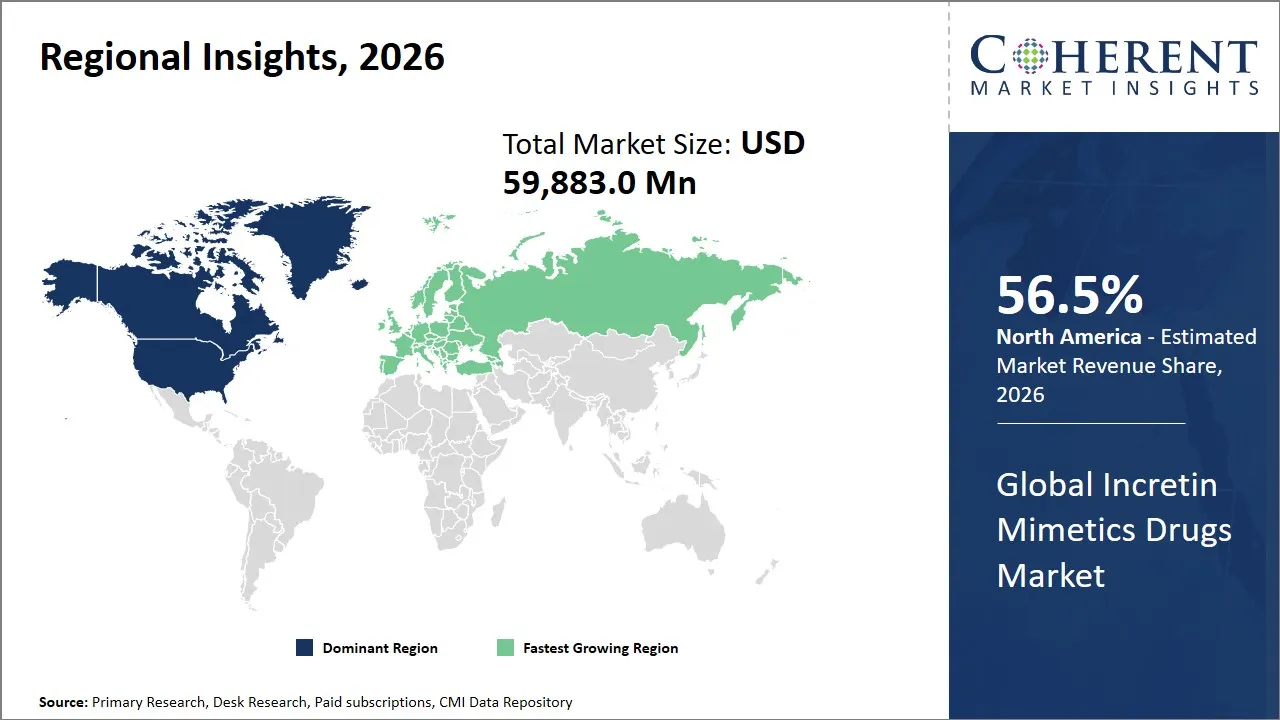
- North America is expected to lead the market, holding a share of 56.5% in 2026. Europe is anticipated to be the fastest-growing region, with 17.4% share in 2026.
Market Overview
- The global incretin mimetics drugs market is experiencing strong growth driven by rising prevalence of type 2 diabetes and obesity worldwide.
- The market is expanding beyond diabetes into weight management and broader cardiometabolic applications, significantly increasing its addressable patient base.
- Innovation is accelerating with the development of dual and triple agonists along with oral formulations that improve treatment convenience and efficacy.
- Leading pharmaceutical companies are investing heavily in manufacturing capacity and pipeline expansion to capture growing demand and maintain competitive positioning.
Currents Events and their Impact
Current Events | Description and its Impact |
Shift toward oral incretin therapies |
|
Pipeline expansion into next generation multi agonist therapies |
|
Segmental Insights
- Current Industry Events of 2026
- Market Size Estimation
- Regional Breakdown
- Competitive Landscape
- Customer Intelligence
- Segmental Analysis
- Pricing Analysis
- Key Market Drivers, Challenges & Future Trends
- Customized Insights Section
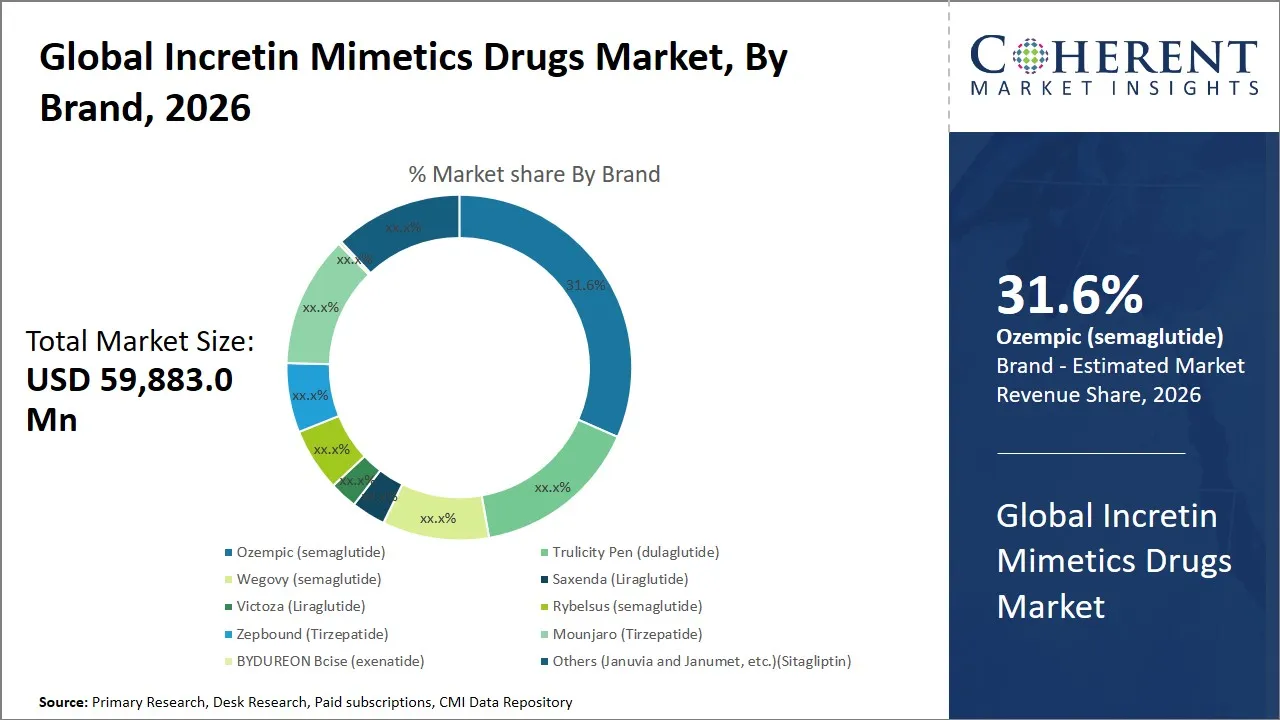
Why Does the Ozempic (semaglutide) Segment Dominate the Global Incretin Mimetics Drugs Market in 2026?
The Ozempic (semaglutide) segment is expected to hold the largest market share of 31.6% in 2026, driven primarily by its proven efficacy and broad application in managing type 2 diabetes as well as its expanding use in weight management. The active compound of Ozempic is semaglutide, which has received a lot of clinical interest because of its strong glucose-lowering effect with the addition of a significant decrease in weight, unlike many other drugs in the incretin group. This is the therapeutic advantages of this dual therapy which is appealing to both patients and healthcare practitioners who want to have holistic management of metabolic syndrome in which management covers various aspects of drug.
The second aspect that has helped Ozempic to take a lead in the market is its ability to be flexible in the dosing regimens and formulation. Ozempic is at once injected in a subcutaneous manner every week, thus making adherence to treatment easier and making it more convenient to patients, particularly when contrasted with other options that require daily injections or oral, but which have schedule complexities. Such a dose frequency per week is quite consistent with the lifestyle requirements of patients that do not want to take drugs every other day without negatively affecting the treatment.
For instance, on February 27, 2026, Abbott announced a strategic partnership with Novo Nordisk India to launch Extensior, a new brand of semaglutide (Ozempic), aimed at improving access to advanced diabetes treatment in India. Under the agreement, Abbott will commercialize the product using its extensive distribution network, while Novo Nordisk will continue to supply the semaglutide molecule.
(Source - Abbott)
Why Does the Semaglutide Segment Dominate the Global Incretin Mimetics Drugs Market in 2026?
The semaglutide segment is expected to hold 47.4% of the market share in 2026, underpinned by its diverse clinical applications and strong therapeutic benefits. The type 2 diabetes treatment has changed dramatically with Semaglutide as it resembles the incretin growth hormone GLP-1 and can promote insulin secretion and inhibit glucagon secretion. Its effect of action is very powerful in enhancing glycemic regulation and hence, it is a preferred medication compared to other incretins mimetics that have limited effect or more adverse effects.
The fact that semaglutide as a molecule is increasingly reducing weight, regardless of diabetes, is a major growth opportunity. The effective development of formulations aimed at the management of obesity has helped semaglutide to increase its clientele beyond the traditional groups of diabetic patients, therefore, being able to gain a greater market share in the global incretin mimetics drugs market. It is a multi-indication with a spectrum of efficacy, which not only increases access to patients but also raises awareness among prescribers of its wide range of efficacy.
The Subcutaneous Segment Dominates the Global Incretin Mimetics Drugs Market
The subcutaneous segment is expected to hold the largest market share of 85.9% in 2026, driven by the pharmacological nature of incretin mimetics and their delivery requirements for optimal bioavailability and efficacy. A host of incretin mimetic peptides such as semaglutide and dulaglutide must be parenterally delivered in order to prevent gastrointestinal degradation, and subcutaneous injection is a convenient and effective route to parenteral delivery. Sustained release of the active compound in the subcutaneous route provides a controlled and constant release of the active substance, which results in constant plasma drug levels necessary to maintain stable glycemic control. This avoids the initial metabolism that is reputed to occur with oral administration, thereby guaranteeing an increase in the bioavailability and therapeutic efficacy of the drug. Consequently, it continues to be the benchmark of numerous incretin mimetic drugs, which strengthens its dominance as the leading mode of delivery.
Supply Constraints and Recurring Drug Shortages in the Global Incretin Mimetics Drugs Market
- Supply constraints in the global incretin mimetics drugs market have become a structural issue due to rising demand for glucagon-like peptide-1 (GLP-1) and dual-incretin therapies for diabetes and obesity. Manufacturing these biologics is complex, requiring specialized production facilities, sterile fill-finish capacity, and reliable integration of injector devices, which limits rapid scale-up. As prescription volumes continue to outpace capacity expansion, companies are struggling to meet demand across major markets, especially in the U.S. and Europe.
- Regular out of stock drugs is currently influencing the continuity of treatment and access by patients, compelling health care providers to switch treatments, defer initiation, or in high-risk patients. It has also brought about stricter distribution measures, prescription and regulatory review in certain areas. Manufacturers are in turn spending a lot of money in capacity building, contract manufacturing alliances, and supply chain efficiency however, shortages may continue to be experienced in the next few years because demand will keep rising at a faster rate, compared to supply availability.
Regional Insights
North America Incretin Mimetics Drugs Market Analysis and Trends
The North America region is projected to lead the market with a 56.5% share in 2026, driven by a highly developed healthcare infrastructure, strong presence of pharmaceutical giants, and proactive government policies promoting diabetes care and innovation. The U.S. especially has sufficiently developed market ecosystem with massive spending on healthcare and vast research infrastructures.
Government systems such as expedited review programs of the FDA promote quicker drug approval and innovation as well as entry of the new product into the market. The giants of the industry, including Eli Lilly and Novo Nordisk, have already made an important presence here, and their lineup of incretin mimetics is supported by extensive clinical testing, market approaches, and extensive physician use. Diabetes and other metabolic diseases are also high in the region, which will provide long-term demand.
For instance, in November 2023, the U.S. Food and Drug Administration (FDA) approved Zepbound (tirzepatide), developed by Eli Lilly, for chronic weight management in adults with obesity or those who are overweight with at least one weight-related condition such as type 2 diabetes, hypertension, or high cholesterol. The therapy is indicated to be used alongside a reduced-calorie diet and increased physical activity.
(Source - Eli Lilly)
Europe Incretin Mimetics Drugs Market Analysis and Trends
The Europe region is expected to exhibit the fastest growth in the incretin mimetics drugs market, contributing 17.4% share in 2026, expanding steadily as demand rises for therapies that address both type 2 diabetes and obesity, with adoption supported by strong clinical confidence, established healthcare systems, and growing use of glucagon-like peptide-1 based treatment in routine metabolic care. Next generation products are also becoming a more significant region since firms are driving oral therapies and label expansions in order to enhance convenience and access to patients. Nonetheless, pricing examination and reimbursement discipline continue to be some of the main limiting factors, and thus Europe expansion will probably continue to grow well but be more disciplined as compared to the U.S.
For instance, in February 2024, Eli Lilly confirmed that its incretin-based therapy Mounjaro (tirzepatide) was already being marketed across the U.K. and several European countries for both type 2 diabetes and weight management.
(Source - Eli Lilly)
Global Incretin Mimetics Drugs Market Outlook for Key Countries
How is the U.S. Helping in the Growth of the Incretin Mimetics Drugs Market?
The U.S. incretin mimetics drugs market is a leader in the world due to well-established pharmaceutical R&D models and comprehensive healthcare delivery models. Major companies such as Novo Nordisk and Eli Lily control the market with a high level of clinical trials and good network of physicians supporting their incretin mimetic medication. The innovative nature in the treatments of diabetes, coupled with the reimbursement policies adopted by the U.S. government, also provide more accessibility to the patients. Further, type 2 diabetes is highly prevalent and patients are aware of the disease, which is upheld by effective supply chains and universal insurance.
How is Germany Helping in the Growth of the Incretin Mimetics Drugs Market?
The Germany market for incretin mimetics drugs has a favorable business climate due to a well-developed healthcare system with universal cover and support of the government in the management of chronic diseases. The European pharma giants like Boehringer Ingelheim are central to facilitating product access and advancement. The strict regulatory landscape of the country guarantees high standards but also causes the rapid uptake of effective incretin mimetics by providing frame worked reimbursement schemes. The fact that Germany has been a pharmaceutical hub increases its ability to innovate as well as distribute, and this makes it a hub in the European market.
Key Drivers for the Growth of the China Incretin Mimetics Drugs Market
The market for incretin mimetics drugs in China is experiencing a tremendous growth with the government programs aimed at making healthcare available and managing the increasing cases of diabetes. The rise in the number of middle and urban population has increased the need to resort to more sophisticated treatment. AstraZeneca and Novo Nordisk are multinational companies which have entered into partnerships with local companies to boost distribution and market penetration. Also, local producers are adding capacity, with the help of government policies to boost biopharmaceutical innovation. The developing regulatory environment in China is being modified to fit the global standards and this benefits in speeding up approvals and allowing market competition.
India Incretin Mimetics Drugs Market Trends
The market for incretin mimetics drugs in India remains to grow with the increased diabetes rates and the better healthcare facilities. Firms like the Laboratories and Lupin companies of Dr. Reddy have played a significant role in ensuring that incretin mimetics are less expensive and accessible. The attempts by the government to promote the spread of health insurance and to initiate the system of treatment of chronic diseases are also very important. With the high generic pharmaceutical base, the country has been able to produce cheaply and reach a very large number of patients because of the high distribution. Also, India is emerging as an increasingly popular center of clinical testing and pharmaceutical development, which is also a contributing factor to the market growth.
Next-Generation Therapy Innovation and Pipeline Expansion in the Global Incretin Mimetics Drugs Market
- Innovation in therapy among global incretin mimetics drugs market is far exceeding first-generation glucagon-like peptide-1 receptor agonists with firms now concentrating on more effectual and convenient therapies. The market is moving towards dual and triple agonists of the pathways, including glucagon-like peptide-1, glucose-dependent insulinotropic polypeptide, and glucagon, to enhance weight loss, glycemic control, and expansion of cardiometabolic outcomes. There is also an interest in oral formulations, extended acting injectables, and fixed-dose combinations as manufacturers strive to enhance adherence and product distinction in an increasingly competitive environment.
- The states of the pipelines in the pharmaceutical business are aggressive as big drug manufacturers and biotech firms compete to acquire next-generation assets by developing them internally, licensing, and acquiring. Much of the pipeline activity is focused on obesity and type 2 diabetes but developers are investigating applications in cardiovascular risk reduction, metabolic dysfunction-related steatohepatitis and in associated chronic metabolic disorders. It is making the market a high investment, high barrier market where clinical differentiation, manufacturing scale and speed to approval will be the determinants of long-term leadership.
Market Players, Key Developments, and Competitive Intelligence
Key Developments
- On February 4, 2026, Novo Nordisk announced plans to launch oral Ozempic tablets for type 2 diabetes in the second quarter of 2026, following regulatory approval for multiple dose strengths. This marks a major shift toward oral incretin therapies, improving patient convenience and expanding adoption beyond injectable GLP-1 drugs.
- In November 2025, Pfizer completed the acquisition of Metsera, gaining access to a pipeline of incretin-based obesity drugs, including a once-monthly GLP-1 injection (MET-097i). The deal marks Pfizer’s strategic re-entry into the incretin mimetics market and strengthens its position against Novo Nordisk and Eli Lilly.
- In March 2025, Novo Nordisk signed a licensing agreement with Lexicon Pharmaceuticals to develop an oral obesity drug candidate alongside GLP-1 therapies. The deal strengthens Novo’s pipeline beyond semaglutide and supports expansion into combination and adjunct metabolic therapies.
Top Strategies Followed by Global Incretin Mimetics Drugs Market Players
Player Type | Strategic Focus | Examples |
Established Market Leaders | Established players in the global incretin mimetics drugs market compete through heavy R&D spending, clinical leadership, and global expansion. They keep their edge by improving efficacy, safety, and patient convenience while also using partnerships, manufacturing investment, and wider distribution to enter fast growth regions such as Asia Pacific and Latin America. | On March 10, 2025, Eli Lilly announced plans to expand the launch of its incretin-based drug Mounjaro (tirzepatide) into key emerging markets including India, Brazil, and Mexico, as the company continues to scale up its manufacturing capacity. The move is aimed at capturing rising demand for diabetes and obesity treatments in high-growth regions. |
Mid-Level Players | Mid-level players in the global incretin mimetics drugs market usually compete on affordability, regional reach, and practical access rather than breakthrough leadership. Their strategy is to offer more cost-effective versions, build scale through licensing or co marketing deals, and expand in price sensitive markets where public health budgets and out of pocket spending matter more than premium branding. This makes them especially relevant in emerging economies and broader diabetes populations where demand is large but treatment affordability remains a barrier. | Dr Reddy’s Laboratories is a strong mid- level player example in the global incretin mimetics drugs market, as it is preparing to launch lower cost generic semaglutide in India through its Obeda brand. Its strategy is built around affordability, manufacturing capability, and broad market access rather than first in class innovation, which is typical of mid-tier companies competing in high demand, price sensitive markets. |
Small-Scale Players | Small scale players in the global incretin mimetics drugs market compete by focusing on narrower, high value segments instead of trying to match the scale of large pharmaceutical companies. They usually stand out through oral delivery platforms, differentiated formulations, better tolerability profiles, or targeted innovation for specific patient groups. Their advantage is speed, flexibility, and the ability to build focused partnerships for development, manufacturing, or regional commercialization. | Metsera, which gained attention through its once monthly GLP 1 candidate MET 097i and became valuable enough to be acquired by Pfizer in a deal worth up to USD 10 billion in November 2025. That is a clear sign that smaller companies can create strong market relevance by developing differentiated incretin assets with better dosing convenience and strategic pipeline value. |
Market Report Scope
Incretin Mimetics Drugs Market Report Coverage
| Report Coverage | Details | ||
|---|---|---|---|
| Base Year: | 2025 | Market Size in 2026: | USD 59,883.0 Mn |
| Historical Data for: | 2020 To 2024 | Forecast Period: | 2026 To 2033 |
| Forecast Period 2026 to 2033 CAGR: | 11.6% | 2033 Value Projection: | USD 102,444.8 Mn |
| Geographies covered: |
| ||
| Segments covered: |
| ||
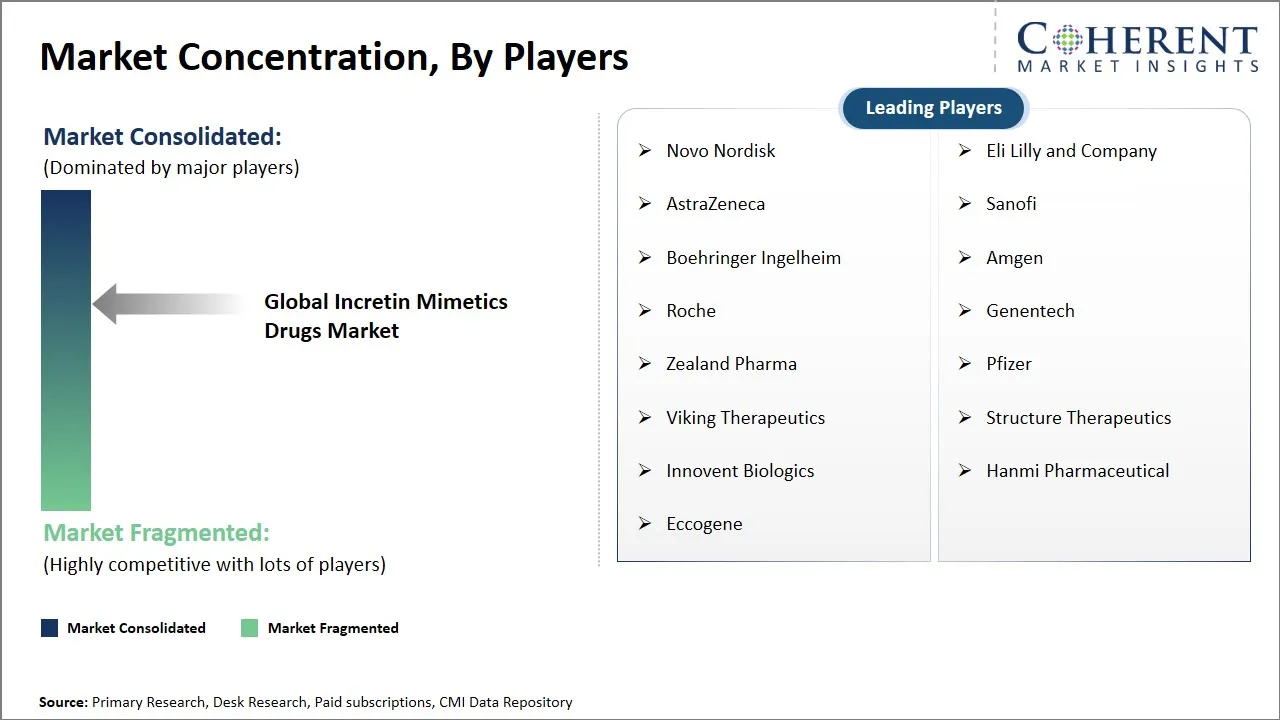
| Companies covered: | Novo Nordisk, Eli Lilly and Company, AstraZeneca, Sanofi, Boehringer Ingelheim, Amgen, Roche, Genentech, Zealand Pharma, Pfizer, Viking Therapeutics, Structure Therapeutics, Innovent Biologics, Hanmi Pharmaceutical, and Eccogene | ||
| Growth Drivers: |
| ||
| Restraints & Challenges: |
| ||
Global Incretin Mimetics Drugs Market Dynamics
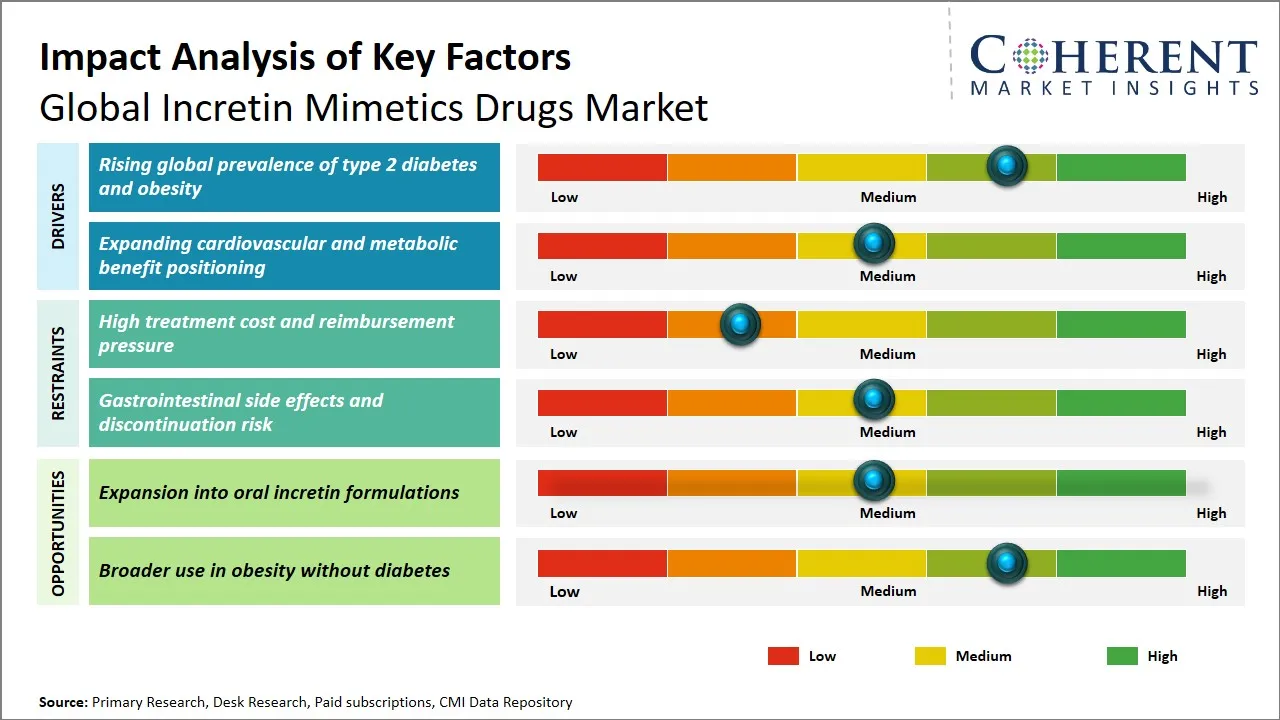
Global Incretin Mimetics Drugs Market Driver - Rising Global Prevalence of Type 2 Diabetes and Obesity
The increasing rates of type 2 diabetes and obesity all over the world is a major force that stimulates the need to use incretin mimetics drugs. With the growing changes in lifestyle, urbanization and changes in dietary habits around the world, an increasing number of people are becoming insulin-resistant as well as developing impaired glucose metabolism disorders, which are directly related to type 2 diabetes. Obesity as a predetermining or comorbid condition of diabetes only worsens the metabolic dysfunction, which requires proper therapeutic interventions. The use of incretin mimetics which increase insulin release and inhibit glucagon release has become more desirable due to its two-fold advantages in the management of glucose and weight management. This increasing number of patients who want a better efficacy and fewer side effects is motivating more regions to adopt these drugs.
For instance, on March 17, 2026, Zydus Lifesciences and Lupin announced a licensing and supply agreement to co-market semaglutide injections in India, targeting the rapidly growing demand for diabetes and weight management therapies. The collaboration is aimed at strengthening market presence in incretin-based treatments as India continues to witness a sharp rise in type 2 diabetes and obesity cases.
(Source- Zydus Lifesciences)
Global Incretin Mimetics Drugs Market Opportunity - Expansion into Oral Incretin Formulations
Oral incretin mimetics, their development and expansion offer a great growth potential in the global incretin mimetics drugs market. The market conventionally relied on injectable formulations; however, a paradigm shift is present in the market, and pharmaceutical firms are investing in oral delivery technologies to increase patient compliance and convenience. Oral GLP-1 receptor agonists are the oral incretin mimetics that have obvious advantages as they do not imply injections, which is the obstacle many patients with type 2 diabetes and obesity tend to have. This change does not only expand the target group of patients who are unwilling or non-compliant with injectable treatment, but also corresponds to the overall tendency in chronic disease management that targets more convenient solutions.
Additionally, the oral formulations are easier to incorporate into the everyday medication routine, which may positively affect therapeutic outcomes and patient satisfaction. There is also an improved regulatory environment where there is increased faster approval of new oral medications with similar efficacy and safety profiles as injectables.
For instance, on March 16, 2026, Structure Therapeutics announced that its experimental oral GLP-1 receptor agonist aleniglipron achieved up to 16.3% weight loss after 44 weeks in a mid-stage clinical trial, compared with placebo. The once-daily pill demonstrated continued weight reduction without plateau and showed competitive efficacy versus other oral incretin candidates, positioning it as a potential best-in-class therapy in the oral obesity drug segment.
(Source- Structure Therapeutics)
Analyst Opinion (Expert Opinion)
- The global incretin mimetics drugs market is witnessing rapidly increasing demand driven by rising incidence, expanding beyond diabetes into obesity and broader metabolic care applications. Excellent clinical outcomes, increasing physician approval, and ongoing development of oral and next generation incretin agents are generating significant growth momentum. The largest opportunity is to increase the accessibility with more convenient products and broader reimbursement, whereas the cost of scaling the production and the shortages of supplies remain the greatest challenge.
- The recent activity in the industry indicates that the market is shifting to execution rather than innovation. Large conferences like the American Diabetes Association Scientific Sessions, EASD, and ObesityWeek have contributed to the knowledge diffusion and uptake of treatment, and massive investments of drug manufacturers in manufacturing in the future are defining future supply. Meanwhile, policy actions to enhance the coverage of obesity drugs and expansion into other geographies should help to boost long term market growth.
Speak to the analyst
Want personalized insights?
Take the findings above to one of our principal consultants, or have the report rebuilt around the segments, geographies and competitors you actually track.
Market Segmentation
- Brand Insights (Revenue, USD Mn, 2021 - 2033)
- Ozempic (semaglutide)
- Trulicity Pen (dulaglutide)
- Wegovy (semaglutide)
- Saxenda (Liraglutide)
- Victoza (Liraglutide)
- Rybelsus (semaglutide)
- Zepbound (Tirzepatide)
- Mounjaro (Tirzepatide)
- BYDUREON Bcise (exenatide)
- Others (Januvia and Janumet, etc.) (Sitagliptin)
- Drug Insights (Revenue, USD Mn, 2021 - 2033)
- Semaglutide
- Tirzepatide
- Dulaglutide
- Exenatide
- Liraglutide
- Others
- Route of Administration Insights (Revenue, USD Mn, 2021 - 2033)
- Subcutaneous
- Oral
- Type Insights (Revenue, USD Mn, 2021 - 2033)
- Branded
- Generic
- Age Group Insights (Revenue, USD Mn, 2021 - 2033)
- Pediatric/Children
- Adult
- Gender Insights (Revenue, USD Mn, 2021 - 2033)
- Male
- Female
- Indication Insights (Revenue, USD Mn, 2021 - 2033)
- Type 2 Diabetes Mellitus (T2DM)
- Weight Management (Obesity/Overweight)
- Cardiovascular Risk Reduction
- Others
- Distribution Channel Insights (Revenue, USD Mn, 2021 - 2033)
- Hospital Pharmacies
- Retail Pharmacies
- Online Pharmacies
- Regional Insights (Revenue, USD Mn, 2021 - 2033)
- North America
- U.S.
- Canada
- Latin America
- Brazil
- Argentina
- Mexico
- Rest of Latin America
- Europe
- Germany
- U.K.
- Spain
- France
- Italy
- Russia
- Rest of Europe
- Asia Pacific
- China
- India
- Japan
- Australia
- South Korea
- ASEAN
- Rest of Asia Pacific
- Middle East
- GCC Countries
- Israel
- Rest of Middle East
- Africa
- South Africa
- North Africa
- Central Africa
- North America
- Key Players Insights
- Novo Nordisk
- Eli Lilly and Company
- AstraZeneca
- Sanofi
- Boehringer Ingelheim
- Amgen
- Roche
- Genentech
- Zealand Pharma
- Pfizer
- Viking Therapeutics
- Structure Therapeutics
- Innovent Biologics
- Hanmi Pharmaceutical
- Eccogene
Sources
Primary Research Interviews
Industry Stakeholders list
- Endocrinologists
- Diabetologists
- Obesity medicine specialists
- Hospital pharmacy directors
- Biopharma manufacturing experts
- Regulatory affairs specialists
End-users list
- Patients with type 2 diabetes
- Patients using anti-obesity therapies
- Hospital formulary committee members
- Retail pharmacists
- Specialty pharmacy managers
- Payers and reimbursement decision makers
Government and International Databases
- U.S. Food and Drug Administration Orange Book
- Drugs@FDA
- European Medicines Agency European Commission database
- World Health Organization Global Health Observatory
- Centers for Disease Control and Prevention Diabetes Data and Statistics
- ClinicalTrials.gov
Trade Publications
- Fierce Pharma
- BioPharma Dive
- Endpoints News
- PharmaPhorum
- Scrip
- Pharmaceutical Technology
Academic Journals
- Diabetes Care
- Diabetes
- The Lancet Diabetes and Endocrinology
- Nature Reviews Endocrinology
- Obesity Reviews
- Diabetologia
Reputable Newspapers
- Financial Times
- The Wall Street Journal
- The New York Times
- The Guardian
- Nikkei Asia
Industry Associations
- American Diabetes Association
- European Association for the Study of Diabetes
- International Diabetes Federation
- The Obesity Society
- European Association for the Study of Obesity
- American Association of Clinical Endocrinology
Public Domain Resources
- World Health Organization fact sheets
- Centers for Disease Control and Prevention surveillance reports
- National Institutes of Health publications
- National Institute for Health and Care Excellence guidance
- Organisation for Economic Co-operation and Development health statistics
- World Bank Data
Proprietary Elements
- CMI Data Analytics Tool: Proprietary analytics tool to analyze real-time market trends, consumer behavior, and technology adoption in market
- Proprietary CMI Existing Repository of Information for Last 8 Years
Get access to 250+ pages report
Every segment, forecast, competitor profile and data table behind the analysis above — available for instant download.
- ESOMAR Member
- ISO 9001:2015 Certified
- D-U-N-S Registered
- GDPR & CCPA Compliant
Missing comfort of reading report in your local language? Find your preferred language:
Transform your Strategy with Exclusive Trending Reports
Frequently Asked Questions
The global incretin mimetics drugs market is estimated to be valued at USD 59,883.0 million in 2026 and is expected to reach USD 102,444.8 million by 2033.
The CAGR of global incretin mimetics drugs market is projected to be 11.6% from 2026 to 2033.
Rising global prevalence of type 2 diabetes and obesity and expanding cardiovascular and metabolic benefit positioning are the major factors driving the growth of the global incretin mimetics drugs market.
High treatment cost and reimbursement pressure and gastrointestinal side effects and discontinuation risk are the major factors hampering the growth of the global incretin mimetics drugs market.
The biggest trend is the shift from injectable therapies toward oral incretin drugs, as companies race to launch pills that can improve convenience, adherence, and patient reach.
Yes. The pipeline is moving toward dual and triple agonists such as therapies targeting glucagon like peptide 1, glucose dependent insulinotropic polypeptide, and glucagon pathways to deliver stronger weight loss and glycemic control outcomes.
In terms of brand, Ozempic (semaglutide) is estimated to dominate the market revenue share in 2026.