

Global IV Bags Market Size and Forecast – 2026 to 2033
According to Coherent Market Insights, The Global IV Bags Market is estimated to be valued at USD 3.11 Bn in 2026 and is expected to reach USD 5.72 Bn by 2033, exhibiting a compound annual growth rate (CAGR) of 9.1% from 2026 to 2033. This significant growth is driven by increasing demand for intravenous solution across hospitals and clinics, rising prevalence of chronic diseases, and advancements in IV bag technologies that enhance safety and efficiency. The expanding healthcare infrastructure in emerging markets also contributes to this upward trajectory.
Key Takeaways of the IV Bags Market
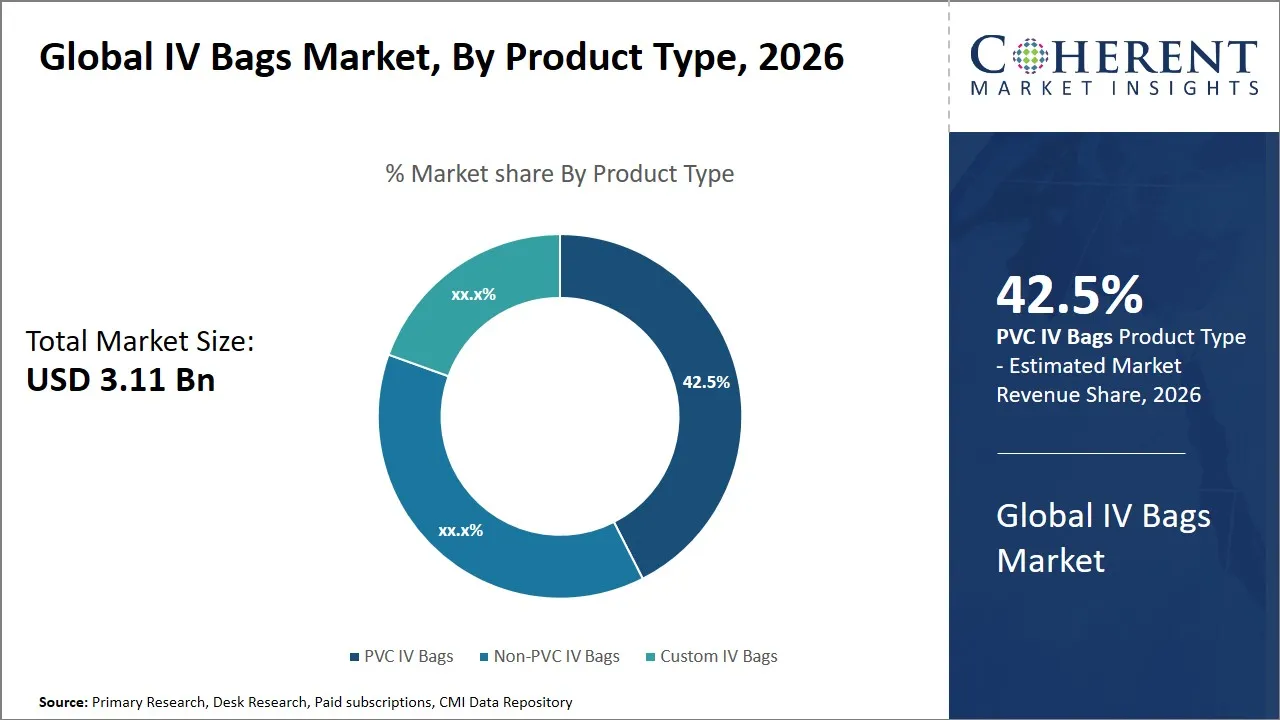
- PVC IV bags are projected to dominate the global IV bags market, holding a share of 42.5 % in 2026.
- When categorized by material type, polyvinyl chloride (PVC) remains the leading material in the global IV bags market, accounting for 45.6 % in 2026.
- Regarding capacity, IV bags with volumes under 500 ml are expected to capture the largest market share, representing 43. 4% in 2026.
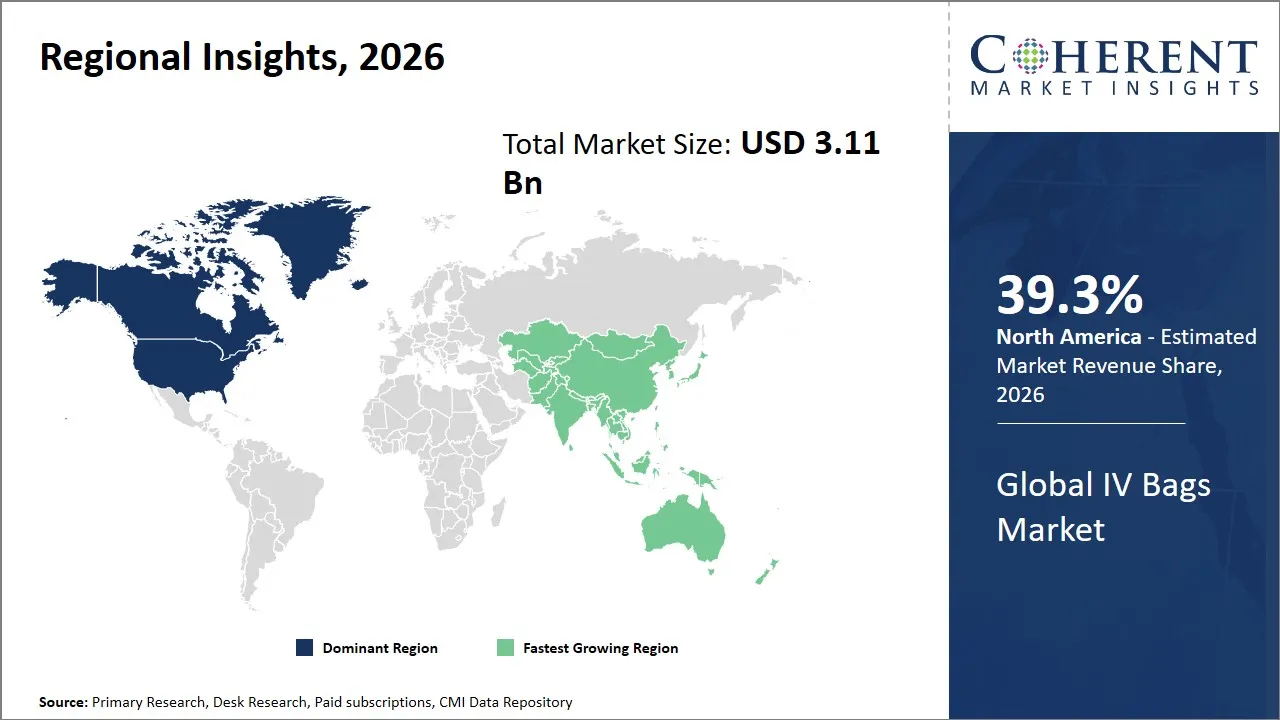
- North America is expected to lead the market, holding a share of 39. 3% in 2026. Asia Pacific is anticipated to be the fastest-growing region, with 23.5% share in 2026.
Market Overview
- A notable market trend is the growing adoption of eco-friendly and biodegradable IV bags, as healthcare providers focus more on reducing environmental impact.
- Additionally, there is a shift towards customizable and smart IV bags integrated with sensors for real-time monitoring of fluid delivery.
- Automation in infusion therapy and the rise in outpatient treatments further elevate the demand for innovative IV bags. These trends underscore a move towards patient-centric solutions and sustainability in the IV bags market.
Current Events and Its Impact
Current Events | Description and its Impact |
Persistent Shortages of Injectable Drugs in the U.S. |
|
Integration of Smart Technology for Inventory Management |
|
Segmental Insights
- Current Industry Events of 2026
- Market Size Estimation
- Regional Breakdown
- Competitive Landscape
- Customer Intelligence
- Segmental Analysis
- Pricing Analysis
- Key Market Drivers, Challenges & Future Trends
- Customized Insights Section
Why are PVC IV bags still the dominant choice in clinical settings despite the rise of alternative materials?
PVC IV bags are expected to hold the largest share of 42.5% in 2026 in the global market for IV bag mainly because of being cost-effective and years of clinical acceptance. Over the decades, PVC (polyvinyl chloride) has been the material of choice for IV bag production due to its capacity to retain fluids and guarantee reliable product functioning at a rather low price. This low cost renders PVC IV bags appealing to a large number of healthcare providers, and more so in areas where costs are a major concern.
One more important reason that helps prove the superiority of PVC IV bags is that they are highly compatible with a great number of different intravenous solutions, such as saline fluids, glucose, and other types of electrolytes. They are also chemically stable which implies that they leak and contaminate very little which is important in patient safety. PVC bags are also easy to sterilize, which does not affect the maintenance of a sterile environment as needed in the intravenous therapy and decreases the chances of infection.
In December 2023, Baxter International Inc. launched its first IV bag recycling pilot in partnership with Northwestern Medicine. Baxter, a leader in infusion therapies, successfully diverted over six tons of PVC IV bag waste from landfills. The program, which started at Northwestern Memorial Hospital, has recycled more than 170,000 IV bags. This initiative aims to reduce waste and support sustainability goals, with plans for broader expansion.
What factors contribute to PVC material's continued leadership in the IV bags market?
When segmented by material type, polyvinyl chloride (PVC) stands out as the predominant choice in the global IV bags market with a projected 45.6% in 2026. This favor is an indication of the strong reputation of PVC in healthcare use which is inspired by its strong physical characteristics and established manufacturing experience. The structural integrity of PVC provides great protection against leaks without loss of clarity to allow medical workers to effortlessly view the fluid contents.
Adaptability to the manufacturing of bags that have high regulatory standards in the diverse regions of the world is one of the major factors that have contributed to the material power of PVC. It is material consistent, therefore, able to perform well across different sterilization and storage such as gamma irradiation and ethylene oxide sterilization, hence meets high-levels of hygiene and safety standards.
What roles do smaller capacity IV bags play in emergency care, outpatient settings, and home healthcare?
Regarding capacity, the IV bags of less than 500 ml are expected to the highest share in the global market at 43.4% in 2026 due to the increasing applicability in a wide range of clinical care and emergency care settings. Smaller capacity IV bags are more portable and easier to administer, especially where outpatient treatments, ambulatory care or home healthcare are required.
This is also due to the preference for IV bags below 500 ml, as precise dosage is crucial for pediatric and geriatric populations, where fluid intake must be carefully monitored and regulated. Smaller bag sizes help make this process more accurate and minimize chances of over-infusion, which may cause negative patient outcomes, particularly in such vulnerable groups that need close fluid control.
Single-Chamber vs. Multi-Chamber Adoption Economics in the IV Bags Market
Aspect | Single-Chamber IV Bags | Multi-Chamber IV Bags |
Cost Efficiency | Lower production costs due to simpler design and materials. | Higher production costs due to complex design and additional chambers. |
Usage | Primarily used for simple infusions requiring one fluid. | Ideal for administering multiple fluids or medications simultaneously. |
Market Adoption | Widely adopted in basic hospital settings and bulk infusion. | Gaining traction in critical care, home healthcare, and specialty applications. |
Patient Safety | Lower risk of contamination, as one fluid is used at a time. | Enhanced safety by maintaining separate chambers for each fluid, reducing the risk of cross-contamination. |
Flexibility | Less flexible for complex treatments or patient needs. | Highly flexible for complex treatments, offering multiple fluids or medications in a single bag. |
Regulatory Compliance | Easier to comply with standard regulatory requirements. | Requires compliance with additional regulatory standards due to complexity. |
Shelf Life | Longer shelf life due to simpler material composition. | Shorter shelf life due to complexity and potential material degradation between chambers. |
Customization | Limited customization options due to simpler structure. | Higher customization options for specific treatments or medications. |
Regional Insights
North America IV Bags Market Analysis and Trends
North America’s dominance in the global IV bags market, with a projected share of 39.3% in 2026, is driven by a well-established healthcare infrastructure combined with the high adoption of advanced medical devices. The area has had a massive government healthcare program to enhance patient outcomes, strong reimbursement policies, and large healthcare spending per capita.
The well-established supply chain ecosystem, high level of regulation in manufacturing activities, and significant attention to patient safety and product quality are playing a significant role in the process of remaining dominant in this region. The trade dynamics are also good including effective distribution systems attached to mega hospital networks and outpatient centers that are influencing the constant demand for IV bags.
For instance, in 2024, Fresenius Kabi opened its USFDA-registered freeflex IV bag production facility in North Carolina, U.S. This state-of-the-art plant, part of a nearly USD 1 billion investment, will significantly boost IV bag production capacity and improve supply reliability and lead times for U.S. customers. The facility features advanced automation, enabling millions of freeflex IV bags to be produced annually in various sizes and formats.
(Source: https://www.freeflexivbags.com/news/)
Asia Pacific IV Bags Market Analysis and Trends
Asia Pacific IV bags market is projected to account for 23.5% in 2026 and register the fastest growth because of the high rate of urbanization, growing healthcare spending, and the development of healthcare facilities by emerging economies like India and China. Government programs that aim to enhance healthcare access, rural and semi-urban communities drive the market towards low-cost and disposable medical products such as IV bags.
Moreover, growing hospital base in the region and the rising prevalence of chronic diseases intensify the need to use intravenous treatments. The increasing entry of foreign firms like Terumo Corporation and domestic producers increases the rate of market penetration. Policies that encourage foreign direct investment (FDI) and the transfer of technology foster innovation and enhance production capabilities in the region, which is the fastest-growing on the planet.
Global IV Bags Market Outlook for Key Countries
How are U.S. hospitals adjusting purchasing strategies for premixed and ready-to-use IV bags?
The IV bags market in the U.S. is very complex in terms of their healthcare facilities and the high level of focus on patient safety and product innovation. Large companies such as Baxter International and ICU Medical are involved by producing IV bags with high safety measures and being compatible with infusion systems.
Quality standards of regulatory authorities like the USFDA are very strict, which guarantees high product reliability. The size of the hospital networks and outpatient care facilities creates the same demand, and the government healthcare policies promote the implementation of new infusion therapy solutions
What is driving German hospitals to shift from PVC to non-PVC IV bags for patient safety needs?
The healthcare system of Germany and the high level of members of large medical equipment producers, such as B. Braun Melsungen AG, supports the IV bags market. The regulatory climate in the country makes it adhere to the strict European Union standards to encourage high-quality production.
There is also a good medical research environment in Germany that encourages invention in IV therapy materials and designs. The policies of government reimbursement make the use of hospitals and clinics very widespread, which stimulates the demand. It is strategically located in Europe and therefore has easy trade and distribution channels.
China IV Bags Market Trends
China is still commanding the Asia Pacific market due to its growing healthcare investment and growing hospitals. The domestic manufacturers are quickly increasing production by government subsidies and technology partnerships with international companies like Baxter and Terumo.
The high number of patients and their increasing interest in intravenous treatment are the major demand factors. The positive trade policies and strategies such as Made in China 2025 program stimulate the local manufacturing development and increase the supply chain efficiency, which facilitates faster market growth.
India IV Bags Market Trends
The IV bags market in India demonstrates an up-surge in demand due to the rising level of healthcare accessibility in rural and semi-urban locations. Hindustan Syringes & Medical Devices and Tricore Surgicals are also companies that can be used to play a significant role in the provision of affordable IV bags that can fit in different health facilities.
Access to necessary medical supplies is enhanced by government health schemes, which increase the market penetration. Also, regulatory reforms to simplify the approvals of medical devices promote the local production and foreign investments to facilitate technological advancements and growth in production capacities.
Regulatory & Compliance Impact: IV Bags Market
- In the North American and European markets, stringent regulations govern the production and use of IV bags. Regulatory bodies like the FDA in the U.S. and the European Medicines Agency (EMA) enforce strict guidelines on material safety, sterilization processes, and labeling requirements. For example, the U.S. FDA mandates that all IV bags meet specific quality standards, particularly regarding the use of materials like PVC, which must be proven safe for patient use. These regions also emphasize sustainability, driving the adoption of non-PVC alternatives in IV bags to comply with environmental regulations, such as the EU's directives on plastic use reduction.
- In Asia Pacific and Latin America, regulatory frameworks are evolving but may not yet be as robust as in North America or Europe. Countries like China and India have implemented stricter standards recently, but enforcement can vary, potentially affecting product safety. For instance, the Chinese National Medical Products Administration (NMPA) has recently ramped up regulations on medical device packaging, including IV bags, requiring more rigorous quality checks. In Latin America, markets like Brazil are seeing regulatory shifts, with increased focus on ensuring compliance with international standards to improve patient safety and expand export opportunities.
Market Players, Key Developments, and Competitive Intelligence
Key Developments
- In March 2025, the Australian government pledged USD 20 million to enhance Baxter’s Western Sydney plant, increasing its production capacity to 80 million units by 2027.
- In May 2025, ICU Medical and Otsuka Pharmaceutical Factory formed a joint venture to expand IV-solution manufacturing, with operations set to begin in Q2 2025.
- In December 2024, Endo Inc. announced the launch of its ADRENALIN ready-to-use premixed IV bag, the first USFDA-approved manufacturer-prepared epinephrine IV bag. This product is designed to streamline hospital operations by eliminating the need for compounding, mixing, or transferring, reducing waste and the risk of medication errors. ADRENALIN is part of Endo’s TruDelivery platform and offers a 24-month shelf life at room temperature.
- In July 2024, Amneal Pharmaceuticals received the USFDA approval for its potassium phosphates injection IV bags, a preservative-free, ready-to-use infusion product. This product aims to simplify phosphorus replacement for patients with hypophosphatemia, available in a single-dose IV bag, eliminating the need for compounding. Amneal is adding this to its growing portfolio of 505(b)(2) injectables, which includes products like PEMRYDI and FOCINVEZ.
Top Strategies Followed by Global IV Bags Market Players
Player Type | Strategic Focus | Examples |
Established Market Leaders | Focus on heavy investments in R&D, innovation, and product safety. They prioritize global expansion, strategic partnerships, and forging collaborations with OEMs. These players aim to dominate the market by improving product performance and securing stable supply chains. | Companies like Baxter and ICU Medical invest heavily in R&D to enhance IV bag safety, develop high-performance products, and form strategic partnerships to expand their reach globally and tap into emerging markets in Asia, Latin America, and Africa. |
Mid-Level Players | Offer cost-effective IV bag solutions while maintaining quality. Their focus is on catering to price-sensitive consumers, such as public healthcare institutions and emerging markets, by offering reliable yet affordable products. They seek collaborations to boost production and access advanced technologies. | Mid-level players such as Fresenius Kabi and B. Braun focus on offering value-driven IV solutions for public healthcare sectors and emerging markets, emphasizing affordability without compromising on quality and operational efficiency. |
Small-Scale Players | Focus on innovation and specialization, often developing niche products with features such as environmentally friendly materials or enhanced biocompatibility. They leverage local partnerships to adapt quickly to regional needs and regulatory standards. | Small players like Polycine and Brevetti C.E.A. prioritize specialized IV bags with unique features such as eco-friendly materials and enhanced biocompatibility, and collaborate with local manufacturers and distributors to target regional markets. |
Market Report Scope
IV Bags Market Report Coverage
| Report Coverage | Details | ||
|---|---|---|---|
| Base Year: | 2025 | Market Size in 2026: | USD 3.11 Bn |
| Historical Data for: | 2020 To 2024 | Forecast Period: | 2026 To 2033 |
| Forecast Period 2026 to 2033 CAGR: | 9.1% | 2033 Value Projection: | USD 5.72 Bn |
| Geographies covered: |
| ||
| Segments covered: |
| ||
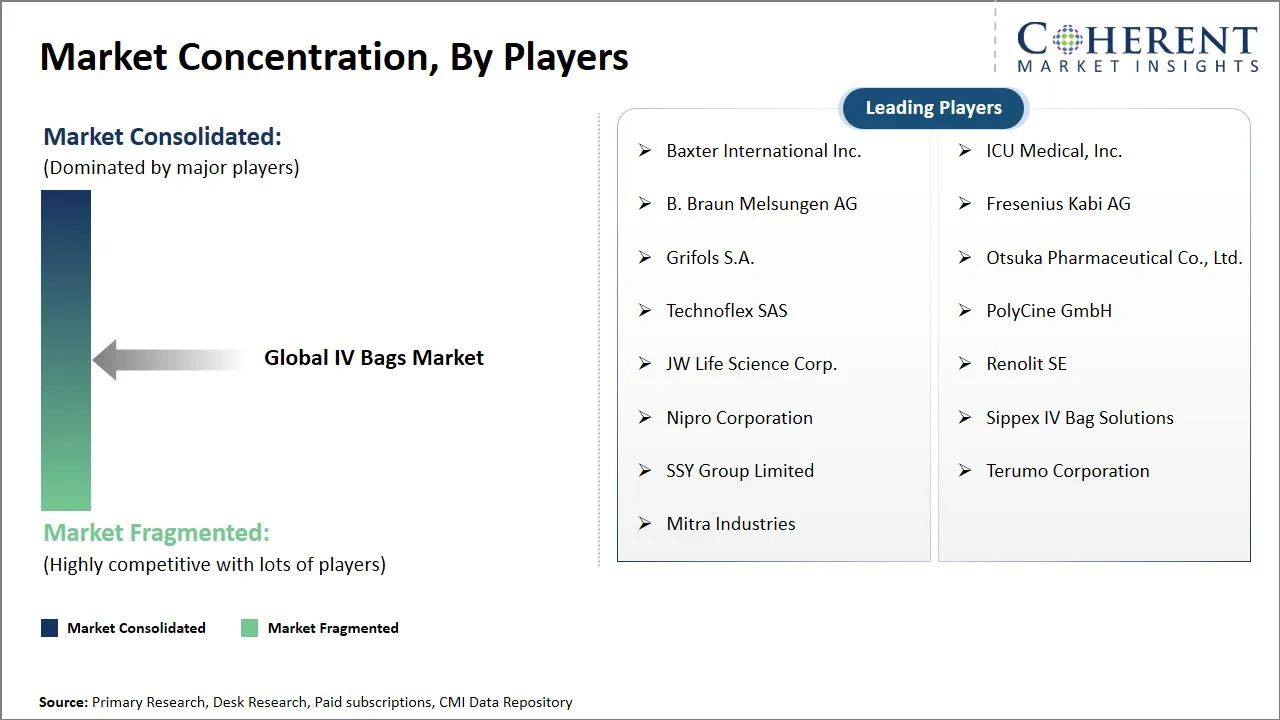
| Companies covered: | Baxter International Inc., ICU Medical, Inc., B. Braun Melsungen AG, Fresenius Kabi AG, Grifols S.A., Otsuka Pharmaceutical Co., Ltd., Technoflex SAS, PolyCine GmbH, JW Life Science Corp., Renolit SE, Nipro Corporation, Sippex IV Bag Solutions, SSY Group Limited, Terumo Corporation, and Mitra Industries | ||
| Growth Drivers: |
| ||
| Restraints & Challenges: |
| ||
IV Bags Market Dynamics
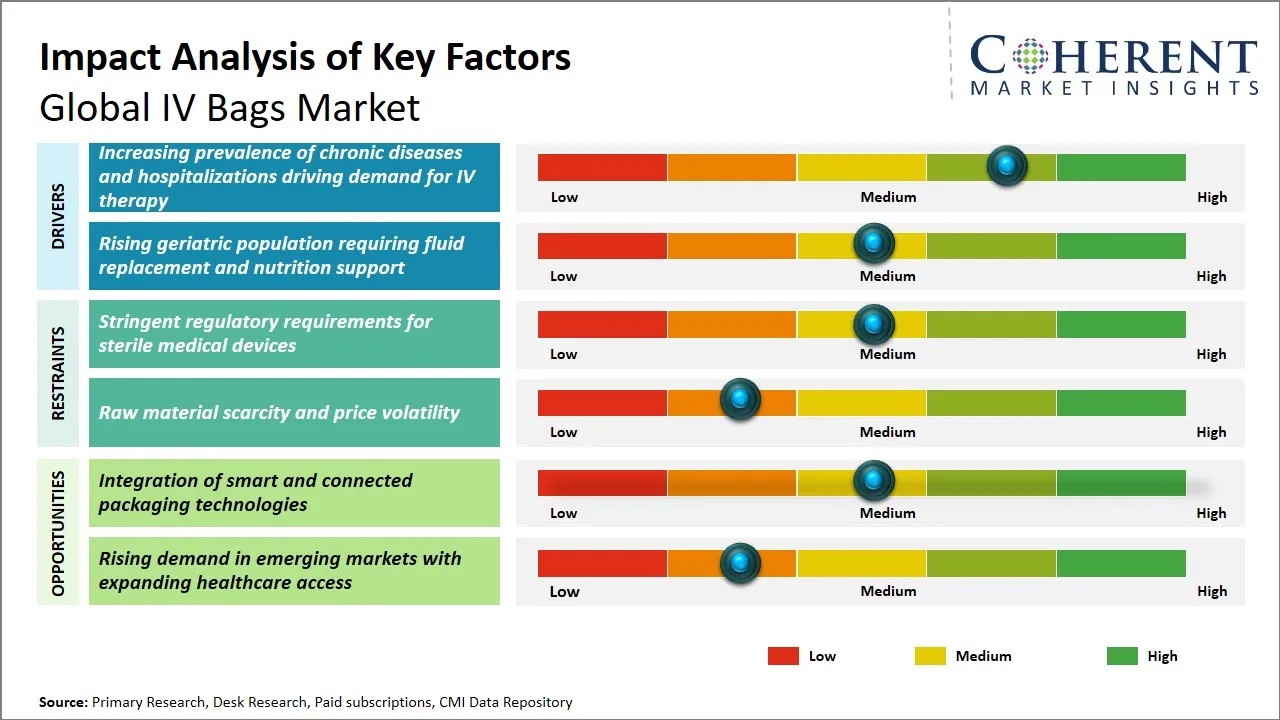
IV Bags Market Driver - Increasing prevalence of chronic diseases and hospitalizations driving demand for IV therapy
The escalating incidence of chronic diseases such as diabetes, cardiovascular disorders, cancer, and kidney ailments has significantly increased the need for continuous and effective medical interventions, thereby driving the demand for intravenous (IV) therapy. Chronic conditions often require long-term administration of medications, fluids, and nutritional support, which are most efficiently delivered through IV infusion due to their rapid onset and controlled dosage capabilities. Additionally, the growing number of hospital admissions resulting from acute exacerbations of these chronic illnesses necessitates comprehensive inpatient care involving frequent fluid replacement, electrolyte balancing, and antibiotic therapy, all facilitated through IV bags. The intensifying pressure on healthcare facilities to provide prompt and efficient treatment further highlights the reliance on IV therapy as a critical component of patient management.
In September 2025, the World Health Organization (WHO) reported a sharp rise in the global burden of chronic or noncommunicable diseases, which claimed around 43 million lives in 2021 accounting for 75% of non-pandemic-related deaths. The data highlighted cardiovascular diseases, cancers, chronic respiratory conditions, and diabetes as the leading causes, with 80% of premature deaths occurring in low- and middle-income countries.
(Source: https://www.who.int/news-room/fact-sheets/detail/noncommunicable-diseases)
IV Bags Market Opportunity: Integration of Smart and Connected Packaging Technologies
The integration of smart and connected packaging technologies presents a significant growth opportunity in the global IV bags market. As healthcare systems prioritize patient safety, traceability, and efficiency, the demand for advanced packaging solutions that enable real-time monitoring and data connectivity is rising. Smart IV bags equipped with sensors can provide critical information such as fluid levels, temperature, and expiration status, reducing medication errors and enhancing inventory management. Additionally, connected packaging allows seamless communication between medical devices and healthcare providers, facilitating remote monitoring and timely interventions. This technology not only improves patient outcomes but also supports regulatory compliance by ensuring accurate tracking throughout the supply chain. Furthermore, advancements in IoT and wireless communication protocols have made it feasible to incorporate these features without significantly increasing costs, making them attractive for hospitals and healthcare facilities worldwide.
In June 2024, Brevetti Cea spa. announced the launch of a new IV-Bag inspection product line at ACHEMA in Frankfurt. The company, known for its advanced technology, is introducing IVB-40, a high-speed inspection machine, IVB-10, a low-speed machine, and IVB-LD, a leak detection unit. These machines are designed for high-precision inspection and leak detection, addressing the growing demand for IV-Bags in the pharmaceutical industry.
Analyst Opinion (Expert Opinion)
- The IV Bags market is growing rapidly due to advancements in packaging technology, including non-PVC and preservative-free solutions, which enhance safety and efficiency in healthcare. Increased demand for ready-to-use IV products, alongside rising chronic diseases and aging populations, is boosting the market growth. Regulatory support also plays a key role in this expansion, although challenges like high manufacturing costs and sterility maintenance remain.
- Emerging opportunities are seen in developing regions like Asia Pacific and Latin America, where healthcare investments are rising. Initiatives like Baxter's plant expansion in Australia and the joint venture between ICU Medical and Otsuka Pharmaceutical Factory are scaling up production. Conferences like the 2024 International IV Therapy Congress provide platforms for industry knowledge-sharing, helping shape policies and promote new technologies in the market.
Speak to the analyst
Want personalized insights?
Take the findings above to one of our principal consultants, or have the report rebuilt around the segments, geographies and competitors you actually track.
Market Segmentation
- Product Type Insights (Revenue, USD Bn, 2021 - 2033)
- PVC IV Bags
- Non-PVC IV Bags
- Custom IV Bags
- Material Type Insights (Revenue, USD Bn, 2021 - 2033)
- Polyvinyl Chloride (PVC)
- Polyethylene (PE)
- Polypropylene (PP)
- Ethylene Vinyl Acetate (EVA)
- Capacity Insights (Revenue, USD Bn, 2021 - 2033)
- Below 500 ml
- 500 ml to 1000 ml
- Above 1000 ml
- Application Insights (Revenue, USD Bn, 2021 - 2033)
- Intravenous Fluids
- Nutrition
- Antibiotics
- Electrolytes
- Blood Products
- Total Parenteral Nutrition (TPN)
- End User Insights (Revenue, USD Bn, 2021 - 2033)
- Hospitals
- Clinics
- Ambulatory Surgical Centers (ASCs)
- Home Healthcare
- Others
- Regional Insights (Revenue, USD Bn, 2021 - 2033)
- North America
- U.S.
- Canada
- Latin America
- Brazil
- Argentina
- Mexico
- Rest of Latin America
- Europe
- Germany
- U.K.
- Spain
- France
- Italy
- Russia
- Rest of Europe
- Asia Pacific
- China
- India
- Japan
- Australia
- South Korea
- ASEAN
- Rest of Asia Pacific
- Middle East
- GCC Countries
- Israel
- Rest of Middle East
- Africa
- South Africa
- North Africa
- Central Africa
- North America
- Key Players Insights
- Baxter International Inc.
- ICU Medical, Inc.
- Braun Melsungen AG
- Fresenius Kabi AG
- Grifols S.A.
- Otsuka Pharmaceutical Co., Ltd.
- Technoflex SAS
- PolyCine GmbH
- JW Life Science Corp.
- Renolit SE
- Nipro Corporation
- Sippex IV Bag Solutions
- SSY Group Limited
- Terumo Corporation
- Mitra Industries
Sources
Primary Research Interviews
Industry Stakeholders List
- Healthcare professionals (doctors, nurses, pharmacists)
- Medical device manufacturers
End Users List
- Hospital administrators
- Home healthcare providers
Government and International Databases
- U.S. Food and Drug Administration (FDA)
- European Medicines Agency (EMA)
- World Health Organization (WHO)
- U.S. Centers for Disease Control and Prevention (CDC)
- Health Canada
- Medicines and Healthcare products Regulatory Agency (MHRA)
Trade Publications
- Pharmaceutical Technology
- Medical Device and Diagnostic Industry (MD+DI)
- Healthcare Packaging
- Drug Development and Delivery
- BioPharma Reporter
- MedTech Europe
Academic Journals
- Journal of Pharmaceutical Sciences
- The Lancet
- Journal of Controlled Release
- International Journal of Pharmaceutics
- Medical Device Technology Journal
- Journal of Hospital Infection
Reputable Newspapers
- The New York Times
- The Wall Street Journal
- The Guardian
- Reuters
- Bloomberg
- Financial Times
Industry Associations
- International Society of Pharmacoepidemiology (ISPE)
- American Medical Association (AMA)
- Medical Device Manufacturers Association (MDMA)
- International Association of Healthcare Professionals (IAHP)
- European Federation of Pharmaceutical Industries and Associations (EFPIA)
- American Society of Health-System Pharmacists (ASHP)
Public Domain Resources
- National Institutes of Health (NIH)
- U.S. Department of Health and Human Services (HHS)
- National Health Service (NHS)
- European Commission Health and Food Safety
- Food and Agriculture Organization (FAO)
- U.S. Department of Veterans Affairs
Proprietary Elements
- CMI Data Analytics Tool: Proprietary analytics tool to analyze real-time market trends, consumer behavior, and technology adoption in market
- Proprietary CMI Existing Repository of Information for Last 8 Years
Get access to 250+ pages report
Every segment, forecast, competitor profile and data table behind the analysis above — available for instant download.
- ESOMAR Member
- ISO 9001:2015 Certified
- D-U-N-S Registered
- GDPR & CCPA Compliant
Missing comfort of reading report in your local language? Find your preferred language:
Transform your Strategy with Exclusive Trending Reports
Frequently Asked Questions
The global IV bags market is estimated to be valued at USD 3.11 Bn in 2026 and is expected to reach USD 5.72 Bn by 2033.
The CAGR of global IV bags market is projected to be 9.1% from 2026 to 2033.
Increasing prevalence of chronic diseases and hospitalizations driving demand for IV therapy and rising geriatric population requiring fluid replacement and nutrition support are the major factors driving the growth of global IV bags market.
Stringent regulatory requirements for sterile medical devices and raw material scarcity and price volatility are the major factors hampering the growth of the global IV bags market.
In terms of Product Type, PVC IV Bags segment is estimated to dominate the market revenue share in 2026.
The market is expected to grow due to technological advancements, increasing healthcare needs, and rising demand for sterile and safe IV solutions.
Alternatives include prefilled syringes, portable infusion devices, and other innovative fluid delivery systems.