

Global Jet Lag Therapy Market Size and Forecast – 2026 to 2033
The Global Jet Lag Therapy Market is estimated to be valued at USD 490.7 Mn in 2026 and is expected to reach USD 650.1 Mn by 2033, exhibiting a compound annual growth rate (CAGR) of 4.1% from 2026 to 2033. This steady growth reflects increasing awareness about the negative impacts of jet lag and rising demand for effective therapeutic solutions among frequent travelers, especially in the aviation and business sectors.
Key Takeaways of the Global Jet Lag Therapy Market
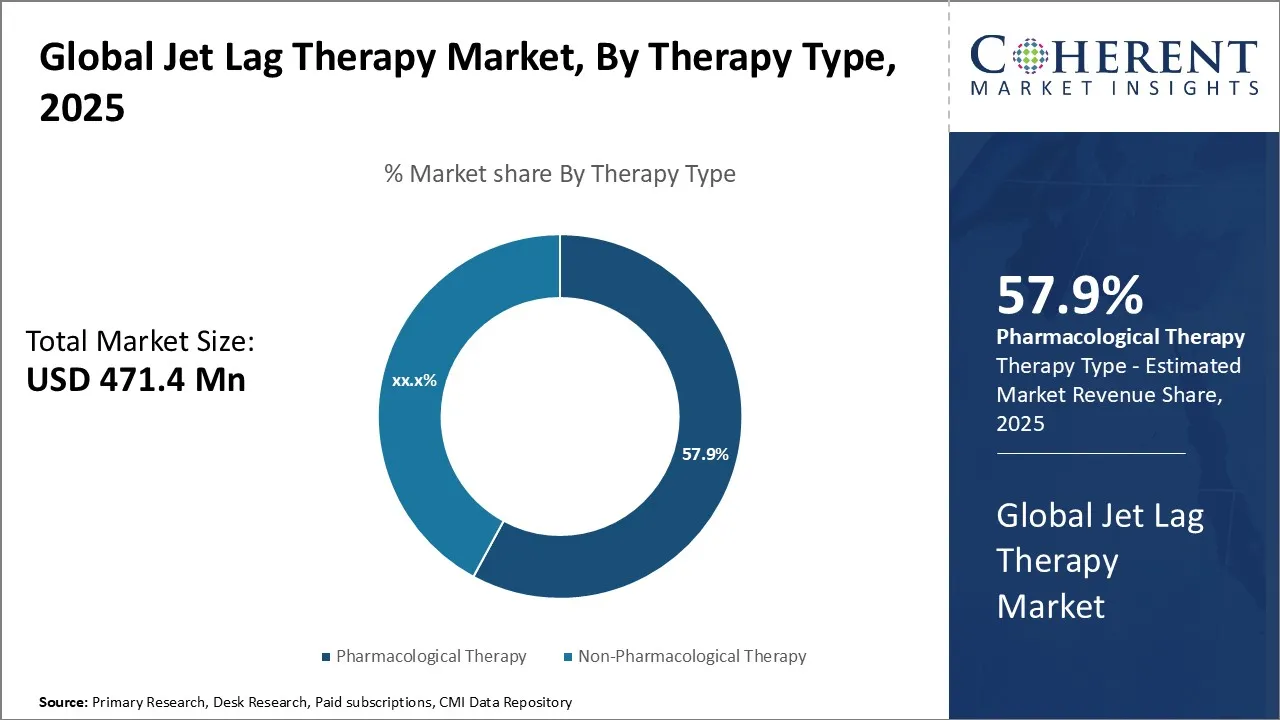
- Pharmacological therapy is expected to hold the largest share of the global jet lag therapy market, accounting for 58.9% in 2026.
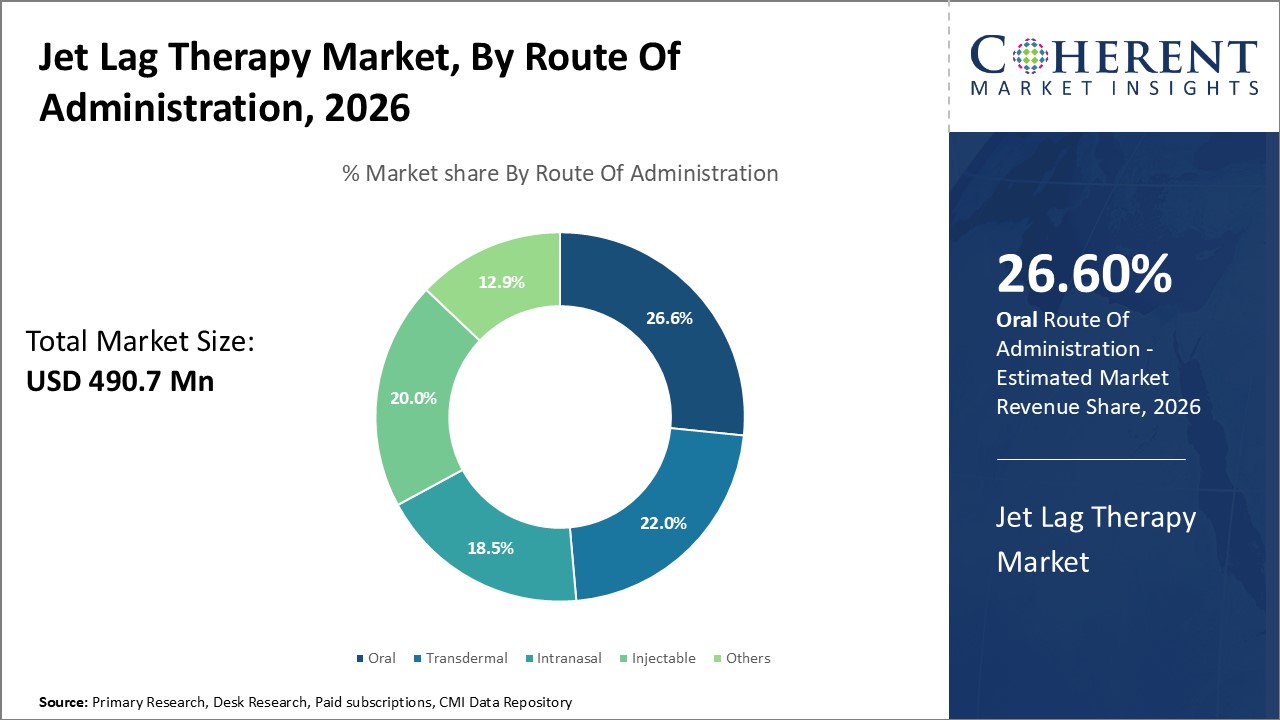
- Among the different administration methods for jet lag treatments, the oral segment is the most prevalent, with an estimated share of 26.6% in 2026.
- In terms of end user, Hospitals/Sleep Clinics lead the global jet lag therapy market, holding an estimated 33.5% of the market share in 2026.
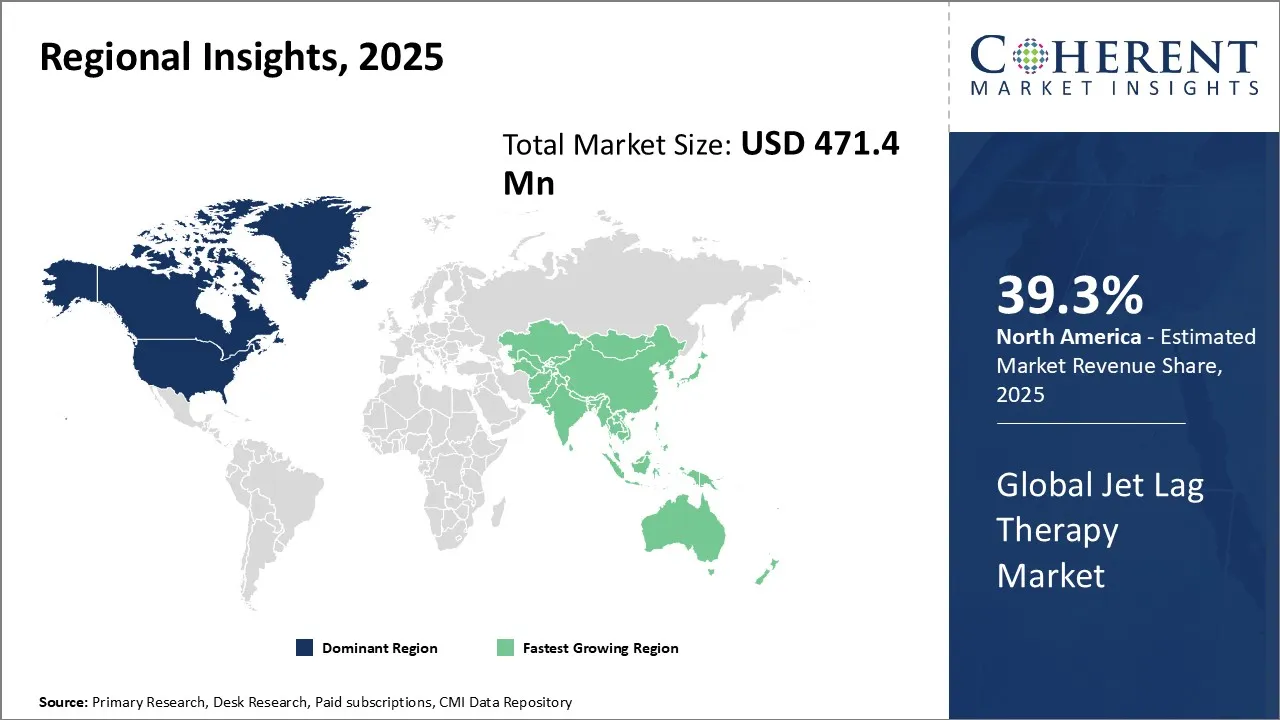
- North America is expected to lead the market, holding a share of 39.3% in 2026. Asia Pacific is anticipated to be the fastest-growing region, with a market share of 23.5% in 2026.
Market Overview
A key market trend is the growing adoption of non-pharmacological treatments such as light therapy and wearable devices that help regulate circadian rhythms, as consumers seek safer alternatives to medication. Additionally, technological advancements and personalized therapy options are gaining traction, driving innovation in product offerings. The rise in global travel post-pandemic further supports market expansion, with increased investments in research and development to improve jet lag management solutions.
Currents Events and their Impact
Current Events | Description and its Impact |
Advancements in Wearable Technology & AI |
|
Market Expansion of Pharmacological and Non-Pharmacological Therapies |
|
Segmental Insights
- Current Industry Events of 2026
- Market Size Estimation
- Regional Breakdown
- Competitive Landscape
- Customer Intelligence
- Segmental Analysis
- Pricing Analysis
- Key Market Drivers, Challenges & Future Trends
- Customized Insights Section
Jet Lag Therapy Market Insights, By Therapy Type - Pharmacological Therapy’s Dominance is Driven by Efficacy and Accessibility in Jet Lag Treatment
By therapy type, pharmacological therapy is expected to constitute the biggest segment of the global jet lag therapy market with 58.9% in 2026. This trend is mainly rooted in the legitimacy of its efficacy, extensive availability, and the growing acceptance among patients of different healthcare professional categories. Sleep medications, melatonin receptor agonists, and other pharmacological activities are preferred because of their quick action and regulation of sleep-wake cycles affected due to long-distance traveling.
For instance, Vanda Pharmaceuticals has communicated that tasimelteon was beneficial in the case of jet lag of transatlantic travelers. The research indicated that patients got 76 minutes more on their second trip and 131 minutes more over a three-night period. Although a small population was involved, tasimelteon has been shown to have an impact on sleep quality and help in overall functioning, thus making it a candidate for jet lag therapy.
Jet Lag Therapy Market Insights, By Route of Administration - Oral Route is Leading Owing to Convenience and Patient Compliance
The oral route is the dominant method for jet lag therapies, holding a 26.6% share in 2026. Its popularity stems from ease of use, patient adherence, and the lack of special apparatus. This method is ideal for travelers seeking a flexible, portable treatment option.
Tablets, capsules, and sublingual creams of pharmacological agents or supplements such as melatonin are the most common oral products available, providing a broad spectrum of dosing options tailored to individual needs. For example, Vitonnix Melatonin Sublingual Spray by Tata 1mg Healthcare Solutions Private Limited is designed for travel‑induced sleep disruption.
Jet Lag Therapy Market Insights, By End User - Hospital and Sleep Clinic Utilization Propelled as they Offer Clinical Expertise and Specialized Care
In terms of end user, the global jet lag therapy market is majorly led by hospitals/sleep clinics with an estimated share of 33.5% in 2026, strengthened by their role in offering specialized and clinically supervised care. These healthcare facilities have the skills and the tools that are needed to diagnose the most complicated circadian rhythm disorders, monitor the patients' responses to the treatment, and accordingly customize the intervention to the needs of the individual patient, which gives them an edge over other care environments.
Hospitals and sleep clinics mostly take care of patients with severe or persistent jet lag symptoms, those having sleep disorders, or business travelers needing thorough management that have been providing the market with their drive for demand.
Treatment Modality Effectiveness for Jet Lag
- Various treatment modalities have shown effectiveness in mitigating jet lag symptoms, with pharmacological therapies being the most widely studied. Medications like melatonin and tasimelteon help regulate the circadian rhythm, particularly in cases of eastward travel, by promoting sleep at appropriate times. Additionally, bright light therapy is effective in adjusting the body’s internal clock, especially when used during the day at specific times relative to travel.
- Non-pharmacological approaches, such as behavioral adjustments and proper sleep hygiene, also contribute significantly to reducing jet lag. These methods include gradually adjusting sleep patterns before travel, staying hydrated, and managing exposure to natural light. Combining these treatments with careful planning around flight schedules and time zone changes enhances their overall effectiveness, providing a holistic approach to managing jet lag symptoms.
Regional Insights
North America Jet Lag Therapy Market Analysis and Trends
The global jet lag therapy market in North America is expected to account for 39.3% in 2026. This growth is driven by a well-established healthcare infrastructure, high awareness of travel-related health issues, and the presence of pharmaceutical and wellness companies specializing in circadian rhythm disorders. The supporting environment contains not only advanced research institutions in sleep medicine but also partnerships between the public and private sectors that are directed towards the development of new jet lag treatments.
Government measures to safeguard travel health, along with strong regulatory frameworks, facilitate quicker product approvals and faster adoption of therapies. In North America, companies such as Elekta and Johnson & Johnson are the shareholders in the jet lag therapy industry, and they reap the benefits of the region’s state-of-the-art healthcare infrastructure. On top of that, ResMed and Philips Healthcare are also prominent players in the market, specializing in treatments for circadian rhythm disorders and sleep apnea.
Asia Pacific Jet Lag Therapy Market Analysis and Trends
Asia Pacific is expected to hold the largest jet lag therapy market share of 23.5% in 2026. This growth is driven by the region’s expanding travel and tourism industry, along with rising disposable incomes and health awareness among consumers.
Many governments around the world such as China, Japan, India, and South Korea, are allocating large sums of money on healthcare infrastructure and policy amendments to bring about the creative process in the medical field, which could include therapies for jet lag. The increasing number of international airlines and business travelers is another factor that helps the market grow faster. The involvement of big players like Takeda Pharmaceutical from Japan, GlaxoSmithKline from India, and local start-ups that are working on herbal and tech-based solutions for jetlag is a major factor behind the market growth.
Jet Lag Therapy Market Outlook for Key Countries
U.S. Jet Lag Therapy Market Trends
The U.S. jet lag therapy market is a very active one, characterized by strong research and development activities, with the National Sleep Foundation and the U.S. FDA's efficiency in the approval of similar drugs being the main inspiration behind the creative process in the field of jet lag treatment. The presence of top pharmaceutical companies, such as Pfizer and Johnson & Johnson, is very noticeable here; they have been providing new medicinal and wearable technologies aimed at jet lag management.
Moreover, the high rate of domestic and international travel, coupled with the strong consumer awareness, creates a favorable environment for the acceptance of both medicinal drugs and behavioral intervention techniques.
China Jet Lag Therapy Market Trends
The growth of the market for jet lag treatments in China is basically caused by the increase in outbound travel and the growing popularity of wellness therapies among the country's middle-class consumers. The government's drive towards healthcare modernization and regulatory improvements for quicker drug approvals have made the country an attractive location for investments by large global players such as GlaxoSmithKline and local companies like Fosun Pharma.
On top of that, with China’s rapidly developing e-commerce platforms and the accessibility of jet lag therapy becoming easier, the influence of international research organizations on product development according to the physiological and cultural preferences of Asian consumers is getting stronger.
Japan Jet Lag Therapy Market Trends
The market for jet lag therapy in Japan is the result of a unique blend of cutting-edge technology and traditional medicine. Japanese companies such as Takeda Pharmaceutical and Otsuka Holdings are pouring a lot of money into research-development to create drugs as well as offer non-pharmacological treatments for jet lag.
The combination of increased air travel for business and pleasure, plus government initiatives to support health tech advancements, is making the use of jet lag therapies common. Japan’s insistence on high quality and efficacy means that there are very few, but very reliable, treatment options available.
India Jet Lag Therapy Market Trends
The rapid growth of India’s middle class and its increasing number of travelers to other countries are the main factors driving the market growth. Global corporations like GlaxoSmithKline, which is cooperating with the local company, Cipla, are broadening their portfolio to include products for curing jet lag.
The government's backing of medical innovation and healthcare infrastructure improvement enables faster commercialization of therapies and educational health literacy with help in increasing therapy acceptance. Moreover, adoption of traditional Ayurvedic practices is becoming common with modern medicine, this creating an even larger Indian consumer market for the diverse choices.
End User Feedback and Unmet Needs in the Global Jet Lag Therapy Market
- End users in the jet lag therapy market appreciate products like melatonin for their ability to regulate sleep cycles and reduce recovery time, with many business travelers reporting faster adjustment to new time zones. However, a common issue is the lack of personalized solutions, as most products are not tailored to individual travel needs or specific time zone shifts. Frequent flyers, particularly in the airline and hospitality sectors, often express frustration over this lack of customization.
- Unmet needs in the market include more affordable, customizable solutions and better accessibility. While some users are satisfied with existing products, they highlight limitations in effectiveness for long-term or complex travel schedules. Addressing these gaps by offering more targeted, cost-effective solutions could drive market growth, improve customer retention, and inspire innovation to meet diverse traveler needs.
Market Players, Key Developments, and Competitive Intelligence
Key Developments
- In June 2025, Voquily launched Australia’s first over-the-counter immediate-release melatonin product for jet lag, now available through major wholesalers. Voquily Jet Lag Relief, a Pharmacist Only Medicine (Schedule 3), is designed for the short-term treatment of jet lag in adults aged 18 and over. Clinical findings confirm its effectiveness in reducing jet lag symptoms, improving sleep quality, and shortening sleep latency. This convenient solution provides travelers with easy access to relief, whether heading overseas or returning home.
- In March 2025, U.S.-based skincare brand, Summer Fridays launched its new Jet Lag Eye Patches. These cooling, blue-tinted patches hydrate, depuff, and refresh the under-eye area, making them ideal for tired eyes. The formula includes glycerin, hyaluronic acid, niacinamide, caffeine, and peptides to firm and awaken skin. Priced at USD 24 for six pairs, the eye patches are part of Summer Fridays’ popular Jet Lag collection, which also features the Jet Lag Mask.
- In October 2024, researchers from Duke-NUS Medical School and the University of California, Santa Cruz, identified a key regulator of the circadian rhythm at the tail end of Casein Kinase 1 delta (CK1δ). Published in PNAS journal, the study reveals that CK1δ’s unique tail sequences control its protein-tagging mechanism, directly influencing the body’s internal clock. This breakthrough could pave the way for targeted treatments for circadian rhythm disorders, including jet lag.
- In July 2024, Ultrahuman, a U.K.-based wearable device company, introduced PowerPlugs, a platform offering personalized health tracking apps and plugins. Among the platform’s innovative features is the world’s first smart ring, which includes AFib detection and various plugins for monitoring jet lag, pregnancy, Vitamin D intake, and caffeine consumption.
Top Strategies Followed by Global Jet Lag Therapy Market Players
- The businesses that have already established themselves in the market continue to be the most dominant ones by heavily investing in the area of research and development (R&D) and thus creating high-performance, scientifically endorsed products appealing to many different kinds of consumers. Such a dedication to innovation enables the firms to remain at the forefront of an efficacy and product differentiation directed market.
- The established players in the jet lag therapy sector like Merck and Johnson&Johnson concentrate mostly on R&D to deliver high-performance products that are scientifically backed. Other players in the jet lag therapy sector like Elekta and Oura Health go for harnessing advanced technology and clinical research to give the most effective products along with the least resistance.
- Jet lag therapy manufacturers targeting mid-level players focus on providing cost-effective solutions that balance quality and affordability. These firms cater to price-sensitive consumers, offering products that meet basic efficacy standards without the premium pricing typically associated with leading brands. The price-sensitive consumers segment is mainly recognized by these firms and they are willing to meet the basic efficacy standards without charging the premium price that usually accompanies the leading brands.
- Mid-level players like Drip IV Therapy and The DRIPBaR emphasize providing low-cost yet effective treatments for jet lag. They target the price-sensitive market segment and offer “practical” solutions at a cost that is lower than that of the top-class brands.
- Small-scale players manage to find their way in the market by focusing on specialized functions or extremely innovative products, which are, in fact, very different from regular ones. They are also more likely to use the latest technologies such as wearables, personalized therapy systems, or app-based solutions in order to make early adopters and tech-savvy consumers who want the most comfortable way to manage jet lag, tech-friendly, and attract them.
- Small-scale companies, like Wearable Therapeutics and Jet Lag Rooster, innovate by deploying tech such as wearable sensors and app-based solutions. They market their tech-savvy products as high-tech and personalized, thus attracting the modern consumer who is looking for tailored jet lag management.
Market Report Scope
Global Jet Lag Therapy Market Report Coverage
| Report Coverage | Details | ||
|---|---|---|---|
| Base Year: | 2025 | Market Size in 2026: | USD 490.7 Mn |
| Historical Data for: | 2020 To 2024 | Forecast Period: | 2026 To 2033 |
| Forecast Period 2026 to 2033 CAGR: | 4.1% | 2033 Value Projection: | USD 650.1 Mn |
| Geographies covered: |
| ||
| Segments covered: |
| ||
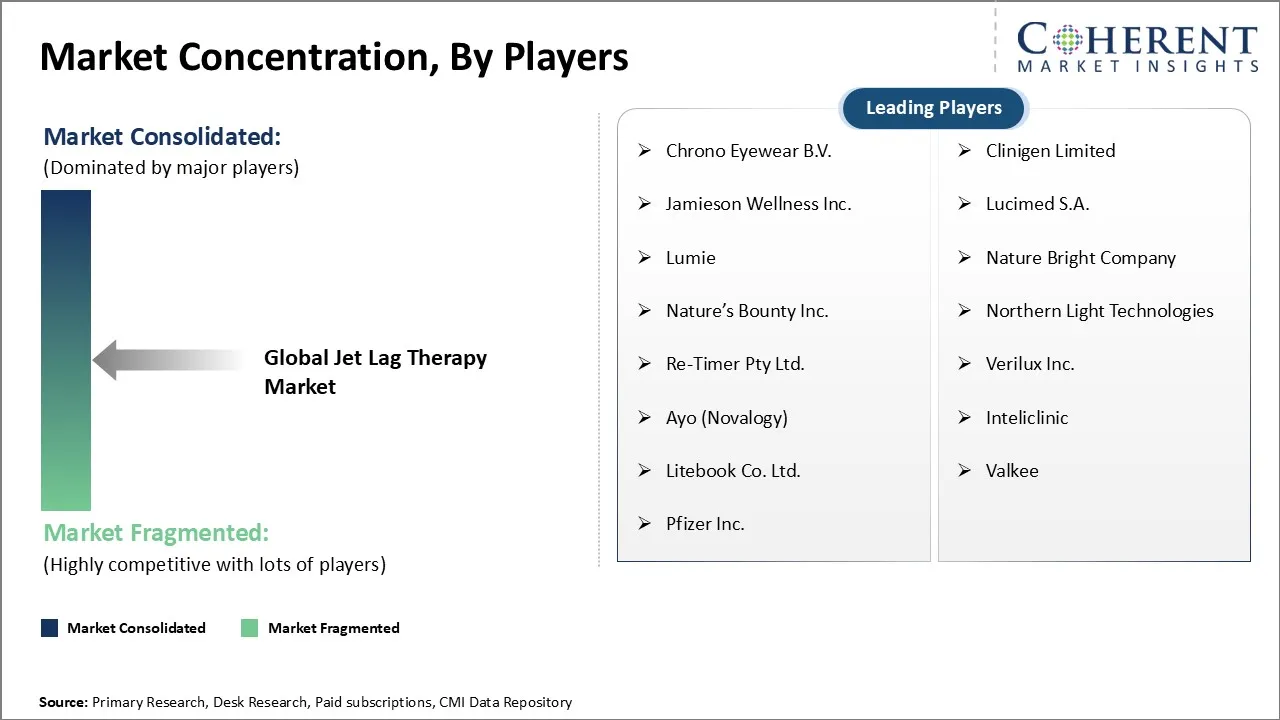
| Companies covered: | Chrono Eyewear B.V., Clinigen Limited, Jamieson Wellness Inc., Lucimed S.A., Lumie, Nature Bright Company, Nature’s Bounty Inc., Northern Light Technologies, Re‑Timer Pty Ltd., Verilux Inc., Ayo (Novalogy), Inteliclinic, Litebook Co. Ltd., Valkee, and Pfizer Inc. | ||
| Growth Drivers: |
| ||
| Restraints & Challenges: |
| ||
Jet Lag Therapy Market Dynamics
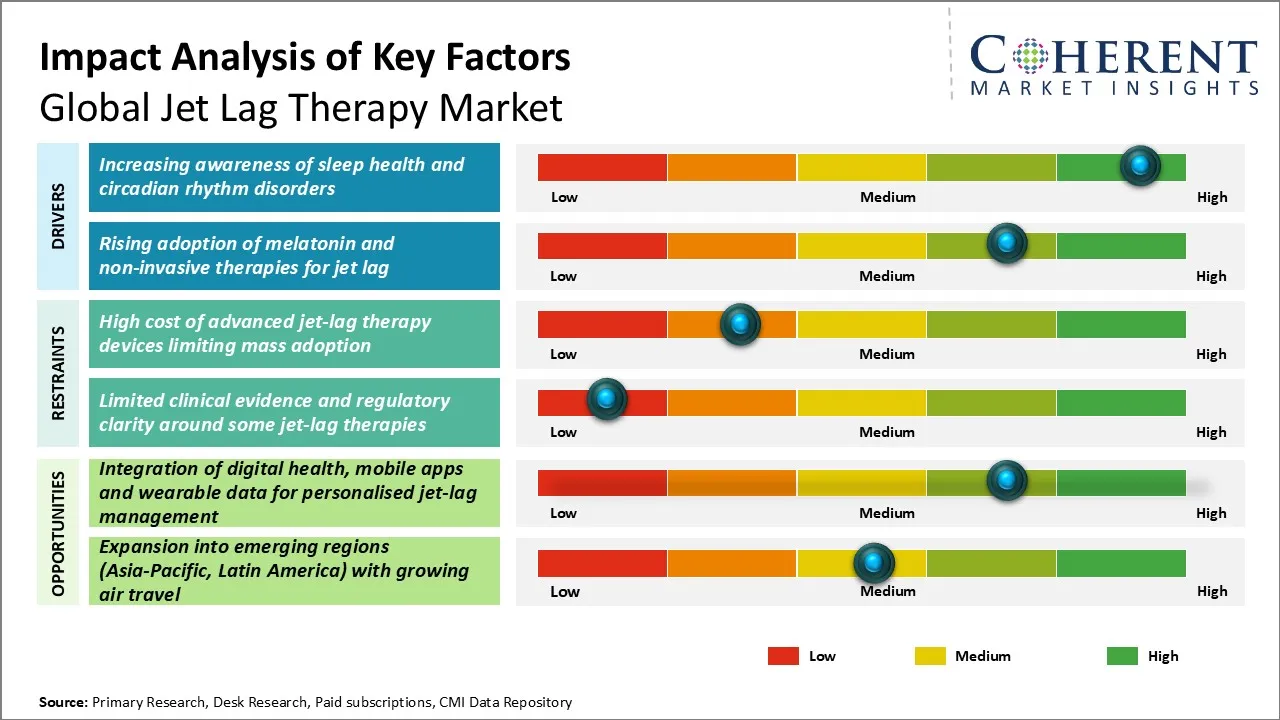
Jet Lag Therapy Market Driver - Increasing Awareness of Sleep Health and Circadian Rhythm Disorders
The global demand for jet lag therapy solutions has been considerably fueled by the growing awareness of the vital role of sleep health and the biological basis of circadian rhythm disorders. The population experiencing the negative effects of sleep deprivation such as lack of focus, lowered immunity, and increased stress levels is becoming more inclined to opt for treatments that help in regulating the sleep-wake cycles naturally.
Besides, the change in lifestyle and work patterns, the increase in international travel for both business and leisure have all contributed to the rise of jet lag and circadian disruptions. Preventive circadian-reset therapies have gained a lot of support from healthcare and wellness professionals to the point that the adoption of the jet-lag solutions such as light devices, melatonin, and behavioral routines has been rapidly increased.
In October 2025, a study by the American Heart Association (AHA) highlighted that disruptions to the circadian rhythm could increase the risk of heart disease, obesity, Type 2 diabetes, and high blood pressure. These disruptions are often caused by mistimed sleep, light exposure, and irregular meal and exercise schedules.
The study calls for multilevel interventions, including policies that promote education on healthy sleep-wake cycles and meal timings. Proper timing is crucial for improving health outcomes, particularly in workplaces and neighborhoods. Additionally, awareness about sleep health and circadian rhythm disorders is growing, with healthcare professionals emphasizing therapies like light exposure, melatonin supplements, and behavioral interventions to realign biological clocks.
Jet Lag Therapy Market Opportunity - Integration of Digital Health, Mobile Apps, and Wearable Data for Personalized Jet-Lag Management
The global jet lag therapy market is poised for significant growth, driven by advancements in digital health technologies, mobile apps, and wearable devices. These innovations enable personalized jet lag management solutions. With the use of smart gadgets, travelers can monitor health metrics like sleep patterns, circadian rhythms, and activity levels. Mobile apps, powered by advanced algorithms, can analyze data from wearables to offer personalized recommendations on light exposure, melatonin use, and sleep scheduling, enhancing the effectiveness of jet lag therapies.
In November 2025, Spike Technologies introduced an AI sleep coach for sleep apps. Spike Technologies, a B2B Agentic AI and health data company, uses its Spike Model Context Protocol (MCP) to provide personalized sleep coaching experiences. Developers can integrate this AI layer into their apps, transforming data from over 500 wearable devices, lab reports, and Nutrition AI into actionable sleep insights.
Analyst Opinion (Expert Opinion)
- The jet lag therapy market has entered a fast lane of growth fueled by the performance of wearables, AI sleep coaching, and light therapy solutions. A growing trend of individual sleep optimization plus the corresponding market demand, particularly among frequent flyers, night shifts, sportsmen, etc. are the factors making technological innovations and awareness about circadian rhythms the top market drivers. However, through research into long-term efficacy, therapy costs, and other areas, challenges are mitigated.
- The Sleepless Sleep 2025 Conference and the International Conference on Circadian Rhythms have great influence on the jet lag remedy by stamping their approvals on it. Wearable tech and sleep experts teaming up is one of the ways riddle solving is getting nearer through co-operation in the industry. A company's "Jet Lag Recovery Pilot" program is an example of the airline industry's jet lag recoveries. Such programs not only show how things can work in reality but also stimulate the market growth and innovation.
Speak to the analyst
Want personalized insights?
Take the findings above to one of our principal consultants, or have the report rebuilt around the segments, geographies and competitors you actually track.
Market Segmentation
- Therapy Type Insights (Revenue, USD Mn, 2021 - 2033)
- Pharmacological Therapy
- Prescription Sleep Aid
- Melatonin Receptor Agonists
- OTC Sleep Aids and Supplements (e.g., Melatonin, Herbal Supplements)
- Non-Pharmacological Therapy
- Light Therapy (e.g., Light Therapy Lamps, Wearable Devices)
- Behavioral Therapy (e.g., Controlled Sleep Schedules, Diet Management)
- Chronobiotic Devices (e.g., Apps, Smart Glasses)
- Pharmacological Therapy
- Route of Administration Insights (Revenue, USD Mn, 2021 - 2033)
- Oral
- Transdermal
- Intranasal
- Injectable
- Others
- End User Insights (Revenue, USD Mn, 2021 - 2033)
- Hospitals/Sleep Clinics
- Homecare/Self‑administered Use
- Specialty Clinics (e.g., travel wellness, circadian rhythm centers)
- Others (wellness spas, corporate travel programs)
- Application Insights (Revenue, USD Mn, 2021 - 2033)
- Business travelers
- Cabin‑crew and pilots
- Athletes/sports travelers
- Seasonal/leisure travelers
- Others
- Distribution Channel Insights (Revenue, USD Mn, 2021 - 2033)
- Hospital pharmacies
- Retail pharmacies
- Online pharmacies/e‑commerce
- Regional Insights (Revenue, USD Mn, 2021 - 2033)
- North America
- U.S.
- Canada
- Latin America
- Brazil
- Argentina
- Mexico
- Rest of Latin America
- Europe
- Germany
- U.K.
- Spain
- France
- Italy
- Russia
- Rest of Europe
- Asia Pacific
- China
- India
- Japan
- Australia
- South Korea
- ASEAN
- Rest of Asia Pacific
- Middle East
- GCC Countries
- Israel
- Rest of Middle East
- Africa
- South Africa
- North Africa
- Central Africa
- North America
- Key Players Insights
- Chrono Eyewear B.V.
- Clinigen Limited
- Jamieson Wellness Inc.
- Lucimed S.A.
- Lumie
- Nature Bright Company
- Nature’s Bounty Inc.
- Northern Light Technologies
- Re‑Timer Pty Ltd.
- Verilux Inc.
- Ayo (Novalogy)
- Inteliclinic
- Litebook Co. Ltd.
- Valkee
- Pfizer Inc.
Sources
Primary Research Interviews
Industry Stakeholders
- Senior researcher at an international travel health institute
- Director of product development at a wearable device company
- End-users
- Frequent long-haul business traveler
- Airline crew member
- Elite athlete traveling across time zones
- Corporate wellness manager
Government and International Databases
- Centers for Disease Control and Prevention (CDC)
- World Health Organization (WHO)
- National Institutes of Health (NIH)
- International Civil Aviation Organization (ICAO)
- European Centre for Disease Prevention and Control (ECDC)
- Eurostat/OECD travel and health databases
Trade Publications
- Aviation, Space and Environmental Medicine
- Aerospace Medicine Review
- SleepTech Magazine
- Travel + Leisure (business-travel section)
- Flight Global
- Sleep Review
Academic Journals
- "Jet Lag: Current and Potential Therapies"
- "Jet Lag and Therapeutics"
- "Social Jetlag and Health Risks"
- "Pharmacological Management of Jet Lag"
- "Circadian Rhythm Disruptions in Jet Lag"
- "Sleep and Health: The Impact of Time Zone Travel"
Reputable Newspapers/News Outlets
- The New York Times (health section)
- The Guardian (science/health)
- BBC News (travel and wellbeing)
- Financial Times (business traveler wellness)
- Sydney Morning Herald (health reporting)
- Reuters Health
Industry Associations
- American Academy of Sleep Medicine (AASM)
- Sleep Research Society (SRS)
- Circadian Sleep Disorders Network (CSD-N)
- International Air Transport Association (IATA)
- World Sleep Society
- National Sleep Foundation (NSF)
Public Domain Resources
- ClinicalTrials.gov (jet lag therapy trials)
- WHO Global Health Observatory
- Open-access aviation safety/health manuals
Proprietary Elements
- CMI Data Analytics Tool: Proprietary analytics tool to analyze real-time market trends, consumer behavior, and technology adoption in market
- Proprietary CMI Existing Repository of Information for Last 8 Years
Get access to 250+ pages report
Every segment, forecast, competitor profile and data table behind the analysis above — available for instant download.
- ESOMAR Member
- ISO 9001:2015 Certified
- D-U-N-S Registered
- GDPR & CCPA Compliant
Missing comfort of reading report in your local language? Find your preferred language:
Transform your Strategy with Exclusive Trending Reports
Frequently Asked Questions
The global jet lag therapy market is estimated to be valued at USD 490.7 Mn in 2026 and is expected to reach USD 650.1 Mn by 2033.
The CAGR of global jet lag therapy market is projected to be 4.1% from 2026 to 2033.
Increasing awareness of sleep health and circadian rhythm disorders and rising adoption of melatonin and non‑invasive therapies for jet lag are the major factors driving the growth of the Global Jet Lag Therapy Market.
High cost of advanced jet‑lag therapy devices limiting mass adoption and limited clinical evidence and regulatory clarity around some jet‑lag therapies are the major factors hampering the growth of the Global Jet Lag Therapy Market.
In terms of therapy type, pharmacological therapy is estimated to dominate the market revenue share in 2026.
Chrono Eyewear B.V., Clinigen Limited, Jamieson Wellness Inc., Lucimed S.A., Lumie, Nature Bright Company, Nature’s Bounty Inc., Northern Light Technologies, Re‑Timer Pty Ltd., Verilux Inc., Ayo (Novalogy), Inteliclinic, Litebook Co. Ltd., Valkee, and Pfizer Inc. are the major players.
North America is expected to lead the global jet lag therapy market in 2026.