

Global Keytruda Market Size and Forecast – 2026 to 2033
The global Keytruda market is estimated to be valued at USD 29.95 Bn in 2026 and is expected to reach USD 24.37 Bn by 2033, exhibiting a compound annual growth rate (CAGR) of -2.9% from 2026 to 2033. This decline indicates challenges faced by the market, including increasing competition, generic drug entry, and changing treatment protocols that may impact Keytruda market share and overall revenue generation during this period.
Key Takeaways of the Global Keytruda Market
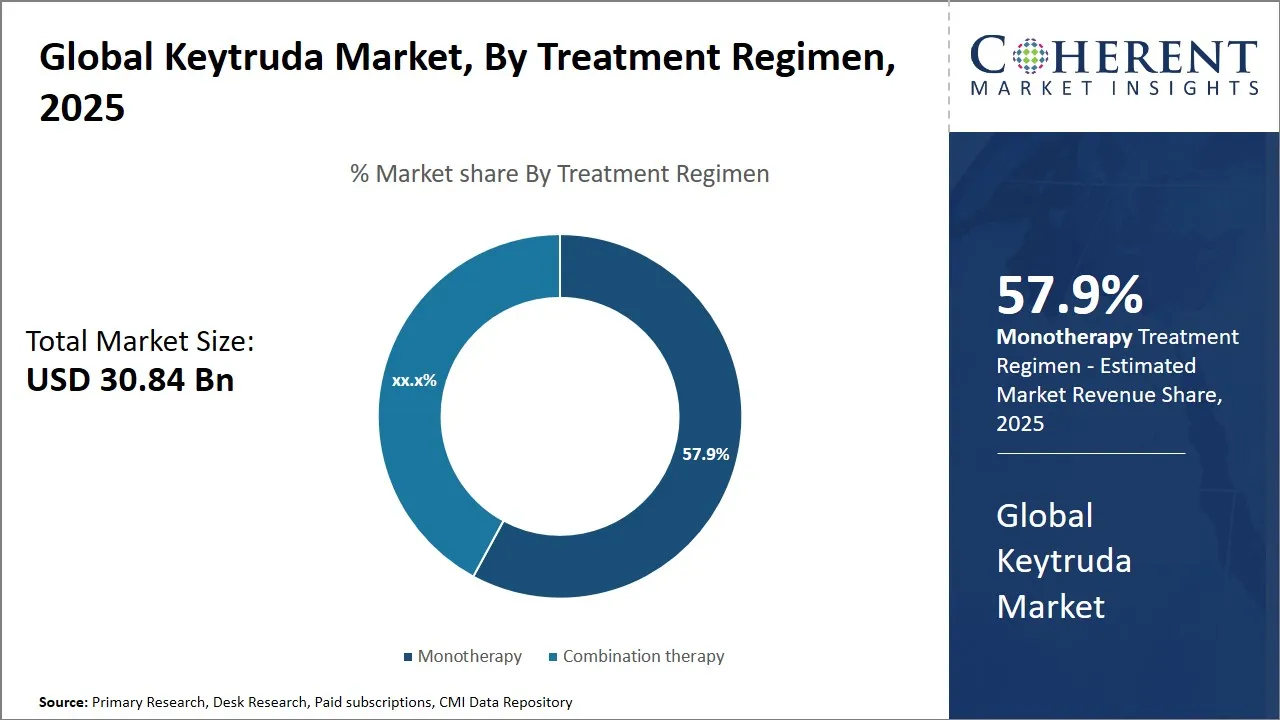
- The monotherapy segment is expected to lead the global Keytruda market by treatment regimen, accounting for 58.9% share in 2026.
- Within the indication segment, the melanoma segment is expected to represent the largest contributing segment with a 13.5% share in 2026.
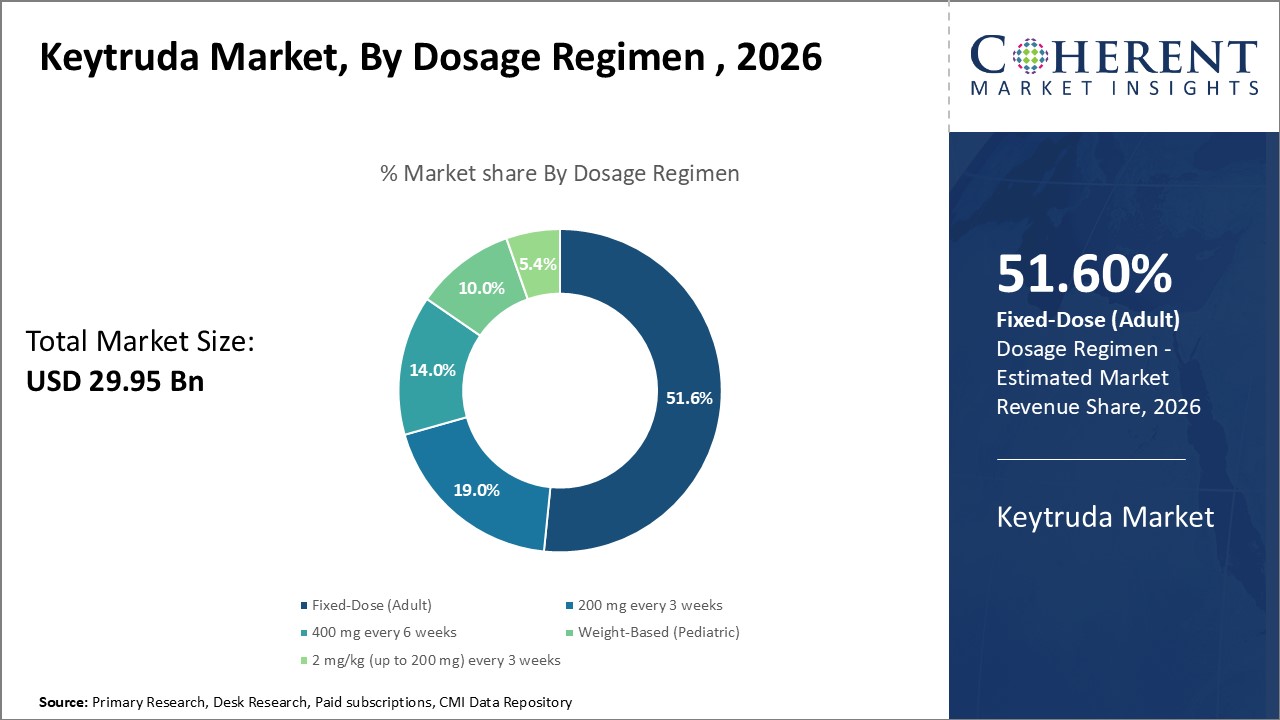
- Based on dosage regimen, the fixed-dose (adult) segment is estimated to dominate the market, holding 51.6% share in 2026.
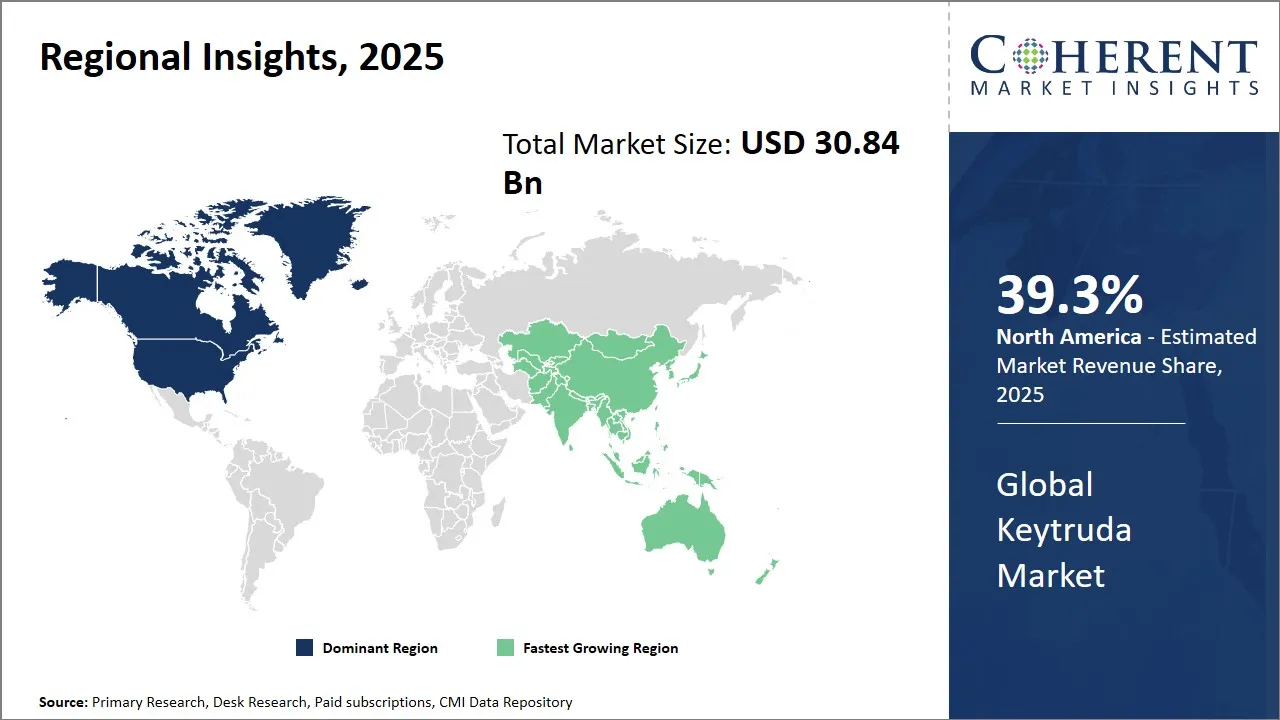
- North America is expected to lead the market, holding a share of 39.3% in 2026. Asia Pacific is anticipated to be the fastest-growing region, with a market share of 23.4% in 2026.
Market Overview
Current market trends show a shift towards personalized medicine and combination therapies in oncology, which influences the demand for immunotherapy drugs like Keytruda. Additionally, advancements in biomarker research and increasing focus on patient-specific treatments are reshaping the competitive landscape. Despite the negative CAGR, ongoing clinical trials and expanding indications may sustain interest in Keytruda, although pricing pressures and emerging alternatives remain significant factors impacting market growth.
Currents Events and Its Impact
Current Events | Description and its Impact |
Patent Expiry and Biosimilar Competition |
|
Expansion of Keytruda Indications |
|
Segmental Insights
- Current Industry Events of 2026
- Market Size Estimation
- Regional Breakdown
- Competitive Landscape
- Customer Intelligence
- Segmental Analysis
- Pricing Analysis
- Key Market Drivers, Challenges & Future Trends
- Customized Insights Section
Keytruda Market Insights, By Treatment Regimen - Monotherapy Segment’s Dominance is Driven by Efficacy and Safety Profile
The monotherapy segment is on the top of the global Keytruda market in treatment regimen with an estimated share of 58.9% in 2026, thus it surpasses the combination therapies in terms of market share. The main reasons for the strong monotherapy position are its simple therapeutic approach, which encourages patient adherence and lessens the complexity of treatment protocols.
Keytruda (pembrolizumab), being a single-agent immune checkpoint inhibitor that acts on the PD-1 pathway, has provided significant efficacy when used alone across a variety of cancer types. This has led to the simplification of dosing schedules and prevention of overlapping toxicities, which are usually associated with combination regimens.
Keytruda Market Insights, By Indication - Melanoma Leads Due to Unmet Medical Needs and High Responsiveness
The melanoma segment has been the largest contributor to the global Keytruda market and its share stood at an estimated 13.5% in 2026. A number of factors exist behind the assertion that melanoma is the main indication for Keytruda therapy. For a long time, advanced melanoma had not been treated with efficient dosages and the disease had poor prognosis along with a considerable unmet medical need.
In May 2026, CytomX Therapeutics, a U.S. biotech developing conditionally activated cancer therapies, announced that the first patient was dosed with its investigational drug CX-801 plus Keytruda in a phase 1 metastatic melanoma trial. The company is testing the combination to address PD-1 refractory disease, aiming to assess safety and early antitumor activity.
Keytruda vs Major PD-1/PD-L1 Competitors: A Comparative Overview
Parameter | Keytruda (Merck) | Opdivo (BMS) | Tecentriq (Roche) | Imfinzi (AstraZeneca) |
Type | PD-1 inhibitor | PD-1 inhibitor | PD-L1 inhibitor | PD-L1 inhibitor |
Key Strength | Broadest global label; strongest survival data across tumor types | Strong IO-IO combos (Opdivo + Yervoy) | Breast, bladder, lung leadership; biomarker focus | Dominant in Stage III lung (PACIFIC) |
Major Indications | Lung, melanoma, renal, head & neck, esophageal, gastric, breast, adjuvant/neo-adjuvant | Melanoma, lung, renal, adjuvant | TNBC, NSCLC, SCLC, bladder | Stage III NSCLC, SCLC, liver |
Formulation Status | IV; SC version emerging | IV; SC version active via Halozyme | IV only | IV only |
Combination Strategy | Chemo combos; targeted + IO | IO-IO combos (CTLA-4) | Chemo + IO; targeted combinations | IO-IO + chemo |
Market Position | Market leader globally | Strong No. 2 competitor | Solid tumor specialist in breast/lung | Highly dominant niche player in lung |
Patent Outlook | EU expiry 2028; U.S. mid-2030s | Several expiries mid-2030s | 2030s | 2030s |
Reimbursement Scenario for Keytruda
- In the U.S., Keytruda carries a high list price, but most insured patients pay little or nothing because commercial plans, Medicare Advantage, Medicaid, and Merck’s support programs absorb most costs. Out-of-pocket exposure becomes significant only for traditional Medicare patients without supplemental coverage and for uninsured patients who face prices close to the full WAC.
- Canada applies stricter value filters. The drug is reimbursed only for defined NSCLC patients and only if prescribed by specialists and priced below current levels, as the ICER exceeds accepted thresholds. Budget-impact estimates show a meaningful public-payer burden, so access remains conditional rather than broad.
Regional Insights
North America Keytruda Market Analysis and Trends
The North America market for Keytruda is claimed by a highly established health system with an estimated 39.3% share in 2026, an advanced biotechnology research ecosystem, and a friendly regulatory environment. Taking the lead, the U.S. is the biggest contributor, powered by heavy investments in cancer studies and the presence of the main pharmaceutical firms like Merck & Co. that produce Keytruda.
Government policies such as fast-track designation of the U.S. FDA, and significant funding for cancer treatments play a part in making the market for drugs even stronger. Moreover, North America’s modern reimbursement systems and high patient awareness help the availability and uptake of immunotherapy treatments.
Asia Pacific Keytruda Market Analysis and Trends
Immunotherapy is the fastest-growing treatment option in the Asia Pacific Keytruda market, owing to the rise in cancer cases with an estimated share of 23.4% in 2026, increased health expenditure, and growth of healthcare facilities in developing countries such as China and India. Along with the introduction of policies to boost innovative cancer therapies and the gradual decrease of barriers for the public to access and realize the benefits of immuno-oncology treatment.
The authorities are becoming more lenient by giving more approvals for revolutionary treatments, which means quicker market entry. Besides, the distribution networks and the number of patients reached are increased through the strategic partnerships and collaborations between international pharmaceutical companies and local firms.
Keytruda Market Outlook for Key Countries
U.S. Keytruda Market Trends
The biggest market for Keytruda in the U.S. is supported by a lot of clinical research, strong intellectual property rights protection, and high healthcare expenditures.
The collaborations with the best cancer hospitals and full-fledged payer coverage are some factors leading to the market being very competitive and mature. The use of personalized medicine and advanced diagnostics also aids treatment in getting more established and effective.
Japan Keytruda Market Trends
Japan Keytruda market is steadily growing due to the aging of their population and people being more aware of cancer. The government is encouraging innovative cancer treatments by doing things like approving drugs very quickly and having policies that favor immunotherapies in terms of being reimbursed.
Merck has worked with local drug companies to make sure that the distribution and penetration are done well. The infrastructure of healthcare in Japan and the country-wide cancer control programs help in getting more Keytruda use in the treatment of various cancers.
China Keytruda Market Trends
China is among the fastest growing countries for Keytruda, and this is because of the government's increasing focus on the use of advanced therapies to cut down cancer mortality rate. As a result of the regulatory reforms, the market access has been quite fast for the immuno-oncology drugs.
Merck, in addition to its joint ventures with local firms, has increased its clinical trial activities, thus helping in local evidence generation. Patient awareness is ascending and insurance coverage is extending; thus, it has facilitated the access to Keytruda that is also backed by the healthcare infrastructure investment in tier-1 and tier-2 cities.
Germany Keytruda Market Trends
The strong healthcare system of Germany and tough regulations create conditions for a mature Keytruda market. The country takes advantage of a well-rounded reimbursement system and the situation where the adoption of new therapies is very high.
Merck and other international companies stand firm on the market and are supported by their collaborations with research institutions. Cancer centers that are certified in the area are the reason for speeding up the clinical adoption and the use of Keytruda in different oncological indications.
Keytruda Market Overview: IV vs SC Formulation, Halozyme Technology & Patent Impact
Category | Details |
Technology Link | Halozyme Therapeutics provides the hyaluronidase enzyme technology required for subcutaneous biologic delivery. |
Keytruda (Standard Version) | Intravenous formulation of pembrolizumab. |
Extended (Subcutaneous) Keytruda | Subcutaneous injectable version enabled using hyaluronidase technology. |
Route of Administration | IV Keytruda: 30-minute infusion every 3–6 weeks. SC Keytruda: Single subcutaneous injection. |
Launch Timeline | IV Keytruda: Initial U.S. FDA approval in September 2014. SC Keytruda: Currently in Phase III clinical trials. |
Patent Status | IV Keytruda loses exclusivity in 2028. SC Keytruda faces patent-related risk due to Halozyme’s enzyme technology. |
Legal Dispute | Merck and Halozyme are in a patent conflict over the hyaluronidase enzyme used to make SC delivery viable. |
Market Impact if Halozyme Wins | Merck may need to license technology or delay/stop SC Keytruda launch. Biosimilars likely gain faster market share after 2028. |
Market Impact if Merck Wins | Merck can launch SC Keytruda freely without licensing payments, strengthening its defense against biosimilars. |
Market Players, Key Developments, and Competitive Intelligence
Key Developments
- On November 19, 2025, Merck & Co., Inc., a global leader in oncology innovation, announced that the European Commission approved the new subcutaneous form of Keytruda for all adult indications in the European Union. The new Keytruda SC allows administration in as little as one minute and offers patients faster, more flexible treatment options. The approval is supported by the 3475A-D77 trial, which showed comparable efficacy and response rates between the subcutaneous and intravenous forms in metastatic non-small cell lung cancer.
- In August 2025, Merck announced that Health Canada had approved Keytruda for patients with resectable locally advanced head and neck squamous cell carcinoma whose tumors are PD-L1 positive. The treatment is now authorized as neoadjuvant monotherapy followed by adjuvant therapy with radiotherapy with or without cisplatin and then as monotherapy.
- In March 2025, BioCity Biopharmaceutics, a company focused on advancing innovative cancer therapies, announced a clinical collaboration with Merck & Co., Inc. to study its immunotherapy candidate BC3195 with Merck’s Keytruda for patients with locally advanced or metastatic solid tumors.
- In September 2024, Merck announced that new data from four approved medicines and six pipeline candidates will be presented at the European Society for Medical Oncology (ESMO) Congress in Barcelona, Spain. Key findings from the Phase 3 KEYNOTE-522 trial in high-risk early-stage triple-negative breast cancer, the Phase 3 KEYNOTE-A18 trial in high-risk locally advanced cervical cancer, and the Phase 3 LEAP-012 trial in unresectable non-metastatic hepatocellular carcinoma (in collaboration with Eisai) were selected for the ESMO Presidential Symposium Sessions.
Market Report Scope
Keytruda Market Report Coverage
| Report Coverage | Details | ||
|---|---|---|---|
| Base Year: | 2025 | Market Size in 2026: | USD 29.95 Bn |
| Historical Data for: | 2020 To 2024 | Forecast Period: | 2026 To 2033 |
| Forecast Period 2026 to 2033 CAGR: | -2.9% | 2033 Value Projection: | USD 24.37 Bn |
| Geographies covered: |
| ||
| Segments covered: |
| ||
| Companies covered: | Merck & Co., Inc. | ||
| Growth Drivers: |
| ||
| Restraints & Challenges: |
| ||
Keytruda Market Dynamics
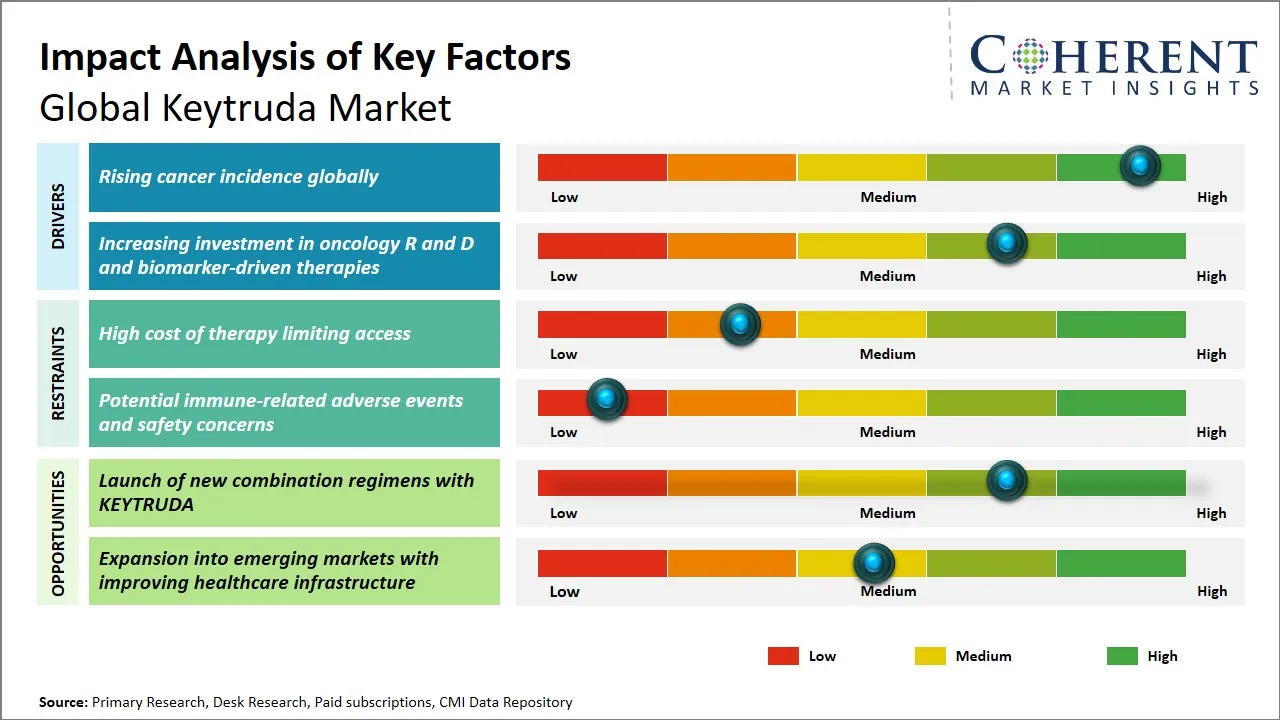
Keytruda Market Driver - Rising Cancer Incidence Globally
The rising cancer incidence worldwide continues to sustain clinical demand for PD-1/PD-L1 therapies, but this demand no longer translates into strong revenue growth for Keytruda. The market now faces structural decline due to biosimilar pressure, shifting reimbursement policies, and rapid diversification of immunotherapy options. As more patients enter treatment pathways earlier, payers increasingly push for cost-effective alternatives, accelerating the erosion of Keytruda’s premium pricing. The expanding use of competing IO regimens and growing adoption of next-generation targeted therapies further dilute Keytruda’s share, causing the market to contract even as underlying oncology cases rise.
In February 2025, WHO reported cancer remains a leading cause of death, responsible for nearly 10 million deaths in 2020, or one in six deaths. The most common cancers include breast (2.26 million cases), lung (2.21 million cases), colon and rectum (1.93 million cases), and prostate (1.41 million cases). Tobacco use, obesity, alcohol, and poor diet contribute to one-third of cancer deaths. Human papillomavirus (HPV) and hepatitis cause about 30% of cancer cases in low-income countries. Keytruda from Merck continues to make progress in treating cancers like lung and breast. Early detection and treatment can cure many cancers, improving survival rates worldwide.
Keytruda Market Opportunity - Launch of New Combination Regimens with Keytruda
The new combination regimens introducing KEYTRUDA (pembrolizumab) are a big macroeconomic factor in the global Keytruda market. As an instance of the immune checkpoint inhibitor targeting the PD-1/PD-L1 pathway, KEYTRUDA has already claimed its position as one of the front-line immuno-oncology therapies for a variety of cancer indications. The combination of KEYTRUDA with other novel agents such as chemotherapy, targeted therapies, or immunomodulatory drugs not only enhances treatment efficacy but also leads to better patient outcomes and addressing cancer types that are still resistant to the monotherapies.
In August 2025, the U.K.'s National Institute for Health and Care Excellence (NICE) recommended the combination of Padcev and Keytruda for metastatic urothelial carcinoma (mUC) treatment. Astellas Pharma, known for its innovative therapies, and MSD, a leading healthcare company, worked with NHS England to make this treatment cost-effective. The combination was previously approved by the U.S. FDA in December 2023 and later by the European Commission and MHRA in 2024. Padcev and Keytruda showed a 55% reduction in disease progression or death in clinical trials.
Analyst Opinion (Expert Opinion)
- Technological innovations made in the field of immuno-oncology have, along with the backing from the regulatory authorities and the global intake of the effective cancer treatments, contributed to the Keytruda market growth. Its wide application across different oncology areas together with the seen effectiveness are the reasons for it being a mainstay in the oncology industry. Growing markets and partnerships between Big Pharma and governments are bringing new chances, but on the other hand, aspects, like the high pricing and the expiration of patents, could have a negative impact on the market size increase.
- The AACR Annual Meeting and similar events have been major contributors to the dissemination of knowledge and the conducting of policy discussions around immunotherapies like Keytruda in the recent past. The collaboration between MSD and Astellas Pharma is an example of a partnership that has resulted in the development of combination therapies, which in turn have helped improve the patients' responses to the treatments. The global movement to make these treatments available to more patients is influencing the market future beliefs that it will be favorable.
Market Segmentation
- Treatment Regimen Insights (Revenue, USD Bn, 2021 - 2033)
- Monotherapy
- Combination therapy
- Indication Insights (Revenue, USD Bn, 2021 - 2033)
- Melanoma
- Non‑Small Cell Lung Cancer (NSCLC)
- Malignant Pleural Mesothelioma (MPM)
- Head and Neck Squamous Cell Carcinoma (HNSCC)
- Classical Hodgkin Lymphoma (cHL)
- Primary Mediastinal Large B‑Cell Lymphoma (PMBCL)
- Urothelial Cancer
- Microsatellite Instability‑High/Mismatch Repair Deficient (MSI‑H/dMMR) Solid Tumors
- MSI‑H/dMMR Colorectal Cancer (CRC)
- Gastric Adenocarcinoma/Gastroesophageal Junction (GEJ) Cancer
- Esophageal/GEJ Carcinoma
- Cervical Cancer
- Hepatocellular Carcinoma (HCC)
- Biliary Tract Cancer (BTC)
- Merkel Cell Carcinoma (MCC)
- Renal Cell Carcinoma (RCC)
- Endometrial Carcinoma
- Tumor Mutational Burden‑High (TMB‑H) Solid Tumors
- Cutaneous Squamous Cell Carcinoma (cSCC)
- Triple‑Negative Breast Cancer (TNBC)
- Dosage Regimen Insights (Revenue, USD Bn, 2021 - 2033)
- Fixed-Dose (Adult)
- 200 mg every 3 weeks
- 400 mg every 6 weeks
- Weight-Based (Pediatric)
- 2 mg/kg (up to 200 mg) every 3 weeks
- Payer Type Insights (Revenue, USD Bn, 2021 - 2033)
- Public
- Private
- Gender Insights (Revenue, USD Bn, 2021 - 2033)
- Male
- Female
- Distribution Channel Insights (Revenue, USD Bn, 2021 - 2033)
- Hospital pharmacies
- Specialty/Retail pharmacies
- Online pharmacies
- End User Insights (Revenue, USD Bn, 2021 - 2033)
- Hospitals
- Academic and Research Cancer Centers
- Specialty Cancer Clinics
- Ambulatory Infusion Centers
- Regional Insights (Revenue, USD Bn, 2021 - 2033)
- North America
- U.S.
- Canada
- Latin America
- Brazil
- Argentina
- Mexico
- Rest of Latin America
- Europe
- Germany
- U.K.
- Spain
- France
- Italy
- Russia
- Rest of Europe
- Asia Pacific
- China
- India
- Japan
- Australia
- South Korea
- ASEAN
- Rest of Asia Pacific
- Middle East
- GCC Countries
- Israel
- Rest of Middle East
- Africa
- South Africa
- North Africa
- Central Africa
- North America
- Key Players Insights
- Merck & Co., Inc.
Sources
Primary Research Interviews
- Industry Stakeholders
- Oncology drug-development executives
- Commercial strategy leads at oncology biotech firms
- End Users
- Oncologists specializing in immunotherapy
- Hospital pharmacy and procurement directors
Government and International Databases
- World Health Organization (WHO)
- International Agency for Research on Cancer (IARC)
- U.S. Food & Drug Administration (FDA)
- National Cancer Institute (NCI)
- National/regional cancer registries
Trade Publications
- Pharmaceutical Technology
- Pharmaceutical Executive
- PharmaVoice
- BioPharma Dive
- Drug Discovery & Development
- Contract Pharma
Academic Journals
- Nature Reviews Clinical Oncology
- Cancer Immunology, Immunotherapy
- Immunotherapy (journal)
- Journal of Clinical Oncology (JCO)
- Biomedicines
- Peer‑reviewed clinical meta‑analyses
Reputable Newspapers/News Media
- The New York Times – health/medicine section
- The Guardian – science/health section
- Financial Times – pharma/life‑sciences coverage
- Reuters Health – oncology drug news
- Bloomberg – biotech/pharma business news
- STAT News – life‑science journalism
Industry Associations
- Society for Immunotherapy of Cancer (SITC)
- American Society of Clinical Oncology (ASCO)
- European Society for Medical Oncology (ESMO)
- Community Oncology Alliance (COA)
- American Association for Cancer Research (AACR)
- Swiss Cancer League
Public Domain Resources
- WHO Fact Sheets on cancer
- Publicly‑available clinical trial registers (e.g., ClinicalTrials.gov)
- Government press releases on cancer statistics
- Open‑access data from NCI, IARC
- Academic pre‑print servers (e.g., arXiv, PMC)
- Patent databases and regulatory filings
Proprietary Elements
- CMI Data Analytics Tool: Proprietary analytics tool to analyze real-time market trends, consumer behavior, and technology adoption in market
- Proprietary CMI Existing Repository of Information for Last 8 Years
Get access to 250+ pages report
Every segment, forecast, competitor profile and data table behind the analysis above — available for instant download.
- ESOMAR Member
- ISO 9001:2015 Certified
- D-U-N-S Registered
- GDPR & CCPA Compliant
Missing comfort of reading report in your local language? Find your preferred language:
Transform your Strategy with Exclusive Trending Reports
Frequently Asked Questions
The global Keytruda market is estimated to be valued at USD 29.95 Bn in 2026 and is expected to reach USD 24.37 Bn by 2033.
The CAGR of the global Keytruda market is projected to be -2.9% from 2026 to 2033.
Rising cancer incidence globally and increasing investment in oncology R and D and biomarker‑driven therapies are the major factors driving the growth of the global Keytruda market.
High cost of therapy limiting access and potential immune‑related adverse events and safety concerns are the major factors hampering the growth of the global Keytruda market.
In terms of treatment regimen, the monotherapy segment is estimated to dominate the market revenue share in 2026.
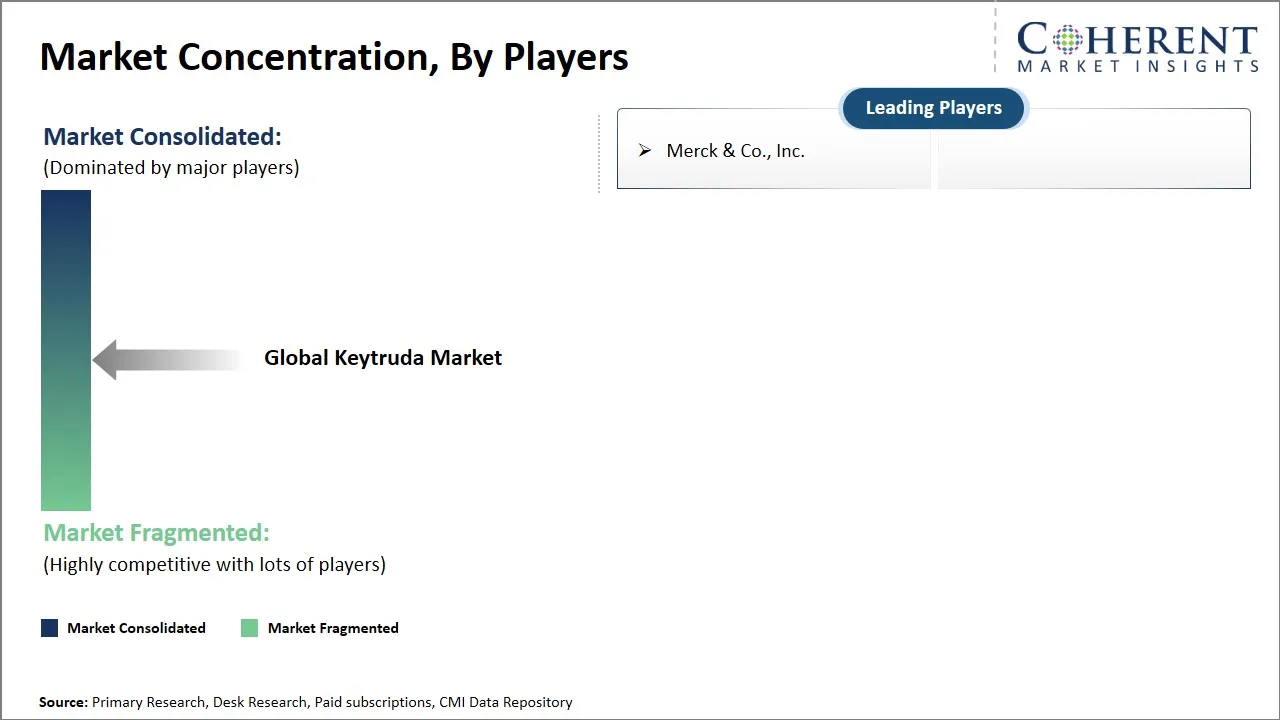
Merck & Co., Inc. is the major player.
North America is expected to lead the global Keytruda market in 2026.