

Global Liquid Detergent Market Size and Forecast – 2026 To 203 3
The Global Liquid Detergent Market is estimated to be valued at USD 72.43 Bn in 2026 and is expected to reach USD 98.56 Bn by 2033, exhibiting a compound annual growth rate (CAGR) of 4.5% from 2026 to 2033. Growth is strongly supported by high-frequency laundry routines, rising preference for liquid formats, and expanding urban household consumption. According to the American Cleaning Institute’s April 2026 National Laundry Day survey, liquid detergent was preferred by 55% of U.S. households washing clothes at home, compared to only 6% using powdered detergent, while 37% of households washed four to six loads per week and 10% washed seven to ten loads weekly. (Source: American Cleaning Institute)
Key Takeaways of the Global Liquid Detergent Market
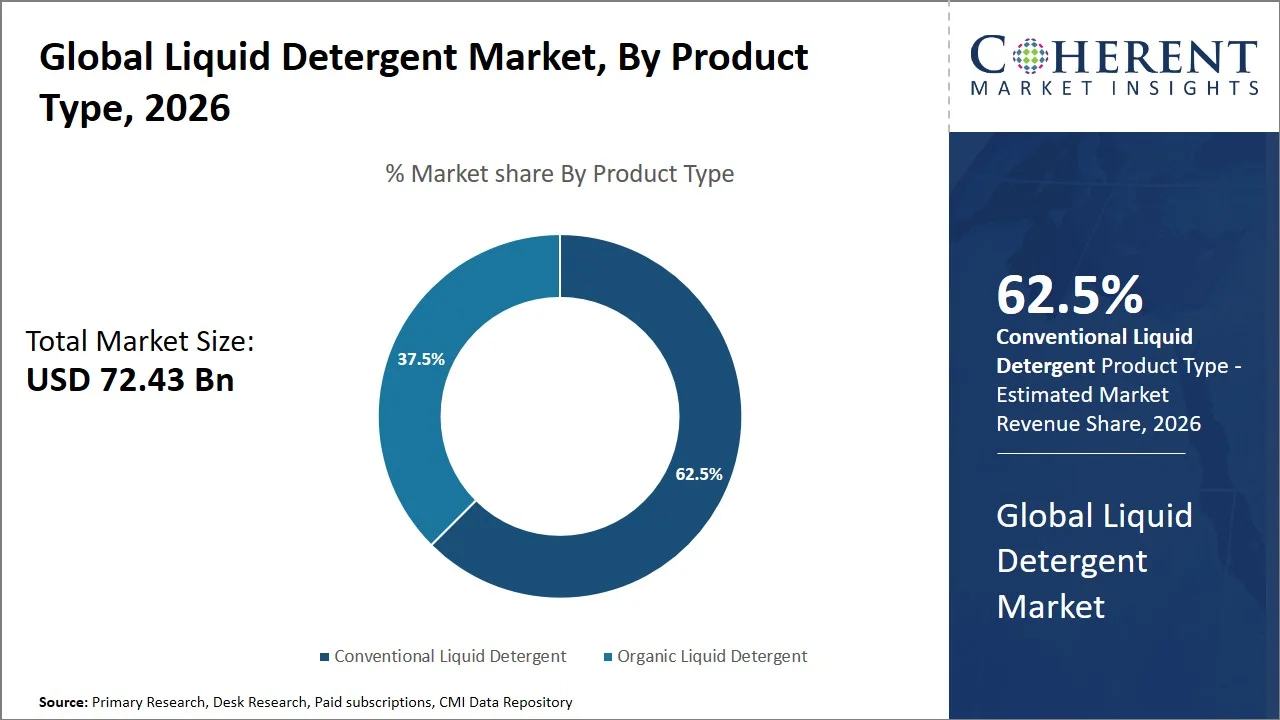
- The conventional liquid detergent segment is projected to account for 62.5 % of the global liquid detergent market in 2026. Consumer preference for effective and affordable cleaning products and solutions, with ease of access and reliability across homes around the world is a major driver of this dominance. In emerging Asian markets, for example, traditional liquid detergents are the most prevalent products in supermarkets and e-commerce websites because they are low cost and can be used in the majority of washing machines available on the market.
- The laundry segment is expected to hold 68.9 % share of the global liquid detergent market in 2026. The rising adoption of liquid detergents in front-load and top-load washing machines drives growth due to the focus on efficiency, stain removal, and fabric care by consumers. For instance, the surveys conducted in urban India and Southeast Asia reveal that more than 70% of homes are using liquid detergent for laundry intended for use in the machine, reflecting the trend of shifting away from powdered detergents in the household market.
- The adult segment is projected to hold 62.7 % of the global liquid detergent market in 2026. The increasing number of working adults and urban households is creating demand for ready-to-use cleaning solutions that will save time and simplify home maintenance. For example, in the big cities of the Middle East, including the U.A.E, Riyadh, etc. busy urban households are increasingly buying pre-dosed liquid detergent packs, driven by convenience.
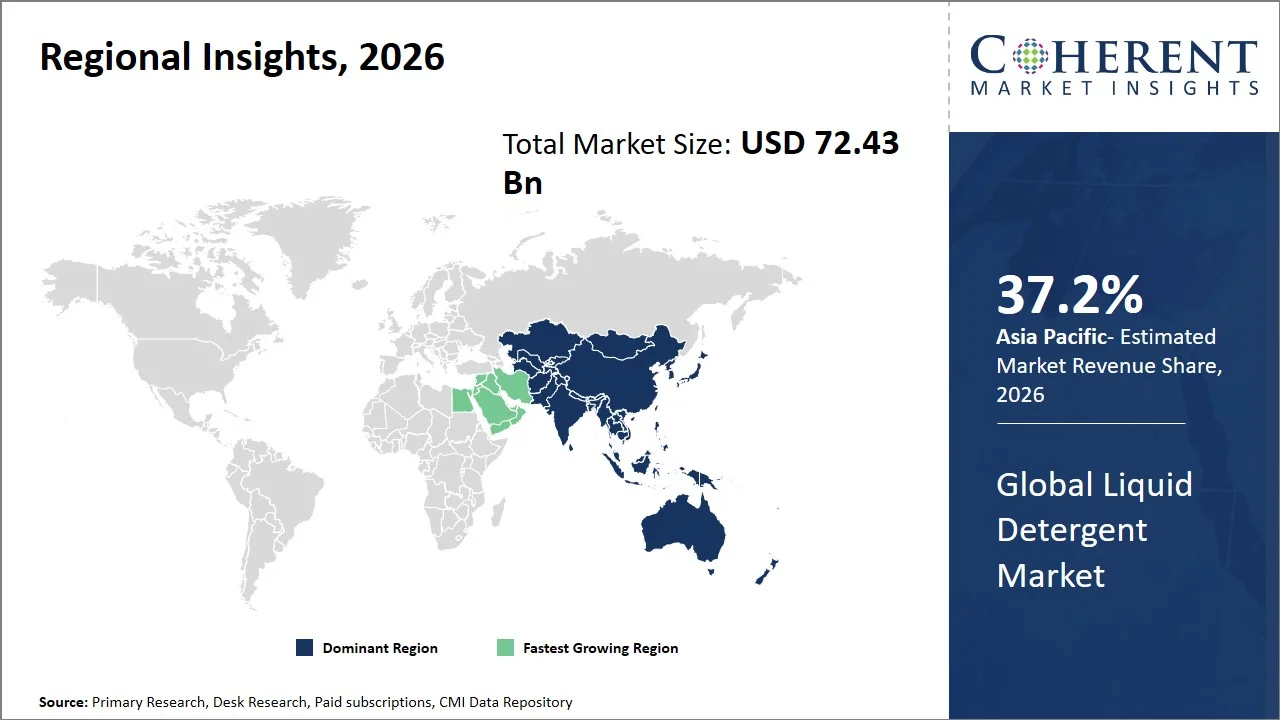
- Asia Pacific is expected to drive the global market with an estimated 37.2 % share in 2026. The growth factors include rapid urbanization, increasing disposable income, and the growing modern retail channels. In China and India, for instance, the growth of ecommerce platforms and large supermarket chains is driving greater availability of liquid detergents, which has led to the spread of the product among consumer segments.
- The Middle East is anticipated to exhibit the fastest growth, contributing an estimated 19.3% share to the market in 2026. The key drivers are strong hygiene awareness, increase in demand for modern laundry appliances, and expansion of retail infrastructure. However, countries such as the U.A.E and Saudi Arabia have been leading the hygiene drive and with the widespread availability of automatic washing machines, consumer adoption of liquid detergents for washing their daily clothes has accelerated.
- Eco ‑Conscious Formulations Gaining Traction: Increasing concern about pollution and residues of chemicals used in liquid detergents is leading to a growing number of products that have been formulated as biodegradable, plant-based, and free from phosphate. According to statistics, 38 to 55 percent of consumers around the world are now looking for plant-based detergents and eco-friendly detergents chemicals for laundering purposes, which is encouraging brand owners to reformulate their products and focus on being more environment friendly.
- Growing Standards for Chemical Safety and Transparency: There are a growing number of regulations being issued in several regions that require greater transparency about ingredients used, biodegradability of detergents, and effects of detergent discharge into wastewater, thereby necessitating manufacturers to formulate their products using environmentally safer surfactants. Some of these regulations include the EU Detergents Regulation (EC No. 648/2004), which focuses on strict labeling requirements, biodegradability specifications, and complete listing of surfactants, enzymes, and fragrances and perfume among other measures.
Segmental Insights
Why Does the Conventional Liquid Detergent Segment Dominate the Liquid Detergent Market?
The conventional liquid detergent segment is projected to account for 62.5% of the global liquid detergent market in 2026 as they are easily available, have been adopted by consumers for long, and offer accurate performance over time. The normal or traditional detergent usually contains synthetic detergents and chemical enhancers that work well on a range of fabrics and remove stains effectively. This is because they are not only affordable but are also very familiar and have created brand loyalty in the past several decades. For example, as one of the most familiar conventional detergent products, Procter & Gamble's Tide Original Liquid Detergent still leads the U.S. liquid detergent market and as of 2025, more than 100 million households buy the product annually. (Source: Procter & Gamble)
- Current Industry Events of 2026
- Market Size Estimation
- Regional Breakdown
- Competitive Landscape
- Customer Intelligence
- Segmental Analysis
- Pricing Analysis
- Key Market Drivers, Challenges & Future Trends
- Customized Insights Section
Why Does the Laundry Application Dominate the Liquid Detergent Market?
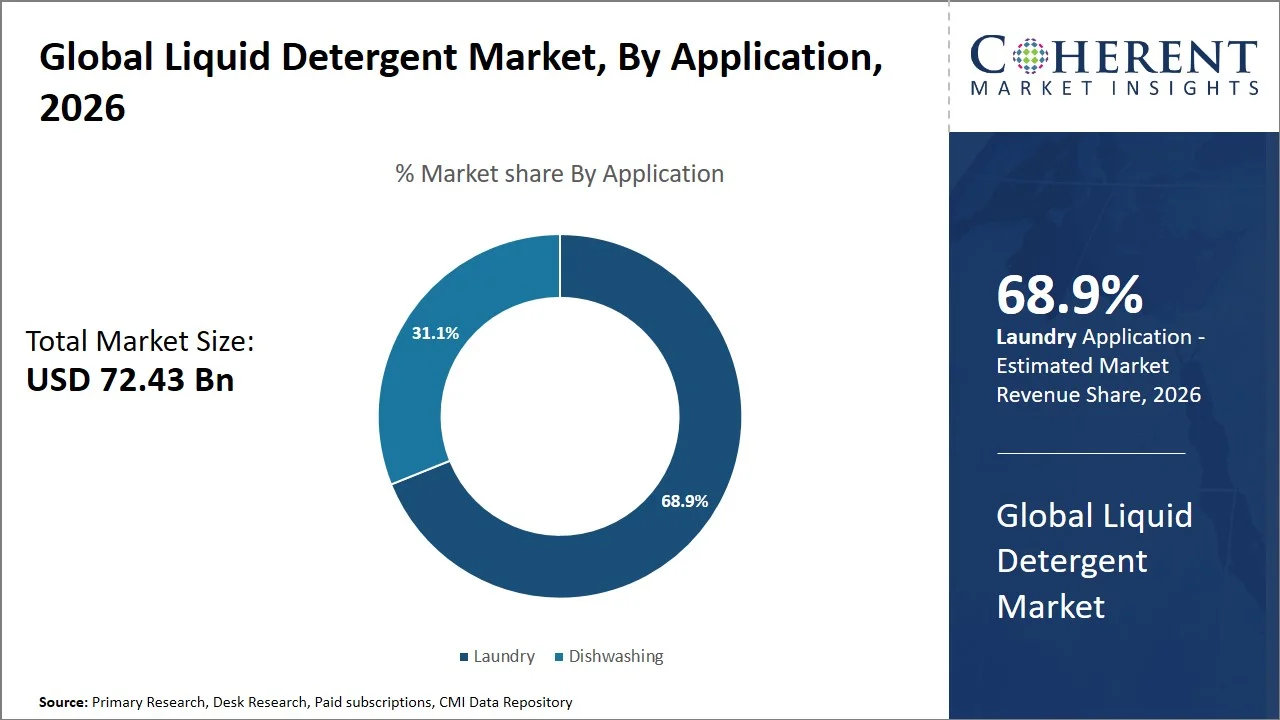
The laundry segment is expected to hold 68.9% share of the global liquid detergent market in 2026, driven by rising consumer focus on fabric cleanliness, hygiene, and garment care. Liquid detergents also have better solubility and are easier to use, especially in cold-water washing, and so saves energy and helps to preserve the quality of the garments. Surf Excel Matic Liquid Detergent was launched in India in January 2026, specifically for front load washing machines and urban households, providing enhanced stain removal and fabric care over traditional detergents. (Source: Hindustan Unilever Limited)
Adult Segment Dominates the Liquid Detergent Market
The adults segment is expected to hold 62.7 % share of the global liquid detergent market in 2026., supported by higher discretionary spending power and diverse cleaning requirements. Liquid detergents provide convenience, efficiency and reliable performance that's important for adults in charge of families. In South Africa, products such as Sunlight Matic Liquid Detergent — a liquid laundry detergent formulated to preserve color and provide deep cleaning performance for everyday laundry needs — appeal to urban adult consumers seeking convenience, effective cleaning, and reliable results in family households. (Source: Henkel)
Currents Events and their Impact
Current Events | Description and its Impact |
Rising Environmental Regulations in Europe |
|
Geopolitical Trade Tensions |
|
Liquid Detergent Market Dynamics
Market Driver
Rising consumer hygiene awareness
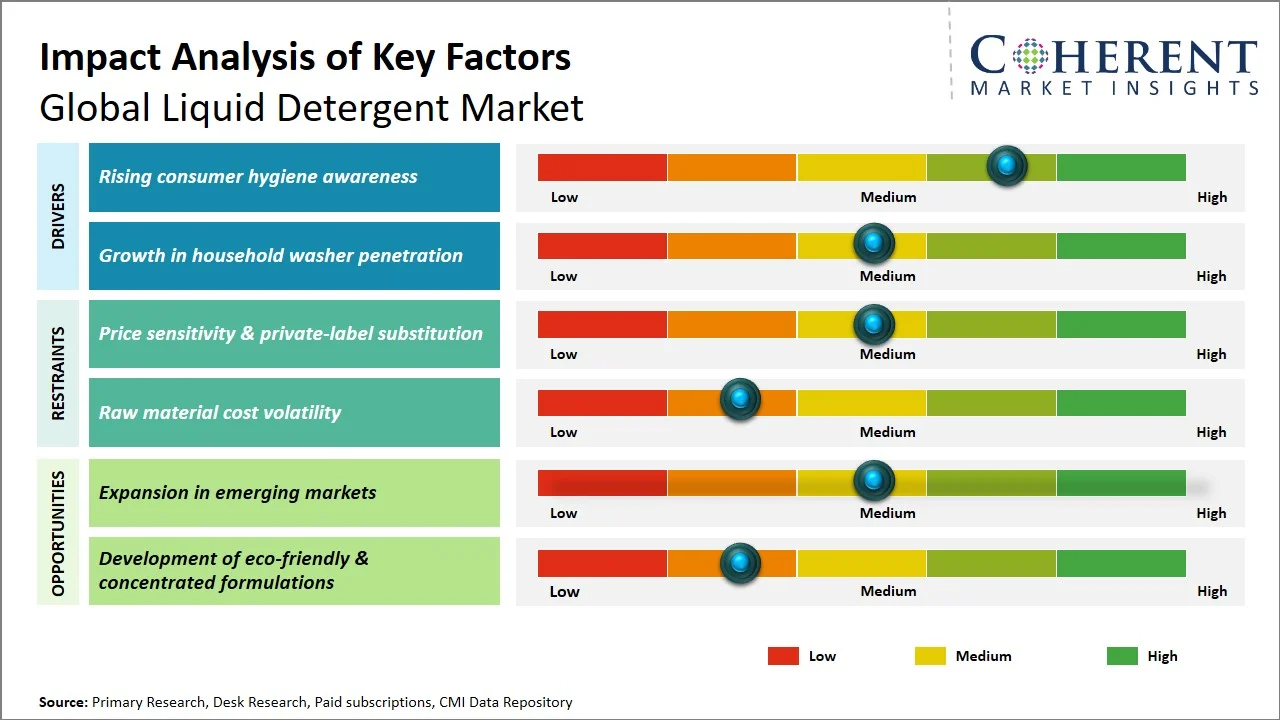
The new awareness of personal and family hygiene is helping liquid detergents to meet increasing demands in the world. With heightened awareness about health, more consumers are looking for superior stain removal and sanitization in their cleaning products that are effective. Many people like liquid detergents because they're not only easier to use, but they also dissolve faster than powder detergents and are more likely to clean. In cities, this shift is particularly noticeable with regard to washing and housekeeping, with users preferring easy, effective and sanitary processes to maintain their clothes and environment clean and hygienic.
The Centers for Disease Control and Prevention (CDC) has issued a laundry hygiene guideline for the U.S. for 2025, which stated that the detergents used for the laundry should be effective in removing the pathogens, and therefore, the companies like Procter & Gamble have been increasing their product line with a product that has been released on February 2026 and is effective in removing pathogens, namely, Tide Hygienic Clean Liquid Detergent. (Source: CDC)
Growth in household washer penetration
The rising adoption of washing machines in households across the world is a key growth factor for the liquid detergent market. With the growing number of consumers switching from manual to automatic hand washing, there is an increasing demand for liquid hand washing detergents designed to be used in automatic washers. In automatic washing machines, liquid detergent is especially preferred over powdered detergents due to its ease of dissolving, prevention of residue, and compatibility with present-day washing cycles, such as cold washes. This change not only raises overall consumption levels, but also the premiumization of detergent products.
In the U.A.E, for instance, the Gulf Consumer Appliances Association conducted a survey in 2025 that revealed that more than 85% of urban households had automatic washing machines, compared with 72% in 2020. Companies such as Unilever Gulf have therefore been promoting Persil Liquid Detergent as a product which is high performance, machine ready and is suitable for urban consumers. It is compatible with all types of washers and can be used easily with different types of dosing, making it a popular product in homes with automatic laundry appliances that look to remove stains.
Regional Insights
Why is Asia Pacific a Strong Market for Liquid Detergent?
Asia Pacific is expected to drive the global liquid detergent market with an estimated share of 37.2% in 2026, owing to the high number of consumers, rapid urbanization, and the growing disposable income in the region. The Asia‑Pacific liquid detergent market is supported by a diverse mix of players. Multinational companies such as Unilever, Procter & Gamble, and Henkel operate across multiple countries, offering established global brands, while regional manufacturers like Godrej Consumer Products and Lion Corporation produce products designed to meet local consumer preferences, including cost‑effective options for price-sensitive households and premium or eco-friendly detergents for urban and high-income segments.
The demand for liquid detergents has been boosted by government campaigns encouraging hygiene and cleanliness, especially in countries such as India and China. Swachh Bharat Mission (Clean India Mission) was launched by the Government of India to improve hygiene and sanitation throughout the country, driving public hygiene awareness and influencing consumer demand for cleanliness products. (Source: India Brand Equity Foundation)
Why Does the Middle East Liquid Detergent Market Exhibit High Growth?
The Middle East liquid detergent market is expected to exhibit the fastest growth with an estimated contribution of 19.3% share to the global market in 2026. The main reason for this rapid growth is due to the rise in health awareness, household income, urbanization and the rise of premium and specialty detergents. The market ecosystem in MEA is transforming with the entry of international brands and the enhancement of retail infrastructure and distribution channels.
Mugi Ultra-Premium Liquid Detergent — a locally‑marketed liquid laundry detergent variant commonly sold in the U.A.E / GCC region caters to everyday laundry needs while offering premium cleaning performance. This type of product exemplifies how local producers in the Middle East are tailoring value and cost‑effective liquid detergents to diverse consumer segments — including urban households and semi‑urban markets — contributing to the region’s strong market growth dynamics.
Liquid Detergent Market Outlook for Key Countries
Why is the U.S. Leading Innovation and Adoption in the Liquid Detergent Market?
The U.S liquid detergents is very well-developed and is fueled by eco-friendly consumers and regulations which favor eco-friendly products. As of March 2026, over 1,200 cleaning products were EPA Safer Choice Certified, including P&Gs Tide, Gain and the Green Works (EPA Safer Choice) by Clorox. The high penetration level is backed by distribution via retail channels, including Walmart and Target, as well as Amazon, which make up ~55% of household cleaning product sales. (Source: United States Environmental Protection Agency)
Is India a Favorable Market for Liquid Detergent?
India's liquid detergent market is growing at a fast rate as a result of increasing urbanization and growth of the middle class household. The realization of the consumers about cleanliness and quality of detergents has been increasing because of different types of drives launched by the Government like Swachh Bharat (Ministry of Housing and Urban Affairs, 2025). Godrej Consumer Products reported 12 % value growth in standalone India business in Q4 FY2025‑26, which comprises the Home Care segment comprising Fabric Care/Liquid Detergents. (Source: Godrej Consumer Products Limited)
Is China Emerging as a Key Growth Hub for the Liquid Detergent Market?
China leads APAC in liquid detergent production and consumption due to large-scale manufacturing and e-commerce adoption. Domestic demand for household detergents reached USD 6.9 billion (¥45.8 billion) in 2025, with an expected growth rate of 9% per year, fueled by online sales and premium product offerings. Alibaba and JD.com are the major actors in online distribution, accounting for ~65% of urban households (Ministry of Commerce, 2025). The big boys are Unilever, P&G and local giant Blue Moon, and their 2026 product launches are all about eco-friendly, functional products.
Why Does Brazil Top the Liquid Detergent Market?
Urbanization and modernization of retail infrastructure are contributing to Brazil's market growth. In 2025, liquid detergents represented 47% of the value of the laundry market, according to the Brazilian Association of Cleaning Products (ABIP). Unilever Omo and Surf, and P&Gs Tide brands are the strong performers in urban retail while regional brands supply cheaper products to smaller towns. A few government initiatives promoting sustainable product use are beginning to promote biodegradable and concentrated detergents.
How is the increasing need for convenient and high-performance cleaning solutions driving growth in the liquid detergent market?
The liquid detergent market is witnessing tremendous growth opportunities in the emerging markets due to the increasing demand for convenient and high-performance cleaning solutions. The preference for liquid detergents is being driven by rising disposable incomes, awareness of hygiene and the use of modern laundry appliances, which dissolve quicker and are better at removing stains than traditional powders, and are easier to use.
In India and Southeast Asia, for example, urban households have been spending an average of 8-10% more per year over the last three years on detergents used in laundry care, as they focus more on high-quality detergent solutions that are efficient. Rising urbanization makes the 42-45% of emerging markets' populations living in urban centers even more powerful as drivers of growth; they are more likely to have access to organized retail and also modern distribution channels, which also boosts the adoption of liquid detergents.
Preference For Liquid Vs Powder Detergents
Factor | Liquid Detergent | Powder Detergent |
Ease of Use | Pre-dissolved, easy to measure and pour directly | Requires careful measuring and stirring; may clump in water |
Cleaning Performance | Effective in both cold and hot water; strong stain removal; gentle on colors and fabrics | Effective primarily in warm/hot water; may leave residue on fabrics |
Washing Machine Compatibility | Optimized for front-load and high-efficiency (HE) machines; low residue | Can leave residue in HE machines; less compatible with modern washers |
Market Players, Key Development, and Competitive Intelligence
Key Developments
- In April 2025, Henkel unveiled concentrated formulas for its all, Persil, and Snuggle liquid laundry lines. The revamped initiative, as stated by Henkel, encompasses updated packaging and formulas, aiming to deliver enhanced cleaning and fabric care in every load.
- In February 2025, Hindustan Unilever entered into a strategic partnership with Whirlpool to enhance the laundry experience in India. This collaboration integrates Whirlpool's top-load washing machines with Surf Excel Matic Liquid Detergent.
- In April 2024, Unilever introduced "Wonder Wash," a liquid laundry detergent specifically formulated for quick wash cycles. This new detergent is formulated to perform effectively in cycles as short as 15 minutes. Wonder Wash is available in the U.K., Ireland, and China, with plans for further market expansion.
- In December 2023, Godrej Consumers launched 'Godrej Fab', a new liquid detergent brand aimed at the mass market. The product has been introduced in the South Indian states of Tamil Nadu, Andhra Pradesh, Karnataka, and Kerala.
Competitive Landscape
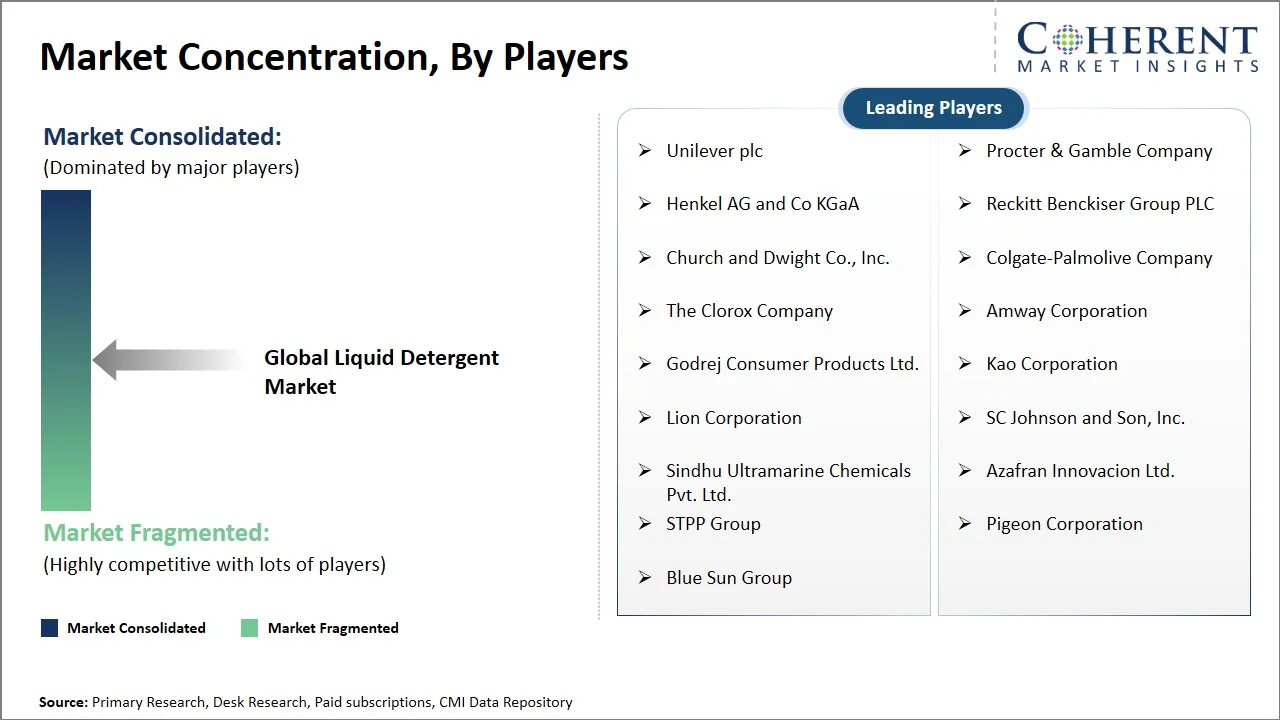
The global liquid detergent market is highly competitive, driven by evolving consumer preferences for performance, sustainability, and convenience. Established players leverage brand recognition, large-scale distribution, and R&D capabilities, while smaller and regional firms compete through niche formulations, eco-friendly products, and pricing flexibility. Key focus areas include:
- High-performance and eco-friendly formulations
- Product diversification and format innovation
- Omnichannel presence and strategic partnerships
Market Report Scope
Liquid Detergent Market Report Coverage
| Report Coverage | Details | ||
|---|---|---|---|
| Base Year: | 2025 | Market Size in 2026: | USD 72.43 Bn |
| Historical Data for: | 2020 To 2024 | Forecast Period: | 2026 To 2033 |
| Forecast Period 2026 to 2033 CAGR: | 4.5% | 2033 Value Projection: | USD 98.56 Bn |
| Geographies covered: |
| ||
| Segments covered: |
| ||
| Companies covered: | Unilever plc, Procter & Gamble Company, Henkel AG and Co KGaA, Reckitt Benckiser Group PLC, Church and Dwight Co., Inc., Colgate-Palmolive Company, The Clorox Company, Amway Corporation, Godrej Consumer Products Ltd., Kao Corporation, Lion Corporation, SC Johnson and Son, Inc., Sindhu Ultramarine Chemicals Pvt. Ltd., Azafran Innovacion Ltd., STPP Group, Pigeon Corporation, and Blue Sun Group | ||
| Growth Drivers: |
| ||
| Restraints & Challenges: |
| ||
Analyst Opinion (Expert Opinion)
- The global liquid detergent market is transitioning from a mature, conventional-consumer-led phase to a high-growth, innovation-driven phase. Rising awareness of sustainability, environmental regulations, and health-conscious cleaning practices is pushing adoption of concentrated, eco-friendly, and cold-water-soluble liquid detergents. Premiumization is gaining momentum in urban households, while e-commerce platforms are enabling wider access to niche and specialty formulations. The market’s future will favor products that combine superior performance with environmental and health benefits.
- Maximum opportunity lies in premium laundry applications in APAC urban centers, particularly in India, China, and Southeast Asia. Urban households are increasingly shifting toward concentrated formulations, single-dose packs, and biodegradable products. Cold-water solubility and fabric-care benefits are becoming key decision drivers. Penetration in tier-2 and tier-3 cities remains low, offering a volume-driven opportunity for players who can combine affordability with differentiated benefits.
Speak to the analyst
Want personalized insights?
Take the findings above to one of our principal consultants, or have the report rebuilt around the segments, geographies and competitors you actually track.
Market Segmentation
- Product Type Insights (Revenue, USD Bn, 2021 - 2033)
- Conventional Liquid Detergent
- Organic Liquid Detergent
- Application Insights (Revenue, USD Bn, 2021 - 2033)
- Laundry
- Dishwashing
- End User Insights (Revenue, USD Bn, 2021 - 2033)
- Adult
- Kids/Children
- Packaging Insights (Revenue, USD Bn, 2021 - 2033)
- Bottles
- Refill Pouches
- Others
- Distribution Channel Insights (Revenue, USD Bn, 2021 - 2033)
- Supermarkets/Hypermarket
- Convenience/Grocery Stores
- Online Retail Stores
- Other Distribution Channel
- Regional Insights (Revenue, USD Bn, 2021 - 2033)
- North America
- U.S.
- Canada
- Latin America
- Brazil
- Argentina
- Mexico
- Rest of Latin America
- Europe
- Germany
- U.K.
- Spain
- France
- Italy
- Russia
- Rest of Europe
- Asia Pacific
- China
- India
- Japan
- Australia
- South Korea
- ASEAN
- Rest of Asia Pacific
- Middle East
- GCC Countries
- Israel
- Rest of Middle East
- Africa
- South Africa
- North Africa
- Central Africa
- North America
- Key Players Insights
- Unilever plc
- Procter & Gamble Company
- Henkel AG and Co KGaA
- Reckitt Benckiser Group PLC
- Church and Dwight Co., Inc.
- Colgate-Palmolive Company
- The Clorox Company
- Amway Corporation
- Godrej Consumer Products Ltd.
- Kao Corporation
- Lion Corporation
- SC Johnson and Son, Inc.
- Sindhu Ultramarine Chemicals Pvt. Ltd.
- Azafran Innovacion Ltd.
- STPP Group
- Pigeon Corporation
- Blue Sun Group
Sources
Primary Research Interviews
- Manufacturers and brand owners
- Contract/Private label packers and formulators in India (Mumbai/Gujarat)
- Grocery / Modern trade procurement heads: DMart, Reliance Retail category managers
- E-commerce channel leads: Amazon India, Flipkart grocery category managers
Stakeholders
- Manufacturers of liquid detergents (e.g., Hindustan Unilever, Procter & Gamble, Henkel India, RSPL Group, Nirma, Godrej Consumers, Dabur, ITC, Patanjali)
- End-use Sectors
- Residential Construction/Household Consumers (urban & rural segments)
- Commercial Laundry (hotels, hospitals, institutional laundries)
- Retailers and distributors: Reliance Retail, DMart (Avenue Supermarts), Big Bazaar, modern trade and neighborhood kirana networks
- Regulatory & Certification Bodies: Bureau of Indian Standards (BIS) — product and labeling standards for detergents
- E-commerce Platforms and Retailers: Amazon India, Flipkart, Home Depot (US), Big Bazaar, DMart, Reliance Retail
- Technology Integration Players: Innovators in eco-friendly/biodegradable surfactants (e.g., BASF, Henkel, Croda)
Databases
- UN Comtrade Database (HS Code 3402 for surfactants, 3404 for detergent preparations)
- India EXIM (customs/EXIM) and SEAIR/Export import databases for shipment-level export/imports of liquid detergents
- Eurostat Trade Statistics for Cleaning Products
- USITC DataWeb for detergent imports
Magazines
- Economic Times Retail – FMCG and detergent market trends
- Business Standard FMCG – Growth in liquid detergent imports and domestic production
- Packaging and consumer goods trade press in India
- Industry portals and trade data providers (Eximpedia, Seair)
Journals
- Journal of Cleaner Production – Environmental impacts of surfactants and wastewater
- Energy and Buildings – Sustainability of cleaning products
- Construction and Building Materials – (adjacent for surfactant chemistry)
- Academic and industry studies on surfactant biodegradability and toxicity
Newspapers
- The Wall Street Journal – FMCG demand for liquid detergents
- Business Standard (India) – Growth in housing and liquid detergent imports
- Construction Dive – (adjacent for supply chain)
Associations
- Consumer Goods Forum (regional India chapters) and local FMCG associations
- Indian Chemical Council (manufacturers of surfactants and raw materials)
- All India Detergent Manufacturers Association (AIDMA)
- Personal Care Products Council (PCPC)
Public Domain Sources
- EPA – Guidelines for building product VOCs and synthetics (adjacent for surfactant regulations)
- Bureau of Indian Standards (BIS) — Standards for detergents (IS 9489)
- US Department of Energy – Energy-efficient manufacturing guidelines
Proprietary Elements
- CMI Data Analytics Tool, Proprietary CMI Existing Repository of information for last 10 years.
Get access to 250+ pages report
Every segment, forecast, competitor profile and data table behind the analysis above — available for instant download.
- ESOMAR Member
- ISO 9001:2015 Certified
- D-U-N-S Registered
- GDPR & CCPA Compliant
Missing comfort of reading report in your local language? Find your preferred language:
Transform your Strategy with Exclusive Trending Reports
Frequently Asked Questions
The global liquid detergent market is estimated to be valued at USD 72.43 Bn in 2026 and is expected to reach USD 98.56 Bn by 2033.
The CAGR of the global liquid detergent market is projected to be 4.5% from 2026 to 2033.
The global liquid detergent market comprises products used for cleaning fabrics, dishes, and surfaces in liquid form. It includes household and commercial applications and various product types such as conventional, organic, enzyme‑based, and eco‑friendly formulations.
Environmental concerns are driving demand for biodegradable formulations, plant‑based surfactants, concentrated products (reducing water/packaging use), and refill‑based distribution. Stricter regulations (e.g., EU detergent standards) and consumer interest in sustainability are reshaping formulation and packaging strategies.
Rising consumer hygiene awareness and growth in household washer penetration are the major factors driving the growth of the global liquid detergent market.
Price sensitivity & private‑label substitution and raw material cost volatility are the major factors hampering the growth of the global liquid detergent market.
In terms of product type, conventional liquid detergent is estimated to dominate the market revenue share in 2026.