

Global Medical Footwear Market Size and Forecast – 2026-2033
The global medical footwear market is estimated to be valued at USD 11.12 Bn in 2026 and is expected to reach USD 19.94 Bn by 2033, exhibiting a compound annual growth rate (CAGR) of 8.7% from 2026 to 2033.
Key Takeaways of the Medical Footwear Market
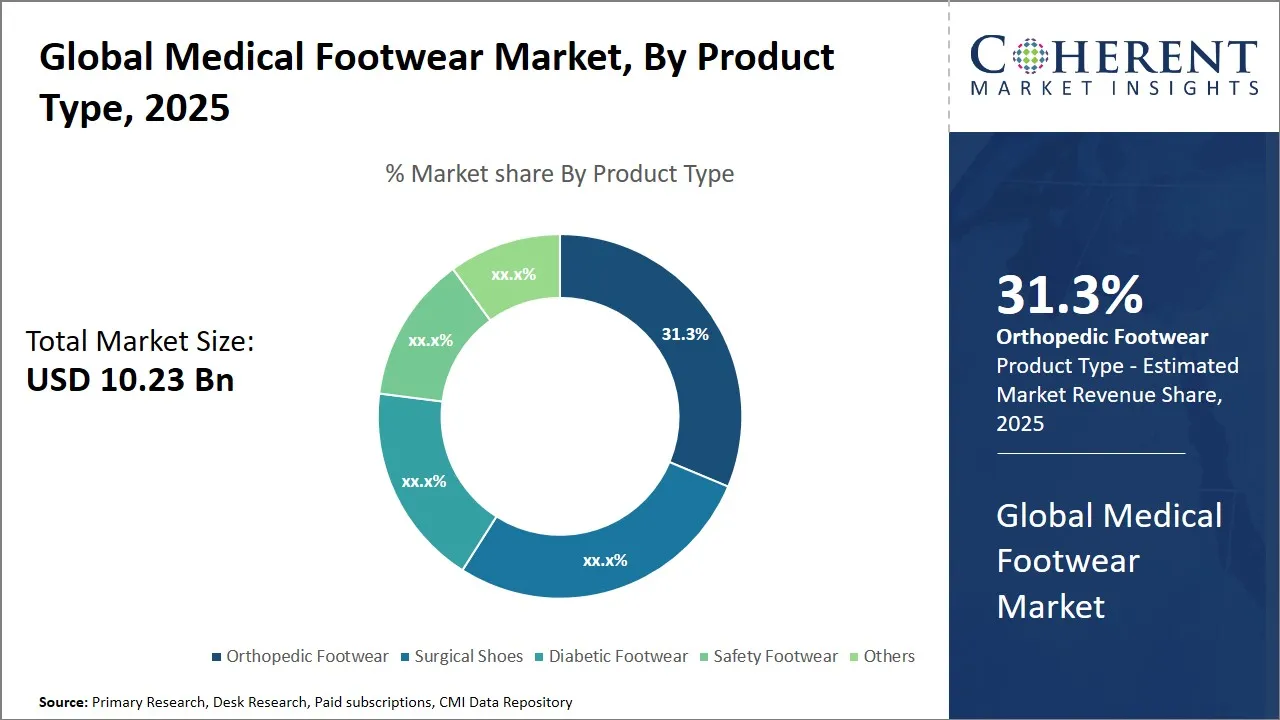
- Orthopedic footwear is projected to capture 32.3 % of the global medical footwear market share in 2026.
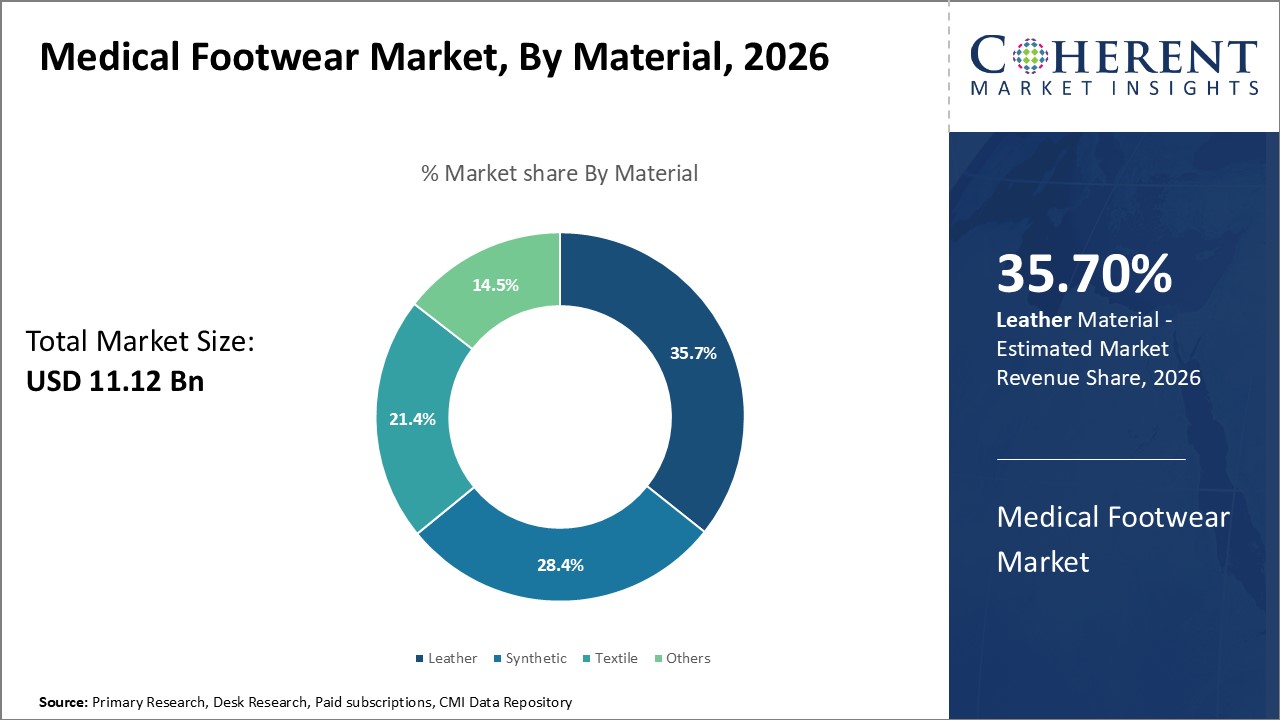
- The leather segment is expected to account for 35.7 % of the market share in 2026.
- The men segment is projected to hold 57.9 % of the medical footwear market share in 2026.
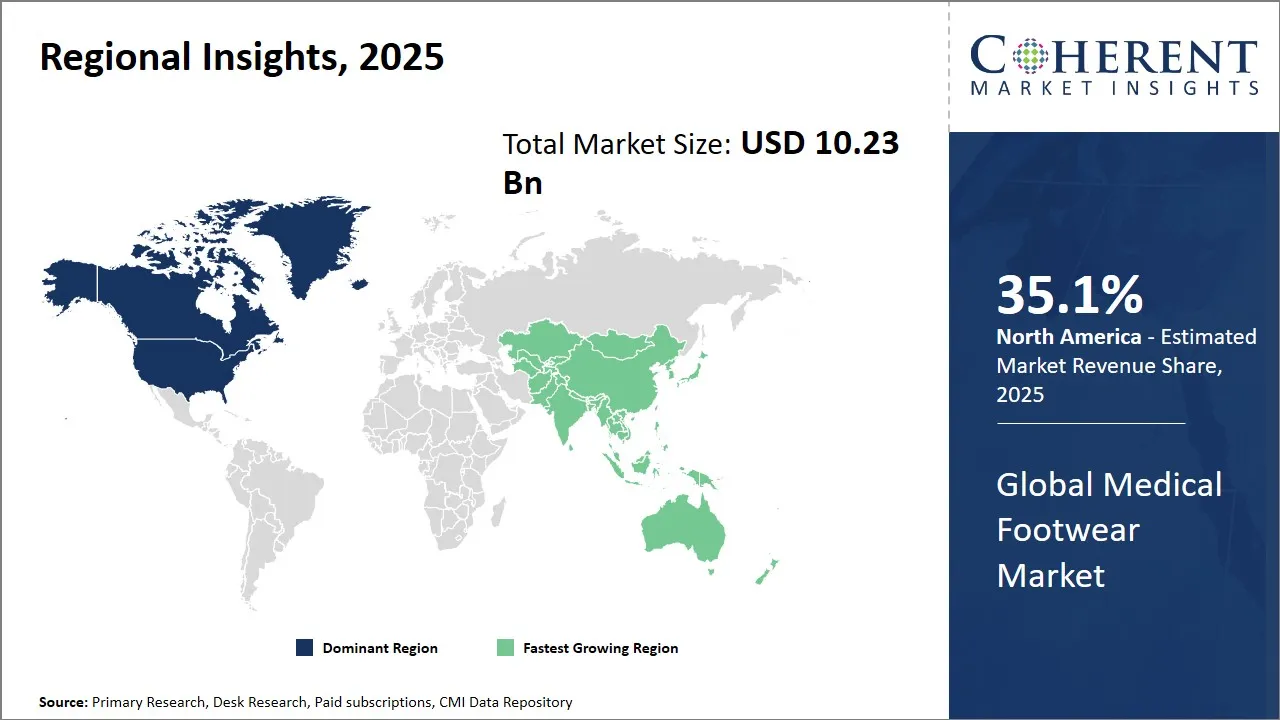
- North America is set to lead the global medical footwear market in 2026 with a 35.1 % share. Asia Pacific, with an estimated share of 21.5% in 2026, and it is projected to be the fastest-growing region.
Market Overview
Today, innovative and customized trends are followed within the medical footwear market. Smart footwear, industrial protective footwear integrated with sensors to better monitor foot conditions is being adopted more widely to enhance treatment effects. The trends also entail a greater reliance on sustainability through a shift toward eco-friendly materials and ethical production processes. Further, e-commerce platforms expand the reach of the market to a broader consumer group, thereby engendering growth in the industry and diversification of offerings.
Current Events and Its Impact
Current Events | Description and its Impact |
Surge in smart footwear & sensor integration |
|
Growing chronic disease burden and ageing population in Asia Pacific |
|
Segmental Insights
- Current Industry Events of 2026
- Market Size Estimation
- Regional Breakdown
- Competitive Landscape
- Customer Intelligence
- Segmental Analysis
- Pricing Analysis
- Key Market Drivers, Challenges & Future Trends
- Customized Insights Section
Medical Footwear Market Insights, By Product Type – Orthopedic Footwear Segment Leads Due to Product Innovation and Comfort
Orthopedic footwear is set to hold 32.3% of the global medical footwear market share in 2026, due to the consistently high demand for specialty shoes as part of the management of musculoskeletal and other foot health conditions. The increased burden of chronic diseases such as arthritis, plantar fasciitis, and other orthopedic disorders significantly boosted demand for different kinds of footwear with improved support, cushioning, and alignment correction. Orthopedic shoes are designed with arch supports, shock-absorbing soles, and custom insoles to meet the specific needs for relief from foot pain or deformity.
Another key factor contributing to the growth of orthopedic footwear is the aging population of the world. As more people live longer, they are at a greater risk from conditions such as osteoporosis, bunions, and diabetic neuropathy, which demand suitable shoes to be able to provide increased mobility, pain reduction, and prevention of further complications. Healthcare providers and various orthopedic specialists recommend such shoes, improving credibility in the market and driving the adoption of orthopedic footwear.
Medical Footwear Market Insights, By Material – Leather Segment Dominates Fueling Medical Footwear Performance and Durability
Leather segment is expected to account for 35.7% of the market share in 2026, which complement the functional demands of medical footwear quite well. The strong points assure that leather is particularly well-suited for footwear designed to be used over extended periods, especially in medical settings where hygiene and dependability are important.
One of the main advantages of leather is that it molds into the wearer's foot shape over time, thus offering a customized fit and reducing pressure points that can further aggravate the existing medical condition. This is quite important for people who have sensitive feet or feet with deformities, like diabetic or orthopedic patients, in whom incorrect fitting can lead to ulcers, blisters, or discomfort.
Medical Footwear Market Insights, By End Use – Male Segment Maintains Dominance Driven by Occupational and Healthcare Needs
Men segment is projected to hold 57.9% of the market share in 2026, driven by specific occupational and health-related factors that require special footwear. Men are often found to be more involved with strenuous jobs or job sites where protectionist and supportive shoes are quite necessary to avoid accidents and keep the foot healthy, including building construction, manufacturing, and other related industries.
In relation to this, the male demographic does present a higher prevalence due to lifestyle and occupational hazards that raise the demand for medical footwear designed for issues such as plantar fasciitis, ankle instability, and complications of the diabetic foot. Most men in hazardous occupations often require safety footwear with integrated orthopedic features that combine protection with comfort over a long period to prevent injuries.
Regional Insights
North America Medical Footwear Market Analysis and Trends
The North America region is projected to lead the market with a 35.1% share in 2026, which has a large pool of patients with diabetes and other foot-related serious medical conditions, demanding more and more advanced medical footwear. Government initiatives reinforce this: for example, Medicare and Medicaid reimbursements in the U.S. for diabetic footwear further increase this adoption and accessibility. Major medical footwear and orthopedic device manufacturers have a strong presence and are increasingly investing in R&D, backed by strong regulatory frameworks.
Furthermore, the growing emphasis of healthcare providers on preventive foot care and rehabilitation therapies increases demand. Companies like Dr. Comfort, part of the Eneslow group; Orthofeet; and Apex are notable players contributing to this growth by innovating adaptive, comfortable, and therapeutic footwear solutions for North American consumers. The extensive retail and distribution network, including partnerships with hospitals, clinics, and specialty stores, plays an important part in consolidating the market.
Asia Pacific Medical Footwear Market Analysis and Trends
The Asia Pacific region is expected to exhibit the fastest growth in the market contributing 21.5% share in 2026. This is driven by an increase in chronic diseases like diabetes, a rise in healthcare access, rapid urbanization, and enhancement of disposable incomes in emerging economies such as India, China, and countries in Southeast Asia. The regional market ecosystem continues to evolve, with an increase in local manufacturers and expansion of international companies establishing a foothold through joint ventures and partnerships.
Universal health coverage and government reforms on chronic disease management promote the adoption of medical footwear. Growing awareness among the population also contributes to increased demand for these products in managing diabetic foot ulcers and other foot ailments. Many companies, including Bata Industrials and Dr. Scholl's, are expanding their presence in this space. Other newer domestic brands focus on cost-effective yet clinically beneficial products to cater to local requirements. Favorable trade policies and improvements in supply chain logistics further bolster this upward growth momentum in Asia Pacific.
Medical Footwear Market Outlook for Key Countries
U.S. Medical Footwear Market Analysis and Trends
The U.S. medical footwear market holds the leading position, owing to its advanced healthcare infrastructure and high prevalence of diabetes-specific foot complications. Different therapeutic footwear is covered under Medicare and Medicaid programs, which influences a greater market pull for these products. Key participants in the medical footwear space, such as Dr. Comfort and Orthofeet, sustain their leading stance via a broader assortment of diabetic and orthopedic shoes, regularly releasing new comfort technologies, as well as offering variations in customizability. Investments in R&D into biomechanics and therapeutic functionality of footwear will also help to reinforce market position within the U.S. The presence of a substantial number of dedicated medical clinics and rehabilitation clinics will also foster greater adoption of product use.
Germany Medical Footwear Market Analysis and Trends
Well-organized health and insurance systems in Germany, which cover the reimbursement of medical footwear for diabetic patients and other foot-related disorders, help drive the country's medical footwear market. Germany has stringent regulatory requirements for medical devices, thus attracting significant production and sales of medically certified shoes.
Various European companies, such as Birkenstock Medical and Schoenstatt, have prospered in this region by highlighting the use of traditional craftsmanship in conjunction with advanced technology to deliver quality orthopedic shoes. The significant presence of various orthopaedic specialists and clinics provides ample opportunities for partnerships with footwear manufacturers to customize products based on patient needs, thus strengthening Germany’s leading position in Europe.
China Medical Footwear Market Analysis and Trends
China continues to dominate the Asia Pacific medical footwear market owing to a huge population base, coupled with increasing cases of diabetes and rapid healthcare infrastructure development. These factors together with government measures to combat chronic disease and enhance health insurance, have increased access to medical footwear as domestic manufacturers increase their production capacity, and global companies pursue partnerships to understand both regulatory and cultural issues. Brands such as Bata and Dr. Scholl’s have grown their footprint by localizing products. Growing consumer awareness and digital health platforms also better educates patients on foot health and expands demand.
India Medical Footwear Market Analysis and Trends
The medical footwear market in India is on a high growth curve, with the increasing diabetic population and health awareness spreading to the countryside from urban centers. The policy of rural healthcare expansion and subsidy programs by the government opens up easier access to therapeutic footwear. Affordable and functional footwear solutions catering to regional climatic and lifestyle needs maintain the grip of local brands in the market. Promotion and support from NGOs and healthcare providers for diabetic foot care awareness play an important role. Local producers partner with global players to drive innovation and improve quality, playing both preventative and post-treatment opportunities in the India medical footwear market.
U.K. Medical Footwear Market Analysis and Trends
The U.K. medical footwear market benefits from the National Health Service's widely available diabetic foot care programs, which include provision for medical footwear. The country has a regulatory framework which encourages robust clinical validation for the quality and safety of all footcare products. Several companies such as Podartis and Medi Foot Manufacture U.K., have created therapeutic and orthopedic footwear. Customization is on the rise mostly because of more 3D printing and digital orthotic solutions to tailor to the individual needs of patients. In the country, collaboration amongst podiatrists and manufacturers for optimizing product design is essential for continued foot healthcare management.
Smart Footwear/Wearables Integration
- Smart footwear is equipped with advanced sensors including pressure sensors, accelerometers, gyroscopes, and temperature sensors embedded into the shoe or insole to monitor health metrics continuously.
- The sensors collect data about foot pressure distribution, weight count, walking speed, gait analysis, temperature of the foot, and humidity; the information is vital in managing medical conditions like diabetic foot ulcers and walking disorders.
- The data is wirelessly transmitted (e.g., Bluetooth) to connected devices like smartphones or computers, to monitor in real-time and provide personalized adjustments for the user.
- Smart footwear can detect early complications in foot health by alerting both the user or clinician of prior abnormal pressure points, temperature differences of the foot, or abnormal gait movements.
- Integration with wearable technology enables continuous health monitoring, remote patient management, and supports rehabilitation by tracking progress in recovery from injuries or surgery.
Market Players, Key Development, and Competitive Intelligence
Key Developments
- In September 2024, Mephisto introduced the Mephisto & Madhappy Rainbow Sneaker, a limited-edition collaboration that perfectly fuses style and comfort. Mephisto's SOFT-AIR technology is included in this sneaker and delivers maximum support and the ideal fit, appealing to consumers who seek fashionable and functional footwear.
- In November 2023, Aetrex Inc. launched its creative FitStarter technology platform to enable retailers an instant footwear fitting solution. This cutting-edge platform utilizes precision measurement technology to ensure accurate foot sizing and fitting all for the improved consumer experience in retail environments. Retailers can offer personalized fitting services, improve customer satisfaction, and reduce return rates associated with improper sizing by integrating FitStarter into their stores.
Top Strategies Followed by Global Medical Footwear Market Players
- Established market leaders are heavily investing in research and development (R&D) to drive innovation in high-performance medical footwear, primarily by integrating advanced materials, ergonomic designs, and smart technologies to improve patient comfort and therapeutic benefits. The collaborative nature of innovation within these organizations allows them to gain access to shared expertise, improve supply chain management, and co-create new solutions that improve their foothold in the market.
- For example, Orthofeet, a global leader, dedicates a portion of its financial resources towards R&D to enhance the various features of their products, including anatomical insoles, arch support, and ergonomic cushioning. Further, Orthofeet, collaborated with universities to develop footwear that utilizes 3D scanning technology, which allows for custom fits and, consequently, intended therapeutic benefits of the footwear.
- Mid-level companies operating in the medical footwear market operate using a distinctly different framework, where their primary focus is providing solutions that represent a cost-effective, but still a relative quality option to the budget-conscience portion of the market. Mid-level medical footwear companies understand the price consciousness of a relative share of the market, which leads them to build their product portfolio around the price-sensitive budget of consumers, while maintaining essential therapeutic features and a reasonable durability of their products.
- An example of this is Dr. Comfort, a mid-sized market player with a business strategy to sell low-cost diabetic shoes that have certain health benefits like extra-depth, cushioning, and orthopedic support while traditionally low-cost.
- Small players in the medical footwear market typically seek niches or unique medical conditions or demographics, where they might offer specialty products and/or innovation in the specialty field, perhaps utilizing new technology—3D printing, smart insoles, orthotic designs—to be innovative and maintain a competitive nature and position without a significant amount of resources.
- An example is SoleMates, a small player using 3D printing to produce custom insoles for people with certain foot conditions, such as bunions or plantar fasciitis. The small company is able to provide a custom product and usability to individuals, at low-cost production.
Market Report Scope
Medical Footwear Market Report Coverage
| Report Coverage | Details | ||
|---|---|---|---|
| Base Year: | 2025 | Market Size in 2026: | USD 11.12 Bn |
| Historical Data for: | 2020 To 2024 | Forecast Period: | 2026 To 2033 |
| Forecast Period 2026 to 2033 CAGR: | 8.7% | 2033 Value Projection: | USD 19.94 Bn |
| Geographies covered: |
| ||
| Segments covered: |
| ||
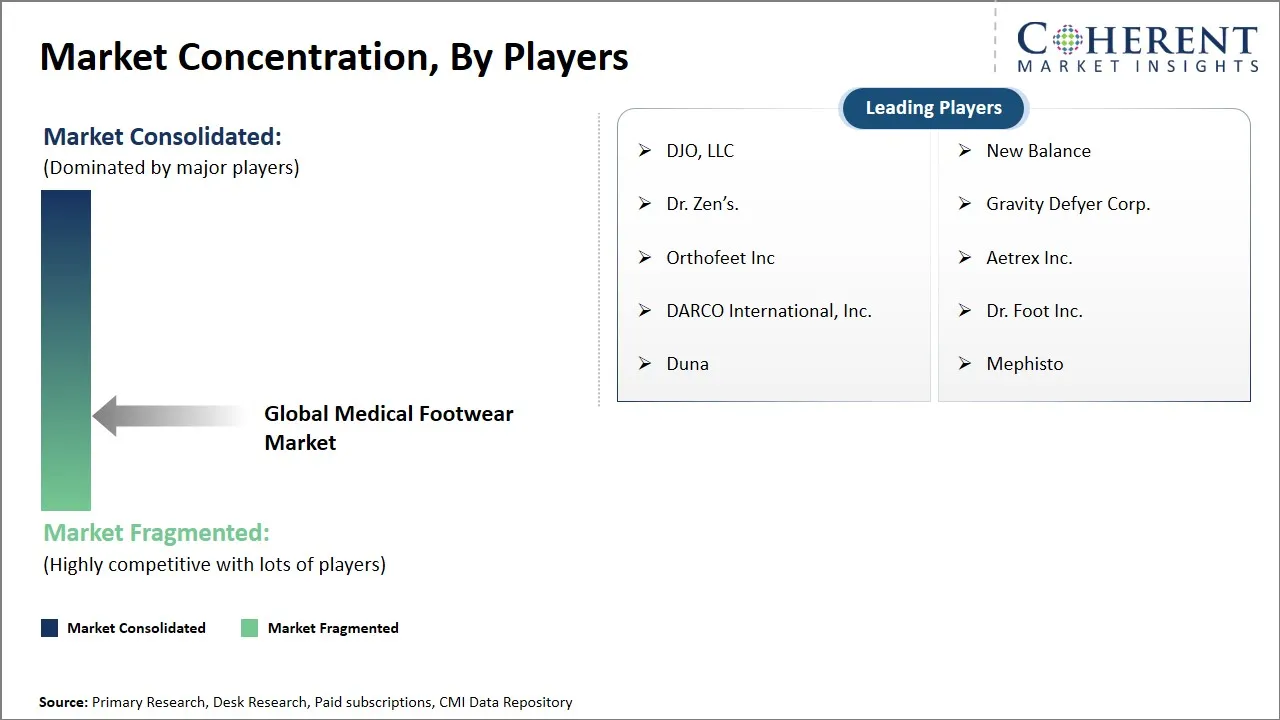
| Companies covered: | DJO, LLC, New Balance, Dr. Zen’s., Gravity Defyer Corp., Orthofeet Inc, Aetrex Inc., DARCO International, Inc., Dr. Foot Inc., Duna, and Mephisto | ||
| Growth Drivers: |
| ||
| Restraints & Challenges: |
| ||
Medical Footwear Market Dynamics
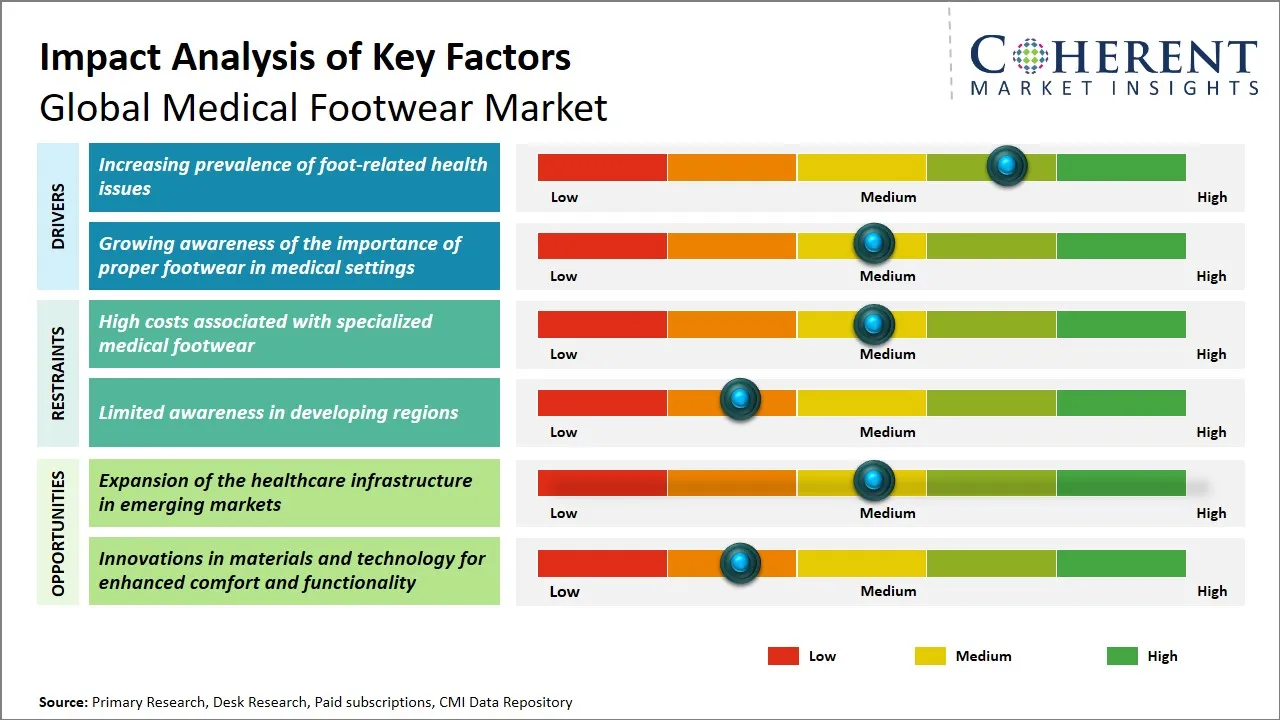
Medical Footwear Market Driver - Increasing Prevalence of Foot-Related Health Issues
The increasing occurrence of foot-related health issues like diabetic foot ulcers, plantar fasciitis, arthritis, and peripheral neuropathy is a major contributor to the growing demand for medical footwear worldwide. With an aging population and increasing cases of chronic diseases such as diabetes and obesity, the demand for specialized, supportive footwear to relieve pain, improve mobility, and avoid future complications is increasing day by day. Medical footwear provides benefits that include pressure relief, improved cushioning, and stability support that are necessary for people with numerous foot deformities and issues.
For instance, Companies like Dr. Comfort and Orthofeet are developing medical footwear options with cushioning and arch support built into their products, which is a relief for individuals dealing with any of these conditions. The increasing cases of obesity worldwide and an aging population are only going to increase the demand for specialized footwear like this.
Medical Footwear Market Opportunity - Expansion of Healthcare Infrastructure in Emerging Markets
Emerging markets possess a developing healthcare infrastructure that will drive growth of the global medical footwear market. Increasing urbanization, growing disposable incomes, and higher government spending on healthcare are contributing to the demand for innovative medical products, including medically-appropriate footwear for providers and patients. Substantial upgrades to hospital networks, clinics, and rehabilitation centers in Asia Pacific, Latin America, and Africa are factors that will contribute to an increase in demand for medical footwear that provides comfort, safety, and infection control.
For instance, the Indian government has invested heavily in increasing healthcare infrastructure through the Ayushman Bharat program that aims to provide healthcare services to over 500 million people at affordable prices. The proliferation of healthcare infrastructure is driving the need for medical footwear, especially in hospitals and rehabilitation settings.
Analyst Opinion (Expert Opinion)
- The market for medical footwear has undergone substantial growth due to the increased awareness around foot health and the increased prevalence of diseases such as diabetes and obesity. The International Conference on Podiatry (2023) and the Foot and Ankle Symposium (2022) showcased technological advancements and trends in orthotic footwear, while Colburn (2022) provided insight into existing and developing manufacturing companies within the orthotic and medical footwear space. Medical manufacturers in orthotic footwear include, but are not limited to, Orthofeet, New Balance, and other companies they are aware of through their presentation.
- Throughout these conferences, there were discussions about barriers to growth in the medical footwear market, such as the competitive nature of existing shoe companies and large demands for clinical evidence that could be addressed by producers of the medical shoes.
- Orthofeet has recently debuted a line of diabetic shoes that also has added arch support and cushioning for a diabetic patient population, which is a prominent example characterizing the footwear market's response to patient needs for functionality and comfort. Another recurring topic of discussion at these conferences was how innovative materials and the ergonomics of shoe design were likely to impact a patient's outcome and comfort.
- Companies able to target messages toward educating health professionals on the benefit of medical shoes and their role in patient care, as well as partner with clinics on these initiatives, may find significant competitive advantage moving forward. In sum, the growth of the medical footwear market will ultimately depend on the ability to navigate existing competition and innovate in meeting the diverse needs of patient comfort and functionality.
Speak to the analyst
Want personalized insights?
Take the findings above to one of our principal consultants, or have the report rebuilt around the segments, geographies and competitors you actually track.
Market Segmentation
- Product Type Insights (Revenue, USD Bn, 2021 - 2033)
- Orthopedic Footwear
- Surgical Shoes
- Diabetic Footwear
- Safety Footwear
- Others
- Material Insights (Revenue, USD Bn, 2021 - 2033)
- Leather
- Synthetic
- Textile
- Others
- End Use Insights (Revenue, USD Bn, 2021 - 2033)
- Men
- Women
- Distribution Channel Insights (Revenue, USD Bn, 2021 - 2033)
- Offline
- Online
- Regional Insights (Revenue, USD Bn, 2021 - 2033)
- North America
- U.S.
- Canada
- Latin America
- Brazil
- Argentina
- Mexico
- Rest of Latin America
- Europe
- Germany
- U.K.
- Spain
- France
- Italy
- Russia
- Rest of Europe
- Asia Pacific
- China
- India
- Japan
- Australia
- South Korea
- ASEAN
- Rest of Asia Pacific
- Middle East
- GCC Countries
- Israel
- Rest of Middle East
- Africa
- South Africa
- North Africa
- Central Africa
- North America
- Key Players Insights
- DJO, LLC
- New Balance
- Zen’s.
- Gravity Defyer Corp.
- Orthofeet Inc
- Aetrex Inc.
- DARCO International, Inc.
- Foot Inc.
- Duna
- Mephisto
Sources
Primary Research Interviews
- R&D Director – Leading Orthopedic Footwear Manufacturer
- Procurement Manager – Major Footwear Retailer (Medical & Orthopedic Focus)
- Product Development Head – Renowned Footwear Brand Specializing in Medical Footwear
- Regulatory Affairs Manager – Footwear Certification Body for Medical Products
Stakeholders
- Manufacturers
- End-use Sectors
- Medical Footwear (Orthopedic, Diabetic, Post-surgery Footwear)
- Sports & Fitness Brands (specializing in rehabilitation and injury prevention footwear)
- Healthcare Providers (Hospitals, Rehabilitation Centers, Podiatrists)
- Regulatory & Certification Bodies
- Retailers (Medical Supply Stores, E-commerce Platforms for Healthcare Products)
- Technology Integration Players
Databases
- UN Comtrade Database
- National Health Service (NHS) Database
Magazines
- Footwear News – Trends and developments in medical and orthopedic footwear
- Health & Wellness Journal – Innovations in therapeutic footwear solutions
- Rehabilitation Technology – Emerging trends in footwear for mobility rehabilitation
- Podiatry Today – Focused on foot health, including medical footwear advancements
- Orthopedic Today – Footwear innovations for orthopedic needs
Journals
- Journal of Foot and Ankle Research – Advances in medical footwear for foot-related diseases
- Journal of Rehabilitation Research and Development – Technology and footwear innovations for rehabilitation
- Clinical Orthopaedics and Related Research – Footwear for post-surgical recovery and prevention
- Journal of the American Podiatric Medical Association – Studies on medical footwear efficacy for different health conditions
- Footwear Science – Biometrics and material sciences related to medical footwear
Newspapers
- The Financial Times – Growth and trends in the medical footwear sector
- The Guardian – Coverage on foot health and the rise of medical footwear solutions
- Health Business Journal – Market trends in specialized footwear for health conditions
- The New York Times – Consumer shifts towards orthopedic footwear and rehabilitation solutions
Associations
- American Podiatric Medical Association (APMA)
- International Society of Biomechanics (ISB)
- Footwear Distributors & Retailers of America (FDRA)
- European Society of Foot and Ankle Surgeons (ESFAS)
- National Association of Orthotic and Prosthetic Manufacturers (NAOPM)
Public Domain Sources
- FDA – Guidelines for medical footwear and foot care products
- European Commission – Medical device regulations, including footwear for medical use
- World Health Organization – Safety standards for orthopedic and medical footwear
- OECD – Health impact assessments related to footwear for chronic foot conditions
Proprietary Elements
- CMI Data Analytics Tool, Proprietary CMI Existing Repository of information for last 8 years.
Get access to 250+ pages report
Every segment, forecast, competitor profile and data table behind the analysis above — available for instant download.
- ESOMAR Member
- ISO 9001:2015 Certified
- D-U-N-S Registered
- GDPR & CCPA Compliant
Missing comfort of reading report in your local language? Find your preferred language:
Transform your Strategy with Exclusive Trending Reports
Frequently Asked Questions
The global medical footwear market is estimated to be valued at USD 11.12 Bn in 2026 and is expected to reach USD 19.94 Bn by 2033.
The CAGR of the global medical footwear market is projected to be 8.7% from 2026 to 2033.
Increasing prevalence of foot-related health issues and growing awareness of the importance of proper footwear in medical settings are the major factors driving the growth of the global medical footwear market.
High costs associated with specialized medical footwear and limited awareness in developing regions are the major factors hampering the growth of the global medical footwear market.
In terms of product type, the orthopedic footwear segment is estimated to dominate the market revenue share in 2026.
DJO, LLC, New Balance, Dr. Zen’s., Gravity Defyer Corp., Orthofeet Inc, Aetrex Inc., DARCO International, Inc., Dr. Foot Inc., Duna, and Mephisto are the major players.
North America is expected to lead the global medical footwear market in 2026.