

Global Medical Manifolds Market Size and Forecast: 2026-2033
The global medical manifolds market is expected to grow from USD 1,486.3 Mn in 2026 to USD 2,694.8 Mn by 2033, registering a compound annual growth rate (CAGR) of 8.9% from 2026 to 2033. The market for global medical manifolds is poised for significant expansion, fueled by the soaring burden of chronic diseases, creating a need for advanced medical devices, including ventilators, dialysis systems, infusion pumps, and patient monitoring equipment that rely on precise fluid and gas control systems.
According to the World Health Organization, non-communicable diseases have been responsible for over 43 million deaths worldwide, representing 75% of all deaths unrelated to pandemics. The mortality rate due to NCDs was about 18 million deaths per year before the age of 70 years, with about 82% of such early deaths occurring in developing countries.
(Source: World Health Organization)
Key Takeaways of the Global Medical Manifolds Market
- Fluid manifolds are projected to hold 46.2 % of the global medical manifolds market share in 2026, making it the dominant product type segment, with high penetration in North America since the region enjoys the significant presence of clinical chemistry laboratories, which offer high throughput diagnostics. The U.S., in particular, will continue developing decentralized diagnostics and hospital automation, all of which involve the use of miniaturized fluid delivery systems for processing reagents and samples. According to the Centers for Medicare and Medicaid Services, there are over 320,000 lab licenses that fall under CLIA regulation in the U.S., indicative of the substantial number of testing systems that use precise fluidic components. (Source: Centers for Medicare and Medicaid Services)
- Polycarbonate is projected to hold 34.8 % of the global medical manifolds market share in 2026, making it the dominant material segment, with considerable dominance in Europe owing to mandatory compliance with EU MDR regulations and the presence of numerous medical device manufacturers specialized in designing products with applications in sterile fluids and diagnostics. Polycarbonate is considered highly suitable for use in Europe’s diagnostics and infusion equipment owing to its dimension stability, visual clarity in fluid transfer, and compatibility with the process of sterilization using gamma and EO technologies. MedTech Europe notes that there are over 38,000 medical device makers in Europe, where Germany is the major center for medtech production in the region. (Source: MedTech Europe)
- Diagnostic devices are projected to hold 38.6% % of the global medical manifolds market share in 2026, making it the dominant application segment, particularly in Asia Pacific owing to fast growing diagnostics infrastructure and testing for infectious diseases in India and China. The rising use of real time-polymerase chain reaction (RT-PCR) technology, cartridge analyzers, and decentralized laboratories are leading to high demand for microfluidics based medical manifolds that are able to provide accurate delivery of fluids during sample testing. For instance, in India, the Indian Council of Medical Research along with Department of Health Research have extended the network of Viral Research & Diagnostics Laboratory (VRDL) facilities in order to increase molecular testing capacity. (Source: Department of Health Research)
- North America maintains dominance with an expected share of 41.3 % in 2026, bolstered by the robust growth in the development of in-vitro diagnostics and minimally invasive devices manufactured from the U.S. Precision manifolds have found greater demand due to the trend towards designing smaller and disposable fluid pathways for automation within hospitals and laboratories. ARPA-H, which is a U.S. government-funded agency aimed at the advancement of domestic medical technology manufacturing, provides an example of a significant local initiative, as it is funding the infrastructure needed for advanced fluid flow assemblies in future diagnostic and healthcare equipment. (Source: ARPA-H)
- Europe is expected to exhibit the fastest growth with an estimated contribution of 28.1 % share in 2026, boosted due to the fast development of infrastructure for single use bioprocessing in the region and stringent EU MDR compliance for sterile fluid transfer parts. Germany, Switzerland, and Ireland have seen more investments in the manufacture of biological drugs and precise diagnostic tools that will need gamma sterilizable manifolds. One example of regional growth can be illustrated through the European Union’s massive investment through its European Commission into improving the resiliency of biomanufacturing and health technologies via its EU4Health initiative. (Source: European Commission)
- Increasing Adoption of Modular Microfluidic Diagnostic Platforms: The increased use of microfluidics in point-of-care diagnostic applications and portable medical instruments are generating a need for custom medical manifolds that can control the fluid flow. Medical manifolds are now designed with microchannels and multiple ports for applications such as lab on chips, wearable infusion pumps, and portable analyzers. Such an application of medical manifolds is especially common in decentralized healthcare facilities where portability and contamination-free handling are crucial.
- Expansion of Single-Use Bioprocessing and Sterile Fluid Handling Systems: The rapid shift towards disposability in both the medical and biopharmaceutical industries has opened up new opportunities for disposable medical manifolds that are designed for use in sterile fluid transfer processes. Medical manifolds that can be sterilized by gamma radiation have been produced using biocompatible materials to meet application needs in cell therapy, dialysis equipment, and sterile drug administration systems.
Segmental Insights
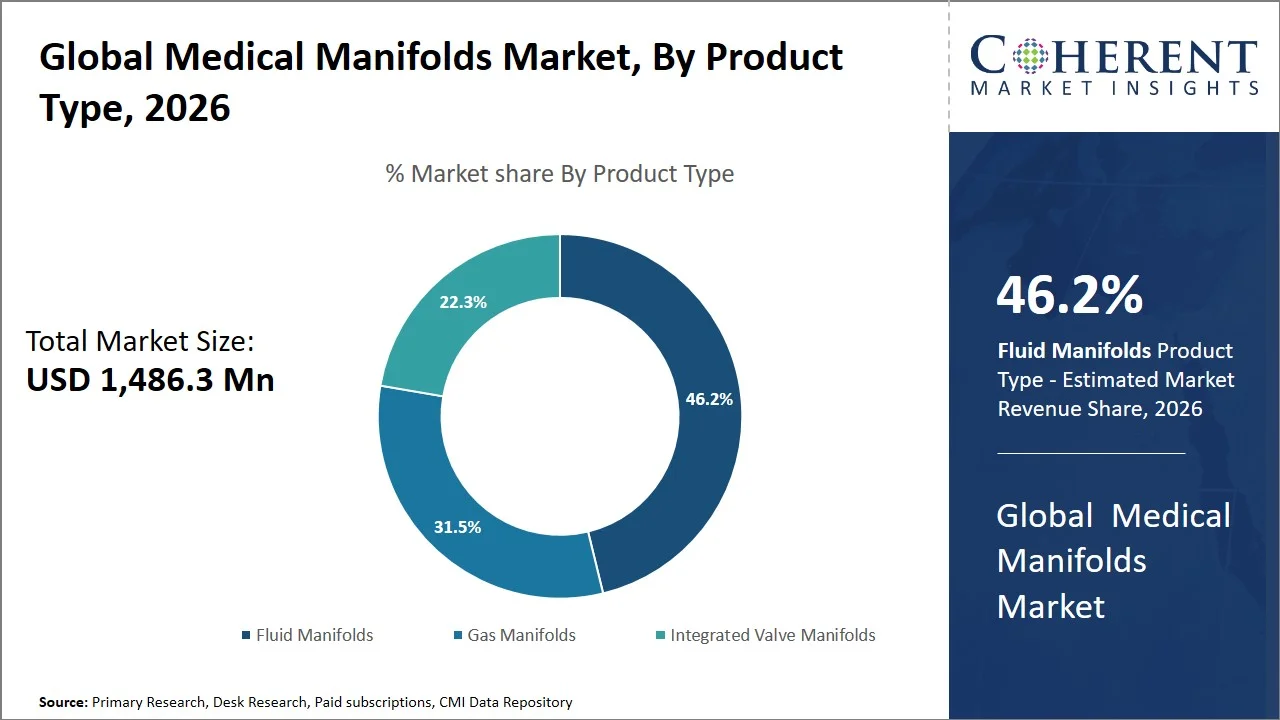
Why Does Fluid Manifolds Segment Dominate the Global Medical Manifolds Market?
Fluid manifolds are projected to hold the market share of 46.2% in 2026, attributed to their wide application in diagnostic analyzers, infusion pumps, dialysis machines, and minimal invasive surgical devices which require precision fluid distribution through multiple channels. These products have become essential in automating medical equipment due to their ease in designing of tubes and compactness in size and are now in high demand for molecular diagnostics cartridges and point of care devices. For instance, the medical diagnostic fluid manifold study by HCLTech shows that fluid manifolds with advanced capabilities enhance precision and reliability during reagent handling in blood gas analyzers and portable diagnostics systems. (Source: HCLTech)
- Current Industry Events of 2026
- Market Size Estimation
- Regional Breakdown
- Competitive Landscape
- Customer Intelligence
- Segmental Analysis
- Pricing Analysis
- Key Market Drivers, Challenges & Future Trends
- Customized Insights Section
Why Does Polycarbonate Represent the Largest Material Segment in the Global Medical Manifolds Market?
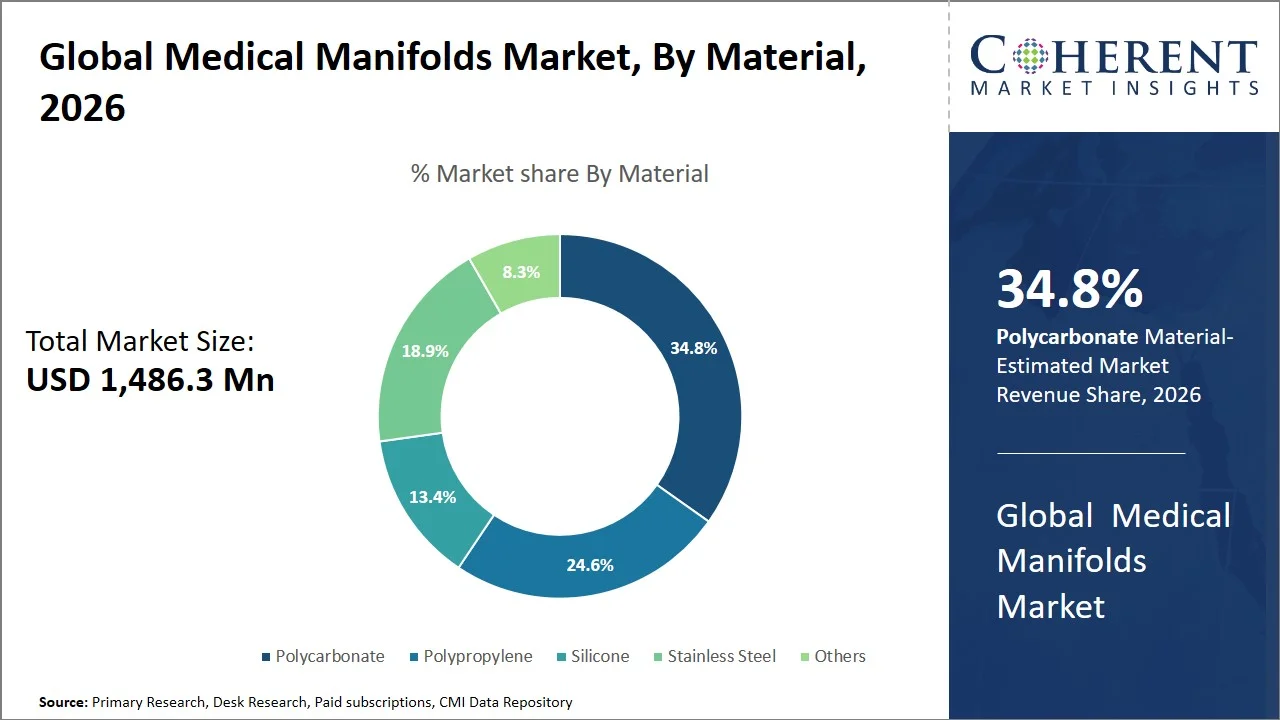
Polycarbonate is projected to hold a market share of 34.8% in 2026, because of its high impact strength, dimensional stability, and good optical clarity that is needed for the visualization of fluid flow through medical and diagnostic devices. This material is extensively used in infusion, dialysis equipment, and disposables for diagnostics because it retains its structure during gamma or EtO sterilization processes. In addition, polycarbonate is suitable for precise molding of intricate complex multi-port manifold geometries required in compact fluid management systems. For instance, Polycarbonate Manifold Platform by Nordson MEDICAL showcases how medical-grade polycarbonate manifolds can be used for biopharmaceuticals and sterile medical fluid handling applications. (Source: Nordson MEDICAL)
Diagnostic Devices Segment Dominates the Global Medical Manifolds Market
The diagnostic devices segment is projected to hold a market share of 38.6% in 2026, attributed to the growing use of automated molecular diagnostics, point of care testing, and high throughput analysis instruments which require accurate fluid transfer and handling of reagents. Multi-channel fluid manifolds have become an integral component of diagnostic instruments in terms of managing sample flow, reducing contamination, and instrument miniaturization. Increased interest in decentralized testing and diagnosis of infectious diseases is driving the incorporation of medical manifolds in diagnostic instruments. For instance, Advanced diffusion bonded manifolds for diagnostics - AFP emphasizes the increased role of manifolds in precision genomics, microfluidic processes, and diagnostics needing leak-free control of fluids. (Source: Newswise, Inc)
Currents Events and their Impact
Current Events | Description and its Impact |
U.S. FDA Reversal of Laboratory Developed Tests (LDTs) Rule Reshaping Molecular Diagnostics Manufacturing (September 2025) |
|
European Commission’s MDR/IVDR Simplification Proposal Supporting Faster IVD Commercialization (December 2025) |
|
(Source: Food and Drug Administration, European Commission)
Global Medical Manifolds Market Dynamics
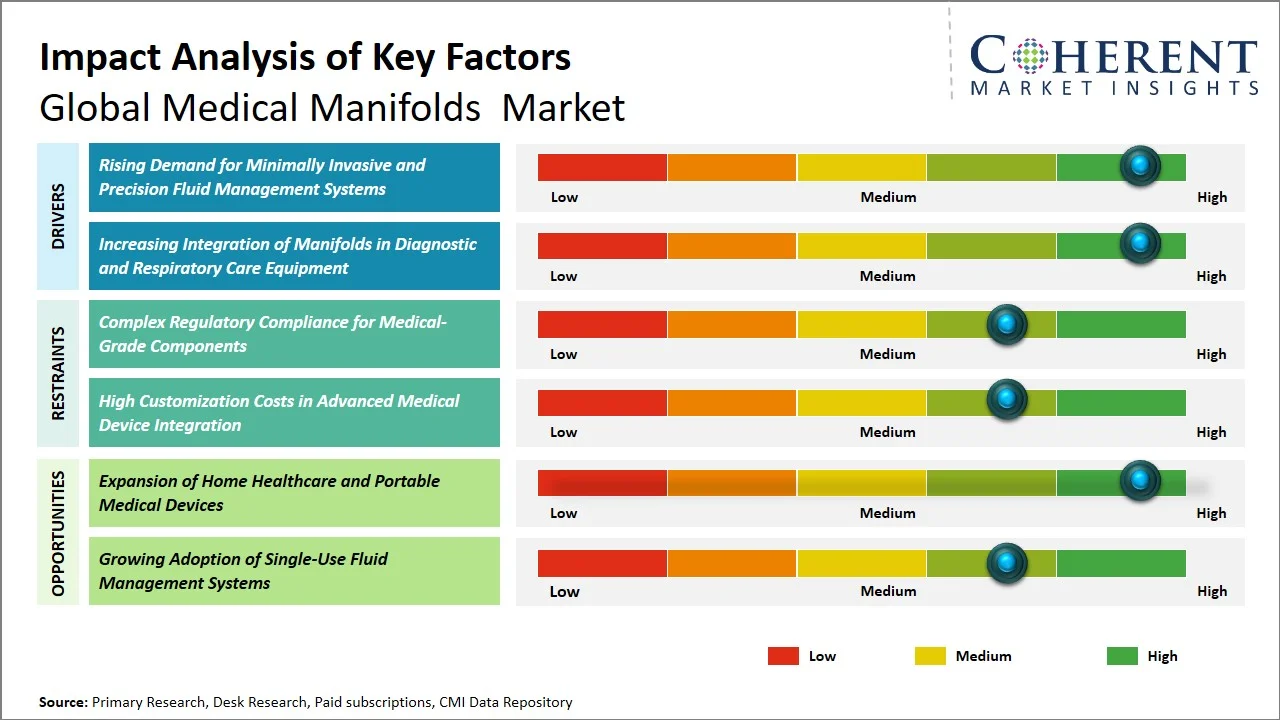
Market Drivers
- Rising Demand for Minimally Invasive and Precision Fluid Management Systems: Growing demand for minimal intervention techniques and precise fluid management technology are expected to be among the key factors driving the global medical manifolds market. Infusion technology, catheterization systems, robotic surgery units, and molecular diagnostic equipment need exact fluid flow management to achieve precise fluid delivery. Medical manifolds are capable of reducing dead volumes, leakage threats, and enabling smaller-sized equipment design in minimally invasive healthcare technologies. The increased trend of automating and making treatments portable is leading hospitals toward using multiple-port fluidic manifolds. For instance, guidance from the U.S. FDA on infusion pump safety and precision fluid delivery systems emphasizes the growing significance of fluid control technology reliability in advanced medical equipment and minimally invasive medical equipment. (Source: Food and Drug Administration)
- Increasing Integration of Manifolds in Diagnostic and Respiratory Care Equipment: The latest range of ventilators, anesthesia machines, oxygen therapy devices, and molecular diagnostic instruments require an effective fluid and gas delivery mechanism to ensure consistent performance and monitoring operations. Medical manifolds offer compact designs along with pressure control and contamination-free operation in the highly sensitive environment of medical facilities. Growing usage of ICU respiratory systems and diagnostic devices will increase demand for medical manifolds. For instance, GE HealthCare anesthesia and respiratory care systems exemplifies the growing use of integrated respiratory and anesthesia systems that utilize advanced gas flow control technologies and multichannel fluid controllers. (Source: GE HealthCare)
Emerging Trends
- Growing Adoption of Microfluidic-Based Diagnostic Platforms: Manifold developers for medical applications are progressively designing smaller and more precise fluid control mechanisms that can be incorporated into microfluidic diagnostic tools and lab-on-a-chip systems. Growing interest in cartridge-based molecular diagnostics and point-of-care testing has driven the adoption of small-size multi-channel manifolds with accurate fluid handling capabilities.
- Increasing Integration of Smart Sensors in Fluid Management Systems: Integration of Medical manifold systems with pressure, flow, and temperature sensors is becoming a common practice to facilitate real-time monitoring in diagnostics, respiration, and infusions. Integration of such components is expected to enhance the precision of fluid management and ensure greater patient safety within the automated healthcare industry.
Regional Insights
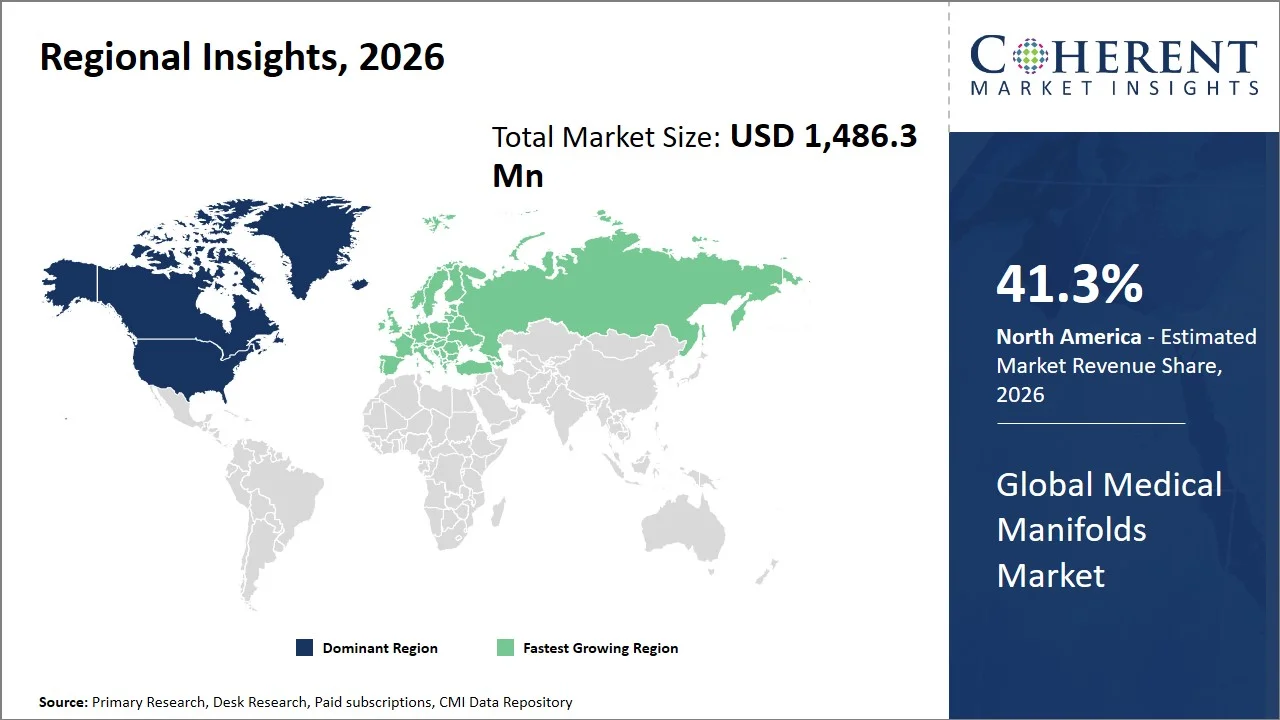
Why is North America a Strong Market for Medical Manifolds?
North America leads the global medical manifolds market, accounting for an estimated 41.3% share in 2026, attributed to the existence of an established manufacturing ecosystem for medical devices and the rising trend towards the automation of diagnosis, infusions, and respiration systems which require fluid management systems. The U.S. being its largest player, boasts a sizable number of OEMs producing molecular diagnostic analyzers, minimally invasive surgical systems, dialysis machines, and ICU respiratory care devices, all of which need small multi-port manifolds to distribute fluids and gases precisely. Increased investments in the automation of hospitals and POCT systems have only hastened this demand.
For instance, the National Institutes of Health provided enhanced funding support for innovative point-of-care diagnostic devices, microfluidic health care solutions, and automated clinical testing systems designed to enhance precision medicine and decentralized health care services. This has led to an increase in the requirement of miniaturized medical manifolds used in fluid management, sampling, and pressurization within medical device operations. (Source: National Institute of Biomedical Imaging and Bioengineering)
Why Does Europe Medical Manifolds Market Exhibit High Growth?
The Europe medical manifolds market is expected to exhibit the fastest growth with 28.1% share of the market in 2026, attributed to increased emphasis in the region on home health care solutions, and advancement of precise drug delivery systems. There has been an increase in demand for smaller, leakage-proof manifolds among wearable infusion pumps, home dialysis equipment, and portable respiratory machines used in managing chronic conditions.
Further, European healthcare facilities have adopted modular medical equipment designs which need customized fluid manifolds. For instance, European Investment Bank’s funding programs for medtech innovation and digital health manufacturing technologies, which are helping in the growth of medical device manufacturing facilities throughout Europe. (Source: European Investment Bank)
Global Medical Manifolds Market Outlook for Key Countries
Why is the U.S. Leading Innovation and Adoption in the Medical Manifolds Market?
The U.S. has been at the forefront of innovation and implementation of medical manifolds due to the rapid emergence of new generation surgical robots, accurate drug delivery systems, and extracorporeal medical instruments needing advanced fluid control architecture. Device manufacturers in the region are beginning to integrate more customized designs of manifold systems with sensors, multilayer flow channels, and compact configurations to facilitate smaller-sized medical devices. Medical manifolds will also gain traction from their earlier adoption in AI-powered diagnostic devices and wearable therapies, which need stable manifold configurations for reliable operations.
Is U.K. a Favorable Market for Medical Manifolds?
The U.K. appears to be a promising market for medical manifolds because of the rising trend in designing small-scale medtech devices that are targeted for ambulatory and mobile health care use cases. The demand for bespoke manifold components in wearable infusions, mobile ventilators, and closed-loop systems for fluid management in community health care settings is on the rise. Moreover, the U.K. is seeing an increasing use of manifold-integrated microfluidics in clinical trials and personalized medicine processes. Finally, the U.K. medical device OEMs are increasingly using polymer machining and additive manufacturing in creating manifold products for niche applications.
Is China Emerging as a Key Growth Hub for the Medical Manifolds Market?
The medical manifolds market is witnessing robust expansion within China as the high-level medical devices' manufacturing process gets localized within China with growing manufacturing of medical diagnostics and critical care equipment. There has been an increasing inclination towards producing miniature ventilation devices, automated biochemical analyzers, and intelligent infusion devices that make use of manifold assemblies to control the flow of fluids and gases. There have also been efforts by Chinese manufacturers to integrate the application of multi-cavity polymer molding technology and microfluidic technology to cut down the imports of the fluid management components. There has also been significant expansion of digital hospitals driving the medical manifolds market in the country.
Why Does Germany Top the Europe Medical Manifolds Market?
Germany is the leader in the Europe market for medical manifolds attributed to its extensive specialization in precise medical technology engineering as well as volume production of complicated diagnostic and therapeutic devices. There is a developed supply chain for the components necessary to create customized manifold systems, which can be used in imaging technologies, extracorporeal treatment modalities, and laboratory automated devices. The manufacturing facilities in Germany have started relying on computer-controlled machining and assembling inside cleanrooms for high purity requirements in medical applications. Moreover, the concentration of Germany on industrial automation and intelligent manufacturing techniques will drive production of small sized manifolds.
Is Medical Manifolds Market Developing in Japan?
The market for medical manifolds is rapidly growing in Japan associated with the country’s proficiency in precision fluid-control engineering and miniaturization of medical devices. The Japanese OEMs are incorporating smaller manifold assemblies into various medical devices including endoscopy systems, dialysis machines, infusion systems, and automated lab equipment that require precise fluid control. Another driver of the medical manifolds market in Japan is innovation in micro-pump systems, precision polymer forming, and ultra-miniature components for advanced medical devices. Moreover, the emphasis on reliable and durable medical equipment in Japan is promoting the development of superior manifold designs.
Regulatory Landscape Governing the Global Medical Manifolds Market
Region
| Authority & Classification | Approval Pathway | Key Regulatory Insight |
North America | U.S. Food and Drug Administration – Medical manifolds are generally regulated as Class I or Class II medical device components depending on integration with fluid delivery, respiratory, or diagnostic systems. | 510(k) clearance is commonly required for manifold-integrated systems demonstrating substantial equivalence to predicate devices. Quality compliance under 21 CFR Part 820 is critical. | Regulatory focus is increasing on fluid-path integrity, biocompatibility validation, sterilization compatibility, and traceability for manifold assemblies integrated into infusion and respiratory systems. |
Europe | European Commission under EU MDR 2017/745 – Classification depends on intended medical application and patient-contact duration. | CE marking through conformity assessment with notified bodies and technical documentation review under EU MDR. | Europe maintains strict oversight on polymer safety, sterilization validation, and cleanroom manufacturing for manifold-integrated medical devices, particularly for single-use systems. |
Asia Pacific | National Medical Products Administration and Pharmaceuticals and Medical Devices Agency regulate medical manifold-integrated systems under country-specific medical device frameworks. | Local type testing, product registration, and quality management audits are generally required before commercialization. | Regional regulators are increasingly emphasizing localization of medical device manufacturing and stronger validation standards for diagnostic and respiratory fluid-control components. |
Latin America | Agência Nacional de Vigilância Sanitária classifies manifold-based medical systems according to device risk profile and intended clinical use. | Cadastro or Registro approvals are required depending on device classification and associated clinical risk. | Brazil is strengthening technical documentation and GMP inspection requirements for imported and domestically assembled medical fluid-management devices. |
Middle East & Africa | Saudi Food and Drug Authority and regional health authorities oversee approval of medical manifold-enabled systems. | Medical device marketing authorization typically requires prior approval from reference markets such as the U.S. or EU along with local registration. | Regulatory frameworks across the region are increasingly aligning with international standards for sterile fluid handling systems, respiratory devices, and diagnostic equipment imports. |
How is expansion of home healthcare and portable medical devices creating new growth opportunities in the global medical manifolds market?
With increased usage of home health care services and portability of medical devices, there have emerged immense growth prospects for the market for medical manifolds due to the increasing need for compact and highly dependable fluid handling systems by manufacturers of portable medical devices. These include portable infusion devices, oxygen concentrators, home dialysis machines, and ambulatory respiratory support devices that use medical manifolds to help regulate fluid and gas flow within the device while avoiding leakage issues. With decentralization of health care gaining momentum, the demand for specialized manifold configurations to support battery-operated medical devices continues to rise. For instance, Expansion of Baxter’s home dialysis and connected care platform, indicative of the growing industry emphasis on portable renal and fluid management systems that need sophisticated manifold integration for safe and consistent treatment at home. (Source: Baxter)
Market Players, Key Development, and Competitive Intelligence
Key Developments
- In February 2026, BeaconMedaes developed three pipeline solutions that were intended to improve safety, regulatory compliance, and versatility in medical gases. These solutions have been developed to provide better gas distribution through health care establishments for more effective management of gases.
- In December 2025, Manifold made an announcement that the startup had successfully raised USD 18 million through a Series B financing round, with Reach Capital acting as the lead investor and SilverArc Capital and Industry Ventures contributing as well. The company claimed that the funds would be used to expand the life sciences platform powered by artificial intelligence (AI). It was created to expedite biopharma processes, from identifying targets to the clinical stage.
Competitive Landscape
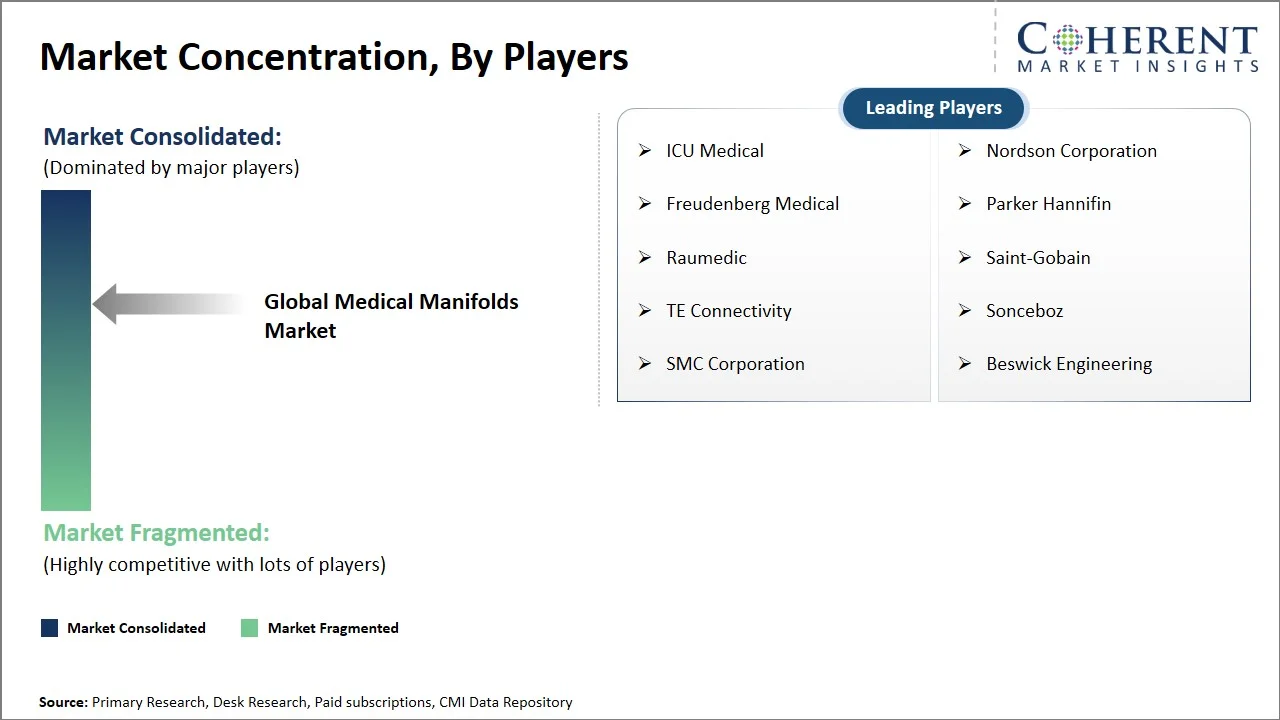
The global medical manifolds market is moderately competitive, where competition is primarily based on precision engineering in fluid control, miniaturization of manifold design, and customization depending upon specific medical applications such as diagnostics, respiratory devices, infusion devices, and bioprocessing equipment. Increasing trends in the global medical manifolds market include multi-port polymer-based manifolds, clean room compatible manufacturing processes, and sensor-based fluid management technologies for different advanced applications. The growing trend in the global medical manifolds market includes rapid prototyping capabilities, microfluidics, and high-purity material compatibility for developing advanced medical devices. Key focus areas include:
- Development of miniaturized and high-precision manifold assemblies for portable medical devices
- Integration of smart sensing and real-time flow monitoring capabilities in fluid-management systems
- Expansion of cleanroom-based manufacturing and sterilizable polymer manifold production
- Increasing adoption of microfluidic-compatible manifold architectures for diagnostic platforms
- Customization of multi-channel fluid routing systems for respiratory and infusion applications
Market Report Scope
Medical Manifolds Market Report Coverage
| Report Coverage | Details | ||
|---|---|---|---|
| Base Year: | 2025 | Market Size in 2026: | USD 1,486.3 Mn |
| Historical Data for: | 2020 To 2024 | Forecast Period: | 2026 To 2033 |
| Forecast Period 2026 to 2033 CAGR: | 8.9% | 2033 Value Projection: | USD 2,694.8 Mn |
| Geographies covered: |
| ||
| Segments covered: |
| ||
| Companies covered: | ICU Medical, Nordson Corporation, Freudenberg Medical, Parker Hannifin, Raumedic, Saint-Gobain, TE Connectivity, Sonceboz, SMC Corporation, and Beswick Engineering | ||
| Growth Drivers: |
| ||
| Restraints & Challenges: |
| ||
Analyst Opinion (Expert Opinion)
- In the coming years, the prospects of the medical manifolds market will be significantly affected by the trend toward developing small-scale, automated, and decentralized medical systems that need accurate handling of fluid and gas streams. The increasing use of manifold systems in wearable drug delivery devices, molecular diagnostic kits, robotic surgery systems, and portable respirators will contribute to higher demand for miniature, multiport, and sensor-equipped manifolds. Another growing tendency is the widespread application of high-quality plastic manifolds in sterilizable and single-use medical devices.
- The maximum opportunities will probably exist in diagnostic, and portable medical respiratory therapy applications in both the China and U.S. markets. China is experiencing a boom in the development of domestically-manufactured automated analyzers, ICU respiratory systems, and smart health-care devices which require precise microfluidics technology for use in a local environment. At the same time, there are substantial opportunities in the U.S. in the development of wearable drug delivery systems, home dialysis solutions, and artificial intelligence (AI) diagnostic platforms using microfluidic manifolds.
- In order to gain a competitive advantage, the key focus of market players needs to be on developing manifold systems that have been specifically tailored to applications by incorporating microgeometries along with integrated sensor capability and advanced polymer processing technologies. The ability of OEMs to engage in cleanroom manufacturing, rapid prototyping, and microfluidic integration will take on greater importance as OEMs seek to produce specialized fluid delivery systems that require very little dead volume.
Speak to the analyst
Want personalized insights?
Take the findings above to one of our principal consultants, or have the report rebuilt around the segments, geographies and competitors you actually track.
Market Segmentation
- Product Type Insights (Revenue, USD Mn, 2021 - 2033)
- Fluid Manifolds
- Gas Manifolds
- Integrated Valve Manifolds
- Material Insights (Revenue, USD Mn, 2021 - 2033)
- Polycarbonate
- Polypropylene
- Silicone
- Stainless Steel
- Others
- Application Insights (Revenue, USD Mn, 2021 - 2033)
- Diagnostic Devices
- Drug Delivery Systems
- Dialysis Equipment
- Respiratory Care Devices
- Surgical and Patient Monitoring Systems
- End User Insights (Revenue, USD Mn, 2021 - 2033)
- Hospitals and Clinics
- Diagnostic Laboratories
- Ambulatory Surgical Centers
- Medical Device Manufacturers
- Others
- Regional Insights (Revenue, USD Mn, 2021 - 2033)
- North America
- U.S.
- Canada
- Latin America
- Brazil
- Argentina
- Mexico
- Rest of Latin America
- Europe
- Germany
- U.K.
- Spain
- France
- Italy
- Russia
- Rest of Europe
- Asia Pacific
- China
- India
- Japan
- Australia
- South Korea
- ASEAN
- Rest of Asia Pacific
- Middle East
- GCC Countries
- Israel
- Rest of Middle East
- Africa
- South Africa
- North Africa
- Central Africa
- North America
- Key Players Insights
- ICU Medical
- Nordson Corporation
- Freudenberg Medical
- Parker Hannifin
- Raumedic
- Saint-Gobain
- TE Connectivity
- Sonceboz
- SMC Corporation
- Beswick Engineering
Sources
Primary Research Interviews
- Medical device design engineers involved in fluid-control and manifold-integrated system development
- Clinical laboratory managers utilizing automated diagnostic and sample-handling equipment
- Respiratory care specialists and ICU equipment professionals managing ventilator and anesthesia systems
- Infusion therapy and dialysis equipment manufacturers utilizing precision fluid-routing assemblies
- Polymer processing and microfluidic engineering experts specializing in medical-grade manifold fabrication
- Hospital biomedical engineering teams involved in maintenance and integration of fluid-management systems
Stakeholders
- Medical manifold manufacturers and precision fluid-control component providers
- End-use Sectors:
- Hospitals and Ambulatory Surgical Centers
- Diagnostic Laboratories and Molecular Testing Facilities
- Medical Device OEMs
- Biopharmaceutical and Drug Delivery Companies
- Home Healthcare and Portable Care Equipment Providers
- Academic and Medical Research Institutes
- Critical Care and Respiratory Treatment Centers
- Regulatory & Health Bodies: U.S. Food and Drug Administration – medical device component regulations and fluid-path compliance frameworks, European Commission – EU MDR regulations for sterile and single-use medical systems, National Medical Products Administration – medical device registration and localized manufacturing regulations, Pharmaceuticals and Medical Devices Agency – approval framework for advanced medical devices and diagnostic systems, World Health Organization – healthcare infrastructure and respiratory care technology frameworks
Databases
- FDA Medical Device Databases – medical device clearances and component approval pathways
- ClinicalTrials.gov – diagnostic and fluid-management device clinical studies
- OECD Health Statistics – healthcare infrastructure and critical care equipment adoption data
- WHO Global Health Observatory – respiratory care and healthcare facility statistics
- NIH MedlinePlus and NCBI – medical device engineering and fluid-control research publications
Magazines
- Medical Design & Outsourcing – medical device engineering and manufacturing developments
- Medical Device Network – fluid-control and diagnostic equipment technology advancements
- MedTech Dive – healthcare device innovation and regulatory updates
- MPO (Medical Product Outsourcing) – contract manufacturing and medical component trends
- Lab Manager – laboratory automation and diagnostic instrumentation developments
Journals
- Journal of Medical Devices
- Biosensors and Bioelectronics
- Lab on a Chip
- Journal of Biomedical Materials Research
- Analytical Chemistry
Newspapers
- Financial Times – healthcare technology investments and medtech manufacturing trends
- The Wall Street Journal – medical device supply chain and healthcare equipment coverage
- The New York Times (Health Section) – healthcare technology and medical innovation trends
- The Guardian (Science & Health) – global healthcare infrastructure and medtech developments
Associations
- Medical Device Manufacturers Association
- Advanced Medical Technology Association
- MedTech Europe
- Association for the Advancement of Medical Instrumentation
- International Society for Pharmaceutical Engineering
Public Domain Sources
- National Institutes of Health – medical device engineering and translational healthcare research
- Centers for Disease Control and Prevention – respiratory care and healthcare infrastructure data
- U.S. Food and Drug Administration – medical device regulatory and manufacturing framework
- European Commission – medical technology policy and healthcare innovation initiatives
- World Health Organization – healthcare systems and medical technology adoption statistics
Proprietary Elements
- CMI Data Analytics Tool
- Proprietary CMI Existing Repository of information for last 10 years.
Get access to 250+ pages report
Every segment, forecast, competitor profile and data table behind the analysis above — available for instant download.
- ESOMAR Member
- ISO 9001:2015 Certified
- D-U-N-S Registered
- GDPR & CCPA Compliant
Missing comfort of reading report in your local language? Find your preferred language:
Transform your Strategy with Exclusive Trending Reports
Frequently Asked Questions
The global medical manifolds market is estimated to be valued at USD 1,486.3 Mn in 2026 and is expected to reach USD 2,694.8 Mn by 2033.
Fluid manifolds dominate due to their extensive use in diagnostic analyzers, infusion systems, respiratory equipment, and dialysis devices requiring precise multi-channel fluid distribution and compact device integration.
The CAGR of global medical manifolds market is projected to be 8.9% from 2026 to 2033.
Rising demand for minimally invasive and precision fluid management systems and increasing integration of manifolds in diagnostic and respiratory care equipment are the major factors driving the growth of the global medical manifolds market.
Complex regulatory compliance for medical-grade components and high customization costs in advanced medical device integration are the major factors hampering the growth of the global medical manifolds market.
ICU Medical, Nordson Corporation, Freudenberg Medical, Parker Hannifin, Raumedic, Saint-Gobain, TE Connectivity, Sonceboz, SMC Corporation, and Beswick Engineering are the major players.
North America is expected to lead the global medical manifolds market in 2026.