

Global Medicated Skincare Market Size and Forecast – 2026 to 2033
The Global Medicated Skincare Market is estimated to be valued at USD 52.06 Bn in 2026 and is expected to reach USD 77.26 Bn by 2033, exhibiting a compound annual growth rate (CAGR) of 5.8% from 2026 to 2033.
Key Takeaways of the Medicated Skincare Market
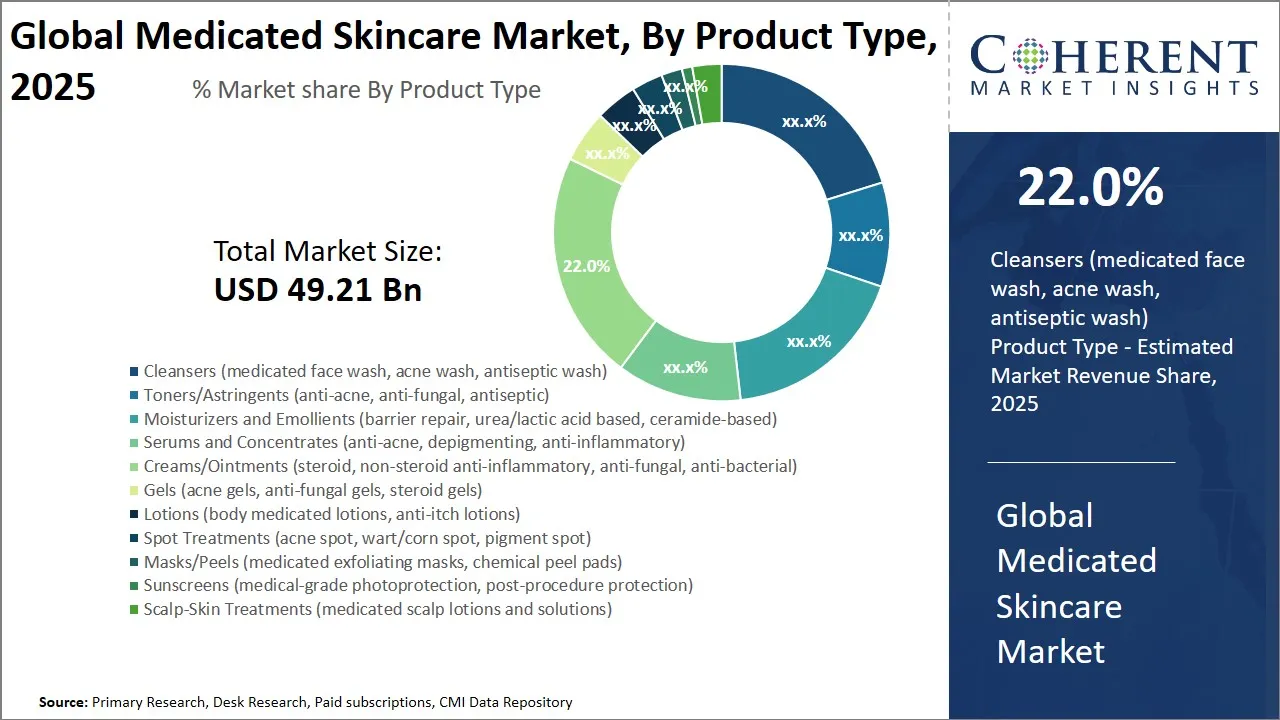
- In 2026, cleansers, including medicated face washes, acne washes, and antiseptic washes, will account for the largest share of the global medicated skincare market, with 23%.
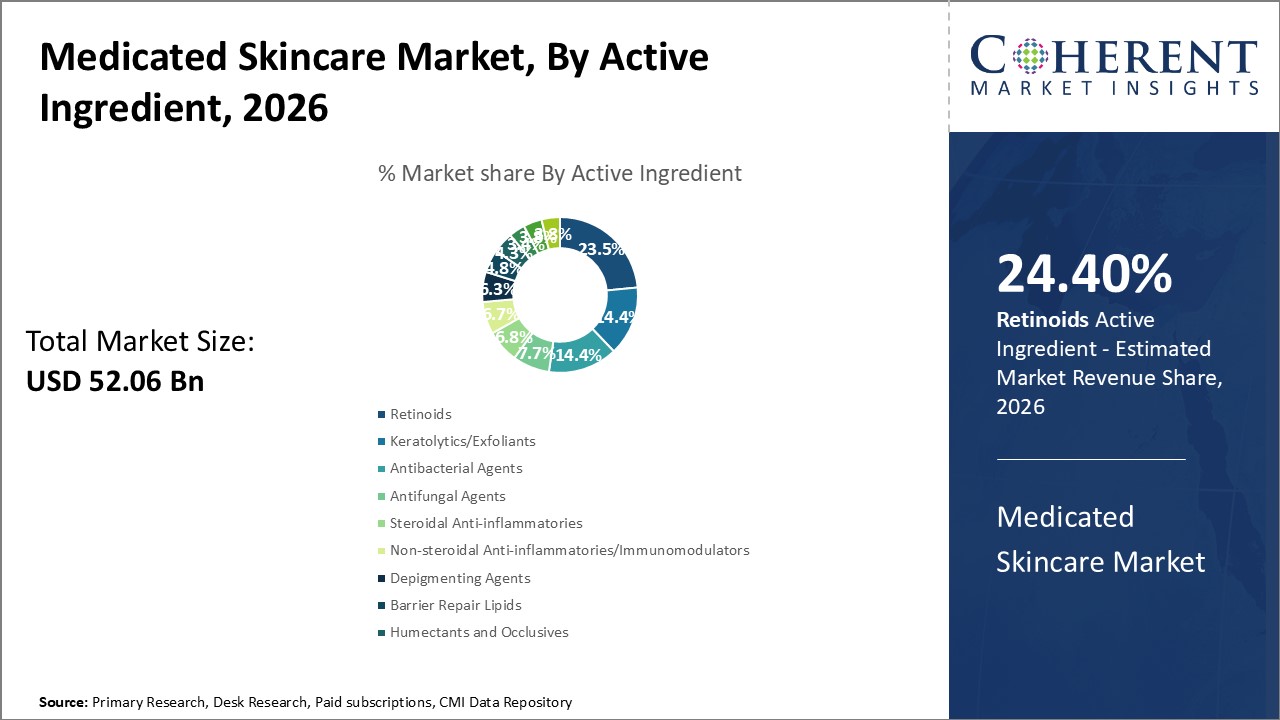
- Retinoids will lead the market by active ingredient class, holding a 24.4% share in 2026.
- The acne and sebum control segment is expected to capture 17.5% share of the global medicated skincare market in 2026.
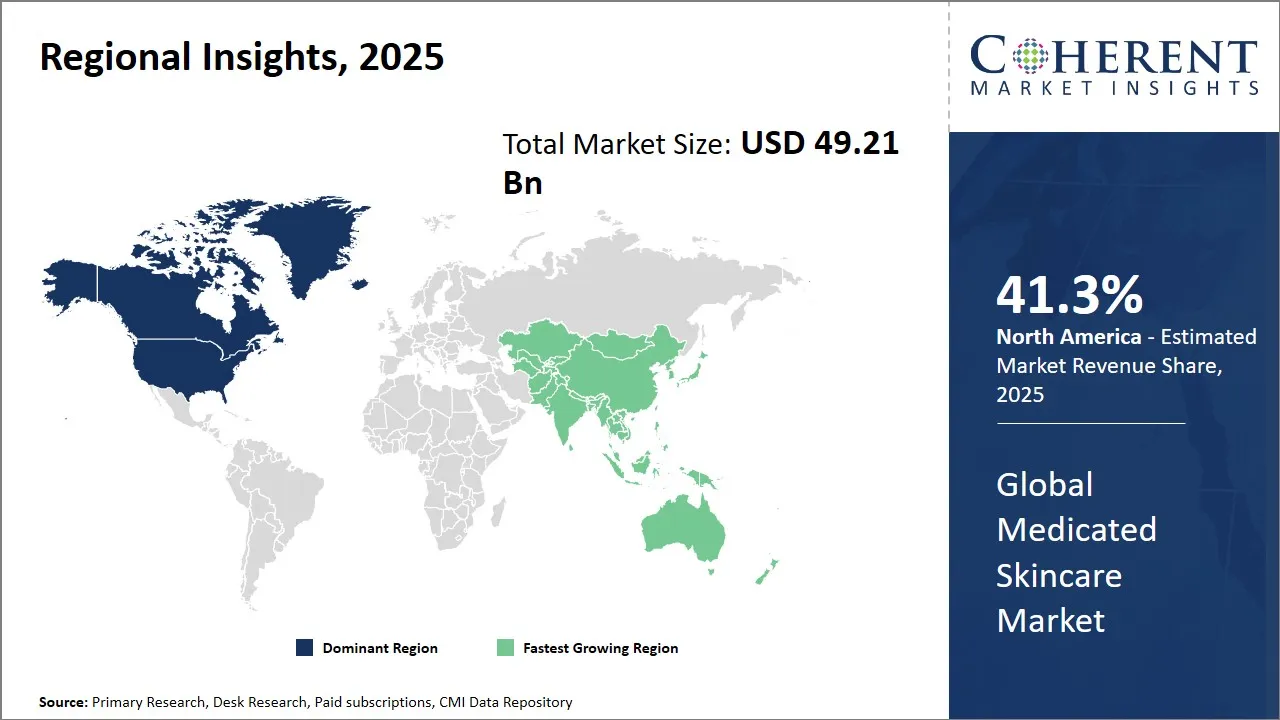
- North America is expected to lead the market, holding a share of 41.3% in 2026. Asia Pacific is anticipated to be the fastest-growing region, with 23.4% share in 2026.
Market Overview
- The market trend in medicated skincare emphasizes the integration of natural and bioactive ingredients with traditional medicinal compounds, catering to consumers seeking safer, more sustainable products.
- Additionally, the surge in chronic skin conditions like acne, eczema, and psoriasis fuels innovation, with companies investing in personalized skincare and digital diagnostics to enhance treatment efficacy.
- These trends are reshaping the market dynamics, making medicated skincare a vital segment within the broader dermatology and personal care industries.
Currents Events and Its Impacts
Current Events | Description and its Impact |
Rising Consumer Demand for Personalized & Tech‑Driven Solutions |
|
Ingredient & Trend Evolution (Microbiome & Barrier‑First Focus) |
|
Segmental Insights
- Current Industry Events of 2026
- Market Size Estimation
- Regional Breakdown
- Competitive Landscape
- Customer Intelligence
- Segmental Analysis
- Pricing Analysis
- Key Market Drivers, Challenges & Future Trends
- Customized Insights Section
What is the leading role of cleansers in the Medicated Skincare Market?
Regarding product type, cleansers (medicated face wash, acnes wash, antiseptic wash) are anticipated to add the largest portion of the global market of medicated skincare with 23% in 2026 due to their essential use in everyday skincare routine along with curative power.
Medicated cleansers would not only be meant to cleanse, get the dirt, oil and impurities out of the skin but also treat some of the most common skin related illnesses that include acne, fungus and bacterial irritations.
For instance, in August 2026, Galderma, a leader in dermatology, launched the Cetaphil Nourishing Oil to Foam Cleanser, designed for sensitive skin. This dual-phase formula cleanses while maintaining hydration, using ingredients like PENTAVITIN and flaxseed oil. The cleanser effectively removes makeup, dirt, and excess oil, while providing 24-hour hydration without stripping skin.
How are retinoids emerging as premier active ingredients in the Medicated Skincare Market?
In the medicated skincare market, retinoids are estimated to hold 24.4% of the market share in 2026, which is a result of their well-established effectiveness in the treatment of various skin disorders and the encouragement of healthier skin regeneration.
Vitamin A products are also known as retinoids which are widely used due to their capacity to increase cellular turnover, unclog pore, and suppress inflammation, rendering them especially useful in the management of acne, photoaging as well as hyperpigmentation. Among the drivers of the superiority of retinoids is the fact that they have been well-documented to be effective in treating acne, a persistent and common skin condition in humans across the world.
How Does the Acne and Sebum Control Segment Influence the Medicated Skincare Market?
The acne and sebum control segment is expected to hold 17.5% of the market share in the global market of medicated skincare in 2026. The medicated skincare market is dominated by the demand for solutions that regulate the production of oil and prevent breakouts and the sources of active ingredients such as benzoyl peroxide, salicylic acid and retinoids to treat acne vulgaris among adolescents and young adults.
Sebum control products are aimed at reducing the excess oil on the skin surface in order to avoid clogged pores and an acne flare-up. These products may also have oil-controlling properties and anti-inflammatory properties in a combination to promote a clear and balanced skin. Acne and sebum control product markets are developing at a high rate because of the heightened awareness, the increasing cases of acne and an increasing interest in specific and medicalized skincare products.
Prescription-to-OTC Migration Pathways in the Medicated Skincare Market
- Consumer Demand & Accessibility: Rising consumer demand for accessible treatments for conditions like acne, eczema, and rosacea drives the shift from prescription to OTC products. Consumers seek convenience and self-care solutions without the need for a doctor’s visit.
- Regulatory Support: Regulatory bodies, such as the FDA, enable the migration by setting criteria for OTC approval based on product safety, efficacy, and ease of use, expanding the availability of OTC options.
- Business Model Shift: OTC products offer a more attractive business model, providing broader reach with lower development and distribution costs compared to prescription drugs.
- Market Strategy: Leading companies are adapting their portfolios to include OTC formulations, tapping into the growing self-care trend while meeting the demand for cost-effective, over-the-counter skincare treatments.
Regional Insights
North America Medicated Skincare Market Analysis and Trends
The dominance in the global medicated skincare market in North America is experienced due to a strong healthcare infrastructure with an estimated 41.3% in 2026. This growth is boosted by high awareness among the people about skin health, and high spending power. Well established dermatology and pharmaceutical industries also play a role in market leadership in this region.
Moreover, the region is advantaged with the developed distribution ecosystem comprising of specialty pharmacy, dermatology, and online retail system. Major competitors, including Johnson and Johnson, AbbVie, and Amgen, play an active role in their contribution through a large amount of research and a variety of product lines that treat a wide range of diseases, such as acne, psoriasis, and eczema.
Asia Pacific Medicated Skincare Market Analysis and Trends
The Asia Pacific region has been forecasted to record the highest growth with an estimated share of 23.4% in 2026 as the skin health awareness will be rising as the disposable income increases and as the urban population continues to grow. Rising cases of skin conditions and increased emphasis on individual appearance are among the factors that have increased demands. Market growth is further enhanced by the dynamic healthcare system and rising access to dermatology services in nations such as China, Japan, India, and South Korea.
The rapid development and distribution of products is supported by government programs that focus on enhancing the healthcare services and increasing investments by local and multinational pharmaceutical companies. Firms such as LG Household & Health Care, Shiseido and Sun Pharmaceutical Industries are also taking advantage of this expansion and coming up with new medicated skincare products specific to the regions with specific skin types and challenges.
Global Medicated Skincare Market Outlook for Key Countries
U.S. Medicated Skincare Market Trends
In the U.S., the skincare market has a high level of chronic dermatology and its consumers show a great interest in the therapeutic skincare products. Major drug manufacturers like Johnson and Johnson and Pfizer are in dominant positions, and as a result, they use developed R&D resources to introduce new therapies.
The U.S. FDA regulatory schemes guarantee product safety and effectiveness, which build consumer confidence and market security. Large accessibility to medical workers and special care clinics of cosmetic dermatology that promote the use of medicated skincare also contributes to the growth.
China Medicated Skincare Market Trends
The China medicated skincare market and is characterized by fast growth due to increasing middle-income buyers and increasing investments in pharmaceutical production and research. It is seeing local firms like Heng Rui Medicine become more innovative in medicated topical treatments, and larger international firms like L’Oréal and Shiseido are growing through strategic alliances and local product development.
The positive influence of the government on the development of the domestic pharmaceutical sector, as well as the changes in the market accessibility and intellectual property safeguards, contribute to the improvement of the competition, and the increasing access to the products in urban and semi-urban regions.
Japan Medicated Skincare Market Trends
Japan is still at the forefront in skincare technology and innovation, backed by the well-developed healthcare system and the population that puts a high value on preventative skin health. The market is driven by major players such as Shiseido, Kao Corporation and Rohto Pharmaceutical with scientifically-backed formulations that are a combination of medicinal and cosmetic benefits.
A well-regulated market place has been achieved by the supportive regulatory environment and quality control by the government. The interest of Japanese in anti-aging and skin condition management products is one of the key elements in increasing consumption of medicated skincare.
India Medicated Skincare Market Trends
The medicated skincare market is booming in India because the level of healthcare awareness is being raised, and more people have an increased access to dermatological products. The major domestic players including Cipla and Sun Pharmaceutical industries play a crucial role, as they specialize in cheap and effective solutions to acne, fungal and vitiligo.
Healthcare infrastructure improvements coupled with an increased e-commerce platform ease the expanses of the product. The policies of government in favor of pharmaceutical production and export, as well as the efforts to increase the availability of healthcare in rural areas, have a great effect on the dynamics and availability of the market.
Treatment Adherence, Formulation Tolerability, and Steroid-Sparing Adoption in Medicated Skincare
- Treatment Adherence vs Formulation Tolerability: Treatment adherence is heavily influenced by formulation tolerability. Products that cause irritation or discomfort lead to poor compliance. Patients prefer treatments that are comfortable, easy to use, and have minimal side effects, making tolerability key to ensuring consistent use and effective results.
- Steroid-Sparing & Non-Steroidal Adoption: Steroid-sparing treatments are gaining popularity as safer alternatives to corticosteroids, which can cause long-term side effects. Non-steroidal options like calcineurin inhibitors are increasingly adopted for conditions such as eczema, providing effective, long-term solutions without the risks associated with steroids.
Market Players, Key Developments, and Competitive Intelligence
Key Developments
- In January 2025, Obagi Medical, known for its medical-grade skincare, made its debut in India through an exclusive launch on Nykaa. The launch brings advanced, clinically proven skincare solutions to Indian consumers, including popular products like the Daily Hydro-Drops Serum, Retinol 1.0 Cream, and Professional-C Serum. Available online and in select Nykaa stores, this launch responds to the growing demand for premium skincare in India.
- In November 2025, Oddity, the parent company of Il Makiage, launched Methodiq, a telehealth platform focused on medical skincare. The platform offers 28 new products, including creams, supplements, and cosmetics for acne, hyperpigmentation, and eczema, priced between USD 29 and USD 59. Methodiq combines Oddity's investments in biotechnology, AI-based imaging, and digital retailing to tap into the growing medical skincare market, projected to reach USD 113 billion in 2025.
- In October 2025, Iberia Pharmaceuticals launched KeyCi, a dermatology-led skincare brand for Indian skin. The brand offers vegan, cruelty-free, alcohol-free, and U.S. FDA-approved products, designed specifically for modern consumers aged 18–45. KeyCi’s range includes a cleanser, serum, hydrating cream, and sunscreen, all developed through clinical research for Indian skin. The products are dermatologically tested, free from harmful chemicals, and use eco-friendly packaging.
- In May 2024, Otsuka Pharmaceutical launched the InnerSignal skincare line, focusing on skin regeneration and cellular turnover. The new basic skincare products, "Repair Lotion" and "Repair Milk," aim to address epidermal imbalances and support healthy skin. The Repair Lotion is a medicated lotion that prevents dullness and rough skin, containing active ingredients like dipotassium glycyrrhizate and amino acid ectoin.
Top Strategies Followed by Global Medicated Skincare Market Players
Player Type | Strategic Focus | Examples |
Established Market Leaders | Heavy R&D investment in high-performance medicated skincare products; focus on scientific advancements, integrating cutting-edge ingredients; strategic partnerships with OEMs, key suppliers, and industry players; global expansion into emerging markets like Asia Pacific, Latin America, and the Middle East | Procter & Gamble integrates AI and biotechnology into skincare formulations; Johnson & Johnson expands into emerging markets through strategic partnerships and product innovation |
Mid-Level Players | Cost-effective medicated skincare solutions balancing quality and affordability; collaborations with technology providers and suppliers; strong focus on public hospitals and price-sensitive consumers in developing markets | Neutrogena (Johnson & Johnson) offers affordable medicated skincare with regional collaborations; CeraVe (L'Oréal) provides effective solutions in emerging markets |
Small-Scale Players | Niche innovation in medicated skincare; focus on biotechnology, novel delivery systems, and personalized treatments; rapid product development and local alliances for enhanced market entry | Dermalogica focuses on skin health and professional-grade skincare; Murad specializes in targeted treatments for specific skin concerns with fast-tracked innovation |
Market Report Scope
Medicated Skincare Market Report Coverage
| Report Coverage | Details | ||
|---|---|---|---|
| Base Year: | 2025 | Market Size in 2026: | USD 52.06 Bn |
| Historical Data for: | 2020 To 2024 | Forecast Period: | 2026 To 2033 |
| Forecast Period 2026 to 2033 CAGR: | 5.8% | 2033 Value Projection: | USD 77.26 Bn |
| Geographies covered: |
| ||
| Segments covered: |
| ||
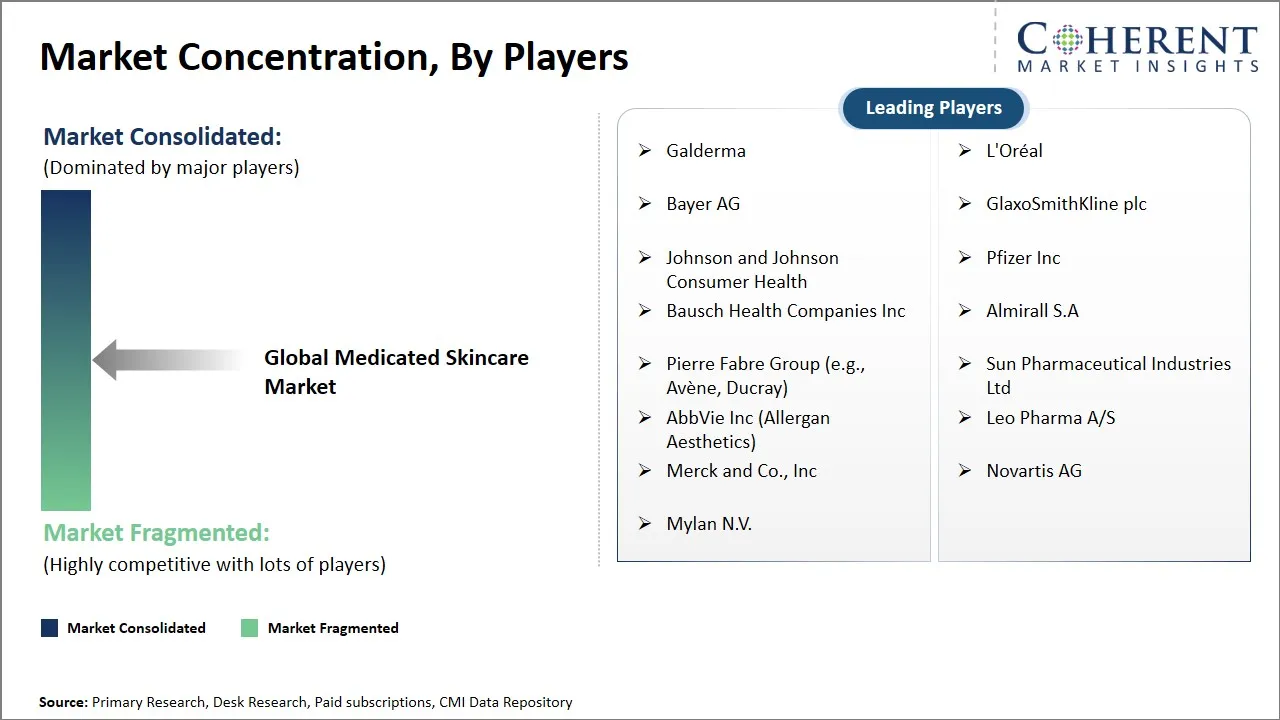
| Companies covered: | Galderma, L'Oréal, Bayer AG, GlaxoSmithKline plc, Johnson and Johnson Consumer Health, Pfizer Inc, Bausch Health Companies Inc, Almirall S.A, Pierre Fabre Group (e.g., Avène, Ducray), Sun Pharmaceutical Industries Ltd, AbbVie Inc (Allergan Aesthetics), Leo Pharma A/S, Merck and Co., Inc, Novartis AG, and Mylan N.V. | ||
| Growth Drivers: |
| ||
| Restraints & Challenges: |
| ||
Medicated Skincare Market Dynamics
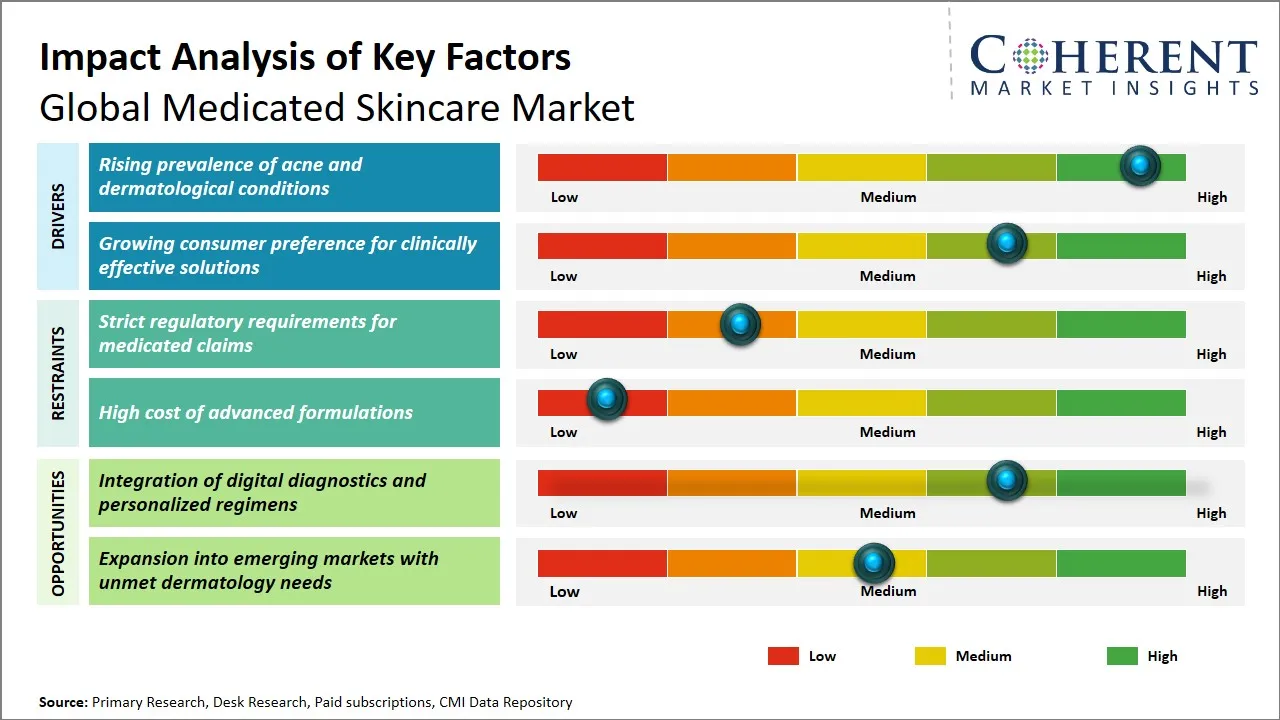
Medicated Skincare Market Driver - Rising prevalence of acne and dermatological conditions
One of the most significant forces behind the medicated skincare market is the increasing popularity of acne and skin related diseases. Skin conditions such as acne, eczema, rosacea, and others have become improperly frequent as a result of environmental pollution, lifestyle changes, and stress. This trend has caused an uptake in the need of skincare products with therapeutic value.
Dermatologists will recommend medicated skincare products that offer specific treatment to these conditions, which will treat the symptoms and the underlying causes. Customers are increasingly conscious of the significance of specialized skincare solutions that extend beyond cosmetic properties, and they want products with established effectiveness to control and treat their skin issues. This is why the market of medicated skincare products has been steadily increasing especially in the regions that are highly susceptible to such conditions.
In February 2024, Pierre Fabre Laboratories published a global study on acne epidemiology in the Journal of American Academy of Dermatology. The study revealed a 20.5% global acne prevalence, with higher rates in adolescents (28.3%) and adults (19.3%). Women were more affected than men (23.6% vs. 17.5%). Latin America (23.9%) and East Asia (20.2%) had the highest prevalence. Acne impacts quality of life, causing fatigue, sleep issues, and stigmatization. The ALL study, launched in 2022, collected data from over 50,000 participants across 20 countries. Pierre Fabre Laboratories, a French pharmaceutical and dermo-cosmetics company, focuses on oncology and dermatology, with 80% of its R&D investment in oncology.
Medicated Skincare Market Opportunity - Integration of digital diagnostics and personalized regimens
There is a great potential in the introduction of digital diagnostics to the medicated skincare market that will provide an opportunity to create a personalized skincare regimen. Cutting-edge technologies, including artificial intelligence-based skin analysis and facial recognition applications, enable precise diagnosis of the skin disorders, enabling consumers with the treatment strategy. This online strategy increases the effectiveness of this product through prescribed formulations, depending on the skin type and skin issues. Individualized regimens powered by digital diagnostics are also more effective in enhancing customer interaction and satisfaction as they provide treatment based on their individual needs.
On July 25, 2025, Alma launched Universkin by Alma, an AI-assisted medical-grade skincare platform aimed at personalizing treatment regimens. This innovative system enables physicians to perform rapid digital skin analysis and create customized formulations in under a minute. Using an intelligent diagnostic algorithm, the platform offers a choice from 18 active ingredients, producing over 12 million unique skincare combinations.
Analyst Opinion (Expert Opinion)
- The medicated skincare market is growing rapidly, driven by technological innovations, regulatory support, and rising consumer demand for personalized solutions. Advancements like AI-powered diagnostics and clean, sustainable beauty products are key drivers. Regulatory bodies like the FDA and EMA are enhancing consumer trust, while opportunities exist in tailored treatments. Challenges include strict regulations and sourcing complexities, alongside rising expectations for transparency.
- Key industry events, such as the Global Aesthetic and Anti-Aging Medicine Congress (2023) and American Academy of Dermatology Annual Meeting (2024), have been instrumental in advancing knowledge and policy in skincare. Notable initiatives like Alma's AI-assisted skincare system highlight the shift towards personalized treatment. Governments and companies are also focusing on sustainability, which will shape market growth and product development in the coming years.
Speak to the analyst
Want personalized insights?
Take the findings above to one of our principal consultants, or have the report rebuilt around the segments, geographies and competitors you actually track.
Market Segmentation
- Product Type Insights (Revenue, USD Bn, 2021 - 2033)
- Cleansers (medicated face wash, acne wash, antiseptic wash)
- Toners/Astringents (anti-acne, anti-fungal, antiseptic)
- Moisturizers and Emollients (barrier repair, urea/lactic acid based, ceramide-based)
- Serums and Concentrates (anti-acne, depigmenting, anti-inflammatory)
- Creams/Ointments (steroid, non-steroid anti-inflammatory, anti-fungal, anti-bacterial)
- Gels (acne gels, anti-fungal gels, steroid gels)
- Lotions (body medicated lotions, anti-itch lotions)
- Spot Treatments (acne spot, wart/corn spot, pigment spot)
- Masks/Peels (medicated exfoliating masks, chemical peel pads)
- Sunscreens (medical-grade photoprotection, post-procedure protection)
- Scalp-Skin Treatments (medicated scalp lotions and solutions)
- Active Ingredient Class Insights (Revenue, USD Bn, 2021 - 2033)
- Retinoids
- Keratolytics/Exfoliants
- Antibacterial Agents
- Antifungal Agents
- Steroidal Anti-inflammatories
- Non-steroidal Anti-inflammatories/Immunomodulators
- Depigmenting Agents
- Barrier Repair Lipids
- Humectants and Occlusives
- Antipruritics/Soothing Agents
- Photoprotective Filters
- Antioxidants and Skin Repair Agents
- Therapeutic Indication Insights (Revenue, USD Bn, 2021 - 2033)
- Acne and Sebum Control
- Atopic Dermatitis/Eczema
- Psoriasis
- Fungal Infections
- Bacterial Skin Infections
- Rosacea
- Hyperpigmentation
- Pruritus/Itch and Inflammation
- Wound and Scar Care
- Photodamage/Actinic Care
- Keratosis Pilaris
- Dry Skin/Xerosis/Barrier Dysfunction
- Seborrheic Dermatitis
- Warts/Corns/Calluses
- Sensitive/Reactive Skin
- Product Type Insights (Revenue, USD Bn, 2021 - 2033)
- Prescription (Rx) Medicated Skincare
- OTC Drug/Pharmacy OTC
- Skin Type Insights (Revenue, USD Bn, 2021 - 2033)
- Oily/Acne-prone
- Dry/Very Dry
- Combination
- Sensitive/Reactive
- Normal
- Compromised Barrier
- Age Group Insights (Revenue, USD Bn, 2021 - 2033)
- Pediatric
- Teen
- Adult
- Elderly
- Gender Insights (Revenue, USD Bn, 2021 - 2033)
- Male
- Female
- Application Area Insights (Revenue, USD Bn, 2021 - 2033)
- Face
- Body
- Scalp
- Intimate/Special Areas
- Distribution Channel Insights (Revenue, USD Bn, 2021 - 2033)
- Online
- Offline
- Regional Insights (Revenue, USD Bn, 2021 - 2033)
- North America
- U.S.
- Canada
- Latin America
- Brazil
- Argentina
- Mexico
- Rest of Latin America
- Europe
- Germany
- U.K.
- Spain
- France
- Italy
- Russia
- Rest of Europe
- Asia Pacific
- China
- India
- Japan
- Australia
- South Korea
- ASEAN
- Rest of Asia Pacific
- Middle East
- GCC Countries
- Israel
- Rest of Middle East
- Africa
- South Africa
- North Africa
- Central Africa
- North America
- Key Players Insights
- Galderma
- L'Oréal
- Bayer AG
- GlaxoSmithKline plc
- Johnson and Johnson Consumer Health
- Pfizer Inc
- Bausch Health Companies Inc
- Almirall S.A
- Pierre Fabre Group (e.g., Avène, Ducray)
- Sun Pharmaceutical Industries Ltd
- AbbVie Inc (Allergan Aesthetics)
- Leo Pharma A/S
- Merck and Co., Inc
- Novartis AG
- Mylan N.V.
Sources
Primary Research Interviews
Industry Stakeholders List
- Dermatologists
- Aesthetic Medicine Professionals
End-users List
- Patients with skin conditions
- Cosmetic dermatology patients
Government and International Databases
- World Health Organization (WHO)
- U.S. Food and Drug Administration (FDA)
- European Medicines Agency (EMA)
- National Institutes of Health (NIH)
- Centers for Disease Control and Prevention (CDC)
- Health Canada
Trade Publications
- Dermatology Times
- Practical Dermatology
- Cosmetics & Toiletries
- The Aesthetic Guide
- Dermatology World
- Skin Inc.
Academic Journals
- The Journal of Investigative Dermatology
- Dermatologic Therapy
- Journal of the American Academy of Dermatology
- Skin Pharmacology and Physiology
- International Journal of Dermatology
- Clinical, Cosmetic and Investigational Dermatology
Reputable Newspapers
- The New York Times
- The Guardian
- The Wall Street Journal
- The Financial Times
- The Washington Post
- Los Angeles Times
Industry Associations
- American Academy of Dermatology (AAD)
- European Academy of Dermatology and Venereology (EADV)
- International Society of Dermatology (ISD)
- National Psoriasis Foundation (NPF)
- International Dermal Institute (IDI)
- American Society for Aesthetic Plastic Surgery (ASAPS)
Public Domain Resources
- National Library of Medicine
- National Institutes of Health (NIH)
- ClinicalTrials.gov
- U.S. National Library of Medicine
- Drug Bank
- OpenFDA
Proprietary Elements
- CMI Data Analytics Tool: Proprietary analytics tool to analyze real-time market trends, consumer behavior, and technology adoption in market
- Proprietary CMI Existing Repository of Information for Last 8 Years
Get access to 250+ pages report
Every segment, forecast, competitor profile and data table behind the analysis above — available for instant download.
- ESOMAR Member
- ISO 9001:2015 Certified
- D-U-N-S Registered
- GDPR & CCPA Compliant
Missing comfort of reading report in your local language? Find your preferred language:
Transform your Strategy with Exclusive Trending Reports
Frequently Asked Questions
The global medicated skincare market is estimated to be valued at USD 52.06 Bn in 2026 and is expected to reach USD 77.26 Bn by 2033.
The CAGR of Global Medicated Skincare Market is projected to be 5.8% from 2026 to 2033.
Rising global prevalence and diagnosis rates of neuropsychiatric conditions and increasing societal acceptance and reduced stigma surrounding mental health are the major factors driving the growth of the global medicated skincare market.
High cost of novel therapeutics and long-term treatment regimens and stringent regulatory pathways and prolonged approval timelines for CNS drugs are the major factors hampering the growth of the global medicated skincare market.
In terms of product type, the cleansers (medicated face wash, acne wash, antiseptic wash) segment is estimated to dominate the market revenue share in 2026.
Galderma, L'Oréal, Bayer AG, GlaxoSmithKline plc, Johnson and Johnson Consumer Health, Pfizer Inc, Bausch Health Companies Inc, Almirall S.A, Pierre Fabre Group (e.g., Avène, Ducray), Sun Pharmaceutical Industries Ltd, AbbVie Inc (Allergan Aesthetics), Leo Pharma A/S, Merck and Co., Inc, Novartis AG, and Mylan N.V. are the major players.
North America is expected to lead the global medicated skincare market in 2026.