

Global Microbiology Culture Market Size and Forecast – 2026 to 2033
The Global Microbiology Culture Market is estimated to be valued at USD 13.03 Bn in 2026 and is expected to reach USD 24.44 Bn by 2033, exhibiting a compound annual growth rate (CAGR) of 9.4% from 2026 to 2033. This significant growth reflects increasing demand for advanced microbiological techniques in healthcare, pharmaceuticals, and food industries, driven by rising infectious diseases and the need for quality control in manufacturing processes globally.
Key Takeaways of the Global Microbiology Culture Market
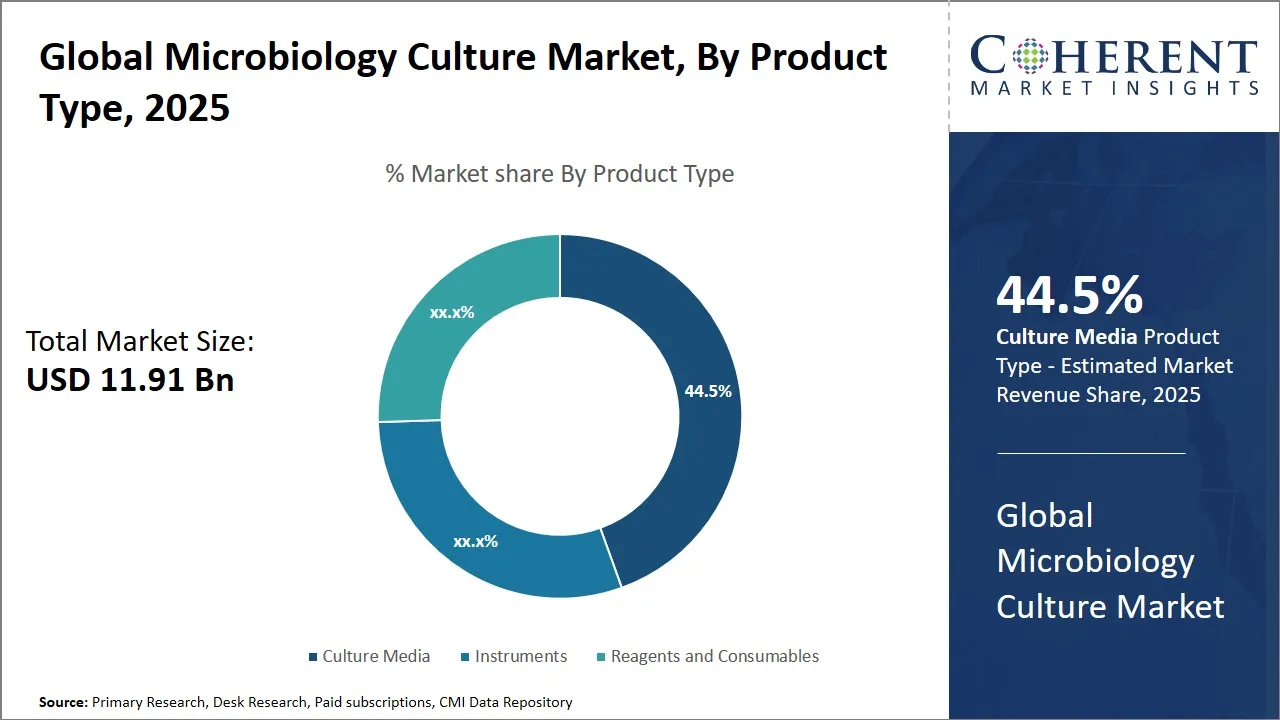
- Culture media segment is projected to account for 45.5 % of the market share in 2026.
- Bacterial culture segment is projected to hold 26.5 % of the microbiology market share in 2026.
- Liquid culture segment is expected to capture 36.4% of the market share in 2026.
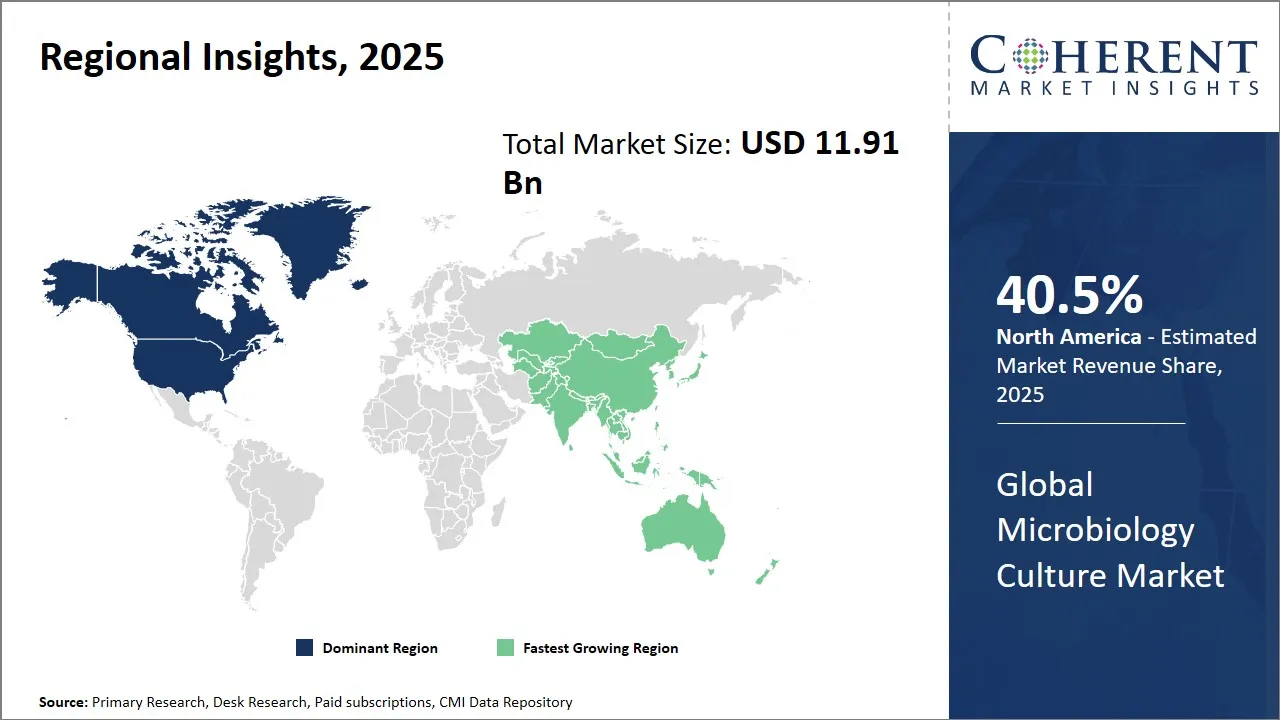
- North America is expected to lead the market, holding a share of 40.5% in 2026. Asia Pacific is anticipated to be the fastest-growing region, with an estimated market share of 24.3% in 2026.
Market Overview
Current market trends highlight a growing emphasis on automation and high-throughput screening technologies in microbiology culture systems, enhancing precision and efficiency. Additionally, the expanding application of microbiology cultures in personalized medicine, biotechnology research, and environmental monitoring is further propelling the market growth. Strategic partnerships and continuous innovation in culture media formulations are also shaping the competitive landscape, enabling companies to capture a larger share of this rapidly evolving the market.
Current Events and Its Impact
Current Events | Description and its Impact |
Accelerated Adoption of Automation and AI |
|
The Rise of Antimicrobial Resistance (AMR) |
|
Segmental Insights
- Current Industry Events of 2026
- Market Size Estimation
- Regional Breakdown
- Competitive Landscape
- Customer Intelligence
- Segmental Analysis
- Pricing Analysis
- Key Market Drivers, Challenges & Future Trends
- Customized Insights Section
Microbiology Culture Market Insights, By Product Type - Culture Media Contributes the Highest Share of the Market Owing to its Critical Role in Microbiological Research and Diagnostics
The use of culture media is an integral part of the entire microbiological process of growing and isolating microorganisms or consequently, their signals from the environment, which is the reason for the microbiology culture segment leading position with a share valued at 45.5% in 2026. Hence, among different product types, culture media are the ones who take the upper hand through their widespread applications in clinical diagnostics, pharmaceutical research, food and beverage testing, and environmental monitoring.
In May 2025, PL BioScience, a German life sciences company, and DewCell Biotherapeutics, a Korean biotech firm, announced a partnership to develop scalable, animal-free cell culture media. DewCell will supply batches of artificial platelets, utilizing their stem cell differentiation technology to create megakaryocytes for production.
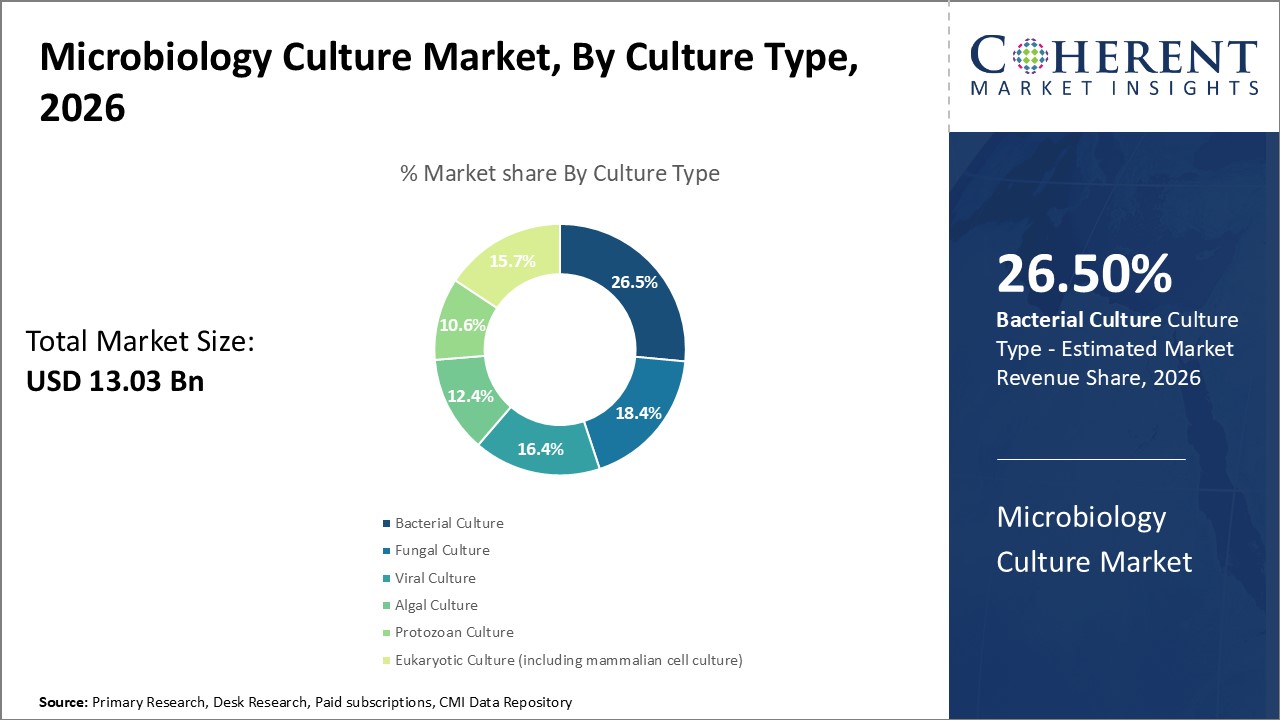
Microbiology Culture Market Insights, By Culture Type - Bacterial Culture Accounts for the Largest Share Driven by its Extensive Applications and Fundamental Role in Microbiological Studies
It is expected that bacterial culture would have 26.5% of the market share in 2026, a major factor being its indispensable application in the health, agriculture, and industry sectors. The market segment is being enriched by the concern related to the rise of bacterial infections and the problem of antimicrobial resistance.
The bacterial culture has become the center of attention in the research pertaining to pathogens, antibiotic resistance, and microbial ecology. The areas of application of this method are clinical diagnostics, environmental monitoring, food safety, and probiotic development. So, the ever-increasing demand for bacterial research and diagnostic testing keeps on providing with the necessary expansion of this segment.
Microbiology Culture Market Insights, By Form - Liquid Culture Holds the Highest Market Share Owing to its Versatility and Enhanced Efficacy in Microbial Cultivation
It is predicted that liquid culture segment will reach a market share of 36.4% in 2026, which is based on the fact that the systems can support rapid, uniform microbial growth. The systems also keep the process of scaling up microbial cultivation going by maintaining even oxygenation and nutrient distribution, which are the significant factors in this kind of process.
Liquid cultures are mainly applied in clinical labs, biopharmaceutical production, and research and are thus classified as automated systems and high-throughput screening that are also very much dependent on liquid cultures. Their compatibility with bioreactors and diagnostic devices facilitates the microbial growth monitoring process, which is essential for the large-scale fermentation and biologics production in the pharmaceutical industry.
Regional Insights
North America Microbiology Culture Market Analysis and Trends
The microbiology culture market in North America is predicted to hold the biggest part by 40.5% share in 2026, mainly due to the strong and advanced healthcare infrastructure and the high research and investment in the biopharmaceutical industry. The region is also being supported by the presence of top microbiology culture manufacturers, such as Thermo Fisher Scientific, Becton Dickinson, and Merck KGaA, as they offer a wide range of products and actively participate in the development of new culture media and diagnostic technologies through their innovations.
In August 2024, Nucleus Biologics, a provider of high-quality cell culture media and related services, introduced its QuickStart Media platform in the U.S. The platform offers customizable, high-performance cell culture media for T cells, HEK cells, MSCs, and NK cells, accelerating therapy development and optimization.
Asia Pacific Microbiology Culture Market Analysis and Trends
The Asia Pacific region is predicted to take up 24.3% of the microbiology culture share in 2026, as a result of the fastest-growing healthcare sector across the world, increased incidence of infectious diseases, and growing consumers’ interest in diagnostics. Countries like China, India, and Japan have been investing heavily in the healthcare infrastructure and biopharmaceuticals, which eventually translates to demand for microbiology culture products.
Furthermore, the region is recognized for its growing demand for microbiology cultures in the food safety and pharmaceutical sectors, which are among the most industrialized industries and extensively use microbiology cultures for the quality control process. Prominent companies, such as bioMérieux (with a strong presence in China and India) and Eiken Chemical Co., are actively expanding their regional footprints by introducing localized and affordable solutions.
Global Microbiology Culture Market Outlook for Key Countries
U.S. Microbiology Culture Market Analysis and Trends
The U.S. microbiology culture market is infectious diseases and biotechnological research that the government strongly supports through NIH grants. Thermo Fisher Scientific and Becton Dickinson, the market leaders, push the innovation further with their high-tech culture media and automation technologies for clinical microbiology. The U.S. continues to have a strong demand for microbiology culture products due to high healthcare expenditure and the presence of numerous pharmaceutical and biotechnology companies.
In May 2021, BD (Becton, Dickinson and Company) launched the Urine Culture Application for the BD Kiestra lab automation system in the U.S., aiming to revolutionize microbiology labs' approach to urine culture analysis. This application leverages artificial intelligence (AI), digital imaging, and machine learning to analyze urine culture plates, reducing the manual workload.
Germany Microbiology Culture Market Analysis and Trends
The Germany microbiology culture market is a clear demonstration of the robustness of the pharmaceutical and life sciences sectors, with the likes of Merck KGaA being a key contributor of quality culture media and reagent products. The rigorous regulations that exist in the country guarantee the maintainability of product quality at high levels, and they are also a source of innovation and trustworthiness. Moreover, support from the government for research and biotechnological industries through programs like the Bioeconomy Strategy is a factor that drives the market's growth.
In May 2026, Molecular Devices launched the QPix FLEX Microbial Colony Picking System, designed to automate microbial screening with over 95% efficiency and nearly 100% accuracy. Ideal for research in microbial strain engineering and microbiome studies, including in Germany, it streamlines workflows, reduces manual labor, and ensures precise sample tracking.
China Microbiology Culture Market Analysis and Trends
China is actively transforming its microbiology culture market by increasing healthcare expenditure and implementing government innovative initiatives, such as the Healthy China 2030 plan. The market is active due to the presence of local and international competitors like bioMérieux and Danaher who are constantly involved in partnerships and joint ventures. One of the reasons for the biosafety media's growing demand for diagnostics and environmental monitoring is the vast pharmaceutical sector and the higher public health awareness.
In June 2026, WuXi Biologics broke ground on a new microbial production plant in Chengdu, China, marking a significant expansion. The 95,000-square-meter facility, set to be GMP-ready by the end of 2026, will feature China’s first dual-chamber lyophilization production line and a vial filling line. It will support various modalities, including peptides, antibody fragments, enzymes, and virus-like particles, with a total capacity exceeding 10 million vials annually.
India Microbiology Culture Market Analysis and Trends
The India microbiology culture market is characterized by rapid dynamic growth mainly due to the increased incidence of infectious diseases and the enhancement of clinical diagnostics infrastructure. Among other things, the government's support under the Ayushman Bharat program is making advanced healthcare services available to more people and thus, increasing the demand for microbiology culture products. One of the main local manufacturers, HiMedia Laboratories, is on the front line of the market by supplying cheap yet quality and innovative culture media.
In January 2026, India-based biotechnology startup CrisprBits inaugurated its CRISPR gene editing and diagnostics laboratory, aimed at advancing molecular diagnostics, rare disease research, and industrial microbiology applications. The facility is equipped with specialized sections for lyophilization, cell and tissue culture, bacterial culture, molecular biology research, and cleanroom operations.
End User Feedback and Unmet Needs for the Global Microbiology Culture Market
- In the global microbiology culture market, end users across various sectors, such as healthcare, agriculture, and industrial applications, have provided both positive feedback and raised concerns about product performance and integration. One of the most significant examples of user acceptance is the healthcare sector, where scientists have unanimously voted for the liquid culture systems as the best due to more vigorous and uniform microbial growth quicker than other systems. The aspect has been particularly advantageous in the diagnosis process of clinical cases since the quicker the turnaround time, the better the results.
- The users also voiced their worries regarding the penetration of state-of-the-art microbiology culture equipment into the market on account of their prohibitive prices and the absence of customized solutions for small labs or unique applications. Many have come forward to say that the initial costs of liquid culture systems together with the complexity of resequencing the lab setups to accommodate the new system are too high and therefore very few organizations or individuals in the developing countries where lab facilities are limited will be able to afford the same.
Market Players, Key Developments, and Competitive Intelligence
Key Developments
- In September 2025, a team of high school students from St. Francis High School in California launched a student-led experiment into space to study bacterial protein synthesis in microgravity. The team, named Team E. coli, partnered with Harvard University researchers to explore how Escherichia coli produced green fluorescent protein (GFP) in space compared to Earth. Their project was part of the inaugural Knight Skies Program, which was created by the school in collaboration with Dream Up to Space, the STEM education branch of Voyager Space Explorations.
- In June 2025, Clear Labs introduced its new fully automated next-generation sequencing (NGS) platform, the Clear Dx System, designed for rapid bacterial and fungal detection from sterile site specimens. The Clear Dx Microbial ID tNGS assay workflow offers next-day results with minimal hands-on time, identifying bacteria and fungi directly from extracted DNA of specimens like cerebrospinal fluid, blood, tissue, and synovial fluid.
- In June 2025, Cherwell Laboratories launched the Redipor TwistLock plates, designed to enhance sample security in microbial environmental monitoring within the microbiology culture field. Featuring a secure locking lid and GS1 DataMatrix barcode, these plates improve contamination protection, data integrity, and traceability.
- In July 2025, Thermo Fisher Scientific, a leader in laboratory equipment and services, launched the TruNarc Delta and Tau Handheld Narcotics Analyzers in the U.S. and global markets, enhancing rapid substance detection. The company also expanded its life sciences portfolio by acquiring Solventum’s purification and filtration business.
Top Strategies Followed by Global Microbiology Culture Market Players
- The dominant firms in the market are thus able to play the game in their favor, not to mention their huge resources, which they take advantage of, by pouring a lot of money into research and developing (R&D) thus they keep on introducing the great microbiological culture products that have high-performance reliability. Their manageability of industry standards makes it possible for them to roll out new formulations of media, automate the entire culture process, and improve diagnostics, which are ultimately very strict.
- In May 2023, HiMedia Laboratories, in collaboration with Advanced Instruments LLC, launched the Anoxomat III Anaerobic Culture System, designed to revolutionize microbiology research. This cutting-edge system provides precise control over atmospheric conditions within specially sealed ergonomic jars, supporting the growth of anaerobes, capnophiles, and microaerophiles.
- The mid-level players in the microbiology culture market have an entirely different strategy where they mainly concentrate on the most efficient cost solutions and thereby, getting the best quality and price. These companies are turning the academic institutions, small-scale diagnostic labs, and developing countries' markets, which form the very good percentage of price-sensitive consumers, into their completely customized reliable yet economically accessible culture media and related products.
- Mid-level players in the microbiology culture market, such as Himedia Laboratories and Oxoid, are mainly offering high-quality solutions at lower prices and vice versa. They cater to the price-sensitive segments of the market including academic institutions and small-scale diagnostic laboratories, particularly in the emerging markets of Southeast Asia and Africa.
- The global microbiology culture market is gradually witnessing the emergence of small-scale players who position themselves as specialists and innovators with their focus on niche segments or unique product features that solve particular microbiological problems. They sometimes resort to new technologies, which might be the likes of customized media creation, novel microbial detection methods, or eco-friendly and sustainable manufacturing processes, to compete in the market with their limited resources.
- Small companies such as Biolog Inc. and VWR International are very notable for their specific and innovative products that are specially made for a certain small part of the market. One such example is Biolog who has gained popularity for the making of tailored systems for microbial detection and making special culture media for certain research needs, such as studying rare or hard-to-culture microbes, etc.
Market Report Scope
Microbiology Culture Market Report Coverage
| Report Coverage | Details | ||
|---|---|---|---|
| Base Year: | 2025 | Market Size in 2026: | USD 13.03 Bn |
| Historical Data for: | 2020 To 2024 | Forecast Period: | 2026 To 2033 |
| Forecast Period 2026 to 2033 CAGR: | 9.4% | 2033 Value Projection: | USD 24.44 Bn |
| Geographies covered: |
| ||
| Segments covered: |
| ||
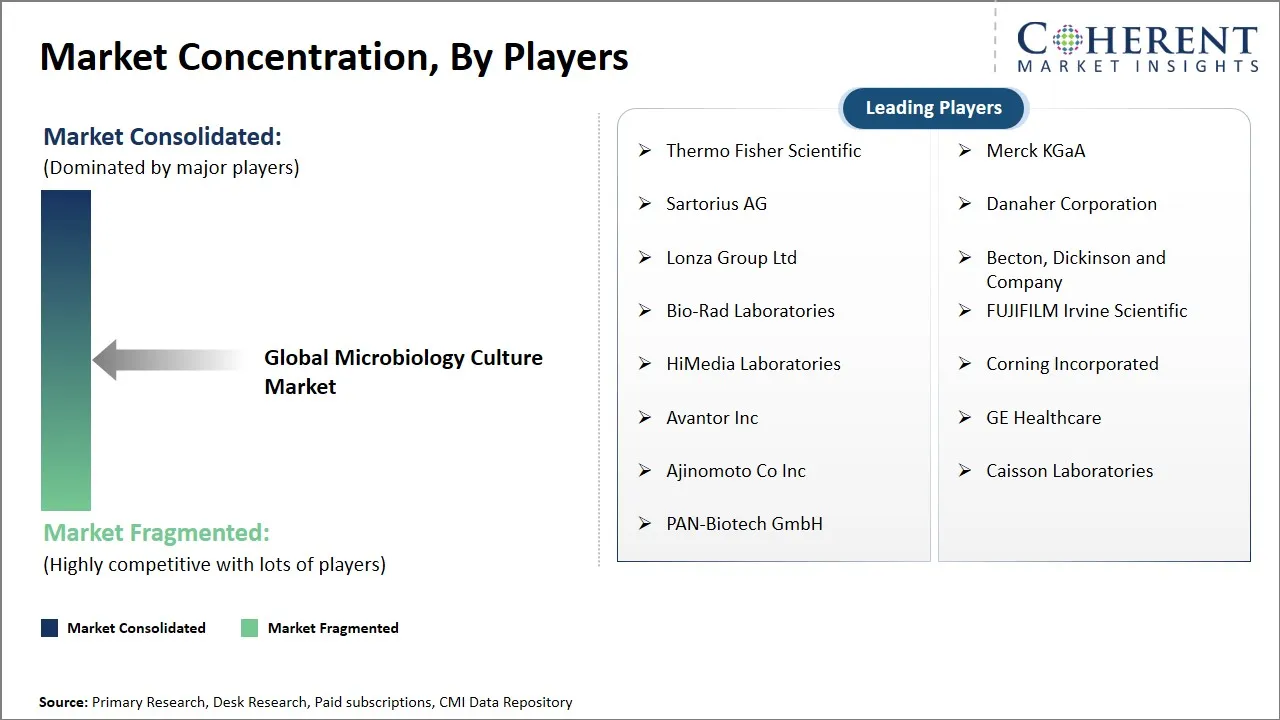
| Companies covered: | Thermo Fisher Scientific, Merck KGaA, Sartorius AG, Danaher Corporation, Lonza Group Ltd, Becton, Dickinson and Company, Bio-Rad Laboratories, FUJIFILM Irvine Scientific, HiMedia Laboratories, Corning Incorporated, Avantor Inc, GE Healthcare, Ajinomoto Co Inc, Caisson Laboratories, and PAN-Biotech GmbH | ||
| Growth Drivers: |
| ||
| Restraints & Challenges: |
| ||
Microbiology Culture Market Dynamics
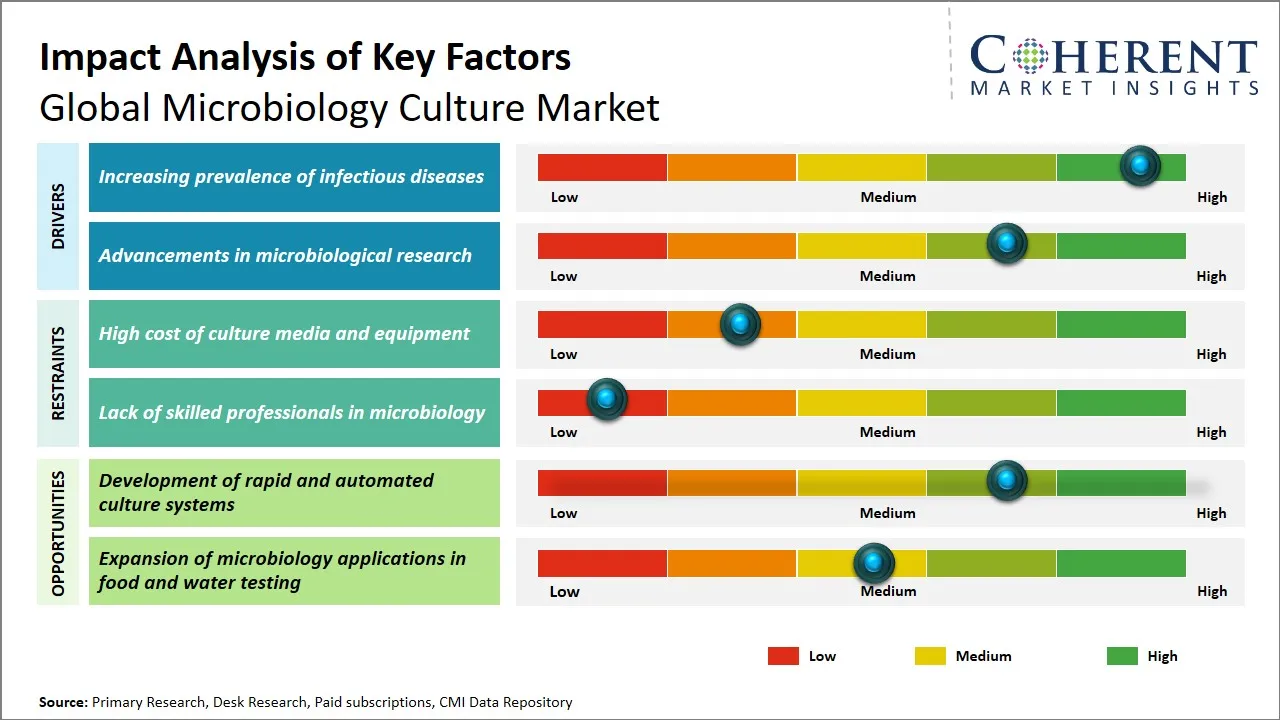
Microbiology Culture Market Driver - Increasing Prevalence of Infectious Diseases
The increasing occurrence of infectious diseases all over the world is one of the main reasons behind the growth of the global microbiology culture market. With the infection-causing germs evolving and appearing more, the management of public health requires very accurate and quick detection. The use of microbiological cultures is the most basic way in identifying bacteria, fungi, and viruses; thus, giving the healthcare providers capacity to diagnose diseases, and then, suggest the correct treatment options. The increase in the number of infectious diseases that are resistant to antibiotics has, therefore, led to the situation where the investments of healthcare facilities and diagnostic laboratories in advanced microbiological culture technologies are considerable.
For instance, in April 2025, WHO, UNICEF, and Gavi warned that vaccine-preventable diseases are on the rise, jeopardizing decades of progress in global health. Outbreaks of diseases like measles, meningitis, TB and yellow fever have surged, with measles cases reaching an estimated 10.3 million in 2023, a 20% increase from 2022. Example is In October 2024, the World Health Organization (WHO) reported a rise in tuberculosis (TB) cases, with 8.2 million new diagnoses in 2023, the highest since monitoring began in 1995. This increase from 7.5 million in 2022 makes TB the leading infectious disease killer, surpassing COVID-19. Although TB-related deaths decreased from 1.32 million in 2022 to 1.25 million in 2023, the total number of TB cases rose to 10.8 million.
Microbiology Culture Market Opportunity - Development of Rapid and Automated Culture Systems
The global microbiology culture market is poised to reap a great deal of benefit from the recent developments and wider use of quick and automated culture systems. The classic microbiology culture methods, although very dependable, are usually taking much time to process, overworking the lab staff and thus sometimes becoming inaccurate due to the human error factor, which all in all causes the delay in diagnosis and treatment decisions. The patient of putting up with all these issues takes a turn with the help of the integration of automation and rapid culture technologies which actually cuts down the time taken by these processes and at the same time improves the accuracy of results significantly.
For example, Mindray introduced advanced microbiology assays for flow cytometry, providing key tools for assessing bacterial and yeast growth, vitality, and metabolic processes. Their LIVE/DEAD BacLight Bacterial Viability and Counting Kit enable efficient separation of live and dead bacteria based on membrane integrity, offering a fast and reliable method for bacterial viability analysis.
Analyst Opinion (Expert Opinion)
- The microbiology culture market is on its way towards a great future, and the driving forces of such a journey are going to be a combination of technological innovations and the ever-increasing demand for accuracy in diagnostics. The development of microbiological research techniques along with automated culture system innovations is not only speeding up but also making pathogen identification very accurate, so media and instruments are becoming more and more involved in the healthcare and biotech sectors. Besides, the world-wide growing fears about infectious diseases and Antimicrobial Resistance (AMR) are quite overwhelming in turning the market towards microbiology cultures which in turn are being heavily relied upon in the clinical diagnostics and pharmaceutical development domains.
- New and promising ideas in the market are related to the production of personalized medicine, higher demand for food and water safety testing, and the wider use of microbiology cultures in environmental monitoring. Nevertheless, there are still great barriers, for instance, the expensive nature of sophisticated culture media and instruments, and the reliance on expert personnel in the particular area. Not long ago, the International Society for Infectious Diseases (ISID) and allied organizations held significant talks that emphasized the participation of microbiology in the fight against global health threats, displaying at the same time the technological innovations and partnerships among the different sectors.
Speak to the analyst
Want personalized insights?
Take the findings above to one of our principal consultants, or have the report rebuilt around the segments, geographies and competitors you actually track.
Market Segmentation
- Product Type Insights (Revenue, USD Bn, 2021 - 2033)
- Culture Media
- Dehydrated Media
- Ready-to-use Media
- Instruments
- Incubators
- Autoclaves
- Petri Dishes
- Reagents and Consumables
- Stains
- Buffers
- Antibiotics
- Culture Media
- Culture Type Insights (Revenue, USD Bn, 2021 - 2033)
- Bacterial Culture
- Fungal Culture
- Viral Culture
- Algal Culture
- Protozoan Culture
- Eukaryotic Culture (including mammalian cell culture)
- Form Insights (Revenue, USD Bn, 2021 - 2033)
- Liquid Culture
- Dry Culture
- Frozen Culture
- End User Insights (Revenue, USD Bn, 2021 - 2033)
- Hospitals and Diagnostic Centers
- Clinical Laboratories
- Academic and Research Institutes
- Pharmaceutical and Biotechnology Companies
- Others (Contract Research Organizations) (CROs)
- Regional Insights (Revenue, USD Bn, 2021 - 2033)
- North America
- U.S.
- Canada
- Latin America
- Brazil
- Argentina
- Mexico
- Rest of Latin America
- Europe
- Germany
- U.K.
- Spain
- France
- Italy
- Russia
- Rest of Europe
- Asia Pacific
- China
- India
- Japan
- Australia
- South Korea
- ASEAN
- Rest of Asia Pacific
- Middle East
- GCC Countries
- Israel
- Rest of Middle East
- Africa
- South Africa
- North Africa
- Central Africa
- North America
- Key Players Insights
- Thermo Fisher Scientific
- Merck KGaA
- Sartorius AG
- Danaher Corporation
- Lonza Group Ltd
- Becton, Dickinson and Company
- Bio-Rad Laboratories
- FUJIFILM Irvine Scientific
- HiMedia Laboratories
- Corning Incorporated
- Avantor Inc
- GE Healthcare
- Ajinomoto Co Inc
- Caisson Laboratories
- PAN-Biotech GmbH
Sources
Primary Research Interviews
- Industry Stakeholders
- U.S. Department of Agriculture (USDA)
- Biotechnology Innovation Organization (BIO)
- End Users
- Clinical Microbiology Laboratories
- Food Safety Testing Laboratories
Government and International Databases
- U.S. Centers for Disease Control and Prevention (CDC)
- World Health Organization (WHO)
- European Centre for Disease Prevention and Control (ECDC)
- Indian Council of Medical Research (ICMR)
- U.S. Food and Drug Administration (FDA)
- National Institutes of Health (NIH)
Trade Publications
- Clinical Microbiology Reviews
- Journal of Clinical Microbiology
- Applied and Environmental Microbiology
- International Journal of Food Microbiology
- Food Control Journal
- Journal of Industrial Microbiology & Biotechnology
Academic Journals
- Nature Microbiology
- Lancet Microbe
- Microbiology and Molecular Biology Reviews
- Frontiers in Microbiology
- Journal of Microbiological Methods
- Microbial Biotechnology
Reputable Newspapers
- The New York Times
- The Guardian
- The Washington Post
- The Times of India
- The Hindu
- Financial Times
Industry Associations
- American Society for Microbiology (ASM)
- European Society of Clinical Microbiology and Infectious Diseases (ESCMID)
- International Union of Microbiological Societies (IUMS)
- Indian Association of Medical Microbiologists (IAMM)
- Society for Industrial Microbiology and Biotechnology (SIMB)
- International Association for Food Protection (IAFP)
Public Domain Resources
- National Center for Biotechnology Information (NCBI)
- Open Access Journals (e.g., PLOS ONE)
- Directory of Open Access Journals (DOAJ)
- Public Library of Science (PLOS)
- arXiv.org (for preprints in microbiology)
Proprietary Elements
- CMI Data Analytics Tool: Proprietary analytics tool to analyze real-time market trends, consumer behavior, and technology adoption in market
- Proprietary CMI Existing Repository of Information for Last 8 Years
Get access to 250+ pages report
Every segment, forecast, competitor profile and data table behind the analysis above — available for instant download.
- ESOMAR Member
- ISO 9001:2015 Certified
- D-U-N-S Registered
- GDPR & CCPA Compliant
Missing comfort of reading report in your local language? Find your preferred language:
Transform your Strategy with Exclusive Trending Reports
Frequently Asked Questions
The global microbiology culture market is estimated to be valued at USD 13.03 Bn in 2026 and is expected to reach USD 24.44 Bn by 2033.
The CAGR of the global microbiology culture market is projected to be 9.4% from 2026 to 2033.
Increasing prevalence of infectious diseases and advancements in microbiological research are the major factors driving the growth of the global microbiology culture market.
High cost of culture media and equipment and lack of skilled professionals in microbiology are the major factors hampering the growth of the global microbiology culture market.
Automation in microbial testing, eco-friendly culture media, and rapid testing solutions.
Clinical diagnostics, pharmaceutical & biotechnology, food & beverage, and agriculture.
In terms of product type, the culture media is estimated to dominate the market revenue share in 2026.