

Global Nocturia Market Size and Forecast: 2026 to 2033
The Global Nocturia Market is estimated to be valued at USD 4.78 Bn in 2026 and is expected to reach USD 8.35 Bn by 2033, exhibiting a compound annual growth rate (CAGR) of 8.3% from 2026 to 2033. This growth reflects the increasing prevalence of nocturia across various age groups, driven by rising awareness, advancements in diagnostic technologies, and expanding treatment options. The market expansion is further supported by the growing geriatric population and increasing incidence of associated underlying conditions such as diabetes and cardiovascular diseases.
Key Takeaways of the Nocturia Market
- Antidiuretic agents, including vasopressin analogs like desmopressin, are expected to account for the largest share of the global nocturia market at 34.8% in 2026.
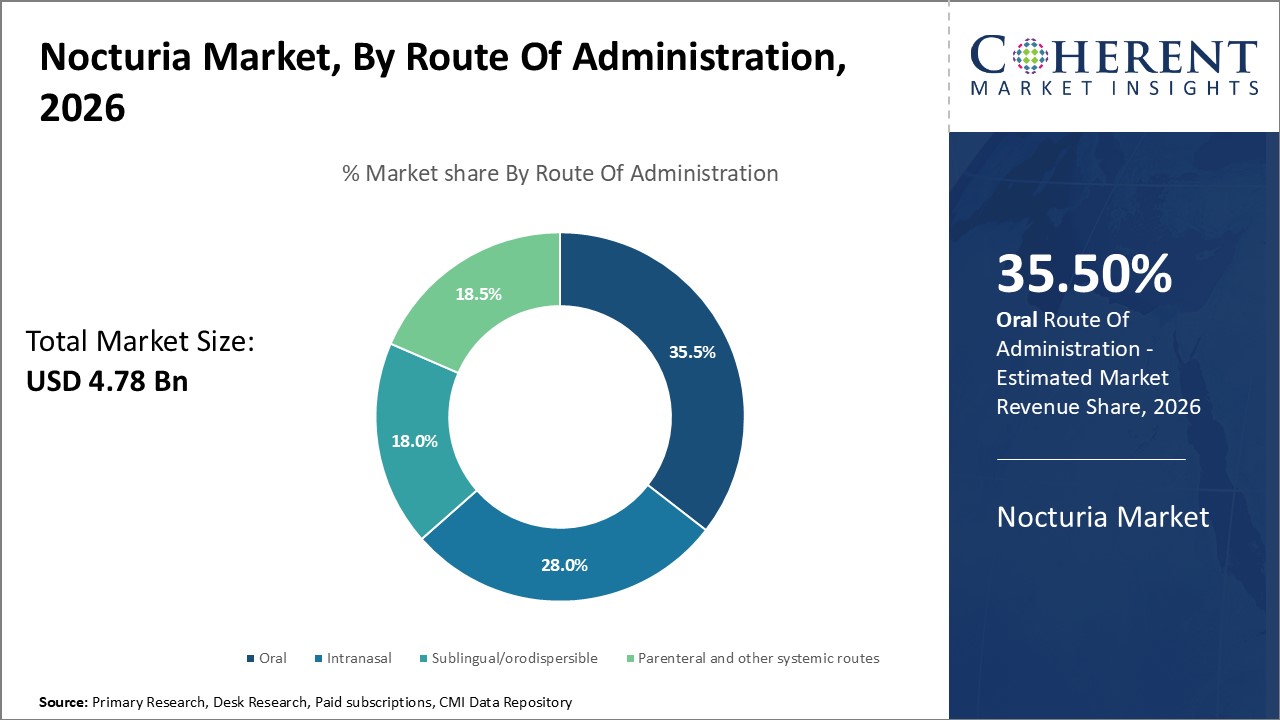
- The oral route of administration is projected to lead the market with a 35.5% share in 2026.
- Immediate-release tablets or capsules are expected to represent the top dosage form, contributing 36.6% of the market share in 2026.
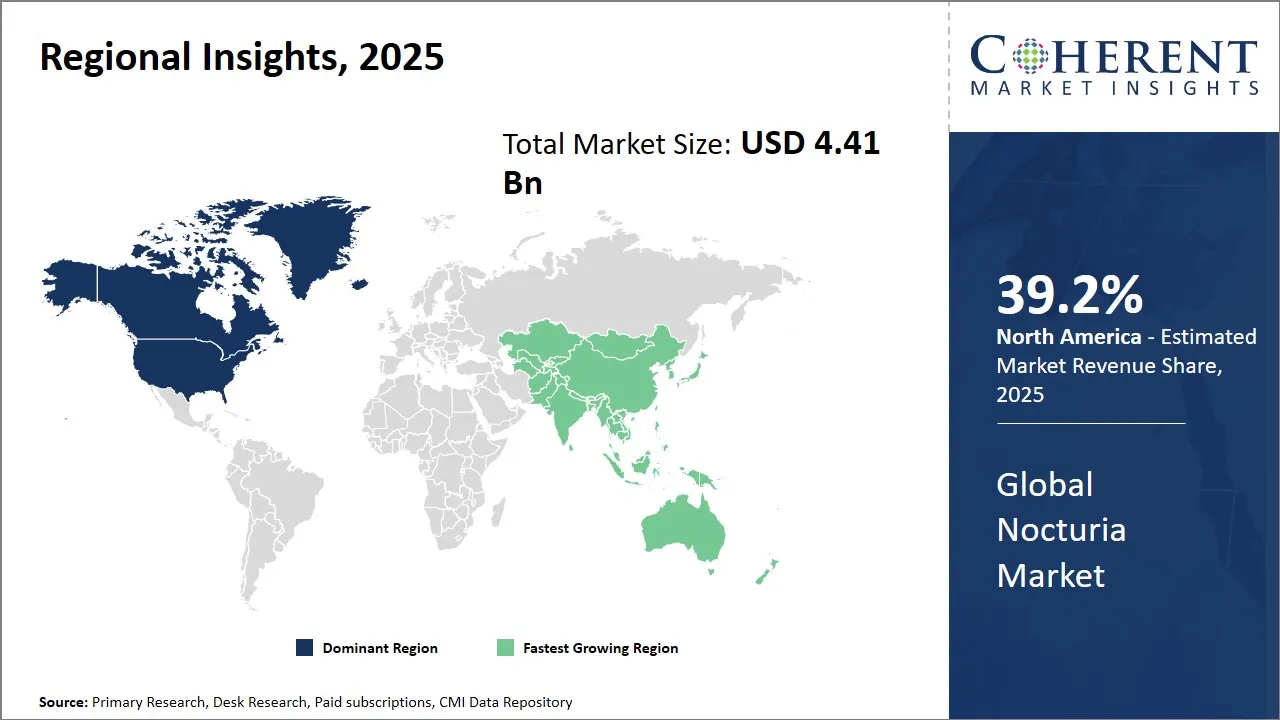
- North America will dominate the barium carbonate market in 2026 with an estimated 39.2% share.
- Asia Pacific will hold 23.4% share in 2026 and record the fastest growth
Market Overview
- Key trends shaping the nocturia market include the development of novel pharmacological therapies aimed at improving patient compliance and minimizing side effects.
- Additionally, there is a rising adoption of personalized medicine approaches and digital health monitoring tools that facilitate better symptom tracking and management.
- Rising pharma R&D collaborations and stronger patient education are driving faster innovation and better treatment uptake, supporting steady market growth.
Currents Events and Its Impact
Current Events | Description and its impact |
Expansion of U.S. FDA's Accelerated Approval Pathway |
|
Growing Focus on Women's Health within Urology |
|
Segmental Insights
- Current Industry Events of 2026
- Market Size Estimation
- Regional Breakdown
- Competitive Landscape
- Customer Intelligence
- Segmental Analysis
- Pricing Analysis
- Key Market Drivers, Challenges & Future Trends
- Customized Insights Section
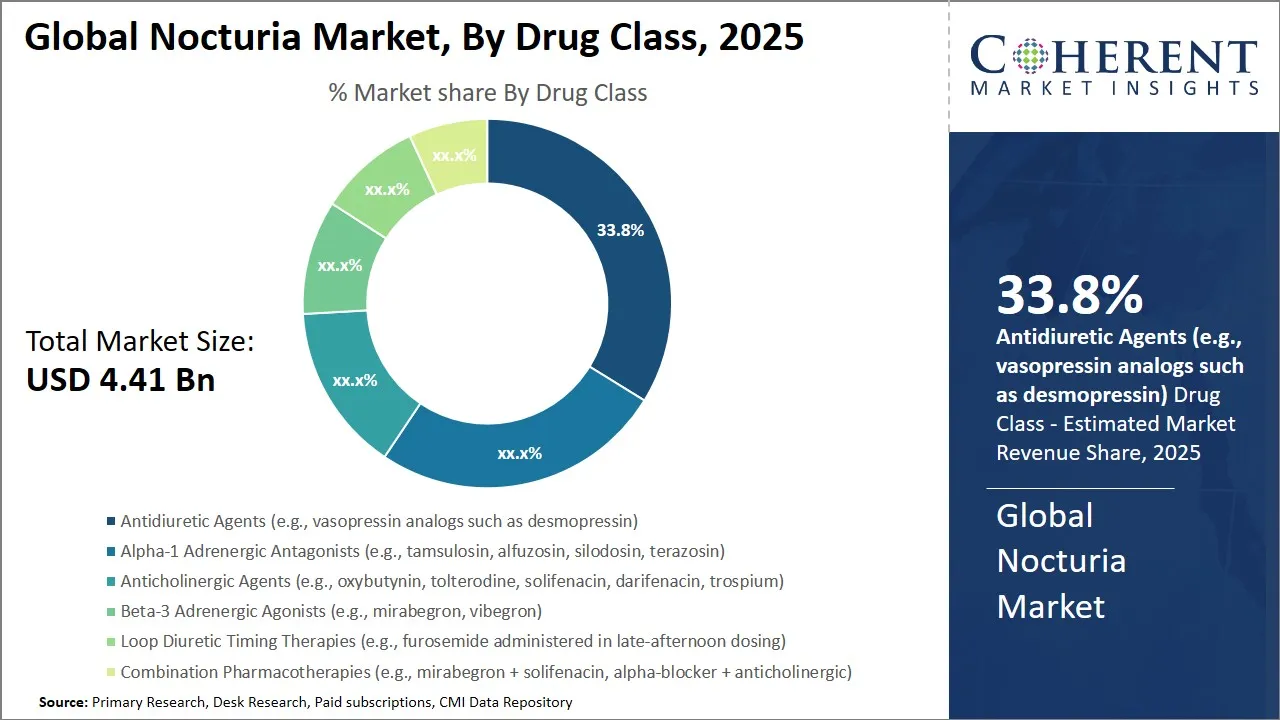
Why Do Antidiuretic Agents Dominate the Nocturia Market in 2026?
Antidiuretic agents, including vasopressin analogs like desmopressin, will hold the leading global market share of 34.8% in 2026, driven by their direct action on the core pathophysiology of nocturia. Their action is similar to the natural antidiuretic hormone action, and thus interfering with night urine secretion and providing a high level of clinical utility to patients with nocturnal polyuria.
These therapies can also greatly decrease the night awakenings, which in turn, results in more consistent and specific control of symptoms compared to other drug classes by reducing nocturnal urine volume. This direct, quantifiable influence on the nocturnal mechanism of the main cause of nocturia makes antidiuretic agents the best treatment choice.
Ferring Pharmaceuticals dominates this segment through its desmopressin ODT product Nocdurna, approved by the U.S. FDA for nocturia due to nocturnal polyuria. Sanofi manufactures legacy vasopressin analog formulations used globally in hospital and outpatient settings.
Oral Segment Dominates the Nocturia Market
By route of administration, the oral segment would maintain a leading portion of the global nocturia market containing 35.5% of the global nocturia market in the year 2026 because it stands well with patient convenient, ease of administering drugs, and long-term use demands. The use of tablets or capsules is still the most preferred one since they are not invasive, they are easy to use yourself, and most importantly they do not require the presence of a clinical supervision, which is needed in managing a chronic disease, which must be under long-term treatment.
The oral formulations are highly prevalent and this enhances the preference. As an illustration, Cipla Ltd. produces desmopressin tablets to foreign markets, which are distributed via retail and hospital distribution systems and promote the wide availability of oral medication
Why Do Immediate-Release Formulations Dominate the Nocturia Market in 2026?
Regarding dosage form, immediate-release tablets or capsules should be expected to take the largest portion of the market share of nocturia in the world with a share of 36.6% by 2026, mainly because of their capacity to produce rapid symptom relief and a long-standing clinical familiarity that they are enjoying with prescribing health workers. IMFs allow quick absorption of the drug and onset of drug action, which is essential in the nocturia management procedure wherein prompt reduction in nocturnal urine production is the key determinant of improvement in sleep quality and quality of life in patients with nocturia.
For example, Ferring’s desmopressin ODT and generic IR desmopressin tablets manufactured by Hikma Pharmaceuticals and Dr. Reddy’s Laboratories dominate prescription volumes. These manufacturers supply IR formulations that demonstrate predictable absorption and fast onset, supporting consistent therapeutic outcomes.
Adoption Analysis of Digital & Behavioral Therapies in the Nocturia Market
- Adoption grows as patients seek non-pharmacological, low-side-effect options for managing nocturia
- Sleep-monitoring apps gain strong uptake for tracking nocturnal awakenings, fluid patterns, and sleep disruption
- Pelvic-floor training programs see higher adoption due to app-guided exercises that improve consistency and adherence
- Bladder-retraining devices are increasingly used in clinics and home settings to support timed voiding and urgency control
- Clinicians rely on digital logs and device feedback to refine treatment plans and monitor behavioral progress
- Telehealth platforms integrate these tools, allowing remote supervision and reducing clinic visits
- AI-based insights improve prediction of triggers and personalize behavioral interventions
- Adoption among elderly patients increases with simplified interfaces and caregiver-supported use
- Key obstacles include digital literacy gaps, device cost, and varying clinical endorsement across regions
Regional Insights
North America Nocturia Market Analysis and Trends
In North America, the nocturia market is dominated by the presence of a high degree of healthcare infrastructure, an estimated share of 39. 2 in the year 2026, advanced research facilities, and government funding to support the urological health which is the core drivers of the dominance in the global nocturia market. Early diagnosis of the disease and extensive availability of innovative therapy options are good news of the region.
The market is also bolstered by the presence of major pharmaceutical firms like Pfizer, Astellas Pharma and Allergan that heavily invest in research and development. In addition, positive reimbursement plans and awareness programs on nocturia and conditions also support access of treatments by patients.
Asia Pacific Nocturia Market Analysis and Trends
Asia Pacific predicted to have the highest growth with market share of 23.4% in 2026 due to the rising urbanization, geriatric population and awareness regarding the bladder health. Raising the healthcare infrastructure in developing economies such as China and India helps in increasing the diagnostic and treatment choices.
The fast growth of the Asia Pacific is strengthened with real life business. In the example of Ono Pharmaceutical in Japan, the company has extended its urology pipeline drug to more regional access to more sophisticated nocturia treatments. Jiangsu Hansoh Pharmaceutical in China is conducting clinical researches in the field of urinary disorders, thus increasing the speed at which it can provide branded generics at a competitive price. Daewoong Pharmaceutical, a South Korean firm, also expands its inroads in bladder treatment therapies by cooperation with local distributors throughout East and Southeast Asia, enhancing the access to treatment in the area.
Nocturia Market Outlook for Key Countries
Why Is the U.S. Becoming a High-Growth Hotspot for Nocturia Treatment Innovation?
U.S. nocturia market presents a developed healthcare environment with a lot of research and clinical trials devoted to nocturia. The major participants such as Pfizer and Astellas Pharma are extensively introducing new pharmacological therapies with full insurance coverage. The effective cooperation between hospitals, research, and pharmaceutical companies enhances the further promotion of products. Regulatory systems enable prompt drug approvals that lead to the quick introduction of innovative therapies in the market.
Japan Nocturia Market Trends
The nocturia market of Japan remains at the forefront of Asia Pacific region due to the developed healthcare system and the large number of geriatrics. The government programs include old age care and urological condition research and development. Firms such as Otsuka Pharmaceutical and Takeda are important in that they present new therapeutic agents particularly the age-related nocturia. Market penetration is increased by the fact that the country has a high level of focus on preventive care and early intervention
China Nocturia Market Trends
The nocturia market in China is growing at a fast rate because of the growing awareness, the increased availability of healthcare services, and the increased emphasis on the government on chronic disease control. MNCs like Sanofi are as well as local powerhouses like Cipla are aggressively investing in sales and marketing and infrastructure development. Also, Chinese governmental reforms aimed at expanding the scope of healthcare insurance and the motivation to innovate have a positive effect on the market forces.
Why Is India Rapidly Emerging as a High-Potential Growth Market for Nocturia Treatments?
The nocturia market in India is taking off with the growth of the healthcare infrastructure and the increase in awareness particularly in cities. The local pharmaceutical firms, including Sun Pharmaceutical and Lupin, engage in the creation of cost-efficient therapeutic methods, and the global competitors join their efforts to develop new treatments. Programs initiated by the government to improve health insurance and healthcare services in rural areas are increasing disease control boosting the growth of the market.
Economic Burden & Cost-of-Care Impact on the Nocturia Market
- The economic burden of nocturia is substantial due to recurring direct costs, including diagnostics, medications, follow-up visits, and hospitalizations linked to falls, fractures, and sleep-related comorbidities. Indirect costs escalate as patients experience reduced productivity, higher absenteeism, impaired daily performance, and increased caregiver dependence due to chronic sleep disruption.
- Quality-of-life deterioration amplifies long-term financial strain through persistent fatigue, mental health decline, and greater reliance on supportive therapies. Health systems face rising costs as untreated nocturia increases emergency visits, comorbidity management needs, and long-term care utilization among aging populations.
Market Players, Key Developments, and Competitive Intelligence
Key Developments
- In July 2025, Eisai, a global pharmaceutical company based in Tokyo, and Kyorin Pharmaceutical, a Japanese drug developer, announced the launch of Beova Tablets for overactive bladder in Thailand through Eisai Thailand. The drug, known as vibegron, received Thai approval in June 2024 and marks Eisai’s first launch in its licensed ASEAN region, where approvals in the Philippines and Malaysia are also secured. Overactive bladder causes urgency, frequent urination, and nocturia, leading to reduced daily functioning and poor sleep. Thailand reports a 15.8% prevalence of the condition, highlighting the need for accessible treatment.
- In May 2024, Sumitomo Pharma, a U.S.-based pharmaceutical company developing therapies for urological and neurological disorders, announced that the U.S. FDA accepted its supplemental application for vibegron, marketed as GEMTESA, for men with overactive bladder symptoms receiving treatment for benign prostatic hyperplasia. The Phase 3 results showed significant reductions in daily urination, urgency, and nocturia episodes, supporting the drug’s potential as the first beta-3 agonist for this patient group.
Top Strategies Followed by Global Nocturia Market Players
Player Type | Example Companies | Specific Strategy Examples |
Established Market Leaders | Ferring Pharmaceuticals, Teva Pharmaceutical Industries, Kyowa Kirin | Ferring Pharmaceuticals developed and commercialized Nocdurna (low-dose desmopressin ODT) with sex-specific dosing to reduce hyponatremia risk, backed by long-term clinical data. Teva expanded global distribution of desmopressin tablets by strengthening partnerships with large hospital networks across Europe and the U.S. Kyowa Kirin advanced research on vasopressin pathway disorders and expanded its urology pipeline to reinforce leadership in nocturia treatment. |
Mid-Level Players | Cipla Ltd., Sun Pharma, Glenmark Pharmaceuticals | Cipla supplies cost-efficient desmopressin tablets across APAC, Middle East, and Africa, improving affordability for price-sensitive markets. Sun Pharma leverages regional manufacturing to reduce production costs and offer competitively priced urology formulations. Glenmark engages in contract manufacturing collaborations to scale volume without heavy CAPEX investment. |
Small-Scale/Emerging Players | Serenity Pharmaceuticals, Vensun Pharmaceuticals, MedinCell (in development stage) | Serenity Pharmaceuticals targeted niche segments with its proprietary desmopressin formulation program aimed at improving pharmacokinetics. Vensun Pharmaceuticals entered the nocturia generics space using micro-batch production models to serve selective hospital channels. MedinCell is developing novel long-acting injectable delivery systems that may address nocturia through sustained hormone modulation—focusing on innovation-driven differentiation. |
Market Report Scope
Global Nocturia Market Report Coverage
| Report Coverage | Details | ||
|---|---|---|---|
| Base Year: | 2025 | Market Size in 2026: | USD 4.78 Bn |
| Historical Data for: | 2020 To 2024 | Forecast Period: | 2026 To 2033 |
| Forecast Period 2026 to 2033 CAGR: | 8.3% | 2033 Value Projection: | USD 8.35 Bn |
| Geographies covered: |
| ||
| Segments covered: |
| ||
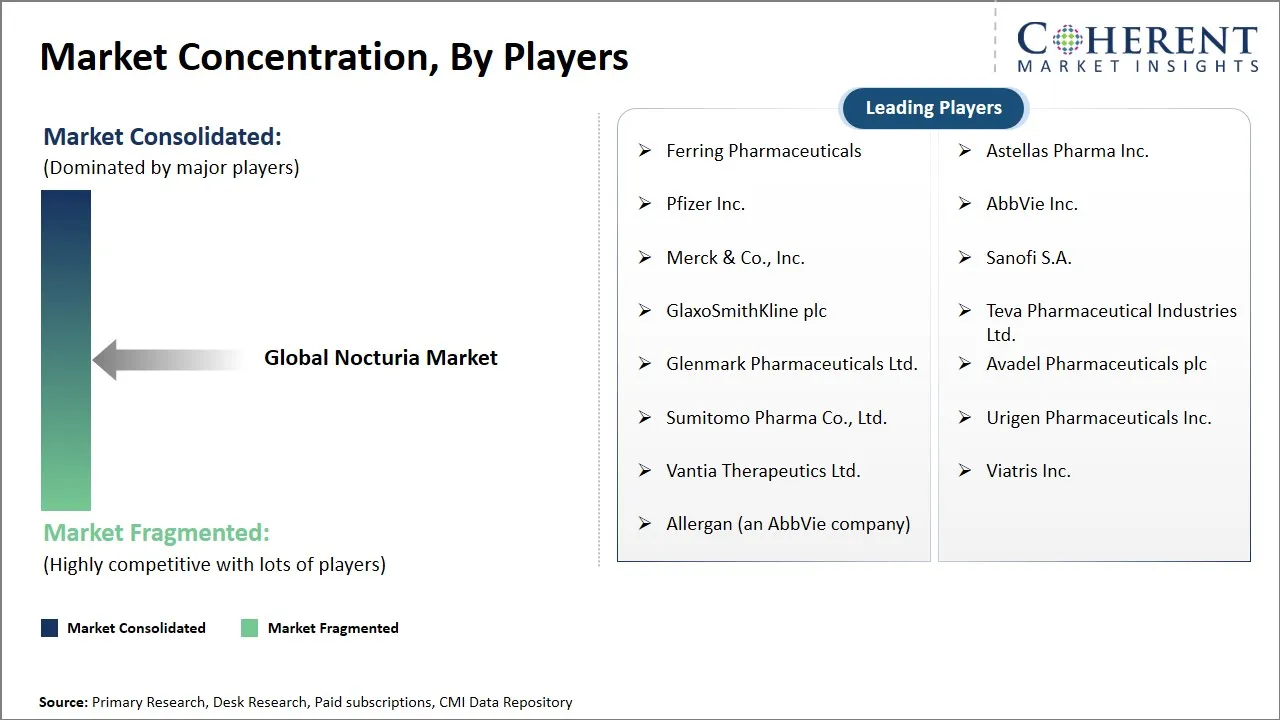
| Companies covered: | Ferring Pharmaceuticals, Astellas Pharma Inc., Pfizer Inc., AbbVie Inc., Merck & Co., Inc., Sanofi S.A., GlaxoSmithKline plc, Teva Pharmaceutical Industries Ltd., Glenmark Pharmaceuticals Ltd., Avadel Pharmaceuticals plc, Sumitomo Pharma Co., Ltd., Urigen Pharmaceuticals Inc., Vantia Therapeutics Ltd., Viatris Inc., and Allergan (an AbbVie company) | ||
| Growth Drivers: |
| ||
| Restraints & Challenges: |
| ||
Nocturia Market Dynamics
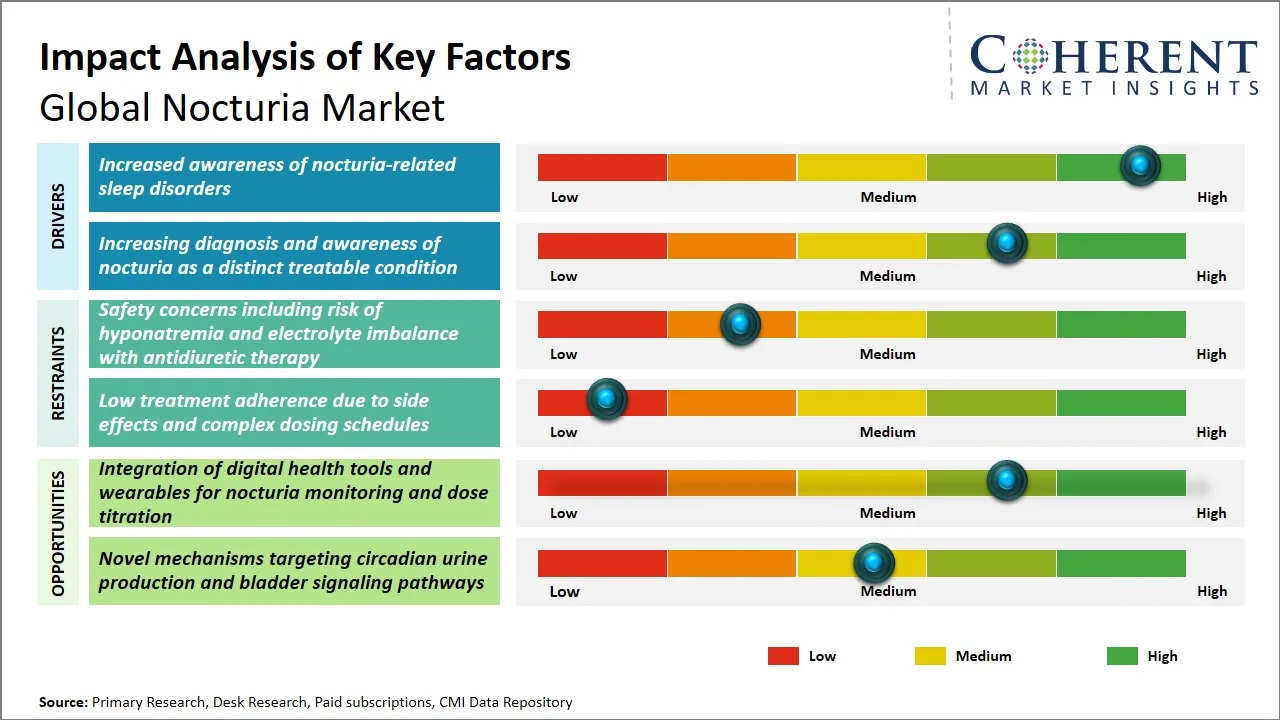
Nocturia Market Driver - Increased Awareness of Nocturia-related Sleep Disorders
The increasing awareness regarding the effect of nocturia on the quality of sleep has emerged as one of the major forces in the global nocturia industry. With the increasing awareness of the disruptive nature of frequent nighttime urination on restorative sleep by both patients and healthcare providers, there has been great interest in diagnosing and treating the condition. Sleep deprivation due to nocturia does not only impact on everyday functioning but also leads to more extended health problems including cardiovascular and cognitive impaired problems, and diminished quality of life in general.
This growing knowledge has triggered the desire to use more efficient methods of treatment and diagnostic instruments capable of overcoming nocturia in the framework of sleep health. In addition, mass media campaigns and other educational programs led by the experts of urology and sleep disorders have helped to eliminate the stigma factor and make people refer to a doctor instead of considering the symptoms to be a natural aging process.
An example is that Merck & Co. funded clinical education programs in the U.S. that reinforced nocturia-induced sleep fragmentation, and assisted primary care teams in incorporating symptom screening into regular checkup. Ferring Pharmaceuticals distributed physician-specific awareness tools in Europe that highlighted the relationship between untreated nocturia and poor sleep outcomes and the rising clinical evaluation of aging populations. AstraZeneca partnered with local sleep-medicine groups in Asia to conduct digital campaigns that would motivate patients to communicate nighttime symptoms at an early stage and extend their treatment with nocturia.
Nocturia Market Opportunity - Integration of Digital Health Tools and Wearables for Nocturia Monitoring and Dose Titration
The combination of digital health devices and wearable technology is one of the key growth prospects of the nocturia market in the world as it improves monitoring of patients and personal treatment management. Nocturia as a frequent nighttime urination involves constant monitoring of symptoms and accurate dose changes in order to maximize the therapeutic results.
Smart devices that are able to monitor the sleep qualities, fluid intake, and urinary frequency in real-time will offer important information to patients and the health care professionals and enable them to intervene on time and reduce the side effects of treatments. Also, remote monitoring of patients can be undertaken by use of mobile health application and connected devices to enhance adherence and engagement by use of automated reminders and feedback loops. This digital revolution assists in fine-tuning dose, where the treatment regimen is modified according to a personal patient response as opposed to pre-defined programs.
With the Apple Watch ecosystem, Apple Health provides a more detailed sleep-stage and nocturnal movement features that can be correlated with nocturia events by clinicians to optimally plan the dose. Through its digital sleep platforms, Philips will combine interconnected monitoring systems that record the disturbances at night and assist urologists to customize treatment plans. The digital respiratory and sleep-care firm ResMed is a global company, which offers cloud-linked sleep monitoring devices that can detect nocturnal disruptions to make more accurate nocturia pattern and dose changes.
Analyst Opinion (Expert Opinion)
- The market of nocturia is increasingly growing in the area of the spread of information about its consequences on sleep disorders and general well-being, pushing patients and clinicians towards a more timely diagnosis and better treatment opportunities. There is an improvement in digital monitoring tools, improved antidiuretic therapies and supportive regulatory environments, but there are still underdiagnosis and adherence issues. New development in the treatment of overactive bladder which also invigilates the nocturia incidents are offering fresh developmental opportunities among ageing populations.
- The recent medical conferences like the American Urological Association Meeting, the European Association of Urology Congress, and the International Continence Society Meeting have emphasized the new research findings, electronic technology, and treatment programs. The level of activity in the industry is increasing as well with Eisai introducing vibegron in Southeast Asia and campaigns such as Sleep Normal taking place in the US that urge patients care. The measures are enhancing awareness, enhancing clinical engagement, and defining market perspective
Speak to the analyst
Want personalized insights?
Take the findings above to one of our principal consultants, or have the report rebuilt around the segments, geographies and competitors you actually track.
Market Segmentation
- Drug Class Insights (Revenue, USD Bn, 2021 - 2033)
- Antidiuretic Agents (e.g., vasopressin analogs such as desmopressin)
- Alpha-1 Adrenergic Antagonists (e.g., tamsulosin, alfuzosin, silodosin, terazosin)
- Anticholinergic Agents (e.g., oxybutynin, tolterodine, solifenacin, darifenacin, trospium)
- Beta-3 Adrenergic Agonists (e.g., mirabegron, vibegron)
- Loop Diuretic Timing Therapies (e.g., furosemide administered in late-afternoon dosing)
- Combination Pharmacotherapies (e.g., mirabegron + solifenacin, alpha-blocker + anticholinergic)
- Route Of Administration Insights (Revenue, USD Bn, 2021 - 2033)
- Oral
- Intranasal
- Sublingual/orodispersible
- Parenteral and other systemic routes
- Dosage Form Insights (Revenue, USD Bn, 2021 - 2033)
- Immediate-release tablets or capsules
- Modified/extended-release oral formulations
- Orodispersible tablets or film
- Nasal sprays or drops
- Injectable formulations
- Mechanism Of Action Insights (Revenue, USD Bn, 2021 - 2033)
- Vasopressin Receptor Agonists
- Smooth Muscle Relaxants
- Muscarinic Receptor Blockers
- Beta-3 Receptor Stimulants
- Prostate-Targeted Relaxants
- Fluid-Regulation Modulators
- Prescription Type Insights (Revenue, USD Bn, 2021 - 2033)
- Prescription-Only Medicines (Rx)
- Over-the-Counter Options (OTC)
- Age Group Insights (Revenue, USD Bn, 2021 - 2033)
- Adult
- Geriatric
- Gender Insights (Revenue, USD Bn, 2021 - 2033)
- Male
- Female
- Distribution Channel Insights (Revenue, USD Bn, 2021 - 2033)
- Hospital Pharmacies
- Retail Pharmacies
- Online Pharmacies
- End User Insights (Revenue, USD Bn, 2021 - 2033)
- Hospitals
- Specialty urology clinics
- Long-term care and nursing facilities
- Home-care and self-administration settings
- Regional Insights (Revenue, USD Bn, 2021 - 2033)
- North America
- U.S.
- Canada
- Latin America
- Brazil
- Argentina
- Mexico
- Rest of Latin America
- Europe
- Germany
- U.K.
- Spain
- France
- Italy
- Russia
- Rest of Europe
- Asia Pacific
- China
- India
- Japan
- Australia
- South Korea
- ASEAN
- Rest of Asia Pacific
- Middle East
- GCC Countries
- Israel
- Rest of Middle East
- Africa
- South Africa
- North Africa
- Central Africa
- North America
- Key Players Insights
- Ferring Pharmaceuticals
- Astellas Pharma Inc.
- Pfizer Inc.
- AbbVie Inc.
- Merck & Co., Inc.
- Sanofi S.A.
- GlaxoSmithKline plc
- Teva Pharmaceutical Industries Ltd.
- Glenmark Pharmaceuticals Ltd.
- Avadel Pharmaceuticals plc
- Sumitomo Pharma Co., Ltd.
- Urigen Pharmaceuticals Inc.
- Vantia Therapeutics Ltd.
- Viatris Inc.
- Allergan (an AbbVie company)
Sources
Primary Research Interviews
Industry Stakeholders
- Urologists
- Sleep medicine specialists
- Geriatric care physicians
- Hospital pharmacy directors
- Clinical researchers in urinary disorders
- Digital therapeutics developers
End Users
- Patients with nocturnal polyuria
- Older adults with sleep disruption
- Caregivers of elderly patients
- Individuals using sleep-tracking wearables
- Long-term care facility residents
- Patients undergoing urology follow-ups
Government and International Databases
- World Health Organization (WHO)
- U.S. National Institutes of Health (NIH)
- Centers for Disease Control and Prevention (CDC)
- European Medicines Agency (EMA)
- National Health Service (NHS)
- Japan Ministry of Health, Labour and Welfare (MHLW)
Trade Publications
- Urology Times
- Pharmacy Times
- MedTech Dive
- Fierce Healthcare
- Sleep Review Magazine
- BioPharma Dive
Academic Journals
- The Journal of Urology
- Neurourology and Urodynamics
- Sleep Medicine Reviews
- The Lancet Urology
- BJU International
- Journal of Clinical Sleep Medicine
Reputable Newspapers
- The New York Times
- The Guardian
- The Wall Street Journal
- The Washington Post
- Financial Times
- The Times of India
Industry Associations
- American Urological Association (AUA)
- European Association of Urology (EAU)
- International Continence Society (ICS)
- American Sleep Association (ASA)
- National Sleep Foundation (NSF)
- International Federation on Ageing (IFA)
Public Domain Resources
- ClinicalTrials.gov
- FDA Drug Database
- European Urology Guidelines Portal
- OpenGrey Repository
- HealthData.gov
Proprietary Elements
- CMI Data Analytics Tool: Proprietary analytics tool to analyze real-time market trends, consumer behavior, and technology adoption in market
- Proprietary CMI Existing Repository of Information for Last 8 Years
Get access to 250+ pages report
Every segment, forecast, competitor profile and data table behind the analysis above — available for instant download.
- ESOMAR Member
- ISO 9001:2015 Certified
- D-U-N-S Registered
- GDPR & CCPA Compliant
Missing comfort of reading report in your local language? Find your preferred language:
Transform your Strategy with Exclusive Trending Reports
Frequently Asked Questions
The global nocturia market is estimated to be valued at USD 4.78 Bn in 2026 and is expected to reach USD 8.35 Bn by 2033.
The CAGR of Global Nocturia Market is projected to be 8.3% from 2026 to 2033
Increased awareness of nocturia-related sleep disorders and increasing diagnosis and awareness of nocturia as a distinct treatable condition are the major factors driving the growth of the global nocturia market.
Safety concerns including risk of hyponatremia and electrolyte imbalance with antidiuretic therapy and low treatment adherence due to side effects and complex dosing schedules are the major factors hampering the growth of the global nocturia market
In terms of drug class, antidiuretic agents (e.g., vasopressin analogs such as desmopressin) are estimated to dominate the market revenue share in 2026.
Ferring Pharmaceuticals, Astellas Pharma Inc., Pfizer Inc., AbbVie Inc., Merck & Co., Inc., Sanofi S.A., GlaxoSmithKline plc, Teva Pharmaceutical Industries Ltd., Glenmark Pharmaceuticals Ltd., Avadel Pharmaceuticals plc, Sumitomo Pharma Co., Ltd., Urigen Pharmaceuticals Inc., Vantia Therapeutics Ltd., Viatris Inc., and Allergan (an AbbVie company) are the major players.
North America is expected to lead the global nocturia market in 2026