

North America and Europe Plasmid DNA Manufacturing Market Forecast – 2026 To 2033
The North America and Europe plasmid DNA manufacturing market is expected to grow from USD 1,780.2 Mn in 2026 to USD 12,053.9 Mn by 2033, registering a compound annual growth rate (CAGR) of 31.4% from 2026 to 2033. The North America and Europe plasmid DNA manufacturing market is poised for significant expansion fueled by the growing pipeline of gene and cell therapies driving the demand for GMP-grade plasmid DNA.
To address this rising demand, U.S. National Institutes of Health (NIH) granted USD 35.3 billion in extramural research grants for FY2025, which helped spur research and development in advanced therapeutics, including gene-based medicines.
Key Takeaways of the North America and Europe Plasmid DNA Manufacturing Market
- Viral vectors are projected to hold a market share of 59.2% of the North America and Europe plasmid DNA manufacturing market share in 2026, making it the dominant product type segment, owing to their extensive use in gene and cell therapies. For instance, in January 2025, the U.S. FDA's Center for Biologics Evaluation and Research (CBER) highlighted continued growth in cell and gene therapy development programs under its regulatory oversight, reinforcing demand for viral vector manufacturing, where GMP-grade plasmid DNA serves as a critical starting material.
- GMP grade is projected to hold 94.1% of the North America and Europe plasmid DNA manufacturing market share in 2026, making it the dominant grade segment, due to stringent quality requirements for clinical and commercial manufacturing. For instance, the European Medicines Agency (EMA) requires active substances used in gene therapy medicinal products, including plasmid DNA, to comply with EU Good Manufacturing Practice (GMP) standards, reinforcing the adoption of GMP-grade materials across clinical and commercial production.
- Immunotherapy is projected to hold 56.1% of the North America and Europe plasmid DNA manufacturing market share in 2026, making it the dominant application segment, driven by the rapid expansion of engineered cell therapies. For instance, the U.S. National Cancer Institute sponsors hundreds of active CAR-T cell therapy clinical trials through its Cancer Therapy Evaluation Program (CTEP), increasing demand for plasmid DNA used in viral vector production and immune-cell engineering.
Segmental Insights
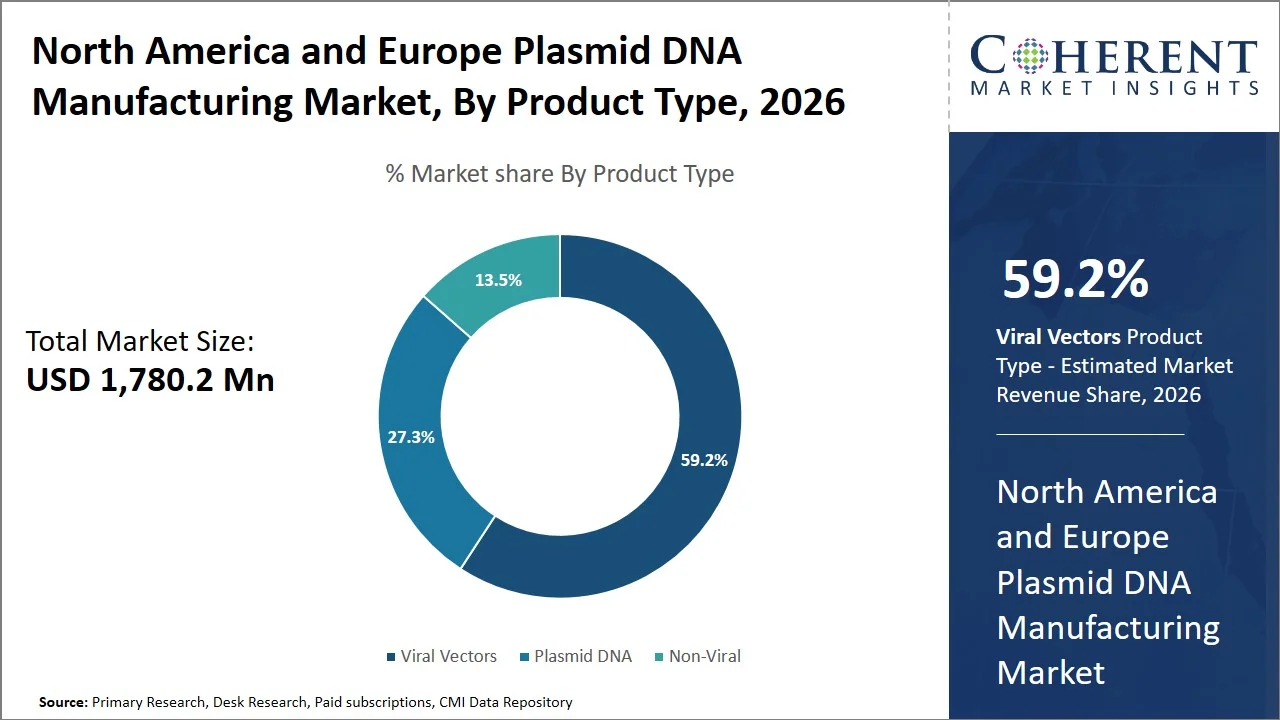
Why Do Viral Vectors Dominate the North America and Europe Plasmid DNA Manufacturing Market?
Viral vectors are projected to hold a market share of 59.2% in 2026, due to improved efficacy of delivery, higher transfection rates, and their major applications in gene & cell-based therapeutics. To help facilitate development of more advanced pipeline therapeutics, the segment continues to see significant and increased investment in scale-up for viral vector manufacturing processes. For instance, in May 2024, Cytiva unveiled the Sefia Platform to automate and streamline the manufacture of CAR-T cell therapies in a step towards achieving even greater process control and ability to scale, while reinforcing the demand for high-quality viral vectors and the plasmid DNA required for their production.
- Current Industry Events of 2026
- Market Size Estimation
- Regional Breakdown
- Competitive Landscape
- Customer Intelligence
- Segmental Analysis
- Pricing Analysis
- Key Market Drivers, Challenges & Future Trends
- Customized Insights Section
Why Does GMP Grade Represent the Largest Grade Segment in the North America and Europe Plasmid DNA Manufacturing Market?
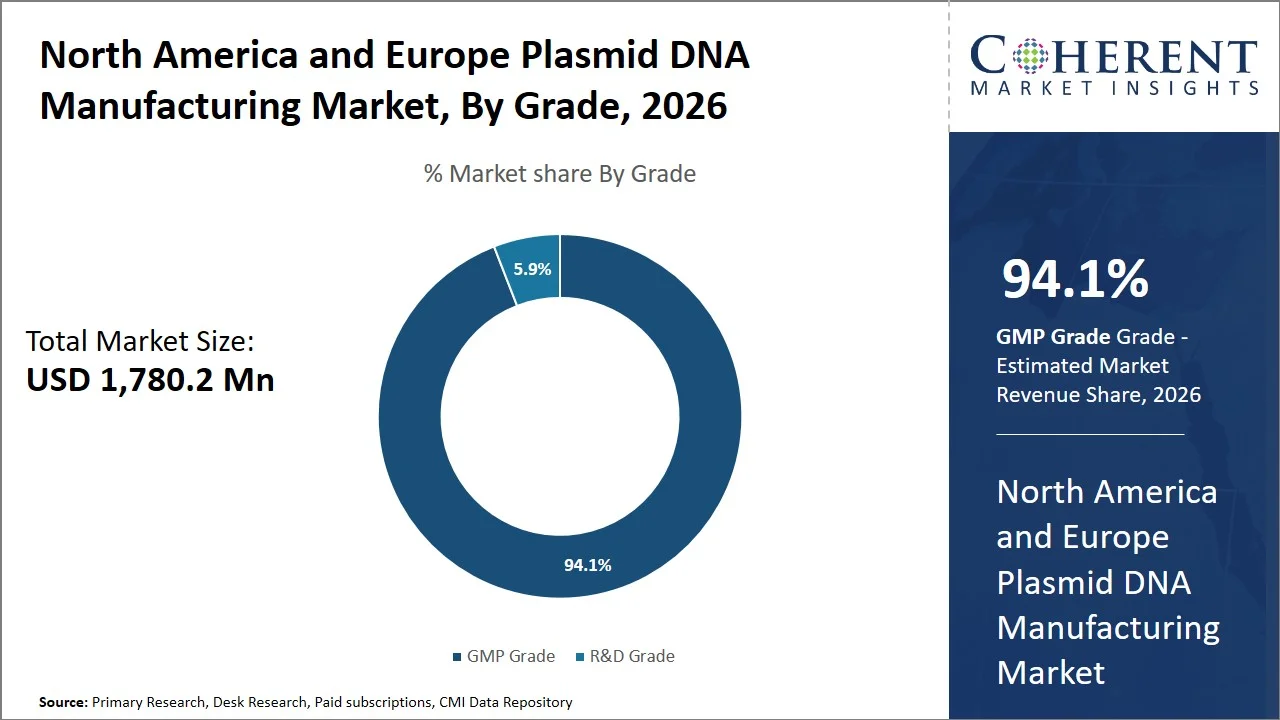
GMP grade is projected to hold 94.1% of the market share in 2026, owing to the intense regulatory stipulations and high commercialization level of gene and cell therapies. The product specifications for consistency, product purity, sterility, and traceability necessitates the employment of GMP-grade plasmid DNA for both clinical and commercial operations. The sustained demand for excellent quality plasmid DNA in the market, facilitated accelerated the investments on exclusive GMP facility development, predominately in North America and European countries. For instance, in June 2025, ProBio unrolled its 128,000 ft2 GMP cell and gene therapy center of excellence in Hopewell, New Jersey which houses cGMP and CMC development as well as internal plasmid and viral vector (AAV and lentivirus) manufacturing capacity for therapeutic candidates through development into clinical production.
Immunotherapy Segment Dominates the North America and Europe Plasmid DNA Manufacturing Market
Immunotherapy segment is expected to hold 56.1% of the North America and Europe plasmid DNA manufacturing market share in 2026, attributing to greater uptake of gene-modified immune cells therapies and DNA-based immunotherapies in cancer treatment. Plasmid DNA is indispensable raw material for viral vector production and development of immune cell therapy, making it essential for the next-generation immunotherapies. Furthermore, increasing investment in oncology R&D and increase in pipelines boost market demand for GMP plasmid DNA in North America and Europe. For instance, in December 2025, the U.S. FDA approved Bristol Myers Squibb's Breyanzi to be the first and only available CAR T cell therapy for adult patients with relapsed/refractory marginal zone lymphoma (MZL), expanding the clinical indications of CAR-T immunotherapy and reinforcing the need for plasmid DNA used in viral vector manufacturing.
Current Events and their Impact
Current Events | Description and its Impact |
U.S. FDA Releases Three Draft Guidance for Cell and Gene Therapies (September 2025) |
|
European Commission Launches Biotech and Biomanufacturing Hub (January 2025) |
|
North America and Europe Plasmid DNA Manufacturing Market Dynamics
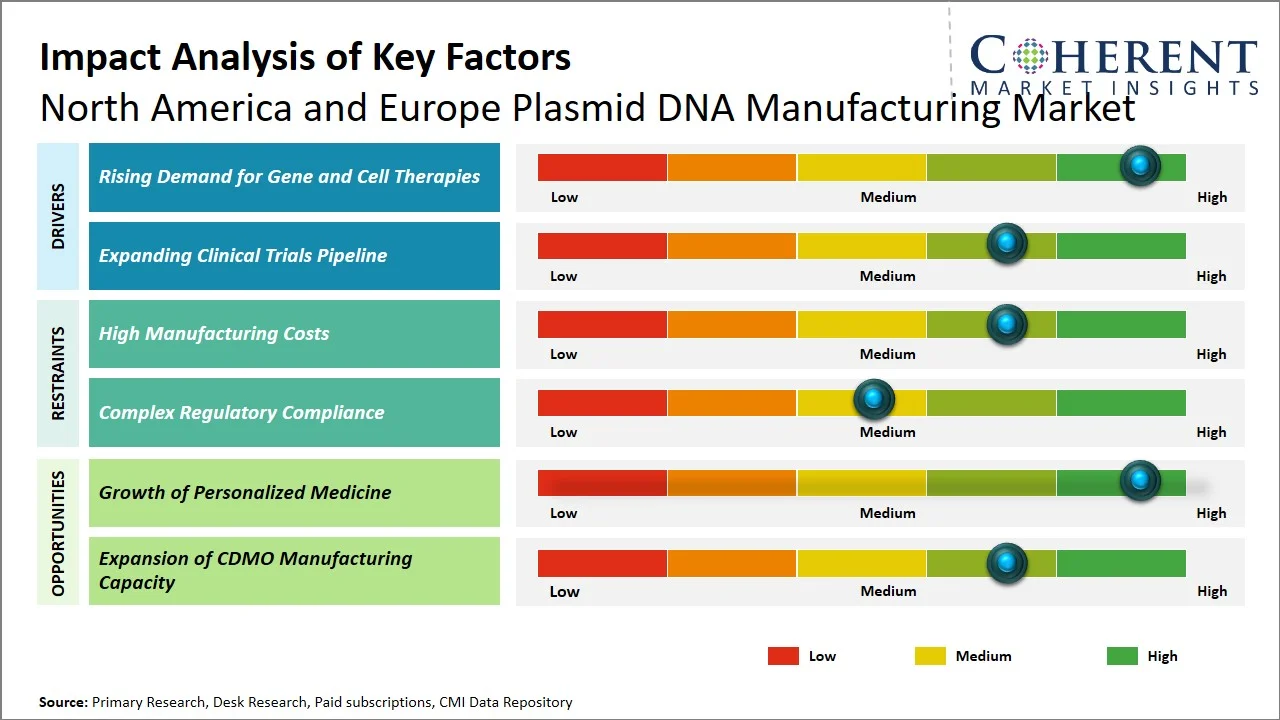
Market Drivers
Rising Demand for Gene and Cell Therapies
The rapid expansion of gene and cell therapy research and clinical development across North America and Europe is driving demand for high-quality GMP-grade plasmid DNA, a critical starting material for viral vectors and gene-editing applications. As more therapies progress toward clinical trials and commercialization, manufacturers are increasing investments in scalable plasmid DNA production to ensure a reliable supply chain. For instance, in March 2025, the U.S. National Institute of Neurological Disorders and Stroke (NINDS), under the NIH, renewed its Ultra-Rare Gene-Based Therapy (URGenT) funding program to support IND-enabling activities, including clinical-scale cGMP manufacturing and process development for gene-based therapeutics.
Expanding Clinical Trials Pipeline
The growing number of clinical trials evaluating gene therapies, cell therapies, DNA vaccines, and gene-editing technologies is significantly increasing the demand for GMP-grade plasmid DNA across North America and Europe. As more candidates advance from preclinical research to clinical development, manufacturers are expanding production capabilities to meet the need for high-quality plasmid DNA used in viral vector and non-viral delivery systems. For instance, in May 2025, the U.S. National Institutes of Health (NIH) launched the Platform Vector Gene Therapy (PaVe-GT) clinical trial to evaluate gene therapies for multiple rare diseases, highlighting the continued expansion of the clinical pipeline requiring clinical-grade plasmid DNA manufacturing.
Rising Investments in Biomanufacturing Infrastructure
Increasing investments in advanced biomanufacturing infrastructure across North America and Europe are strengthening plasmid DNA production capacity and improving supply chain resilience. Governments and industry stakeholders are funding new GMP manufacturing facilities and expanding existing capabilities to support the growing pipeline of advanced therapeutics. For instance, in March 2025, the European Commission announced the Critical Medicines Act, which includes measures to strengthen biomanufacturing capabilities and reduce strategic dependencies by encouraging investments in pharmaceutical manufacturing infrastructure across the European Union. These initiatives are expected to enhance regional manufacturing capacity, benefiting plasmid DNA production for gene and cell therapies.
Emerging Trends
Increasing Integration of Advanced Plasmid Purification Technologies
Manufacturers are increasingly adopting advanced plasmid purification technologies, including membrane chromatography and high-resolution filtration systems, to improve plasmid purity, increase recovery yields, and minimize process-related impurities. These innovations are enhancing manufacturing efficiency while supporting stringent regulatory requirements for clinical-grade plasmid DNA.
Rising Demand for Integrated Plasmid DNA Testing and Analytical Services
The growing complexity of gene and cell therapy products is driving demand for comprehensive plasmid DNA testing services, including identity, purity, supercoiling, endotoxin, and residual host-cell DNA analysis. Manufacturers are expanding integrated analytical capabilities to ensure regulatory compliance, accelerate batch release, and improve quality assurance throughout the manufacturing process.
Growing Adoption of End-to-End Plasmid DNA Manufacturing Platforms
Manufacturers are increasingly offering integrated end-to-end plasmid DNA manufacturing services encompassing plasmid design, cell banking, upstream processing, downstream purification, analytical testing, and fill-finish operations. This integrated approach reduces technology transfer risks, shortens development timelines, and provides biopharmaceutical companies with a streamlined pathway from preclinical research to commercial production.
Plasmid DNA Manufacturing Requirements by Therapeutic Modality
Therapeutic Modality | Role of Plasmid DNA | Manufacturing Priority | Key Quality Requirements |
Gene Therapy | Viral vector production | Very High | GMP, Supercoiled DNA, Low Endotoxin |
Cell Therapy | CAR-T/TCR vector production | High | High Purity, Regulatory Compliance |
DNA Vaccines | Active therapeutic component | High | High Yield, GMP Compliance |
Gene Editing | CRISPR/Cas delivery templates | Medium-High | High Fidelity, Sequence Integrity |
How is the growth of personalized medicine creating new growth opportunities in the North America and Europe plasmid DNA manufacturing market?
The surge of personalized medicine throughout North America and Europe represents a tremendous opportunity for plasmid DNA manufacturers due to the growing use of custom genetic constructs and high-quality plasmid DNA in gene editing and gene delivery as precision therapies become mainstream. Furthermore, increased investment in genomics, molecular diagnostics, and personalized medicines has amplified the need for flexible, GMP-ready plasmid DNA production capabilities. For instance, in March 2025, the European Health Data Space (EHDS) regulation came into force and provided a legal basis on the usage and reuse of health data across EU with the aim of fostering research and innovation in healthcare and accelerate personal medicine with the support of long-term plasmid DNA demand and innovation. (Source: European Commission)
Market Players, Key Development, and Competitive Intelligence
Key Developments
- In December 2025, Twist Bioscience launched a new portfolio of plasmid preparation services to support nucleic acid therapeutics research. The offering includes animal origin-free and transfection-grade plasmid preps with turnaround times starting at four business days for Express Genes. The launch expands access to high-quality plasmid DNA solutions, enabling faster preclinical research and therapeutic development.
- In August 2025, WACKER and Gearbox Biosciences entered into a strategic collaboration to advance plasmid DNA manufacturing technologies for cell and gene therapy applications. The partnership integrates WACKER's GMP manufacturing capabilities with Gearbox Biosciences' proprietary DNA technology to improve plasmid quality, scalability, and production efficiency, supporting the growing demand for genetic medicines.
- In April 2025, ProBio launched its GMP Plasmid DNA Manufacturing service at its Hopewell, New Jersey facility. The service guarantees delivery of clinical-grade plasmid DNA within three months with at least 85% supercoiled DNA, enabling faster and more reliable production for gene and cell therapy developers. The launch strengthens manufacturing capacity and accelerates clinical development timelines.
Competitive Landscape
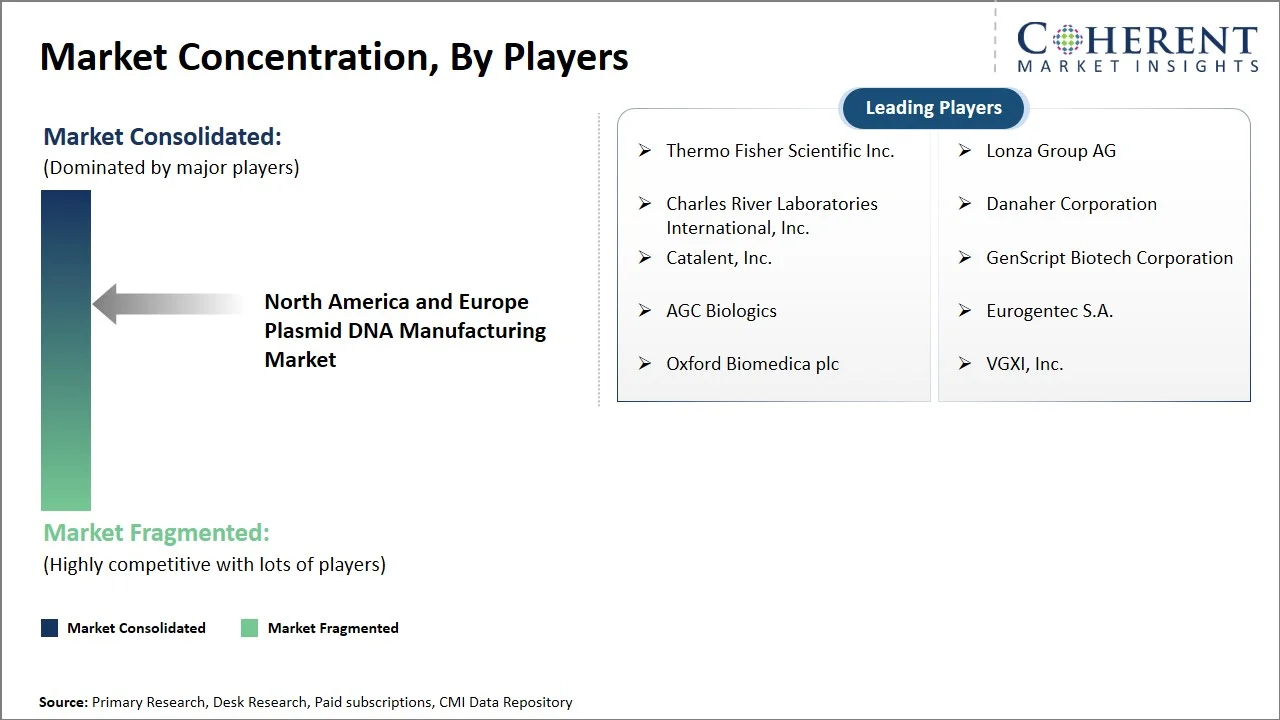
The North America and Europe plasmid DNA manufacturing market is moderately consolidated, with leading players competing through large-scale GMP manufacturing capabilities, advanced process development, and integrated end-to-end plasmid DNA production services. Companies are focusing on expanding manufacturing capacity, adopting high-yield purification technologies, and strengthening quality systems to meet the growing demand for gene and cell therapies. Strategic collaborations with biotechnology companies, CDMOs, and research organizations are further accelerating innovation and commercial-scale production. Key focus areas include:
- Expansion of GMP Manufacturing Capacity and Commercial Scale-Up
- Advanced Purification and Process Optimization Technologies
- Integrated End-to-End Plasmid DNA Manufacturing Services
- Strategic Collaborations and Biopharmaceutical Partnerships
Market Report Scope
North America and Europe Plasmid DNA Manufacturing Market Report Coverage
| Report Coverage | Details | ||
|---|---|---|---|
| Base Year: | 2025 | Market Size in 2026: | USD 1,780.2 Mn |
| Historical Data for: | 2020 To 2024 | Forecast Period: | 2026 To 2033 |
| Forecast Period 2026 to 2033 CAGR: | 31.4% | 2033 Value Projection: | USD 12,053.9 Mn |
| Segments covered: |
| ||
| Companies covered: | Thermo Fisher Scientific Inc., Lonza Group AG, Charles River Laboratories International, Inc., Danaher Corporation, Catalent, Inc., GenScript Biotech Corporation, AGC Biologics, Eurogentec S.A., Oxford Biomedica plc, and VGXI, Inc. | ||
| Growth Drivers: |
| ||
| Restraints & Challenges: |
| ||
Analyst Opinion (Expert Opinion)
- In the coming years, the North America and Europe plasmid DNA manufacturing market is expected to transition from a capacity-driven market to a technology-driven ecosystem, where manufacturing efficiency, regulatory compliance, and scalability will become the primary competitive differentiators. As the pipeline of gene therapies, cell therapies, DNA vaccines, and gene-editing products continues to mature, demand will increasingly shift toward high-quality, GMP-grade plasmid DNA supported by advanced manufacturing platforms.
- Most opportunities can be foreseen within viral vector manufacturing for gene and cell therapy applications, particularly in the U.S, which hosts the largest concentration of clinical trials, biopharmaceutical innovators, and GMP manufacturing facilities. In Europe, countries such as Germany, the U.K., and Belgium are expected to witness strong demand, supported by robust biotechnology ecosystems, favorable regulatory frameworks, and expanding biomanufacturing investments.
- To strengthen their competitive position, market players should invest in high-capacity GMP manufacturing infrastructure, adopt next-generation purification and digital bioprocessing technologies, and expand integrated end-to-end service offerings from plasmid design through analytical testing and fill-finish. Building long-term partnerships with biotechnology companies and strengthening regulatory readiness will also be critical to securing commercial manufacturing contracts and sustaining market leadership.
Speak to the analyst
Want personalized insights?
Take the findings above to one of our principal consultants, or have the report rebuilt around the segments, geographies and competitors you actually track.
Market Segmentation
- Product Type Insights (Revenue, USD Mn, 2021 - 2033)
- Viral Vectors
- Plasmid DNA
- Non-Viral
- Grade Insights (Revenue, USD Mn, 2021 - 2033)
- GMP Grade
- R&D Grade
- Application Insights (Revenue, USD Mn, 2021 - 2033)
- Immunotherapy
- Gene Therapy
- DNA Vaccines
- RNA Vaccines
- Others
- Development Phase Insights (Revenue, USD Mn, 2021 - 2033)
- Pre- Clinical Therapeutics
- Clinical Therapeutics
- Marketed Therapeutics
- Sourcing Type Insights (Revenue, USD Mn, 2021 - 2033)
- Outsource
- In-House
Sources
Primary Research Interviews
- Gene therapy and cell therapy manufacturing experts from leading biopharmaceutical companies
- Plasmid DNA manufacturing scientists and process development specialists
- CDMO executives specializing in plasmid DNA and viral vector manufacturing
- Upstream and downstream bioprocess engineers
- Quality assurance (QA) and quality control (QC) professionals for GMP biologics
- Regulatory affairs specialists for gene and cell therapy products
- Biotechnology R&D directors and translational medicine researchers
- Academic researchers specializing in molecular biology, gene editing, and synthetic biology
Stakeholders
- Plasmid DNA manufacturers
- Contract Development and Manufacturing Organizations (CDMOs)
- Gene and cell therapy developers
- Viral vector manufacturing companies
- Biotechnology and biopharmaceutical companies
- Academic and translational research institutes
- Contract Research Organizations (CROs)
- GMP raw material and reagent suppliers
- End-use Sectors
- Gene Therapy
- Cell Therapy
- DNA Vaccines
- Viral Vector Manufacturing
- Gene Editing (CRISPR)
- Synthetic Biology
- Academic & Research Laboratories
- Regulatory & Health Bodies
- U.S. Food and Drug Administration (FDA)
- Center for Biologics Evaluation and Research (CBER)
- European Medicines Agency (EMA)
- European Commission – Directorate-General for Health and Food Safety (DG SANTE)
- European Directorate for the Quality of Medicines & HealthCare (EDQM)
- Medicines and Healthcare products Regulatory Agency (MHRA), UK
- National Institutes of Health (NIH)
- National Institute for Biological Standards and Control (NIBSC), UK
Databases
- ClinicalTrials.gov – Gene therapy, cell therapy, and plasmid DNA-related clinical studies
- EMA Medicines Database – Approved Advanced Therapy Medicinal Products (ATMPs)
- FDA Cellular & Gene Therapy Guidance
- NIH RePORTER – Gene therapy and biotechnology research funding
- NIH Genetic and Rare Diseases Information Center (GARD)
- European Commission – Horizon Europe Research Portal
- OECD Biotechnology Statistics
- Eurostat – Biotechnology R&D and healthcare expenditure statistics
Magazines
- BioPharm International
- Genetic Engineering & Biotechnology News (GEN)
- Cell & Gene
- Pharmaceutical Technology
Journals
- Human Gene Therapy
- Molecular Therapy
- Journal of Gene Medicine
Associations
- American Society of Gene & Cell Therapy (ASGCT)
- European Society of Gene and Cell Therapy (ESGCT)
- Biotechnology Innovation Organization (BIO)
- Alliance for Regenerative Medicine (ARM)
Public Domain Sources
- U.S. Food and Drug Administration (FDA)
- European Medicines Agency (EMA)
- National Institutes of Health (NIH)
- U.S. National Library of Medicine (ClinicalTrials.gov)
Proprietary Elements
- CMI Data Analytics Tool
- Proprietary CMI Existing Repository of information for last 10 years.
Get access to 250+ pages report
Every segment, forecast, competitor profile and data table behind the analysis above — available for instant download.
- ESOMAR Member
- ISO 9001:2015 Certified
- D-U-N-S Registered
- GDPR & CCPA Compliant
Missing comfort of reading report in your local language? Find your preferred language:
Transform your Strategy with Exclusive Trending Reports
Frequently Asked Questions
The North America and Europe plasmid DNA manufacturing market is estimated to be valued at USD 1,780.2 Mn in 2026 and is expected to reach USD 12,053.9 Mn by 2033.
Immunotherapy dominates due to the increasing development of CAR-T cell therapies, TCR therapies, and other gene-modified immunotherapies that require GMP-grade plasmid DNA for viral vector production and cell engineering.
Plasmid DNA manufacturing is the GMP-compliant production of high-purity circular DNA molecules used as critical starting materials for gene therapies, cell therapies, DNA vaccines, and viral vector manufacturing.
The CAGR of the North America and Europe plasmid DNA manufacturing market is projected to be 31.4% from 2026 to 2033.
Rising demand for gene and cell therapies, and expanding clinical trials pipeline are the major factors driving the growth of the North America and Europe plasmid DNA manufacturing market.
High manufacturing costs, and complex regulatory compliance are the major factors hampering the growth of the North America and Europe plasmid DNA manufacturing market.
In terms of sourcing type, outsource is estimated to dominate the market revenue share in 2026.