

Global Nuclear Medicine Software Market Size and Forecast – 2026 to 2033
The Global Nuclear Medicine Software Market is estimated to be valued at USD 1071.7 Mn in 2026 and is expected to reach USD 1,997.1 Mn by 2033, exhibiting a compound annual growth rate (CAGR) of 9.3% from 2026 to 2033. This robust growth reflects the expanding adoption of advanced imaging technologies and increasing demand for personalized diagnostic solutions in healthcare. The market’s valuation underscores significant opportunities for software innovators focused on enhancing nuclear medicine applications.
Key Takeaways of the Global Nuclear Medicine Software Market
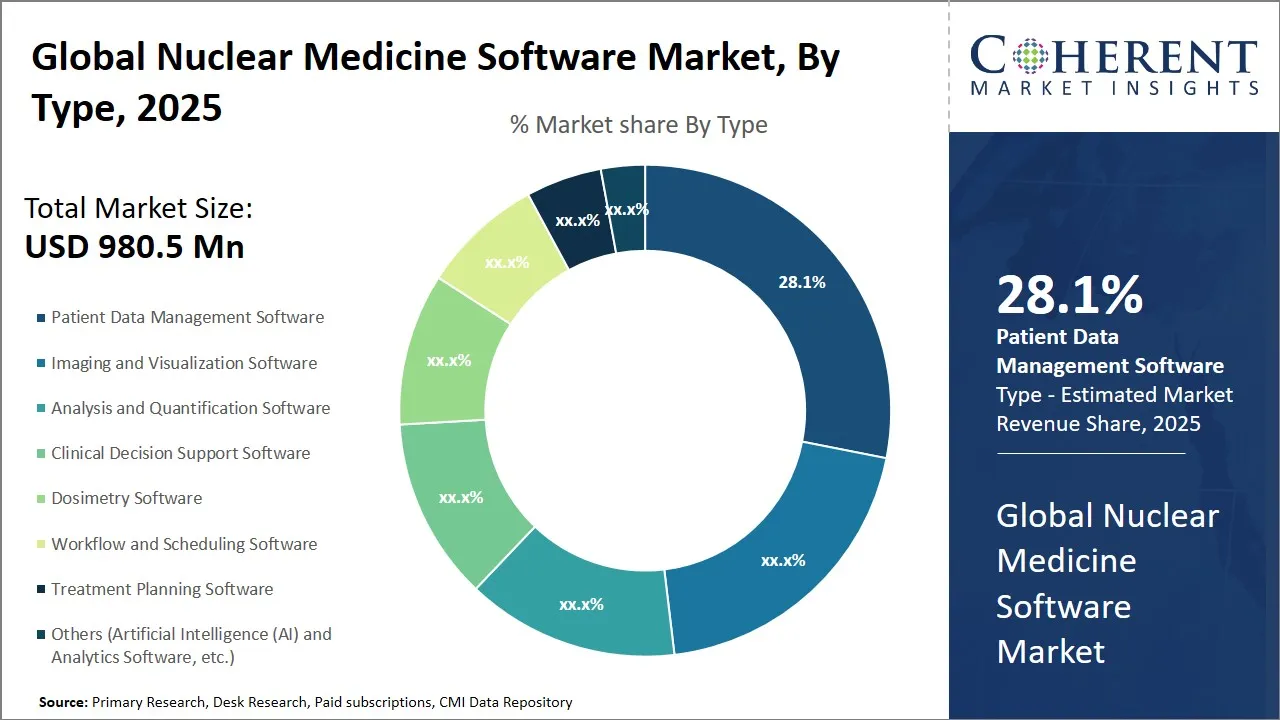
- In the global nuclear medicine software market, patient data management software is expected to be the dominant segment, accounting for 29.1 % of the market share in 2026.
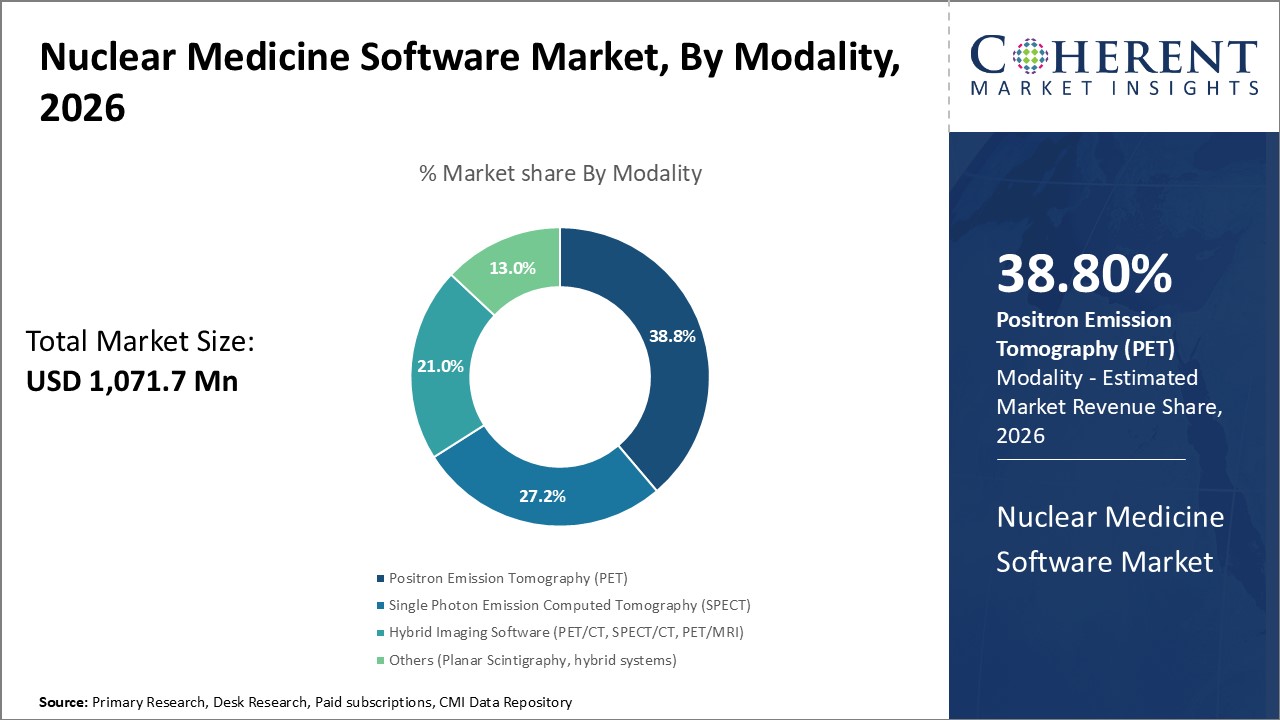
- Based on the modality segmentation, Positron Emission Tomography (PET) software leads with an estimated market share of 38.8 % in 2026.
- Oncology is set to hold the largest share in the therapeutic area segment, capturing 34.5 % of the market share in 2026.
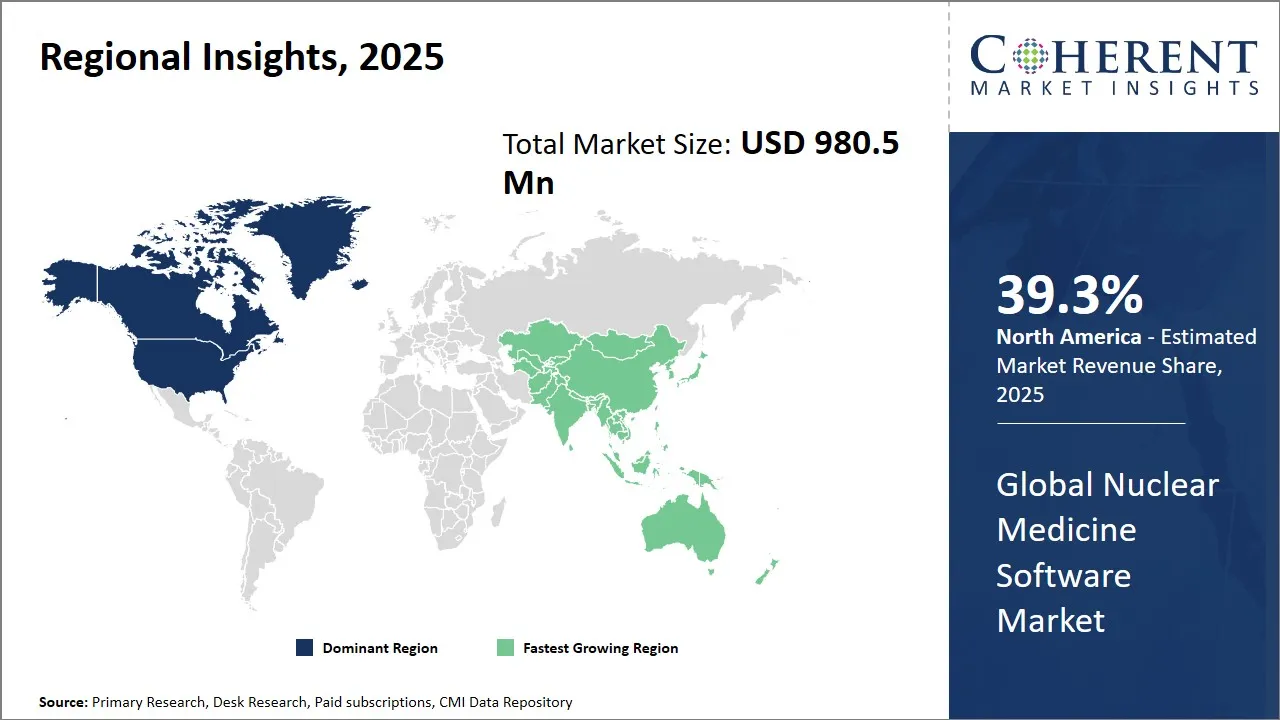
- North America is expected to lead the market, holding a share of 39.3 % in 2026. Asia Pacific is anticipated to be the fastest-growing region, with a market share of 24.5% in 2026.
Market Overview
A notable trend in the nuclear medicine software market is the integration of artificial intelligence and machine learning algorithms, which are improving image analysis accuracy and operational efficiency. Additionally, the rising prevalence of chronic diseases and cancer is driving the need for precise diagnostic tools, further fueling market expansion. Cloud-based solutions and interoperability with existing hospital systems are also gaining traction, enabling real-time data access and better patient management. These innovations are collectively shaping the market’s evolution towards more effective and scalable nuclear medicine software platforms.
Current Events and Its Impact
Current Events | Description and its impact |
AI Integration in Nuclear Medicine Software |
|
Focus on Personalized Medicine and Precision Diagnostics |
|
Segmental Insights
- Current Industry Events of 2026
- Market Size Estimation
- Regional Breakdown
- Competitive Landscape
- Customer Intelligence
- Segmental Analysis
- Pricing Analysis
- Key Market Drivers, Challenges & Future Trends
- Customized Insights Section
Nuclear Medicine Software Market Insights, By Type – Patient Data Management Software Dominates Due to Increasing Need for Comprehensive Data Integration and Regulatory Compliance
In terms of type, patient data management software is expected to emerge as the leading segment with 29.1% in 2026. This dominance is primarily driven by the rising need for comprehensive data integration and streamlined management of vast amounts of patient information generated through nuclear medicine procedures. As nuclear medicine imaging and therapies become increasingly sophisticated, hospitals and diagnostic centers require robust systems that can efficiently collect, store, and manage patient records, imaging results, dosimetry data, and treatment histories in one unified platform.
The complexity of nuclear medicine workflows puts significant pressure on healthcare providers to ensure accuracy, data security, and accessibility. Patient data management software facilitates compliance with stringent healthcare regulations by providing audit trails, secure data encryption, and standardized reporting formats.
In November 2023, Radiology Partners (RP), a leading U.S. radiology practice, launched RPX AI, a cloud-based platform integrated with AWS HealthImaging. This platform simplifies AI tool deployment in medical imaging, enhancing patient data management and improving care coordination. RP’s solution aims to overcome challenges in integrating AI across healthcare systems, offering a unified platform for hospitals to select, validate, and scale AI tools efficiently. The collaboration with AWS ensures seamless data management at scale, driving faster diagnoses and better patient outcomes.
Nuclear Medicine Software Market Insights, By Modality – Positron Emission Tomography (PET) Leads Owing to High Diagnostic Precision and Expanding Clinical Applications
Within the modality segmentation, Positron Emission Tomography (PET) software is expected to hold the highest market share, accounting for 38.8% in 2026, a trend attributable largely to the superior diagnostic capabilities and expanding clinical indications of PET imaging. PET technology offers precise functional and metabolic imaging, which is crucial in diagnosing, staging, and monitoring various diseases, particularly cancers and neurological disorders. This accuracy necessitates specialized software capable of handling complex image acquisition, reconstruction, and quantitative analysis, making PET-specific software solutions critical for effective clinical workflows.
A key driver behind the segment's growth is the rising adoption of PET in oncology, where its ability to detect metabolic changes before anatomical abnormalities appear allows for earlier diagnosis and tailored treatment protocols. The development of novel radiotracers further broadens PET applications, helping clinicians visualize specific molecular pathways and tumor biology, thereby enhancing personalized medicine approaches. This increasing complexity demands advanced imaging and visualization software that supports high-resolution image processing and integrates seamlessly with hybrid imaging systems like PET/CT and PET/MRI.
Nuclear Medicine Software Market Insights, By Therapeutic Area – Oncology Leads Due to Increasing Cancer Prevalence and Personalized Treatment Needs
Oncology leads the therapeutic area segment in the global nuclear medicine software market with an estimated share of 35.5% in 2026, reflecting the significant clinical demand for effective cancer diagnosis, staging, and therapeutic monitoring. The increasing global incidence of cancer, coupled with advances in nuclear medicine techniques such as Positron Emission Tomography and Single Photon Emission Computed Tomography has amplified the need for sophisticated software that can accurately interpret complex imaging data and support personalized treatment strategies.
Nuclear medicine plays a pivotal role in oncology by providing functional imaging that transcends conventional anatomical scans. This allows clinicians to assess tumor biology, identify metastasis, and evaluate treatment efficacy dynamically. Software solutions specialized for oncology enable detailed image analysis, including volumetric quantification of tumors, metabolic activity tracking, and dosimetry calculations essential for targeted radionuclide therapy. These capabilities are critical in adopting precision oncology frameworks, which tailor interventions to individual patient profiles and disease progression.
Regional Insights
North America Nuclear Medicine Software Market Analysis and Trends
North America’s dominance in the global nuclear medicine software market, with an estimated share of 39.3% in 2026, is driven by a mature healthcare infrastructure, advanced technological adoption, and robust regulatory frameworks. The region benefits from strong government support for innovation and healthcare digitization, alongside significant investments in medical imaging and nuclear medicine facilities.
The presence of leading industry players such as GE Healthcare, Siemens Healthineers, and Philips Healthcare has further catalyzed market growth through development and deployment of sophisticated nuclear medicine software platforms. The integration of AI and machine learning into diagnostic workflows along with extensive clinical research initiatives also reinforces North America’s commanding position.
Asia Pacific Nuclear Medicine Software Market Analysis and Trends
The Asia Pacific region is expected to exhibit the fastest growth in the nuclear medicine software market with a share of 24.5% in 2026, propelled by rising healthcare spending, increasing nuclear medicine procedures, and expanding hospital infrastructure. Rapid urbanization, growing awareness about nuclear imaging benefits, and government initiatives to improve diagnostic healthcare accessibility are key growth drivers. Countries including China, Japan, India, and South Korea are aggressively investing in healthcare digitalization and nuclear medicine capabilities, supported by progressive regulatory reforms. The influx of international and local players like Canon Medical Systems, Fujifilm Holdings, and Mediso Medical Imaging has intensified competitive dynamics and innovation in software solutions tailored for regional needs.
In March 2026, AIIMS New Delhi signed a Memorandum of Understanding with SAMEER (Society for Applied Microwave Electronics Engineering & Research) to enhance medical electronics innovation. The collaboration focuses on advancing MRI, NMR systems, and RF/microwave technology, including Nuclear Medicine Software. This partnership aims to improve diagnostic capabilities and treatment planning in nuclear medicine, leveraging cutting-edge technologies to provide more efficient and accessible healthcare solutions.
Global Nuclear Medicine Software Market Outlook for Key Countries
U.S. Nuclear Medicine Software Market Trends
The U.S. leads the global nuclear medicine software market with significant contributions from both domestic and international firms. Companies such as GE Healthcare and Siemens Healthineers have invested heavily in R&D operations across the country, enhancing the capabilities of nuclear medicine imaging software. The U.S. benefits from a well-established regulatory ecosystem under the FDA that ensures compliance while encouraging innovation. Additionally, extensive healthcare expenditure and advanced clinical research programs facilitate the adoption of cutting-edge software for accurate diagnostics and workflow efficiency.
In March 2026, Bracco Diagnostics Inc., a U.S. subsidiary of Bracco Imaging S.p.A, a global leader in diagnostic imaging, announced the release of an upgraded version of its HeartSee software. This new update (v4.0) enhances the software's usability, broadens access, and increases data security, providing significant support for physicians in diagnosing coronary artery disease (CAD) using cardiac positron emission tomography (PET) imaging.
U.K. Nuclear Medicine Software Market Trends
The U.K. nuclear medicine software market is witnessing significant trends driven by technological advancements and increasing demand for precision medicine. Key trends include the growing integration of artificial intelligence (AI) and machine learning (ML) in nuclear imaging, enabling more accurate diagnostics and personalized treatment plans. Hybrid imaging technologies, such as PET/CT and SPECT/CT, are becoming more widely adopted, offering enhanced imaging quality and efficiency. Additionally, the rise in oncology, neurology, and cardiology imaging is driving demand for more sophisticated nuclear medicine software solutions.
In July 2024, Claritas HealthTech, a U.K.-based company known for its advanced image processing and AI diagnostic tools, announced the launch of Claritas NucMed Technologies Ltd. This spin-off will focus on the global commercialization of cutting-edge nuclear medicine software solutions for Positron Emission Tomography (PET) and Single Photon Emission Computed Tomography (SPECT) imaging.
Germany Nuclear Medicine Software Market Trends
Germany’s nuclear medicine software market is marked by robust industrial presence and strong government support for healthcare technology advancements. The country hosts several prominent companies, including Siemens Healthineers, which has roots in Germany and remains a key player in nuclear medicine imaging solutions. Efficient healthcare infrastructure and reimbursement policies further drive software adoption, particularly in diagnostic and therapeutic procedures. Germany’s commitment to integrating digital health technologies with traditional healthcare delivery positions it as a critical hub within Europe for market development.
In April 2022, Sun Nuclear, a Mirion Medical company, announced that its SunCHECK Quality Management software and key radiation therapy Quality Assurance (QA) devices, along with its nuclear medicine software, have successfully received CE Class IIb certification under the European Medical Devices Regulation (EU MDR). This certification confirms the safety, performance, and compliance of Sun Nuclear’s solutions with rigorous safety standards.
India Nuclear Medicine Software Market Trends
India’s nuclear medicine software market is growing steadily, supported by increasing healthcare awareness and government programs aimed at enhancing diagnostic infrastructure. Local and international companies are expanding their presence to address the needs of a large and diverse patient population. Regulatory reforms and investments in healthcare IT infrastructure encourage the integration of advanced nuclear medicine workflows. Cost-effectiveness, coupled with expanding nuclear medicine centers, especially in urban and semi-urban areas, drives the demand for innovative software solutions capable of streamlining diagnostics and treatment planning.
In October 2023, Abbott, a global healthcare company, introduced Ultreon 1.0, an AI-driven coronary imaging software in India. This advanced software integrates Optical Coherence Tomography (OCT) with artificial intelligence to help physicians view blood flow and blockages in coronary arteries. It distinguishes between calcified and non-calcified blockages, assesses the severity of calcium deposits, and aids in guiding stent deployment for optimal expansion.
End User Feedback and Unmet Needs in the Global Nuclear Medicine Software Market
- End users from key sectors such as healthcare institutions, government bodies, and industrial users have provided a range of insights into the performance and challenges of nuclear medicine software. On the positive side, many healthcare professionals have praised the software’s ability to enhance diagnostic accuracy through advanced imaging and data analytics. For example, radiologists have reported significant improvements in their ability to track tumor progression and plan radiation treatments with greater precision, thanks to the software’s intuitive interface and automated reporting features. This has streamlined workflows, reduced errors, and boosted confidence in clinical decision-making. However, on the flip side, a common concern among users is the software’s lack of seamless integration with existing hospital IT infrastructure. Many end-users, especially in government-run healthcare systems, have faced challenges in linking nuclear medicine software with electronic health records (EHR) systems, leading to time-consuming manual data entries and inconsistent information transfer across platforms.
- Beyond these operational challenges, there are several unmet needs that, if addressed, could open doors for growth and innovation. One prominent issue is the lack of customization options, which limits the software’s adaptability to specific hospital or clinic requirements. Users have expressed the need for more tailored features, such as specialized reporting templates or region-specific regulatory compliance tools. Additionally, affordability remains a barrier, particularly for smaller healthcare facilities in emerging markets, where the high upfront cost of advanced nuclear medicine software is a significant hurdle. By addressing these gaps through more flexible pricing models, modular software solutions, and improved integration capabilities, developers could not only enhance user satisfaction and retention but also position themselves to tap into a broader customer base. These improvements could foster innovation in nuclear medicine applications, making the software more accessible, adaptable, and aligned with end-user needs.
Market Players, Key Developments, and Competitive Intelligence
Key Developments
- In June 2025, GE HealthCare, a global leader in medical technology, advanced its precision care offerings by integrating its proprietary features and algorithms with MIM Encore, a cutting-edge software solution. This collaboration aims to enhance digital imaging and streamline workflows across oncology, cardiology, and neurology. MIM Encore now delivers a more integrated and efficient reporting experience for PET and SPECT imaging, enabling healthcare providers to boost diagnostic confidence and optimize collaboration across departments.
- In May 2025, Hermes Medical Solutions (HMS), a global leader in molecular imaging and dosimetry software, unveiled the latest updates to its Hermia platform, including CE-marked functionalities. These enhancements are designed to improve precision and efficiency in nuclear medicine imaging and dosimetry, particularly in oncology.
- In March 2025, DOSIsoft, a leading provider of patient-specific imaging and dosimetry software for radiation oncology and nuclear medicine, announced that its PLANET Onco Dose version 3.2 received U.S. FDA 510(k) clearance on March 14, 2025. This follows the platform’s EU MDR CE Mark certification. The new software expands clinical capabilities, incorporating a multi-radionuclide approach and supporting therapies like SIRT and MRT, with added support for ¹³¹Iodine and ¹⁷⁷Lutetium targeted radionuclide-based therapies.
- In April 2024, Spectrum Dynamics Medical, known for its advanced Digital SPECT scanners, partnered with Hermes Medical Solutions, a leader in nuclear medicine and dosimetry software, to offer an integrated, vendor-neutral software solution. This new partnership combines Hermes' Hermia software with Spectrum's VERITON-CT scanner, providing enhanced processing, quantitative analysis, and image reviewing capabilities, including access to dosimetry applications for theranostics.
Top Strategies Followed by Global Nuclear Medicine Software Market Players
- Established companies dominate through significant investments in research and development (R&D), enabling them to innovate high-performance, technologically advanced products that meet evolving clinical demands. These industry leaders continuously enhance their software solutions, integrating features such as artificial intelligence, machine learning, and enhanced imaging analytics to provide greater diagnostic accuracy and workflow efficiency. To further consolidate their market position, they forge strategic partnerships with major original equipment manufacturers (OEMs), healthcare providers, and technology firms, thereby expanding their ecosystem and creating synergistic value.
- In January 2024, GE HealthCare announced an agreement to acquire MIM Software, a leader in AI-enabled imaging analysis. The acquisition aims to strengthen precision care by enhancing GE HealthCare’s digital solutions in oncology, neurology, cardiology, and urology. MIM Software’s tools, including advanced processing, automation, and Theranostics capabilities, will integrate into GE HealthCare’s offerings to improve AI-based segmentation and dosimetry analysis, enhancing patient care and treatment precision.
- Mid-level market participants leverage a different set of tactics aimed at balancing quality with affordability, targeting the substantial segment of price-sensitive consumers in both developed and developing regions. These companies concentrate on producing cost-effective nuclear medicine software solutions without significant compromise on essential features, appealing primarily to healthcare providers with budget constraints or those in markets with limited purchasing power. To bolster their competitive edge, mid-tier players often engage in collaborations and joint ventures, which enhance their technological capabilities, scale of production, and access to new markets.
- For example, Neusoft Medical Systems Co., Ltd. is a Chinese company that focuses on producing affordable imaging solutions, including SPECT and CT scanners. Neusoft offers cost-effective nuclear medicine software solutions tailored to the needs of developing markets, where affordability is a key consideration.
- Small-scale players in the nuclear medicine software market carve out unique niches by developing specialized features or innovative product offerings tailored to address specific clinical needs or operational challenges. Their agility allows them to rapidly adopt and integrate cutting-edge technologies like cloud computing, data security enhancements, and highly customizable user interfaces, enabling them to remain competitive despite their limited scale.
- In November 2021, Lantheus Holdings, Inc., a leader in innovative imaging diagnostics and targeted therapeutics, announced that PYLARIFY AI, its U.S. FDA-cleared artificial intelligence platform, is now commercially available in the U.S. This advanced software employs a deep learning algorithm to standardize the quantification of PSMA PET/CT scans for prostate cancer, improving accuracy, consistency, and efficiency in imaging assessments.
Market Report Scope
Nuclear Medicine Software Market Report Coverage
| Report Coverage | Details | ||
|---|---|---|---|
| Base Year: | 2025 | Market Size in 2026: | USD 1071.7 Mn |
| Historical Data for: | 2020 To 2024 | Forecast Period: | 2026 To 2033 |
| Forecast Period 2026 to 2033 CAGR: | 9.3% | 2033 Value Projection: | USD 1,997.1 Mn |
| Geographies covered: |
| ||
| Segments covered: |
| ||
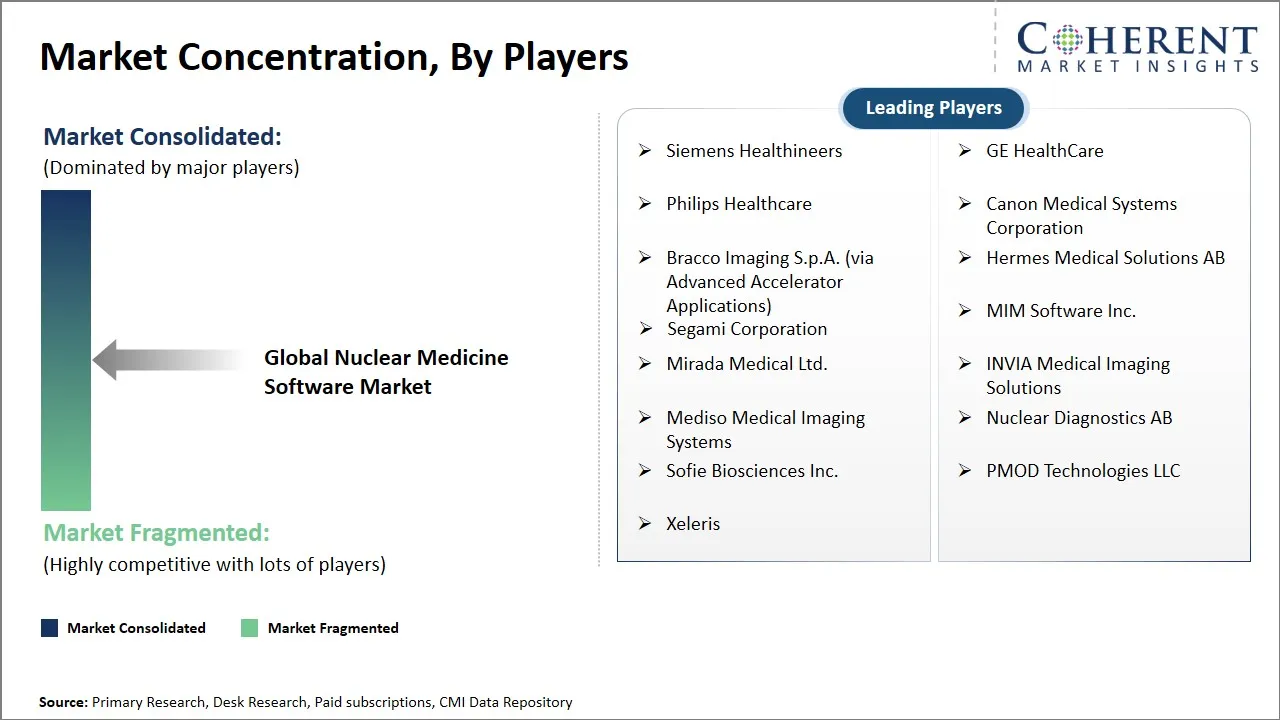
| Companies covered: | Siemens Healthineers, GE HealthCare, Philips Healthcare, Canon Medical Systems Corporation, Bracco Imaging S.p.A. (via Advanced Accelerator Applications), Hermes Medical Solutions AB, Segami Corporation, MIM Software Inc., Mirada Medical Ltd., INVIA Medical Imaging Solutions, Mediso Medical Imaging Systems, Nuclear Diagnostics AB, Sofie Biosciences Inc., PMOD Technologies LLC, and Xeleris | ||
| Growth Drivers: |
| ||
| Restraints & Challenges: |
| ||
Nuclear Medicine Software Market Dynamics
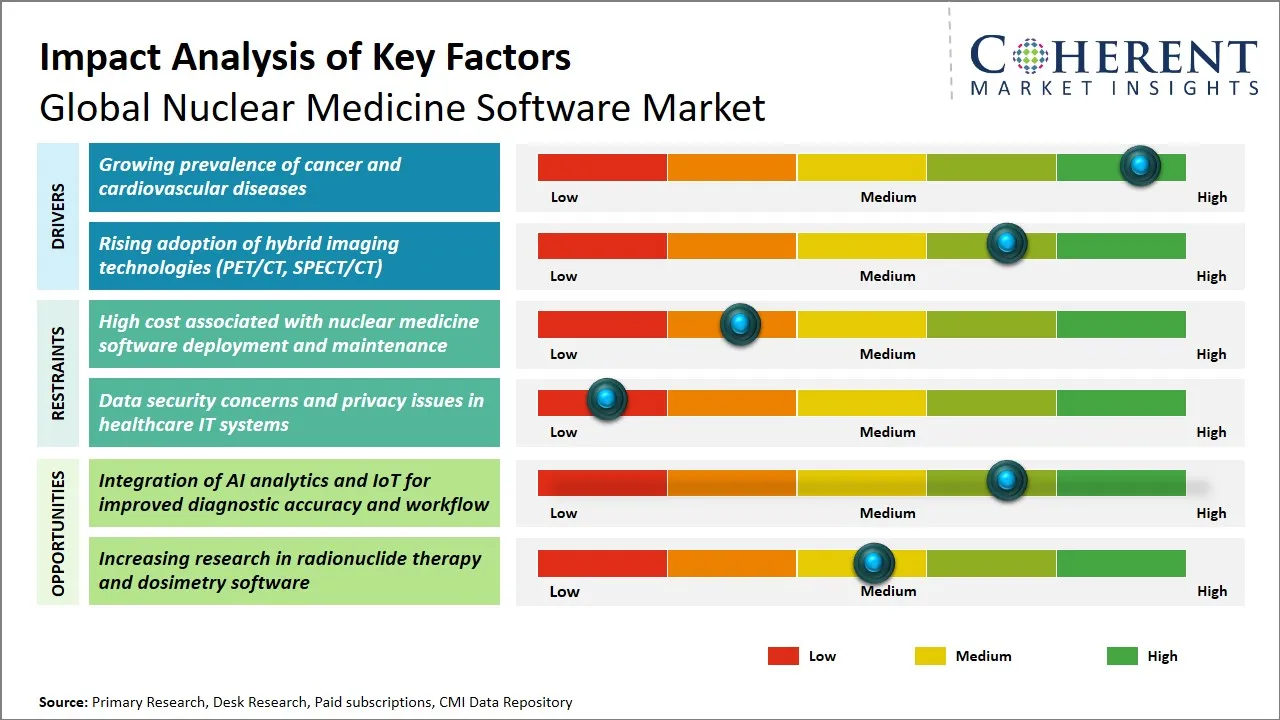
Nuclear Medicine Software Market Driver - Growing Prevalence of Cancer and Cardiovascular Diseases
The increasing incidence of cancer and cardiovascular diseases across the globe is significantly propelling the adoption of nuclear medicine software, as these conditions require advanced diagnostic and therapeutic solutions for effective management. Nuclear medicine plays a crucial role in early detection, accurate diagnosis, and ongoing monitoring of such chronic diseases, leveraging sophisticated imaging techniques like PET and SPECT scans. As cancer cases rise due to factors such as aging populations, lifestyle changes, and environmental exposures, healthcare providers are increasingly relying on nuclear medicine software to enhance image processing, analysis, and interpretation, thereby improving diagnostic accuracy and patient outcomes. Similarly, cardiovascular diseases, which remain leading causes of morbidity and mortality worldwide, demand precise assessment of cardiac function and tissue viability, functions that are made possible through nuclear imaging supported by specialized software.
In February 2025, as per the WHO, cancer and cardiovascular diseases (CVDs) are the leading causes of death globally. In 2022, 19.8 million people died from CVDs, accounting for 32% of all deaths, with heart attacks and strokes being the primary culprits. Cancer caused nearly 10 million deaths in 2020, with breast, lung, colon, and prostate cancers being the most common. Both diseases are largely preventable through lifestyle changes, including avoiding tobacco, unhealthy diets, obesity, physical inactivity, and reducing alcohol and air pollution exposure.
Nuclear Medicine Software Market Opportunity - Integration of AI Analytics and IoT for Enhanced Diagnostic Accuracy and Workflow Efficiency
The global nuclear medicine software market stands at the cusp of a technological transformation propelled by the integration of Artificial Intelligence (AI) analytics and the Internet of Things (IoT). This convergence presents a significant opportunity to dramatically enhance diagnostic accuracy and streamline clinical workflows within nuclear medicine. AI algorithms, particularly those leveraging machine learning and deep learning, are capable of analyzing complex imaging data with increased precision, enabling earlier and more accurate detection of diseases such as cancer and neurological disorders. Meanwhile, IoT devices facilitate real-time data collection and seamless communication between imaging equipment, healthcare providers, and patient monitoring systems. This interconnected ecosystem allows for continuous monitoring and timely updates, optimizing patient management and reducing the likelihood of diagnostic errors.
In December 2023, according to data published by International Atomic Energy Agency, (IAEA) Artificial Intelligence (AI) is making significant strides in nuclear medicine (NM) imaging, offering transformative potential in diagnosis and treatment. AI algorithms can enhance image analysis, improve image reconstruction, and personalize treatment plans, ultimately optimizing patient outcomes. By developing more accurate prognostic models and streamlining workflows, AI is poised to revolutionize NM imaging, making it a vital tool for healthcare professionals.
Analyst Opinion (Expert Opinion)
- The nuclear medicine software market is experiencing significant growth, driven by advancements in imaging technologies and the increasing integration of artificial intelligence (AI) into diagnostic processes. Key factors such as the rising demand for accurate, personalized diagnostics, regulatory support for healthcare innovation, and the adoption of hybrid imaging systems like PET/CT and SPECT/CT are pushing the market forward. Furthermore, growing investments in radiopharmaceuticals and the continuous push towards precision medicine have opened new opportunities. However, challenges such as high software costs, the need for skilled professionals, and data privacy concerns still persist, hindering broader adoption, especially in lower-income regions.
- Recent industry events, including conferences like RSNA 2024 and the European Society of Nuclear Medicine (ESNM) meetings, have become key platforms for discussing the evolving role of AI and machine learning in nuclear medicine, enabling vital knowledge exchange and showcasing cutting-edge technologies. Noteworthy initiatives such as collaborative projects between tech companies and medical institutions have led to the development of more accessible and efficient diagnostic solutions. Government-backed pilot projects focusing on the integration of AI-driven software in hospitals are expected to significantly impact the market, particularly in emerging economies.
Speak to the analyst
Want personalized insights?
Take the findings above to one of our principal consultants, or have the report rebuilt around the segments, geographies and competitors you actually track.
Market Segmentation
- Type Insights (Revenue, USD Mn, 2021 - 2033)
- Patient Data Management Software
- Imaging and Visualization Software
- Analysis and Quantification Software
- Clinical Decision Support Software
- Dosimetry Software
- Workflow and Scheduling Software
- Treatment Planning Software
- Others (Artificial Intelligence (AI) and Analytics Software, etc.)
- Modality Insights (Revenue, USD Mn, 2021 - 2033)
- Positron Emission Tomography (PET)
- Single Photon Emission Computed Tomography (SPECT)
- Hybrid Imaging Software (PET/CT, SPECT/CT, PET/MRI)
- Others (Planar Scintigraphy, hybrid systems)
- Therapeutic Area Insights (Revenue, USD Mn, 2021 - 2033)
- Oncology
- Cardiology
- Neurology
- Endocrinology
- Gastroenterology
- Others (Orthopedics, Infectious disease imaging, etc.)
- Deployment Model Insights (Revenue, USD Mn, 2021 - 2033)
- On-Premise
- Cloud-Based
- Integration Complexity Insights (Revenue, USD Mn, 2021 - 2033)
- Standalone Software
- Integrated Software Solutions
- Pricing Model Insights (Revenue, USD Mn, 2021 - 2033)
- Subscription-based Pricing
- Perpetual License Pricing
- Usage-based Pricing (pay-per-use)
- Freemium or Trial-based Pricing
- Customized or Enterprise Pricing
- End User Insights (Revenue, USD Mn, 2021 - 2033)
- Hospitals and Clinics
- Diagnostic Imaging Centers
- Academic and Research Institutions
- Pharmaceutical and Biotechnology Companies
- Regional Insights (Revenue, USD Mn, 2021 - 2033)
- North America
- U.S.
- Canada
- Latin America
- Brazil
- Argentina
- Mexico
- Rest of Latin America
- Europe
- Germany
- U.K.
- Spain
- France
- Italy
- Russia
- Rest of Europe
- Asia Pacific
- China
- India
- Japan
- Australia
- South Korea
- ASEAN
- Rest of Asia Pacific
- Middle East
- GCC Countries
- Israel
- Rest of Middle East
- Africa
- South Africa
- North Africa
- Central Africa
- North America
- Key Players Insights
- Siemens Healthineers
- GE HealthCare
- Philips Healthcare
- Canon Medical Systems Corporation
- Bracco Imaging S.p.A. (via Advanced Accelerator Applications)
- Hermes Medical Solutions AB
- Segami Corporation
- MIM Software Inc.
- Mirada Medical Ltd.
- INVIA Medical Imaging Solutions
- Mediso Medical Imaging Systems
- Nuclear Diagnostics AB
- Sofie Biosciences Inc.
- PMOD Technologies LLC
- Xeleris
Sources
Primary Research Interviews
- Industry Stakeholders List
- Senior Radiologists
- Hospital IT Managers
- End Users List
- Nuclear Medicine Technologists
- Medical Imaging Specialists
Government and International Databases
- World Health Organization (WHO)
- U.S. Food and Drug Administration (FDA)
- Centers for Medicare & Medicaid Services (CMS)
- European Medicines Agency (EMA)
- National Institutes of Health (NIH)
- International Atomic Energy Agency (IAEA)
Trade Publications
- Journal of Nuclear Medicine
- Radiology Today
- Imaging Economics
- Health Imaging
- Medical Imaging Technology
- Diagnostic Imaging
Academic Journals
- The Journal of Nuclear Medicine
- Radiology
- Journal of Medical Imaging
- Nuclear Medicine Communications
- Journal of Clinical Oncology
- Medical Physics
Reputable Newspapers
- The New York Times
- The Guardian
- The Washington Post
- Financial Times
- The Wall Street Journal
- The Times of India
Industry Associations
- Radiological Society of North America (RSNA)
- European Society of Radiology (ESR)
- American College of Radiology (ACR)
- Society of Nuclear Medicine and Molecular Imaging (SNMMI)
- International Society of Radiology (ISR)
- American Association of Physicists in Medicine (AAPM)
Public Domain Resources
- National Cancer Institute (NCI)
- Centers for Disease Control and Prevention (CDC)
- National Institutes of Health (NIH)
- National Library of Medicine (NLM)
- U.S. National Archives
- European Commission - Health and Food Safety
Proprietary Elements
- CMI Data Analytics Tool: Proprietary analytics tool to analyze real-time market trends, consumer behavior, and technology adoption in market
- Proprietary CMI Existing Repository of Information for Last 8 Years
Get access to 250+ pages report
Every segment, forecast, competitor profile and data table behind the analysis above — available for instant download.
- ESOMAR Member
- ISO 9001:2015 Certified
- D-U-N-S Registered
- GDPR & CCPA Compliant
Missing comfort of reading report in your local language? Find your preferred language:
Transform your Strategy with Exclusive Trending Reports
Frequently Asked Questions
The global nuclear medicine software market is estimated to be valued at USD 1071.7 Mn in 2026 and is expected to reach USD 1,997.1 Mn by 2033.
The CAGR of global nuclear medicine software market is projected to be 9.3% from 2026 to 2033.
Growing prevalence of cancer and cardiovascular diseases and rising adoption of hybrid imaging technologies (PET/CT, SPECT/CT) are the major factors driving the growth of the global nuclear medicine software market.
High cost associated with nuclear medicine software deployment and maintenance and data security concerns and privacy issues in healthcare IT systems are the major factors hampering the growth of the global nuclear medicine software market.
In terms of type, patient data management software is estimated to dominate the market revenue share in 2026.
The market is expected to grow rapidly with innovations in AI, machine learning, and cloud-based software, which will drive enhanced capabilities in diagnostics and treatment planning.
AI integration in nuclear medicine software enables faster image analysis, improved diagnostic accuracy, and enhanced decision-making through automation and predictive modeling.