

Global Organic Cocoa Powder Market Size and Forecast – 2026-2033
The Global Organic Cocoa Powder Market is estimated to be valued at USD 116.4 Mn in 2026 and is expected to reach USD 194.4 Mn by 2033, exhibiting a compound annual growth rate (CAGR) of 7.6% from 2026 to 2033.
Key Takeaways of the Organic Cocoa Powder Market
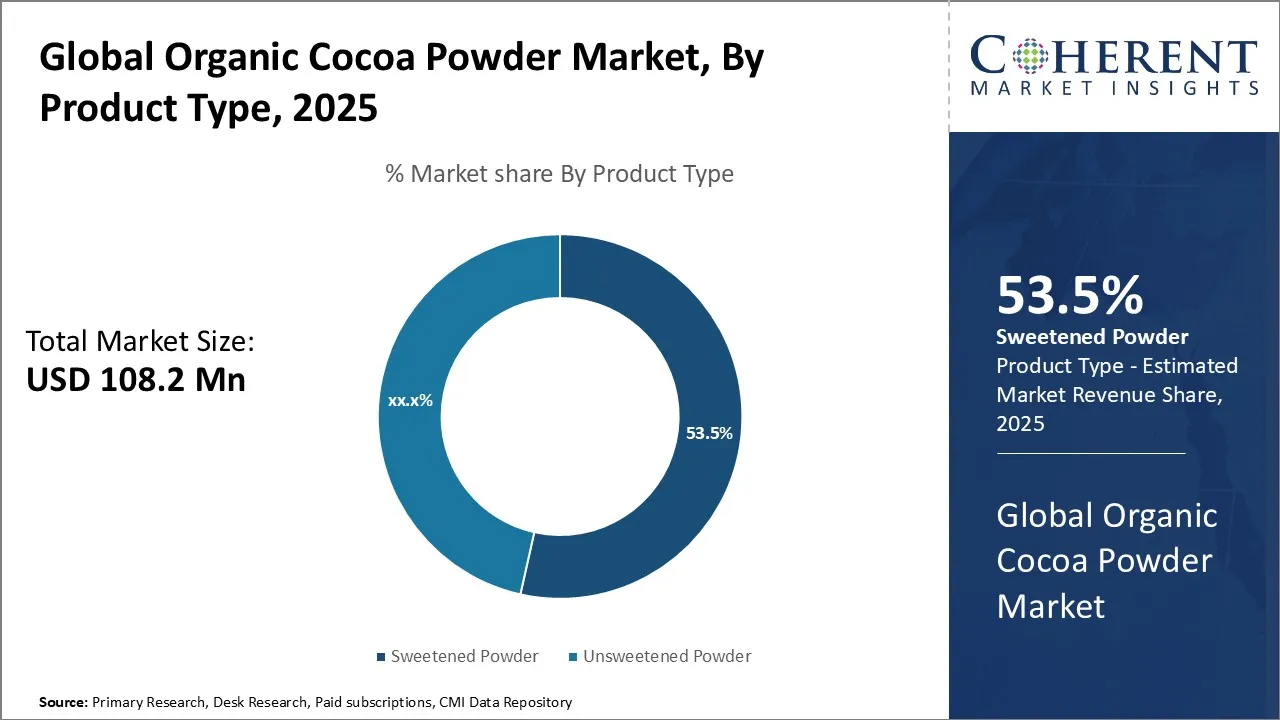
- The sweetened powder segment is projected to command 54.5% share of the global organic cocoa powder market in 2026, driven largely by its rich flavor profile and convenient application, both of which strongly appeal to consumer tastes worldwide.
- The natural segment is expected to account for 58.8% of the market in 2026, highlighting a growing consumer preference for minimally processed products that preserve their inherent nutritional value.
- The food and beverages segment is projected to capture 33.8% share of the global organic cocoa powder market in 2026, driven by consumers’ rising inclination to include organic ingredients in their everyday diets for both flavor and health benefits.
- North America is set to lead the global organic cocoa powder market in 2026 with a 32. 1% share, supported by strong demand for clean-label and sustainably sourced products, alongside the presence of major chocolate and confectionery manufacturers. Asia Pacific, with a 23.5% share, will be the fastest-growing region, fueled by rapid urbanization, rising disposable incomes, and increasing adoption of organic and plant-based diets, especially in markets such as China, India, and Southeast Asia.
Market Overview
Market trends indicate a significant shift towards sustainability and ethically sourced organic cocoa powder, propelled by consumer demand for transparency and environmental responsibility. Additionally, there is a growing innovation in product formulations, with manufacturers focusing on enhancing flavor profiles, nutritional benefits, and incorporating organic cocoa powder into functional food and beverages. The trend toward premiumization and clean-label ingredients is also expected to boost the market growth over the forecast period.
Current Events and Its Impact
Current Events | Description and its impact |
Record cocoa price spike through 2024–2025 |
|
U.S. Strengthening Organic Enforcement (SOE) fully in force (March 19, 2024) |
|
Segmental Insights
- Current Industry Events of 2026
- Market Size Estimation
- Regional Breakdown
- Competitive Landscape
- Customer Intelligence
- Segmental Analysis
- Pricing Analysis
- Key Market Drivers, Challenges & Future Trends
- Customized Insights Section
Organic Cocoa Powder Market Insights, By Product Type - Sweetened Powder Segment Dominates the Market Driven by Consumer Preference for Enhanced Flavor and Convenience
The sweetened powder segment is expected to hold 54.5% share of the global organic cocoa powder market in 2026. This is mainly due to its better flavor and ease of use, which appeal to consumers worldwide. Sweetened organic cocoa powder has a balanced taste that attracts a broad audience. It offers both the health benefits of organic products and a pleasant sweetness that goes well with drinks and desserts. The growth of this segment is fueled by increasing demand for ready-to-use cocoa powders that require little preparation, making them perfect for home users and food service operators.
Health-conscious consumers who prefer organic products still want tasty experiences, which sweetened cocoa powders provide without needing extra sweeteners. Convenience is essential, as sweetened powders make recipe creation simpler and cut down prep time. This design attracts busy consumers and culinary experts. Additionally, manufacturers are innovating by using natural sweeteners, like coconut sugar or organic cane sugar, in line with the growing trend for natural and minimally processed ingredients, which boosts the segment's growth.
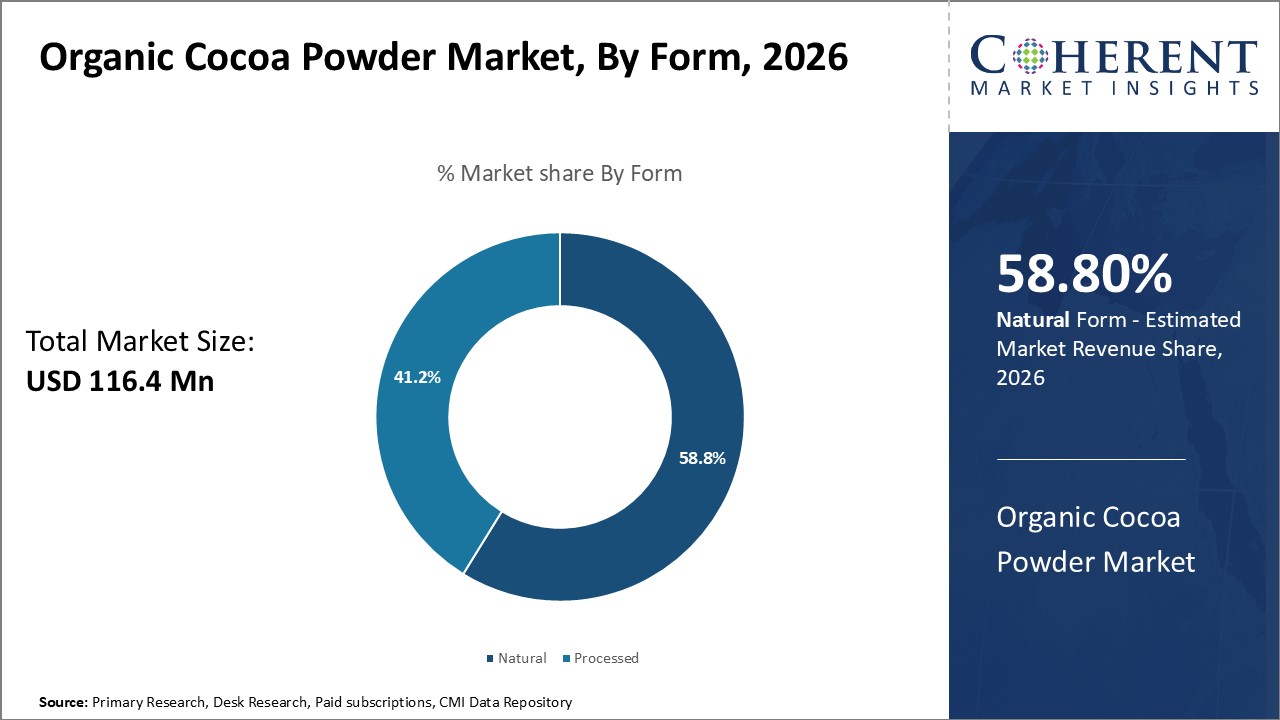
Organic Cocoa Powder Market Insights, By Form – Natural Segment Dominates the Market due to Preferred Choice Owing to Purity and Nutritional Integrity
The natural segment is projected to hold 58.8% share of the market in 2026. This reflects a trend among consumers who prefer minimally processed foods that keep their original nutritional qualities. Natural cocoa powders are valued for maintaining higher levels of antioxidants, flavonoids, and essential nutrients compared to processed ones.
The processing methods, like alkalization or Dutch processing, can reduce these beneficial compounds. The idea of purity and better health benefits motivates consumers to choose natural cocoa powder. Consumers are increasingly looking for products that support clean label commitments. This means fewer additives, no artificial chemicals, and minimal processing. Natural cocoa powder strongly meets this demand.
Organic Cocoa Powder Market Insights, By Application - Dominance of Food and Beverages Application Fueled by Versatility and Health-Conscious Consumption
The food and beverages segment is expected to hold 33.8% share in the global organic cocoa powder market by 2026. Consumers are increasingly adding organic ingredients to their daily diets for both taste and health reasons. Cocoa powder is a key ingredient in many food and beverage products, including chocolates, candies, baked goods, dairy products, and drinks like hot chocolate, smoothies, and protein shakes. The growing demand for organic options in these categories mainly stems from increased awareness of the benefits of organic farming, such as no synthetic pesticides and support for biodiversity.
Moreover, functional foods that include organic cocoa powder are becoming more popular because cocoa has antioxidant properties and may help with cardiovascular health and mental well-being. This trend has pushed manufacturers to incorporate organic cocoa powder into healthier snacks and drinks marketed as better choices. The clean-label trend in food and beverage production encourages producers to swap synthetic ingredients for organic cocoa powder. This approach aims to attract health-conscious consumers and parents looking for wholesome options for their families.
Regional Insights
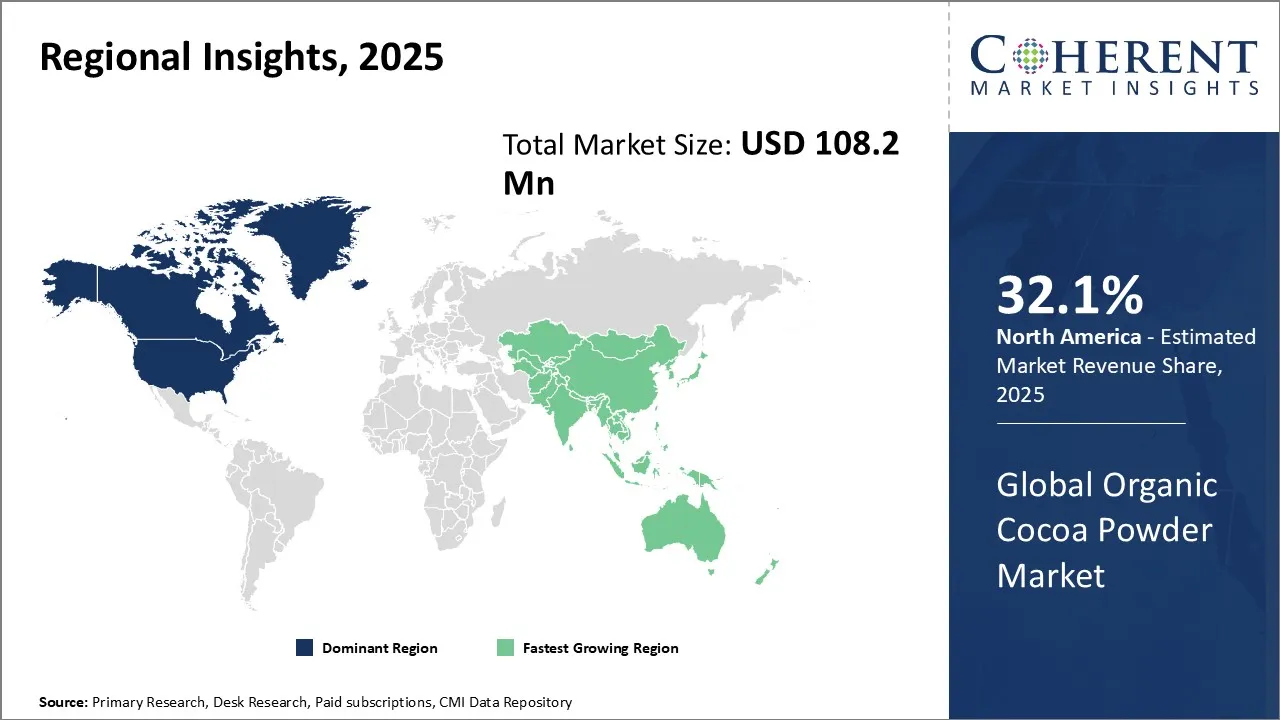
North America Organic Cocoa Powder Market Analysis and Trends
The North America region is projected to lead the market with a 32.1% share in 2026, primarily fueled by rising consumer preference for healthier, clean-label, and organic food products. The region has a strong regulatory framework under the USDA Organic certification, which ensures transparency, consumer trust, and product authenticity. Government initiatives promoting sustainable farming and the growing trend toward plant-based and natural ingredients further support organic cocoa demand.
Leading players, such as Hershey’s, Cargill, Blommer Chocolate Company, and Mars, have significant operations in North America, focusing on innovation in organic cocoa-based products and expanding their distribution networks. The region also benefits from a well-established retail infrastructure, including natural food chains like Whole Foods, Sprouts, and organic produce sections in large supermarkets, which provide strong market access.
Asia Pacific Organic Cocoa Powder Market Analysis and Trends
The Asia Pacific region is expected to exhibit the fastest growth in the market contributing 23.5% share in 2026, due to rising consumer awareness about health and wellness, increasing disposable incomes, and expanding middle-class populations. Countries, such as Japan, China, and India, are witnessing a surge in demand for organic and natural food ingredients, fueled by the growing trend towards clean-label and ethically sourced products.
Government initiatives to support organic farming and import liberalization policies are fostering the growth of organic agriculture and trade in the region. Notable companies like Meiji Holdings (Japan), Hershey’s, and Nestlé are actively expanding their organic cocoa offerings to cater to this burgeoning market. Additionally, the development of domestic organic cocoa cultivation in countries like Indonesia and the Philippines is creating new supply avenues, reinforcing the regional market momentum.
Organic Cocoa Powder Market Outlook for Key Countries
Germany Organic Cocoa Powder Market Trends
Germany’s organic cocoa powder market is characterized by a strong preference for organic food products, supported by high consumer awareness and purchasing power. The country’s well-organized organic certification and labeling system reinforce consumer confidence. Leading companies like Barry Callebaut have significant R&D centers in Germany, fostering product innovation in organic cocoa powder. Germany also acts as a key import hub for organic cocoa powder within Europe, leveraging advanced logistics infrastructure and robust trade links.
U.S. Organic Cocoa Powder Market Trends
The U.S. organic cocoa powder market shows growing enthusiasm for organic cocoa powder driven by increasing health-conscious consumers and expanding use in functional and specialty food products. The National Organic Program (NOP) provides a rigorous certification framework that strengthens market transparency. Companies, such as Hershey and Cargill, emphasize sustainable sourcing and product development, while organic cocoa imports and domestic processing capabilities continue to expand, benefiting from strong retail and e-commerce channels.
Japan Organic Cocoa Powder Market Trends
Japan’s organic cocoa powder market is fueled by consumers seeking premium and organic food ingredients with perceived health benefits. Strict government regulations ensure high standards for organic labeling, which supports consumer trust. Meiji Holdings and Morinaga & Co. are key industry players leveraging the organic trend within confectionery and beverage segments. Import reliance is significant, with a growing niche demand encouraging suppliers to maintain stringent quality and sustainability certifications.
India Organic Cocoa Powder Market Trends
India’s organic cocoa powder market is rapidly evolving driven by rising consumer health awareness and a preference for natural, organic products. The government supports organic agriculture through dedicated schemes, enhancing organic cocoa cultivation in states like Karnataka and Kerala. Leading multinational firms, including Nestlé and Hershey’s through partnerships, are investing to tap the growing organic cocoa powder demand. The expanding retail and online distribution channels further accelerate market access across urban centers.
Macro and Micro Economic Factors Impacting on Organic Cocoa Powder Market Growth
Macro-Economic Factors
- Rising global health awareness and consumer demand for organic and pesticide-free products are major macro drivers, especially as consumers increasingly associate cocoa with positive health benefits like antioxidant content and mood enhancement.
- Strict regulatory and certification requirements (USDA Organic, EU Organic, etc.) increase costs, but also build trust and underpin market credibility.
- Price volatility in global cocoa markets, due to weather events and geopolitical instability, affects input costs and overall market investment.
- Expansion of e-commerce and online shopping platforms is accelerating access to wider consumer bases, especially in emerging markets.
- Overall growth in disposable incomes, notably in developing economies, supports premium organic product purchases.
Micro Economic Factors
- High production and certification costs—involving labor, training, infrastructure, and annual audits—are barriers to entry, especially for smallholder farmers.
- Consumer preference shifts towards clean-label, ethical, and sustainably sourced cocoa are influencing product development, marketing, and supply chain transparency.
- Producers face logistical challenges in maintaining organic integrity throughout transport and processing, requiring specialized systems and raising operational expenses.
- Growth in bakery, dessert, and bespoke chocolate sectors in urban centers and among younger demographics increases demand for high-quality and artisanal cocoa powder varieties.
Market Players, Key Development, and Competitive Intelligence
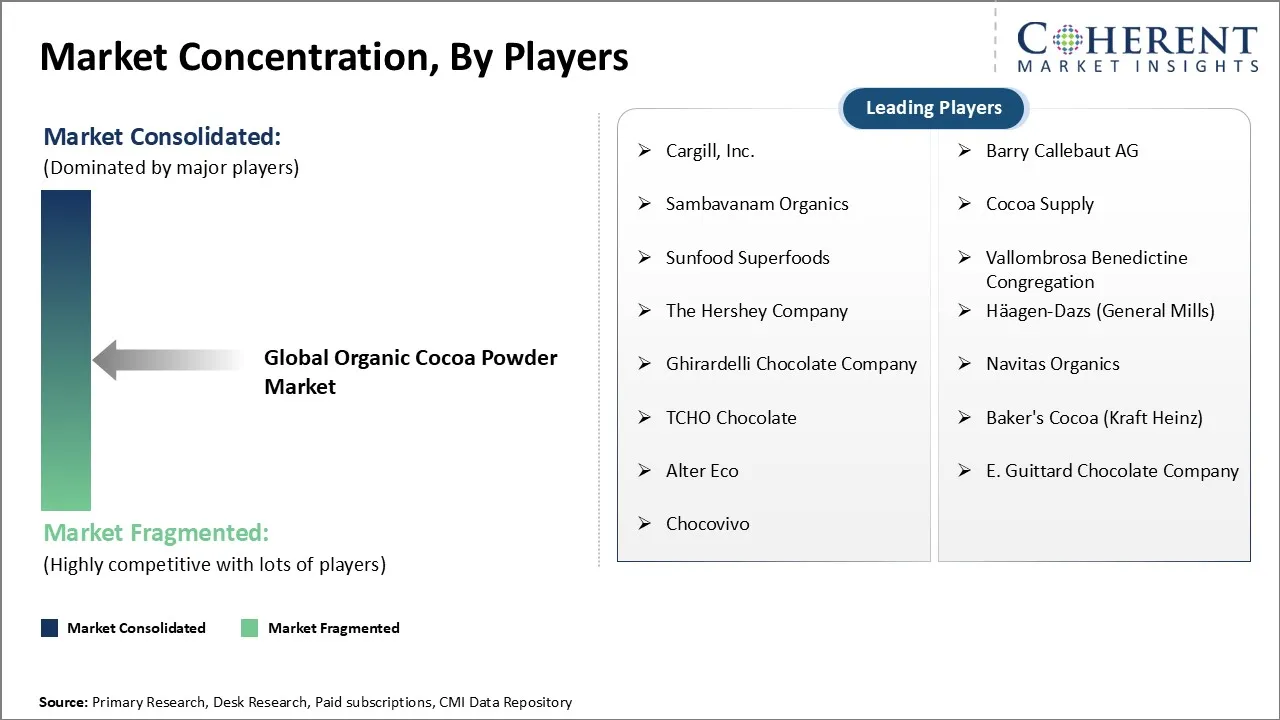
Key Developments
- In March 2024, Cargill India, a subsidiary of Cargill Inc., broadened its portfolio under the NatureFresh Professional brand with the launch of block chocolates, chocolate chips, and cocoa powder. These products are designed to cater to food and bakery manufacturers across India.
- In June 2023, Belgium-based Puratos Group acquired Foley's Chocolates, a Canadian chocolate producer. The acquisition enhances Puratos’ portfolio by adding innovative plant-based, protein-fortified, and no-sugar or reduced-sugar product solutions.
- In September 2022, Pronatec AG, a Swiss family-owned company, inaugurated a cutting-edge organic cocoa processing facility near Schaffhausen, about 50 km north of Zurich and close to the German border. The multi-Mn Swiss Franc plant has an annual processing capacity of around 14,000 tons of organic cocoa.
Top Strategies Followed by Global Organic Cocoa Powder Market Players
- Established market leaders invest heavily in research and development (R&D) to innovate high-performance organic cocoa products that meet evolving consumer demands for quality, sustainability, and health benefits. These companies focus on refining processing techniques to enhance flavor profiles, nutritional value, and product consistency. Such collaborations allow them to leverage shared expertise and resources, thereby solidifying their dominance.
- For instance, Barry Callebaut has advanced its Cacao Barry Pureté range using unique fermentation techniques that preserve natural flavors, while Cargill has developed sustainable sourcing programs like the Cargill Cocoa Promise to ensure traceability and farmer welfare.
- Mid-level players in the organic cocoa powder market typically emphasize delivering cost-effective solutions that balance quality with affordability, targeting the growing segment of price-sensitive consumers who seek organic options without premium pricing. These competitors often adopt lean production processes and source organic raw materials strategically to maintain competitive pricing. To amplify their market presence and enhance operational efficiency, mid-sized companies frequently engage in collaborations with technology providers and manufacturing partners.
- For example, Puratos recently launched a line of plant-based and reduced-sugar cocoa products to capture demand in emerging markets, while Blommer partners with regional suppliers to secure competitively priced organic cocoa.
- Small-scale players operating in the organic cocoa powder market differentiate themselves by concentrating on niche segments with specialized features or innovative product offerings. These companies leverage cutting-edge technologies such as advanced organic fermentation methods, novel packaging solutions, or unique flavor infusions to create distinctive products that appeal to discerning consumers. Given their limited scale, small players frequently establish local alliances with startups, artisan producers, or regional manufacturers to gain market entry and enhance visibility within targeted regional markets.
- For instance, Taza Chocolate is known for its Direct Trade program that directly sources from small farmer cooperatives, ensuring ethical transparency and distinct flavor profiles. Similarly, Chocolates Solé focuses on innovative packaging made from compostable materials to appeal to eco-conscious buyers.
Market Report Scope
Organic Cocoa Powder Market Report Coverage
| Report Coverage | Details | ||
|---|---|---|---|
| Base Year: | 2025 | Market Size in 2026: | USD 116.4 Mn |
| Historical Data for: | 2020 To 2024 | Forecast Period: | 2026 To 2033 |
| Forecast Period 2026 to 2033 CAGR: | 7.6% | 2033 Value Projection: | USD 194.4 Mn |
| Geographies covered: |
| ||
| Segments covered: |
| ||
| Companies covered: | Cargill, Inc., Barry Callebaut AG, Sambavanam Organics, Cocoa Supply, Sunfood Superfoods, Vallombrosa Benedictine Congregation, The Hershey Company, Häagen-Dazs (General Mills), Ghirardelli Chocolate Company, Navitas Organics, TCHO Chocolate, Baker's Cocoa (Kraft Heinz), Alter Eco, E. Guittard Chocolate Company, and Chocovivo | ||
| Growth Drivers: |
| ||
| Restraints & Challenges: |
| ||
Organic Cocoa Powder Market Dynamics
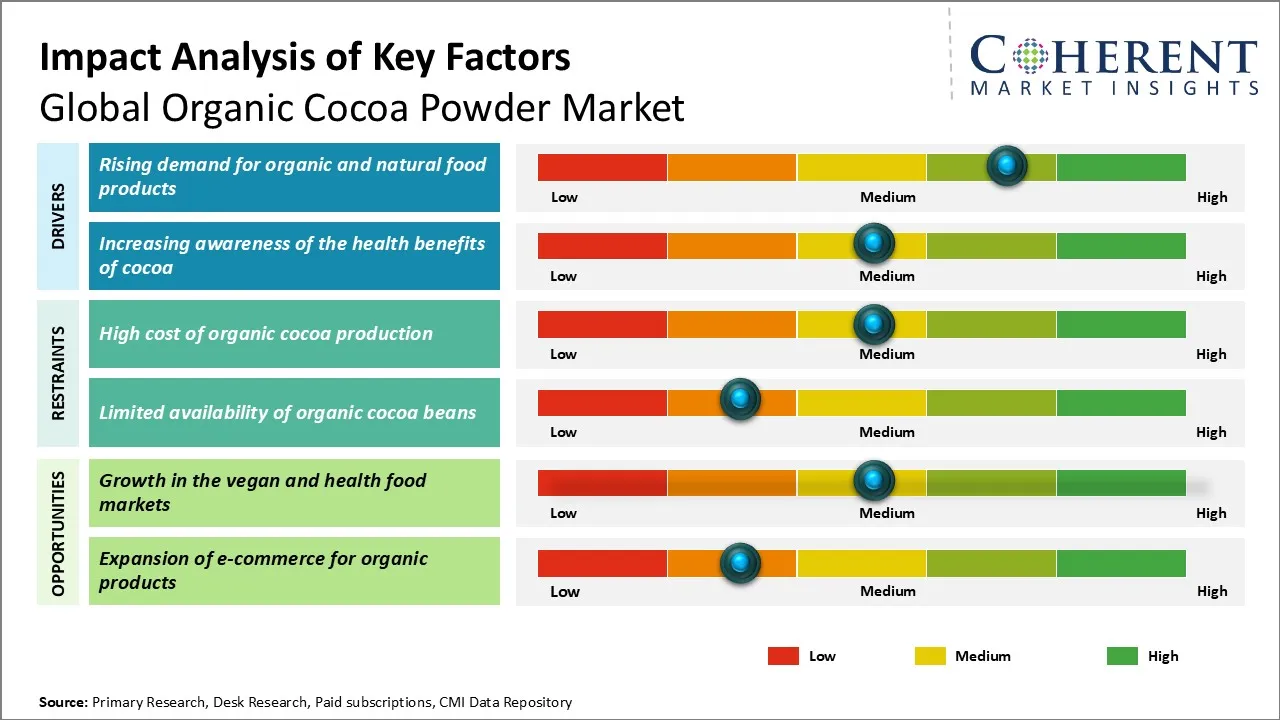
Organic Cocoa Powder Market Driver - Rising demand for organic and natural food products
The growing consumer preference for organic and natural food products is a significant factor propelling the demand for organic cocoa powder globally. Increasing awareness about the health benefits associated with organic ingredients, such as the absence of synthetic pesticides and fertilizers, is driving consumers to opt for clean-label products that align with their wellness goals. This trend is further supported by a shift toward sustainable and ethically sourced food items, where consumers are becoming more conscious of the environmental impact of conventional farming practices and are willing to pay a premium for products that promote ecological balance.
For instance, brands like Green & Black’s (Mondelēz International) and Navitas Organics highlight “organic” and “non-GMO” certifications on their cocoa powder packaging to attract these consumers.
Organic Cocoa Powder Market Opportunity - Growth in the Vegan and Health Food Markets
The expanding vegan and health-conscious consumer base presents a significant growth opportunity for the global organic cocoa powder market. Increasing awareness regarding the benefits of plant-based diets, coupled with rising concerns about animal welfare and environmental sustainability, has driven a surge in demand for vegan-friendly food products. Organic cocoa powder, being a natural, plant-derived ingredient free from synthetic chemicals and pesticides, aligns well with the values and preferences of these consumers. Moreover, the health food segment continues to gain momentum as individuals seek nutrient-dense, antioxidant-rich foods to support wellness and disease prevention.
For example, retailers like Whole Foods Market (U.S.) and Planet Organic (U.K.) highlight organic cocoa as part of their superfood categories, while companies like Navitas Organics and Sunfood Superfoods promote its high flavonoid and magnesium content to appeal to wellness-driven buyers.
Analyst Opinion (Expert Opinion)
- The global organic cocoa powder market is witnessing dynamic growth, propelled by rising consumer awareness about health and sustainability. Insights from the International Cocoa Conference (2023) and the Natural Products Expo (2022) underscored key trends, with companies like Cocoa Supply and Navitas Organics leading innovations in organic sourcing and product diversification.
- Cocoa Supply’s recent launch of a sustainably sourced organic cocoa powder line reflects a strategic response to the increasing demand for clean-label products among health-conscious consumers. Discussions at these conferences highlighted the critical role of certification standards and traceability in building consumer trust, especially as more buyers seek ethically produced ingredients. However, challenges such as price volatility in raw cocoa and competition from conventional cocoa products were noted as potential obstacles.
- Companies that invest in transparent supply chains and forge direct relationships with farmers are likely to gain a competitive advantage. Furthermore, effective marketing strategies that emphasize the health benefits and versatility of organic cocoa powder can enhance market penetration. Ultimately, the organic cocoa powder market's growth will depend on its ability to innovate while addressing sustainability and quality in an increasingly discerning consumer landscape.
Speak to the analyst
Want personalized insights?
Take the findings above to one of our principal consultants, or have the report rebuilt around the segments, geographies and competitors you actually track.
Market Segmentation
- Product Type Insights (Revenue, USD Mn, 2021 - 2033)
- Sweetened Powder
- Unsweetened Powder
- Form Insights (Revenue, USD Mn, 2021 - 2033)
- Natural
- Processed
- Application Insights (Revenue, USD Mn, 2021 - 2033)
- Food and Beverages
- Cosmetics
- Pharmaceuticals
- Others
- Regional Insights (Revenue, USD Mn, 2021 - 2033)
- North America
- U.S.
- Canada
- Latin America
- Brazil
- Argentina
- Mexico
- Rest of Latin America
- Europe
- Germany
- U.K.
- Spain
- France
- Italy
- Russia
- Rest of Europe
- Asia Pacific
- China
- India
- Japan
- Australia
- South Korea
- ASEAN
- Rest of Asia Pacific
- Middle East
- GCC Countries
- Israel
- Rest of Middle East
- Africa
- South Africa
- North Africa
- Central Africa
- North America
- Key Players Insights
- Cargill, Inc.
- Barry Callebaut AG
- Sambavanam Organics
- Cocoa Supply
- Sunfood Superfoods
- Vallombrosa Benedictine Congregation
- The Hershey Company
- Häagen-Dazs (General Mills)
- Ghirardelli Chocolate Company
- Navitas Organics
- TCHO Chocolate
- Baker's Cocoa (Kraft Heinz)
- Alter Eco
- Guittard Chocolate Company
- Chocovivo
Sources
Primary Research Interviews
- Procurement Head – Leading Organic Cocoa Importer
- Sustainability Manager – Global Chocolate Manufacturer
- R&D Director – Premium Cocoa-based Beverage Brand
- Product Innovation Head – Organic Confectionery Producer
Stakeholders
- Manufacturers (Organic cocoa processors, chocolate makers)
- End-use Sectors:
- Food & Beverages (chocolates, bakery, dairy, beverages)
- Nutraceuticals & Functional Foods (protein powders, supplements)
- Cosmetics & Personal Care (organic cocoa-based skin products)
- Regulatory & Certification Bodies
- Global Distributors & Retailers
- Sustainability & Fair-Trade Certification Players
Databases
- UN Comtrade Database
- Food and Agriculture Organization Statistics (FAOSTAT)
- International Cocoa Organization (ICCO) Database
Magazines
- Confectionery News – Cocoa and chocolate industry updates
- Food Business News – Trends in organic food and beverage ingredients
- Nutritional Outlook – Organic cocoa in functional foods and nutraceuticals
- Beverage Daily – Cocoa powder innovations in drinks
Journals
- Food Research International – Nutritional and functional properties of organic cocoa
- Journal of Agricultural and Food Chemistry – Bioactive compounds in cocoa powder
- Journal of Food Science – Processing impact on cocoa quality
- International Journal of Food Sciences and Nutrition – Health benefits of organic cocoa
Newspapers
- The Financial Times – Cocoa price trends and sustainability challenges
- The Guardian – Fair-trade and ethical cocoa production issues
- Business Standard – Cocoa powder consumption growth in emerging markets
- The New York Times – Consumer demand for organic and ethical chocolate
Associations
- International Cocoa Organization (ICCO)
- World Cocoa Foundation (WCF)
- Fairtrade International
- Rainforest Alliance
Public Domain Sources
- European Commission – Organic certification and cocoa trade regulations
- USDA – Organic certification standards for cocoa imports
- World Health Organization – Health impacts of cocoa consumption
Proprietary Elements
- CMI Data Analytics Tool, Proprietary CMI Existing Repository of information for last 8 years.
Get access to 250+ pages report
Every segment, forecast, competitor profile and data table behind the analysis above — available for instant download.
- ESOMAR Member
- ISO 9001:2015 Certified
- D-U-N-S Registered
- GDPR & CCPA Compliant
Missing comfort of reading report in your local language? Find your preferred language:
Transform your Strategy with Exclusive Trending Reports
Frequently Asked Questions
The global organic cocoa powder market is estimated to be valued at USD 116.4 Mn in 2026 and is expected to reach USD 194.4 Mn by 2033.
The CAGR of global organic cocoa powder market is projected to be 7.6% from 2026 to 2033.
Rising demand for organic and natural food products and increasing awareness of the health benefits of cocoa are the major factors driving the growth of the global organic cocoa powder market.
High cost of organic cocoa production and limited availability of organic cocoa beans are the major factors hampering the growth of the global organic cocoa powder market.
In terms of product type, sweetened powder is estimated to dominate the market revenue share in 2026.
Cargill, Inc., Barry Callebaut AG, Sambavanam Organics, Cocoa Supply, Sunfood Superfoods, Vallombrosa Benedictine Congregation, The Hershey Company, Häagen-Dazs (General Mills), Ghirardelli Chocolate Company, Navitas Organics, TCHO Chocolate, Baker's Cocoa (Kraft Heinz), Alter Eco, E. Guittard Chocolate Company, and Chocovivo are the major players.
North America is expected to lead the global organic cocoa powder market in 2026.