

Global Pain Relief Oil Market Size and Forecast – 2026 to 2033
According to Coherent Market Insights, the global pain relief oil market is estimated to be valued at USD 4.80 Bn in 2026 and is expected to reach USD 7.76 Bn by 2033, exhibiting a compound annual growth rate (CAGR) of 7.1% from 2026 to 2033. This significant growth is driven by increasing consumer awareness about alternative pain management solutions and the rising prevalence of chronic pain conditions worldwide, which collectively fuel demand for effective and natural pain relief options.
Key Takeaways of the Pain Relief Oil Market
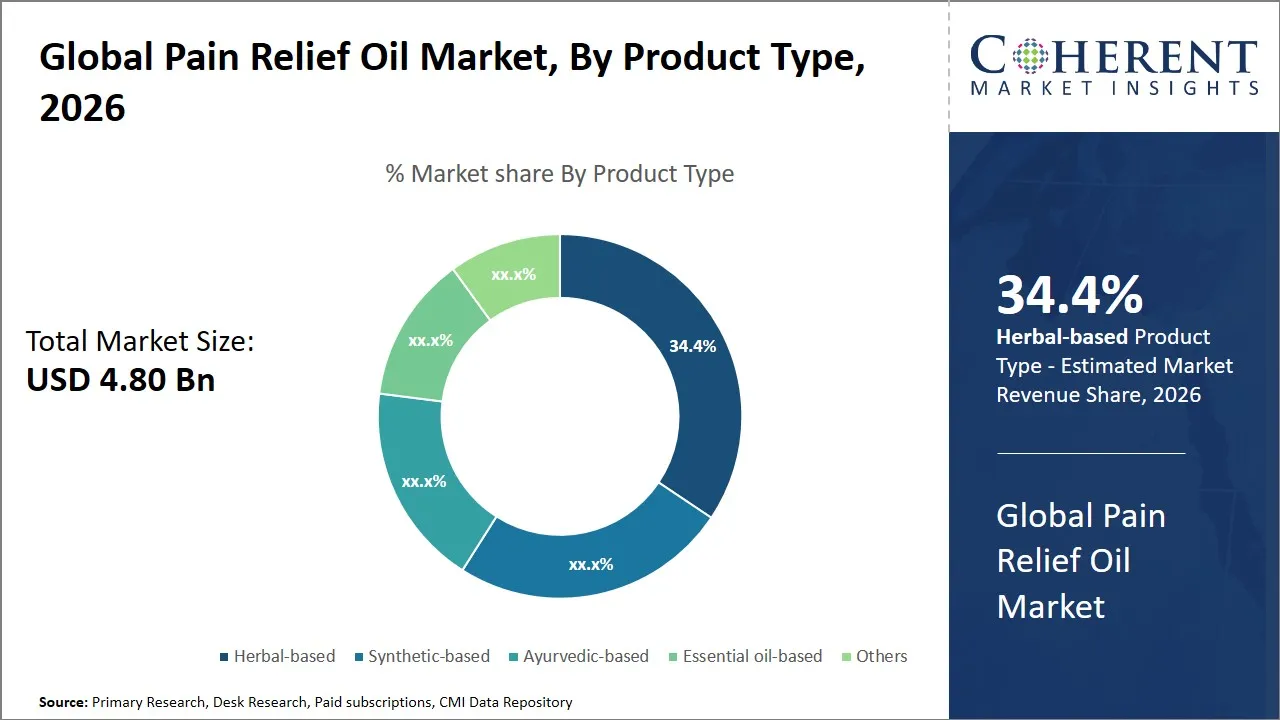
- Herbal-based product type segment is expected to lead the global pain relief oil market, capturing 34.40 % share in 2026.
- Single ingredient oil segment is estimated to represent 63.5 % of the global pain relief oil market share in 2026.
- Plant-based segment is projected to dominate with 44.5 % of the market share in 2026.
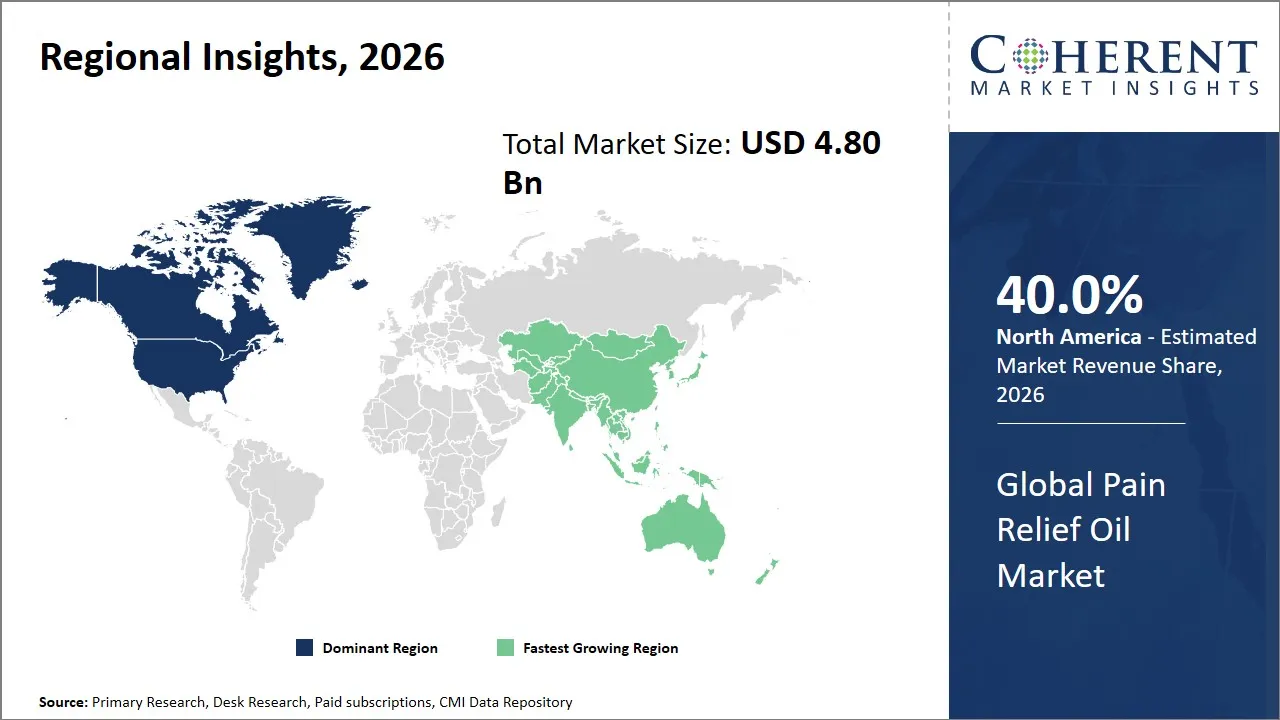
- North America is expected to lead the market, holding a share of 40.0 % in 2026. Asia Pacific is anticipated to be the fastest-growing region, with 31.4% share in 2026.
Market Overview
- The rising demand for natural and drug-free pain management solutions are increasing due to increasing prevalence of musculoskeletal disorders, arthritis, and chronic pain This is expected to increase the demand for pain relief oil market.
- Herbal and menthol-based oils are gaining popularity as they provide quick relief and have minimal side effects, especially in both over the counter (OTC) and professional healthcare settings.
- Growing trend of self-care and wellness leading to higher adoption of pain relief oils, particularly among aging populations and athletes also adds to the pain relief oil market’s growth.
- Shift towards natural remedies as consumers seek alternatives to pharmaceutical painkillers, with increasing awareness about their risks.
Current Events and Its Impact
Current Events | Description and its Impact |
Rising Demand for Natural and Organic Pain Relief Solutions |
|
Growth of E-commerce Channels for Pain Relief Oils |
|
Segmental Insights
- Current Industry Events of 2026
- Market Size Estimation
- Regional Breakdown
- Competitive Landscape
- Customer Intelligence
- Segmental Analysis
- Pricing Analysis
- Key Market Drivers, Challenges & Future Trends
- Customized Insights Section
Why Does the Herbal-Based Segment Dominate the Global Pain Relief Oil Market in 2026?
The herbal-based segment is expected to hold the largest share of 34.40% in 2026, due to the growing consumer inclination towards natural and holistic wellness solutions. Herbal oils are products of plant extracts with therapeutic effects, which are generally considered safer as opposed to synthetic formulations, which contain no harsh chemicals and have no side effects. This image corresponds to the growing interest in health and environmental sustainability that promotes the use of products that make use of the healing power of nature instead of artificial chemicals by consumers.
Besides, the ancient history of the traditional application of herbs in pain relieving is a powerful stimulator of this segment. The consumers have confidence in the products due to the long history of herbal pain relief oils as a part of the alternative medicine systems in different cultures. Such ingredients as turmeric, neem, eucalyptus, wintergreen, and peppermint are being glorified with their anti-inflammatory and analgesic properties that not only help to relieve the symptoms but also improve the circulation and effect relaxation. These natural ingredients give it credibility which leads to intense consumer loyalty and preference.
For instance, in April 2024, to enter the expanding natural wellness segment in India, Neet announced natural topical pain relief oils, both Neet Daily Joint + and Neet Daily NeuPain Gone, which combine Ayurvedic herbs with CBD (Vijaya extract) as a way of providing safe, effective, and affordable relief. Such vegetable products incorporate other substances such as Ashwagandha and MCT oil to absorb through absorption, which attacks inflammation and pain and is sold in pharmacies and Internet.
(Source- https://www.ptinews.com/story/business/neet-launches-topical-cbd-oils-for-pain-relief/1436920)
Why the Single Ingredient Segment is Widely Used in the Global Pin Relief Oil Market?
The single ingredient segment is projected to dominate the market, accounting for 63.5% of the market share in 2026, driven by consumer preferences for product simplicity and transparency. The single ingredient oils are based on a single active botanical or chemical molecule and so they are preferred by those who need specific pain relief but not the complexity or uncertainty of a mixed-compound formula. This simplicity enables a user to have a better insight into the effectiveness and possible advantages of the product, which will make them trust it.
Their perceived conceptual purity also makes them an easy sell to the proponents of alternative medicine who tend to prescribe particular botanical oils to particular pain or parts of the body. Indicatively, wintergreen oil, which includes methyl salicylate, is common in treating muscle pain whereas eucalyptus oil is preferred in treating joint pain as it has anti-inflammatory properties. Being a specific therapeutic use, this contributes to customization in pain management and attaching products to the needs of the users.
Plant-based Pain Relief Oil Leads the Global Pain Relief Oil Market
In terms of source, the plant-based segment is expected to capture the highest share of 44.5% in 2026, owing to its strong association to natural efficacy and environmental consciousness. Plant oils are considered more biocompatible and safer in nature with human skin and human physiological processes that can lead to adverse reactions, which decreases the likelihood of adverse reactions. A wide range of bio-active compounds including terpenes, flavonoid, and phenolic acid can be found in many plant-derived oils and are attributed to analgesic, anti-inflammatory and antioxidant properties that combine to produce good analgesia.
The increased concern about sustainability and ethical sourcing by consumers has greatly enhanced the popularity of plant-based pain relief oils. The environment is minimally impacted by sustainable harvesting and environment-friendly extraction techniques, which in addition to this, provide the community who are engaged in growing the product with livelihood, which builds a good social-economic history of the products. This is an ethical aspect that is a decisive factor especially when it comes to millennials and Gen Z buyers whose ethical behavior is appreciative of corporate social responsibility alongside product performance.
End User Feedback and Unmet Needs in the Global Pain Relief Oil Market
- End users across retail consumers, clinical practitioners (such as physiotherapists and sports medicine professionals), and traditional wellness providers generally value pain relief oils for their non‑invasive, drug‑free relief and ease of use. Nonetheless, the issues of product consistency and over-packaging are often mentioned, especially when it comes to oils sold as so-called all-natural that differ in their efficacy.
- One of them is a high demand in the individualized pain relief products that are focused on particular types of pain (e.g., joint or back pain), as well as the products that will be able to potentially serve low-end markets. These needs may be met by creating individual formulations and green packaging and affordable product lines that may introduce new growth opportunities, build customer loyalty, and widen the market.
Regional Insights
North America Pain Relief Oil Market Analysis and Trends
The North America region is projected to lead the market with a 40.0% in 2026, due to a highly developed healthcare infrastructure, extensive research and development activities, and strong consumer awareness about alternative pain management solutions. Increasing health consciousness and migration to self-treatment and preventative wellness is influencing a greater use of topical pain relievers specifically herbal, menthol-containing, and camphor-infused oils. Market expansion in the United States and Canada is also enhanced by the fact that they have well established retail networks and have adopted e-commerce systems faster and have well-established regulatory structures that guarantee product safety and quality.
The aging population with increased chronic pain, the increased popularity of drug-free pain management, and the increased adoption of complementary therapies in mainstream healthcare are key driver forces. Top consumers which include retail homes, physiotherapy and rehabilitation centers and sports medicine clinic prefer products that are more effective and have fewer side effects and manufacturers are being forced to develop superior formulations and modes of delivery.
For instance, in 2025, the U.S. FDA’s guidance on topical pain relief product claims continues to shape product positioning, ensuring that brands adopt substantiated language and safety labeling. Meanwhile, wellness expos like Natural Products Expo East (2024–2025) have become key venues for showcasing innovative pain relief oils and educating buyers on natural alternatives.
Asia Pacific Pain Relief Oil Market Analysis and Trends
The Asia Pacific region is expected to exhibit the fastest growth in the market contributing 31.4% share in 2026, owing to the profound cultural acceptance of the traditional and herbal remedies with the increasing disposable income and growing retail and digital channels. The major contributors include countries like China, India, Japan, South Korea and Southeast Asian countries where herbal pain relief formulations based on the time-tested practices as Ayurveda and Traditional Chinese Medicine remain popular in commanding a high trust of consumers. The rapid urbanization process, the development of musculoskeletal diseases related to the lack of physical activity, and the rise of self-wellness as the main health concern also contribute to the demand of pain relief oils that can be used in both OTC and professional settings.
The preference of end users who are individual consumers and sports therapy clinics to traditional medicine practitioners is to use products containing a combination of natural efficacy and modern packaging and safety assurance. Formulations based on multiple ingredients that integrate menthol, camphor, eucalyptus, and herbal extracts are specially popular due to the assumed speed of action and a wide range of application in muscle, joint, and back pain.
Pain Relief Oil Market Outlook for Key Countries:
What are the Current Trends Shaping U.S.’ Pain Relief Oil Market?
U.S. pain relief oil market is defined as an already mature consumer market that is increasingly getting attracted to holistic and non-pharmaceutical pain relief methods. Product credibility is ensured through regulatory measures taken by the agencies such as the FDA to instill consumer confidence.
The presence of key players like Biofreeze and Tiger Balm is significant and they have invested in new formulations that will include menthol, camphor and natural extracts. Its online sales spread covers the range between pharmacy and specialty wellness stores and has experienced tremendous growth with regards to serving various consumer demands including sport related injuries as well as prolonged pain management.
How is India Helping in the Growth of Pain Relief Oil Market?
India has taken advantage of its long culture of herbal and Ayurvedic medicines to flourish in the market. The Ayurveda and natural product promotion by government programs drive market growth. Some of the companies like Dabur and Patanjali Ayurved are instrumental in increasing the scale of pain relief oils that utilize the native resources like eucalyptus, clove, and camphor. The demand is fueled by the rising health awareness and favoring natural ingredients among the rising middle class. Besides, the rural and semi-urban market penetration via modern and traditional retail would increase market coverage.
Key Drivers for the Growth of China Pain Relief Oil Market
China is still in the lead due to the high acceptance of Traditional Chinese Medicine (TCM) which incorporates balms and essential oils as a form of pain relief. The legal support of herbal medicine and increasing health consciousness of urban population play an important role. Other significant market players are the manufacturing facility of Tiger Balm and other local manufacturers of the herbal oil. The encouragement of Traditional Chinese Medicine (TCM) by the Chinese government does not only cater the domestic demand but also enhances the export opportunities, and actually the modern retail stores and online retailing sites make direct consumer access easy.
Germany Pain Relief Oil Market Trends
The market of Germany has the advantage of strong pharmaceutical industry and preference of proven, natural therapeutic products by consumers. The healthcare ecosystem assists in integration of the pain- relieving oils as alternative remedies initiated or advised by healthcare providers.
Other companies such as Cinq Mondes which are owned by L’Oréal and local manufacturers of herbal products concentrate on quality formulations in EU requirements. Market growth is supported by the presence of well-developed distribution channels such as pharmacies and health stores and consumer confidence in natural remedies.
OTC Regulations and Claim Boundaries
- Regulatory Effect on Product Claims - OTC regulations provide that pain relief oils are safe and that it should not produce any misleading claims like permanent pain relief unless there is substantial evidence to substantiate it. To protect consumers and guarantee proper usage, regulatory authorities such as the FDA and EMA impose regulations on ingredients of the active ingredients, the type of doses, and the labelling on the product.
- Challenges with Global Compliance and Market Expectations - Manufacturers have a hard time trying to balance their regulatory needs with the consumer demands to have quick and permanent relief. The regional differences in OTC regulations also complicate marketing in the global marketing context since a brand must comply with regulations besides addressing local consumer needs in order to have an effective pain management product.
Market Players, Key Developments, and Competitive Intelligence
Key Developments
- In October 2025, after overwhelming commercial success of the TVB greatest rated TV drama Heroes in White that engaged more than 1.57 million viewers with a rating of 24.2 points, Herbalgy, a reliable brand in pain management, is bringing the same powerful message into the real world. The show is based on a true-life story of Professor Wong Tin Chee, the founder of Herbalgy and demonstrates his commitment to the traditional Chinese medicine (TCM) and pain management. The end of each episode is a reflection of the essence of the mission of Herbalgy in that Professor Wong provides practical wellness advice to the audience, the main aim of Herbalgy being to instill the wisdom of TCM in modern preventive care. Herbalgy is determined to improve the lives of the people with relied on innovative pain relieving products.
- In August 2025, Saje Natural Wellness, a trailblazer of plant-based remedies, collaborated with Ulta Beauty as its inaugural national retailer, releasing bestsellers in 200 + stores and online to widen its footprint in the U.S. and cater to the increasing demand of wellness products, in line with Ultra concentrating on the health and beauty category with science-based, natural products such as their famous Peppermint Halo and Pocket Farmacy kits.
- In September 2024, Mankind Pharma introduced Nimulid Strong, a diclofenac-containing gel and spray product for neck pain in the topical analgesic market in a higher concentration (2X) of diclofenac to provide enhanced relief, and with quick absorption and aimed to increase its consumer healthcare product line with this product. This product is tailored to provide fast and specialized relief to neck and shoulder pain, to solve the effect on the daily movement and is a segment of the overall strategy by Mankind Pharma in the consumer health sector.
Top Strategies Followed by Global Pain Relief Oil Market Players
Player Type | Strategic Focus | Examples |
Established Market Leaders | Established large market players that are already market leaders in the pain relief oil industry invest much on R&D activities to enhance product effectiveness, safety and formula. They lay emphasis on the use of novel natural ingredients and sophisticated delivery system. OEMs, healthcare providers, and distribution partners are also strategic alliances of these companies to reach more people across different regions in the world. | Emami limited, among the major force in the pain oil industry has increased its market segment and reduced its R&D to invest in innovative products such as the Zandu Balm, which is made of natural ingredients and superior formulation to meet the needs of different consumers in different markets globally. |
Mid-Level Players | The medium-level players in the pain relief oil industry specialize in providing affordable solutions without interfering with quality. They streamline production to ensure that the costs are low and they are competitive. By strategic alliances, they are able to increase their production capacities, acquire new technologies and also increase their market coverage. | As a mid-level competitor within the market of pain relief oils, Medera provides low-cost and high-quality products through the prioritization of the production process and the utilization of the strategic collaboration with distributors. Their value based products such as Mederma Pain Relief Oil appeals to price sensitive clients at the same time being reliable in its products. |
Small-Scale Players | The small-scale players can distinguish in terms of niche market and specialization in specific pain relief products, including products aimed at chronic conditions or sports injury. They also use state-of-art technologies such as biotechnology to extract ingredients and sales using digital channels in direct-to-consumer (regional) sales. | Tifara is a minor player that deals with the production of natural pain relief oils of sports injuries, and it extracts its ingredients with the help of the state-of-the-art biotechnological tools. They collaborate with the local wellness facilities to increase their credibility and directly connect with the consumers online. |
Market Report Scope
Pain Relief Oil Market Report Coverage
| Report Coverage | Details | ||
|---|---|---|---|
| Base Year: | 2025 | Market Size in 2026: | USD 4.80 Bn |
| Historical Data for: | 2020 To 2024 | Forecast Period: | 2026 To 2033 |
| Forecast Period 2026 to 2033 CAGR: | 7.1% | 2033 Value Projection: | USD 7.76 Bn |
| Geographies covered: |
| ||
| Segments covered: |
| ||
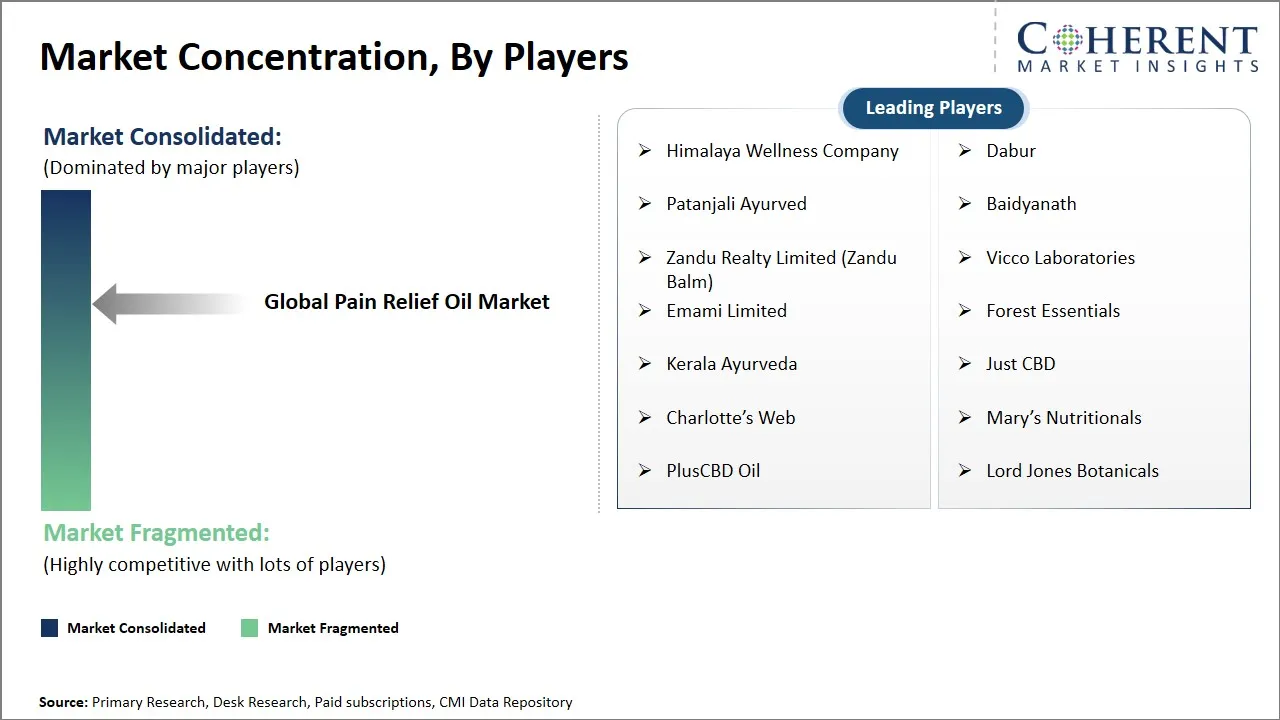
| Companies covered: | Himalaya Wellness Company, Dabur, Patanjali Ayurved, Baidyanath, Zandu Realty Limited (Zandu Balm), Vicco Laboratories, Emami Limited, Forest Essentials, Kerala Ayurveda, Just CBD, Charlotte’s Web, Mary’s Nutritionals, PlusCBD Oil, and Lord Jones Botanicals | ||
| Growth Drivers: |
| ||
| Restraints & Challenges: |
| ||
Pain Relief Oil Market Dynamics
Pain Relief Oil Market Driver - Rising Consumer Preference for Natural and Herbal Remedies
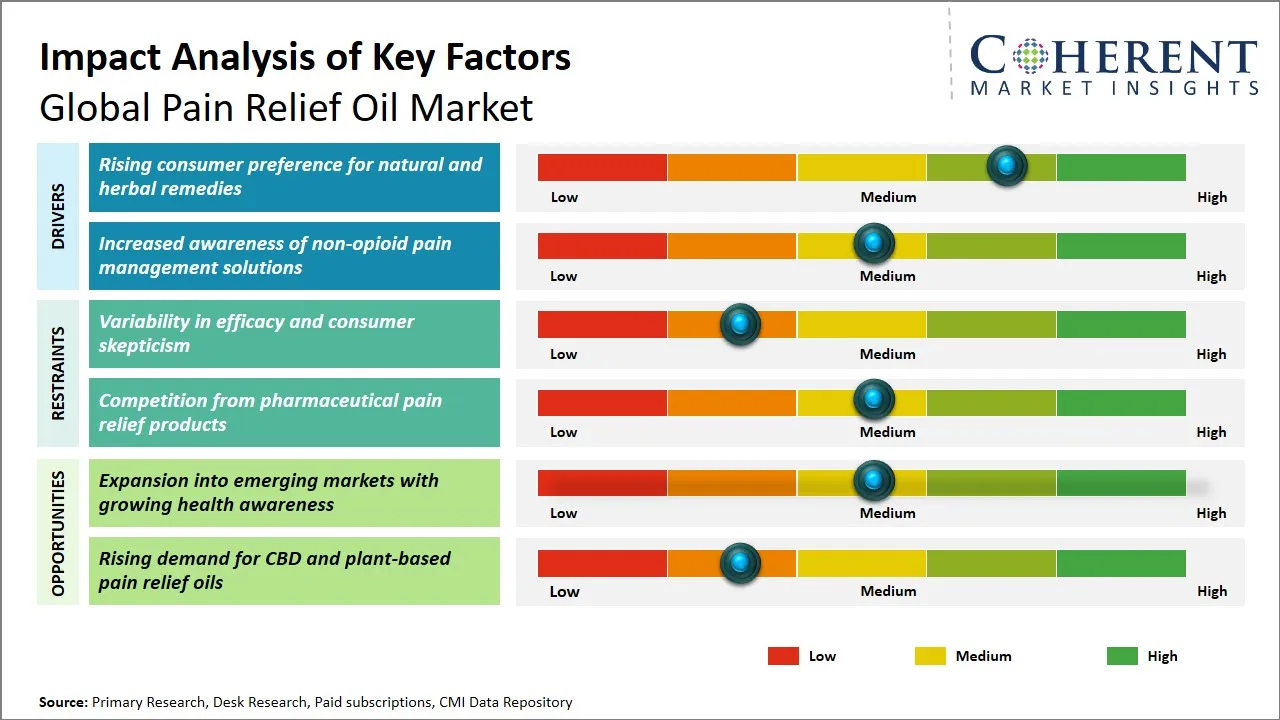
There has been an emerging trend of consumer behavior towards consumption of natural and herbal remedies and this has been a major force driving the global oil pain relief market. As the knowledge of the possible side effects and long-term health effects of synthetic pharmaceuticals increases, more people are turning to safer natural alternatives to address pain and inflammation. This tendency is also supported by the fact that holistic health practices are popular nowadays and the general tendency to wellness and self-care. The use of botanical extract oils including eucalyptus, peppermint, turmeric and camphor is becoming more popular because of their perceived medicinal values such as analgesic and anti-inflammatory effects.
Besides, the cultural acceptance of traditional medicine, the increasing role of social media and online platforms offering natural remedies to pain, and the increasing consumer confidence in herbal pain relief oils all help promote the success of the product in question. The manufacturers are therefore paying much attention to formulations that focus on purity, organic products, and sustainable sourcing to cater to the new needs of natural pain relievers.
For instance, the consumption of herbal medicinal products and supplements has grown enormously in the last 30 years with at least 80% of the world population depending on them in the primary healthcare.
(Source- https://pmc.ncbi.nlm.nih.gov/articles/PMC3887317/)
Pain Relief Oil Market Opportunity - Expansion into Emerging Markets with Growing Health Awareness
The global pain relief oil market has a great potential with the growth and expansion into the emerging markets with the growing health awareness and growing disposable income. The increasing demand of natural and alternative health products is being experienced in countries in the regions like Asia-Pacific and even in parts of Africa due to the increasing middle class and the movement towards preventive healthcare. There is an increase in awareness by the consumers of these markets about the advantages of plant-based and herbal formulations because they are thought to be safer and holistic to use relative to synthetic pharmaceuticals.
There is also the increasing prevalence of chronic conditions of pain in the older populations and lifestyle induced conditions, which also contributes to market potential. The penetration of the e-commerce options and modernization of the retail in these areas also makes it easier to access the pain relief oils, increasing the reach of the consumer and the availability of the product. Wellness programs promoted by the local governments and health organizations are focusing on the use of traditional remedies, which indirectly increase the use of pain relief oils.
For instance, throughout 2025, healthcare continued to be a priority worlwide. The repeated spending on budgetary allocations to the public health infrastructure, digital health platforms, medical education, and domestic production portrayed the long-term policy vision as opposed to short-term intervention.
(Source- https://www.business-standard.com/content/press-releases-ani)
Analyst Opinion (Expert Opinion)
- The pain relief oil market is reporting a good growth that is attributed to the rising customer demand on natural, non-invasive pain management products. The main drivers of this expansion are the transition to the herbal and menthol formulations, the increasing awareness of the side effects of pharmaceutical analgesics, and the rapidly increasing popularity of self-care and wellness trends. Innovation is also being accelerated by technological changes, including the application of biotechnology to extract more efficient ingredients and the creation of more efficient delivery mechanisms.
- Nevertheless, the issues like poor products quality, legal barriers, and high rivalry with multinational corporations are still pressing. The opportunity that is emerging is in the personalized pain relief oils, the development of e-commerce and in the Asian Pacific and Latin American markets where consumers are now in the process of seeking cheaper and effective alternatives. Market potentials will keep on growing, particularly in the North America and European markets where consumers are increasingly moving towards health-conscious ways of managing pain.
Speak to the analyst
Want personalized insights?
Take the findings above to one of our principal consultants, or have the report rebuilt around the segments, geographies and competitors you actually track.
Market Segmentation
- Product Type Insights (Revenue, USD Bn, 2021 - 2033)
- Herbal-based
- Synthetic-based
- Ayurvedic-based
- Essential oil-based
- Others
- Formulation Insights (Revenue, USD Bn, 2021 - 2033)
- Single Ingredient Oil
- Blended/Compound Oil
- Source Insights (Revenue, USD Bn, 2021 - 2033)
- Plant-based
- Animal-based
- Synthetic chemicals
- Application Insights (Revenue, USD Bn, 2021 - 2033)
- Musculoskeletal Pain Relief
- Joint Pain Relief
- Back Pain Relief
- Headache and Migraine Relief
- Sports Injury Pain Relief
- Post-surgical Pain Relief
- General Body Pain Management
- End User Insights (Revenue, USD Bn, 2021 - 2033)
- Adults
- Elderly Population
- Others
- Distribution Channel Insights (Revenue, USD Bn, 2021 - 2033)
- Online
- Offline
- Regional Insights (Revenue, USD Bn, 2021 - 2033)
- North America
- U.S.
- Canada
- Latin America
- Brazil
- Argentina
- Mexico
- Rest of Latin America
- Europe
- Germany
- U.K.
- Spain
- France
- Italy
- Russia
- Rest of Europe
- Asia Pacific
- China
- India
- Japan
- Australia
- South Korea
- ASEAN
- Rest of Asia Pacific
- Middle East
- GCC Countries
- Israel
- Rest of Middle East
- Africa
- South Africa
- North Africa
- Central Africa
- North America
- Key Players Insights
- Himalaya Wellness Company
- Dabur
- Patanjali Ayurved
- Baidyanath
- Zandu Realty Limited (Zandu Balm)
- Vicco Laboratories
- Emami Limited
- Forest Essentials
- Kerala Ayurveda
- Just CBD
- Charlotte’s Web
- Mary’s Nutritionals
- PlusCBD Oil
- Lord Jones Botanicals
Sources
Industry Stakeholders
- Acupuncture and herbal oil manufacturers
- Packaging and distribution experts for pain relief oils
- Pharmaceutical and health product regulatory consultants
- Retail channel buyers and procurement managers
- Quality assurance professionals in healthcare product manufacturing
- Importers and exporters of herbal pain relief oils
End Users
- Licensed pain management professionals
- Physiotherapy clinics
- Sports rehabilitation centers
- Retail consumers seeking natural pain relief options
- Online direct-to-consumer platforms
- Elderly care facilities
Government and International Databases
- U.S. Food and Drug Administration (FDA)
- World Health Organization (WHO)
- European Medicines Agency (EMA)
- National Institute for Health and Care Excellence (NICE)
- Ministry of Health and Family Welfare, India
- Therapeutic Goods Administration (TGA), Australia
Trade Publications
- Healthcare Packaging
- Medical Device Network
- Pain Medicine News
- Natural Products Insider
- Drug Development & Delivery
- Packaging Digest
Academic Journals
- Journal of Pain Research
- Complementary Therapies in Medicine
- Journal of Ethnopharmacology
- Clinical Journal of Pain
- Journal of Alternative and Complementary Medicine
- European Journal of Pain
Reputable Newspapers
- The Wall Street Journal
- Reuters
- BBC News
- Financial Times
- The New York Times
- The Guardian
Industry Associations
- American Herbalists Guild
- National Center for Complementary and Integrative Health (NCCIH)
- World Federation of Acupuncture-Moxibustion Societies (WFAS)
- American Pain Society
- National Association for Home Care & Hospice (NAHC)
- European Association for the Study of Pain (EASP)
Public Domain Resources
- ClinicalTrials.gov
- Cochrane Library
- Google Scholar
- OpenFDA
- WIPO Patentscope
Proprietary Elements
- CMI Data Analytics Tool: Proprietary analytics tool to analyze real-time market trends, consumer behavior, and technology adoption in market
- Proprietary CMI Existing Repository of Information for Last 8 Years
Get access to 250+ pages report
Every segment, forecast, competitor profile and data table behind the analysis above — available for instant download.
- ESOMAR Member
- ISO 9001:2015 Certified
- D-U-N-S Registered
- GDPR & CCPA Compliant
Missing comfort of reading report in your local language? Find your preferred language:
Transform your Strategy with Exclusive Trending Reports
Frequently Asked Questions
Consumers are increasingly choosing natural and herbal formulations as part of a broader shift toward non‑pharmaceutical and self‑care solutions, with e‑commerce channels playing a major role in widening access and repeat purchases.
Regulators in key regions are tightening rules on ingredient disclosure and marketing claims, requiring firms to substantiate effectiveness and safety, which is driving the demand for compliant, transparently labeled products and discouraging exaggerated health claims.
The global pain relief oil market is estimated to be valued at USD 4.80 billion in 2026 and is expected to reach USD 7.76 billion by 2033.
The CAGR of global pain relief oil market is projected to be 7.1% from 2026 to 2033.
Rising consumer preference for natural and herbal remedies and increased awareness of non-opioid pain management solutions are the major factors driving the growth of the global pain relief oil market.
Variability in efficacy and consumer skepticism and competition from pharmaceutical pain relief products are the major factors hampering the growth of the global pain relief oil market.
In terms of product type, herbal-based is estimated to dominate the market revenue share in 2026.