

Global Passenger Ferry Market Size and Forecast 2026-2033
The Global Passenger Ferry Market is estimated to be valued at USD 14.47 Bn in 2026 and is expected to reach USD 19.70 Bn by 2033, exhibiting a compound annual growth rate (CAGR) of 4.5% from 2026 to 2033.
Key Takeaways of the Passenger Ferry Market
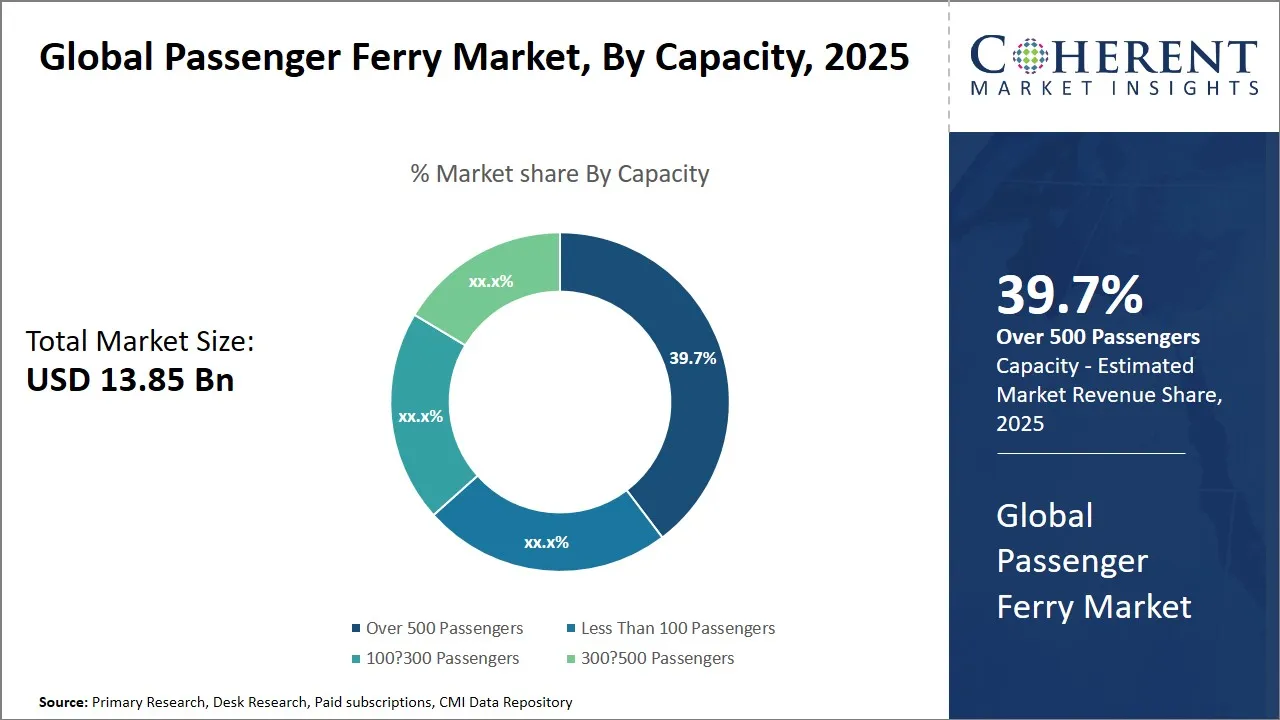
- The Over 500 passengers segment leads the market holding an estimated share of 40.7% in 2026.
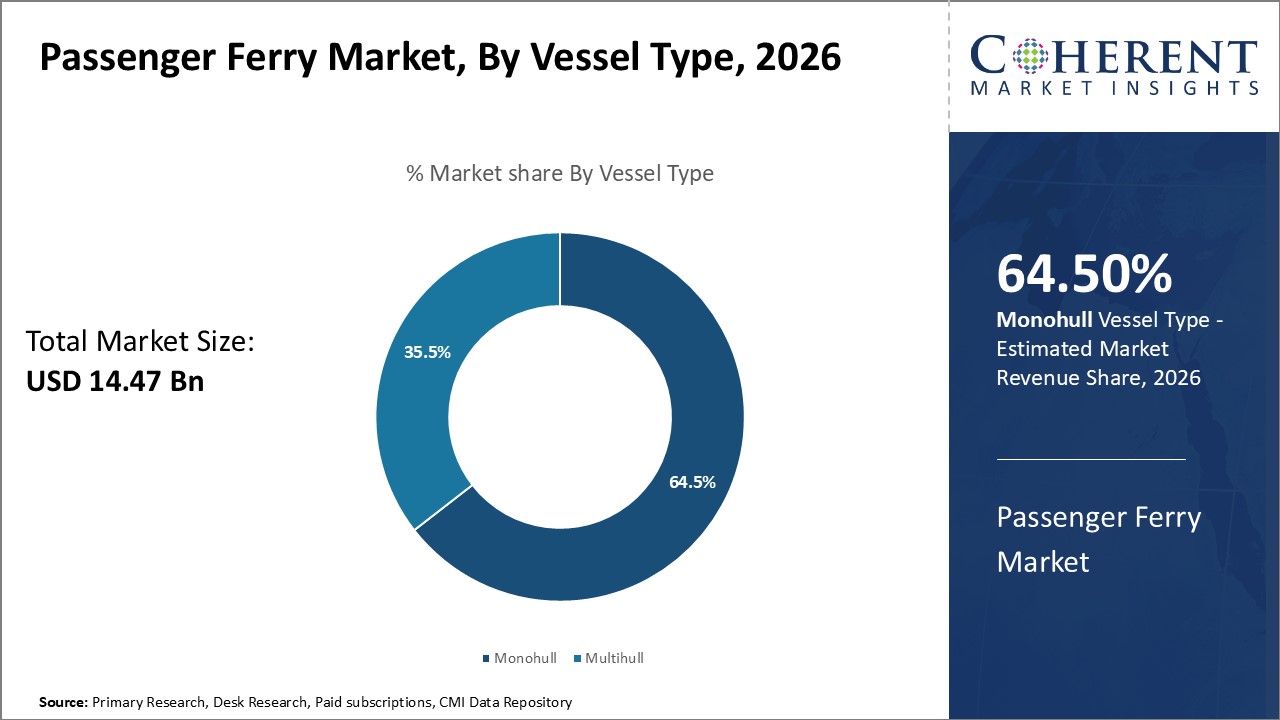
- The monohull segment leads the market holding an estimated share of 64.5% in 2026.
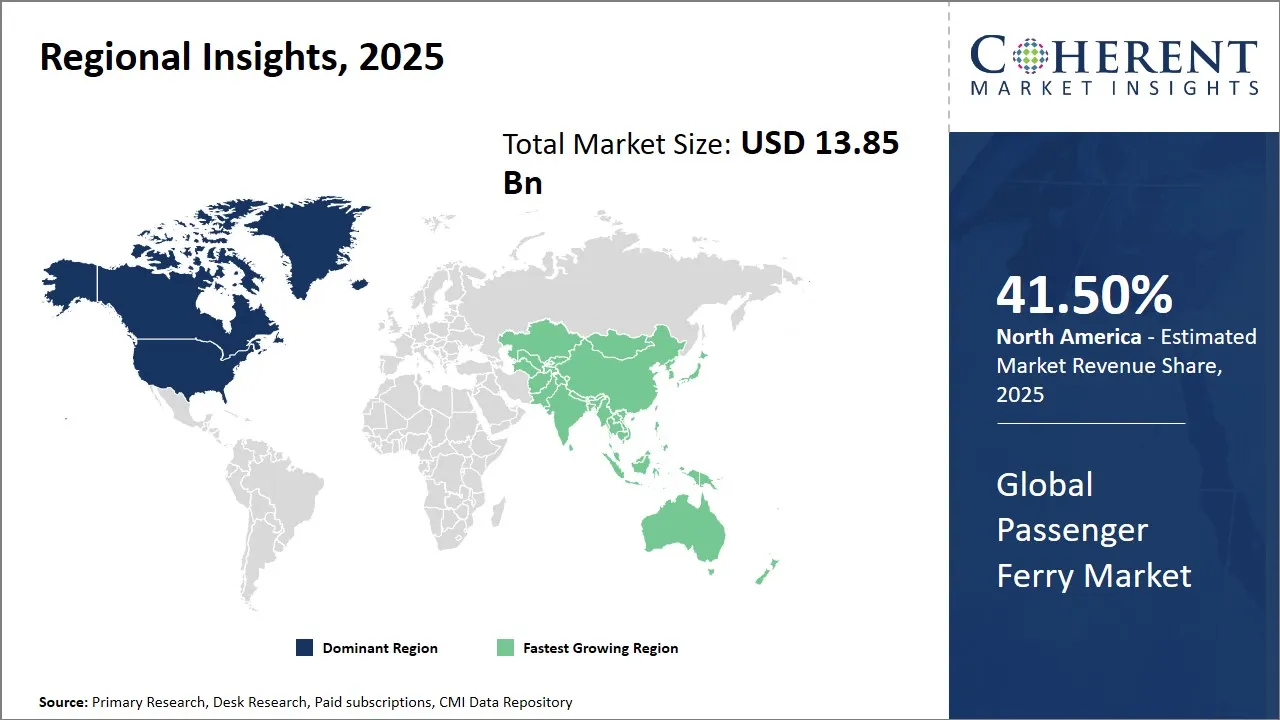
- North America is expected to lead the market with a share of 41. 5% in 2026.
- Asia Pacific, holding a share of 22. 9% in 2026, is projected to be the fastest growing region.
Market Overview
The market is seeing the adoption of eco-friendly and energy-efficient vessels, including electric and hybrid ferries, to address environmental concerns and comply with stringent regulations. Also, digitalization and smart technologies are making possible improved safety, ticketing solutions, and real-time passenger information systems. Increasing government initiatives to promote waterborne transport and growing investment in modern ferry terminals also add to the market growth.
Current Events and their Impact
Current Events | Description and its impact |
Geopolitical and Trade Developments |
|
Economic and Infrastructure Trends |
|
Segmental Insights
- Current Industry Events of 2026
- Market Size Estimation
- Regional Breakdown
- Competitive Landscape
- Customer Intelligence
- Segmental Analysis
- Pricing Analysis
- Key Market Drivers, Challenges & Future Trends
- Customized Insights Section
Global Passenger Ferry Market Insights, By Capacity – Over 500 Passengers Segment Leads Owing to Increasing Demand for Large-scale Passenger Transport and Enhanced Operational Efficiencies
The over 500 passengers segment, holding a projected share of 40.7% in 2026, dominates the global passenger ferry market. This vessels are used on routes that see heavy daily commuter traffic, such as inter-island services and busy coastal connections. By transporting more passengers in a single trip, ferry operators can lower the cost per passenger Staten Island Ferry, operated by the New York City Department of Transportation, carries over 70,000 passengers per day, with each vessel accommodating over 4,000 passengers. The ferry plays a crucial role in daily commuter traffic between Staten Island and Manhattan.
Ferries with capacities exceeding 500 passengers typically offer considerable onboard facilities such as lounges, dining areas, shopping zones, and entertainment options, making them attractive for longer routes and leisure travel. Environmental considerations are another factor bolstering the growth of high-capacity ferries. With the rising awareness of sustainability, operators prefer large vessels designed to be more fuel-efficient per passenger-kilometer, reducing the overall carbon footprint of maritime transport.
Furthermore, infrastructural improvements at ports and terminals around the world have facilitated the accommodation of larger ferry vessels, allowing for smoother boarding and disembarking processes and the integration of advanced safety protocols. Governments and private operators are increasingly supporting the development of infrastructure capable of handling larger ferries, recognizing their potential to enhance connectivity, stimulate economic activity, and support tourism growth.
Global Passenger Ferry Market Insights, By Vessel Type - Monohull Dominates Due to Its Versatility, Cost-effectiveness, and Widespread Adoption
Monohull vessels are expected to hold the major share of 64.5% in the global passenger ferry market in 2026. These vessels, characterized by a single hull design, have been the traditional workhorses of ferry fleets globally. Compared to multihull vessels such as catamarans and trimarans, monohulls typically require lower initial investment and incur reduced operating and maintenance costs. In addition, monohull vessels offer significant versatility, capable of operating efficiently across a wide range of sea and weather conditions. Their design is well-suited to handling rough waters, which makes them favorable for routes exposed to turbulent weather or open sea conditions where vessel stability is critical. Damen Ferry 2306 E3 (Monohull Design) is a fully electric monohull passenger ferry developed by Damen Shipyards, deployed in Copenhagen, Denmark. Designed for inland water transport, it carries 80 passengers and is part of a broader sustainability strategy in public maritime transport.
Passenger capacity flexibility is another advantage of monohull vessels. They can be manufactured in various sizes, accommodating everything from smaller commuter ferries to large vessels capable of transporting hundreds of passengers, aligning with specific route requirements. Furthermore, the ability of monohull ferries to integrate additional features such as roll-on/roll-off (RoRo) facilities enables efficient vehicle transport alongside passengers, enhancing their utility in markets where mixed passenger-vehicle ferry services are common.
Technological advancements have also improved the performance of monohull vessels. Innovations in hull design, materials, and propulsion systems have increased fuel efficiency, reduced emissions, and enhanced speed and maneuverability, allowing monohulls to remain competitive against newer multihull technologies.
Price Analysis of the Passenger Ferry Market
Price Metric | Value (approx.) |
Construction Cost: Fast Ferry Contract | USD 81 million (€74m) |
Construction Cost: Kwa‑di Tabil Class | USD 213 million (three ships) |
Used / Smaller Vessel Price | USD 295,000 |
Used Ro‑Ro Passenger Ship | USD 6.85 million |
Ferry Ticket Price: Twin City Liner (Europe) | USD 38–43 per trip |
Ferry Ticket Price: Pacific Ferries (Canada) | USD 36.77 per trip |
Regional Insights
North America Passenger Ferry Market Analysis and Trends
North America, holding an estimated share of 41.50% in 2026, is fueled by high passenger volumes, significant public investment in maritime infrastructure, and a strong push toward fleet modernization. The region features some of the world's busiest ferry systems, including Washington State Ferries (U.S.) and BC Ferries (Canada), which collectively transport tens of millions of passengers annually. These systems are supported by extensive commuter and regional networks serving coastal cities, islands, and tourist destinations.
Government initiatives, particularly in the U.S. and Canada, have accelerated the adoption of hybrid-electric and low-emission ferries, backed by large-scale funding for sustainable transport. Programs such as Washington State’s Hybrid-Electric Conversion Plan and Canada’s Green Infrastructure Fund have positioned North America at the forefront of ferry electrification.
Asia Pacific Passenger Ferry Market Analysis and Trends
The Asia Pacific region, holding a projected share of 22.9% in 2026, exhibits the fastest growth in the passenger ferry market, fueled by rapid urbanization, increasing trade across vast archipelagic nations, and growing tourism. Countries like China, Indonesia, the Philippines, and India have intensified their focus on expanding and modernizing maritime transport networks. Government initiatives promoting coastal connectivity and infrastructure enhancements, such as India's Sagarmala project, enhance regional ferry services and inter-island connectivity.
The burgeoning middle class and a rise in domestic and international tourists have led to increased passenger volumes. Industry presence is being bolstered by key players like China COSCO Shipping, Jumbo Kingdom (Hong Kong), and Indonesia's ASDP Ferry. Trade dynamics are further supporting growth owing to the importance of ferries for both passenger and freight movement across maritime trade corridors in Southeast Asia and the Indian Ocean.
Passenger Ferry Market Outlook for Key Countries
U.K. Passenger Ferry Market Analysis and Trends
The U.K. is characterized by its extensive ferry network connecting the mainland to Scotland, Ireland, and continental Europe. Operators such as P&O Ferries, Stena Line, and Caledonian MacBrayne dominate this landscape, offering frequent passenger and freight services. The U.K.'s regulatory environment, combined with government investments to maintain vital transport links, supports continuous market activity. Moreover, innovation in vessel technology, including LNG-powered ferries, indicates a commitment to sustainability. Despite Brexit-related trade shifts, ferry transport remains essential for cross-channel passenger movement, reinforcing the U.K.’s strategic role in the global passenger ferry market.
Germany Passenger Ferry Market Analysis and Trends
Germany benefits greatly from its position as a major economic hub in Europe with strong maritime connections across the Baltic and North Seas. Ferry operators like TT-Line and FRS maintain vital routes linking Germany with Scandinavia and neighboring countries. The maritime industry enjoys support through government initiatives focusing on reducing carbon emissions, fostering investments in cleaner ferry technologies.
China Passenger Ferry Market Analysis and Trends
China’s market growth is propelled by government-driven strategies to enhance coastal and inland waterway connectivity, as well as a rapidly expanding tourism sector. Major players, including China COSCO Shipping and Dalian Ferry Group, are investing heavily in modern vessels to service both domestic and international routes in regions like the Pearl River Delta and along the eastern seaboard. Urban centers such as Shanghai and Hong Kong serve as pivotal ferry hubs.
Indonesia Passenger Ferry Market Analysis and Trends
Indonesia, an archipelago with over 17,000 islands, heavily relies on passenger ferries for inter-island connectivity, making it a crucial market within the Asia Pacific region. State-owned PT ASDP Indonesia Ferry operates a vast network of routes supporting millions of passengers annually. Government investment in ferry terminal modernization and fleet upgrade projects enhances safety and service quality. The burgeoning domestic tourism and growing urban population contribute to the market's dynamic expansion.
Italy Passenger Ferry Market Analysis and Trends
Italy possesses a vibrant passenger ferry market supported by its long coastline and numerous island destinations, including Sicily, Sardinia, and the Aeolian Islands. Companies like Moby Lines, Tirrenia, and Grandi Navi Veloci serve both local commuters and tourists, particularly during the summer months. The Italian government’s focus on infrastructure development, including port modernization and support for greener ferry fleets, helps maintain the market’s vitality.
Market Players, Key Development, and Competitive Intelligence
Key Developments
- In July 2025, P&O Ferries closed its last route from the east coast U.K. port of Teesport, to Zeebrugge in Belgium. The ferry operator said it had taken this decision so that it can focus on more strategic North Sea activities.
- In January 2025, Calmac’s MV Glen Sannox, a new large vessel, joined the U.K.'s largest ferry fleet in nearly a decade. It made its first scheduled journey between Troon in South Ayrshire and Brodick on Arran before dawn. The vessel makes three return sailings each day, with the journey lasting 75 minutes.
- In December 2024, Jersey, U.S. chose Denmark-based firm DFDS to provide its lifeline passenger and freight services.
- In April 2024, the U.S. Department of Transportation’s Federal Transit Administration (FTA) announced the availability of USD 316 million to support and modernize passenger ferry service in communities across the country. Within that FTA support, the Electric or Low Emitting Ferry Program provides federal support to transit agencies to buy ferries that reduce emissions by using alternative fuels or on-board energy storage systems.
Top Strategies Followed by Passenger Ferry Market Players
- Established market leaders typically invest heavily in research and development (R&D) to design and introduce high-performance products that improve speed, fuel efficiency, and passenger comfort.
- Stena Line invested in AI-assisted navigation, fuel optimization, and battery-electric hybrid technology for its E-Flexer class ferries.
- Mid-level players in the passenger ferry sector concentrate on carving out their niche by providing cost-effective solutions that strike a careful balance between quality and affordability.
- Jadrolinija (Croatia’s largest ferry operator, but mid-level globally) launched budget inter-island services using refurbished ferries to offer low-fare travel options for domestic routes.
- Small-scale players typically differentiate themselves by targeting niche segments of the passenger ferry market through specialized features or innovative product designs.
- Red Funnel Ferries (U.K.) is focused on vehicle–passenger hybrid ferries for short routes between Southampton and the Isle of Wight. The company emphasizes local service reliability, premium onboard customer experience, and hybrid-electric conversions to differentiate from mass operators.
Market Report Scope
Passenger Ferry Market Report Coverage
| Report Coverage | Details | ||
|---|---|---|---|
| Base Year: | 2025 | Market Size in 2026: | USD 14.47 Bn |
| Historical Data for: | 2020 To 2024 | Forecast Period: | 2026 To 2033 |
| Forecast Period 2026 to 2033 CAGR: | 4.5% | 2033 Value Projection: | USD 19.70 Bn |
| Geographies covered: |
| ||
| Segments covered: |
| ||
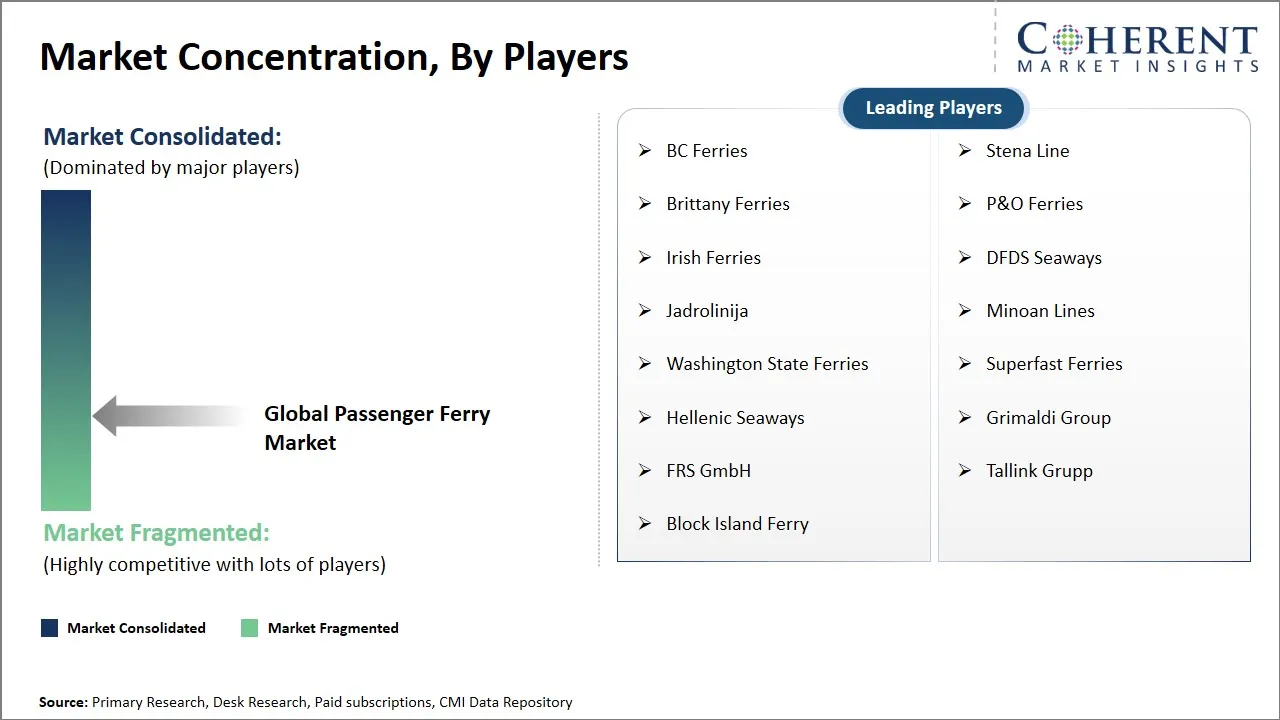
| Companies covered: | BC Ferries, Stena Line, Brittany Ferries, P&O Ferries, Irish Ferries, DFDS Seaways, Jadrolinija, Minoan Lines, Washington State Ferries, Superfast Ferries, Hellenic Seaways, Grimaldi Group, FRS GmbH, Tallink Grupp, and Block Island Ferry | ||
| Growth Drivers: |
| ||
| Restraints & Challenges: |
| ||
Market Dynamics
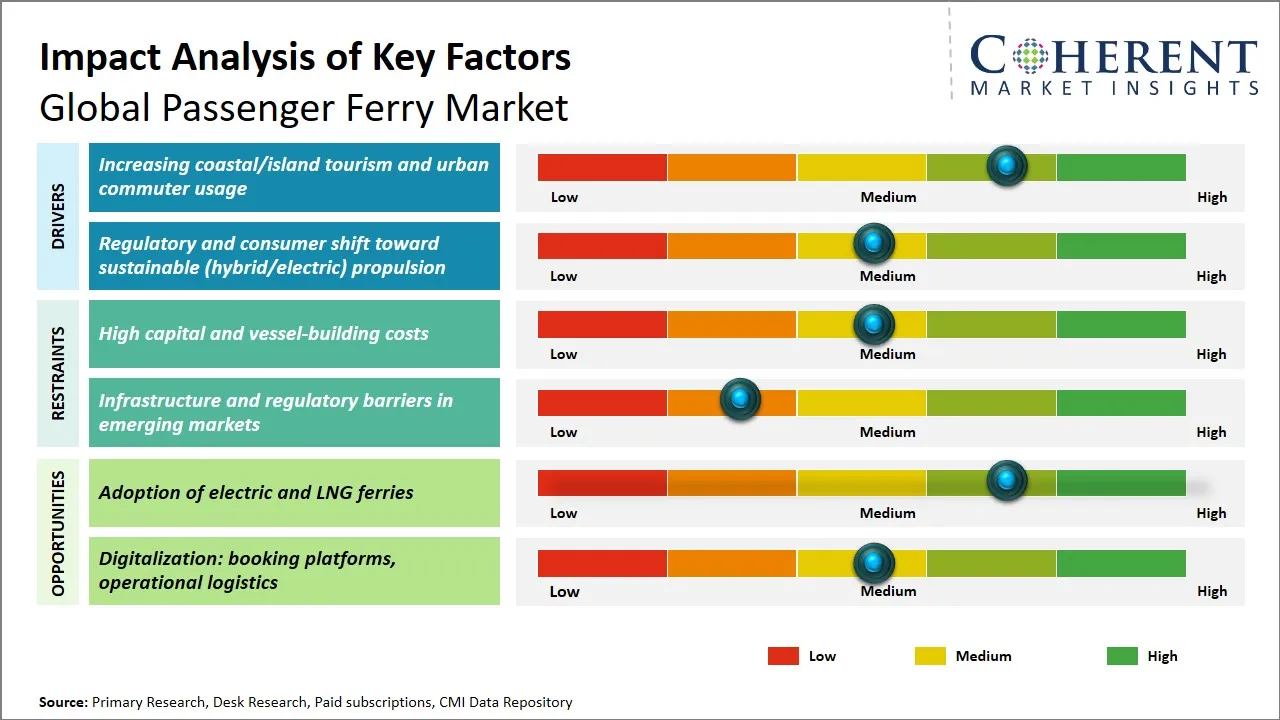
Global Passenger Ferry Market Driver – Increasing Coastal/Island Tourism and Urban Commuter Usage
Coastal tourism hotspots and remote islands often rely heavily on ferry services to connect with mainland regions, providing an essential mode of transport that supports both local economies and leisure activities. Simultaneously, the growth of urban populations in coastal cities has heightened the demand for efficient, sustainable, and time-saving commuter transport alternatives. In 2023–2024, the Philippine Ports Authority (PPA) significantly expanded its "Strong Republic Nautical Highway", adding new ferry terminals and subsidizing routes across Visayas, Mindanao, and Luzon.
Ferries offer a viable solution to urban congestion, allowing daily commuters to bypass heavy road traffic while enjoying an environmentally friendlier option. This dual rise—spurred by leisure travelers exploring coastal attractions and an increasing number of urban residents opting for waterborne transit—has intensified the utilization of passenger ferry networks globally.
Global Passenger Ferry Market Opportunity – Adoption of Electric and LNG Ferries
Growing environmental concerns and stringent maritime emission regulations are driving ferry operators and manufacturers to explore cleaner propulsion technologies. Electric ferries, powered by batteries and renewable energy sources, offer a zero-emission alternative that reduces carbon footprint and noise pollution, making them ideal for urban waterways and short-distance routes. Simultaneously, LNG ferries present a lower-emission substitute to conventional diesel-powered vessels, delivering substantial reductions in sulfur oxides (SOx), nitrogen oxides (NOx), and particulate matter. These advancements not only align with global sustainability goals but also respond to increasing governmental incentives and funding initiatives aimed at green maritime transport.
Technological improvements in battery capacity, charging infrastructure, and LNG storage systems are making these vessels more economically viable and operationally efficient. Furthermore, consumer preferences are shifting towards environmentally responsible travel options, boosting demand for greener ferries. This transition enables ferry operators to comply with upcoming international maritime regulations such as the International Maritime Organization’s (IMO) 2030 and 2050 emission targets, while simultaneously reducing operational costs through improved fuel efficiency.
Analyst Opinion (Expert Opinion)
- The U.S. and Canada continue to invest heavily in ferry infrastructure, particularly through electrification programs in Washington, California, and British Columbia. With consistently high passenger volumes in urban corridors and a clear regulatory push for decarbonization, North America remains the most valuable market by share.
- Demand in countries like India, Indonesia, Vietnam, and the Philippines is accelerating due to expanding coastal cities, increased island connectivity needs, and public investments in ferry terminals and electric vessels. This region shows the highest CAGR in the global market.
- The Europe market is mature but resilient, driven by strong intra-EU maritime connectivity and environmental mandates like the EU Fit for 55. Operators in Greece, Italy, and Scandinavia are modernizing fleets with LNG and hybrid-electric technologies, sustaining demand for new vessels and retrofitting services.
Speak to the analyst
Want personalized insights?
Take the findings above to one of our principal consultants, or have the report rebuilt around the segments, geographies and competitors you actually track.
Market Segmentation
- Capacity Insights (Revenue, USD Bn, 2021 - 2033)
- Over 500 Passengers
- Less Than 100 Passengers
- 100–300 Passengers
- 300–500 Passengers
- Vessel Type Insights (Revenue, USD Bn, 2021 - 2033)
- Monohull
- Multihull
- Regional Insights (Revenue, USD Bn, 2021 - 2033)
- North America
- U.S.
- Canada
- Latin America
- Brazil
- Argentina
- Mexico
- Rest of Latin America
- Europe
- Germany
- U.K.
- Spain
- France
- Italy
- Russia
- Rest of Europe
- Asia Pacific
- China
- India
- Japan
- Australia
- South Korea
- ASEAN
- Rest of Asia Pacific
- Middle East
- GCC Countries
- Israel
- Rest of Middle East
- Africa
- South Africa
- North Africa
- Central Africa
- North America
- Key Players Insights
- BC Ferries
- Stena Line
- Brittany Ferries
- P&O Ferries
- Irish Ferries
- DFDS Seaways
- Jadrolinija
- Minoan Lines
- Washington State Ferries
- Superfast Ferries
- Hellenic Seaways
- Grimaldi Group
- FRS GmbH
- Tallink Grupp
- Block Island Ferry
Sources
Primary Research Interviews
Stakeholders
- Passenger Ferry Operators and Transport Authorities
- Shipbuilding Companies
- Maritime Engineers and Naval Architects
- Port Authorities and Coastal Transport Planners
- Government Officials from Maritime Ministries (e.g., US DOT, India’s Ministry of Ports)
- Sustainability Consultants specializing in marine decarbonization
Databases
- Eurostat
- U.S. Census
- Maritime Transport Database (MTD)
- OECD
- International Transport Forum (ITF) – Shipping Indicators
Magazines
- Maritime Executive
- WorkBoat Magazine
- Passenger Transport Weekly
- Ship Technology Global
- Ferry Operators Digest (FOD) (fictional)
Journals
- Journal of Maritime Policy & Management
- Marine Engineering & Technology Journal
- Journal of Transportation Geography
- International Journal of Naval Architecture and Ocean Engineering
- Sustainable Shipping and Logistics Review (fictional)
Newspapers
- The Guardian (UK)
- The Economic Times (India)
- Marine News Daily (fictional)
- Coastal Transport Gazette (fictional)
- The Times (UK) – Transportation Section
Associations
- International Association of Public Transport (UITP)
- Passenger Vessel Association (PVA)
- World Ferry Safety Association (WFSA)
- International Maritime Organization (IMO)
- Electric Ferry Development Coalition (EFDC) (fictional)
Public Domain Sources
- U.S. Census Bureau
- EUROSTAT
- United Nations Economic Commission for Europe (UNECE)
- World Bank
- ResearchGate
Proprietary Elements
- CMI Data Analytics Tool, Proprietary CMI Existing Repository of information for last 8 years
Get access to 250+ pages report
Every segment, forecast, competitor profile and data table behind the analysis above — available for instant download.
- ESOMAR Member
- ISO 9001:2015 Certified
- D-U-N-S Registered
- GDPR & CCPA Compliant
Missing comfort of reading report in your local language? Find your preferred language:
Transform your Strategy with Exclusive Trending Reports
Frequently Asked Questions
The global passenger ferry market is estimated to be valued at USD 14.47 Bn in 2026 and is expected to reach USD 19.70 Bn by 2033.
The CAGR of global passenger ferry market is projected to be 4.5% from 2026 to 2033.
Increasing coastal/island tourism and urban commuter usage and regulatory and consumer shift toward sustainable (hybrid/electric) propulsion are the major factors driving the growth of the global passenger ferry market.
High capital and vessel‑building costs and Infrastructure and regulatory barriers in emerging markets are the major factors hampering the growth of the global passenger ferry market.
In terms of Capacity, Over 500 Passengers segment is estimated to dominate the market revenue share 2026.
BC Ferries, Stena Line, Brittany Ferries, P&O Ferries, Irish Ferries, DFDS Seaways, Jadrolinija, Minoan Lines, Washington State Ferries, Superfast Ferries, Hellenic Seaways, Grimaldi Group, FRS GmbH, Tallink Grupp, and Block Island Ferry are the major players.
North America is expected to lead the global passenger ferry market in 2026.