

Global Phenol Derivatives Market Size and Forecast: 2026-2033
The Global Phenol Derivatives Market is estimated to be valued at USD 34.19 Bn in 2026 and is expected to reach USD 49.41 Bn by 2033, exhibiting a compound annual growth rate (CAGR) of 5.4% from 2026 to 2033.
Key Takeaways of the Phenol Derivatives Market
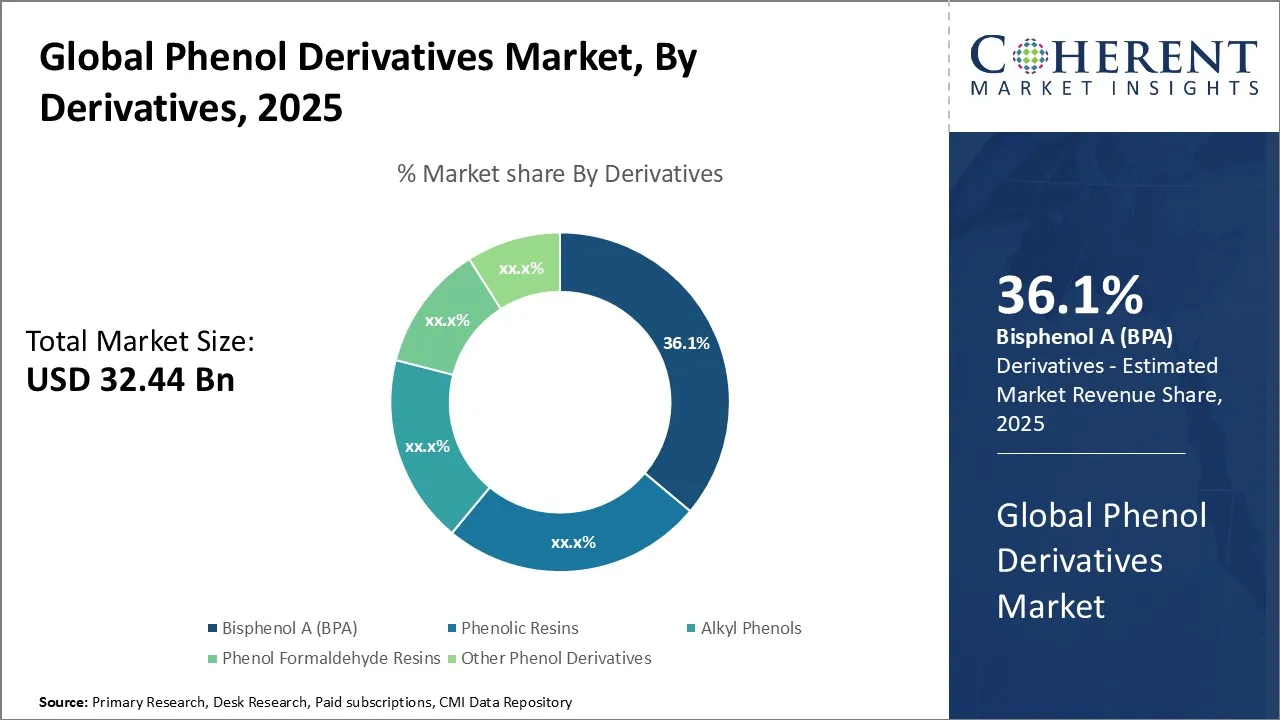
- The Bisphenol A (BPA) segment is expected to account for 37.1% of the global phenol derivatives market in 2026, driven by its essential role in the manufacturing of polycarbonate plastics and epoxy resins.
- The plastics and polymers segment is projected to dominate the global phenol derivatives market in 2026, holding 35.6% of the market share, driven by the rising demand for high-performance plastic materials.
- Asia Pacific is set to lead the global phenol derivatives market in 2026, with a 47. 2% share, driven by the region's strong industrial base and increasing demand for phenol derivatives across various end-use industries. It will also be the fastest-growing region, fueled by rapid industrialization, urbanization, and government initiatives to promote sustainable chemical production.
Market Overview
Market trends indicate a rising focus on sustainable and eco-friendly phenol derivatives, driven by stricter environmental regulations and growing consumer awareness. Innovations in bio-based phenol production and advancements in green chemistry are reshaping the market landscape. Additionally, increasing investments in research and development to enhance product performance and reduce environmental impact are expected to propel industry growth in the coming years.
Currents Events and their Impact
Current Events | Description and its impact |
Surge in Demand from Automotive & Electronics |
|
Technological Developments in Production and Application |
|
Segmental Insights
- Current Industry Events of 2026
- Market Size Estimation
- Regional Breakdown
- Competitive Landscape
- Customer Intelligence
- Segmental Analysis
- Pricing Analysis
- Key Market Drivers, Challenges & Future Trends
- Customized Insights Section
Phenol Derivatives Market Insights, By Derivatives - Bisphenol A (BPA) Segment Dominates the Market due to its Extensive Applications in Manufacturing and Rising Demand for Durable Plastics
Bisphenol A (BPA) segment is expected to 37.1% share of the global phenol derivatives market in 2026, due to its critical role in the production of polycarbonate plastics and epoxy resins. These materials are indispensable across various end-use industries, fueling the increasing consumption of BPA. One of the primary factors driving this dominance is BPA's exceptional ability to enhance the durability, clarity, and thermal resistance of plastics, making it a preferred choice for high-performance applications.
Polycarbonates derived from BPA are widely used in packaging, electronics, automotive components, and consumer goods, owing to their lightweight and impact-resistant nature. The growing preference for lightweight materials in automotive and electronics sectors to improve fuel efficiency and device portability, respectively, has led to a consistent demand for BPA-based polycarbonates. Moreover, epoxy resins made from BPA are crucial in protective coatings, adhesives, and laminates, which further expand its application.
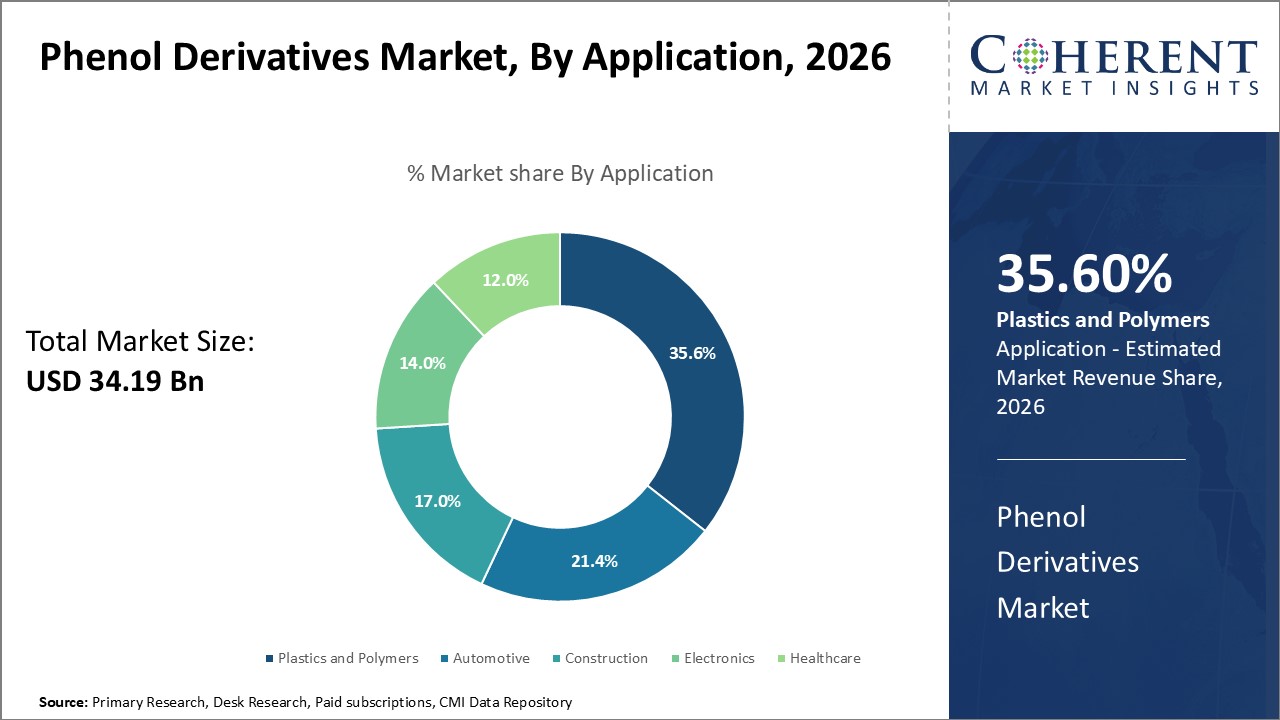
Phenol Derivatives Market Insights, By Application - Plastics and Polymers Segment Dominates the Market due to Expanding Industrial Use and Demand for Lightweight, High-Performance Materials
The plastics and polymers segment is expected to lead the global phenol derivatives market in 2026, accounting for 35.6% of the market share, primarily driven by the escalating demand for advanced plastic materials that offer improved strength, durability, and versatility. Phenol derivatives, notably Bisphenol A-based polycarbonates and phenolic resins, are foundational to the manufacture of high-quality plastics used in a broad range of industries, from packaging to construction and electronic devices.
A major growth catalyst within this application segment is the widespread adoption of lightweight plastics in automotive and electronics manufacturing. The shift towards reducing carbon footprints and enhancing energy efficiency compels manufacturers to use phenol derivative-based plastics, which provide significant weight advantages without compromising mechanical properties. As a result, phenolic resins and BPA-derived polycarbonates are increasingly preferred materials in producing automotive interiors, electronic casings, and consumer appliances.
Regional Insights
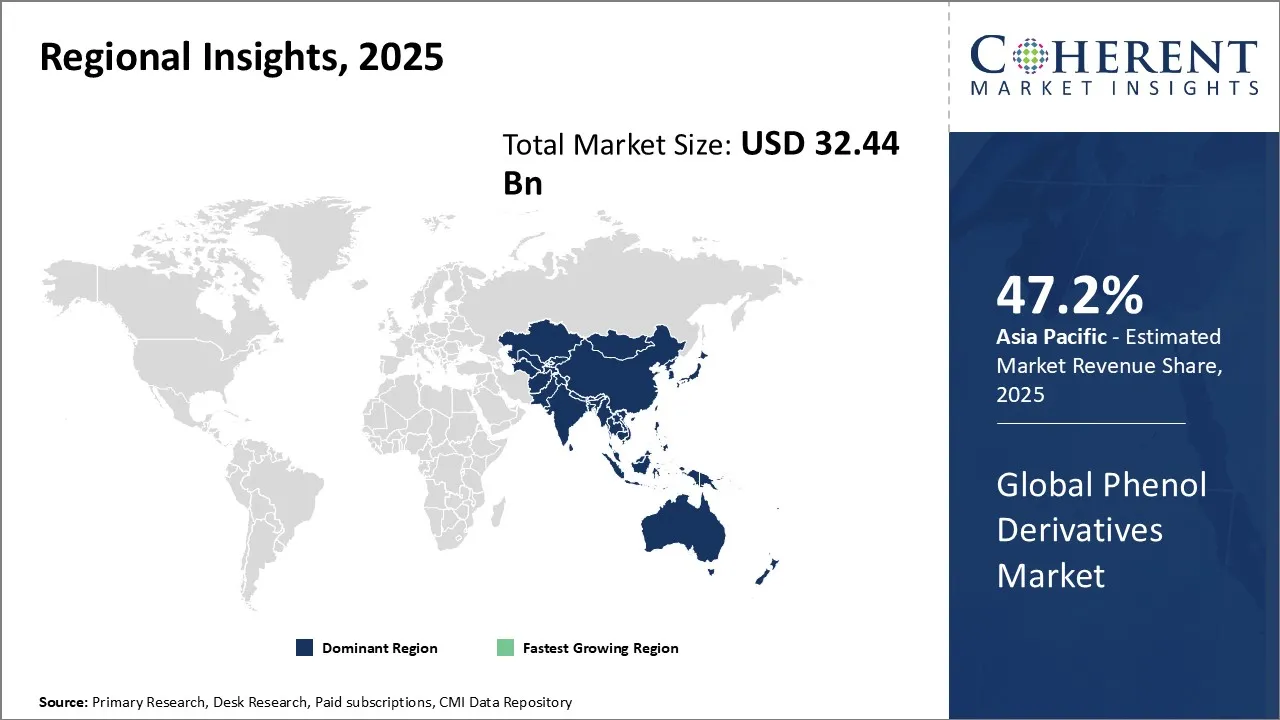
Asia Pacific Phenol Derivatives Market Analysis and Trends
The Asia Pacific region is projected to lead the market with a 47.2% share in 2026, making it both the dominant and fastest-growing region in the global phenol derivatives market. This dominance is driven by the region's extensive industrial ecosystem, competitive raw material access, and a robust manufacturing base. Countries like China, India, and Japan host major chemical manufacturing hubs that serve diverse industries such as automotive, construction, pharmaceuticals, and adhesives. Additionally, government policies focusing on industrial growth and infrastructure development in these countries further stimulate the demand for phenol derivatives, reinforcing the region's leadership and rapid market expansion.
Global Phenol Derivatives Market Outlook for Key Countries
China Phenol Derivatives Market Trends
China’s phenol derivatives market plays a crucial role in shaping the global dynamics of phenol derivatives due to its massive manufacturing scale and diverse application sectors. The country’s aggressive push towards enhancing chemical production efficiency and upgrading downstream segments like resins and plastics supports steady market growth. Leading companies such as Sinopec and China National Chemical Corporation (ChemChina) dominate local production, while ongoing investments in capacity expansion and environmental sustainability initiatives ensure robust supply and innovation.
India Phenol Derivatives Market Trends
India’s phenol derivatives market is characterized by expanding industrialization and growing demand from automotive and construction sectors. Government initiatives aimed at boosting “Make in India” and infrastructure investments create a favorable environment for phenol derivative manufacturers. Notable players like PI Industries and Jubilant Life Sciences contribute heavily to the domestic market, focusing on specialty chemicals and derivatives with increasing exports. The rising emphasis on cleaner production techniques further impacts market dynamics in India.
U.S. Phenol Derivatives Market Trends
The U.S. phenol derivatives market continues to lead in technological advancement and product diversification within phenol derivatives. Major industry players such as Dow Chemical and Huntsman drive innovation with a focus on sustainable and high-performance derivatives used in aerospace, electronics, and automotive industries. Supportive trade policies and investment in green chemistry enhance market competitiveness, while stringent environmental regulations push companies towards developing eco-friendly phenol-based products.
Germany Phenol Derivatives Market Trends
Germany’s phenol derivatives market serves as a critical hub for Europe’s phenol derivative industry, combining advanced chemical manufacturing with strict regulatory adherence. Companies like BASF and Covestro are instrumental in producing specialized phenol derivatives catering to automotive, construction, and coatings industries. Germany’s emphasis on sustainability and circular economy practices influences production strategies, resulting in more efficient, environmentally responsible output. The well-established supply chain and strong research institutions further sustain Germany’s position in the global market.
Japan Phenol Derivatives Market Trends
Japan’s phenol derivatives market is marked by a strong focus on high-quality production and technological innovation. Key players like Mitsui Chemicals and Sumitomo Chemical lead with advanced formulations tailored for electronics, adhesives, and pharmaceuticals sectors. Japan’s phenol derivatives market benefits from a stable regulatory environment and strong intellectual property protections that foster continuous product development. Collaboration between industry and academia drives innovations, ensuring Japan maintains its relevance in high-value phenol derivatives globally.
Overview of Macro and Micro Economic Factors Impacting the Phenol Derivatives Market Growth
Macroeconomic Factors
- Economic cycles in major industrial nations affect demand. Economic expansions boost demand for phenol-driven products in automotive, construction, electronics, and healthcare sectors, while slowdowns reduce demand and cause price volatility.
- Raw material price fluctuations are significant. Phenol production relies heavily on benzene, which is tied to crude oil prices. Volatility in oil and benzene prices leads to unstable production costs and phenol product prices.
- Regulatory policies, particularly environmental restrictions such as the European Union’s REACH regulations, are increasing production costs and limiting market growth due to stricter compliance requirements and environmental concerns about phenol derivatives like BPA.
Microeconomic Factors
- Demand surge from end-use industries: Automotive, construction, electronics, and healthcare sectors use phenol derivatives extensively (e.g., bisphenol A, phenolic resins) for durable, lightweight, and high-performance materials, supporting market expansion.
- Competition: The market is fragmented with many players; larger companies have advantages in scale, R&D, and distribution, while smaller players face challenges accessing raw materials and investing in advanced tech.
- Innovation opportunities: The development of bio-based, recyclable, and eco-friendly phenol derivatives due to rising sustainability demands creates prospects for growth.
- Cost management strategies: Companies may use long-term supply contracts and explore alternate raw material sources to stabilize costs amid volatile prices.
Market Players, Key Development, and Competitive Intelligence
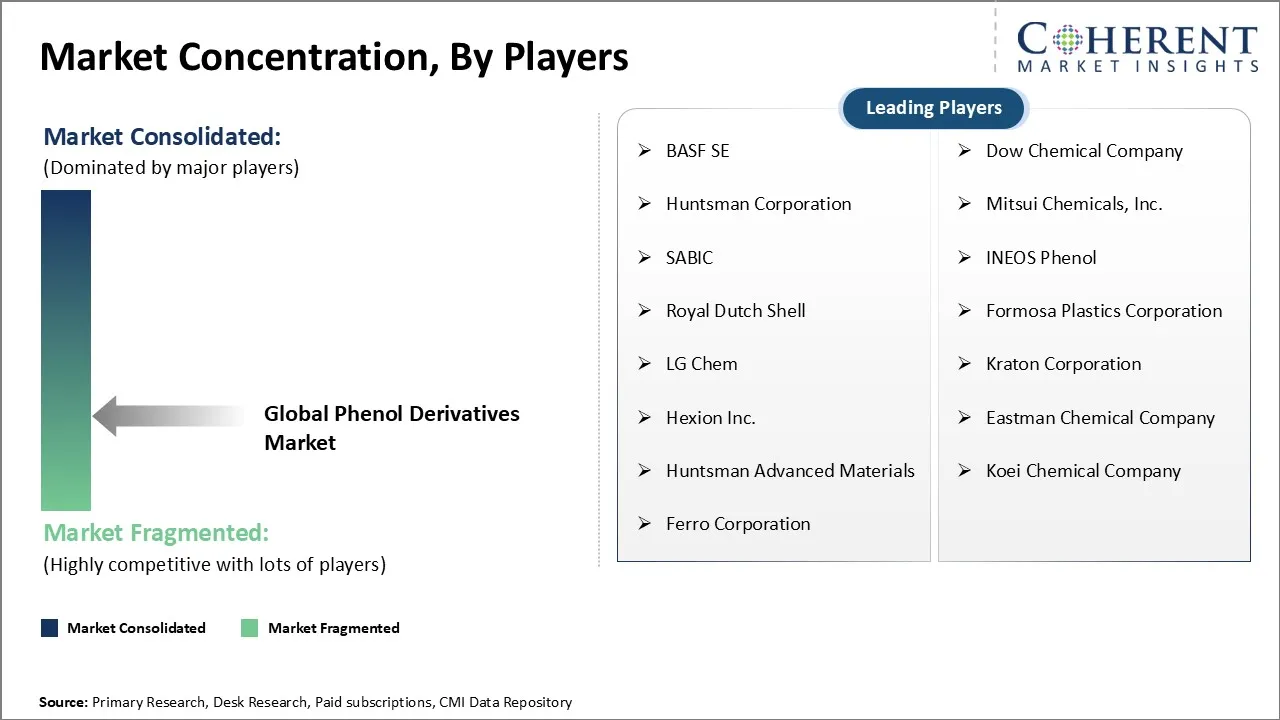
Key Developments
- In January 2025, BASF introduced an innovative bio-based phenol derivative manufacturing process that substantially lowers carbon emissions and water usage, supporting global sustainability objectives. This breakthrough is anticipated to establish new industry benchmarks while addressing tightening regulatory demands.
- In November 2024, Huntsman Corporation rolled out a next-generation bisphenol-A alternative engineered for high-performance polycarbonate resins. Featuring enhanced thermal stability and a reduced environmental footprint, the product is tailored for the automotive and electronics industries, delivering greater durability and sustainability.
- In August 2022, a new bisphenol-A production facility commenced operations in Pune, India, aimed at boosting domestic manufacturing and reducing the country’s reliance on imports. Currently, India imports approximately 1.35 lakh tons of bisphenol-A annually from the U.S. and China.
- In June 2022, INEOS Phenol introduced its first bio-attributed product line—covering phenol, acetone, and alphamethylstyrene—at its Gladbeck, Germany, and Antwerp, Belgium facilities. Marketed under the INVIRIDIS brand, these products are manufactured without fossil fuel-based feedstocks.
Top Strategies Followed by Global Phenol Derivatives Market Players
- Established industry leaders tend to heavily invest in research and development (R&D) to maintain a competitive edge through the innovation of high-performance phenol derivative products. By continuously enhancing product specifications and developing environmentally friendly or application-specific variants, these key players strengthen their offerings to meet evolving customer demands. This synergistic approach not only ensures a stable demand pipeline but also leverages shared expertise and resources.
- For example, in September 2024, Dow Launched REVOLOOP Reusable Polymers Resins, focusing on sustainable, circular materials for the phenol derivatives sector.
- Mid-level competitors in the phenol derivatives market typically adopt a different strategic stance, emphasizing cost-effective solutions that strike a balance between quality and affordability. This approach is tailored to appeal to price-sensitive consumers, including small and medium enterprises in various developing regions where budget constraints are significant. By optimizing manufacturing processes and focusing on efficient resource utilization, mid-level players can offer competitively priced products without drastically compromising performance.
- For instance, in April 2023, INEOS acquired Mitsui Phenol Singapore for USD 330 million in 2023 to boost its Asia presence and strengthen its bisphenol-A portfolio.
- Small-scale players within the global phenol derivatives market tend to carve out specialized niches through a strong focus on innovation and differentiation. By concentrating on unique product attributes or emerging application areas, these smaller companies can distinguish themselves from larger competitors. Adoption of cutting-edge technologies, such as advanced catalysts, green chemistry methods, or digital manufacturing tools, allows them to enhance product innovation and operational efficiency despite comparatively limited resources.
- For instance, Covestro AG announced a 15% production expansion of polycarbonate resins in Shanghai in 2024 to meet Asia Pacific’s automotive and electronics demand.
Market Report Scope
Phenol Derivatives Market Report Coverage
| Report Coverage | Details | ||
|---|---|---|---|
| Base Year: | 2025 | Market Size in 2026: | USD 34.19 Bn |
| Historical Data for: | 2020 To 2024 | Forecast Period: | 2026 To 2033 |
| Forecast Period 2026 to 2033 CAGR: | 5.4% | 2033 Value Projection: | USD 49.41 Bn |
| Geographies covered: |
| ||
| Segments covered: |
| ||
| Companies covered: | BASF SE, Dow Chemical Company, Huntsman Corporation, Mitsui Chemicals, Inc., SABIC, INEOS Phenol, Royal Dutch Shell, Formosa Plastics Corporation, LG Chem, Kraton Corporation, Hexion Inc., Eastman Chemical Company, Huntsman Advanced Materials, Koei Chemical Company, and Ferro Corporation | ||
| Growth Drivers: |
| ||
| Restraints & Challenges: |
| ||
Phenol Derivatives Market Dynamics
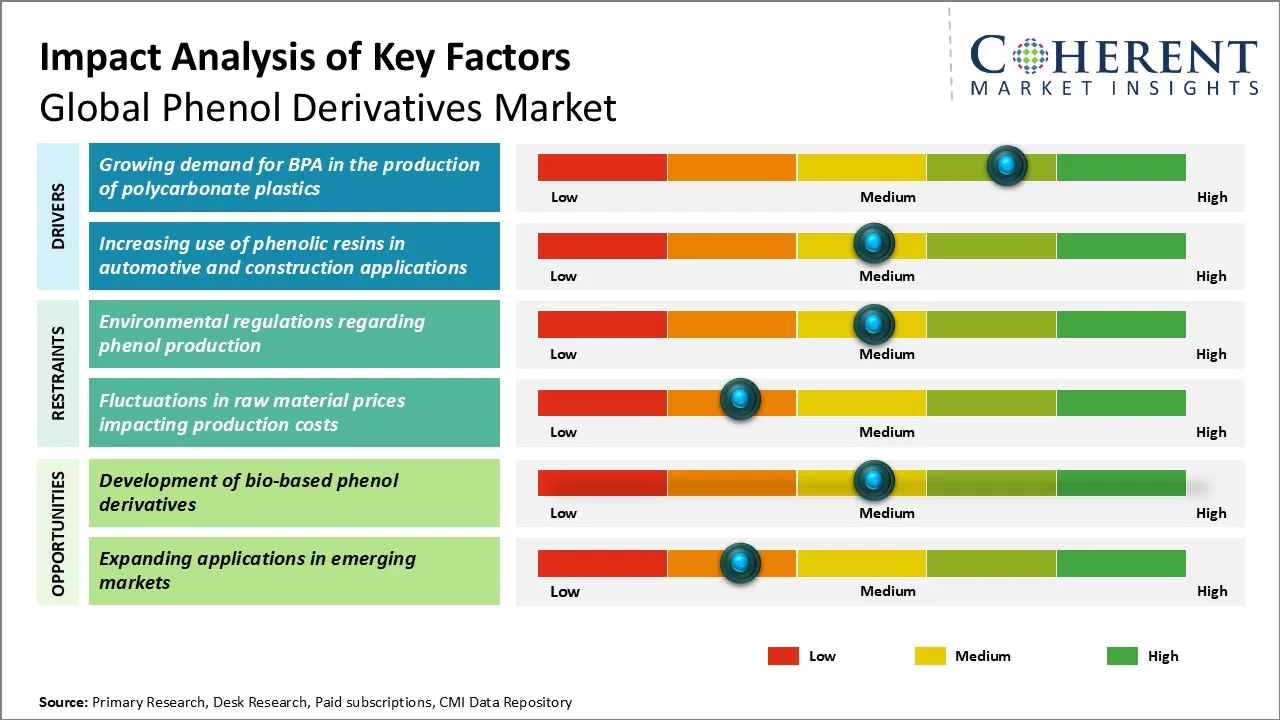
Phenol Derivatives Market Driver - Growing Demand for BPA In the Production of Polycarbonate Plastics
The rising application of bisphenol A (BPA), a key phenol derivative, in the manufacturing of polycarbonate plastics is significantly driving the growth of the global phenol derivatives market. Polycarbonate plastics, renowned for their high transparency, durability, and impact resistance, have become indispensable in various industries such as automotive, electronics, construction, and packaging. This escalating demand is largely attributed to the shift toward lightweight, yet sturdy materials that enhance product performance and energy efficiency. BPA serves as the primary raw material in producing these polycarbonate polymers, where its unique chemical properties enable the formation of materials that offer exceptional clarity and thermal stability.
This surge in polycarbonate applications directly correlates with heightened BPA consumption, as BPA serves as the primary raw material in polycarbonate synthesis through condensation polymerization processes. According to the United Nations Environment Programme's (UNEP) 2022 report on plastic production trends, polycarbonate plastic consumption in the Asia Pacific region increased by approximately 15% between 2020 and 2022, with automotive and electronics sectors accounting for nearly 60% of this growth, thereby intensifying the demand for phenol derivatives including BPA.
Phenol Derivatives Market Opportunity - Development of Bio-Based Phenol Derivatives
The development of bio-based phenol derivatives represents a significant growth opportunity within the global phenol derivatives market, driven by increasing environmental concerns and stringent regulatory frameworks aimed at reducing reliance on fossil fuels. Traditional phenol derivatives are primarily produced from petroleum-based sources, which face volatility in prices and supply chain risks. In contrast, bio-based phenol derivatives, derived from renewable resources such as lignin, biomass, and other agricultural byproducts, offer a sustainable alternative that aligns with the shifting preferences of consumers and manufacturers toward greener products. Innovations in biotechnological processes and catalytic conversions have enhanced the efficiency and cost-effectiveness of producing bio-phenols, thereby improving their market competitiveness.
For example, BASF has introduced a bio-based phenol derivative manufacturing process that significantly reduces carbon emissions and water consumption. This innovation is in line with global sustainability goals and has already set new industry standards. Furthermore, major players in industries like coatings, adhesives, resins, and pharmaceuticals are increasingly adopting bio-based phenols due to their lower environmental impact and comparable performance to traditional phenols.
Analyst Opinion (Expert Opinion)
- The global phenol derivatives market is poised for significant transformation, driven by increasing applications in pharmaceuticals, automotive, and consumer goods. Insights from the International Chemical Congress (2023) and the Global Phenol Symposium (2022) highlighted a growing trend towards bio-based phenol production, with companies like BASF leading the charge through innovative processes that enhance sustainability.
- For example, BASF's recent investment in biotechnological methods for phenol synthesis showcases a proactive approach to meeting rising environmental regulations and shifting consumer preferences for greener products. Additionally, discussions at these conferences underscored the impact of the automotive industry's transition to lightweight materials, which is propelling demand for phenolic resins. Furthermore, with the increasing focus on circular economy principles, innovations in recycling phenolic materials are gaining traction.
- As end-use industries increasingly prioritize sustainability and efficiency, manufacturers that invest in research and development will likely secure a competitive edge. The future of the phenol derivatives market will depend on the ability to innovate, adapt to regulatory changes, and meet the evolving needs of diverse applications, positioning key players for sustained growth in this dynamic landscape.
Speak to the analyst
Want personalized insights?
Take the findings above to one of our principal consultants, or have the report rebuilt around the segments, geographies and competitors you actually track.
Market Segmentation
- Derivatives Insights (Revenue, USD Bn, 2021 - 2033)
- Bisphenol A (BPA)
- Phenolic Resins
- Alkyl Phenols
- Phenol Formaldehyde Resins
- Other Phenol Derivatives
- Application Insights (Revenue, USD Bn, 2021 - 2033)
- Plastics and Polymers
- Automotive
- Construction
- Electronics
- Healthcare
- Regional Insights (Revenue, USD Bn, 2021 - 2033)
- North America
- U.S.
- Canada
- Latin America
- Brazil
- Argentina
- Mexico
- Rest of Latin America
- Europe
- Germany
- U.K.
- Spain
- France
- Italy
- Russia
- Rest of Europe
- Asia Pacific
- China
- India
- Japan
- Australia
- South Korea
- ASEAN
- Rest of Asia Pacific
- Middle East
- GCC Countries
- Israel
- Rest of Middle East
- Africa
- South Africa
- North Africa
- Central Africa
- North America
- Key Players Insights
- BASF SE
- Dow Chemical Company
- Huntsman Corporation
- Mitsui Chemicals, Inc.
- SABIC
- INEOS Phenol
- Royal Dutch Shell
- Formosa Plastics Corporation
- LG Chem
- Kraton Corporation
- Hexion Inc.
- Eastman Chemical Company
- Huntsman Advanced Materials
- Koei Chemical Company
- Ferro Corporation
Sources
Primary Research Interviews
- R&D Director – Leading Chemical Manufacturer Specializing in Phenol Derivatives
- Procurement Manager – Major Global Phenol Derivative Buyer (e.g., Resin or Plastic Producer)
- Product Development Head – Specialty Chemicals Brand Using Phenol Intermediates
- Sustainability Manager – Chemical Industry Environmental Compliance Body
Stakeholders
- Chemical Manufacturers (including upstream and downstream processors)
- End-use Sectors
- Plastics & Resins (BPA, epoxy resins, polycarbonates)
- Pharmaceuticals (as intermediates in APIs production)
- Agrochemicals (herbicides, pesticides utilizing phenolic groups)
- Dyes & Pigments
- Regulatory & Certification Bodies
- Distributors, Traders, and Bulk Chemical Suppliers
- Technology Integration Providers (process optimization, sustainability)
Databases
- UN Comtrade Database
- India Import Export (EXIM) Database
Magazines
- Chemical Week – Market trends and industry news in phenol derivatives
- ICIS Chemical Business – Trade and pricing updates for derivatives like BPA, acetone, caprolactam
- Specialty Chemicals Magazine – Innovation and application trends
- European Coatings Journal – Use of phenolic resins in coatings and adhesives
- Plastics News – End-use trends in polycarbonate and epoxy resin markets
Journals
- Journal of Applied Polymer Science – Technological advances in phenolic polymers and resins
- Industrial & Engineering Chemistry Research – Process developments for phenol derivative manufacturing
- Journal of Chemical & Engineering Data – Property and synthesis methods
- Chemosphere – Environmental and safety studies on phenol production and usage
Newspapers
- The Financial Times – Global industrial chemical market analysis
- The Hindu Business Line – Chemical sector investments and policies in Asia
- Nikkei Asia – Industrial chemical production and value chain news
- Chemical & Engineering News (C&EN) – Regulatory and innovation updates
Associations
- American Chemical Society (ACS)
- European Chemical Industry Council (Cefic)
- Indian Chemical Council (ICC)
- Society of Chemical Manufacturers & Affiliates (SOCMA)
- Association of Synthetic Organic Chemical Manufacturers of India (ASOCM)
- PlasticsEurope (for applications in polycarbonates and BPA)
Public Domain Sources
- US Environmental Protection Agency (EPA) – Safety, environmental, and risk assessments for phenols
- European Chemicals Agency (ECHA) – REACH data on phenol and derivatives
- Food and Drug Administration (U.S. FDA) – Regulations for phenol derivatives in packaging and food contact
- Organisation for Economic Co-operation and Development (OECD) – Chemical safety profiles and assessments
Proprietary Elements
- CMI Data Analytics Tool, Proprietary CMI Existing Repository of information for last 8 years.
Get access to 250+ pages report
Every segment, forecast, competitor profile and data table behind the analysis above — available for instant download.
- ESOMAR Member
- ISO 9001:2015 Certified
- D-U-N-S Registered
- GDPR & CCPA Compliant
Missing comfort of reading report in your local language? Find your preferred language:
Transform your Strategy with Exclusive Trending Reports
Frequently Asked Questions
The global phenol derivatives market is estimated to be valued at USD 34.19 Bn in 2026 and is expected to reach USD 49.41 Bn by 2033.
Derivatives of phenols include phenolic acids, phenolic resins, ethers, and esters.
The CAGR of global phenol derivatives market is projected to be 5.4% from 2026 to 2033.
Growing demand for BPA in the production of polycarbonate plastics and increasing use of phenolic resins in automotive and construction applications are the major factors driving the growth of the global phenol derivatives market.
Environmental regulations regarding phenol production and fluctuations in raw material prices impacting production costs are the major factors hampering the growth of the global phenol derivatives market.
In terms of derivatives, Bisphenol A (BPA) is estimated to dominate the market revenue share in 2026.
BASF SE, Dow Chemical Company, Huntsman Corporation, Mitsui Chemicals, Inc., SABIC, INEOS Phenol, Royal Dutch Shell, Formosa Plastics Corporation, LG Chem, Kraton Corporation, Hexion Inc., Eastman Chemical Company, Huntsman Advanced Materials, Koei Chemical Company, and Ferro Corporation are the major players.