

Global Powered Wheelchair Market Size and Forecast – 2026 to 2033
The Global Powered Wheelchair Market is estimated to be valued at USD 3.04 Bn in 2026 and is expected to reach USD 4.72 Bn by 2033, exhibiting a compound annual growth rate (CAGR) of 6.5% from 2026 to 2033. The steady increase in market size is driven by rising demand for mobility solutions among the elderly and physically disabled population, alongside innovations in wheelchair technology enhancing comfort and usability.
Key Takeaways of the Global Powered Wheelchair Market
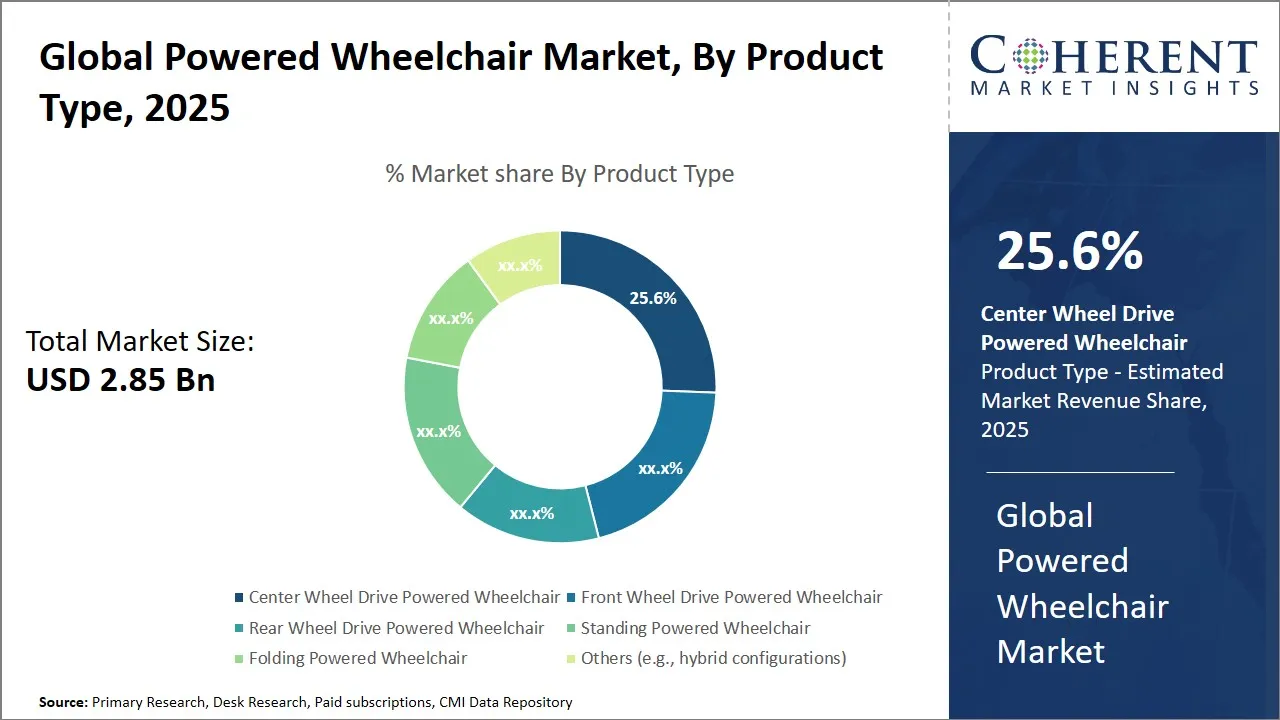
- The center wheel drive powered wheelchair segment is expected to dominate the global powered wheelchair market, holding the largest share of 26.6 % in 2026.
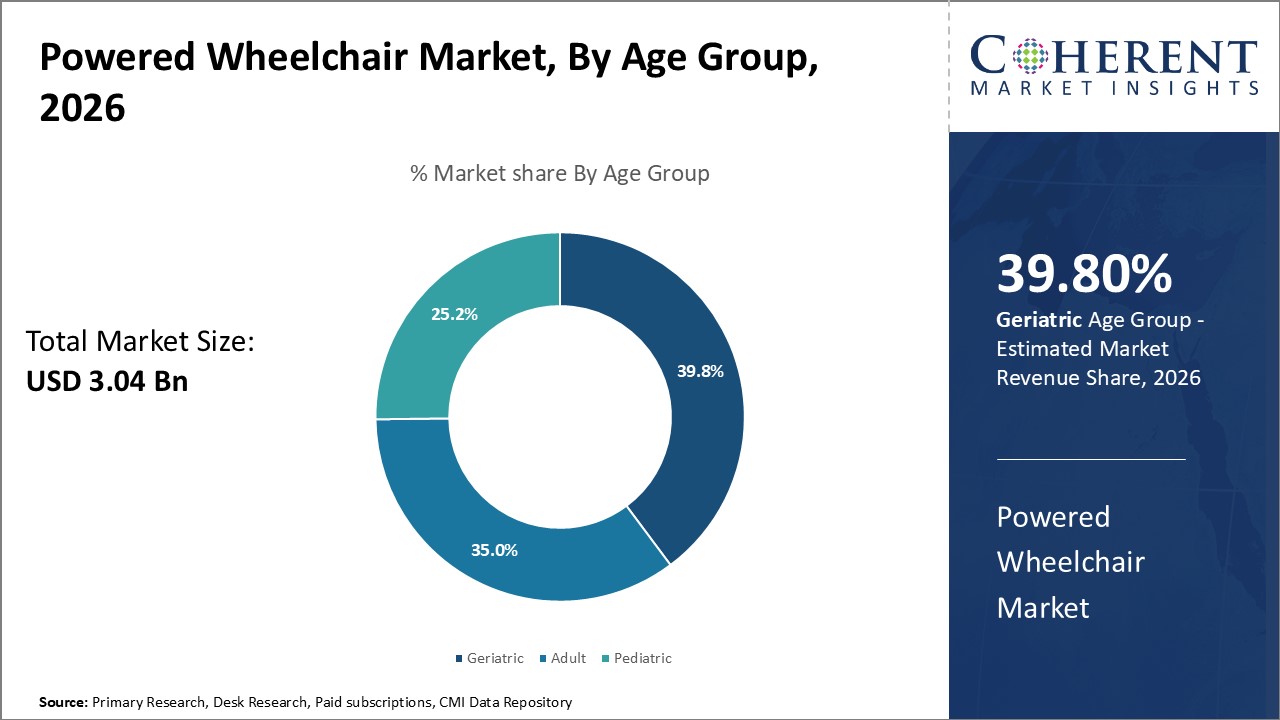
- In terms of age group, the geriatric segment is expected to lead the market, accounting for 39.8 % of the market share in 2026.
- Among different technology types, joystick controlled powered wheelchairs hold the highest market share, with an estimated 24.2 % in 2026.
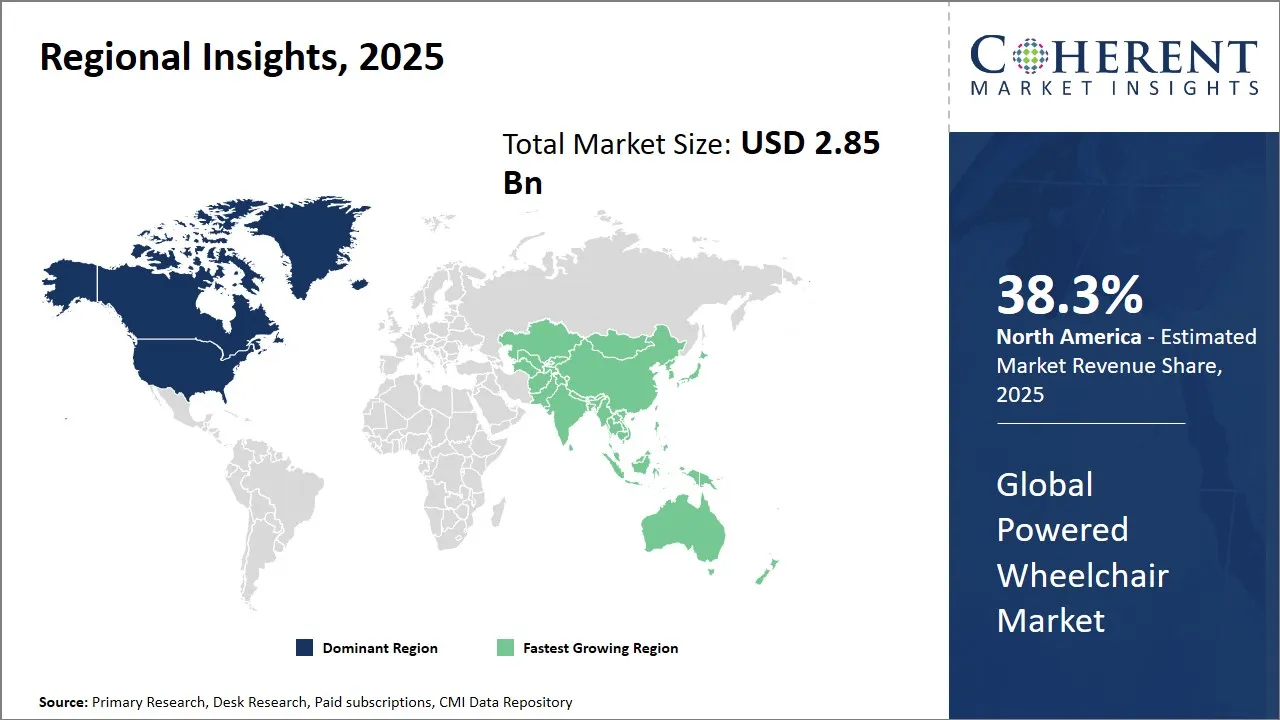
- North America is expected to lead the market, holding a share of 38.3 % in 2026. Asia Pacific is anticipated to be the fastest-growing region, with a market share of 24.5% in 2026.
Market Overview
Key trends shaping the powered wheelchair market include integration of advanced features such as smart controls, lightweight materials, and improved battery efficiency. Additionally, increasing awareness about accessibility, supportive government initiatives, and expanding healthcare infrastructure in emerging economies are fueling market growth. The shift towards personalized and ergonomic designs also reflects growing consumer expectations, making the powered wheelchair market highly dynamic and innovation-driven.
Current Events and Its Impact
Current Events | Description and its impact |
Easwe Launches S10 Standing Power Wheelchair |
|
U.S. Medicare Expands Reimbursement for High-End Wheelchairs |
|
Segmental Insights
- Current Industry Events of 2026
- Market Size Estimation
- Regional Breakdown
- Competitive Landscape
- Customer Intelligence
- Segmental Analysis
- Pricing Analysis
- Key Market Drivers, Challenges & Future Trends
- Customized Insights Section
Powered Wheelchair Market Insights, By Product Type – Superior Maneuverability and Stability Drive the Dominance of Center Wheel Drive Powered Wheelchairs
In terms of product type, the center wheel drive powered wheelchair segment is expected to hold the highest share of the global powered wheelchair market with a share of 26.6% in 2026, predominantly due to its superior maneuverability and stability. Center wheel drive wheelchairs are designed with the drive wheels positioned in the center of the chassis, allowing these wheelchairs to execute tight turns and navigate confined spaces more easily than other configurations. This critical feature makes CWD wheelchairs particularly popular among users who live in environments with space constraints such as homes, care facilities, and urban settings where mobility within restricted areas is paramount.
Another factor bolstering the popularity of center wheel drive powered wheelchairs is the balanced weight distribution afforded by the central drive wheels. This design ensures better stability, allowing users to feel more secure during movement, especially over uneven surfaces. The ability of these wheelchairs to offer smooth rides combined with increased safety resonates well with users requiring reliable daily mobility solutions.
Powered Wheelchair Market Insights, By Age Group – Aging Global Population Propels Geriatric Powered Wheelchair Segment
Within the age group segmentation of the global powered wheelchair market, the geriatric segment is expected to account for the highest share with 39.8% in 2026, largely driven by demographic trends and rising healthcare awareness among elderly populations worldwide. As global life expectancy increases, there is a corresponding rise in age-related mobility challenges such as arthritis, osteoporosis, and general decline in muscle strength and balance. These factors elevate the demand for powered wheelchairs among older adults seeking independence and enhanced quality of life.
Healthcare providers and governments are also prioritizing elderly care through the adoption of supportive mobility equipment designed specifically to cater to seniors. Unlike younger populations who might opt for manual wheelchairs or less specialized devices, the geriatric segment often demands powered wheelchairs that offer enhanced safety features, comfort, and ease of use. For example, powered wheelchairs for the elderly typically emphasize ergonomic seating, easy-to-operate controls, and stability features that reduce the risk of falls.
Powered Wheelchair Market Insights, By Technology – Established User Familiarity and Reliability Favor Joystick Controlled Powered Wheelchairs
Among the technology types in the powered wheelchair market, joystick controlled powered wheelchairs maintain the highest market share with an estimated 24.2% in 2026. The primary driver behind the joystick segment’s leadership is its longstanding acceptance and proven reliability among users with various disabilities. Joystick controls offer intuitive and precise navigation that empowers users with varying degrees of upper limb dexterity to operate their wheelchairs effectively. The ergonomic design of joystick controllers aligns well with human motor capabilities, allowing simple forward, backward, and lateral movement through minimal hand or finger pressure.
In March 2023, Mountain Trike Company, a leader in all-terrain mobility solutions, launched the SDMotion Trike, a joystick-controlled powered off-road wheelchair. Developed in collaboration with Steering Development, the SDMotion Trike offers exceptional outdoor performance with its 26” off-road tires, a lithium-ion battery providing 18 miles of range, and the ability to navigate challenging terrains. Weighing 37kg (without the battery), it can be folded for easy transport. The wheelchair features electromagnetic brakes, RockShox air shock absorbers, and customizable seating for enhanced comfort and safety.
Role of Artificial Intelligence (AI) in the Global Powered Wheelchair Market
- Artificial Intelligence (AI) is profoundly reshaping the global powered wheelchair market by introducing advancements that enhance operational efficiency, cost reduction, and customer-centric innovations. AI plays a pivotal role in predictive analytics, enabling manufacturers to anticipate maintenance needs and reduce downtime through real-time data analysis. The integration of AI in powered wheelchairs facilitates personalization, adapting the devices to individual user needs based on preferences and mobility patterns, ultimately improving user experience. Additionally, process automation powered by AI enhances production processes, resulting in quicker turnaround times and more cost-effective operations. With AI-enabled systems, powered wheelchairs can analyze the environment, detect obstacles, and assist with navigation, offering greater safety and usability. The ongoing innovation driven by AI leads to new business models, such as subscription-based services or on-demand customizations, further expanding market reach and customer loyalty.
- However, while AI brings significant benefits, such as increased efficiency and data-driven decision-making, the adoption of AI in this market is not without its challenges. One potential drawback is the high initial investment in AI technology, which might be a barrier for smaller manufacturers or companies in emerging markets. Additionally, data privacy concerns and the complexity of integrating AI systems into existing infrastructure could pose operational hurdles. Nonetheless, AI remains a powerful tool for companies in the powered wheelchair market, offering the opportunity to gain a competitive edge through enhanced customer satisfaction and streamlined operations. By leveraging AI for product innovation, personalized services, and operational optimization, companies can position themselves for long-term growth and success, ensuring that their products remain at the forefront of technology and meet the evolving needs of users.
Regional Insights
North America Powered Wheelchair Market Analysis and Trends
North America’s dominance in the global powered wheelchair market, with an estimated 38.3% in 2026, is driven by a well-established healthcare infrastructure, high healthcare expenditure, and advanced technological adoption. The robust presence of major medical device companies and extensive research & development activities further consolidate North America’s leadership. Government policies such as Medicare and Medicaid reimbursement support the adoption of powered wheelchairs among aging populations and disabled individuals, amplifying market demand. The mature supply chain and well-regulated trade dynamics facilitate seamless product innovation and distribution.
In February 2026, Senator Miss Patricia Fahy introduced the Consumer Wheelchair Repair Bill of Rights Act (S.4500) to address long repair wait times and monopolies in the powered wheelchair repair industry. The bill mandates that wheelchair manufacturers provide necessary parts, tools, and documentation to independent repair providers and wheelchair owners, fostering a more competitive repair market. This legislation aims to improve access to timely repair services for individuals who rely on powered wheelchairs for daily mobility, ensuring they can get repairs done more efficiently and without excessive delays.
Asia Pacific Powered Wheelchair Market Analysis and Trends
The Asia Pacific region is expected to exhibit the fastest growth in the powered wheelchair market with a share of 24.5% in 2026, primarily fueled by increasing awareness about mobility devices, rising geriatric population, and growing prevalence of disabilities associated with chronic diseases. Rapid urbanization combined with improving healthcare infrastructure and government initiatives to boost social inclusion for disabled persons are key factors propelling market expansion. Emerging economies such as China, India, and Japan are investing in local manufacturing and R&D, alongside favorable import policies boosting product availability. The presence of companies like Sunrise Medical, Drive DeVilbiss Healthcare, and China-based Yuyue Medical has been instrumental in market penetration and localized innovation.
Powered Wheelchair Market Outlook for Key Countries
U.S. Powered Wheelchair Market Trends
The U.S. holds a significant position in the powered wheelchair market due to extensive healthcare coverage policies and sophisticated reimbursement frameworks. Leading companies such as Invacare Corporation and Pride Mobility Products maintain strong distribution networks and product portfolios that cater to a broad range of mobility impairments. The country’s emphasis on technological advancements, including smart wheelchair features and customizable options, further drives adoption rates. Government-funded healthcare programs and advocacy for disability rights create a conducive environment for market growth.
In May 2026, Kia, a global automotive leader, unveiled its first electric van, the PV5 WAV, specifically designed for powered wheelchair users. Built on Kia’s E-GMP.S EV platform, this electric van features a flat floor, extended wheelbase, custom side-entry system, and a wheelchair belt fastener. With a weight capacity supporting up to 661 lbs (300 kg), it is designed to provide enhanced accessibility for powered wheelchair users, their families, and caregivers. Kia’s new vehicle aims to make mobility more accessible and convenient, catering to the growing need for wheelchair-friendly transportation options.
Japan Powered Wheelchair Market Trends
Japan continues to lead the Asia Pacific powered wheelchair market with a significant demand for powered wheelchairs driven by its rapidly aging population and high healthcare expenditure. Healthcare providers and insurers emphasize mobility solutions to improve quality of life among elderly patients, which stimulates innovation and market penetration. Companies such as Panasonic Healthcare and Permobil have been active in launching technologically advanced and ergonomically designed powered wheelchairs tailored to Japanese consumers. Government policies encourage domestic production and support adoption through subsidies and healthcare coverage.
In October 2024, Yamaha Motor Co., Ltd., a leading manufacturer of mobility products, launched the JWG-1 wheelchair electric power unit, marking its first major redesign in 10 years. The JWG-1, designed to retrofit manual wheelchairs, features enhanced functionality such as better LCD screen visibility, a new assistant controller with a lever throttle, an increased load capacity of 160 kg, and a lighter battery (2.4 kg). The unit will be available in Japan from January 2026, with plans for a global launch, offering powered wheelchair users improved comfort and performance.
China Powered Wheelchair Market Trends
China’s market for powered wheelchairs is rapidly expanding due to increasing healthcare accessibility and government initiatives promoting assistive technologies for disabled and elderly populations. Local manufacturers like Yuyue Medical and international players such as Sunrise Medical focus on affordability and adaptability to diverse customer needs in urban and rural regions. Favorable import-export regulations and burgeoning e-commerce channels significantly enhance market reach. The government’s commitment to integrating assistive devices into public health strategies bolsters overall market growth.
In October 2023, G Square, South India’s largest plot promoter, launched the ‘Wheels of Hope’ initiative, a program providing motorized powered wheelchairs to differently-abled individuals. In its first phase, over 100 wheelchairs have been distributed, helping improve mobility for individuals across South India. This initiative reflects G Square’s commitment to supporting the community and enhancing accessibility for people with disabilities.
India Powered Wheelchair Market Trends
The India powered wheelchair market is experiencing significant growth, driven by several key trends. The increasing aging population and rising prevalence of disabilities are major factors contributing to the demand for mobility aids. Technological advancements have led to the development of lightweight, portable, and smart-powered wheelchairs, enhancing user comfort and independence. Government initiatives and policies aimed at improving accessibility and providing financial assistance are further boosting market expansion. Additionally, the growing awareness and acceptance of powered wheelchairs among the general public are fostering a more inclusive environment for individuals with mobility challenges.
In October 2023, G Square, South India’s largest plot promoter, launched the ‘Wheels of Hope’ initiative, a program providing motorized powered wheelchairs to differently-abled individuals. In its first phase, over 100 wheelchairs have been distributed, helping improve mobility for individuals across South India. This initiative reflects G Square’s commitment to supporting the community and enhancing accessibility for people with disabilities.
Market Players, Key Developments, and Competitive Intelligence
Top Strategies Followed by Global Powered Wheelchair Market Players
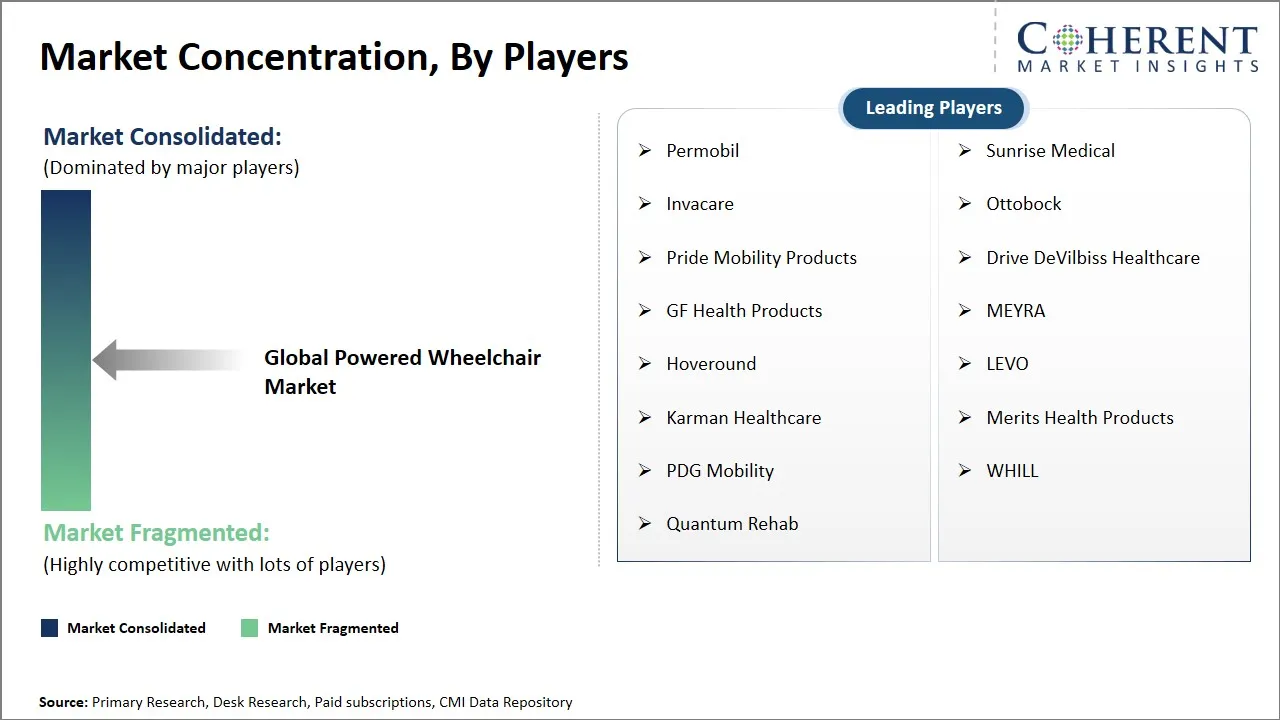
- Established companies in the powered wheelchair market maintain dominance by making significant investments in research and development (R&D) to continuously deliver high-performance products that meet the evolving needs of their customers. These players focus on incorporating advanced features such as enhanced battery efficiency, improved maneuverability, and superior comfort to set industry standards and differentiate their offerings. In addition to innovation, these companies actively form strategic partnerships with original equipment manufacturers (OEMs) and technology firms to integrate cutting-edge components and optimize supply chains, enabling them to maintain a competitive edge.
- In October 2023, Permobil, a global leader in advanced mobility solutions, introduced the CR1 (Carbon Rigid 1), a highly configurable and ultra-lightweight powered wheelchair that combines durability with superior performance. This addition to the market is revolutionizing mobility for users who need both flexibility and a lightweight design for everyday use.
- Mid-level players in the powered wheelchair market focus primarily on offering cost-effective solutions that strike a balance between quality and affordability. These companies target price-sensitive consumers such as older adults and individuals in developing regions who require reliable mobility devices without the premium features that characterize high-end models.
- In March 2024, Sunrise Medical, a prominent provider of powered mobility solutions, unveiled the QUICKIE Q50 R Carbon, the lightest foldable power wheelchair in the QUICKIE line. This design innovation focuses on promoting independence and mobility, providing users with greater portability and ease of use. The QUICKIE Q50 R Carbon is tailored for those seeking cost-effective solutions that strike a balance between quality and affordability, making it an ideal choice for individuals looking for a lightweight yet functional powered wheelchair.
- Small-scale players in the powered wheelchair market often face unique challenges due to their limited resources but stand out by targeting niche markets with specialized features and innovative product offerings. These companies tend to adopt advanced technologies such as IoT integration, lightweight materials, and customizable designs to cater to specific customer groups with distinct needs. In order to stay competitive, small-scale manufacturers often form strategic alliances with startups, healthcare providers, and regional manufacturers, allowing them to increase market access and enhance brand visibility within specific geographic regions.
- In March 2024, IIT Madras, a prestigious Indian institute, introduced the NeoStand, an innovative electric standing wheelchair that allows users to transition from sitting to standing with the push of a button. Launched on March 20, 2024, the NeoStand offers powered wheelchair users improved accessibility and usability, making it easier for them to engage in activities such as reaching for objects and participating in eye-level conversations.
Key Developments
- In March 2025, eFOLDi, a leading provider of portable mobility solutions, announced the launch of the Navigator, its lightest and most advanced folding powered wheelchair. Weighing just over 12kg (excluding the battery and accessories), the Navigator is designed for users seeking portability, convenience, and versatility. Ideal for active individuals, it is airline-safe, folds and unfolds in seconds, and requires no complex assembly. The powerchair features a magnesium-alloy chassis, enhanced attendant controls, a rapid-charge lithium battery, and an ergonomic joystick for superior safety and maneuverability.
- In March 2025, MYFRIDO, a brand under Arcatron Mobility, launched the Frido Electric Prime Wheelchair on International Wheelchair Day, aiming to redefine mobility. The wheelchair combines smart technology and intuitive design, offering users enhanced freedom and independence. Powered by a high-performance 24V lithium battery, it provides up to 15 km of range and a top speed of 6 km/h. Features include heavy-duty tires for stability, an ambidextrous joystick for smooth control, a voice-guided SOS system, and a dual-mode option for easy switching between electric and manual modes.
- In March 2025, Precision Rehab, a supplier of bespoke powerchairs, will unveil the iBOT duo electric balance wheelchair at Naidex 2025 (March 19-20, at Birmingham’s NEC). Designed to navigate challenging terrains like mud, gravel, and tarmac, the iBOT duo features gyroscopic technology for enhanced comfort and a top speed of nearly 10 mph. It includes two driving speeds, cruise control, and a customizable tiller steering system for easy transfers. The wheelchair is fully customizable with various colors and design options.
Market Report Scope
Powered Wheelchair Market Report Coverage
| Report Coverage | Details | ||
|---|---|---|---|
| Base Year: | 2025 | Market Size in 2026: | USD 3.04 Bn |
| Historical Data for: | 2020 To 2024 | Forecast Period: | 2026 To 2033 |
| Forecast Period 2026 to 2033 CAGR: | 6.5% | 2033 Value Projection: | USD 4.72 Bn |
| Geographies covered: |
| ||
| Segments covered: |
| ||
| Companies covered: | Permobil, Sunrise Medical, Invacare, Ottobock, Pride Mobility Products, Drive DeVilbiss Healthcare, GF Health Products, MEYRA, Hoveround, LEVO, Karman Healthcare, Merits Health Products, PDG Mobility, WHILL, and Quantum Rehab | ||
| Growth Drivers: |
| ||
| Restraints & Challenges: |
| ||
Powered Wheelchair Market Dynamics
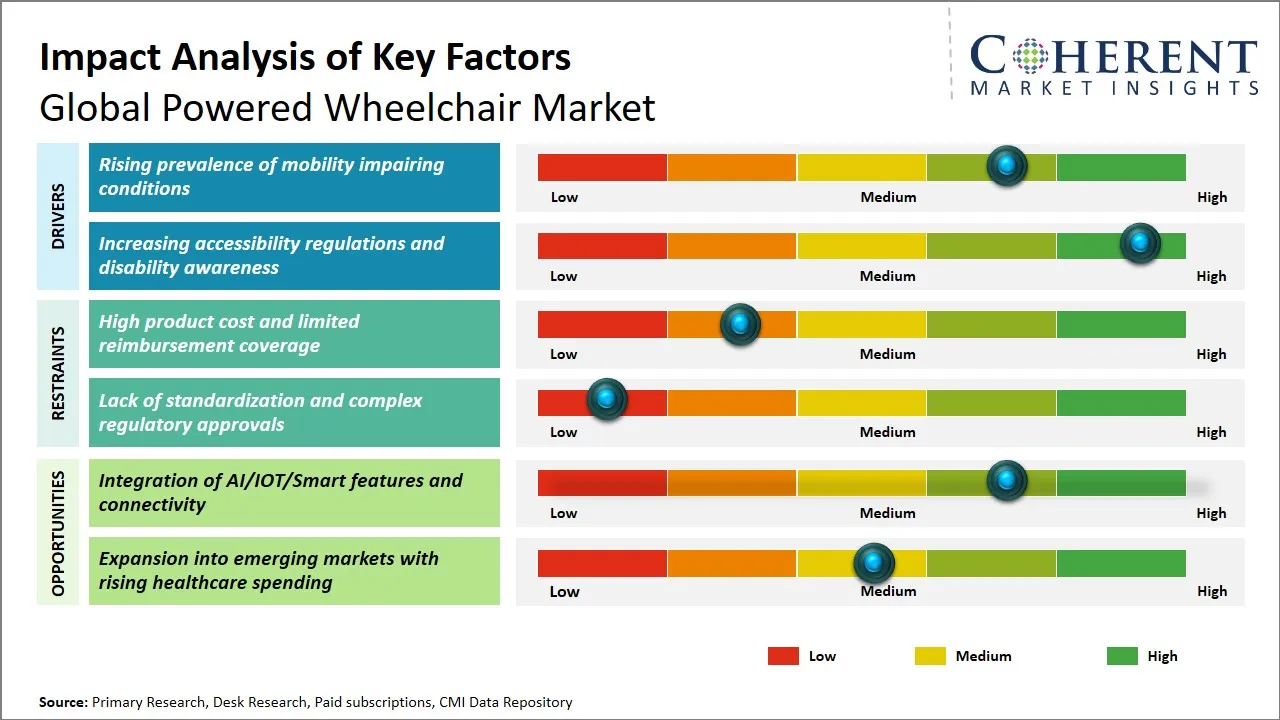
Powered Wheelchair Market Driver - Rising Prevalence of Mobility Impairing Conditions
The increasing prevalence of mobility-impairing conditions such as multiple sclerosis, spinal cord injuries, cerebral palsy, and age-related musculoskeletal disorders is a significant driver fueling the demand for powered wheelchairs globally. Powered wheelchairs offer superior ease of use and better maneuverability compared to manual wheelchairs, making them especially beneficial for patients with limited upper body strength or endurance.
Additionally, advancements in medical diagnostics and improved healthcare access have led to earlier detection and longer survival rates of patients with debilitating conditions, amplifying the long-term requirement for mobility aids. This demographic shift, combined with growing awareness among healthcare providers and caregivers about the benefits of powered mobility solutions, continues to expand the user base, thereby propelling growth and innovation within the powered wheelchair market.
According to the WHO, in March 2023, an estimated 1.3 billion people globally, or 16% of the population, experience significant disabilities, with many facing health inequities. Those with disabilities are more likely to develop conditions like depression, diabetes, and obesity and often experience poorer health, dying up to 20 years earlier than individuals without disabilities. Accessibility to transportation and healthcare remains a major challenge, with persons with disabilities finding transportation 15 times harder to access. Health inequities arise due to stigma, discrimination, poverty, exclusion from education and employment, and barriers within the health system.
Powered Wheelchair Market Opportunity - Integration of AI, IoT, and Smart Connectivity
The integration of Artificial Intelligence (AI), Internet of Things (IoT), and advanced smart connectivity features presents a significant growth opportunity in the global powered wheelchair market. As healthcare consumers increasingly demand personalized, efficient, and connected mobility solutions, powered wheelchairs embedded with AI and IoT capabilities can transform user experience and enable enhanced functionality. AI-powered wheelchairs can offer real-time obstacle detection, route optimization, and adaptive performance adjustments tailored to individual user needs, thus improving autonomy and safety.
Meanwhile, IoT-enabled connectivity facilitates remote monitoring, diagnostics, and predictive maintenance by allowing healthcare providers and caregivers to track wheelchair usage patterns and health parameters. Smart integration also enhances user convenience through smartphone apps that control wheelchair settings, battery status monitoring, and geolocation services, which are especially valuable for independent users.
In March 2025, Soracom and Suzuki launched a proof-of-concept (PoC) to commercialize Suzuki’s Versatile Micro e-Mobility Platform, utilizing IoT and electric wheelchair technology to develop mobility solutions for various robots. The platform, originally designed for industrial robots, benefits from Suzuki's expertise in electric wheelchair development, offering enhanced stability and maneuverability. By integrating autonomous driving, AI, and IoT connectivity via Soracom’s platform, the initiative targets applications in logistics, snow removal, construction, and monitoring.
Analyst Opinion (Expert Opinion)
- The powered wheelchair market is experiencing robust growth, primarily driven by technological advancements in mobility solutions and the increasing demand for independence among individuals with disabilities. Innovations such as smart wheelchairs, enhanced battery technology, and gyroscopic stabilization systems are revolutionizing the sector. Furthermore, supportive government regulations promoting accessibility and inclusion are fueling market expansion. The aging population worldwide and a rising number of mobility-impaired individuals have increased the demand for powered wheelchairs, creating a significant market opportunity. However, challenges remain, including the high cost of advanced mobility devices and the limited availability of repair services, which can hinder accessibility for some users.
- Emerging opportunities in the sector include the integration of AI and IoT technologies in powered wheelchairs, offering personalized user experiences and enhanced safety features. Key industry events such as the International Disability Expo (IDE) and the Assistive Technology Industry Association (ATIA) Conference have provided platforms for knowledge exchange, showcasing innovations and discussing policies that promote greater inclusivity. For instance, government-backed programs in the U.S. and Europe aimed at increasing healthcare accessibility and funding for mobility aids are expected to influence future market dynamics. Additionally, pilot projects like the wheelchair-sharing program in Singapore are setting precedents for wider adoption of powered mobility devices in public spaces.
Speak to the analyst
Want personalized insights?
Take the findings above to one of our principal consultants, or have the report rebuilt around the segments, geographies and competitors you actually track.
Market Segmentation
- Product Type Insights (Revenue, USD Bn, 2021 - 2033)
- Center Wheel Drive Powered Wheelchair
- Front Wheel Drive Powered Wheelchair
- Rear Wheel Drive Powered Wheelchair
- Standing Powered Wheelchair
- Folding Powered Wheelchair
- Others (e.g., hybrid configurations)
- Age Group Insights (Revenue, USD Bn, 2021 - 2033)
- Geriatric
- Adult
- Pediatric
- Technology Insights (Revenue, USD Bn, 2021 - 2033)
- Joystick Controlled Powered Wheelchairs
- Head Controlled Powered Wheelchairs
- Sip-and-Puff Controlled Powered Wheelchairs
- Touchscreen Controlled Powered Wheelchairs
- Automated/Smart Powered Wheelchairs (AI-assisted)
- Weight Capacity Insights (Revenue, USD Bn, 2021 - 2033)
- Below 250 lbs (Lightweight)
- 250–400 lbs (Standard)
- Above 400 lbs (Heavy Duty)
- Medical Conditions Insights (Revenue, USD Bn, 2021 - 2033)
- Spinal Cord Injuries (SCI)
- Cerebral Palsy (CP)
- Multiple Sclerosis (MS)
- Muscular Dystrophy (MD)
- Amyotrophic Lateral Sclerosis (ALS)
- Post-Stroke Rehabilitation
- Severe Arthritis
- Others (Amputees, etc.)
- End User Insights (Revenue, USD Bn, 2021 - 2033)
- Hospitals and Clinics
- Rehabilitation Centers
- Long-Term Care Facilities
- Home Healthcare Settings
- Others (Elderly Care Facilities)
- Distribution Channel Insights (Revenue, USD Bn, 2021 - 2033)
- Offline
- Online
- Regional Insights (Revenue, USD Bn, 2021 - 2033)
- North America
- U.S.
- Canada
- Latin America
- Brazil
- Argentina
- Mexico
- Rest of Latin America
- Europe
- Germany
- U.K.
- Spain
- France
- Italy
- Russia
- Rest of Europe
- Asia Pacific
- China
- India
- Japan
- Australia
- South Korea
- ASEAN
- Rest of Asia Pacific
- Middle East
- GCC Countries
- Israel
- Rest of Middle East
- Africa
- South Africa
- North Africa
- Central Africa
- North America
- Key Players Insights
- Permobil
- Sunrise Medical
- Invacare
- Ottobock
- Pride Mobility Products
- Drive DeVilbiss Healthcare
- GF Health Products
- MEYRA
- Hoveround
- LEVO
- Karman Healthcare
- Merits Health Products
- PDG Mobility
- WHILL
- Quantum Rehab
Sources
Primary Research Interviews
- Industry Stakeholders List
- Manufacturers of powered wheelchairs
- Suppliers and distributors of mobility aids
- End Users List
- Individuals with mobility impairments
- Healthcare providers and professionals working with mobility devices
Government and International Databases
- World Health Organization (WHO)
- U.S. Food and Drug Administration (FDA)
- National Institutes of Health (NIH)
- European Commission
Trade Publications
- Mobility Management
- The Mobility Channel
- Medical Device and Diagnostic Industry (MD+DI)
Academic Journals
- Journal of Rehabilitation Research and Development
- Assistive Technology Journal
- Disability and Rehabilitation: Assistive Technology
Reputable Newspapers
- The New York Times
- The Guardian
- The Wall Street Journal
Industry Associations
- National Mobility Equipment Dealers Association (NMEDA)
- Rehabilitation Engineering and Assistive Technology Society of North America (RESNA)
- International Society for Prosthetics and Orthotics (ISPO)
Public Domain Resources
- United Nations Enable
- U.S. Census Bureau (Data on disability and mobility statistics)
- National Disability Institute (NDI)
Proprietary Elements
- CMI Data Analytics Tool: Proprietary analytics tool to analyze real-time market trends, consumer behavior, and technology adoption in market
- Proprietary CMI Existing Repository of Information for Last 8 Years
Get access to 250+ pages report
Every segment, forecast, competitor profile and data table behind the analysis above — available for instant download.
- ESOMAR Member
- ISO 9001:2015 Certified
- D-U-N-S Registered
- GDPR & CCPA Compliant
Missing comfort of reading report in your local language? Find your preferred language:
Transform your Strategy with Exclusive Trending Reports
Frequently Asked Questions
The powered wheelchair market is estimated to be valued at USD 3.04 Bn in 2026 and is expected to reach USD 4.72 Bn by 2033.
The CAGR of global powered wheelchair market is projected to be 6.5% from 2026 to 2033.
Rising prevalence of mobility impairing conditions and increasing accessibility regulations and disability awareness are the major factors driving the growth of the powered wheelchair market.
High product cost and limited reimbursement coverage and lack of standardization and complex regulatory approvals are the major factors hampering the growth of the powered wheelchair market.
In terms of product type, center wheel drive powered wheelchair is estimated to dominate the market revenue share in 2026.
Permobil, Sunrise Medical, Invacare, Ottobock, Pride Mobility Products, Drive DeVilbiss Healthcare, GF Health Products, MEYRA, Hoveround, LEVO, Karman Healthcare, Merits Health Products, PDG Mobility, WHILL, and Quantum Rehab are the major players.
North America is expected to lead the global powered wheelchair market in 2026.