

Protein Chip Market Size And Share Analysis - 2026 to 2033
The Global Protein Chip Market is estimated to be valued at USD 2.60 Bn in 2026 and is expected to reach USD 4.20 Bn by 2033, exhibiting a compound annual growth rate (CAGR) of 7.3% from 2026 to 2033.
Key Takeaways
- By Type, the Analytical Microarrays segment is projected to dominate the global protein chip market with a 41.5% share in 2026.
- By Application, the Proteomics segment is expected to hold the leading share of 36% in the global protein chip market in 2026.
- By Detection Technique, Fluorescence detection is anticipated to command the highest share of 41% in 2026.
- By Region, North America is set to maintain its dominance in the global protein chip market, capturing a 41.7% share in 2026.
Market Overview
The global Protein Chip Market is experiencing steady growth, fuelled by increasing demand for high-throughput protein analysis in drug discovery platform and diagnostics. Technological advancements in microarray fabrication and detection techniques, such as fluorescence, are enhancing sensitivity and accuracy. Analytical microarrays dominate the market due to their precision, while proteomics drives application demand. North America leads with strong research infrastructure and biotech presence, while Asia Pacific shows rapid growth supported by expanding healthcare investment and growing interest in personalized medicine and genomics.
Current Events and its Impacts on the Protein Chip Market
Current Event | Description and its impact |
Technological Advancements in Protein Analysis |
|
Shifting Research and Diagnostic Focus |
|
Evolving Regulatory Landscape and Quality Standards |
|
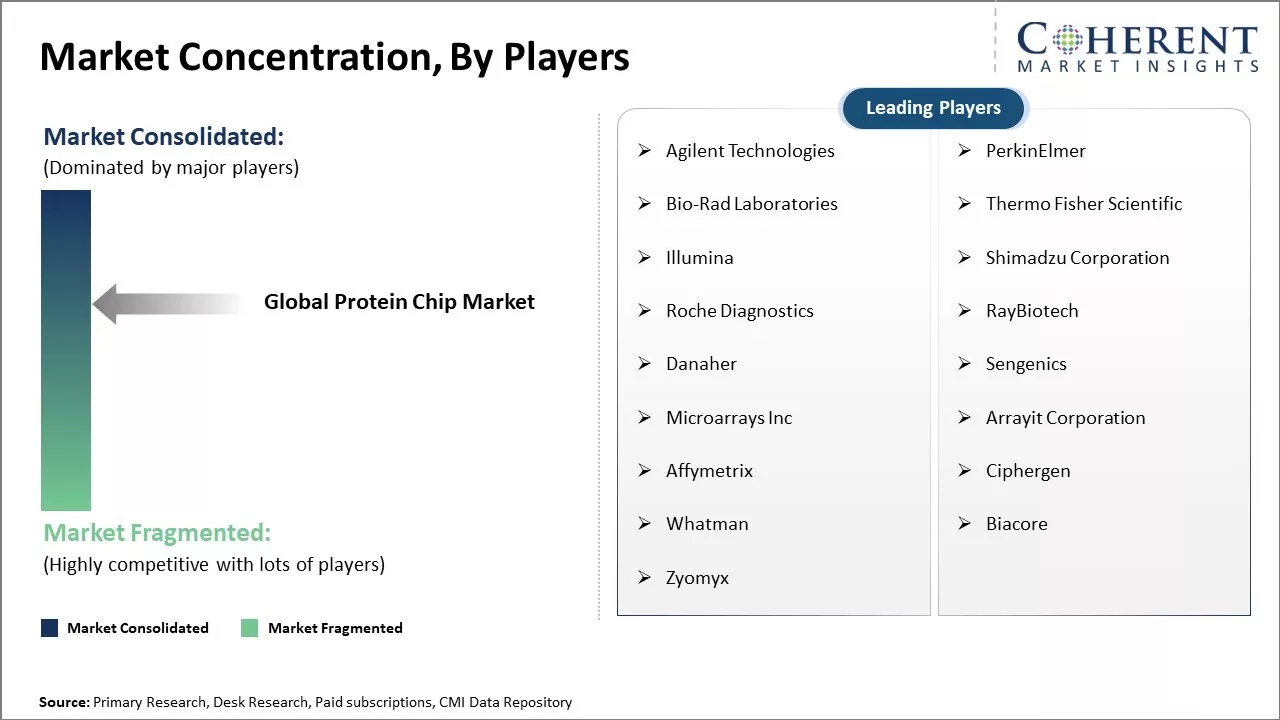
Market Concentration and Competitive Landscape
- Current Industry Events of 2026
- Market Size Estimation
- Regional Breakdown
- Competitive Landscape
- Customer Intelligence
- Segmental Analysis
- Pricing Analysis
- Key Market Drivers, Challenges & Future Trends
- Customized Insights Section
Protein Chip Market Trends
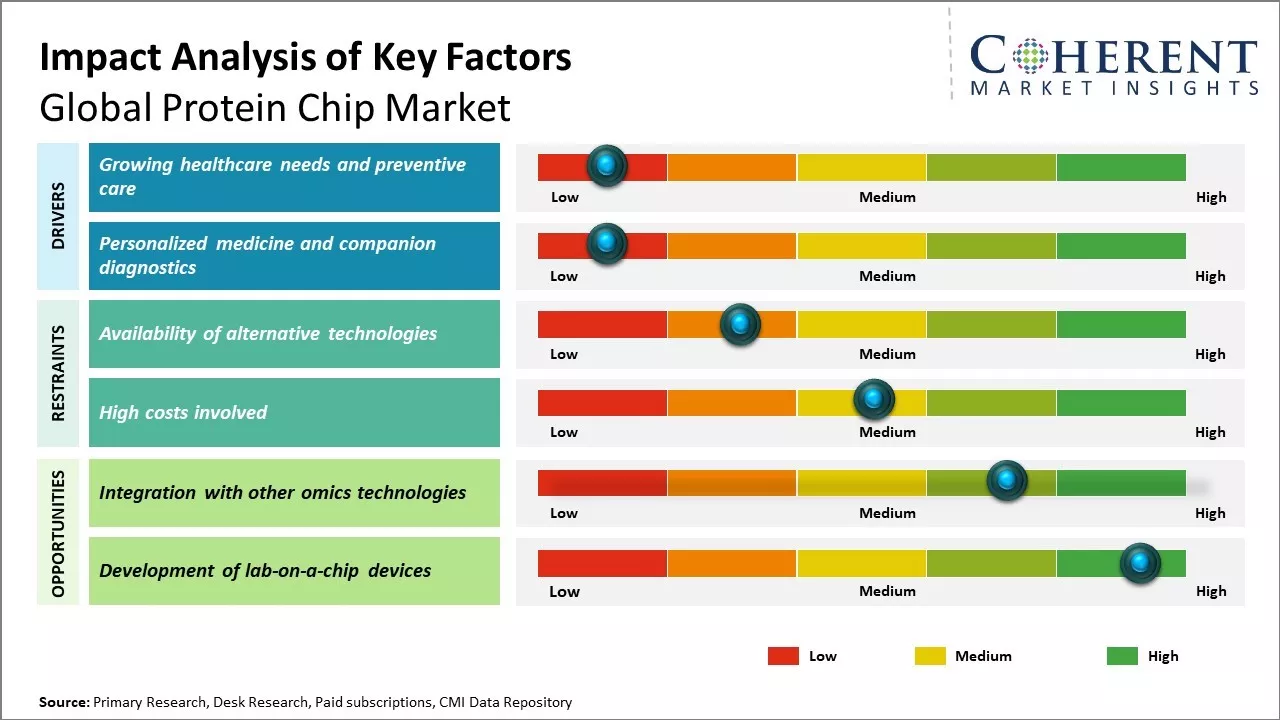
- Growing healthcare needs and preventive care
The global demand for healthcare is rising steadily due to the growth in the aging population and prevalence of chronic diseases. As per estimates, chronic diseases already account for over 60% of all deaths globally each year. Additionally, there is a growing focus on preventive care and early disease diagnosis to curb rising healthcare costs.
Protein chips provide an effective solution to address these needs by enabling rapid multi-marker disease screening and detection of biomarkers through a single small sample. Researchers are exploring the potential of protein chips to screen for conditions like cancer, diabetes, cardiovascular diseases, and neurological disorders. This can help improve patient outcomes, support drug development, and lower treatment costs in the long run.
The ability to analyse thousands of proteins simultaneously from a minute sample volume without sample pre-treatment or purification makes protein chips well-suited for point-of-care diagnostics and population health screening programs. Their adoption is expected to boost as healthcare shifts focus towards integrating predictive, preemptive and preventive care measures.
- Personalized medicine and companion diagnostics
Another key driver for protein chips is the growing adoption of personalized medicine and precision diagnostics approach. With vast individual variability in disease presentation and drug response, a one-size-fits-all approach to diagnosis and treatment is becoming increasingly outdated. Protein chips can help develop more targeted treatment regimens by enabling high-throughput proteomic profiling of patient samples.
Their ability to analyse protein-expression signatures associated with a person’s genetic variations, disease state and drug-response potential makes them valuable tools for developing companion diagnostics.
Several pharmaceutical firms are collaborating with protein chip companies to co-develop diagnostics that identify the patients most likely to benefit from new drugs. This is expected to facilitate the discovery and development of biomarker-guided therapeutics over the coming years. As the focus shifts towards developing better predictive tests to optimize drug efficacy and minimize adverse reactions, protein chips are likely to emerge as mainstream technologies in personalized medicine.
In March 2025, MIT News (mainstream academic news site) reported that MIT‑spun Advanced Silicon Group developed a protein sensor chip that accelerates drug development and biomanufacturing—delivering rapid, affordable protein quantification in under 15 minutes.
Opportunities in the Protein Chip Market
- Integration with other omics technologies
Integration with other omics technologies presents a great opportunity for growth in the protein chip market. As the cost of genome sequencing and other ‘omics’ techniques continue to decline significantly, an integrated approach analyzing multiple bimolecular layers of information holds enormous potential for advancing understanding of biology and disease.
Protein chips allow analyzing thousands of proteins simultaneously from a single patient sample. Combining protein expression data from chips with genomics, transcriptomics and metabolomics data through integrated analysis can provide novel clinical and research insights. For example, an integrated analysis of transcriptomic and proteomic data from tumour samples has helped identify new protein biomarkers and drug targets for certain cancers.
As the scope and affordability of multi-omics studies increases, protein chips are well-positioned to be a key analytical technology supporting such studies. Various public health organizations globally have acknowledged the power of integrated omics approaches for applications like precision medicine and population health research.
For instance, the U.S. National Institutes of Health has made multi-omics studies a top funding priority area under its “All of Us” precision medicine initiative from 2020-2023. The initiative aims to collect omics data from over one million participants to better understand health outcomes. Protein chip manufacturers can tap into such large initiatives and clinical studies by offering optimized assay platforms and analysis solutions for integrated profiling of biomolecules from the same sample set.
Overall, as multi-omics integration gains greater acceptance among pharmaceutical and biotech companies as well as academia for accelerating disease insights, protein chips are likely to experience increased adoption rates.
Segmental Insights
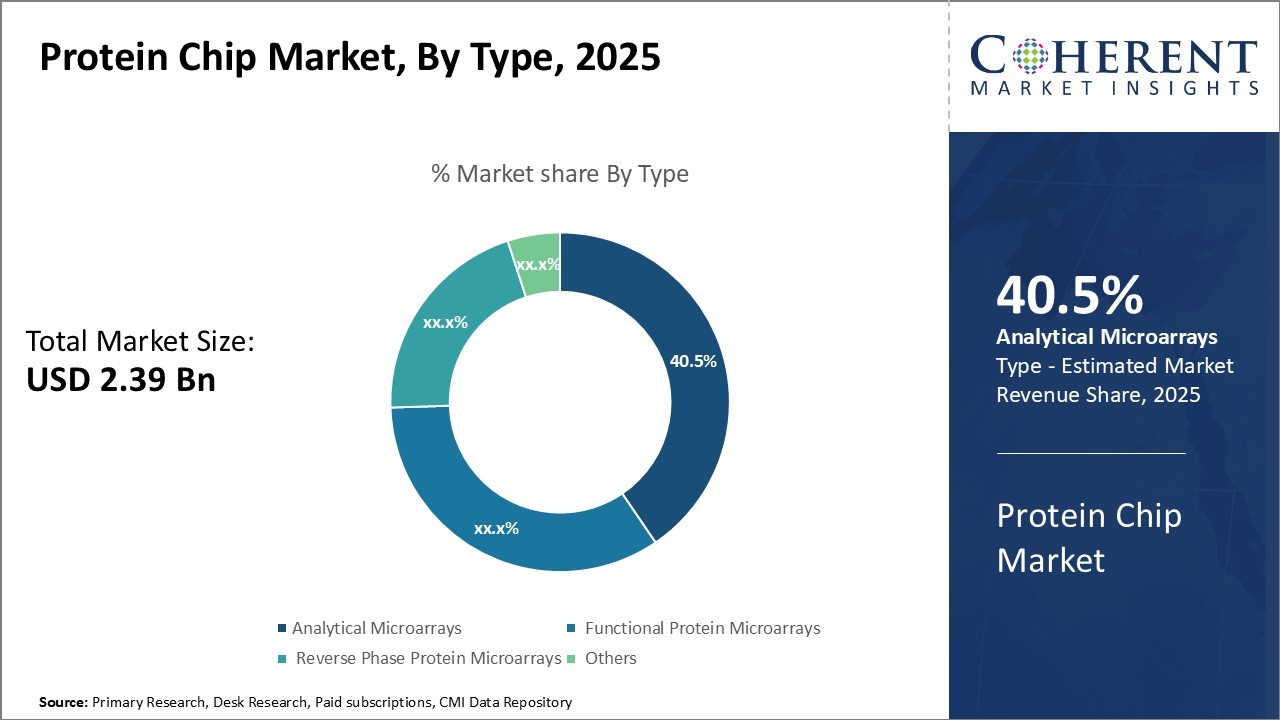
Global Protein Chip Market Insights, By Type
The Analytical Microarrays segment is projected to dominate the global protein chip market with a 41.5% share in 2026. This leadership is driven by their unmatched ability to detect thousands of protein interactions simultaneously, providing high-throughput analysis crucial for both research and clinical diagnostics.
Their accuracy, speed, and scalability make them indispensable in applications ranging from disease diagnostics to drug discovery. Analytical microarrays play a key role in biomarker validation and functional proteomics, underscoring their value in the growing demand for precise protein profiling technologies.
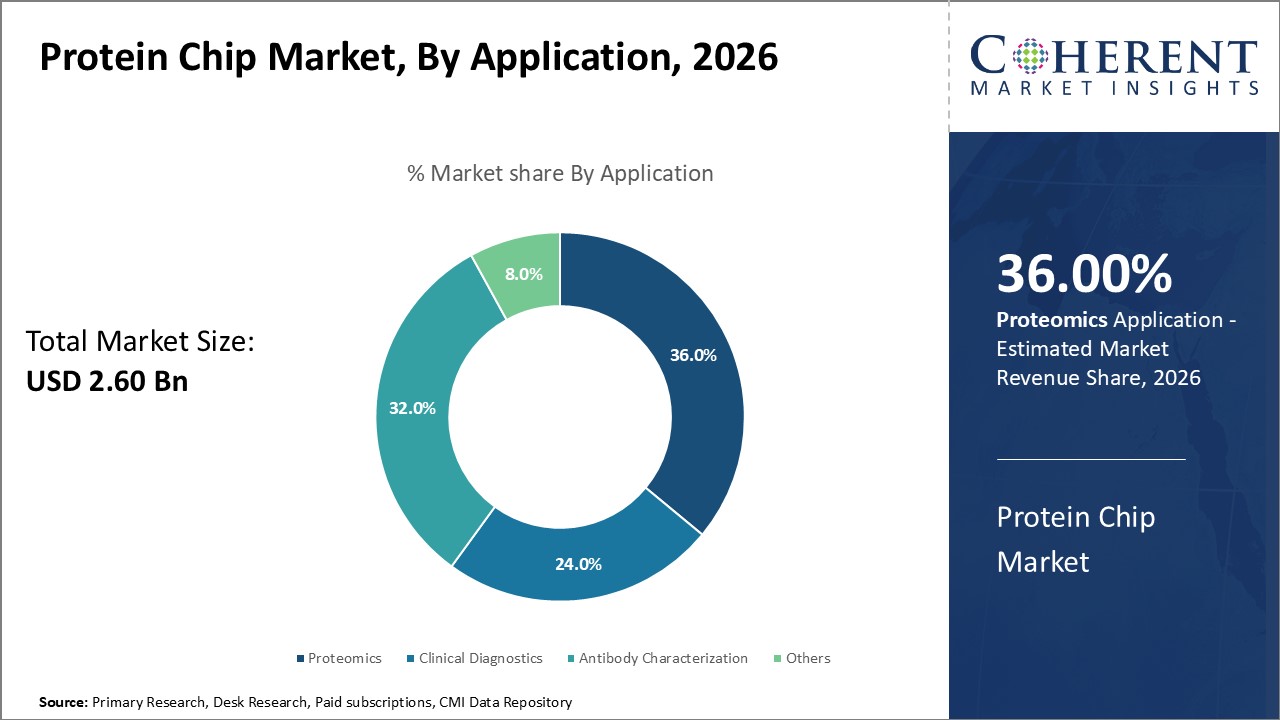
Global Protein Chip Market Insights, By Application
The Proteomics segment is expected to hold the leading share of 36% in the global protein chip market in 2026. This dominance is attributed to the critical role of proteomics in analyzing functional proteins across cells, tissues, and organisms.
As the cornerstone of modern biological research, proteomics helps uncover disease mechanisms, identify therapeutic targets, and enable precision medicine. The surge in demand for protein expression profiling, pathway analysis, and personalized treatment strategies continues to accelerate adoption of protein chips in this application area.
Global Protein Chip Market Insights, By Detection Technique
Fluorescence detection is anticipated to command the highest share of 41% in the protein chip market by 2024, owing to its exceptional sensitivity and resolution. This technique allows accurate detection and quantification of protein interactions, making it the gold standard in many research and clinical laboratories. Its ability to visualize low-abundance proteins enhances diagnostic accuracy and supports early disease detection.
The widespread adoption of fluorescence-based systems is driving innovation and supporting the broader integration of protein chips in advanced diagnostic workflows.
Regional Insights
North America Protein Chip Market Trends and Analysis
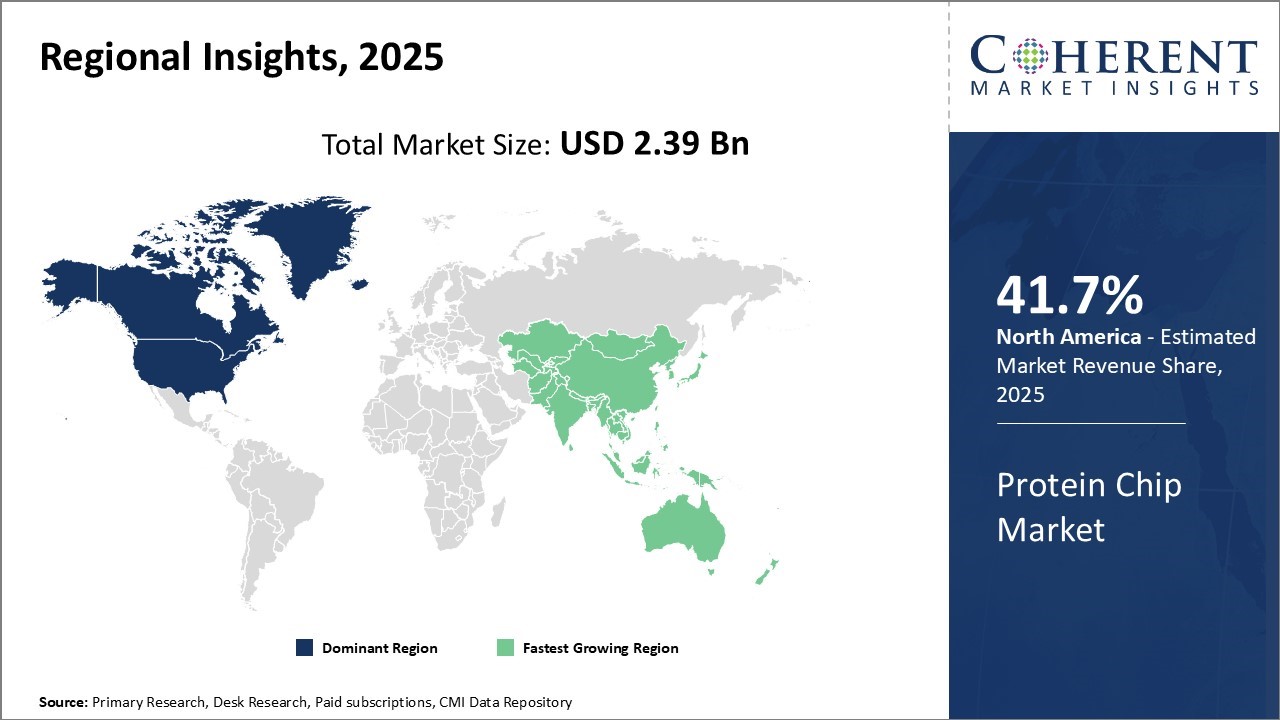
North America is set to maintain its dominance in the global protein chip market, capturing a significant 41.7% share in 2026. This regional leadership is driven by the presence of major life sciences companies, well-established research institutions, and extensive government and private funding for biomedical innovation.
The region's strong focus on personalized medicine, coupled with advanced healthcare infrastructure and high adoption of proteomic technologies, positions North America as the frontrunner in driving technological advancement and market growth in protein chip applications.
Europe Protein Chip Market Trends and Analysis
Europe follows closely behind, benefiting from robust healthcare systems, academic research excellence, and increased investments in life sciences. Countries such as Germany, the UK, and France are at the forefront of integrating proteomics into clinical and pharmaceutical research.
The European market is supported by stringent regulatory frameworks that ensure product quality and innovation. Growth is also driven by the region’s rising interest in precision medicine, collaborative R&D initiatives, and expanding use of protein chips in disease diagnostics and drug development.
Protein Chip Market Dominating Countries
United States and Canada
The United States leads the global protein chip market, driving North America's 41.7% market share in 2026. This dominance is attributed to its strong concentration of leading biotechnology and pharmaceutical companies, advanced research institutions like the NIH, and robust government and private funding in biomedical research. The U.S. also spearheads innovation in personalized medicine and proteomics, with widespread adoption of protein chips for disease diagnostics, drug development, and academic research.
Canada contributes significantly to North America's leadership in the protein chip market. The country benefits from a strong academic research environment, rising investment in life sciences, and supportive government initiatives promoting innovation in healthcare technologies. Canadian research centres and hospitals are increasingly integrating protein chips into proteomics studies and diagnostic applications, bolstering the region’s market share and advancing clinical research capabilities.
Market Report Scope
Protein Chip Market Report Coverage
| Report Coverage | Details | ||
|---|---|---|---|
| Base Year: | 2025 | Market Size in 2026: | USD 2.60 Bn |
| Historical Data for: | 2020 To 2024 | Forecast Period: | 2026 To 2033 |
| Forecast Period 2026 to 2033 CAGR: | 7.3% | 2033 Value Projection: | USD 4.20 Bn |
| Geographies covered: |
| ||
| Segments covered: |
| ||
| Companies covered: | Agilent Technologies, PerkinElmer, Bio-Rad Laboratories, Thermo Fisher Scientific, Illumina, Shimadzu Corporation, Roche Diagnostics, RayBiotech, Danaher, Sengenics, Microarrays Inc, Arrayit Corporation, Affymetrix, Ciphergen, Whatman, Biacore, Zyomyx | ||
| Growth Drivers: |
| ||
| Restraints & Challenges: |
| ||
Analyst Viewpoint – Protein Chip Market
- Analysts hold a highly optimistic outlook for the global protein chip market, viewing it as a transformative technology within the diagnostic and life sciences sectors. They emphasize its critical role in accelerating biomarker discovery, disease diagnostics, and personalized medicine. The ability to simultaneously analyse thousands of protein interactions using minimal sample volumes positions protein chips as a high-value tool for both clinical and research applications.
- Experts highlight that ongoing advancements in detection techniques particularly fluorescence and label-free systems are key drivers of accuracy, sensitivity, and scalability. The integration of AI for data analysis and interpretation is seen as essential for enhancing usability and expanding clinical adoption.
- Regionally, North America continues to dominate due to its strong biomedical infrastructure and research funding, while Asia Pacific led by China, Japan, and India is emerging as the fastest-growing region, driven by rising healthcare investment and demand for precision diagnostics. Analysts predict sustained growth through innovation, collaborative research, and increased regulatory support.
Protein Chip Market: Key Development
- In January, 2025, Quantum‑Si partnered with IDEX Health & Science to co-develop and manufacture the optics module for its Proteus proteomics platform. This collaboration integrates precision optical engineering into Proteus, improving detection accuracy and reliability, which strengthens the platform’s readiness for market launch and enhances its competitiveness in clinical applications.
- In June 2025, a refreshed “Protein Chips Global Strategic Business Report” included updated geopolitical considerations like June 2025 tariff and trade adjustments, reaffirming the U.S. market size at $633.4 M in 2024 and forecasting China’s protein chip sector to reach $552.8 M by 2030. This macroeconomic inclusion aids manufacturers in adjusting sourcing strategies and pricing, and reassessing regional market approaches prompting greater agility in supply chain and expansion planning.
- In November 2025, Quantum‑Si announced a collaboration with NVIDIA to integrate accelerated computing into its next-gen proteomics platform, Proteus, enhancing core technologies like aminopeptidases and data processing. Leveraging AI and GPU acceleration enables rapid, large-volume data analysis, improving throughput and accelerating clinical and research deployment of protein sequencing technologies.
- In November 2024, Quantum‑Si deepened collaboration with Planet Innovation to manufacture its new Proteus platform, building upon earlier support for the Platinum Pro system. Strengthened manufacturing infrastructure ensures scalability and reliability of the Proteus rollout, reducing time-to-market and supporting global deployment.
- In November 2024, Quantum‑Si and SkyWater expanded their agreement to include production of Proteus consumables, enhancing previous partnerships established since 2021. This extension secures high-quality, scalable manufacturing for core consumables, supporting cost-effective deployment and consistent performance of Proteus in research and clinical settings.
Market Segmentation
- By Type (Revenue, USD Bn, 2021 - 2033)
- Analytical Microarrays
- Functional Protein Microarrays
- Reverse Phase Protein Microarrays
- Others
- By Application (Revenue, USD Bn, 2021 - 2033)
- Antibody Characterization
- Clinical Diagnostics
- Proteomics
- Others
- By Detection Technique (Revenue, USD Bn, 2021 - 2033)
- Fluorescence
- Chemiluminescence
- Mass Spectrometry
- Electrical
- Others
- By End User (Revenue, USD Bn, 2021 - 2033)
- Hospitals & Clinics
- Diagnostic Laboratories
- Academic & Research Institutes
- Pharmaceutical & Biotechnology Companies
- By Region (Revenue, USD Bn, 2021 - 2033)
- North America
- U.S.
- Canada
- Latin America
- Brazil
- Argentina
- Mexico
- Rest of Latin America
- Europe
- Germany
- U.K.
- Spain
- France
- Italy
- Russia
- Rest of Europe
- Asia Pacific
- China
- India
- Japan
- Australia
- South Korea
- ASEAN
- Rest of Asia Pacific
- Middle East
- GCC Countries
- Israel
- Rest of Middle East
- Africa
- South Africa
- North Africa
- Central Africa
- Company Profiles
- Agilent Technologies
- PerkinElmer
- Bio-Rad Laboratories
- Thermo Fisher Scientific
- Illumina
- Shimadzu Corporation
- Roche Diagnostics
- RayBiotech
- Danaher
- Sengenics
- Microarrays Inc.
- Arrayit Corporation
- Affymetrix
- Ciphergen
- Whatman
- Biacore
- Zyomyx
Sources
The Stakeholders Consulted
- Medical laboratory directors and diagnostic center heads
- Biotech and pharmaceutical R&D leads
- Protein chip manufacturers and material suppliers
- Regulatory and clinical compliance advisors
- University and institutional proteomics researchers
- Hospital procurement departments and clinical lab managers
- Health economics and outcomes researchers (HEOR)
- Healthcare analytics and diagnostics integration consultants
Databases Opened
- U.S. National Institutes of Health (NIH) – Biomedical Research Portfolio
- European Medicines Agency (EMA) – Diagnostic Technology Assessment Reports
- World Health Organization (WHO) – Diagnostics and Laboratory Technologies Data
- National Center for Biotechnology Information (NCBI) – Proteomics and Genomics Resources
- India’s Department of Biotechnology (DBT) – Biomedical Innovation Database
Magazines & Trade Publications
- Genetic Engineering & Biotechnology News (GEN)
- Clinical Lab Products Magazine
- The Scientist – Life Sciences Industry Section
- Medical Device and Diagnostic Industry (MD+DI)
- Lab Manager – Instrumentation and Clinical Testing Features
Scientific and Industry Journals
- Journal of Proteome Research
- Nature Communications – Proteomics & Diagnostics
- Analytical Chemistry (ACS Publications)
- Proteomics: Clinical Applications
- BioTechniques – Lab Methodologies and Trends
Newspapers & Media Outlets
- The Wall Street Journal – Health & Life Sciences
- Bloomberg – Biotech and Diagnostics Markets
- Reuters – Healthcare Innovation and FDA News
- The Economic Times – Biotech & Pharma Sector
- Business Standard – Diagnostics and Healthcare Technology
Associations and Regulatory Bodies
- U.S. Food and Drug Administration (FDA) – Diagnostics Division
- European Commission – Health Technology Assessment (HTA)
- Indian Council of Medical Research (ICMR)
- American Association for Clinical Chemistry (AACC)
- Human Proteome Organization (HUPO)
- Clinical and Laboratory Standards Institute (CLSI)
Public Domain Sources
- World Health Organization (WHO) – In Vitro Diagnostic Standards
- U.S. Centers for Medicare & Medicaid Services (CMS) – Reimbursement Databases
- European Union Open Data Portal – Biomedical & Life Sciences
- National Health Service (UK) – Innovation and Diagnostic Approvals
- OECD – Healthcare R&D and Diagnostic Innovation Reports
Proprietary Research Elements
- CMI Data Analytics Tool
- Proprietary CMI Repository of Market Data (covering past 8 years)
- CMI Expert Interviews and Transcripts (focused on proteomics, clinical diagnostics, and precision medicine adoption trends)
Get access to 250+ pages report
Every segment, forecast, competitor profile and data table behind the analysis above — available for instant download.
- ESOMAR Member
- ISO 9001:2015 Certified
- D-U-N-S Registered
- GDPR & CCPA Compliant
Missing comfort of reading report in your local language? Find your preferred language:
Transform your Strategy with Exclusive Trending Reports
Frequently Asked Questions
The Protein Chip Market size is estimated to be valued at USD 2.60 Bn in 2026, and is expected to reach USD 4.20 Bn by 2033.
The CAGR of the Protein Chip Market is projected to be 7.3% from 2026 to 2033.
Growing healthcare needs and preventive care and personalized medicine and companion diagnostics are the major factors driving the growth of global market.
Availability of alternative technologies and high costs involved are the major factors hampering the growth of global market.
In terms of Type, Analytical Microarrays segment is estimated to dominate the market revenue share in 2026.
Agilent Technologies, PerkinElmer, Bio-Rad Laboratories, Thermo Fisher Scientific, Illumina, Shimadzu Corporation, Roche Diagnostics, RayBiotech, Danaher, Sengenics, Microarrays Inc, Arrayit Corporation, Affymetrix, Ciphergen, Whatman, Biacore, and Zyomyx are the major players.
North America is expected to lead the global protein chip industry.