

Global Protein Water Market Size and Forecast – (2026-2033)
According to Coherent Market Insights, the global protein water market is estimated to be valued at USD 822.5 Mn in 2026 and is expected to reach USD 1,364.5 Mn by 2033, expanding at a compound annual growth rate (CAGR) of 7.5% from 2026 to 2033.
Key Takeaways of the Protein Water Market
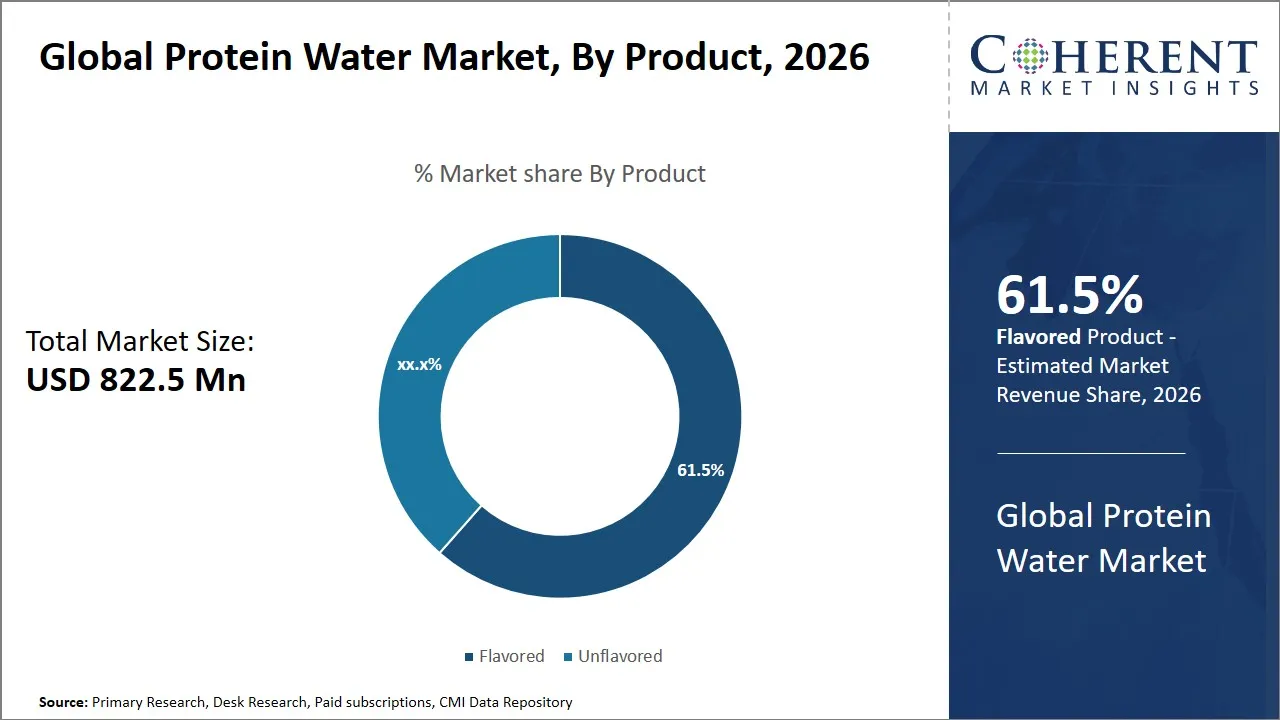
- The flavored segment is expected to capture 61.5 % of the global protein water market share in 2026.
- The hypermarkets and supermarkets segment is projected to account for 38.7 % of the protein water market share in 2026.
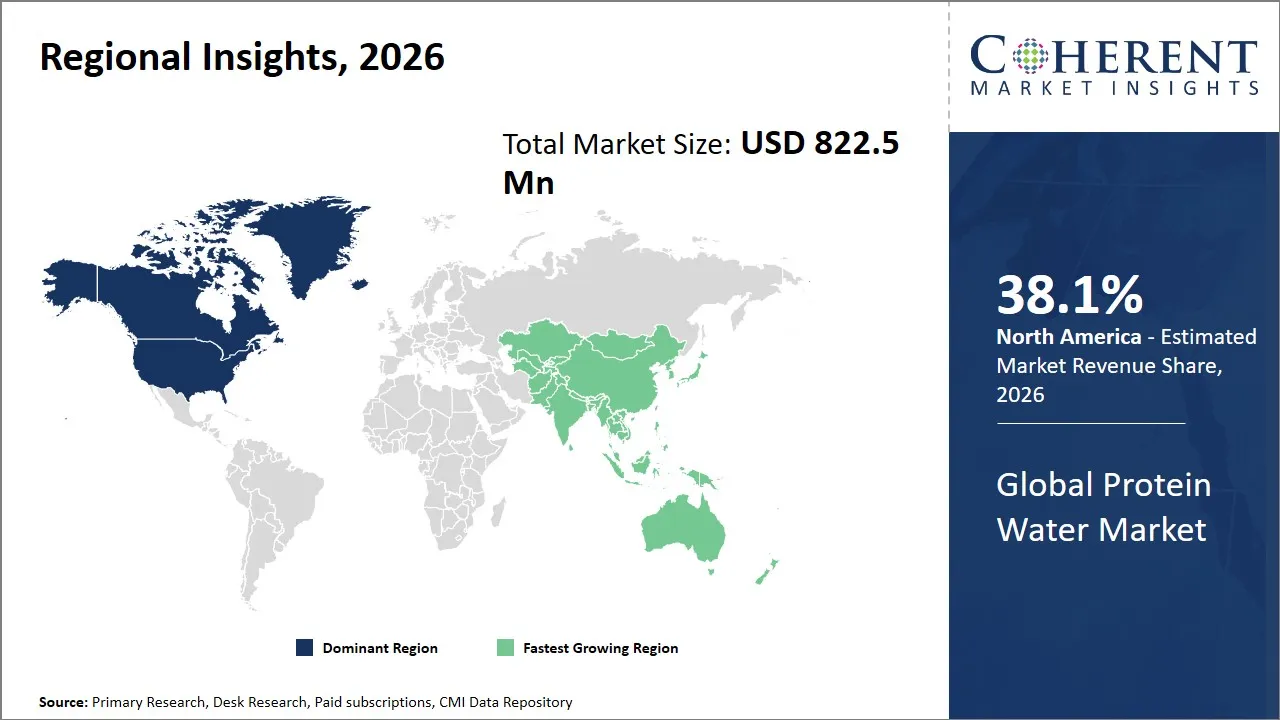
- North America is expected to lead the market with a 38.1 % share in 2026.
- The Asia Pacific region is expected to show the fastest growth, capturing an 18.3 % share in 2026.
Market Overview
- Current market trends indicate a rising preference for protein water products that combine hydration with muscle recovery and energy-boosting attributes. Consumers are gravitating towards clean-label, low-calorie, and plant-based protein sources, functional protein, fueling product diversification.
- Additionally, collaborations between beverage manufacturers and fitness influencers are amplifying market reach.
- Sustainability initiatives, such as eco-friendly packaging, are also becoming prominent, aligning with the growing environmental awareness among target consumers. These trends collectively contribute to the robust outlook for the protein water market.
Currents Events and Its Impact
Current Events | Description and its Impact |
Surge in Functional Beverages Demand |
|
Innovation in Protein Formulations & Ingredients |
|
Segmental Insights
- Current Industry Events of 2026
- Market Size Estimation
- Regional Breakdown
- Competitive Landscape
- Customer Intelligence
- Segmental Analysis
- Pricing Analysis
- Key Market Drivers, Challenges & Future Trends
- Customized Insights Section
Why Does the Flavored Segment Dominate the Global Protein Water Market in 2026?
The flavored segment is expected to hold 61.5% of the protein water market share in 2026, due to evolving consumer tastes and increasing the demand for enjoyable, health-oriented beverages. Flavored varieties provide an alternative, which is more palatable than unflavored protein water that appeals primarily to the fitness-focused segment of the population that values the pure nutritional benefits of the product. This broad acceptance can be motivated by the desire of consumers to know practical hydration at an affordable cost with attractive flavors that make the usual protein water a cool lifestyle drink.
For example, the launch of Core Power Protein Water by Coca-Cola, a flavored protein water beverage, has gained significant popularity in the U.S. market due to its appealing taste and the addition of 26 grams of protein per bottle. This aligns with the growing demand for functional beverages that cater to both hydration and muscle recovery needs among active consumers.
Hypermarkets and Supermarkets Dominate the Global Protein Water Market
The hypermarkets and supermarkets segment is projected to hold 38.7% of the global protein water market share in 2026, due to several strategic and consumer behavior factors that facilitate widespread product availability and trust. These huge retail formats provide an unmatched coverage serving a wide cross-section of consumers as health enthusiasts as well as casual buyers and are best suited to communicate product visibility and stimulate higher levels of purchase.
The fact that hypermarkets and supermarkets offer a wholesome shopping experience under a single roof is among the key factors that drive them to dominate this segment. The protein water is commonly found in the shopping list of consumers who are interested in the shopping of wellness products. Availability of the beverages fortified with proteins together with other daily needs also stimulates trial and repeat purchases, which facilitates an increase in the segment sales. Besides, hypermarkets usually sell a variety of brands and product versions, such as different flavored and unflavored ones, which allows a consumer to choose and enables healthy competition in terms of pricing.
Regional Insights
North America Protein Water Market Analysis and Trends
The North America region is projected to lead the market with a 38.1% share in 2026, driven by the region’s mature health and wellness consumer base, robust sports nutrition culture, and well-established retail infrastructure. There is a high level of presence of multinational and local companies in the United States and Canada specializing in protein-enhanced drinks due to the high level of disposable income and growing consumer awareness in matters of fitness and nutrition.
The policies adopted by the government in support of a healthy lifestyle, and the development of advanced food technologies in the field of R&D, contribute to the innovation in the protein water segment. Moreover, there is a wide network of distribution consisting of specialty fitness centers, supermarkets, and online channels that allow mass delivery of the products. The major players including Glanbia (Optimum Nutrition), PepsiCo (Muscle Milk), and Nestle have played a significant role in product diversification and penetration providing a variety of options of protein water to sports enthusiasts and health-conscious consumers.
Asia Pacific Protein Water Market Analysis and Trends
The Asia Pacific region is expected to exhibit the fastest growth in the market contributing 18.3% share in 2026. This boom is driven by the accelerated urbanization, growing disposable incomes and the growing awareness of the trendiness and healthiness, particularly in such countries as China, India, Japan and South Korea. This is due to the growing middle class and increased infiltration of western lifestyle, which increased the demand of convenient and functional beverages.
The potential of this market is also supported by government programs that have encouraged people to exercise and receive nutrition education. The market ecosystem has an advantage in the growth of retail chains and e-commerce that have a wide consumer base. The competitive environment is characterized by such prominent companies as Abbott laboratories, Danone, and local competitors like Amway and Yakult, which are offering innovative protein water blends that suit local taste profiles, including fruit-flavored and vegetarian protein waters.
Global Protein Water Market Outlook for Key Countries
Is the U.S. Poised for Continued Dominance in the Protein Water Market?
The market of protein water in the U.S. is at the leading position since the population is highly health conscious and the presence of a well-developed fitness industry. Firms such as Glanbia (Optimum Nutrition), PepsiCo and MusclePharm are all leaders with large portfolios and include protein water, which is aimed at the lifestyle consumer as well as athletes. In the U.S. market, there are good supply chains, developed marketing policies with emphasis on clean labels and transparency, and high investments in product innovation. Product access is enabled by the retail chains like Walmart and Whole Foods as well as the rising markets of online sales.
China Protein Water Market Trends
The protein water market in China is fast changing where urban youth and the middle-class consumers are the ones interested in the health-enhancing beverages in a fast-evolving lifestyle. Domestic brands are also emerging as well as multinational brands like Abbott and Danone who are taking the opportunities of local alliances and consumer education programs. Market expansion is created by the Chinese governments Healthy China 2030 project that promotes healthier diets and physical activity and enables the mainstreaming of the protein water products. The Alibaba and JD.com e-commerce giants contribute to the market growth and provide consumers around the country with diverse choices in terms of protein water.
Japan Protein Water Market Trends
Japan is still on the top of the product innovations and interaction with consumers in the protein water market. In this case, the demand will be caused by the aging yet health-conscious population and a culture that favors functional drinks. Suntory and Asahi are Japanese firms that have been leading in innovation of protein-enhanced water that is in line with the local tastes of delicate flavors and multi-purpose health advantages. The developed fronts of retail and convenience stores in the country make products testable and adopted faster, and government policies that promote nutrition and wellness make the market even more promising.
Is India the Next Growth Engine for the Protein Water Market?
The protein water market in India has significant potential as the consumer lifestyle trends change and the health awareness of the population, especially the urban millennials, increases. The major global companies such as Amway and Herbalife are collaborating with the local brands to access the potential of rising market demands related to convenient and high-protein drinks. Although price sensitivity and consumer education requirements are still the main obstacles, increased government attention to nutrition in various projects like the National Nutrition Strategy and the development of fitness culture is making protein water a preferred choice. Market penetration is also facilitated by the emergence of the organized retail and digital marketplaces.
South Korea Protein Water Market Trends
South Korea’s protein water market benefits from a tech-savvy, health-aware population with an affinity for innovative wellness products. Korean conglomerates like Lotte and CJ Group, alongside global brands like Yakult and Danone, contribute to a dynamic market offering a variety of protein water products tailored with functional ingredients and appealing aesthetics. Government backing for health promotion and the significant presence of fitness centers and health stores facilitate consumer engagement. The country’s vibrant online ecosystem further accelerates product discovery and sales.
Demographic Adoption Index (Gen Z vs Millennials vs Boomers)
Demographic Group | Adoption Rate | Market Preferences | Primary Driver |
Gen Z (18-24 years) | High | Preference for trendy, low-calorie, functional beverages with clean labels. | Health Consciousness, Fitness Trends |
Millennials (25-40 years) | Moderate-High | Interested in protein water as a post-workout drink, value quality and transparency in ingredients. | Wellness, Convenience, Performance |
Boomers (56-74 years) | Low-Moderate | Interested in products that support muscle maintenance and overall health. | Health Benefits, Weight Management |
Market Players, Key Development, and Competitive Intelligence
Key Developments
- In February 2024, Warrior, a sports nutrition brand, added new protein water to its portfolio of high-protein snacks and supplements. The drink is low in calories and high in protein and will be available in two fresh flavors: berry and tropical. The bottle comes with nutritional properties such as vitamins and minerals to enhance hydration by adding 10 grams of collagen peptide to hair, skin, and nail nourishment.
- Optimum Nutrition, the world's leading nutrition brand, launched Clear Protein, the latest product that enables cutting-edge technology to create a clear protein shake. The newly launched product is 100% plant protein isolate with fruity flavors, and 20 g of high-quality protein is added to it, which supports the daily supplement requirements.
Top Strategies Followed by Global Protein Water Market Players
Player Type | Strategic Focus | Example |
Established Market Leaders | Heavy investment in R&D and innovation | For instance, one of the market leaders, Vital proteins, spends a lot of money in terms of research and development to come up with collagen-based protein waters to position their products as having the perfect balance of recovery and joint health. The second example is the Gatorade of PepsiCo that has entered the protein water category with the introduction of Gatorade Protein Water in response to the needs of the active population that needs both hydration and protein at the same time. |
Mid-Level Players | Cost-effective solutions with balanced quality | Some companies such as Protein2o are involved in production of low-calorie, high-protein water with flavors that are loved by low-income consumers. They plan to do this by ensuring that their manufacturing processes are streamlined and the supply chains are well managed to ensure that their expenses remain low. |
Small-Scale Players | Niche specialization & innovative variants | For instance, Kibu sells plant-based protein waters which help satisfy the increasing demand of vegan and clean-label products. They also put stress on the fact that they use organic products and environmentally friendly packaging in order to attract environmentally conscious customers. |
Market Report Scope
Global Protein Water Market Report Coverage
| Report Coverage | Details | ||
|---|---|---|---|
| Base Year: | 2025 | Market Size in 2026: | USD 822.5 Mn |
| Historical Data for: | 2020 To 2024 | Forecast Period: | 2026 To 2033 |
| Forecast Period 2026 to 2033 CAGR: | 7.5% | 2033 Value Projection: | USD 1,364.5 Mn |
| Geographies covered: |
| ||
| Segments covered: |
| ||
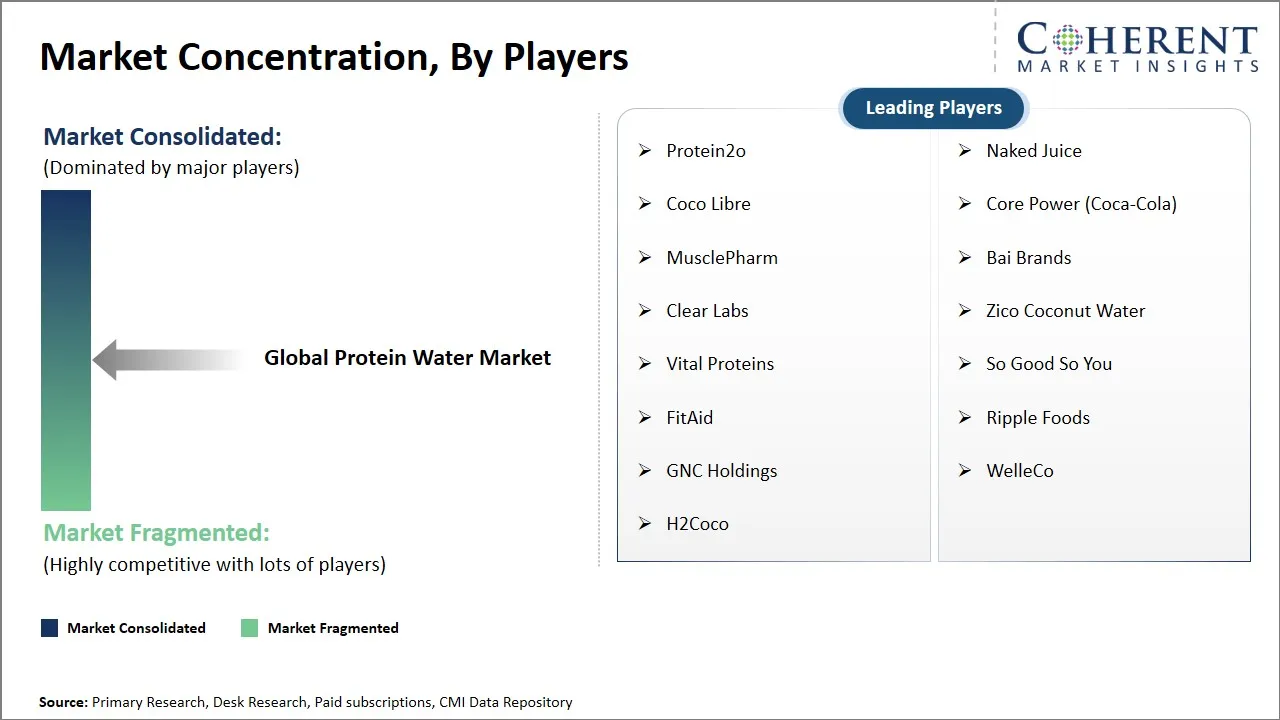
| Companies covered: | Protein2o, Naked Juice, Coco Libre, Core Power (Coca-Cola), MusclePharm, Bai Brands, Clear Labs, Zico Coconut Water, Vital Proteins, So Good So You, FitAid, Ripple Foods, GNC Holdings, WelleCo, and H2Coco | ||
| Growth Drivers: |
| ||
| Restraints & Challenges: |
| ||
Protein Water Market Dynamics
Protein Water Market Driver - Growing Awareness of the Health Benefits of Protein-Enriched Beverages
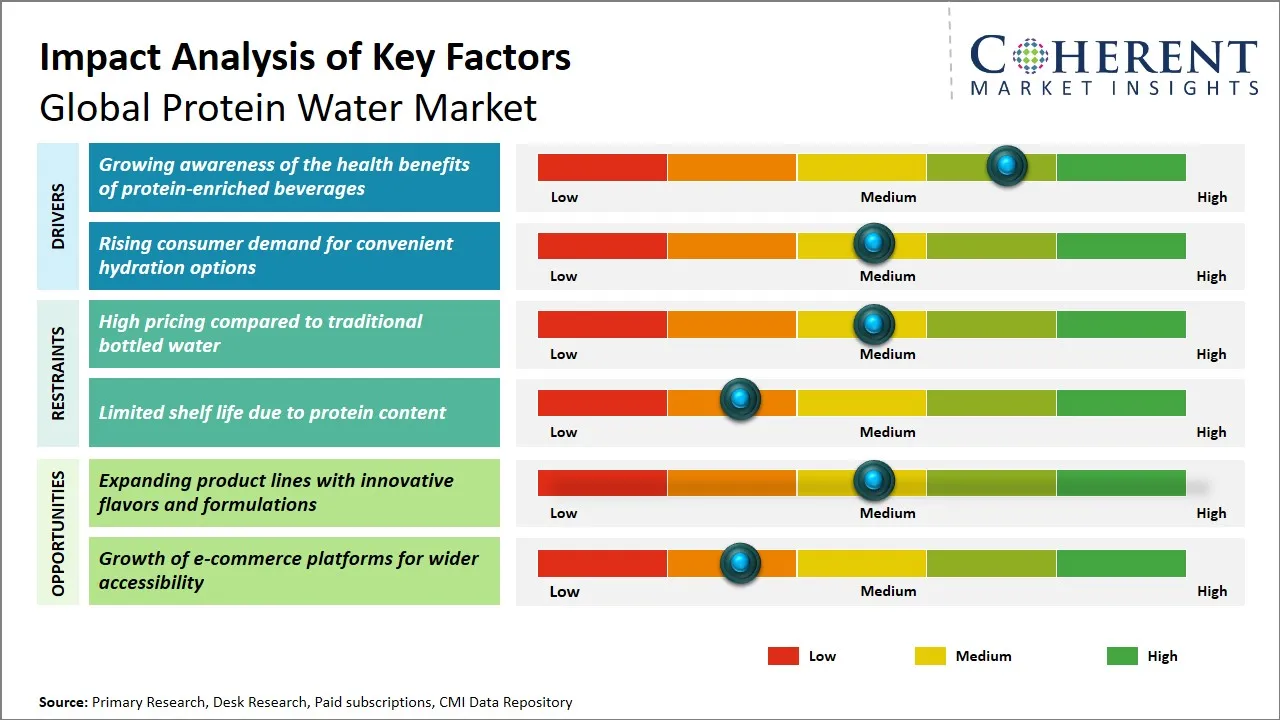
The rising consumer inclination toward healthier lifestyle choices has significantly contributed to the growing awareness of protein-enriched beverages as a vital component of balanced nutrition. As more and more people are concerned about their fitness, muscle recovery, and weight, people are pursuing convenient sources of high-quality protein, and protein water has become an attractive product. As opposed to conventional protein shakes, protein supplements, protein water is a low-calorie and refreshing alternative to protein supplements that do not weigh a person down and have an unnatural flavor.
For example, in 2025, Glanbia PLC, with the launch of Isopure, is ushering in the Year of Clear by launching the latest innovation: Isopure Protein Water. Its brands are always driven by innovation and this lightly flavored water produces on the promise. The bottles have ultra-filtered content of 15 grams of protein and electrolytes to aid hydration, and none of the artificial colors, flavors or sweeteners.
Source: https://www.glanbia.com/news/introducing-isopure-protein-water
Protein Water Market Opportunity - Expanding Product Lines with Innovative Flavors and Formulations
The most promising opportunities in the global protein water market are taking new product line directions by introducing new flavors and formulations. With the growing demand towards health and functional drinks among consumers, there is plethora of prospects of the protein waters brands to diversify their products by introducing a new range of flavors that appeal to the changing taste appeal. Further to the classic flavors such as berry or citrus, exotic, botanical, or even superfood ingredients can be added, making the product experience more impactful and appealing to a wider audience, not a consumer of just fitness-focused but to the average health-conscious person.
For example, BODYARMOR created a new collection of protein waters in exotic and botanical flavors such as Cucumber Lime and Hibiscus Pear. The behind story of this product expansion was due to the rising consumer trend that favors functional drinks that can achieve both health-related objectives and provide consumers with a high-tasting pleasure.
(Source: https://www.drinkbodyarmor.com/flash-iv-ready-to-drink/cucumber-lime)
Analyst Opinion (Expert Opinion)
- The protein water market is experiencing a phenomenal rise and this is attributed to the growing consumer interest in convenient, healthy hydration products that help support the active lifestyles of the consumers. The findings of the Global Sports Nutrition Conference (2023) and the Health and Wellness Expo (2022) revealed considerable trends of the innovations, with such brands as HydraFit and Protein2o at the forefront of producing flavored protein waters that can fulfill the needs of a healthy population.
- The new product line recently introduced by HydraFits that contains functional ingredients, including electrolytes and vitamins, is a good example of how the markets move on to providing more holistic health benefits. At these conferences, talks focused on the increased popularity of low-calorie and high-protein drinks, especially among millennials and those interested in the fitness industry who are seeking products to help them recover after a workout.
- The competition in the market, as well as the necessity of making the nutritional value of products obvious, was often mentioned as an obstacle in the further development. Firms, which are more transparent in terms of sourcing ingredients and those that implement working marketing strategies, will probably gain a significant market share. Finally, the expansion of the protein water market will be based on its capacity to keep innovating and changing with the changing consumer tastes in health, convenience, and quality when it comes to beverage products.
Speak to the analyst
Want personalized insights?
Take the findings above to one of our principal consultants, or have the report rebuilt around the segments, geographies and competitors you actually track.
Market Segmentation
- Product Insights (Revenue, USD Mn, 2021 - 2033)
- Flavored
- Unflavored
- Distribution Channel Insights (Revenue, USD Mn, 2021 - 2033)
- Hypermarkets and Supermarkets
- Convenience Stores
- Online
- Others
- Regional Insights (Revenue, USD Mn, 2021 - 2033)
- North America
- U.S.
- Canada
- Latin America
- Brazil
- Argentina
- Mexico
- Rest of Latin America
- Europe
- Germany
- U.K.
- Spain
- France
- Italy
- Russia
- Rest of Europe
- Asia Pacific
- China
- India
- Japan
- Australia
- South Korea
- ASEAN
- Rest of Asia Pacific
- Middle East
- GCC Countries
- Israel
- Rest of Middle East
- Africa
- South Africa
- North Africa
- Central Africa
- North America
- Key Players Insights
- Protein2o
- Naked Juice
- Coco Libre
- Core Power (Coca-Cola)
- MusclePharm
- Bai Brands
- Clear Labs
- Zico Coconut Water
- Vital Proteins
- So Good So You
- FitAid
- Ripple Foods
- GNC Holdings
- WelleCo
- H2Coco
Sources
Primary Research Interviews
- CEO – Leading Protein Water Producer
- Supply Chain Director – Major Functional Beverage Distributor
- Production Lead – Sports Nutrition Beverage Manufacturer
- Sustainability Officer – Beverage Industry Certification Authority
Stakeholders
- Manufacturers
- End-use Sectors:
- Fitness and Wellness Consumers
- Sports and Gym Users
- Health-Conscious Retail Buyers
- Regulatory & Certification Bodies
- E-commerce Platforms and Retailers
- Technology Integration Players
Databases
- UN Comtrade Database (HS codes for protein preparations and beverages)
- India Import Export (EXIM) Database
- USDA Food and Nutrition Statistics
- Eurostat Trade Statistics for Beverages
Magazines
- Beverage Industry Magazine – Trends in functional beverages
- Nutrition Business Journal – Protein-enriched drinks growth
- Food Navigator – Protein water innovations
Journals
- Journal of the International Society of Sports Nutrition – Protein supplementation effects
- Journal of Exercise and Nutrition – Beverage nutrition research
- Nutrients – Functional beverage health impacts
Newspapers
- The Wall Street Journal – Wellness beverage demand
- Business Standard (India) – Functional drink imports
- Reuters – Sports nutrition market volatility
Associations
- International Council of Beverages Associations (ICBA)
- American Beverage Association
- International Society of Sports Nutrition
- International Bottled Water Association
Public Domain Sources
- FDA – Guidelines for bottled water and nutrient-added beverages
- EFSA – Safety standards for protein-fortified drinks
- WHO – Nutrition guidelines for sports beverages
- USDA – Protein supplement trade assessments
Proprietary Elements
- CMI Data Analytics Tool
- Proprietary CMI Existing Repository of information for last 8 years.
Get access to 250+ pages report
Every segment, forecast, competitor profile and data table behind the analysis above — available for instant download.
- ESOMAR Member
- ISO 9001:2015 Certified
- D-U-N-S Registered
- GDPR & CCPA Compliant
Missing comfort of reading report in your local language? Find your preferred language:
Transform your Strategy with Exclusive Trending Reports
Frequently Asked Questions
The global protein water market is estimated to be valued at USD 822.5 Mn in 2026 and is expected to reach USD 1,364.5 Mn by 2033.
The CAGR of global protein water market is projected to be 7.5% from 2026 to 2033.
Growing awareness of the health benefits of protein-enriched beverages and rising consumer demand for convenient hydration options are the major factors driving the growth of the global protein water market.
High pricing compared to traditional bottled water and limited shelf life due to protein content are the major factors hampering the growth of the global protein water market.
In terms of product, flavored is estimated to dominate the market revenue share in 2026
Protein2o, Naked Juice, Coco Libre, Core Power (Coca-Cola), MusclePharm, Bai Brands, Clear Labs, Zico Coconut Water, Vital Proteins, So Good So You, FitAid, Ripple Foods, GNC Holdings, WelleCo, and H2Coco are the major players.
North America is expected to lead the global protein water market in 2026.