

Global Respite Care for the Elderly Market Size and Forecast – 2026 to 2033
The Global Respite Care for the Elderly Market is estimated to be valued at USD 374.1 Mn in 2026 and is expected to reach USD 562.5 Mn by 2033, exhibiting a compound annual growth rate (CAGR) of 6.0% from 2026 to 2033. This steady growth reflects increasing awareness among caregivers and families about the importance of temporary relief services for elderly care, coupled with rising geriatric populations worldwide, fueling the demand for professional respite care facilities and services.
Key Takeaways of the Global Respite Care for the Elderly Market
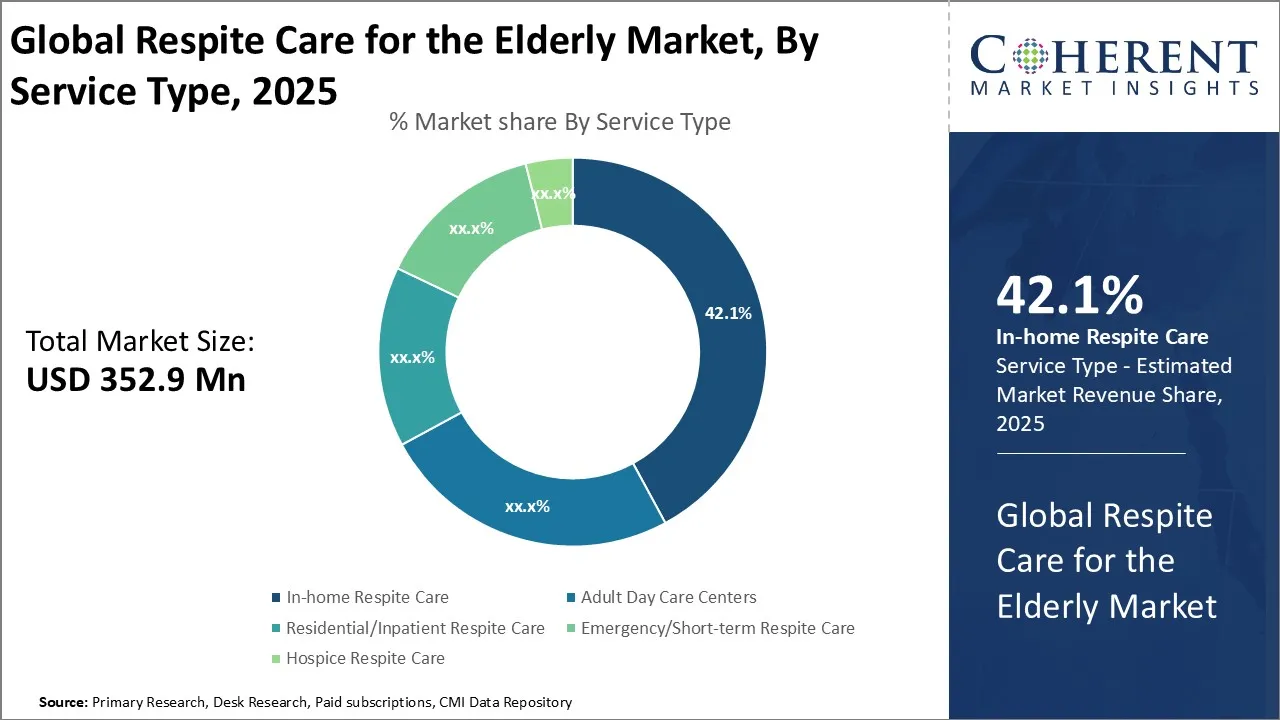
- In 2026, the in-home respite care segment is anticipated to represent the leading share of the global respite care for the elderly market at 43.1%
- Within the duration of stay category, hourly care is projected to emerge as the dominant segment, accounting for 33.4% of the market share in 2026.
- Meanwhile, under the medical condition segment, the Dementia and Alzheimer’s sub-segment is expected to hold the largest share, contributing 41.1% to the overall market share in 2026.
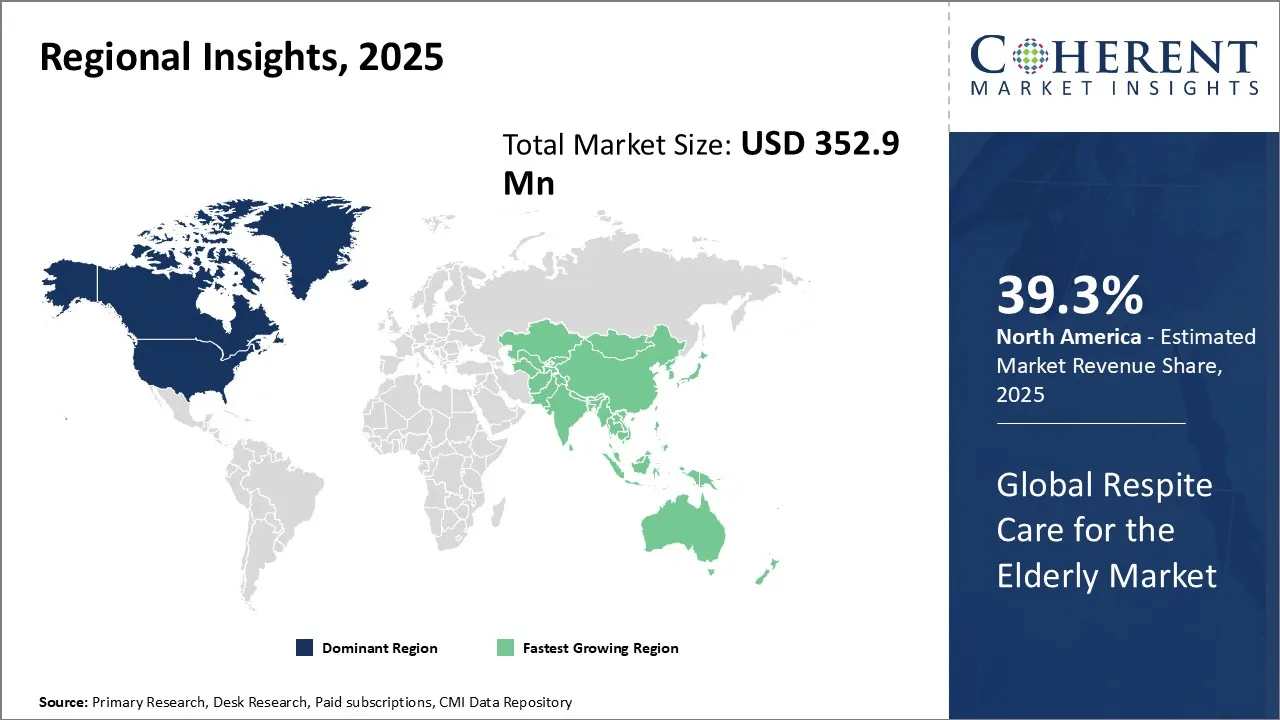
- North America is expected to lead the market, holding a share of 39.3% in 2026. Asia Pacific is anticipated to be the fastest-growing region, with a market share of 23.4% in 2026.
Market Overview
Current market trends indicate a growing preference for personalized and home-based respite care solutions, driven by advancements in telehealth and remote monitoring technologies. Additionally, there is a shift towards integrating mental health support and wellness programs in respite care offerings. Increasing government initiatives and insurance coverages to support elderly care services further propel market growth. These evolving trends emphasize convenience, quality of care, and holistic support for both caregivers and the elderly, shaping the future landscape of the market.
Currents Events and their Impact
Current Events | Description and its Impact |
Expansion of Home-Based Care Programs |
|
Technological Innovations in Elderly Care |
|
Segmental Insights
- Current Industry Events of 2026
- Market Size Estimation
- Regional Breakdown
- Competitive Landscape
- Customer Intelligence
- Segmental Analysis
- Pricing Analysis
- Key Market Drivers, Challenges & Future Trends
- Customized Insights Section
Respite Care for the Elderly Market Insights, By Service Type - In-home Respite Care Contributes the Highest Share of the Market Owing to Growing Preference for Familiar and Personalized Care Environments
In the global elderly respite care market, the in-home respite care segment is expected to hold the largest share of 43.1% in 2026, driven by the growing preference for elderly individuals and their families for care provided in the comfort and familiarity of their own homes. This segment has an advantage of personalized care afforded to them which enables caregivers to provide services to the care recipient according to their specific needs and routine. Being able to stay in their respective homesteads enables many elderly people to feel that sense of independence, dignity and emotional satisfaction, a major concern in the concept of quality respite which is very important to those family members who want good respite.
Moreover, the increase in the number of nuclear families worldwide and the increase in the number of women in the work force has generated a high demand of the flexible and convenient forms of care that do not require a shift in location or lengthy commutes to care centers. In-home respite care takes care of these issues by offering services in line with basic assistance and companionship to qualified nursing care, in the home set-up.
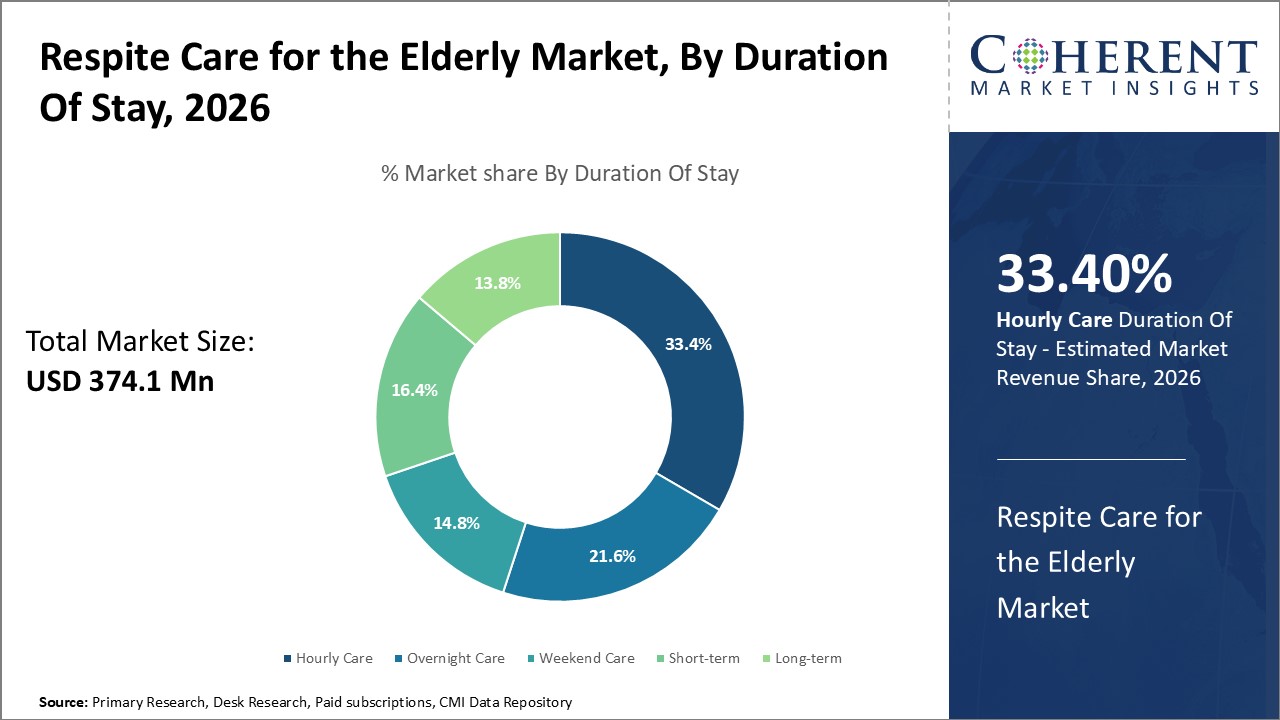
Respite Care for the Elderly Market Insights, By Duration of Stay - Hourly Care Dominates as it Offers Flexibility and Cost-Effectiveness for Caregivers and Families
Hourly care will dominate the respite care of the aged market in the global market with an estimated market share of 33.4% in 2026. This popularity can be explained mainly by the unrivaled flexibility and low costs this form of format provides to the caregivers and the elderly people. Hourly respite care enables the family caregiver to have brief breaks of between two to half-day stints, and this assists the family caregiver to be able to handle the fatigue associated with caregiving as well as personal demands and obligations without being obliged to spend extended periods of time away with the aged individual.
The fact that the care can be obtained hourly, it is not as difficult to ensure that the families can tailor the intensity and timing of the respite services to meet the changing needs. As an illustration, parents might choose to have hourly services at certain points in the day when they are away at work, doing errands, and other engagements, and hence will receive 24-hour support without any form of contractual obligation. This unitarized system of care is particularly popular with middle-income families that need assistance despite being cost conscious because hourly rates usually come at a lower cost than an overnight or long term accommodation.
Respite Care for the Elderly Market Insights, By Medical Condition - Dementia and Alzheimer’s Lead Due to Increasing Prevalence and Complex Care Needs
The Dementia and Alzheimer’s segment is expected to account for the highest share in the medical condition segment of the global respite care of the elderly market with 41.1% in 2026 due to the growing incidences of the neurodegenerative conditions among the growing aging population across the globe. The elderly who are dementia or Alzheimer patients have special needs due to cognitive impairment, loss of memory, change of behavior, and more susceptibility to trauma, and may require special care strategies.
In July 2025, Arkansas launched the Guide Model program to assist families and caregivers of individuals with dementia. Initially tested in 2024, the program provides a standardized approach to dementia care, offering services such as screening, caregiver education, coordination, and respite care. Sharon Sparrow, a home care representative for Right at Home Little Rock, highlighted the impact of a comprehensive care strategy in reducing depression and behavioral symptoms in dementia patients.
Regional Insights
North America Respite Care for the Elderly Market Analysis and Trends
The advanced infrastructure of healthcare services, the presence of supportive government policies, and well-developed ecosystem of elderly care services in North America determine the monopoly in the global respite care of the elderly market with an estimated share of 39.3% in 2026. There is growing awareness about the significance of respite care in the U.S. and Canada and some of these efforts have been supported by programs like Medicare and Medicaid schemes, which cover partially some of the respite care services given by in-home services.
The fact that there are many private and non-profit institutions that cater to the welfare of the elderly also enhances the market growth. Other companies such as Brookdale Senior Living, Home Instead Senior Care, and Interim HealthCare have also added their services portfolios to include the comprehensive respite care solutions, which includes both the in-home and facility-based services.
Asia Pacific Respite Care for the Elderly Market Analysis and Trends
On the other hand, the Asia Pacific region is expected to experience the highest growth in the elderly respite care market, capturing a 23.4% share in 2026. This growth is primarily driven by demographic shifts, including the rapidly aging populations in Japan, China, South Korea, and India. The shift to a culture of more formal care services is on the verge of rising due to adverse changes in the traditional multigenerational families.
In April 2026, Geri Care Health Services, India’s first integrated geriatrician-led healthcare provider for senior citizens, launched its first Assisted Living Centre in Bengaluru. Located on St. John’s Road, Ulsoor, the 100-bed facility offers round-the-clock medical supervision, a High Dependency Unit for high-risk patients, and a Mind and Memory Unit for dementia care.
Global Respite Care for the Elderly Market Outlook for Key Countries
U.S. Respite Care for the Elderly Market Trends
The U.S. respite care for the elderly market is very sophisticated and has a wide range of services in both in-home and facility-based respite care. Modern healthcare financing models such as the Medicare Advantage programs are enabling the elderly to access temporary respite services in cases where the elderly require temporary relief of the family caregivers. Major providers such as Brookdale Senior Living and Home Instead Senior Care are leading the market, with national networks offering a range of services, from dementia care to palliative care. Technological advancements, including remote health monitoring and caregiver scheduling apps, have been implemented to enhance operational efficiency and improve patient outcomes.
In July 2026, Author Health, a U.S.-based provider specializing in mental health and dementia care for Medicare recipients, announced its official participation in the Centers for Medicare & Medicaid Services’ new Guiding an Improved Dementia Experience (GUIDE) Model. The initiative focuses on improving quality of life for people living with dementia, supporting caregivers through education and respite services, and promoting coordinated, home-based care.
Canada Respite Care for the Elderly Market Trends
The respite care market for the elderly in Canada benefits from the publicly funded healthcare system, which emphasizes community-based respite care, making it more affordable and integrated into the broader continuum of elderly care. Organizations like Bayshore Home Health and Revera Inc. offer quality respite services tailored to individual needs. There is a growing focus on culturally sensitive care, along with programs designed to support caregivers, reflecting Canada's diverse population. Government collaboration with service providers, backed by inclusive funding, plays a key role in ensuring the market's steady growth.
In December 2024, the government of Ontario announced plans to introduce new legislation to strengthen dementia care and caregiver support across the province. Under the leadership of the Ministry of Long-Term Care, headed by Mr. Natalia Kusendova-Bashta, and the Ministry of Health, led by Mrs. Sylvia Jones, the province will invest nearly USD 80 million over three years to expand dementia programs, community care access, and respite services.
Japan Respite Care for the Elderly Market Trends
The age care systems remain the most mature in Asia Pacific with Japan having innovative respite care programs in place due to its Long-Term Care Insurance scheme. The aging population and increased government funding for elderly welfare are driving demand for various respite services, such as day care and short-stay facilities. Companies like Nichiigakkan and SOMPO Care are leading the market by offering technologically advanced care solutions, including robotic assistance and telecare services. These innovations not only address manpower shortages but also help maintain the quality of care delivery.
In August 2026, Japan’s Ministry of Health, Labour and Welfare announced plans to introduce a nationwide support system for elderly people living alone without family assistance. Set to begin in fiscal 2027, the program will help seniors with hospital admissions, nursing home placements, and posthumous arrangements such as funerals and home clearance. Implemented through local social welfare councils and non-profit organizations, the initiative aims to ensure dignified end-of-life support for single older adults, with fees adjusted based on income to make services accessible to low-income individuals.
India Respite Care for the Elderly Market Trends
The respite care market in India is still in its early stages but is growing rapidly, driven by increasing life expectancy and the gradual shift away from traditional family-based elderly care to a more formalized system, especially with the rise of nuclear families. The market is influenced by the private sector, and some of the companies such as Seniority provide in-home respite care, training caregivers, and elder wellness programs. Government programs aimed at improving elderly welfare, though still in the early stages, are beginning to provide support for non-institutional care options. Social enterprises and NGOs are also critical in increasing awareness and the provision of care outside of metros.
In June 2026, Policybazaar, a leading Indian online insurance aggregator, launched Saarthi, an elder care concierge program designed to bridge India’s growing senior healthcare gap. The initiative offers personalized support for senior citizens through dedicated advisors, a priority helpline, on-ground claims assistance, and partnerships with home healthcare and diagnostic providers.
End User Feedback and Unmet Needs in the Global Respite Care for the Elderly Market
- End users have also shared positive experiences, as well as the recurrent challenges in the global market of respite care of the elderly. One of its major areas of satisfaction has been the incorporation of personalized care options. The numerous caregivers indicate high satisfaction with the services which provide personalized care, i.e. customized in-home care schedules and tailored care plans to the elderly patients with special needs, i.e., patients with dementia or mobility problems. As an example, a customer in the U.S. posted how a care at home service assisted his family in taking care of their parent who has Alzheimer, enabling them to retain their own health and leave their loved one with regular and human care. This quantity of personalization was lauded to decrease the pressure on caregivers and enhance the overall quality of care, which is a significant need of services that can be tailored to different requirements.
- Reason being, cost-effectiveness and ease of access to respite care services is a prevalent issue among end users. Users complain that quality respite services are not readily available to them in most of the regions, particularly the rural or underfunded ones, because of the availability of limited providers or the high costs involved. The lack of insurance cover tends to make this problem even more problematic, as many families have to pay a huge financial price. Indicatively, smaller communities have been complaining of the unavailability of affordable options that make caregivers feel helpless and experience burnout. Such unmet needs indicate that there is much potential that market players can use to create cheaper, more accessible forms of care which may make use of technology to save costs or increase the scale of services. By filling these gaps, not only would it lead to expansion in the market, but it would also enhance better customer retention since respite care would become readily available and more affordable to families of varying socio-economic statuses.
Market Players, Key Developments, and Competitive Intelligence

Key Developments
- On October 06, 2025, KITES Senior Care, a division of Lifebridge Group and a leading out-of-hospital senior care provider in India, opened a 48-bed specialized geriatric care center in Kochi. Located on Seaport–Airport Road, Kakkanad, the facility offers post-hospital rehabilitation, palliative care, respite care, and wellness services under 24×7 medical and nursing supervision. Inaugurated by State Industries Minister P. Rajeev, the centre features high-dependency units, physiotherapy, occupational therapy, Ayurveda, and communal spaces designed to enhance comfort and social engagement for seniors.
- In October 2025, Heritage Eldercare Services Pvt., a senior care provider based in India specializing in Alzheimer’s and dementia support, announced the expansion of its respite care services across Hyderabad and Chennai. The program offers short-term care options through day care and short-stay facilities, giving family caregivers relief during work hours, emergencies, or travel.
- In July 2025, Age Friendly Ireland, a national initiative promoting active and inclusive ageing, launched the Community Linkage Project to support elderly women living in residential care in Leitrim and Roscommon. Funded by the Women’s Health Fund under Ireland’s Department of Health, the program connects volunteer befrienders with senior residents to reduce isolation and strengthen community ties, marking an important step toward improving social well-being for older women in long-term care facilities.
- In April 2024, the Administration for Community Living (ACL), a U.S. government agency focused on supporting older adults and people with disabilities, announced new funding opportunities under the Lifespan Respite Care Program. The initiative aims to strengthen respite care networks, enhance caregiver support, and expand access to short-term relief services across states.
Top Strategies Followed by Global Respite Care for the Elderly Market Players
- Established players dominate the landscape by leveraging substantial investments in research and development (R&D) to innovate high-performance, reliable care solutions tailored to the evolving needs of elderly populations. Their R&D efforts often focus on integrating advanced technologies such as AI, remote monitoring, and telehealth into their respite care offerings, enhancing both efficiency and user experience. These companies also emphasize strategic partnerships with original equipment manufacturers (OEMs) and other major industry players to consolidate resources, improve supply chain integration, and co-develop cutting-edge products.
- Brookdale Senior Living (U.S.) is one of the largest senior care providers globally, operating assisted living and respite care facilities. It invests in AI-driven monitoring and telehealth integration to enhance patient safety and reduce caregiver strain. Amedisys Inc., a leading home health and hospice care company, collaborates with Amazon Web Services (AWS) to implement predictive analytics for elderly care.
- Mid-level players in the respite care for the elderly market adopt a more cost-conscious but strategically savvy approach. By focusing on delivering cost-effective solutions that strike a careful balance between quality and affordability, these companies actively target price-sensitive consumer segments, including middle-income families and smaller care facilities. To enhance their competitive stance, mid-sized firms often engage in collaborations or alliances with technology providers, contract manufacturers, or regional distributors.
- Comfort Keepers (U.S.), owned by Sodexo, targets middle-income households with cost-efficient respite care supported by GPS-enabled caregiver tracking and cloud-based management. Visiting Angels and Right at Home strengthen regional networks through alliances with local healthcare providers and technology startups, emphasizing affordability and accessibility over high-end tech.
- Small-scale players carve out their distinct market niches by focusing on innovation and specialization within the respite care segment. Rather than competing head-to-head with global giants on scale or price, these companies develop specialized features or innovative product designs that address specific caregiver or patient needs, such as portable devices, user-friendly interfaces, or eco-friendly materials. Cutting-edge technologies, such as IoT-enabled monitoring or AI-driven predictive care tools, are often embraced early by small players to differentiate their offerings and gain competitive traction.
- CarePredict (U.S.) develops AI-powered wearables that track seniors’ activity patterns to detect early signs of health decline. Birdie (U.K.) uses IoT-enabled home monitoring and a digital care platform for family visibility and safety alerts. TruSense (U.S.) focuses on eco-friendly, portable monitoring devices, catering to individual caregivers and remote regions.
Market Report Scope
Global Respite Care for the Elderly Market Report Coverage
| Report Coverage | Details | ||
|---|---|---|---|
| Base Year: | 2025 | Market Size in 2026: | USD 374.1 Mn |
| Historical Data for: | 2020 To 2024 | Forecast Period: | 2026 To 2033 |
| Forecast Period 2026 to 2033 CAGR: | 6.0% | 2033 Value Projection: | USD 562.5 Mn |
| Geographies covered: |
| ||
| Segments covered: |
| ||
| Companies covered: | Sunrise Senior Living, Brookdale Senior Living, Home Instead, Right at Home, Comfort Keepers, Senior Helpers, Orpea, Bupa Care Services, COLISÉE, DomusVi, Amedisys, Attendo, Clariane, Maria Mallaband Care Group (MMCG), and Anchor Hanover Group | ||
| Growth Drivers: |
| ||
| Restraints & Challenges: |
| ||
Respite Care for the Elderly Market Dynamics
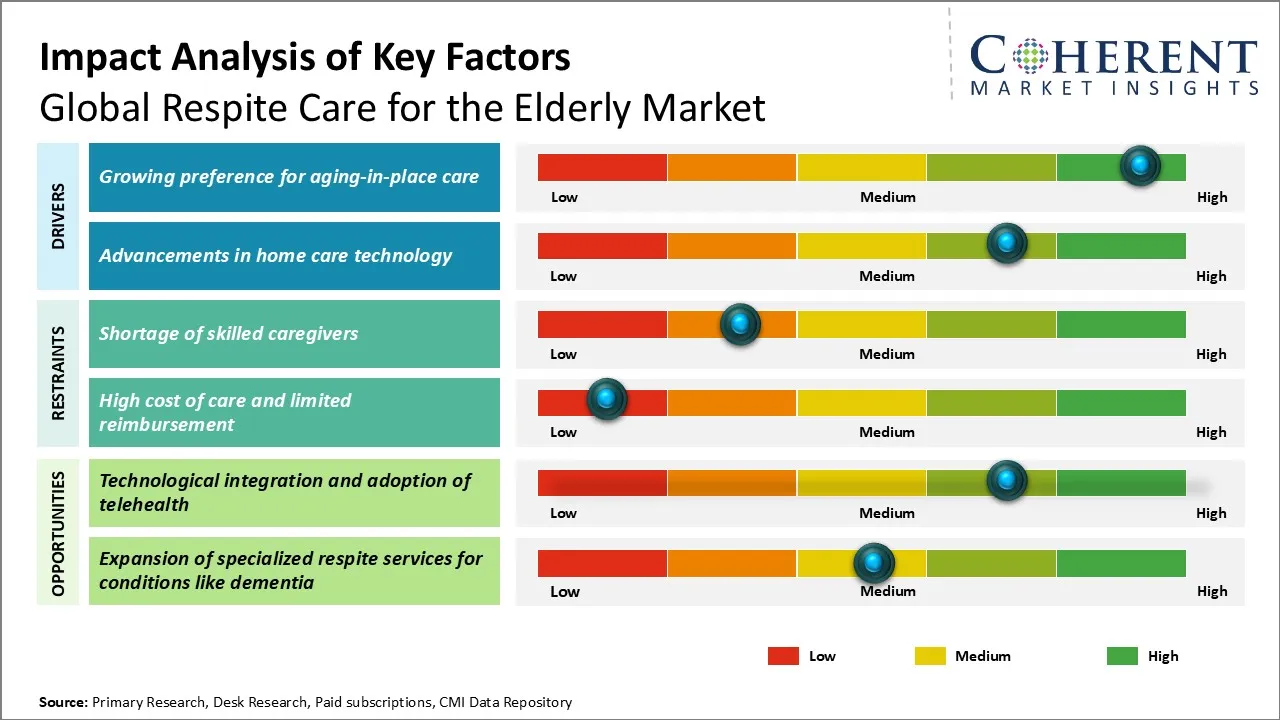
Respite Care for the Elderly Market Driver - Growing Preference for Aging-in-Place Care
Another important force that is affecting the international respite care of the elderly industry is the growing trend of the seniors to age in place whereby they stay in their own homes instead of transferring to assisted and long-term care homes. The causes of this change are both emotional, psychological, and practical in their nature, as old people prefer to stay independent, in the same environment and be close to the relatives and friends. Consequently, families and caregivers are seeking viable respite care options which can be implemented at home environment and which can temporarily relieve them without interfering with the daily activities of individuals who are dear to them. This trend is further supported by the development of home healthcare services and the presence of trained professional caregivers that are able to provide personalized respite care.
In September 2024, Canada’s Drug Agency released new guidance aimed at supporting aging-in-place initiatives across the country. The guidance, informed by an evidence report published in July 2024, provides health systems with objective, evidence-based information to address the growing needs of Canada’s aging population. Aging in place allows older adults to live safely in their own homes or communities with the necessary health and social supports, in line with their values and preferences. This initiative is part of Canada’s efforts to ensure equitable, sustainable care as the demand for services increases.
Respite Care for the Elderly Market Opportunity - Technological Integration and Adoption of Telehealth in Global Respite Care for the Elderly Market
The use of emerging developments in terms of technologies and telehealth solutions opens up a major but still untapped market in the global respite care of the elderly industry. The number of elderly individuals is growing in the world, and the need to receive accessible and efficient respite care services is increasing, which prompts the implementation of digital tools that would help to monitor, conduct remote consultations, and communicate with caregivers, medical workers, and relatives in real-time. The telehealth technologies enable constant monitoring of health using wearable devices, which facilitate timely intervention and minimize readmission to hospitals, which improves the quality and responsiveness of care.
In September 2024, the Australian Department of Health and Aged Care launched a telehealth service for aged care residents as part of sector reforms. The department is seeking telehealth providers to deliver virtual nursing services to 30 unnamed residential aged care homes.
Analyst Opinion (Expert Opinion)
- The respite care for the elderly market is entering a period of steady expansion, driven by demographic aging, increasing caregiver fatigue, and greater government emphasis on home- and community-based care models. Advancements in telehealth monitoring, scheduling platforms, and remote assistance tools are transforming how care is delivered, while supportive regulations in North America and Europe are improving reimbursement access and service quality. The growing acceptance of short-term residential stays for dementia and post-surgery recovery has also created new revenue streams. However, the market still faces challenges such as caregiver shortages, uneven quality standards, and the affordability gap across low-income regions. Industry gatherings like the Global Ageing Conference (2023, Glasgow), the International Federation on Ageing Conference (2024, Toronto), and the European Geriatric Medicine Society Congress (2022, London) have played a key role in sharing care innovation models and influencing policy toward sustainable eldercare systems.
- Recent initiatives further signal the market’s maturing direction. The U.S. Administration for Community Living expanded its National Family Caregiver Support Program to include additional respite service funding, while Japan’s Ministry of Health advanced community-based short-stay pilot models to support family caregivers. Private operators such as Brookdale Senior Living and Sunrise Senior Living have partnered with digital health firms to integrate remote monitoring into temporary care packages, improving both transparency and efficiency. Together, these developments highlight a global pivot toward hybrid, technology-supported respite care that balances medical oversight with the comfort of home-based assistance.
Speak to the analyst
Want personalized insights?
Take the findings above to one of our principal consultants, or have the report rebuilt around the segments, geographies and competitors you actually track.
Market Segmentation
- Service Type Insights (Revenue, USD Mn, 2020 - 2032)
- In-home Respite Care
- Adult Day Care Centers
- Residential/Inpatient Respite Care
- Emergency/Short-term Respite Care
- Hospice Respite Care
- Duration of Stay Insights (Revenue, USD Mn, 2020 - 2032)
- Hourly Care
- Overnight Care
- Weekend Care
- Short-term
- Long-term
- Medical Condition Insights (Revenue, USD Mn, 2020 - 2032)
- Dementia and Alzheimer’s
- Parkinson’s Disease
- Stroke Recovery
- Post-surgical/Chronic Illness Recovery
- General Age-related Frailty
- Age Group Insights (Revenue, USD Mn, 2020 - 2032)
- 60–70 Years
- 71–80 Years
- 81–90 Years
- Above 90 Years
- Payer Insights (Revenue, USD Mn, 2020 - 2032)
- Public
- Private
- End User Insights (Revenue, USD Mn, 2020 - 2032)
- Individual Families
- Nursing Home
- Assisted Living Facilities
- Hospice Centers
- Community-based Organizations
- Regional Insights (Revenue, USD Mn, 2020 - 2032)
- North America
- U.S.
- Canada
- Latin America
- Brazil
- Argentina
- Mexico
- Rest of Latin America
- Europe
- Germany
- U.K.
- Spain
- France
- Italy
- Russia
- Rest of Europe
- Asia Pacific
- China
- India
- Japan
- Australia
- South Korea
- ASEAN
- Rest of Asia Pacific
- Middle East
- GCC Countries
- Israel
- Rest of Middle East
- Africa
- South Africa
- North Africa
- Central Africa
- North America
- Key Players Insights
- Sunrise Senior Living
- Brookdale Senior Living
- Home Instead
- Right at Home
- Comfort Keepers
- Senior Helpers
- Orpea
- Bupa Care Services
- COLISÉE
- DomusVi
- Amedisys
- Attendo
- Clariane
- Maria Mallaband Care Group (MMCG)
- Anchor Hanover Group
Sources
Primary Research Interviews
Industry Stakeholders list
- National/regional home care agencies
- Public health department leaders
- Senior living facility directors
- Non-profit elderly care organizations
- Caregiver support NGOs
- Regulatory body officials
End users list
- Family caregivers of elderly
- Elderly persons receiving respite care
- Patient advocacy group members
- Community elder services users
- Caregivers in rural areas
- Users of dementia support programs
Government & International Databases
- HealthData.gov
- U.S. Nursing Home Dataset (CMS)
- National Institutes of Aging (NIA) database
- Agency for Healthcare Research and Quality (AHRQ) elderly topics
- Catalog of Older Adults Health Data (Data.gov)
- Aging Stats/Interagency Forum on Aging‐Related Statistics
Trade Publications
- Community Care
- Nursing Older People journal / trade magazine
- Health Affairs (social care & health policy)
- Journal of Long-Term Care Policy
- Care Management Journals / care operations periodicals
- Gerontological Social Work Publications
Academic Journals
- Journal of Applied Gerontology
- The Gerontologist
- Journal of Aging & Social Policy
- BMC Geriatrics
- Aging & Mental Health
- International Journal of Geriatric Psychiatry
Reputable Newspapers/Media
- The Guardian (health/aging sections)
- The New York Times (health/senior care)
- The Lancet Public Health (news and commentary)
- BBC Health
- The Washington Post (health policy coverage)
- Financial Times (health/social sector)
Industry Associations
- International Federation on Ageing
- American Association of Retired Persons (AARP)
- Alzheimer’s Association
- Age UK
- HelpAge International
- National Association for Home & Community Care
Public Domain Resources
- U.S. Eldercare Locator Database
- U.S. Census Bureau elder demographics data
- World Health Organization ageing/long-term care reports
- OECD health statistics on aging/LTC
- UN World Population Prospects (ageing)
- National minimum data sets (e.g. social care workforce)
Proprietary Elements
- CMI Data Analytics Tool: Proprietary analytics tool to analyze real-time market trends, consumer behavior, and technology adoption in market
- Proprietary CMI Existing Repository of Information for Last 8 Years
Get access to 250+ pages report
Every segment, forecast, competitor profile and data table behind the analysis above — available for instant download.
- ESOMAR Member
- ISO 9001:2015 Certified
- D-U-N-S Registered
- GDPR & CCPA Compliant
Missing comfort of reading report in your local language? Find your preferred language:
Transform your Strategy with Exclusive Trending Reports
Frequently Asked Questions
The global respite care for the elderly market is estimated to be valued at USD 374.1 Mn in 2026 and is expected to reach USD 562.5 Mn by 2033.
The CAGR of global respite care for the elderly market is projected to be 6.0% from 2026 to 2033.
Growing preference for aging-in-place care and advancements in home care technology are the major factors driving the growth of the global respite care for the elderly market.
Shortage of skilled caregivers and high cost of care and limited reimbursement are the major factors hampering the growth of the global respite care for the elderly market.
In terms of service type, in-home respite care is estimated to dominate the market revenue share in 2026.
Sunrise Senior Living, Brookdale Senior Living, Home Instead, Right at Home, Comfort Keepers, Senior Helpers, Orpea, Bupa Care Services, COLISÉE, DomusVi, Amedisys, Attendo, Clariane, Maria Mallaband Care Group (MMCG), and Anchor Hanover Group are the major players.
North America is expected to lead the global respite care for the elderly market in 2026.