

Robotic Prosthetics Market Size and Trends – 2026 to 2033
The Global Robotic Prosthetics Market share is estimated to be valued at USD 2.20 Bn in 2026 and is expected to reach USD 4.06 Bn by 2033, exhibiting a compound annual growth rate (CAGR) of 9.4% from 2026 to 2033.
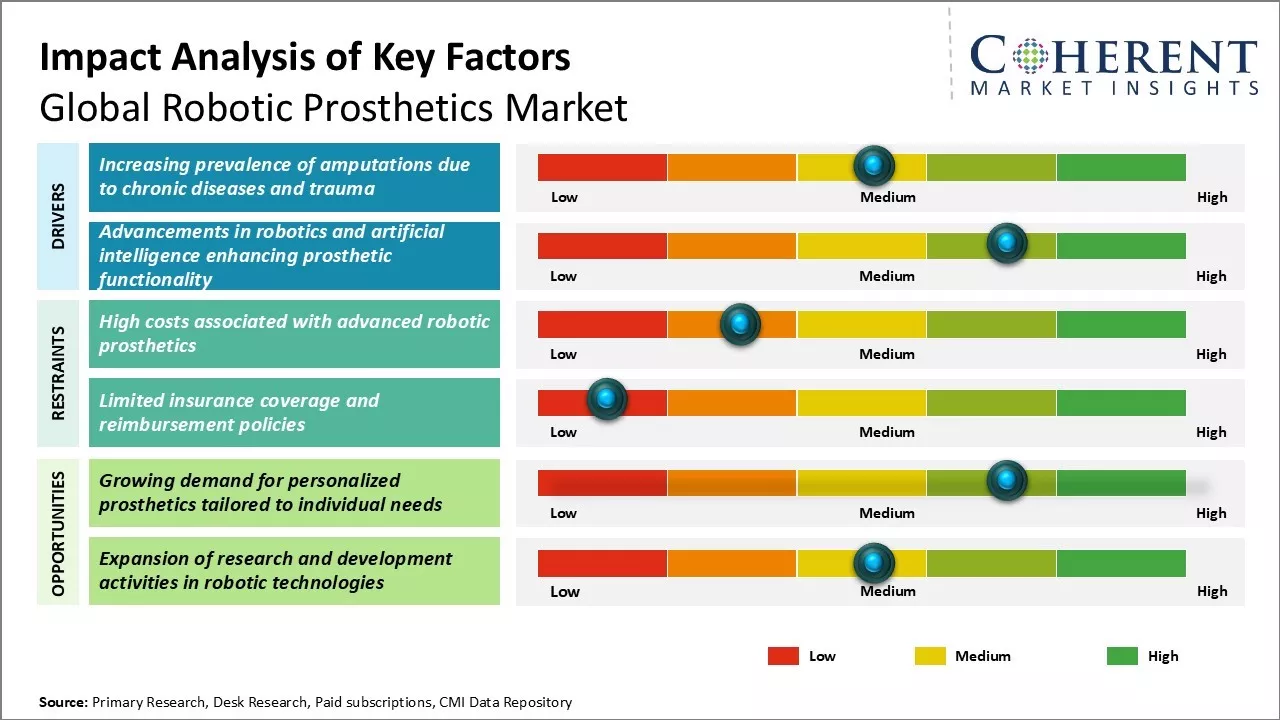
Key Takeaways
- Based on Technology, the Microprocessor-Controlled Prosthetics segment is expected to contribute the highest share of the global robotic prosthetics market with 43.6% in 2026, owing to the ongoing technological advancements.
- Based on Extremity, the Upper Extremity Prosthetics segment is expected to hold the highest share in the extremity category with a share of 53.8% in 2026 due to the large worldwide patient population requiring such devices.
- Based on End User, the Hospitals segment is expected to contribute the highest share among end users of robotic prosthetics with a share of 36.7% in 2026 due to their role as the major sites for prosthetic prescriptions, fittings and ongoing management.
- North America is expected to top the market with 38.9% share in 2026, attributed to factors such as strong healthcare infrastructure. While, Asia Pacific is considered as the fastest growing region with 28.2% share in 2026.
Market Overview
The global robotic prosthetics market demand is witnessing positive trends with increasing incidence of amputations worldwide due to rise in accidents and health conditions like diabetes. With advancement in technology, robotic prosthetics are getting smarter and more humanlike with features such as improved movement control, integration with smartphones and accessibility to resemble natural body functions. Major industry players are investing in developing multi-functional prosthetics using light-weight materials, biomimicry and machine learning integrated with sensors and actuators for close to real-time functionality. Wider health coverage and growing affordability is expected to boost the demand for rehabilitation and bionic solutions in developing nations over the forecast period.
Current Events and Its Impact
Current Event | Description and its Impact |
Regulatory Changes |
|
U.S.-China Medtech Decoupling |
|
Role of Artificial Intelligence (AI) in the Robotic Prosthetics Market
The integration of artificial intelligence into robotics prosthetics has revolutionized the prosthetics limbs design, control and use. AI algorithms hold the potential to analyses the data and learn the user’s movements, muscle signals and adapt accordingly, leading to more natural and intuitive control of prosthetic limbs. This allows users to perform tasks with greater dexterity, precision, and comfort. Researchers are increasingly using AI to assist people who have lost a limb to gain enhanced control over their prosthetic.
In May 2025, Dyna Robotics unveiled Dynamism v1 (DYNA-1), an advanced AI model designed to enhance robotic arm autonomy and precision. The breakthrough technology enables robotic arms to perform complex tasks continuously, achieving a 99% success rate in a 24-hour napkin-folding test.
- Current Industry Events of 2026
- Market Size Estimation
- Regional Breakdown
- Competitive Landscape
- Customer Intelligence
- Segmental Analysis
- Pricing Analysis
- Key Market Drivers, Challenges & Future Trends
- Customized Insights Section
Segmental Insights
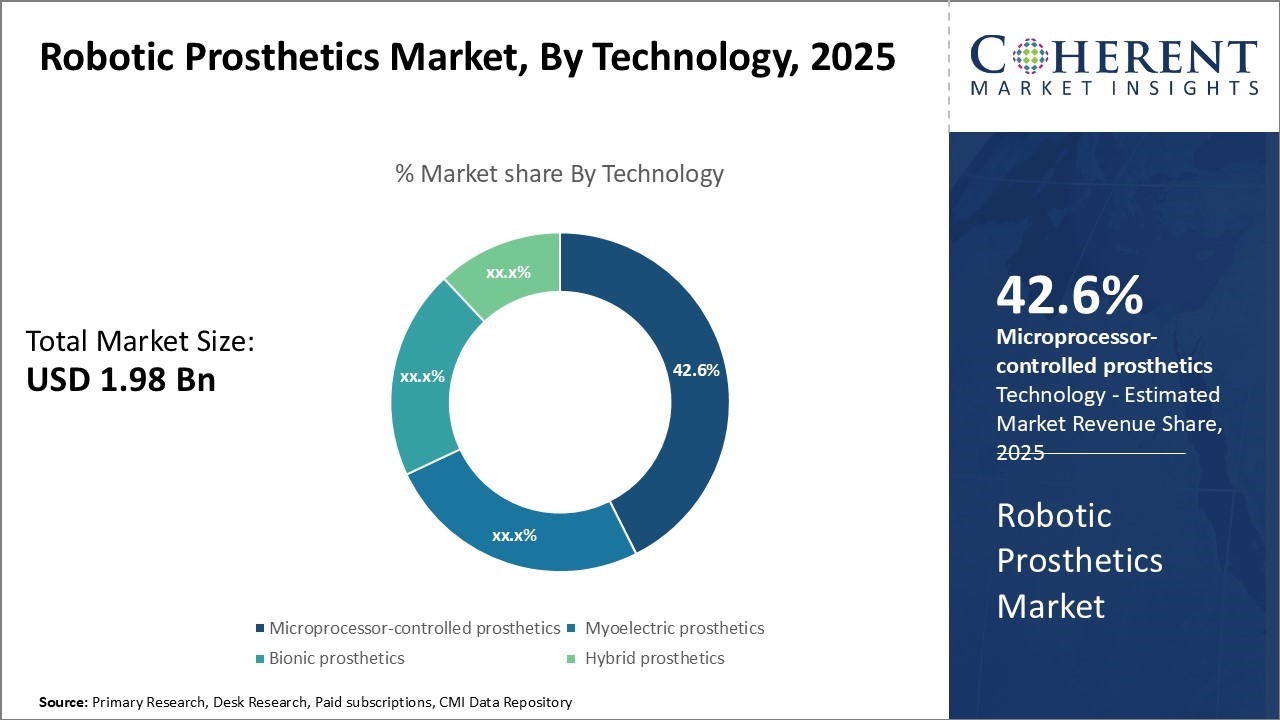
Robotic Prosthetics Market Insights, By Technology - Technological Advancements Fuel the Growth of Microprocessor-controlled Prosthetics
In terms of technology, the microprocessor-controlled prosthetics segment is expected to contribute the highest share in the technology segment of the global robotic prosthetics market with 43.6% in 2026 owing to the ongoing technological advancements in this field. The use of microprocessors in prosthetic devices has allowed for greater customization and control compared to traditional prosthetics. Manufacturers are designing microprocessor knees, feet and hands that can mimic the natural movement of biological limbs much better through sensors and software.
In February 2025, Össur, a leader in patient-centric prosthetic innovations for over 50 years, introduced Navii, a new waterproof microprocessor knee (MPK) designed to help people with above-knee limb loss or limb difference experience freedom of movement and confidence in new ways to move. Navii’s design features a revolutionary actuator and proprietary gait algorithms that enable the wearer to move confidently. The MPK facilitates easy gait initiation with enhanced swing dynamics and consistent swing release while also providing stumble recovery and standing stability functionality.
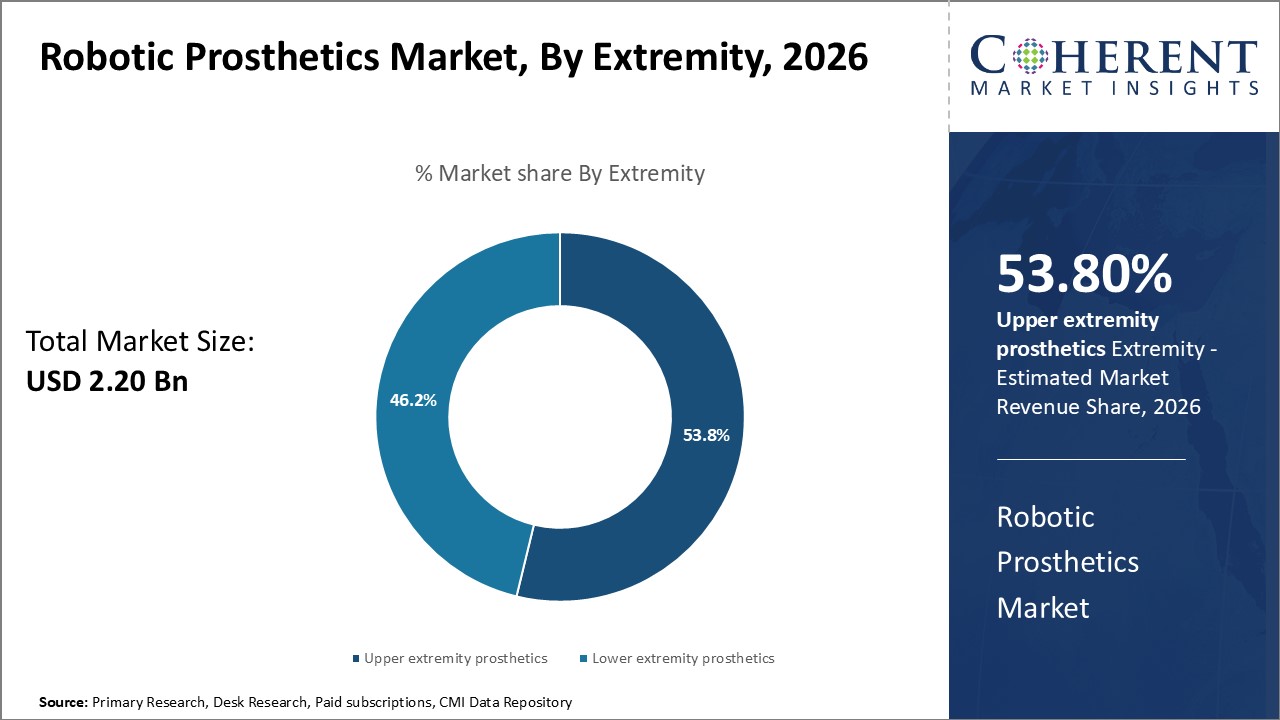
Robotic Prosthetics Market Insights, By Extremity - Large Patient Pool Boosts Upper Extremity Prosthetics
In terms of extremity, the upper extremity prosthetics segment is expected to hold the highest share in the extremity category with share of 53.8% in 2026 due to the large worldwide patient population requiring such devices. Arm and hand amputations constitute a major portion of limb loss globally owing to causes like accidents, cancer and congenital deformities. Upper limb prosthetics are also more common than lower limb replacements among military personnel injured in combat or other line of duty situations. A key factor driving demand is the rising focus on early rehabilitation and reconstructive options post amputation. Modern prosthetics not only restore mobility but also assist in maintaining muscle tone and residual limb health in the long run. This has made upper body prosthetics a preferred choice even in cases where basic functionality can be restored using alternative assistive devices.
In January 2025, The Istituto Italiano di Tecnologia (IIT) secured a prestigious €150,000 European Research Council “Proof of Concept” grant to advance upper limb prosthetics. Led by Antonio Bicchi, a pioneer in soft robotics, the project—titled VSoftPro—aims to develop a robotic arm prosthesis that mimics the natural movement and adaptability of a human limb. The initiative will be carried out in collaboration with qbrobotics, an IIT spin-off. This funding is part of a broader €36.75 million ERC initiative supporting 245 projects across Europe.
Robotic Prosthetics Market Insights, By End User - Hospitals Command the Largest Share as It’s a Key Centre for Prosthetic Care
In terms of end user, the hospitals segment is expected to contribute the highest share among end users of robotic prosthetics with a share of 36.7% in 2026 due to their role as the major sites for prosthetic prescriptions, fittings and ongoing management. Post-amputation, specialized rehabilitation centers within hospitals play a key part in assessing the options, fabricating custom devices, training patients and periodically reviewing prosthetic function. Their multidisciplinary teams integrating prosthetists, surgeons, therapists, and counsellors offer comprehensive solutions under one roof. This consolidated expertise makes hospitals the preferred choice for initial prosthetic fittings and follow-ups. Moreover, hospitals have the infrastructure and personnel for advanced prosthetic fitting techniques like osseointegration and targets movement-based trainings with robotic devices. They also accommodate amputees requiring revision surgeries and post-operative rehabilitation.
In October 2024, SPARSH Hospitals, Infantry Road, Bengaluru, inaugurated an advanced on-site 3D printing lab aimed at revolutionizing personalized healthcare. The facility’s new 3D printing lab integrates advanced technologies such as custom prosthetics designing and streamlining processes to make healthcare more efficient and affordable for patients.
The state-of-the-art facility enables surgeons to create precise anatomical models for pre-surgical planning, enhancing accuracy and patient outcomes.
Regional Insights
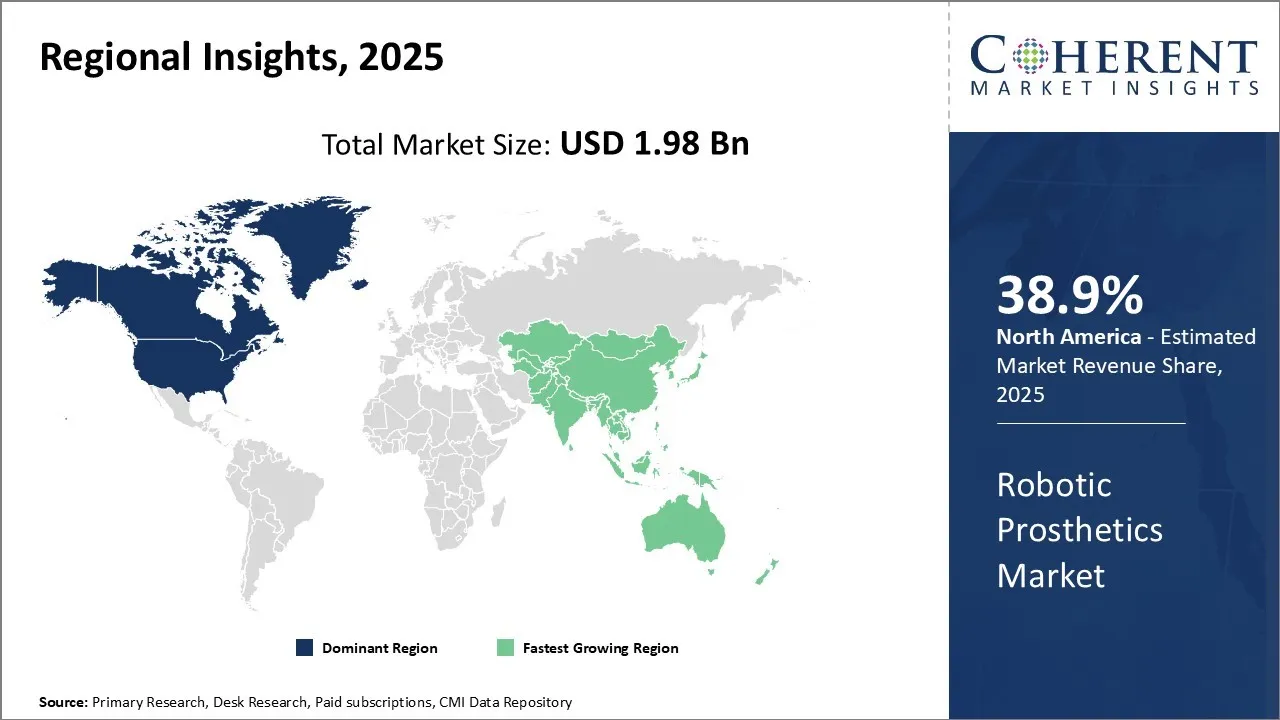
North America Robotic Prosthetics Market Analysis & Trends
North America dominates in the robotic prosthetics market with an estimated share of 38.9% in 2026. This can be attributed to factors such as strong healthcare infrastructure, high healthcare spending, growing geriatric population, supportive government policies for disability aid, and the presence of major market players. Additionally, North America has an intensive focus on restoring mobility and independence for amputees, and advancements in technology. While traditional prosthetics offer basic functionality, robotic prosthetics promise advanced capabilities like natural gait, improved grasping ability, and more intuitive control, making them highly sought after. According to Pro Medical East, around 2.1 million people in the United States are living with limb loss, and that number is expected to double by 2050. This is further propelling the robotic prosthetics market share.
Asia Pacific Robotic Prosthetics Market Analysis & Trends
The Asia Pacific region exhibits the fastest growth with 28.2% market share in 2026 due to large patient pools, rising medical tourism, increased focus of international players on emerging countries, growing incidence of amputations due to road accidents, and diabetes. Additionally, the Asia Pacific region is experiencing robust growth as the government and hospitals in countries like China, Japan, Singapore, Thailand and South Korea are expanding their focus into purchasing the increasing number of robotics system and importing from other countries. For Instance, Japan is making remarkable strides in the development of high-tech bionic prosthetics, combining robotics, artificial intelligence, and precise sensor technologies. Japanese companies and researchers are creating prosthetic limbs that offer near-natural movement and sensory feedback, dramatically improving the quality of life for users.
Robotic Prosthetics Market Outlook for Key Countries
United States Robotic Prosthetics Market Trends
The U.S. Robotic Prosthetics Market is led by innovative products and continued investment in robotics research. Approximately 1.7 million people in the United States use a prosthetic limb. The most common type of prosthetic limb is a below-the-knee prosthesis, accounting for approximately 70% of all prosthetic limbs.
China Robotic Prosthetics Market Trends
China continues to lead in medical robotics technologies due to rising technological advancement in robotics technologies, particularly in the development of highly dexterous and biomimetic prosthetic hands. In February 2026, a research team from the University of Science and Technology of China (USTC) unveiled a groundbreaking biomimetic prosthetic hand with high dexterity, which is capable of combing hair, operating smartphones, and even performing intricate sign language gestures.
U.K. Robotic Prosthetics Market Trends
In December 2024, the U.K. government allocated USD 83.3 Bn to support 100 transformative research projects across 39 institutes, aiming to drive breakthroughs in healthcare, clean energy, AI, and quantum computing. Among the initiatives, the University of Bristol is developing advanced prosthetic arms with improved tactile feedback to enhance the sense of touch for amputees. In April 2026, Open Bionics, a UK-based robotics company, launched its next-generation bionic arm, aiming to revolutionize prosthetic accessibility and functionality. Designed for amputees, the Hero Arm uses 3D printing and advanced sensors to offer precise movement, comfort, and customizable aesthetics.
Canada Robotic Prosthetics Market Trends
Canada is experiencing growth in the robotic prosthetics industry, driven by increasing investments in healthcare technology. In August 2023, the Canadian government announced funding for research projects aimed at developing advanced prosthetic devices, emphasizing the importance of improving accessibility and functionality for amputees. This initiative is expected to boost the market significantly.
Market Players, Key Development, and Competitive Intelligence
Key Developments
- In January 2025, Tokyo-based robotics firm BionicM introduced its U.S. headquarters in Boston, marking a major step in global expansion. The company also unveiled its groundbreaking powered prosthetic leg, the Bio Leg, which has been honored with the CES 2025 “Best of Innovation” award. Designed to enhance mobility for amputees through intelligent robotics and advanced sensors, the Bio Leg showcases BionicM’s commitment to assistive technology.
- In January 2025, Covvi has unveiled its latest innovation, the Covvi Robotic Hand, a multi-articulated device designed to push technological boundaries in robotics. Originally developed for prosthetics, the hand now extends its capabilities to industrial and research applications, offering precise control and dexterity. Operators can manipulate all five fingers individually or use pre-set grips for specific tasks, enhancing efficiency in hazardous environments.
- In August 2024, a study presented at the European Society of Cardiology in London demonstrated that echocardiograms performed remotely using a robotic arm and 5G network achieved 98% diagnostic accuracy compared to in-person tests
- In November 2024, Johnson & Johnson MedTech, a global leader in cardiovascular, orthopedic, surgery and vision solutions, announced the U.S. FDA approval of an Investigational Device Exemption (IDE) for its OTTAVA robotic surgical system, enabling clinical trials to begin at U.S. sites. The company is preparing trial sites, enrolling patients, and advancing its surgical technology portfolio to expand access to robotic surgery benefits for patients and healthcare providers.
Market Report Scope
Robotic Prosthetics Market Report Coverage
| Report Coverage | Details | ||
|---|---|---|---|
| Base Year: | 2025 | Market Size in 2026: | USD 2.20 Bn |
| Historical Data for: | 2020 To 2024 | Forecast Period: | 2026 To 2033 |
| Forecast Period 2026 to 2033 CAGR: | 9.4% | 2033 Value Projection: | USD 4.06 Bn |
| Geographies covered: |
| ||
| Segments covered: |
| ||
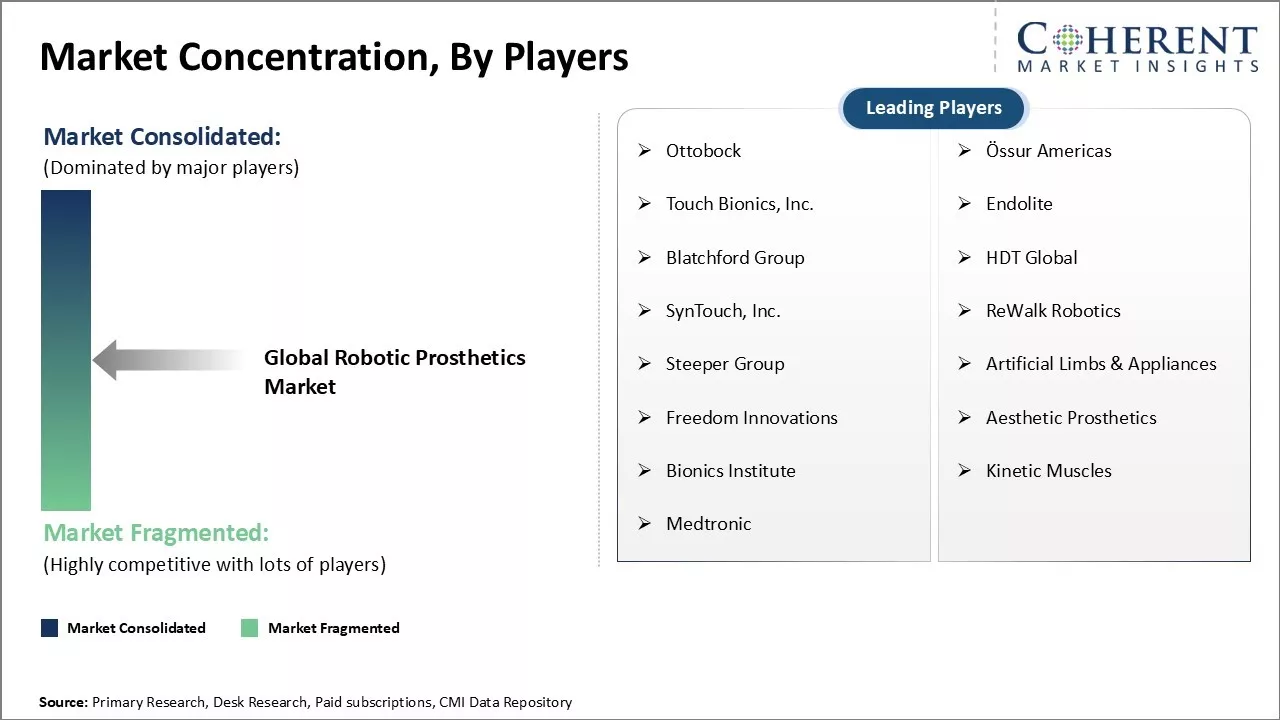
| Companies covered: | Ottobock, Össur Americas, Touch Bionics, Inc., Endolite, Blatchford Group, HDT Global, SynTouch, Inc., ReWalk Robotics, Steeper Group, Artificial Limbs & Appliances, Freedom Innovations, Aesthetic Prosthetics, Bionics Institute, Kinetic Muscles, and Medtronic | ||
| Growth Drivers: |
| ||
| Restraints & Challenges: |
| ||
Robotic Prosthetics Market Driver
Increasing prevalence of amputations due to chronic diseases and trauma
The rise in amputations due to chronic diseases and trauma across the world has been steadily increasing over the years. The growing geriatric population across developed nations has contributed significantly to this trend. With age comes increased risk of conditions like diabetes, peripheral artery disease, and various forms of cancer - all of which can potentially lead to limb amputation if not managed well. Diabetes in particular has been a major driver of amputations globally. Uncontrolled blood glucose levels can damage blood vessels and nerves over time, which may ultimately result in infected sores or ulcers that do not heal.
For Instance, in September 2024, according to the Amputee Coalition, 2.1 million people in the U.S. are living with limb loss, primarily caused by chronic conditions such as diabetes, vascular diseases, and cancer. Chronic diseases are on the rise globally, accounting for 71% of all annual deaths, as reported by the WHO in September 2023. Among these, cardiovascular diseases are the leading cause, responsible for approximately 17.9 million deaths each year, followed by cancer, respiratory diseases, and diabetes. These trends highlight the urgent need for advanced assistive technologies, as emphasized in ongoing robotic prosthetics market research, which explores innovative solutions to meet growing patient needs and improve quality of life post-amputation. This is further proliferating the robotic prosthetics market demand.
Robotic Prosthetics Market Opportunities
Growing demand for personalized prosthetics tailored to individual needs
One of the key opportunities for the global robotic prosthetics market forecast is the growing demand for personalized prosthetics tailored to individual needs and lifestyles. With ongoing technological advancements, manufacturers are able to develop prosthetics with customizations allowing for better personalization. This includes options like custom designed sockets and liners, customized grip patterns, added functionality based on activity level, etc. The ability to customize prosthetics has improved comfort levels and user experience significantly. It also helps address limitations of one-size-fits-all approach. The trend towards personalization is driven by both increased customization options as well as growing personalization demand from current and future users of prosthetics.
Analyst Opinion (Expert Opinion)
- The robotic prosthetics sector is undergoing a fundamental transformation driven by advancements in sensor technology, artificial intelligence, and neural integration. The pace of innovation has surpassed conventional expectations, shifting the market’s focus from mere mechanical replacement to sophisticated, adaptive systems that closely emulate natural limb function.
- A notable example is the integration of myoelectric sensors with machine learning algorithms, as evidenced by Össur’s Rheo Knee. A 2023 study published in IEEE Transactions on Neural Systems and Rehabilitation Engineering demonstrated a 35% improvement in gait symmetry compared to traditional hydraulic prosthetic knees, underscoring a significant enhancement in user mobility and comfort. This is not an incremental improvement but a meaningful leap toward more responsive prosthetic solutions.
- Furthermore, the efforts of companies such as Open Bionics highlight a critical market shift toward affordability and customization. Their Hero Arm, priced under $10,000 compared to traditional prostheses costing upwards of $100,000, represents a disruptive approach to accessibility. This development has the potential to expand the adoption of advanced prosthetics in regions where cost has historically been a major barrier to rehabilitation.
- Beyond mechanical performance, the integration of neural feedback and sensory restoration is poised to redefine clinical outcomes. Research conducted at the University of Utah illustrates that tactile sensors capable of transmitting feedback to peripheral nerves can reduce phantom limb pain by approximately 50%. This advancement suggests that future prosthetic devices will not only restore function but also reestablish sensory experiences, moving closer to true neuroprosthetics. Leading institutions and innovators such as Neuralink and Johns Hopkins are making significant progress in this domain.
Speak to the analyst
Want personalized insights?
Take the findings above to one of our principal consultants, or have the report rebuilt around the segments, geographies and competitors you actually track.
Market Segmentation
- By Technology Insights (Revenue, USD Bn, 2021 - 2033)
- Microprocessor-controlled prosthetics
- Myoelectric prosthetics
- Bionic prosthetics
- Hybrid prosthetics
- By Extremity Insights (Revenue, USD Bn, 2021 - 2033)
- Upper extremity prosthetics
- Prosthetic Arm
- Prosthetic Hand
- Others
- Lower extremity prosthetics
- Prosthetic Knee
- Prosthetic Ankle
- Others
- Upper extremity prosthetics
- By End User Insights (Revenue, USD Bn, 2021 - 2033)
- Hospitals
- Rehabilitation centers
- Home care settings
- Others
- Regional Insights (Revenue, USD Bn, 2021 - 2033)
- North America
- U.S.
- Canada
- Latin America
- Brazil
- Argentina
- Mexico
- Rest of Latin America
- Europe
- Germany
- U.K.
- Spain
- France
- Italy
- Russia
- Rest of Europe
- Asia Pacific
- China
- India
- Japan
- Australia
- South Korea
- ASEAN
- Rest of Asia Pacific
- Middle East
- GCC Countries
- Israel
- Rest of Middle East
- Africa
- South Africa
- North Africa
- Central Africa
- North America
- Key Players Insights
- Ottobock
- Össur Americas
- Touch Bionics, Inc.
- Endolite
- Blatchford Group
- HDT Global
- SynTouch, Inc.
- ReWalk Robotics
- Steeper Group
- Artificial Limbs & Appliances
- Freedom Innovations
- Aesthetic Prosthetics
- Bionics Institute
- Kinetic Muscles
- Medtronic
Sources
Primary Research Interviews from the following stakeholders
Stakeholders
- Interviews with prosthetic device manufacturers, biomedical engineers, rehabilitation specialists, orthopedic surgeons, procurement heads at hospitals, and mobility solution providers across major global markets.
Databases
- World Health Organization (WHO) Global Health Observatory
- United Nations Statistics Division – Medical Equipment Data
- U.S. Food and Drug Administration (FDA) 510(k) Database
- European Database on Medical Devices (EUDAMED)
- Indian Ministry of Health and Family Welfare – Medical Device Statistics
- Japan Ministry of Health, Labour and Welfare
- National Institutes of Health (NIH) – RePORT Database
- Eurostat – Health Tech Trade and Utilization Statistics
- China National Medical Products Administration (NMPA)
- Korea Medical Devices Industry Association (KMDIA)
Magazines
- Medical Device and Diagnostic Industry (MD+DI)
- IEEE Pulse
- MedTech Innovation News
- Healthcare Technology Management
- Robotics Business Review
- Rehab Management Magazine
- TechCrunch HealthTech
- Assistive Technology Today
Journals
- Journal of NeuroEngineering and Rehabilitation
- IEEE Transactions on Neural Systems and Rehabilitation Engineering
- Journal of Prosthetics and Orthotics
- Advanced Intelligent Systems (Wiley)
- Biomedical Signal Processing and Control
- The Lancet Digital Health
- Nature Biomedical Engineering
- Medical Engineering & Physics
Newspapers
- The Wall Street Journal – Health & Science
- The Economic Times – MedTech and Healthcare Innovation
- The Hindu – Health and Science Reports
- Financial Times – Biotech & Robotics Focus
- Nikkei Asia – Medical Technology & Devices
- South China Morning Post – Healthcare and Robotics Industry
Associations
- International Society for Prosthetics and Orthotics (ISPO)
- Rehabilitation Engineering and Assistive Technology Society of North America (RESNA)
- Institute of Electrical and Electronics Engineers (IEEE) – EMBS
- World Federation of Neurology – Neurorehabilitation Section
- Association for the Advancement of Assistive Technology in Europe (AAATE)
- National Institute for Locomotor Disabilities (Divyangjan), India
- Japan Assistive Products Association
- American Orthotic and Prosthetic Association (AOPA)
Public Domain Sources
- U.S. National Institute on Disability, Independent Living, and Rehabilitation Research (NIDILRR)
- Indian Council of Medical Research (ICMR)
- Ministry of Science and Technology (India) – Biotech and Robotics Initiatives
- European Commission – Horizon Europe Health Cluster Reports
- U.S. Department of Veterans Affairs – Prosthetics and Sensory Aids Service (PSAS)
- NITI Aayog – Assistive Devices Policy Briefs
- National Health Systems Resource Centre (NHSRC), India
- Japanese Organization for Medical Device Development and Innovation (JOMDD)
Proprietary Elements
- CMI Data Analytics Tool, and Proprietary CMI Existing Repository of information for last 8 years
Get access to 250+ pages report
Every segment, forecast, competitor profile and data table behind the analysis above — available for instant download.
- ESOMAR Member
- ISO 9001:2015 Certified
- D-U-N-S Registered
- GDPR & CCPA Compliant
Missing comfort of reading report in your local language? Find your preferred language:
Transform your Strategy with Exclusive Trending Reports
Frequently Asked Questions
The Robotic Prosthetics Market is estimated to be valued at USD 2.20 Bn in 2026, and is expected to reach USD 4.06 Bn by 2033.
The CAGR of the Robotic Prosthetics Market is projected to be 9.4% from 2026 to 2033.
Increasing prevalence of amputations due to chronic diseases and trauma and advancements in robotics and artificial intelligence enhancing prosthetic functionality are the major factors driving the growth of the global robotic prosthetics market.
High costs associated with advanced robotic prosthetics and limited insurance coverage and reimbursement policies are the major factor hampering the growth of the global robotic prosthetics market.
In terms of technology, the microprocessor-controlled prosthetics segment is estimated to dominate the market revenue share in 2026.
Ottobock, Össur Americas, Touch Bionics, Inc., Endolite, Blatchford Group, HDT Global, SynTouch, Inc., ReWalk Robotics, Steeper Group, Artificial Limbs & Appliances, Freedom Innovations, Aesthetic Prosthetics, Bionics Institute, Kinetic Muscles, and Medtronic are the major players.
North America is expected to lead the global robotic prosthetics market in 2026.