

Global Rodenticides Market Size and Forecast: 2026 to 2033
The global rodenticides market is estimated to be valued at USD 5.94 Bn in 2026 and is expected to reach USD 8.19 Bn by 2033, exhibiting a compound annual growth rate (CAGR) of 4.7% from 2026 to 2033.
Key Takeaways of the Rodenticides Market
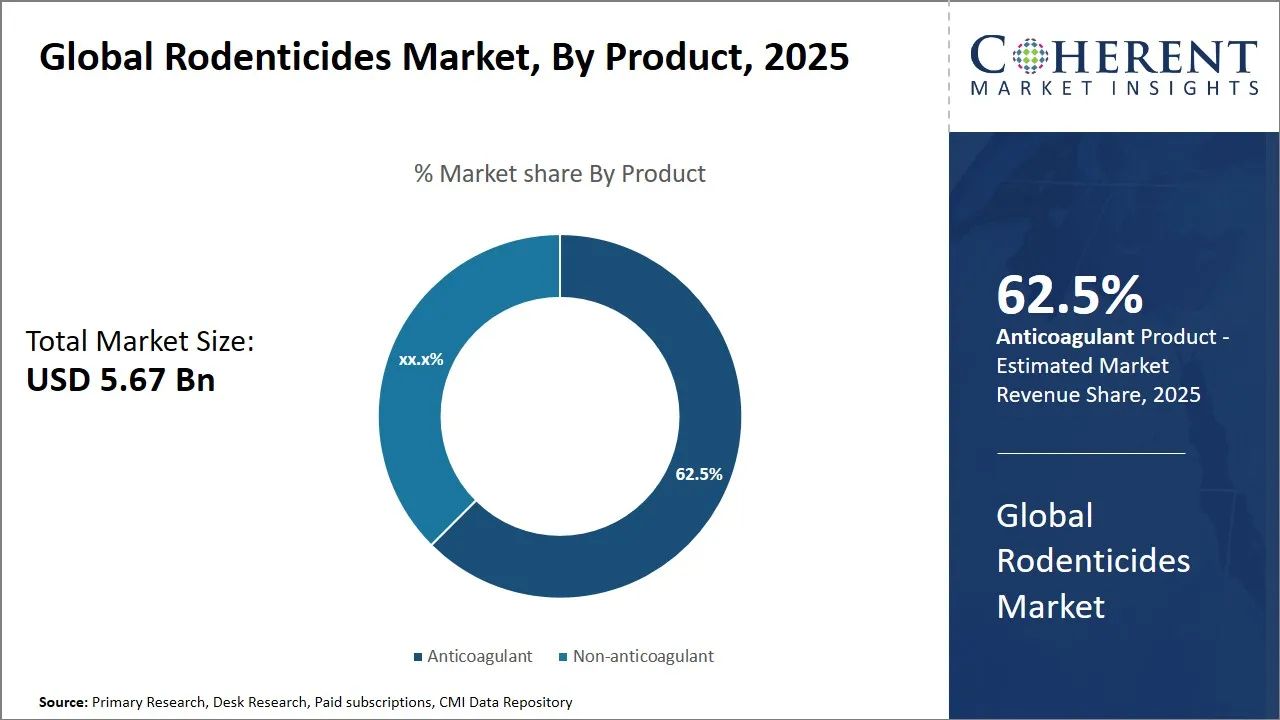
- Anticoagulant segment is expected to accounts for 63.5% of the rodenticides market share in 2026.
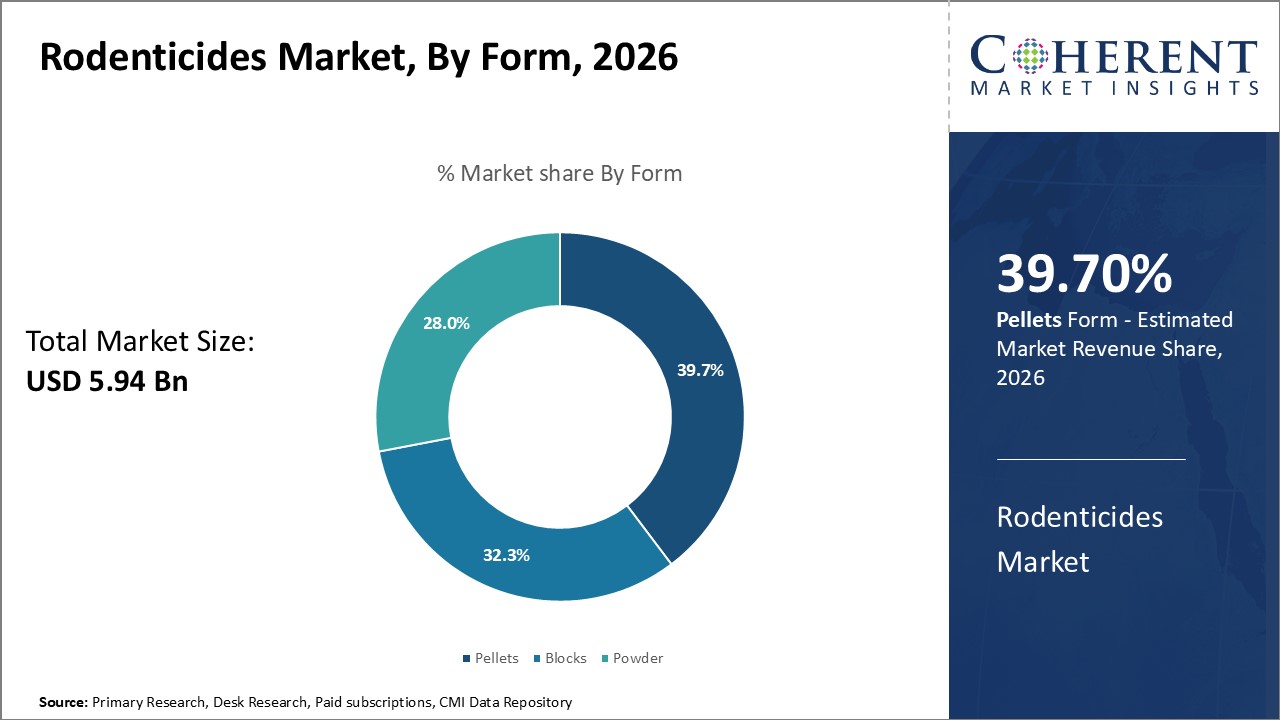
- The pellets segment is estimated to capture 39.7% of the global rodenticides market share in 2026.
- The agriculture segment is projected to holds 30.6% of the market share in 2026.
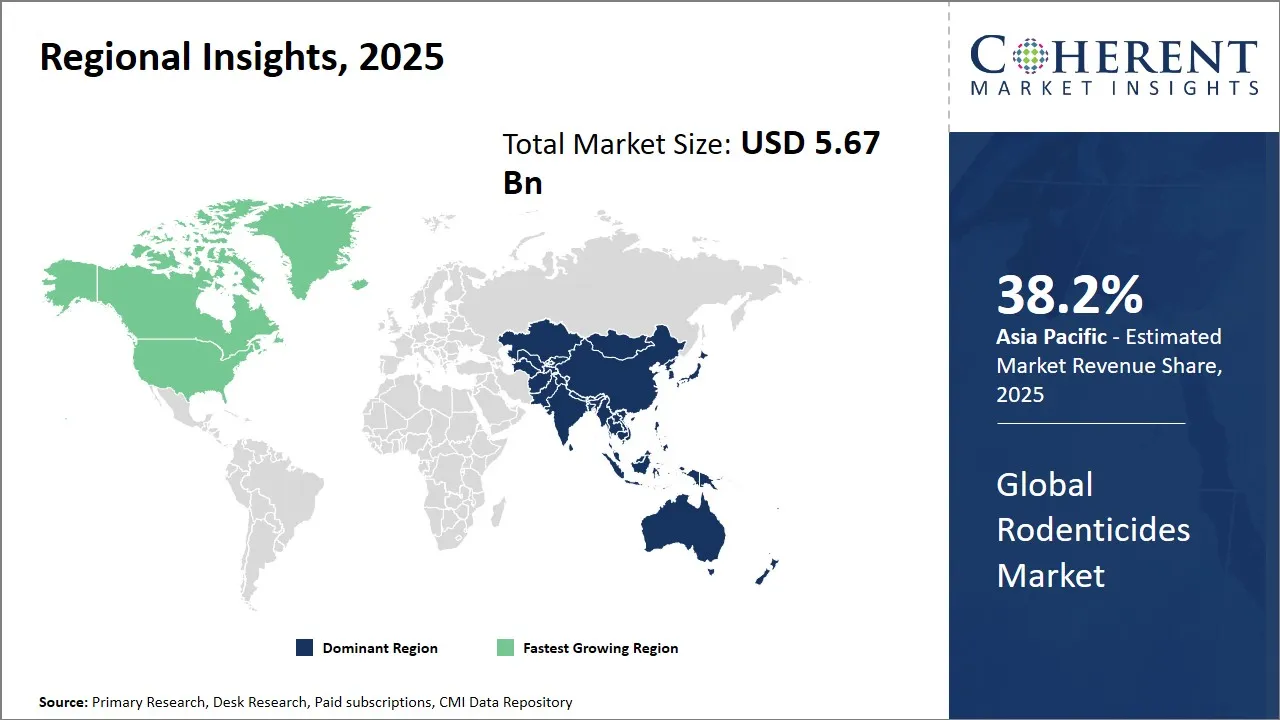
- Asia Pacific is expected to lead the market in 2026 with a 38.2% share. North America is anticipated to be the fastest-growing region, with a projected market share of 22.5% in 2026.
Market Overview
The trend in the market, regarding the use of rodenticides, is a tremendous orientation towards environment-friendly and biodegradable rodenticides since regulatory authorities set strict standards on the use of the chemical with the aim of reducing environmental effects. There has also been progress in the development of formulation technology that has increased the diversity of more and efficient rodent control products causing less collateral damage to non-target species. The increasing attention to the use of integrated pest management (IPM) approaches and the rise in the levels of research and development contribute to innovation and uptake in the market for rodenticides even further.
Currents Events and Its Impact
Current Events | Description and its Impact |
Climate change and urbanization driving rodent surges |
|
Shift toward eco-friendly and non-anticoagulant solutions |
|
Segmental Insights
- Current Industry Events of 2026
- Market Size Estimation
- Regional Breakdown
- Competitive Landscape
- Customer Intelligence
- Segmental Analysis
- Pricing Analysis
- Key Market Drivers, Challenges & Future Trends
- Customized Insights Section
Rodenticides Market Insights, By Product – Anticoagulant Segment Dominates the Market Leadership due to Efficacy and Safety Profile
Anticoagulant segment is expected to account for 63.5% of the market share in 2026, because of their demonstrated efficacies, prolonged residual activity, and comparative safety, when used in accordance to guideline. Anticoagulants act by interfering with the blood clotting system of rodents resulting in internal bleeding and death. The mode of action is not only very effective, but it is also meant to reduce chances of development of resistance, which have been a major problem when it comes to rodent control. The selection of the first-generation and more effective second-generation anticoagulants is suitable to the full spectrum of the infestation levels and environmental factors and makes them a diverse and convenient tool of pest control operators and agricultural specialists.
In the Anticoagulant segment, the example can be the use of brodifacoum, which is the second-generation anticoagulant, which is extensively used in agriculture to maintain rodent populations in the fields and warehouses. This is because of its strong performance and its residual effect, which lasts longer; the performance is good in large scale pest control particularly in areas where rodents are a constant menace.
Rodenticides Market Insights, By Form – Pellets Segment Dominates the Market Due to Ease of Application and Targeted Delivery
Pellets segment is projected to hold 39.7% of the global rodenticides market share in 2026, driven by their ease of use, controlled dosage delivery, and adaptability to diverse environments. Pellets provide a uniform size and concentration, thus allowing baiting to be precise and minimize wastage and improbable rodent ingestion to be successful. This design is especially beneficial to both commercial and residential uses because it can be easily located in bait stations; it requires minimum human interaction and maximum bait uptake by rodents.
The pellet form also offers the best stability and shelf life which enables the distributors and final consumers to have inventory without fear of degradation. Such dependability is desirable to pest control operators and farmers who need to know that they can have reliable rodenticides that will not lose their effectiveness with time. Also, the grainy texture of pellets resembles the natural food sources of many rodents, increasing palatability and increasing the rate of uptake of the bait that frequently results in reduced population knockdown times.
Rodenticides Market Insights, By Application – Agriculture Segment Dominates the Market Due to High Demand for Rodent Damage Prevention
The agriculture segment is expected to command 30.6% of the global rodenticides market share in 2026, propelled by the critical need to protect crops and stored produce from significant damage caused by rodent infestations. Rodents are infamous in eating and polluting large amounts of grains, fruits, and vegetables and it has a direct effect on agricultural productivity, food security and economic returns to farmers. This is a result of the vulnerability that has prompted the widespread use of rodent control strategies as a form of crop management and post-harvest storage practices.
This demand has been increased by the growing magnitude of intensive farming and mechanization of farming. Commercial farms need effective and dependable rodent control measures that can handle a large area of land and storage areas. The rodenticides especially those in convenient pellet sizes and suitable types of products such as anticoagulants help the farmers to control the infestation on a proactive basis. In addition, the trend of integrated pest management (IPM) within the agricultural sector merges chemical rodenticides with biological and cultural controls and strengthens their essential role in the contemporary agricultural industry.
Rodenticide Resistance Mapping & Surveillance Insights
- Rodenticide Resistance Prevalence: Genes for anticoagulant resistance detected in 79% of rats and 95% of house mice in UK surveillance (2020-2022, ongoing 2026); hybrid resistance (multiple genes) emerging, with Y139C gene spreading to 30 new U.K. sites.
- Geographical Mapping: Europe-wide resistance maps (RRAC) show hotspots in the U.K., Germany, France, Netherlands for house mice/Norway rats; London as U.K. mouse hybrid-resistance epicenter; global spread via migration, including new 'spretus' strain from Spain to U.K. Hertfordshire.
- Surveillance Methods: CRRU UK DNA tail-sample testing via APHA/University of Reading; genome-based tracking (+0.7% market impact); questionnaire pest controller reports note higher mouse vs. rat issues; INBO Flanders monitoring tool maps infestations/control.
- Species-Specific Insights: House mice (Mus musculus) show higher resistance than Norway rats ( norvegicus), linked to frequent bait use; mutations like Vkorc1 variants confirmed via large-scale genotyping.
- Market Impacts: Undermines efficacy, drives need for alternatives (cholecalciferol, non-anticoagulants, IPM); boosts IoT bait telemetry (+0.8% growth); concerns slow rodenticides expansion amid urbanization/agriculture demand.
Regional Insights
Asia Pacific Rodenticides Market Analysis and Trends
The Asia Pacific region is projected to lead the market with a 38.2% share in 2026, due to expanding agricultural activities, increasing urbanization, and growing awareness about pest control. The increasing investment in modern agriculture and development of modern infrastructure is being experienced in some countries such as China, India, Japan, and Southeast Asian countries, increasing the demand of rodent control solutions.
The government programs to facilitate food security and modernization of agricultural activities further trigger market expansion. Key industry leaders like BASF SE, Syngenta AG, and other firms with a high level of local presence in places with a varied market, like UPL Limited and Sumitomo Chemical, are all vigorously building in their portfolios and distribution channels to access the varied market of Asia Pacific. The sophistication of the trade dynamics including imports and local production provides increased speed on the transfer of technology and availability of products within the region.
North America Rodenticides Market Analysis and Trends
The North America region is expected to exhibit the fastest growth in the market contributing 22.5% share in 2026, driven by a well-established agricultural sector, advanced pest management practices, and stringent government regulations that emphasize sustainable and effective rodent control. The U.S. and Canada have extensive rules and regulating structures that regulate the use of pesticides to promote the use of better and more specific rodenticide formulations.
There is also the existence of large agrochemical enterprises like FMC Corporation, Bell Laboratories Inc., and Liphatech Inc. which promotes innovation and large market spread. North America has a highly developed market with a high level of demand in both residential, commercial and industrial markets due to the well-established ecosystem of distributors, agriculture industries and urban pest management services.
Global Rodenticides Market Outlook for Key Countries
U.S. Rodenticides Market Trends
The U.S. rodenticides market is defined by the high level of regulations compliance and innovation. Environmental regulatory authorities like the Environmental Protection Agency (EPA) have very stringent safety regulations, which compel the manufacturers to produce rodenticides that are environmentally friendly and with low-toxicity. The net effect of this has been a rise in the demand of highly developed anticoagulant rodenticides and combined pest management. The major players such as FMC Corporation and Bell Laboratories Inc. are dominating the scene with products that are specific to agriculture, control of pests in urban and residential settings. The supply chain and awareness programs that are already well established in the country also contribute towards maturity and stability of the markets.
China Rodenticides Market Trends
The market for rodenticides in China is developing at a high rate because of its expansive agricultural background and urbanization. Moderation of pest control methods by the Chinese government is aimed at minimizing crop losses and chances of contamination caused by the rodents. Local companies, as well as international industries, such as Basf SE and Sumitomo Chemicals, contribute to the product innovation and distribution in a big way. The government has excellent import-export laws in place and is involved in global trade, taking advantage of which is a large range of formulations to access. The market is also being changed by increased investment in R&D and campaigns on health hazards of rodents among the society.
India Rodenticides Market Trends
The market in Indias is changing as the agricultural productivity and urbanization are advancing creating the need to control rodents efficiently. The significance of rodenticides in ensuring the quality of crops and minimizing health risks in highly populated regions can be emphasized due to government initiatives to ensure food safety and pest control.
The leading companies like UPL Limited and Syngenta AG are focusing on the cost-effective and sustainable products to satisfy the requirements of the various Indian farmers and urban consumers. Threats like incomplete distribution channels and regulations are also being solved with alliances and educational penetration, which encourage more people to use sophisticated rodentizer products.
Germany Rodenticides Market Trends
Germany is still on top of the rodenticides market in Europe because of its well-developed regulation system and attention to the environment. The strict pesticide control policies in the country promote the adoption of novel low-impact rodenticides in terms of efficacy and safety profile. Germany is a prominent research location due to companies like Bayer AG and BASF SE undertaking major operations and development centers in the country. The Germanys market is supported by good trade policies in the European Union, an advanced industrial environment and an emerging demand in urban pest control and agriculture.
Brazil Rodenticides Market Trends
The Brazil market for rodenticides is indicative of the fact that the country is a large agricultural producer that experiences losses of crops due to rodents and has health issues in the population. The government is encouraging sustainable agriculture by policies that encourage rational use of the pesticides, which increases the demand of effective and environmentally friendly rodenticides.
The key players such as the local companies and the international companies such as the FMC Corporation invest in the expansion of distribution networks to take access to the rural and the peri-urban regions. The existence of dynamism in its trade relations with Latin America and growing emphasis on food safety make Brazils relevance as a growth market in the rodenticides industry.
Regulatory & Compliance Impact Analysis (EPA, EU Biocidal Products Regulation, India CIBRC updates)
- EPA (U.S.) FIFRA Regulations: Enforces pesticide registration and safety reviews; recent actions include tolerance revisions and 2025 state-level SGAR restrictions (e.g., Clemson DPR indefinite extension from Feb 2025) requiring dealer licenses, sales records, and certified applicator-only use to protect non-target wildlife from brodifacoum, bromadiolone, difethialone, and difenacoum.
- EPA Market Impact: Raises compliance costs, limits residential/agricultural applications, slows growth but promotes safer formulations; anticipates federal mitigation in 2026.
- EU Biocidal Products Regulation (BPR): ECHA BPC approved anticoagulant rodenticides (June-July 2025) for professional/non-professional use with RMMs like outdoor bans, mandatory training, specialized packaging, and IPM prioritization as "last resort" after non-chemical failure.
- EU Market Impact: Addresses persistence/bioaccumulation risks, increases authorization costs, favors sustainable practices over non-compliant products.
- India CIBRC Updates: Under Insecticides Act 1968, mandates Form I/II dossiers, GLP trials, toxicity/efficacy data for approvals; 465th-467th RC meetings (July-October 2025) granted agrochemicals (including potential rodenticides) to UPL, Syngenta, Corteva, etc.
- India Process: Technical review, risk-benefit analysis, 12–36-month timelines; challenges include incomplete dossiers, delays for imports/new molecules
Market Players, Key Development, and Competitive Intelligence
Key Developments
- In April 2023, Target Specialty Products introduced Strike MAX CITO Paste, a commercial rodenticide paste known for its rapid action and user-friendly application. Engineered for both internal and external use, it functions as a soft bait paste, with its swift efficacy attributed to its primary component, brodifacoum.
- In January 2022, Syngenta AG successfully completed the acquisition of two advanced bio-insecticides, UniSpore and NemaTrident, from BIONEMA, a developer of biocontrol technology based in U.K. This acquisition is intended to address a diverse array of insects and pests in ornamentals and horticulture, forestry, and turf amenity sectors, thus offering customers an expanded range of solutions.
- In June 2022, FGV Agri Services Sdn. Bhd. unveiled an environment-friendly rodenticide, the Butik S, tailored for paddy crops in Malaysia. As a contribution to the Paddy Production Incentive Scheme (SIPP), the pioneering rodenticide has been specially designed for cage owl integration. This anti-coagulant bait is formulated using a blend of substances that are enticing to rodents, and its shape, weight, and color are carefully crafted to attract rats effectively.
Top Strategies Followed by Global Rodenticides Market Players
- The long-established companies (usually industry veterans with vast resources) invest a lot in the research and development (R&D) to develop high-performance rodenticide products to comply with the new regulatory requirements and the consumer demands. Through innovation, these players are looking to provide safer, more effective and environmentally friendly solutions that have major benefits to the traditional products.
- As an example, Storm Ultra Secure (2022) by BASF presented a high-palatability flocoumafen bait to fight rodent resistance in Europe as stipulated in the Biocidal Products Regulation (BPR).
- The middle-level actors on the rodenticides market follow a different, but strategically important direction of providing cost-efficient solutions that will provide a balance between the quality and the cost. These firms mostly focus on price-sensitive consumers such as farmers, small business owners as well as local pest control services and are in need of quality but cost-effective products. Middle-level companies mostly seek partnerships with other industry participants to boost their production capacity, better access to technology and to increase their distribution network in order to be on par with the industry competition.
- For example, companies such as Rentokil initial, PelGar International, and Liphatech (mid-tier not in the U.S.) develop competitive value products such as multi-feed anticoagulant or ready-to-use grain baits which can be attractive to farmers, grain store operators, and local pest-control agencies.
- Small players can cut their niches by specializing in niche or innovative rodenticides to meet a localized market requirement or to solve a specific pest control issue. Many of these companies resort to the latest technologies like using environmentally friendly formulations, bio-rat poisons, or using digital pest watching devices to stand out among the bigger players. The focus on product distinction or the new delivery systems means that small players could address the high demands of environmental regulations and customer preference in specific regional areas.
- For example, Senestechs ContraPest is a non-lethal, fertility-controlling rodenticide called ContraPest which specifically addresses urban rodent problems where conventional toxicants are being opposed by the populace, giving the company a special regulatory edge in the United States municipalities.
Market Report Scope
Global Rodenticides Market Report Coverage
| Report Coverage | Details | ||
|---|---|---|---|
| Base Year: | 2025 | Market Size in 2026: | USD 5.94 Bn |
| Historical Data for: | 2020 To 2024 | Forecast Period: | 2026 To 2033 |
| Forecast Period 2026 to 2033 CAGR: | 4.7% | 2033 Value Projection: | USD 8.19 Bn |
| Geographies covered: |
| ||
| Segments covered: |
| ||
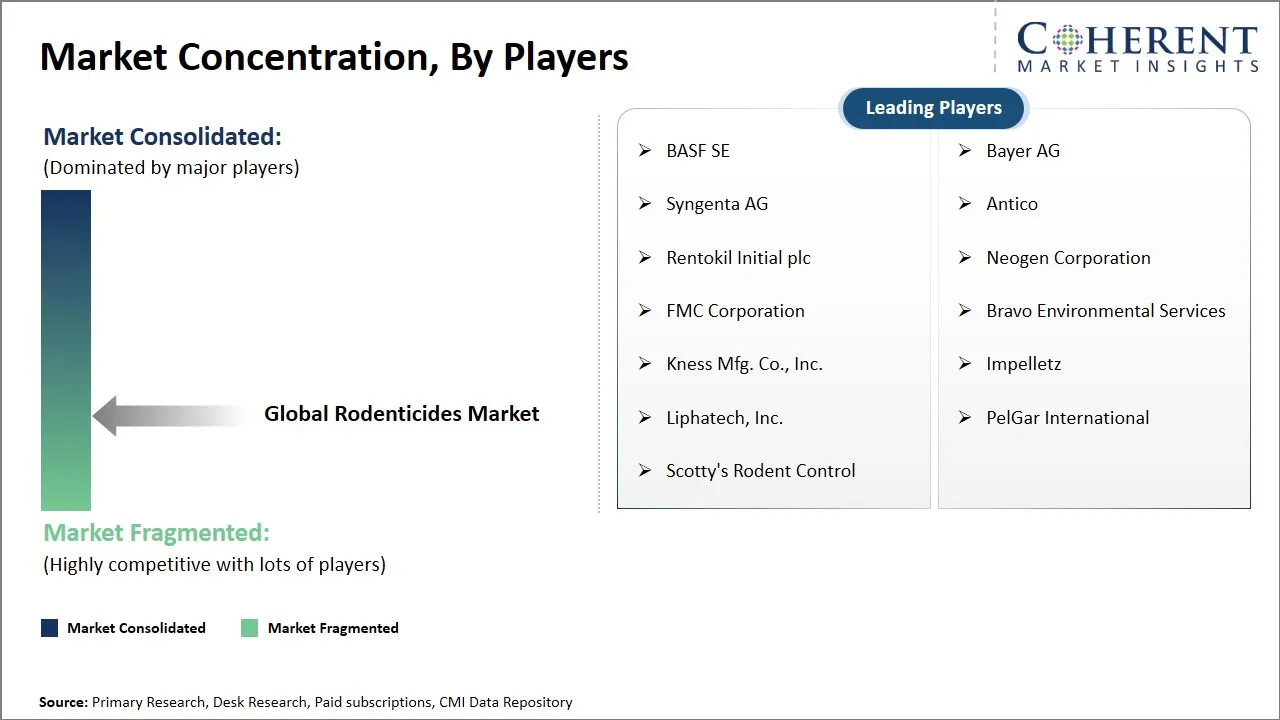
| Companies covered: | BASF SE, Bayer AG, Syngenta AG, Antico, Rentokil Initial plc, Neogen Corporation, FMC Corporation, Bravo Environmental Services, Kness Mfg. Co., Inc., Impelletz, Liphatech, Inc., PelGar International, and Scotty's Rodent Control | ||
| Growth Drivers: |
| ||
| Restraints & Challenges: |
| ||
Rodenticides Market Dynamics
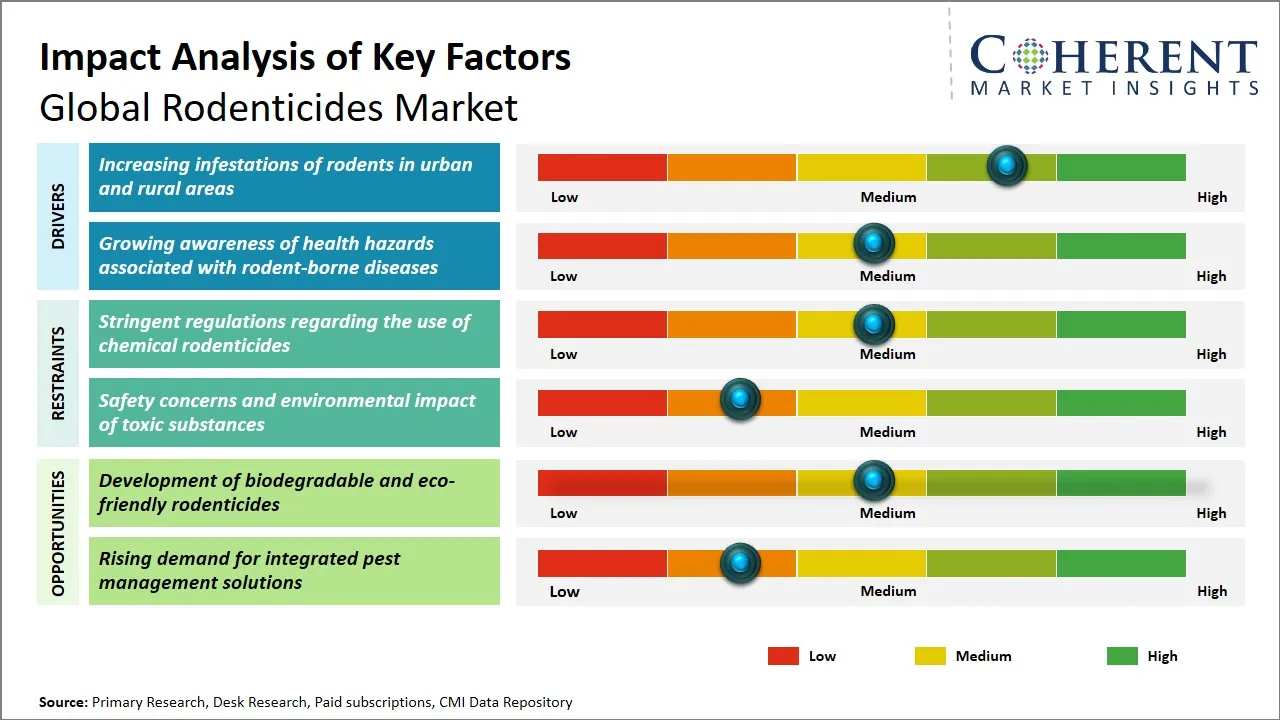
Rodenticides Market Driver - Increasing Infestations of Rodents in Urban and Rural Areas
Rodent infestation on both urban and rural landscapes is an escalating factor that is increasing the demand of rodenticides in the world. High urbanization coupled with poor waste management systems has provided favorable conditions in which rodents can develop in the crowded cities. Besides structural destruction of buildings and contamination of food, the rodents are vectors of numerous diseases, which has attracted the concern of the people. At the same time within agricultural and rural environment, rodents are very dangerous to crops and stored food and cause a significant economic loss to the farmers and food chain.
Indicatively, the 2024 sanitation report of New York City showed an acute increase in rat-associated complaints, which triggered violent pest-control measures based on the application of chemical and mechanical rodenticides. In rural areas, Indias Food Corporation and USDA field data are showing that rodents destroy 8 -12 percent of the stored grains per year, which is leading to intensive use of rodenticides in warehousing centers and farms in Asia Pacific and Africa.
Rodenticides Market Opportunity - Development of Biodegradable and Eco-Friendly Rodenticides
A major opportunity is the global rodenticides market whereby the introduction of biodegradable and environmentally friendly rodenticides has been introduced due to the growing concern over environmental issues and stringent regulatory requirements in most parts of the globe. Conventional rodenticides, which are usually made of toxic substances such as anticoagulant are not only dangerous to the intended rodent populations, but also to non-target animals, domestic pets, and humans which have resulted in increasing demands to have safer options. Regulations and governments in Europe, North America and Asia Pacific are implementing strict regulations to minimize the ecological footprint of pest control products, urging the manufacturers to come up with sustainable solutions.
As an example, in 2023, Australia’s APVMA gave the green light to a biodegradable rodent bait line, which minimizes the risks to native wildlife. In Europe, enzyme-based and botanical toxin formulations that degrade rapidly when used have substituted second-generation anticoagulants due to limitations of their use imposed by REACH and EU Biocidal Products Regulation.
Analyst Opinion (Expert Opinion)
- The rodenticides market is witnessing notable growth, driven by increasing urbanization and the rising need for effective pest control solutions in residential and commercial settings. Insights from the PestWorld Conference (2023) and the Global Rodent Control Summit (2022) highlighted critical advancements in formulation and sustainability, with companies like Bayer and Rentokil Initial leading innovations in safer rodenticide products.
- Bayer’s recent launch of a biodegradable bait product that targets rodents while reducing environmental impact exemplifies how the industry is responding to consumer and regulatory demands for greener pest control solutions. Discussions at these conferences emphasized the increasing importance of integrated pest management strategies that combine rodenticides with preventive measures to ensure long-term effectiveness. However, challenges such as regulatory scrutiny over traditional rodenticides and public concern regarding their safety were frequently noted as significant hurdles.
- Companies that prioritize research and development to create safer alternatives and engage in community education about responsible usage will likely strengthen their market position. Ultimately, the growth of the rodenticides market will depend on its ability to innovate while addressing safety, efficacy, and environmental stewardship in pest management strategies.
Speak to the analyst
Want personalized insights?
Take the findings above to one of our principal consultants, or have the report rebuilt around the segments, geographies and competitors you actually track.
Market Segmentation
- Product Insights (Revenue, USD Bn, 2021 - 2033)
- Anticoagulant
- Non-anticoagulant
- Form Insights (Revenue, USD Bn, 2021 - 2033)
- Pellets
- Blocks
- Powder
- Application Insights (Revenue, USD Bn, 2021 - 2033)
- Agriculture
- Pest Control Companies
- Warehouses
- Urban Centers
- Household
- Regional Insights (Revenue, USD Bn, 2021 - 2033)
- North America
- U.S.
- Canada
- Latin America
- Brazil
- Argentina
- Mexico
- Rest of Latin America
- Europe
- Germany
- U.K.
- Spain
- France
- Italy
- Russia
- Rest of Europe
- Asia Pacific
- China
- India
- Japan
- Australia
- South Korea
- ASEAN
- Rest of Asia Pacific
- Middle East
- GCC Countries
- Israel
- Rest of Middle East
- Africa
- South Africa
- North Africa
- Central Africa
- North America
- Key Players Insights
- BASF SE
- Bayer AG
- Syngenta AG
- Antico
- Rentokil Initial plc
- Neogen Corporation
- FMC Corporation
- Bravo Environmental Services
- Kness Mfg. Co., Inc.
- Impelletz
- Liphatech, Inc.
- PelGar International
- Scotty's Rodent Control
Sources
Primary Research Interviews
- R&D Director – Leading Rodenticide Manufacturer
- Procurement Manager – Major Pest Control Retailer
- Product Development Head – Prominent Rodenticide Brand
- Sustainability Manager – Environmental Safety Certification Body for Pest Control
Stakeholders
- Manufacturers of rodenticides and pest control products
- End-use Sectors:
- Pest Control Services
- Agriculture and Food Storage
- Residential and Commercial Property Management
- Regulatory & Certification Bodies for pesticide and chemical safety
- E-commerce Platforms and Retailers of pest control solutions
- Technology Integration Players: AI and IoT for pest monitoring and control
Databases
- UN Comtrade Database – Rodenticide export-import statistics
- India Import Export (EXIM) Database – Rodenticide trade data
Magazines
- Pest Control Technology Magazine – Trends in rodenticides and pest management solutions
- Global Pest Management – Innovations in rodent control
- Agricultural Safety & Health – Rodenticide use in agriculture and safety updates
- Journal of Pest Science – Regulatory and market updates on rodenticides
Journals
- International Journal of Pest Management – Efficacy studies on rodenticides
- Journal of Environmental Toxicology and Chemistry – Environmental impact of rodenticides
- Pest Management Science – Advances in rodenticide formulations
- Food Protection Trends – Rodent control in food safety contexts
Newspapers
- The Financial Times – Market dynamics for rodenticides and pest control products
- The Guardian – Environmental and consumer concerns on pest management
- Asia Health Journal – Rodenticides regulation and market growth in Asia-Pacific
- European Nutrition News – Rodent control and health policies in Europe
Associations
- National Pest Management Association (NPMA)
- International Federation of Pest Control Associations (IFPCA)
- Environmental Protection Agency (EPA) – Rodenticide regulations
- European Chemicals Agency (ECHA) – Rodenticide registration and safety standards
Public Domain Sources
- EPA – Guidelines and regulations on rodenticide use
- European Commission – Pesticides regulation including rodenticides
- World Health Organization – Health impact studies on rodenticides
- OECD – Safety and environmental assessments for pest control chemicals
Proprietary Elements
- CMI Data Analytics Tool
- Proprietary CMI Existing Repository of information for last 8 years.
Get access to 250+ pages report
Every segment, forecast, competitor profile and data table behind the analysis above — available for instant download.
- ESOMAR Member
- ISO 9001:2015 Certified
- D-U-N-S Registered
- GDPR & CCPA Compliant
Missing comfort of reading report in your local language? Find your preferred language:
Transform your Strategy with Exclusive Trending Reports
Frequently Asked Questions
The global rodenticides market is estimated to be valued at USD 5.94 Bn in 2026 and is expected to reach USD 8.19 Bn by 2033.
The CAGR of the global rodenticides market is projected to be 4.7% from 2026 to 2033.
Increasing infestations of rodents in urban and rural areas and growing awareness of health hazards associated with rodent-borne diseases are the major factors driving the growth of the global rodenticides market.
Stringent regulations regarding the use of chemical rodenticides and safety concerns and environmental impact of toxic substances are the major factors hampering the growth of the global rodenticides market.
In terms of product, the anticoagulant is estimated to dominate the market revenue share in 2026.
BASF SE, Bayer AG, Syngenta AG, Antico, Rentokil Initial plc, Neogen Corporation, FMC Corporation, Bravo Environmental Services, Kness Mfg. Co., Inc., Impelletz, Liphatech, Inc., PelGar International, and Scotty's Rodent Control are the major players.
Asia Pacific is expected to lead the global rodenticides market in 2026.