

Global Skin Substitute Market Size and Forecast – 2026 to 2033
The global skin substitute market is estimated to be valued at USD 459.0 Mn in 2026 and is expected to reach USD 833.7 Mn by 2033, exhibiting a compound annual growth rate (CAGR) of 8.9% from 2026 to 2033. This growth is driven by increasing incidences of chronic wounds, burns, and surgical procedures that necessitate advanced skin substitutes, along with advancements in biomaterials and regenerative medicine.
Key Takeaways of the Global Skin Substitute Market
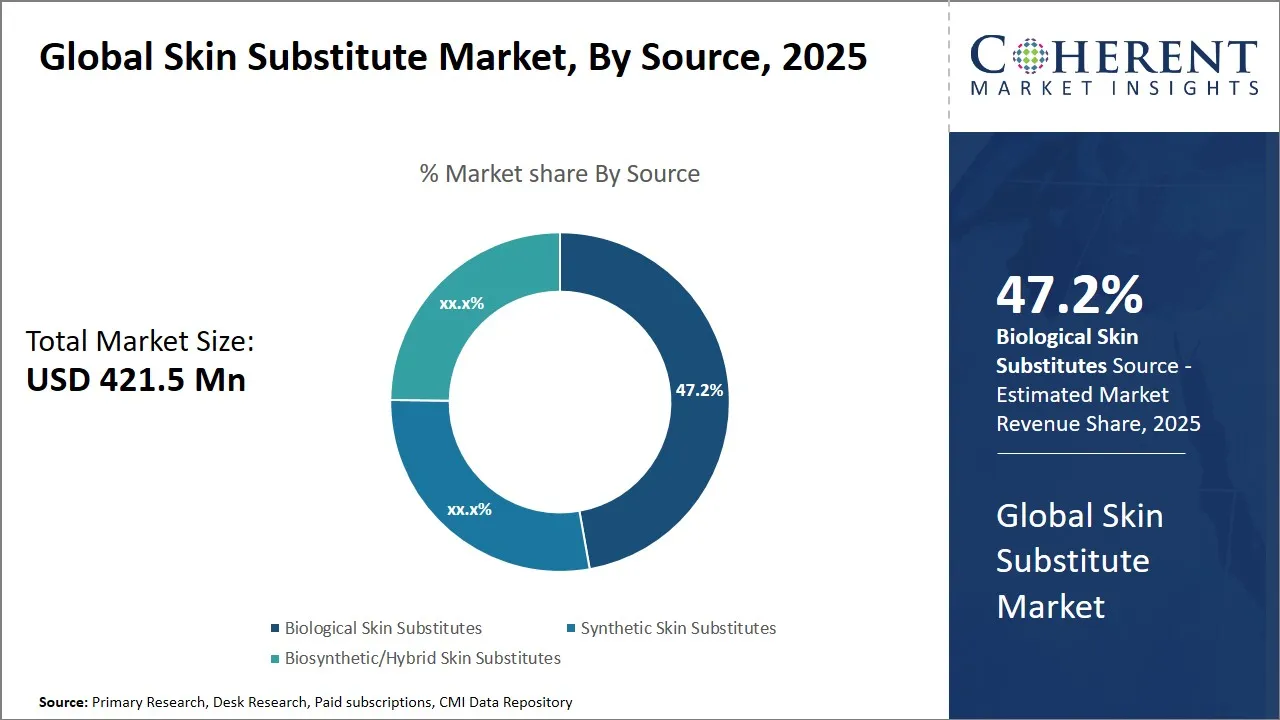
- Biological skin substitutes segment is projected to account for 48.2% of the market share in 2026.
- Acellular skin substitutes segment is projected to hold 60.7% share in 2026.
- Temporary segment is expected to capture 66.6% of the skin substitute market share in 2026.
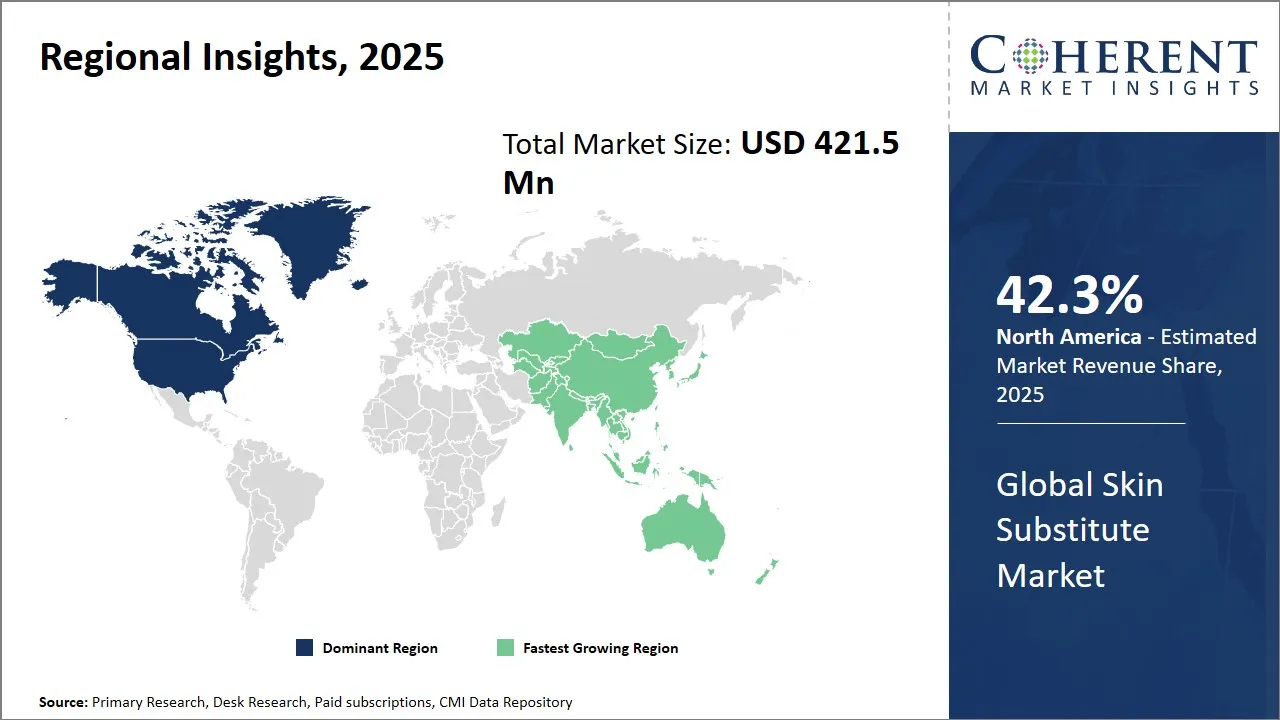
- North America is expected to lead the market, holding a share of 42.3% in 2026. Asia Pacific is anticipated to be the fastest-growing region, with an estimated market share of 24.3% in 2026.
Market Overview
A key trend in the skin substitute market is the rising adoption of tissue-engineered products that promote faster wound healing and reduce infection risks. Additionally, technological innovations such as 3D bioprinting and incorporation of stem cells are enhancing product efficacy. Growing awareness among healthcare providers and patients, coupled with supportive regulatory frameworks, is further accelerating market expansion, especially in emerging economies with rising healthcare infrastructure investments.
Currents Events and Its Impacts
Current Events | Description and its Impact |
Launch and Medicare coverage of BioLab’s Tri-Membrane Wrap and similar advanced allografts |
|
U.S. FDA enforcement actions against unapproved “regenerative” skin products |
|
Segmental Insights
- Current Industry Events of 2026
- Market Size Estimation
- Regional Breakdown
- Competitive Landscape
- Customer Intelligence
- Segmental Analysis
- Pricing Analysis
- Key Market Drivers, Challenges & Future Trends
- Customized Insights Section
Skin Substitute Market Insights, By Source - Biological Skin Substitutes Contribute the Highest Share of the Market Owing to their Superior Biocompatibility and Ability to Closely Mimic the Natural Structure and Function of Human Skin
Biological skin substitutes are expected to hold 48.2% share in 2026, due to their excellent clinical results with allograft, xenograft, and autologous choices. Allografts still dominate due to the retention of extracellular matrix which promotes fast cellular infiltration and tissue regeneration to support temporary wound coverage which creates minimal risk of infection and decreases fluid loss. They are highly accessible, inexpensive and are often applied as an interim measure as the wound is readied awaiting final treatment.
In September 2025, Smith+Nephew, a global medical technology company, expanded its Biological Skin Substitutes portfolio with the launch of the CENTRIO Platelet-Rich-Plasma System. The system uses a patient’s own platelets to create a hematogel that supports healing by keeping wounds moist. It helps treat chronic exuding wounds such as diabetic foot ulcers, venous leg ulcers, pressure ulcers, and tunnelling wounds.
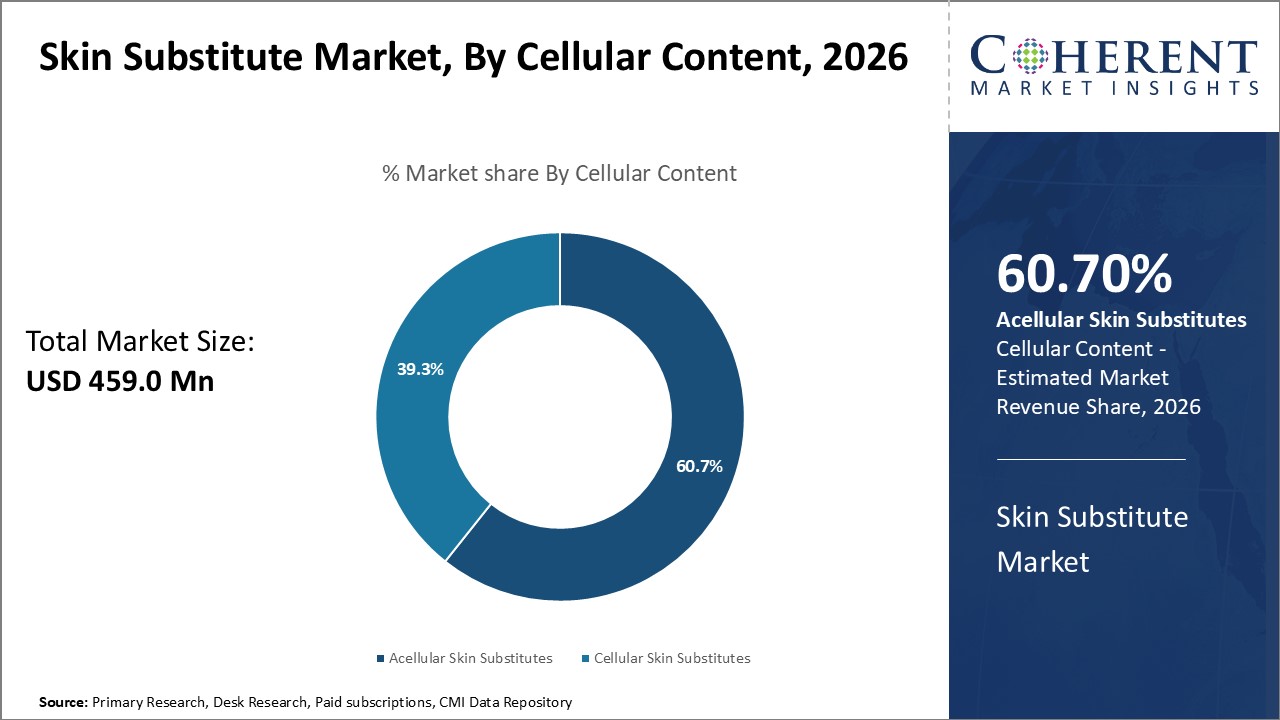
Skin Substitute Market Insights, By Cellular Content - Acellular Skin Substitutes Dominate the Market Owing to their Ease of Use, Lower Risk of Immunogenic Response, and Versatility Across a Broad Range of Wound Care Applications
Acellular skin substitutes are projected to capture 60.7% share in 2026, because they are treated to eliminate all the viable donor cells to reduce the possibility of immune rejection and ensuring the preservation of the extracellular matrix that is essential to help regenerate the tissue. This renders them appropriate in both temporary and permanent wound cover especially to patients with the weak immunity or patients in need of repeated grafting.
Their acellular composition also prolongs the shelf life as well as makes their storage easy to maintain uniform supply within the emergency rooms and outpatient clinics. This logistic feature enables clinicians to apply them promptly in situations that require timeliness and makes them more widely applicable in complex care facilities.
Skin Substitute Market Insights, By Use - Temporary Segment Holds the Highest Share of the Market Driven by their Critical Role in Acute Wound Management and as Interim Solutions Prior to Permanent Coverage
The temporary segment is anticipated to represent 66.6% of the market share in 2026, because they are primarily applied to stabilize wounds and reduce the risk of infection and maintain a damp environment in the early healing phase. They are particularly useful in burn treatment, traumatic injuries, and surgical wounds in which urgent skin coverage is required but autografting or permanent solutions are out of the question.
Their versatility enables them to be applied as either biological dressings (allografts and xenografts) or artificial membrane dressings such as polyurethane or products based on hydrogel that provide an option based on the severity of the wound and the condition of the patient.
Medicare Reimbursement Updates are Driving New Dynamics in the Skin Substitute Market
- Skin substitutes reduce total per-patient costs by accelerating wound closure, lowering infection rates, and decreasing the need for repeat debridements, clinic visits, and hospitalizations, which offsets their higher upfront price for chronic wounds such as DFUs and VLUs; at the same time, U.S. reimbursement is becoming tightly evidence-based, with Medicare enforcing stricter coverage criteria, documentation requirements, episode-based payment limits, and frequency caps, pushing providers to prove SOC failure and weekly improvement, while commercial insurers mirror CMS through step therapy and prior authorization, ultimately favoring clinically validated, cost-effective products that demonstrate measurable healing outcomes.
- In November 2025, CMS introduced a new 2026 payment model that sets most skin substitutes at USD 127.28 per square centimeter, with only biological products keeping ASP-based reimbursement. The rule applies to private offices, patient homes, and hospital outpatient settings and works alongside the strict DFU and VLU coverage limits starting Jan 2026.
- Moreover, in August 2025, CMS tightened Skin Substitute reimbursement for diabetic and venous ulcers and limited coverage to proven products. Organogenesis, a major wound-care company, offers Affinity, Apligraf, and Dermagraft with strong evidence. MTF Biologics, a leading tissue processor, supplies AmnioBand and FlexHD for approved use.
Regional Insights
North America Skin Substitute Market Analysis and Trends
The North America region is projected to lead the market with a 42.3% share in 2026, a factor that is backed by a well-developed healthcare system, the strong support of the government towards the advanced wound care, and the concentration of the major industry player. There is a high rate of introduction of new advanced skin substitutes in the region due to high levels of clinical awareness, favorable reimbursement and simple regulatory licenses. The major competitors such as Organogenesis, MiMedx group and Integra LifeSciences are leading with bioengineered grafts and ECM based substitutes that meet the varying chronic and acute wound needs.
In January 2026, the Ohio State University Wexner Medical Center became the first worldwide to use Cohealyx, a new Skin Substitute designed for severe burns and deep wounds. AVITA Medical, a global regenerative company, brands Cohealyx, while Regenity Biosciences co-developed the collagen-based product. Surgeons reported that Cohealyx supports faster tissue growth and prepares wounds for grafting sooner than existing options.
Asia Pacific Skin Substitute Market Analysis and Trends
The Asia Pacific region is expected to exhibit the fastest growth in the market contributing 24.3% share in 2026, driven by the growing healthcare infrastructure, rising cases of chronic wounds owing to diabetes, and aging populations and growing government efforts towards the modernization of healthcare services. Innovation and market entry of new therapies are becoming progressive in countries such as China, India, Japan and South Korea because of the progressive government policies.
Moreover, raising healthcare spending and raising awareness of patients on the benefits of advanced treatment of the skin replacement are some of the factors that add to faster adoption rates. Localization of operations and product customization of companies like Sienci, 3M and Heal-Go Medical Corporation to fit the local needs have led to accessibility and affordability especially in the view of the companies.
Global Skin Substitute Market Outlook for Key Countries
U.S. Skin Substitute Market Trends
The U.S. skin substitute market is defined by the massive number of clinical research and rapid innovation of advanced skin substitutes. Familiar participants such as Organogenesis, MiMedx have already carved a meaningful presence by having a great product range which deals with chronic and acute wounds. With a high level of patient base, good regulatory support, and efficient reimbursement policy, the country will support innovation and commercialization.
Other notable U.S. players include Integra LifeSciences, Stryker (Advanced Wound Care segment), Convatec, and Avita Medical. These companies strengthen the market with diverse biologic matrices, synthetic scaffolds, and advanced wound-care systems aligned with CMS compliance.
Germany Skin Substitute Market Trends
The reason behind the growth of the skin substitute market in Germany is due to the high level of healthcare it has as well as the proactive regulatory environment as enabled by the European Medicines Agency (EMA). Product innovativeness and excellence are supported by the presence of internationally known firms like BioTissue Technologies and MedSkin Solutions. Germany is another country that promotes the technologies of skin substitutes with the help of the public healthcare funding and close contacts between research centers and industry participants.
Beyond the listed companies, Botiss Biomaterials, Matricel GmbH, Tissue Regeneration Technologies GmbH, and JeNaCell (Cellulose-based matrices) contribute to Germany’s strong biomaterials and regenerative medicine ecosystem, reinforcing innovation in wound and burn care.
China Skin Substitute Market Trends
The China skin substitute market remains fast developing because of increased rates of developing chronic wounds and the healthcare reforms supported by the government that focuses on the accessibility of biologics and regenerative medicine. The local firms like Sienci have also become prominent with the customized skin substitute product to suit the fundamental clinical requirements of the region. The government initiative to promote local production and research in the field of biotechnology has led to foreign investments and joint ventures, which increase the availability of products and expand the market scope.
Additional emerging and established participants include Jianxin Biotechnology, Zhuhai Yks Bioengineering, Tongni Biomedical, and Guangzhou JET Bio-Filtration. These firms deliver domestically manufactured bioactive matrices and synthetic wound-care scaffolds, supporting national self-reliance initiatives.
India Skin Substitute Market Trends
The market of skin substitutes in India is characterized by the rising popularity of affordable skin substitutes as the cases of diabetic wounds and burns are on the rise. A favorable market environment is created by regulatory reforms to simplify approvals and government programmes to encourage the manufacture of medical devices. The Indian companies such as Heal-Go Medical Corporation are expanding and venturing into partnership with the multinational companies, which means that the distribution will be extensive, and the companies will be more affordable.
Other active Indian companies include Axio Biosolutions, Biotech Healthcare, Lotus Surgicals, and Advanced Biotech Products (ABPL). They provide chitosan dressings, collagen membranes, and affordable regenerative wound-care substitutes aimed at diabetic ulcer and burn management.
Clinical Outcomes & Effectiveness Benchmarking - Skin Substitute Market
Parameter | Biologic Skin Substitutes | Synthetic Skin Substitutes | Biosynthetic Skin Substitutes |
Healing Rate | Fast healing due to native ECM signaling and high cellular compatibility | Moderate healing; depends on polymer quality and scaffold design | High healing speed; combines biological cues with synthetic stability |
Integration With Host Tissue | Strong integration; promotes angiogenesis and fibroblast activity | Limited integration; relies on scaffold degradation timeline | Good integration; hybrid matrix improves vascularization |
Infection Control | Lower infection rates due to natural antimicrobial elements | Higher infection risk without additional coatings | Moderate infection control; improved vs synthetic |
Inflammatory Response | Low inflammatory response; high biocompatibility | Higher inflammatory response due to foreign-body reaction | Controlled inflammatory response; optimized through hybrid materials |
Durability & Mechanical Strength | Moderate strength; may degrade faster | High durability and strength; suitable for high-stress areas | Balanced mechanical strength; better elasticity and tear-resistance |
Rejection/Immunogenicity | Very low when decellularized properly | No immune concerns (fully synthetic), but foreign-body reactions possible | Low to moderate; depends on biological layer purity |
Time to Wound Closure | Shortest time among all categories, especially for DFUs/VLUs | Longer closure time; best for partial-thickness wounds | Comparable to biologics in chronic wounds when optimized |
Suitability for Chronic Wounds | Highly suitable (DFU, VLU, pressure ulcers) | Limited suitability; more for acute wounds, burns | Strong suitability; engineered for chronic exuding wounds |
Cost vs Outcomes | Higher upfront cost; superior clinical outcomes reduce long-term cost | Lower cost but lower effectiveness in complex chronic wounds | Mid-range cost; favorable cost–benefit for mixed wound types |
Market Players, Key Developments, and Competitive Intelligence
Key Developments
- On December 2, 2025, the American Hospital Association urged CMS to protect clinicians and ACOs from rising Skin Substitute spending. The American Hospital Association, a major U.S. healthcare advocacy group, warned that inappropriate or fraudulent billing is affecting cost benchmarks. CMS, the federal agency overseeing Medicare, was asked to adjust payment models to prevent unfair penalties in Shared Savings and MIPS programs.
- On November 25, 2025, Integra LifeSciences welcomed a new CMS decision that improves Medicare reimbursement for Skin Substitute products and strengthens patient access. Integra LifeSciences, a global leader in tissue reconstruction, highlighted that the ruling covers its Integra matrices and AmnioExcel products used in complex wound repair.
- In July 2025, Organogenesis supported a new CMS proposal that reforms Skin Substitute payment rules for 2026. Organogenesis, a major regenerative medicine company, said the per-square-centimeter payment model will improve fairness and protect access to advanced grafts. CEO Gary Gillheeney noted that U.S. FDA-classified products with strong clinical value should receive appropriate reimbursement.
- In October 2024, BioLab Holdings launched its new Tri-Membrane Wrap Skin Substitute to support treatment of deep and difficult wounds. BioLab Holdings, a Phoenix-based wound-care manufacturer, designed the triple-layer amniotic graft to offer stronger protection and improved handling for large or complex injuries. The product, now covered by Medicare, provides enhanced tensile strength and multiple size options for clinical use.
Top Strategies Followed by Global Skin Substitute Market Players
- The existing market leaders spend much on research and development (R&D) in order to develop innovative and high-performance skin substitute products that fulfill the rigorous clinical demands of various patients. Their dedication to the development of technology facilitates product differentiation thus making them stay ahead of competition. In addition to innovation, such players engage in strategic alliances and relationships with major industry assigns, original equipment manufacturer (OEMs) and care providers.
- Established players strengthen leadership through heavy R&D and clinical innovation. Organogenesis develops advanced biological grafts for chronic wounds. Vericel focuses on autologous cell-based constructs for severe burns. Coloplast expands engineered matrices through strong hospital partnerships.
- The middle-level competitors on the skin substitute market have cut their competitive edge by concentrating on low-cost solutions that make a compromise between quality and prices. Being aware that the price of some consumer groups is highly sensitive especially in developing economies, such companies focus on the products that will provide satisfactory clinical results at a lower price than the premium products.
- Mid-level players compete by offering clinically reliable but cost-efficient solutions. Medline supplies affordable synthetic substitutes for high-volume hospitals. Dermasciences provides value-driven dressings for diabetic wounds. Covalon delivers antimicrobial hybrid matrices suited for budget-sensitive markets.
- Small-scale players, in their turn, focus on niche segments of the extensive market of skin substitute. These firms are becoming more interested in specialized features or novel product formats that solve certain clinical issues or patient requirements that are not entirely covered by mass-market products. Through the use of innovative technologies like bioengineered materials, high-tech scaffolding, or custom regenerative therapies, they can remain competitive with small resources.
- Small players gain traction by targeting niche regenerative needs. PolarityTE advances novel autologous tissue constructs. Regenicin develops focused bioengineered scaffolds for burns. RenovaCare explores personalized spray-based regenerative treatments.
Market Report Scope
Skin Substitute Market Report Coverage
| Report Coverage | Details | ||
|---|---|---|---|
| Base Year: | 2025 | Market Size in 2026: | USD 459.0 Mn |
| Historical Data for: | 2020 To 2024 | Forecast Period: | 2026 To 2033 |
| Forecast Period 2026 to 2033 CAGR: | 8.9% | 2033 Value Projection: | USD 833.7 Mn |
| Geographies covered: |
| ||
| Segments covered: |
| ||
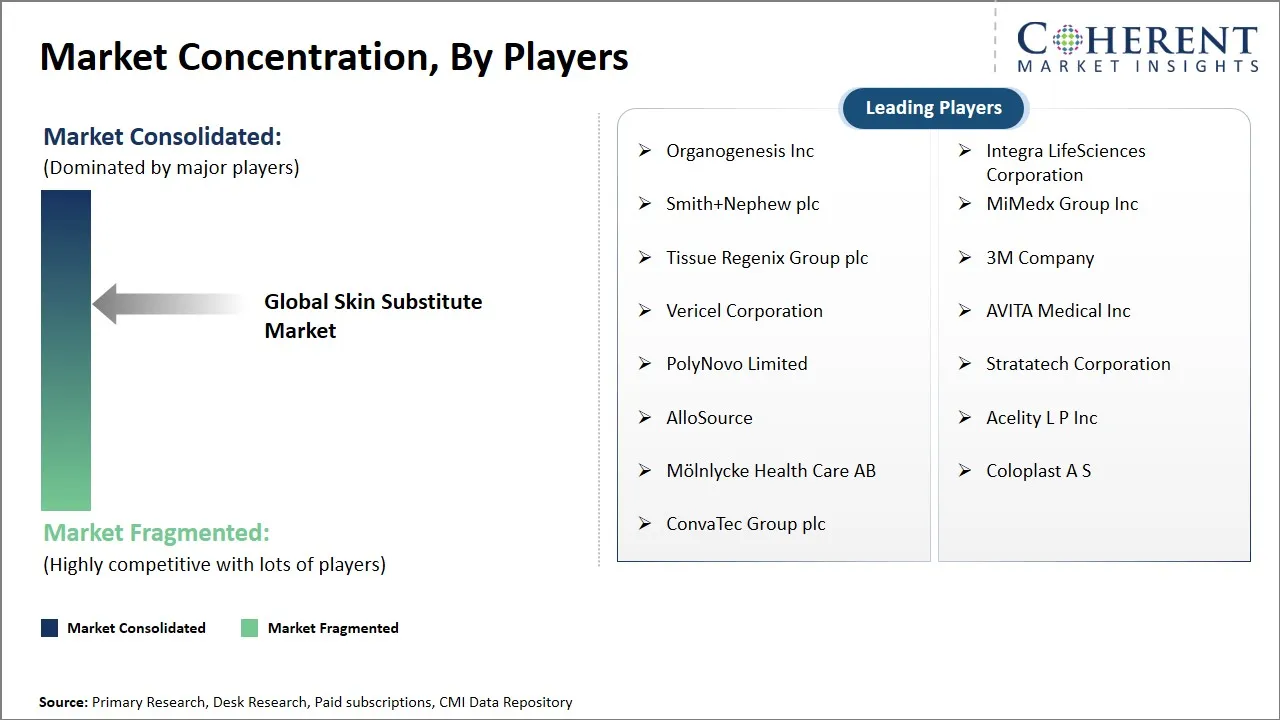
| Companies covered: | Organogenesis Inc, Integra LifeSciences Corporation, Smith+Nephew plc, MiMedx Group Inc, Tissue Regenix Group plc, 3M Company, Vericel Corporation, AVITA Medical Inc, PolyNovo Limited, Stratatech Corporation, AlloSource, Acelity L P Inc, Mölnlycke Health Care AB, Coloplast A S, and ConvaTec Group plc | ||
| Growth Drivers: |
| ||
| Restraints & Challenges: |
| ||
Skin Substitute Market Dynamics
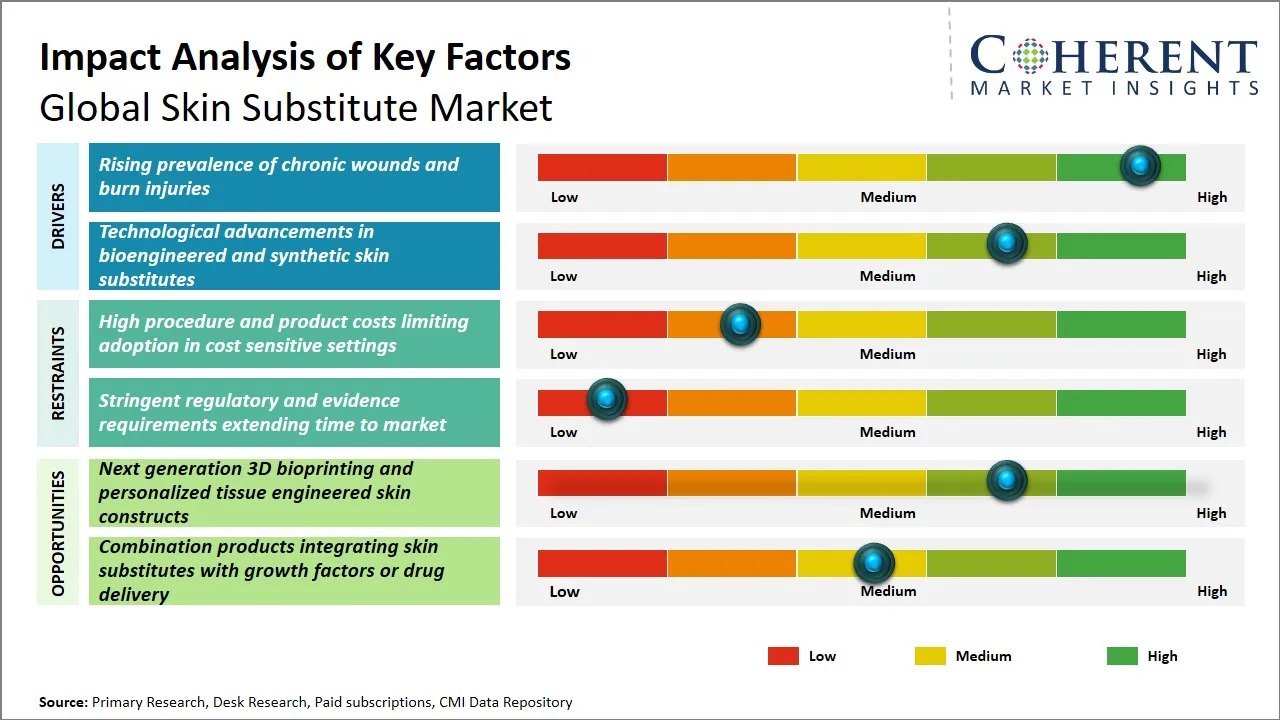
Skin Substitute Market Driver - Rising Prevalence of Chronic Wounds and Burn Injuries
The increase in the number of cases of chronic wounds and burns is driving high pressure in the development of sophisticated skin substitutes. Growing diabetes, obesity and aging trends are precipitating diabetic foot ulcers, venous leg ulcers and pressure sores. Treatment requirements are also augmented by burn injuries in accidents and industrial hazards. Conventional dressings do not work with such complicated wounds and skin replacements are a better choice to allow quicker and safer healing.
For instance, in October 2023, the WHO reported 180000 burn deaths each year, showing rising demand for Skin Substitute treatments. Integra LifeSciences develops matrices that support recovery for 40000 hospitalized US burn patients annually. Smith+Nephew supplies graft solutions used across 410000 yearly U.S. burn cases. Mölnlycke Health Care provides hybrid dressings supporting treatment for 1 million severe burn patients in India each year. The WHO also noted 173000 Bangladeshi children suffer major burns annually.
Moreover, in September 2024, an Indian study reported 1.89 chronic wound cases per 1000 people, increasing the need for modern Skin Substitute therapies. Integra LifeSciences, a global wound-care leader, supplies biological grafts for diabetic ulcers.
Skin Substitute Market Opportunity - Next-Generation 3D Bioprinting and Personalized Tissue Engineered Skin Constructs
The introduction of next-generation 3D bioprinting technology in the world market of skin substitutes constitutes a major growth opportunity because of the growth of need of personalized and effective wound care products. 3D bioprinting technology can be used to create highly accurate and patient-specific skin constructs by printing living cells and biomaterials in layers to replicate the natural skin architecture. The technology can solve the shortcomings of conventional skin substitutes in that it has resulted in improved biocompatibility, decreased rejection rates, and better graft integration and functional recovery. Individualized tissue-engineered epidermises based on wound characteristics and genetic profiles of specific patients can result in better therapeutic results, in particular, to chronic wounds, burns, and enormous skin gaps.
In April 2025, NUS researchers reported a breakthrough in personalized tissue engineering that supports future Skin Substitute innovations. The National University of Singapore, a leading research institution, developed an AI-guided 3D bioprinting method to create customized gingival grafts for dental repair. The team led by Assistant Professor Gopu Sriram used AI to optimize printing parameters and reduce procedure time. Their approach aims to replace traditional grafting, which requires tissue harvesting and often causes discomfort.
Analyst Opinion (Expert Opinion)
- The skin substitute market is rising with hospitals becoming more sophisticated with regard to burns and chronic wounds. Increasing standards of healing are being brought by improvements in biomaterials, engineered matrices and hybrid scaffolds with easier regulatory paths existing in key regions. Issues still persist in the area of cost, reimbursement and differing clinical needs, but the demand is increasing in diabetic and geriatric wound care. Conferences like the European Wound Management Association conference and the World Burn congress keep placing the new technologies and clinical advances into the limelight.
- Pilot programmes to diabetic ulcers using bioengineered grafts have brought positive results to hospitals in the U.S. and Europe, companies like Integra LifeSciences and Smith+Nephew are broadening their next-generation product range. The government programmes to enhance the wound-care infrastructure are also accelerating the adoption driving the market towards overall acceptance of advanced biological, synthetic and hybrid substitutes.
Speak to the analyst
Want personalized insights?
Take the findings above to one of our principal consultants, or have the report rebuilt around the segments, geographies and competitors you actually track.
Market Segmentation
- Source Insights (Revenue, USD Mn, 2021 - 2033)
- Biological Skin Substitutes
- Allograft
- Xenograft
- Autologous
- Synthetic Skin Substitutes
- Polymer-based (e.g., polyurethane, silicone
- Hydrogel-based
- Foam and film-based
- Biosynthetic/Hybrid Skin Substitutes
- Biological–synthetic composite matrices
- Bioactive polymer–collagen hybrids
- Cellular Content Insights (Revenue, USD Mn, 2021 - 2033)
- Acellular Skin Substitutes
- Cellular Skin Substitutes
- Use Insights (Revenue, USD Mn, 2021 - 2033)
- Temporary
- Permanent
- Application Insights (Revenue, USD Mn, 2021 - 2033)
- Acute Wounds
- Chronic Wounds
- Burn Injuries
- Surgical Wounds and Reconstruction
- Trauma and Accident Care
- Thickness Insights (Revenue, USD Mn, 2021 - 2033)
- Epidermal Substitutes
- Dermal Substitutes
- Double-Layered (Bilayer) Substitutes
- Technology Insights (Revenue, USD Mn, 2021 - 2033)
- Tissue-Engineered Constructs
- Stem Cell–Based Constructs
- 3D Bioprinted Constructs
- Collagen-Based Matrices
- Hydrogel-Based Matrices
- End User Insights (Revenue, USD Mn, 2021 - 2033)
- Hospitals
- Specialty Burn Centers
- Wound Care Clinics
- Ambulatory Surgical Centers
- Academic and Research Institutes
- Regional Insights (Revenue, USD Mn, 2021 - 2033)
- North America
- U.S.
- Canada
- Latin America
- Brazil
- Argentina
- Mexico
- Rest of Latin America
- Europe
- Germany
- U.K.
- Spain
- France
- Italy
- Russia
- Rest of Europe
- Asia Pacific
- China
- India
- Japan
- Australia
- South Korea
- ASEAN
- Rest of Asia Pacific
- Middle East
- GCC Countries
- Israel
- Rest of Middle East
- Africa
- South Africa
- North Africa
- Central Africa
- North America
- Key Players Insights
- Organogenesis Inc
- Integra LifeSciences Corporation
- Smith+Nephew plc
- MiMedx Group Inc
- Tissue Regenix Group plc
- 3M Company
- Vericel Corporation
- AVITA Medical Inc
- PolyNovo Limited
- Stratatech Corporation
- AlloSource
- Acelity L P Inc
- Mölnlycke Health Care AB
- Coloplast A S
- ConvaTec Group plc
Sources
Primary Research Interviews
Industry Stakeholders
- Burn surgeons
- Plastic and reconstructive surgeons
- Wound care specialists
- Biomedical engineers
- Hospital procurement managers
- Regulatory affairs professionals
End Users
- Burn unit clinicians
- Chronic wound care nurses
- Trauma center physicians
- Dermatology specialists
- Home-care wound management providers
- Rehabilitation therapists
Government and International Databases
- U.S. FDA – PMA & 510(k) database
- EMA – European Medicines Agency repository
- NIH – National Institutes of Health
- WHO – Global Health Observatory
- CDC – National Hospital Care Survey
- Eurostat – Healthcare statistics
Trade Publications
- Wound Care Today
- Wounds International
- Journal of Wound Care Industry News
- MedTech Dive
- DeviceTalks
- Medical Device and Diagnostics Industry (MD+DI)
Academic Journals
- Journal of Burn Care & Research
- Burns & Trauma
- Wound Repair and Regeneration
- Biomaterials
- Tissue Engineering Part A/B/C
- Journal of Biomedical Materials Research
Reputable Newspapers
- The New York Times – Health
- The Guardian – Health
- The Washington Post – Science & Health
- Financial Times – Healthcare & Life Sciences
- Reuters Health
- The Hindu – Science & Medicine
Industry Associations
- American Burn Association (ABA)
- European Burns Association (EBA)
- Wound Healing Society (WHS)
- International Society for Burn Injuries (ISBI)
- American Society of Plastic Surgeons (ASPS)
- Advanced Wound Care Society (AWCS)
Public Domain Resources
- ClinicalTrials.gov
- OpenFDA datasets
- U.S. National Library of Medicine
- NCBI Bookshelf
- ResearchGate open-access papers
Proprietary Elements
- CMI Data Analytics Tool: Proprietary analytics tool to analyze real-time market trends, consumer behavior, and technology adoption in market
- Proprietary CMI Existing Repository of Information for Last 8 Years
Get access to 250+ pages report
Every segment, forecast, competitor profile and data table behind the analysis above — available for instant download.
- ESOMAR Member
- ISO 9001:2015 Certified
- D-U-N-S Registered
- GDPR & CCPA Compliant
Missing comfort of reading report in your local language? Find your preferred language:
Transform your Strategy with Exclusive Trending Reports
Frequently Asked Questions
The global skin substitute market is estimated to be valued at USD 459.0 Mn in 2026 and is expected to reach USD 833.7 Mn by 2033.
The CAGR of the global skin substitute market is projected to be 8.9% from 2026 to 2033.
Rising prevalence of chronic wounds and burn injuries and technological advancements in bioengineered and synthetic skin substitutes are the major factors driving the growth of the global skin substitute market.
High procedure and product costs limiting adoption in cost sensitive settings and stringent regulatory and evidence requirements extending time to market are the major factors hampering the growth of the global skin substitute market.
In terms of source, the biological skin substitutes segment is estimated to dominate the market revenue share in 2026.
Organogenesis Inc, Integra LifeSciences Corporation, Smith+Nephew plc, MiMedx Group Inc, Tissue Regenix Group plc, 3M Company, Vericel Corporation, AVITA Medical Inc, PolyNovo Limited, Stratatech Corporation, AlloSource, Acelity L P Inc, Mölnlycke Health Care AB, Coloplast A S, and ConvaTec Group plc are the major players.
North America is expected to lead the global skin substitute market in 2026.