

Global Squalene Market Size and Forecast – 2026-2033
The Global Squalene Market is estimated to be valued at USD 224.1 Mn in 2026 and is expected to reach USD 456.5 Mn by 2033, exhibiting a compound annual growth rate (CAGR) of 10.7% from 2026 to 2033.
Key Takeaways of the Squalene Market
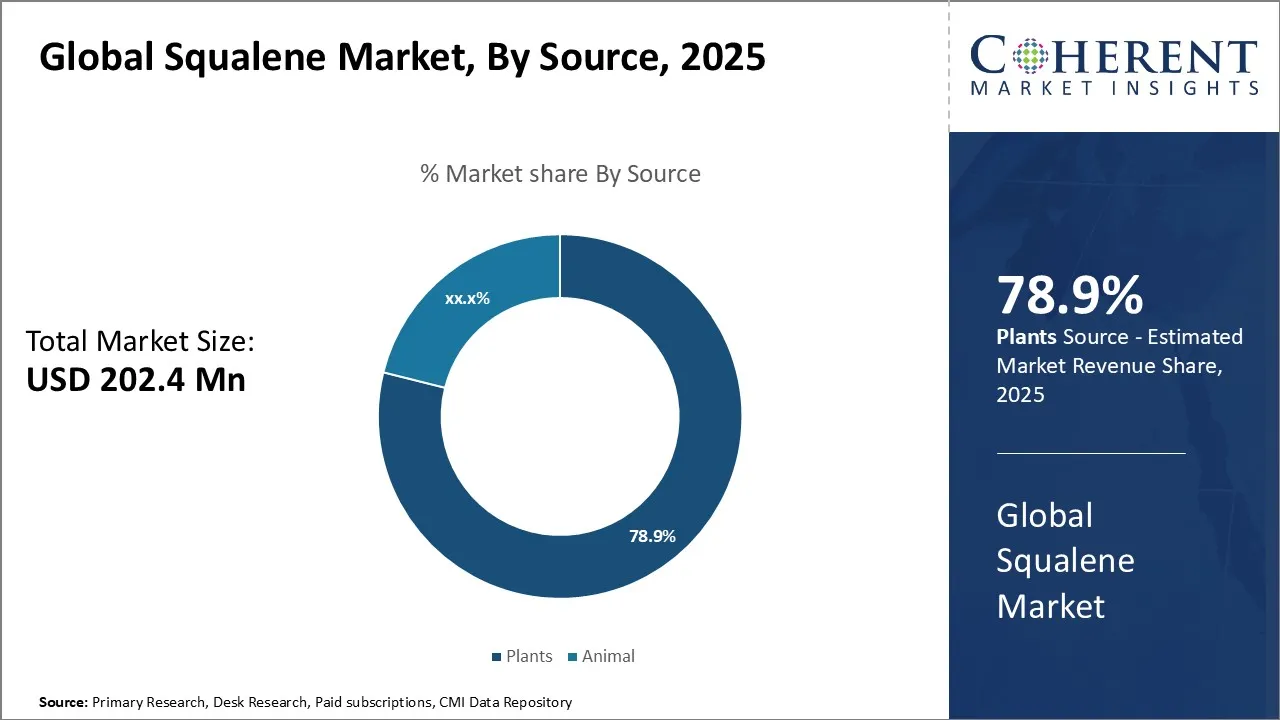
- The plants segment is projected to capture 79.9% of the market share in 2026.
- The personal care & cosmetics segment is expected to account for 39.5% of the global squalene market in 2026.
- Europe is anticipated to lead the global squalene market in 2026 with a 33. 3% share. Asia Pacific, with a 21.5% share, will be the fastest-growing region.
Market Overview
A notable trend in the squalene market is the rising preference for sustainable and bio-based sources, particularly plant-derived squalene, over traditional shark liver extraction. Consumers and regulatory bodies are increasingly focused on ethical sourcing and environmental impact, encouraging innovations in extraction technologies. Additionally, growing awareness about squalene’s benefits for skin health and immune support is boosting adoption in personal care products and dietary supplements, further propelling market growth and diversification.
Current Events and Its Impact
Current Events | Description and its impact |
Shift from Shark-Based to Plant/Biosynthetic Squalene |
|
Technological Advancements in Biosynthetic Production |
|
Segmental Insights
- Current Industry Events of 2026
- Market Size Estimation
- Regional Breakdown
- Competitive Landscape
- Customer Intelligence
- Segmental Analysis
- Pricing Analysis
- Key Market Drivers, Challenges & Future Trends
- Customized Insights Section
Squalene Market Insights, By Source – Plants Segment Dominates Due to Sustainability and Consumer Preference for Natural Ingredients
The plants segment is expected to hold 79.9% share of the market in 2026, owing to the rising consumer preference for natural and sustainable ingredients. Squalene derived from plants, such as amaranth oil, olive oil, and rice bran oil, is perceived as a safer and more sustainable alternative to animal-based sources, particularly shark liver oil, which has faced ethical concerns and regulatory restrictions. Growing awareness about environmental conservation and animal welfare has directed manufacturers and consumers alike towards plant-based squalene, bolstering its market share.
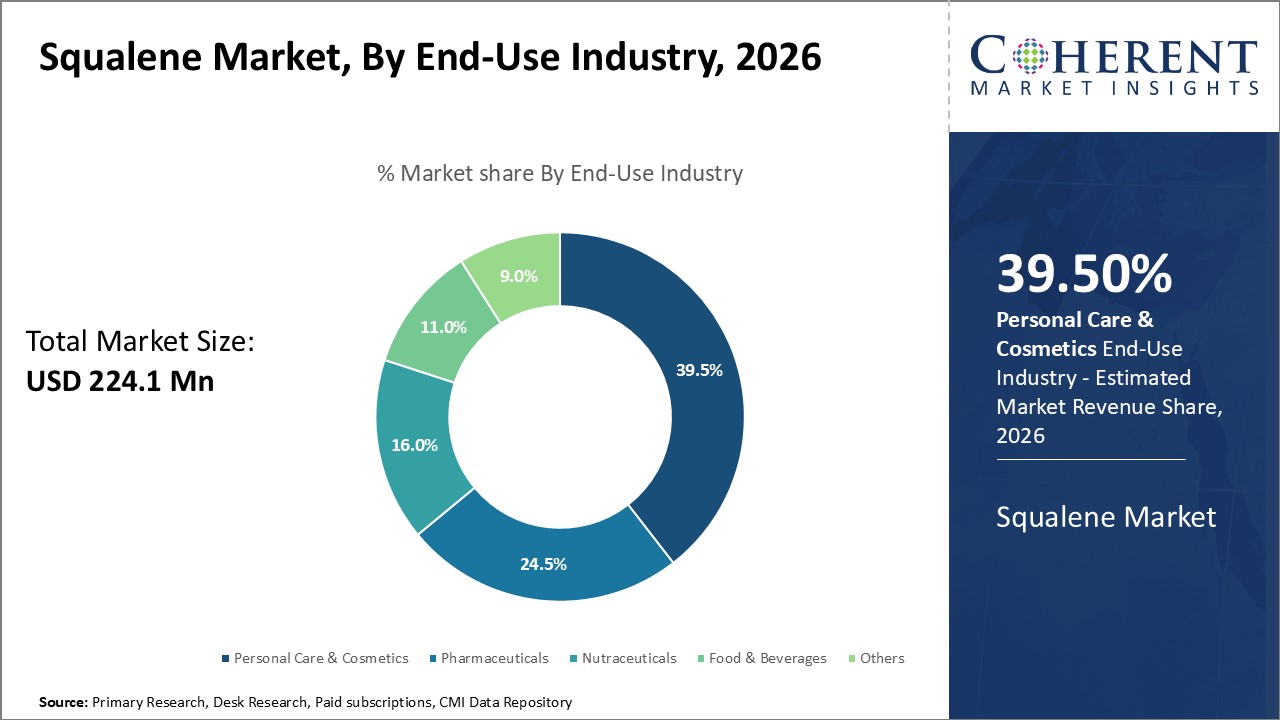
Squalene Market Insights, By End-use Industry - Personal Care & Cosmetics Segment Dominates Due to the Booming Global Demand for Innovative Skincare and Beauty Products
The personal care & cosmetics segment is projected to hold 39.5% share within the global squalene market in 2026, primarily propelled by the rapidly expanding global skincare and beauty industry. Squalene's unique emollient and antioxidant properties make it increasingly sought after by cosmetic formulators focused on improving skin hydration, softness, and protection against environmental stressors. Consumer pursuit for anti-aging, moisturizing, and non-comedogenic ingredients aligns perfectly with squalene’s attributes, driving its extensive integration in creams, serums, lotions, and hair care products.
A significant driver is the rising consumer inclination towards natural and chemical-free cosmetic products. Given squalene’s biological similarity to human sebum, it is celebrated for its excellent skin compatibility and absorption, which boosts its endorsement as a premium natural ingredient. The surge in awareness about the harmful effects of synthetic chemicals in beauty products has encouraged brands to reformulate with squalene, further elevating demand.
Regional Insights
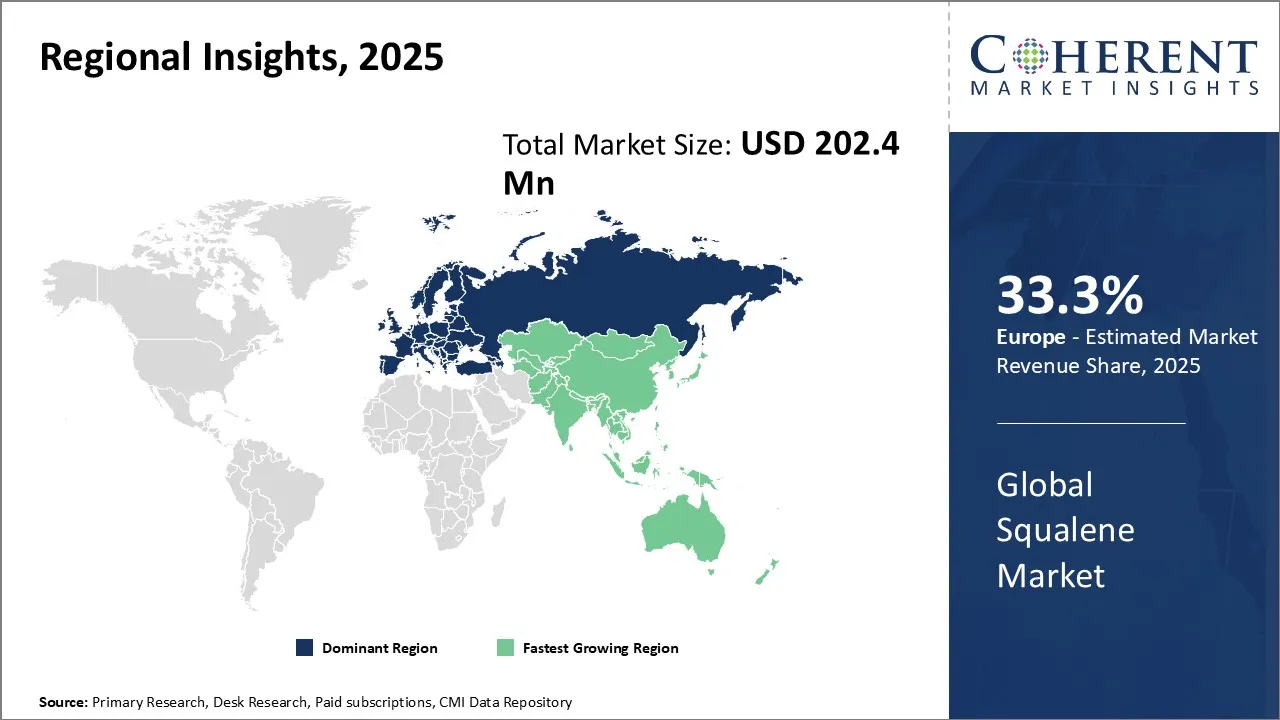
Europe Squalene Market Analysis and Trends
The Europe region is projected to lead the market with a 33.3% share in 2026. The region’s dominance is underpinned by the EU’s strict cosmetic ingredient regulations (EC No. 1223/2009) and sustainable sourcing initiatives aligned with the European Green Deal, pushing manufacturers toward plant- and algae-derived squalene over shark-based sources. Advanced biotechnological and fermentation techniques are widely adopted to ensure both efficiency and environmental responsibility in production.
Key players, such as Kishimoto, Sophim (France), and Croda International Plc (U.K.), are central to the market, focusing on clean-label, vegan, and natural formulations to meet the rising consumer demand for eco-friendly cosmetics and supplements. The pharmaceutical segment is also gaining traction, as European firms integrate squalene into adjuvants for vaccines and immune-support products. Additionally, robust trade networks across EU member states enhance intra-regional distribution efficiency and support exports to Asia Pacific and North America. Europe’s leadership is further consolidated by government-funded R&D programs and collaborations between biotech firms and cosmetic brands, ensuring continuous innovation and market growth.
Asia Pacific Squalene Market Analysis and Trends
The Asia Pacific region is expected to exhibit the fastest growth in the market contributing 21.5% share in 2026, fueled by rising consumer awareness regarding beauty and personal care, expanding pharmaceutical sectors, and a growing preference for natural and organic products. The market ecosystem benefits from a burgeoning middle-class population, rapid urbanization, and increasing disposable income, which collectively drive the demand for squalene-based cosmetics and health products.
Governments in countries like China, India, and South Korea are actively supporting domestic manufacturing through favorable policies, encouraging local production and innovation. Additionally, easy access to raw materials like olive oil, rice bran, and sugarcane in the region supports plant-based squalene production. Notable regional players include Shanghai Squalene Biotech Co., Ltd., Kyowa Hakko Bio Co., Ltd. (Japan), and Lipoid GmbH, which are expanding capacities and forging strategic partnerships to capitalize on rising demand.
Global Squalene Market Outlook for Key Countries
U.S. Squalene Market Trends
The U.S. squalene market remains highly competitive and innovation-driven, marked by strong collaborations between biotech firms and cosmetic industries. Companies such as Amyris are pioneering synthetic squalene production through fermentation, aiming to reduce reliance on animal sources. The presence of stringent regulations ensures high-quality product standards, supporting widespread adoption in vaccines, personal care products, and supplements. The country’s extensive distribution network and consumer preference for natural, sustainable ingredients further boost market growth.
China Squalene Market Trends
China’s squalene market is rapidly expanding, supported by rising skincare awareness and pharmaceutical advancements. The government’s commitment to enhancing domestic biotechnology and green chemical industries incentivizes local production and reduces import dependency. Companies, such as Shanghai Squalene Biotech, have increased capacity, focusing on plant-derived sources to meet consumer demand for cruelty-free products. Additionally, China’s growing e-commerce sector facilitates broader market penetration, especially in Tier 1 and Tier 2 cities.
Japan Squalene Market Trends
Japan continues to lead in technologically advanced squalene applications, particularly in high-end cosmetics and nutraceuticals. The country’s precision manufacturing, combined with a strong pharmaceutical tradition and aging population, drives the demand for squalene-enhanced products that promote skin health and immunity. Key players like Kyowa Hakko Bio are instrumental in advancing fermentation-based squalene production, aligning with Japan’s focus on sustainable and ethical sourcing.
India Squalene Market Trends
India's squalene market is evolving swiftly, underpinned by growing health consciousness and a booming beauty and personal care segment. The government fosters local entrepreneurship through supportive policies, encouraging the establishment of extraction facilities utilizing indigenous raw materials such as rice bran and sugarcane. Regional firms are increasingly collaborating with global companies to enhance product quality and distribution. Aasha Biochem, located in Kerala, is a prominent Indian manufacturer and exporter of 100% pure Squalene and Squalane, operating from a GMP-certified facility. Expansion in the healthcare industry, particularly vaccine manufacturing, also contributes to increased squalene utilization.
South Korea Squalene Market Trends
South Korea's squalene market thrives on the country’s dominant beauty and skincare industry, which heavily incorporates natural and innovative ingredients. The South Korean government supports the cosmetics sector through regulatory facilitation and innovation grants, thereby accelerating the adoption of squalene in premium cosmetic formulations. Players like Kolmar Korea are investing in R&D to develop plant-based squalene and derivatives to meet the preferences of eco-conscious consumers domestically and abroad. Robust export channels to global markets further underscore South Korea’s strategic role in the squalene supply chain.
Macro and Micro Economic Factors Impacting on Squalene Market Growth
Macroeconomic Factors
- Geopolitical Risks and Trade Policies: Regional conflicts, international sanctions, and trade barriers (such as those affecting major oil-producing countries and EU tariffs) disrupt supply chains and impact squalene prices globally.
- Regulatory Pressures: Global regulations restricting shark hunting (like CITES) and growing conservation efforts are shifting sourcing away from animal-based to plant-based or biosynthetic squalene. This realignment affects production volumes and market stability.
- Economic Growth and Spending Power: Expansion in emerging economies, especially in Asia Pacific (China, India), boosts demand for cosmetics, nutraceuticals, and pharmaceuticals where squalene is a core ingredient.
Microeconomic Factors
- Raw Material Availability: Fluctuating supply of shark liver (restricted by regulations) and low squalene yield from plant sources (olive, amaranth) cause frequent price volatility. Producers are investing in biotechnology, such as microbial fermentation, to stabilize sourcing and drive costs lower.
- Technological Innovation: Advancements in fermentation and synthetic biology are enabling scalable, cost-competitive production of biosynthetic squalene, giving firms a supply and price advantage.
- Consumer Preferences: Demand is surging for ethical, eco-friendly, vegan, and 'clean label' products, pushing brands toward plant-based and biosynthetic squalene. This results in portfolio shifts and marketing strategies focused on sustainability.
- Competitive Dynamics: Vertical integration and collaborative innovation between biotech, cosmetics, and pharma companies increase R&D investment, product purity, and market penetration. Leading firms like Amyris and DSM benefit from sustainable sourcing and advanced production technology.
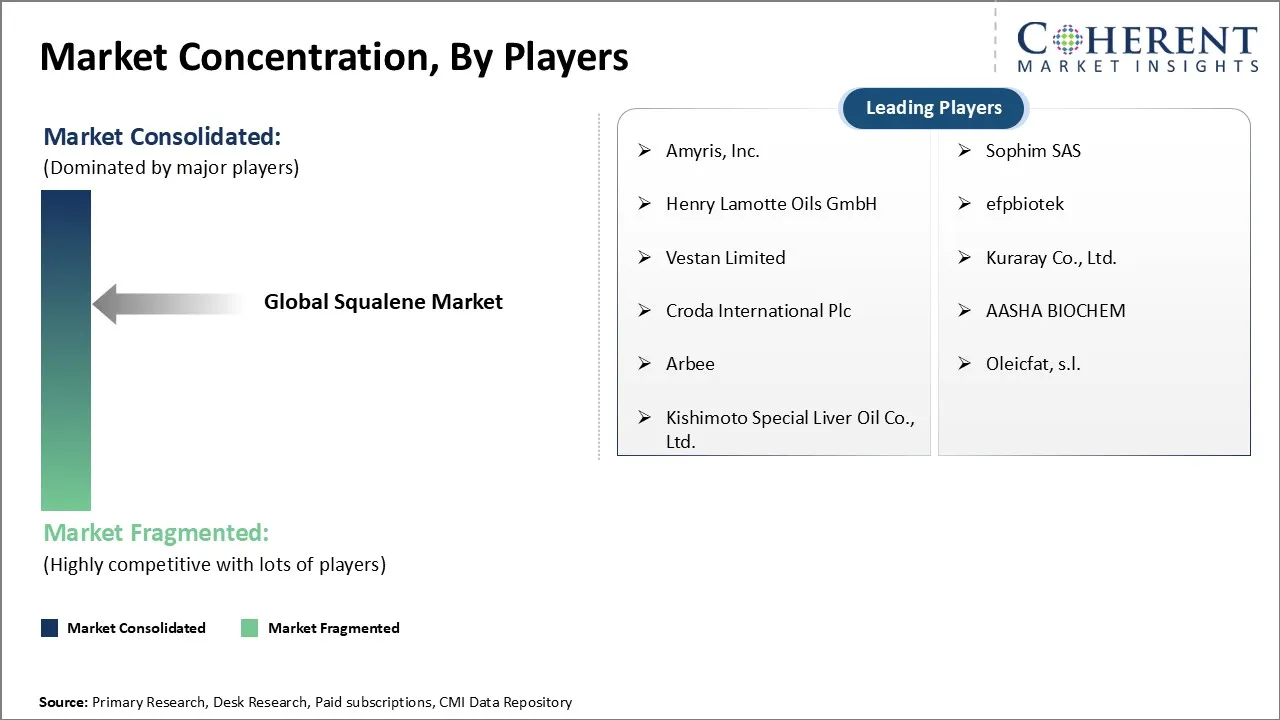
Market Players, Key Development, and Competitive Intelligence
Key Developments
- In March 2024, new research by Mr. Mickey Carroll, a science and technology reporter, highlighted that the widespread use of beauty ingredient squalene is directly linked to the exploitation of hundreds of shark species facing extinction. Deepwater sharks and rays, which reproduce slowly and are particularly vulnerable to overfishing, are experiencing rapid declines, with squalene demand emerging as a major contributing factor.
Top Strategies Followed by Global Squalene Market Players
- Established industry leaders invest heavily in research and development to innovate high-performance squalene-based products that meet evolving customer demands in sectors like cosmetics, pharmaceuticals, and nutraceuticals. Their R&D efforts focus on enhancing product purity, sustainability, and multifunctionality, enabling them to offer advanced solutions that differentiate them from competitors.
- For instance, Amyris pioneered sugarcane-derived bio-based squalene (Neossance Squalane), reducing dependency on shark liver oil while meeting the rising demand in cosmetics and pharmaceuticals.
- Mid-level players in the squalene market adopt a different approach by concentrating on delivering cost-effective solutions that maintain a balance between quality and affordability. Acknowledging the price sensitivity of certain consumer segments, these companies focus on optimizing their production processes to reduce costs while sustaining acceptable product standards. Collaborations are a critical component of their strategies; they often enter into partnerships with technology providers or contract manufacturers to boost production efficiency and access advanced capabilities that would be difficult to develop independently.
- For example, EFPBiotek is recognized as a leading European manufacturer of squalene and squalane, including vegetable-origin variants. The company is described as food-grade certified, with a heritage dating back over 100 years.
- Small-scale players in the global squalene market differentiate themselves by carving out niche segments that emphasize specialized product features or innovative formulations. Often leveraging cutting-edge extraction and purification technologies, these smaller firms aim to compete on innovation rather than scale, addressing unique consumer needs or regulatory demands that larger companies might overlook.
- For instance, Arista Industries supplies plant-sourced squalene and has the capability to serve clean-label cosmetic formulations.
Market Report Scope
Squalene Market Report Coverage
| Report Coverage | Details | ||
|---|---|---|---|
| Base Year: | 2025 | Market Size in 2026: | USD 224.1 Mn |
| Historical Data for: | 2020 To 2024 | Forecast Period: | 2026 To 2033 |
| Forecast Period 2026 to 2033 CAGR: | 10.7% | 2033 Value Projection: | USD 456.5 Mn |
| Geographies covered: |
| ||
| Segments covered: |
| ||
| Companies covered: | Amyris, Inc., Sophim SAS, Henry Lamotte Oils GmbH, efpbiotek, Vestan Limited, Kuraray Co., Ltd., Croda International Plc, AASHA BIOCHEM, Arbee, Oleicfat, s.l., and Kishimoto Special Liver Oil Co., Ltd. | ||
| Growth Drivers: |
| ||
| Restraints & Challenges: |
| ||
Squalene Market Dynamics
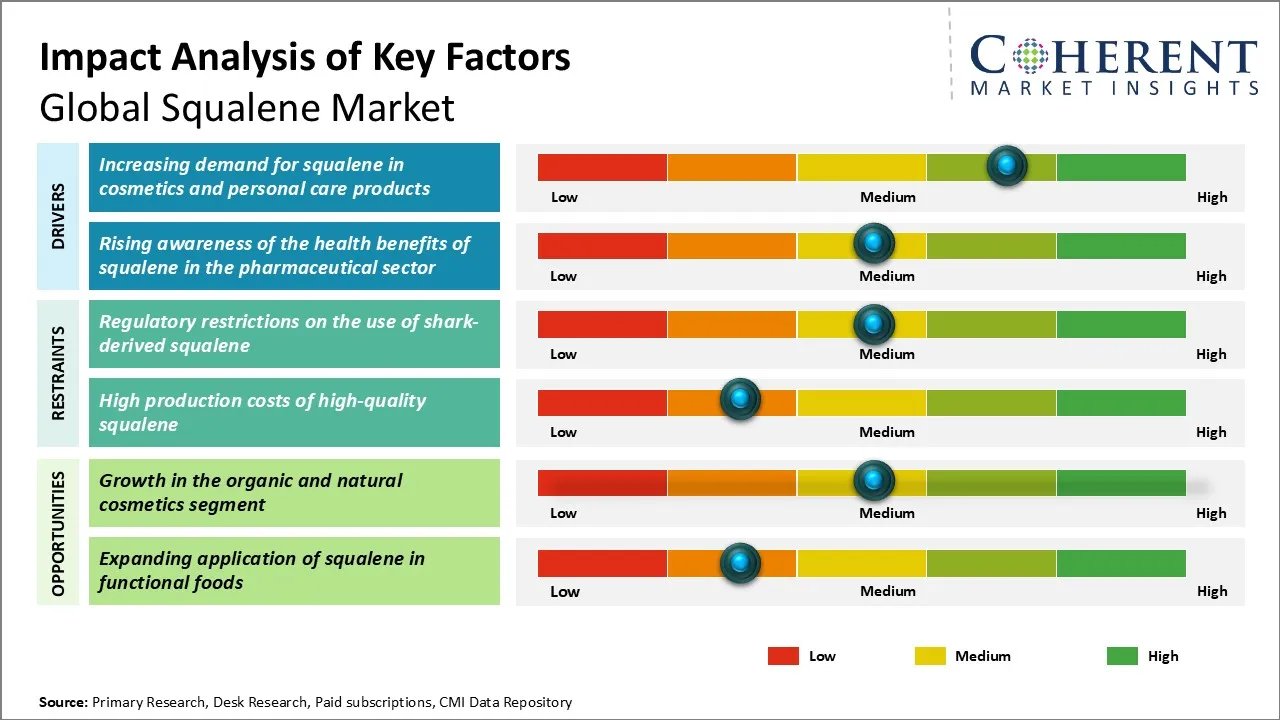
Squalene Market Driver - Increasing Demand for Squalene in Cosmetics and Personal Care Products
The surge in consumer preference for natural and effective skincare ingredients has significantly propelled the demand for squalene, especially within the cosmetics and personal care sectors. Known for its moisturizing properties and ability to enhance skin’s hydration without leaving a greasy residue, squalene has become a favored ingredient in formulations such as anti-aging creams, serums, lotions, and makeup products. Its biocompatibility and gentle nature make it suitable for all skin types, including sensitive skin, which further amplifies its appeal among cosmetic manufacturers aiming to cater to diverse consumer needs.
For instance, The Ordinary (by DECIEM) uses plant-derived squalane in its highly popular 100% Plant-Derived Squalane Serum, which is marketed as a lightweight hydrator suitable for both skin and hair. Similarly, L’Oréal Paris integrates squalane into its Revitalift anti-aging line to enhance skin suppleness and reduce fine lines.
Squalene Market Opportunity - Expansion Driven by Growth in the Organic and Natural Cosmetics Segment
The global squalene market is poised to benefit significantly from the rising consumer demand for organic and natural cosmetics. As awareness about the harmful effects of synthetic chemicals in skincare products grows, consumers are increasingly shifting toward formulations that emphasize natural and plant-derived ingredients. Squalene, particularly sourced from olives, sugarcane, and other plant origins, aligns perfectly with this trend, offering a biodegradable, skin-friendly, and effective moisturizing agent. The organic cosmetics segment’s rapid expansion is further propelled by the increasing preference for clean-label products that promise safety, efficacy, and sustainability.
For example, Biossance (a brand under Amyris, Inc.) has built its entire identity around sugarcane-derived squalane, promoting it as a sustainable alternative to shark-liver squalene. Its Squalane + Vitamin C Rose Oil and Squalane + Probiotic Gel Moisturizer are marketed as clean, vegan, and eco-friendly skincare solutions, directly tapping into the organic cosmetics boom.
Analyst Opinion (Expert Opinion)
- The global squalene market is witnessing significant momentum, driven by the increasing demand for natural and sustainable ingredients in cosmetics and pharmaceuticals. Analysts predict that the shift toward plant-based squalene, such as that derived from olive and sugarcane, will gain traction, particularly as consumers become more conscious about ethical sourcing.
- For instance, companies like Amyris have successfully launched innovative, plant-derived squalene, demonstrating a viable alternative to shark-derived products. Conferences like the Sustainable Cosmetic Summit have highlighted the importance of sustainability in ingredient sourcing, showcasing industry leaders who advocate for transparency and eco-friendliness. Furthermore, the rise in the popularity of functional foods containing squalene, particularly in Asian markets, underscores the ingredient's versatility beyond traditional applications.
- Analysts emphasize that as regulatory frameworks become more stringent regarding animal-derived ingredients, the market could see accelerated growth in synthetic and vegetable-sourced squalene. Overall, the future of the squalene market appears promising, with opportunities for innovation and sustainable practices driving its expansion in the coming years.
Speak to the analyst
Want personalized insights?
Take the findings above to one of our principal consultants, or have the report rebuilt around the segments, geographies and competitors you actually track.
Market Segmentation
- Source Insights (Revenue, USD Mn, 2021 - 2033)
- Plants
- Amaranth Oil
- Olive Oil
- Rice Bran Oil Plants
- Other Amaranth Oil
- Synthetic
- Animal
- Shark Liver Oil
- Other Animals
- End-use Industry Insights (Revenue, USD Mn, 2021 - 2033)
- Personal Care & Cosmetics
- Pharmaceuticals
- Nutraceuticals
- Food & Beverages
- Others
- Regional Insights (Revenue, USD Mn, 2021 - 2033)
- North America
- U.S.
- Canada
- Latin America
- Brazil
- Argentina
- Mexico
- Rest of Latin America
- Europe
- Germany
- U.K.
- Spain
- France
- Italy
- Russia
- Rest of Europe
- Asia Pacific
- China
- India
- Japan
- Australia
- South Korea
- ASEAN
- Rest of Asia Pacific
- Middle East
- GCC Countries
- Israel
- Rest of Middle East
- Africa
- South Africa
- North Africa
- Central Africa
- North America
- Key Players Insights
- Amyris, Inc.
- Sophim SAS
- Henry Lamotte Oils GmbH
- efpbiotek
- Vestan Limited
- Kuraray Co., Ltd.
- Croda International Plc
- AASHA BIOCHEM
- Arbee
- Oleicfat, s.l.
- Kishimoto Special Liver Oil Co., Ltd.
Sources
Primary Research Interviews
- R&D Director – Leading Cosmetic Ingredient Manufacturer (specializing in squalene-based emollients)
- Procurement Head – Major Nutraceutical & Dietary Supplement Brand
- Sustainability Manager – Marine & Plant-Derived Ingredient Supplier
- Product Innovation Head – Personal Care & Skincare Brand (using plant/algae-derived squalene)
Stakeholders
- Manufacturers (cosmetics, pharmaceuticals, nutraceuticals, biotechnology companies)
- End-use Sectors:
- Cosmetics & Personal Care (creams, lotions, serums)
- Pharmaceuticals (vaccine adjuvants, drug formulations)
- Nutraceuticals & Dietary Supplements (capsules, oils)
- Food & Beverages (fortified functional foods)
- Regulatory & Certification Bodies (U.S. FDA, EFSA, Clean Label certifiers)
- E-commerce Platforms & Retailers (Amazon, Sephora, iHerb)
- Technology Integration Players (biotech labs using fermentation & algal cultivation)
Databases
- UN Comtrade Database – Global trade of shark liver oil, olive-derived, and synthetic squalene
- India Import Export (EXIM) Database – Imports/exports of squalene & derivatives
- FAO Fishery Statistics – Data on shark populations linked to squalene sourcing
Magazines
- Cosmetics Business – Natural emollients & bio-based squalene market coverage
- Personal Care Europe – Plant- and algae-derived squalene adoption trends
- NutraIngredients – Squalene in dietary supplements and nutraceuticals
- Chemical Weekly – Pricing and supply updates for squalene
Journals
- International Journal of Cosmetic Science – Efficacy and stability of squalene in skin care
- Marine Drugs Journal – Studies on shark-derived vs plant-derived squalene
- Journal of Nutraceuticals & Functional Foods – Nutritional and therapeutic properties
- Journal of Applied Biotechnology – Fermentation and microbial production of squalene
Newspapers
- The Financial Times – Global demand growth in cosmetic & pharma ingredients
- The Guardian – Environmental impact of shark-derived squalene
- Asia Health Journal – Rising demand in Asia-Pacific nutraceutical markets
- European Nutrition News – EU regulations on sourcing and labeling of squalene
- The New York Times – Consumer trends toward plant/algae-based alternatives
Associations
- Council for Responsible Nutrition (CRN)
- International Society of Nutraceuticals and Functional Foods (ISNFF)
- American Cosmetic Association
- Natural Products Association (NPA)
- European Food Safety Authority (EFSA)
- Clean Label Project
Public Domain Sources
- U.S. FDA – Guidelines for squalene in dietary supplements & pharma adjuvants
- European Commission (EC) – Regulations for cosmetic ingredients and supplements
- World Health Organization (WHO) – Squalene in vaccine adjuvants (e.g., MF59)
- Convention on International Trade in Endangered Species (CITES) – Shark trade regulations
Proprietary Elements
- CMI Data Analytics Tool, Proprietary CMI Existing Repository of information for last 8 years.
Get access to 250+ pages report
Every segment, forecast, competitor profile and data table behind the analysis above — available for instant download.
- ESOMAR Member
- ISO 9001:2015 Certified
- D-U-N-S Registered
- GDPR & CCPA Compliant
Missing comfort of reading report in your local language? Find your preferred language:
Transform your Strategy with Exclusive Trending Reports
Frequently Asked Questions
The global squalene market is estimated to be valued at USD 224.1 Mn in 2026 and is expected to reach USD 456.5 Mn by 2033.
The CAGR of global squalene market is projected to be 10.7% from 2026 to 2033.
Increasing demand for squalene in cosmetics and personal care products and rising awareness of the health benefits of squalene in the pharmaceutical sector are the major factors driving the growth of the global squalene market.
Regulatory restrictions on the use of shark-derived squalene and high production costs of high-quality squalene are the major factors hampering the growth of the global squalene market.
In terms of source, the plants segment is estimated to dominate the market revenue share in 2026.
Amyris, Inc., Sophim SAS, Henry Lamotte Oils GmbH, efpbiotek, Vestan Limited, Kuraray Co., Ltd., Croda International Plc, AASHA BIOCHEM, Arbee, Oleicfat, s.l., and Kishimoto Special Liver Oil Co., Ltd. are the major players.
Europe is expected to lead the global squalene market in 2026.