

Global Steel Rebar Market Size and Forecast: 2026-2033
The global steel rebar market is estimated to be valued at USD 244.89 Bn in 2026 and is expected to reach USD 362.67 Bn by 2033, exhibiting a compound annual growth rate (CAGR) of 5.8% from 2026 to 2033.
Key Takeaways of the Steel Rebar Market
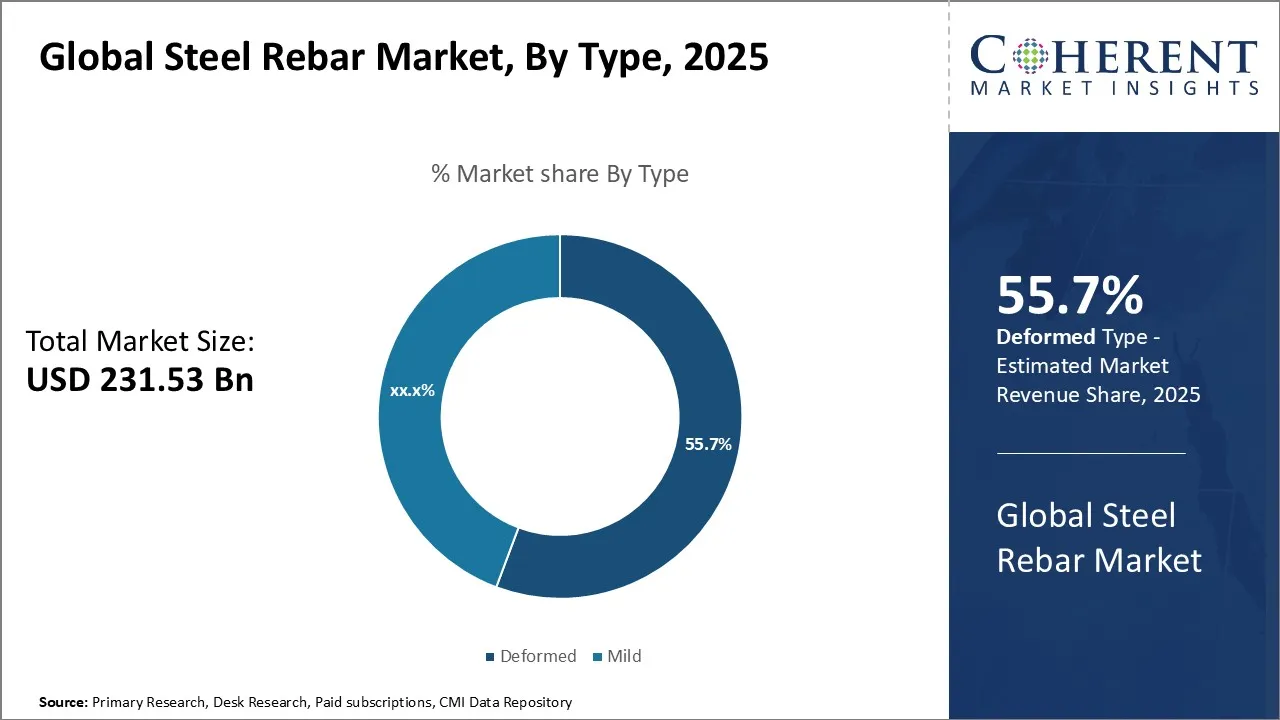
- The deformed segment is projected to account for 56.7% of the market share in 2026.
- The plain carbon steel rebar segment is expected to capture 35.7% share in 2026.
- The construction segment is projected to account for 54.7% of the market share in 2026.
- Asia Pacific is projected to dominate the global steel rebar market in 2026 with a 58.3% share. North America is anticipated to be the fastest-growing region, with a projected market share of 24.5% in 2026.
Market Overview
The steel rebar market is witnessing rising demand for high-strength, corrosion-resistant rebars, increased use of structural steel in infrastructure, and growing adoption of alloy steel in specialized projects. Advancements in automation, eco-friendly production, and recycled steel are further driving efficiency and sustainable growth. Environmental concerns are further prompting a shift toward eco-friendly production methods, boosting the demand for recycled steel rebars. These developments collectively support long-term market resilience and the growth opportunities.
Currents Events and their Impact
Current Events | Description and its Impact |
U.S. Trade Investigation into Vietnamese Steel Rebar (2025) |
|
Adoption of Hydrogen-Based Steel Rebar in the Middle East (2025) |
|
Segmental Insights
- Current Industry Events of 2026
- Market Size Estimation
- Regional Breakdown
- Competitive Landscape
- Customer Intelligence
- Segmental Analysis
- Pricing Analysis
- Key Market Drivers, Challenges & Future Trends
- Customized Insights Section
Steel Rebar Market Insights, By Type – Deformed Segment Dominates the Market due to Superior Mechanical Properties and Enhanced Bonding Capabilities
The deformed segment holds an estimated share of 56.7% in 2026, driven by its enhanced structural performance and widespread adoption in the construction industry. Deformed rebars are characterized by surface ridges or patterns that significantly improve the bond strength between the steel and concrete. This unique feature addresses critical challenges in reinforced concrete structures by reducing slippage and ensuring better load transfer, thereby increasing durability and safety. As urbanization accelerates globally, builders and engineers increasingly prefer deformed rebars to meet stringent building codes and sustainability standards demanding resilient infrastructures capable of withstanding seismic and dynamic loads.
For example, in large-scale infrastructure projects such as the Delhi–Meerut Expressway in India and the Istanbul Grand Airport in Turkey, deformed rebars were extensively deployed to ensure structural integrity under heavy traffic and seismic conditions. These projects highlighted how the ridged surface design of deformed rebars enhanced concrete bonding, minimized cracking risks, and ensured long-term durability.
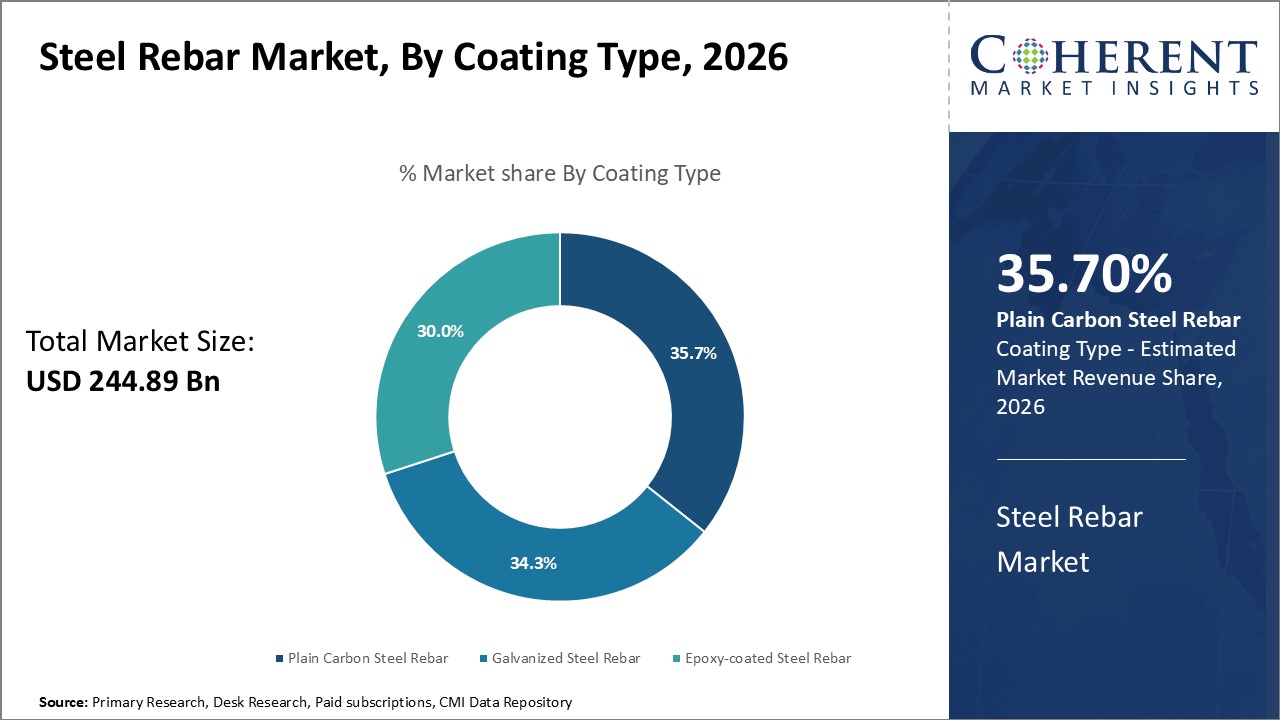
Steel Rebar Market Insights, By Coating Type - Plain Carbon Steel Rebar Segment leads due to Cost-Effectiveness and Extensive Availability for Traditional Construction Needs
The plain carbon steel rebar segment holds an estimated share of 35.7% in 2026, largely because of its balance between affordability and functional adequacy for most standard construction applications. The relatively straightforward production process for plain carbon steel rebar, without additional coating treatments, helps keep costs lower compared to galvanized or epoxy-coated options. This affordability makes it the preferred choice in regions where construction budgets are constrained but demand remains high, such as in emerging economies undergoing rapid urbanization.
Steel Rebar Market Insights, By Application - Construction Segment Dominates the Market Driven by Global Infrastructure Development and Urban Expansion
The construction segment is projected to contributes 54.7% share of the steel rebar market in 2026, reflecting its essential role in the creation of buildings, bridges, highways, and other civil engineering structures. The surging pace of urbanization across continents has dramatically increased the need for new residential, commercial, and industrial buildings, all of which rely heavily on reinforced concrete and thus steel rebar as a fundamental structural component. Governments and private developers alike are channeling substantial resources into expanding housing and commercial facilities, directly stimulating the consumption of steel rebar.
Infrastructure development further fuels this segment's growth. Large-scale public works, including roads, airports, railways, and water management systems, typically require substantial quantities of steel rebar to ensure structural stability and longevity. Investments by governments to upgrade or expand such infrastructure, often as part of economic stimulus or modernization strategies, translate into robust demand patterns. The adaptability of steel rebar in accommodating diverse engineering designs—from high-rise towers to expansive bridges—underscores its critical importance in this application space.
Regional Insights
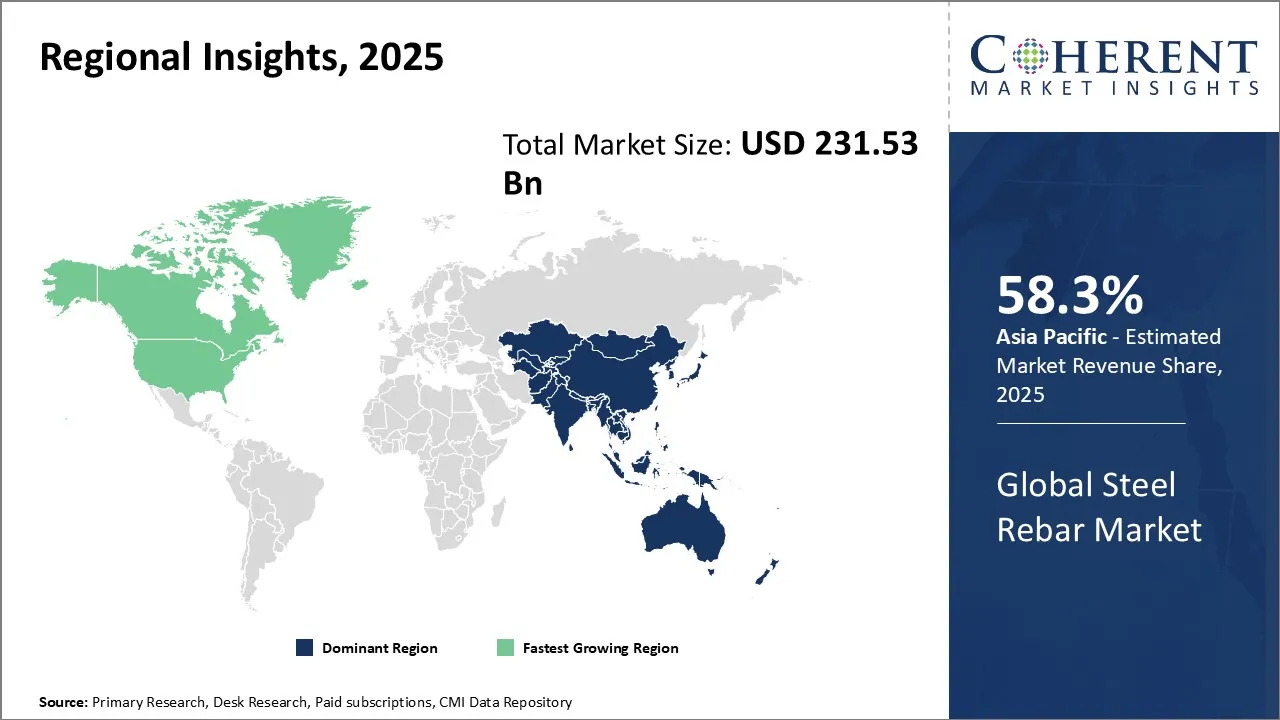
Asia Pacific Steel Rebar Market Analysis and Trends
The Asia Pacific region is projected to lead the market with a 58.3% share in 2026, driven by the extensive construction activities, rapid urbanization, and robust industrial development across countries such as China, India, Japan, and South Korea. The region benefits from a strong ecosystem encompassing raw material availability, advanced manufacturing infrastructure, and a well-established supply chain.
Government policies in many APAC countries emphasize infrastructure development, affordable housing projects, and industrial expansion, thus propelling demand for steel rebars. Major players such as China Baowu Steel Group, Jindal Steel & Power Ltd., Nippon Steel Corporation, and POSCO have significant production capacities, technological expertise, and distribution networks that reinforce the region’s dominance. Trade dynamics also favor this region due to its export-oriented manufacturing hubs and established shipping routes facilitating the global distribution.
North America Steel Rebar Market Analysis and Trends
The North America region is expected to exhibit the fastest growth in the market contributing 24.5% share in 2026, fueled by infrastructure rehabilitation programs, smart city initiatives, and growing demand for sustainable construction materials. The U.S., supported by the Infrastructure Investment and Jobs Act (IIJA), is channeling billions into highway modernization, bridge repair, and urban transit development, creating a strong pull for high-quality steel rebars. Canada is also prioritizing affordable housing projects and resilient infrastructure capable of withstanding extreme weather, boosting regional consumption.
The market ecosystem is becoming more advanced through the adoption of green steel technologies and digitalized manufacturing processes, ensuring compliance with stringent environmental regulations. Additionally, trade dynamics support the import of specialty rebars with seismic resistance and corrosion protection for critical projects in coastal and earthquake-prone regions.
Global Steel Rebar Market Outlook for Key Countries
China Steel Rebar Market Trends
China steel rebar market continues to lead globally due to its massive infrastructure and real estate development agendas. As the world’s largest steel producer, companies like China Baowu Steel Group and Anshan Iron and Steel Group dominate domestic production and export. The government’s focus on sustainable urbanization and modernization of transport infrastructure constantly fuels demand for steel rebars of varied grades and specifications.
India Steel Rebar Market Trends
India steel rebar market is propelled by rapid urbanization, governmental initiatives such as Smart Cities Mission and affordable housing schemes, and a growing industrial base. Key players like Jindal Steel & Power, Tata Steel, and Vizag Steel actively capitalize on the domestic demand surge through localized production and extensive distribution networks. Trade liberalization policies and infrastructure development grants enhance the market accessibility, while advancements in steel rebar manufacturing technology improve product offerings tailored to seismic and climate resilience requirements.
U.S. Steel Rebar Market Trends
The U.S. steel rebar market maintains steady demand driven by infrastructure upgrades, residential and commercial construction activities. Leading companies such as Nucor Corporation, Commercial Metals Company, and Gerdau Ameristeel ensure supply reliability through integrated production facilities and recycled steel utilization, aligning with environmental sustainability goals. The government policies like the Infrastructure Investment and Jobs Act provide financial impetus for large construction projects requiring substantial quantities of steel rebar, fostering innovation in product development and supply chain optimization.
Saudi Arabia Steel Rebar Market Trends
Saudi Arabia steel rebar market is rapidly evolving due to ambitious infrastructure projects under the Saudi Vision 2030 framework, including urban development and oil & gas sector expansions. Emirates Steel and Saudi Iron & Steel Company are pivotal, leveraging vertical integration and strategic partnerships with international firms to supply high-quality rebars for both domestic use and export. The government's supportive industrial policies and investment in technology upgrades within steel manufacturing units underpin the market growth and diversification.
Brazil Steel Rebar Market Trends
Brazil steel rebar market benefits from ongoing urban infrastructure modernization and industrial expansion, supported by companies like Gerdau and Companhia Siderúrgica Nacional. Domestic demand is heightened by public and private sector investments in transportation, energy, and housing. Trade dynamics in Brazil foster import substitution strategies alongside capacity enhancement initiatives. The focus on adopting advanced steel grades suited for seismic zones and tropical climates helps manufacturers maintain competitiveness amid the global steel rebar market fluctuations.
End User Feedback and Unmet Needs in the Steel Rebar Market
Proven Reliability in Large-scale Infrastructure
- One consistent area of satisfaction among government bodies and utility contractors is the performance reliability of high-grade rebars in mega-infrastructure projects. For example, public works departments engaged in bridge and highway expansion projects frequently commend thermomechanical treated (TMT) rebars for their high tensile strength, seismic resistance, and long-term durability.
- These attributes have reduced the frequency of structural failures and minimized maintenance costs, which is particularly valuable in regions with high seismic activity or heavy load-bearing infrastructure. End-users also note that the standardization of rebar grades has simplified project approvals and compliance, creating smoother integration with regulatory frameworks.
Unmet Needs in the Market
- Customization and Flexibility: Many contractors express a need for rebars tailored to specialized applications, such as lightweight, corrosion-resistant grades for coastal infrastructure or prefabricated cut-and-bend solutions to reduce on-site labor.
- Affordability and Price Stability: End users consistently seek more transparent pricing mechanisms or hedging options to mitigate the impact of global steel market fluctuations.
Market Players, Key Development, and Competitive Intelligence
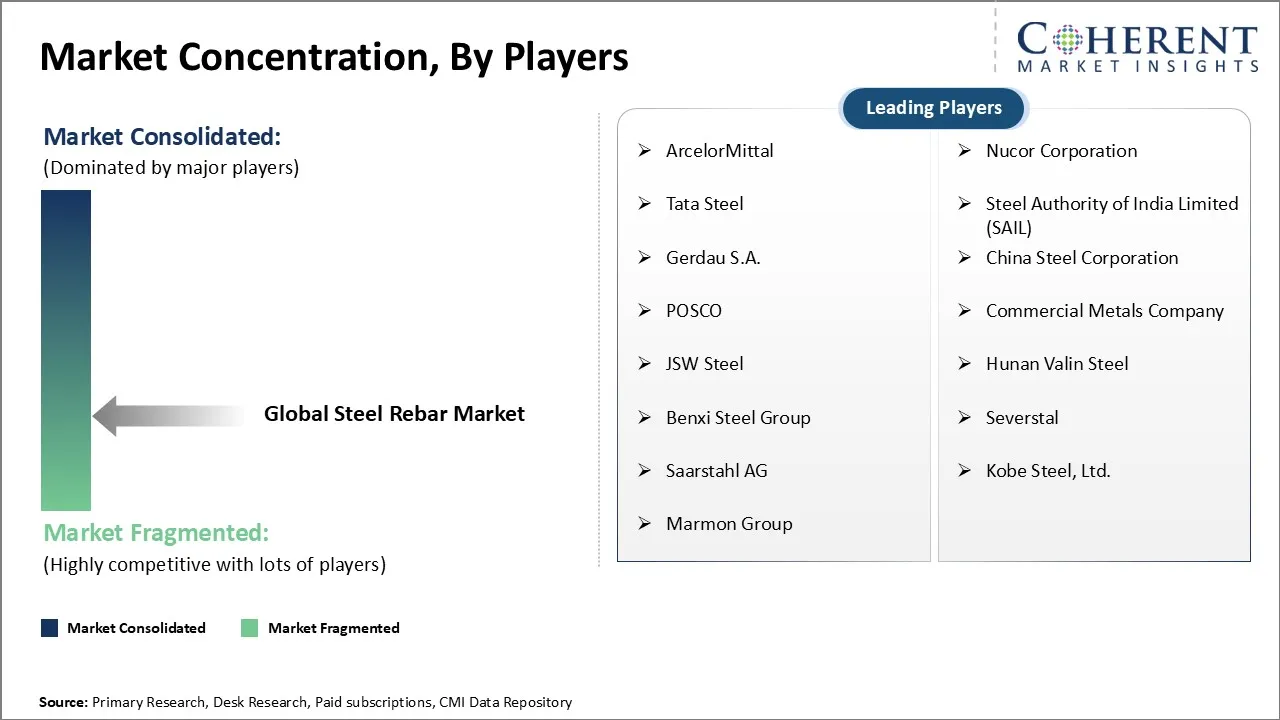
Key Developments
- In June 2025, the U.S. Department of Commerce (DOC) initiated antidumping and countervailing duty investigations into steel concrete reinforcing bar (rebar) imports from Algeria, Bulgaria, Egypt, and Vietnam, following petitions reported by the Trade Remedies Authority of Vietnam. This move marks heightened trade scrutiny on Vietnamese steel rebar exports.
- On May 20, 2025, Aldar announced its adoption of EMSTEEL’s hydrogen-based steel rebar, becoming the first developer in the Middle East and North Africa region to utilize this sustainable material. Supplied by EMSTEEL Group, the rebar will play a key role in constructing Abu Dhabi’s first net-zero carbon mosque within Sustainable City Yas Island, marking a significant step toward reducing carbon emissions in regional construction projects.
- In November 2023, NIPPON STEEL CORPORATION revealed plans to secure raw material supply stability by acquiring stakes in iron ore and coking coal assets. As part of this strategy, the company intends to purchase a 20% stake in Teck Resources’ coal unit, helping mitigate risks associated with price volatility.
- In August 2023, JSW Steel announced its intention to expand the production capacity of long steel products, driven by rising infrastructure demand. At present, 28% of its overall capacity is dedicated to long steel, which the company aims to increase to 35% in the coming years.
Top Strategies Followed by Global Steel Rebar Market Players
- Established industry leaders dominate through significant investments in research and development to innovate high-performance steel rebars tailored to evolving construction standards and sustainability demands. To sustain growth, they also aggressively expand their geographic footprint by broadening distribution networks, enabling deeper penetration into emerging markets where urbanization and infrastructure projects are booming.
- For instance, ArcelorMittal, developed corrosion-resistant rebars specifically designed for coastal and humid regions, ensuring longer durability in infrastructure projects.
- Mid-level players in the steel rebar market carve out competitive advantages by emphasizing cost-effective solutions that manage to strike a balance between durability and affordability. Recognizing the price sensitivity of many regional markets, especially in developing economies, these companies focus on optimizing production processes to reduce costs without compromising on essential quality attributes. They also leverage technological collaborations and joint ventures to enhance production efficiency and adopt modern manufacturing technologies, which improve product consistency and performance.
- For example, JSW Steel, adopted energy-efficient blast furnace technologies that lower production costs while ensuring quality, helping it serve India’s booming infrastructure sector at competitive prices.
- Small-scale players, meanwhile, differentiate themselves by carving out niche segments through specialization and innovation. These firms often concentrate on producing steel rebars with unique features, such as customized sizes, eco-friendly coatings, or enhanced flexibility, tailored for specific applications or local construction needs. To maintain competitiveness against larger manufacturers, small players adopt cutting-edge technologies, including automation and digital monitoring of production processes, to improve product quality and reduce turnaround times.
- For example, POSCO integrates digital monitoring and automation in its rebar production lines, ensuring consistent product standards while maintaining affordability. These strategies allow mid-level companies to balance performance with cost-effectiveness, winning contracts in fast-growing regional markets.
Market Report Scope
Steel Rebar Market Report Coverage
| Report Coverage | Details | ||
|---|---|---|---|
| Base Year: | 2025 | Market Size in 2026: | USD 244.89 Bn |
| Historical Data for: | 2020 To 2024 | Forecast Period: | 2026 To 2033 |
| Forecast Period 2026 to 2033 CAGR: | 5.8% | 2033 Value Projection: | USD 362.67 Bn |
| Geographies covered: |
| ||
| Segments covered: |
| ||
| Companies covered: | ArcelorMittal, Nucor Corporation, Tata Steel, Steel Authority of India Limited (SAIL), Gerdau S.A., China Steel Corporation, POSCO, Commercial Metals Company, JSW Steel, Hunan Valin Steel, Benxi Steel Group, Severstal, Saarstahl AG, Kobe Steel, Ltd., and Marmon Group | ||
| Growth Drivers: |
| ||
| Restraints & Challenges: |
| ||
Steel Rebar Market Dynamics
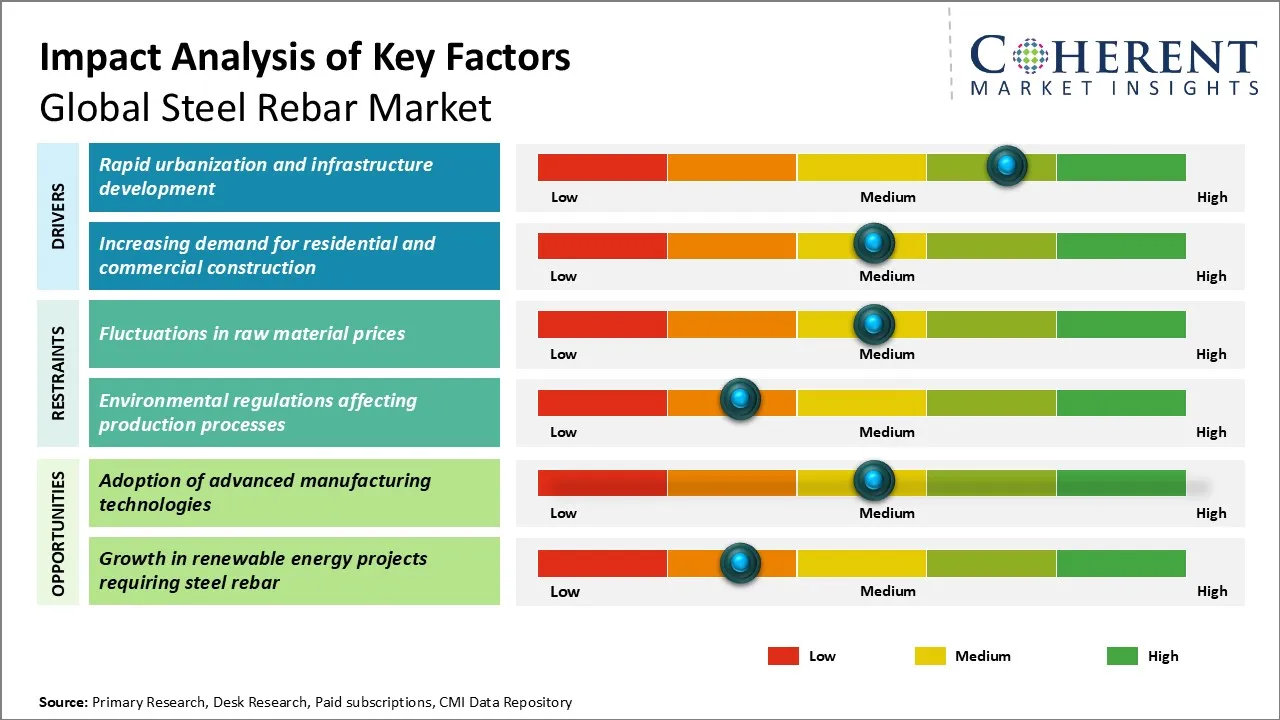
Steel Rebar Market Driver - Rapid Urbanization and Infrastructure Development
The accelerating pace of urbanization across emerging and developed economies is a significant catalyst driving the demand for steel rebar. As populations continue to migrate towards urban centers, the demand for new residential, commercial, and industrial structures rises substantially, necessitating robust and reliable construction materials. Steel rebar, known for its superior tensile strength and durability, is essential for reinforcing concrete in building foundations, bridges, highways, and various infrastructure projects.
For example, according to the pib gov., India’s government launched the Pradhan Mantri Awas Yojana (Urban) scheme to build over 11.2 million affordable housing units by 2025, alongside major infrastructure initiatives such as the Bharatmala Pariyojana, which aims to construct over 34,000 km of highways. Similarly, China’s continuous investment in urban rail transit and megacities’ infrastructure expansion (e.g., the Greater Bay Area project) drives massive steel rebar consumption. These large-scale projects highlight how rapid urbanization directly fuels steel rebar demand in both residential housing and public infrastructure sectors.
Steel Rebar Market Opportunity - Adoption of Advanced Manufacturing Technologies
The global steel rebar market presents a significant opportunity through the adoption of advanced manufacturing technologies, which promises to enhance productivity, quality, and cost-effectiveness across the industry. As construction activities accelerate worldwide, the demand for high-strength, durable, and precisely engineered steel rebars is rising, necessitating the integration of cutting-edge manufacturing solutions such as automation, robotics, and AI-driven quality control systems. Advanced manufacturing technologies enable producers to optimize material utilization, reduce waste, and improve dimensional accuracy, thereby meeting stringent construction standards and regulatory requirements.
For instance, according to mdpi.com, smart manufacturing systems can now monitor steel composition in real-time during the production process, ensuring consistent mechanical properties and adherence to international standards like ASTM A615 or BS 4449. The integration of predictive maintenance technologies has also enabled manufacturers to minimize downtime and optimize equipment performance, while advanced metallurgical techniques such as thermomechanical treatment are producing high-strength, low-alloy rebars that offer superior corrosion resistance and durability.
Analyst Opinion (Expert Opinion)
- The global steel rebar market is poised for substantial growth, driven by increasing infrastructure development and urbanization across emerging economies. Insights from the Global Steel Innovations Forum (2023) and the International Conference on Steel and Construction (2022) highlighted notable advancements, with companies like Tata Steel and ArcelorMittal at the forefront of introducing high-performance rebar solutions.
- Tata Steel’s recent launch of its corrosion-resistant rebar reflects a strategic response to enhancing durability in construction, addressing the increasing demand for long-lasting materials. Discussions at these conferences emphasized the significance of sustainability, particularly the push towards using recycled steel in rebar production, which can significantly reduce the carbon footprint. However, challenges such as fluctuating raw material prices and trade tariffs were pointed out as potential impediments to growth.
- Companies that invest in innovative production techniques and sustainable practices will likely gain a competitive edge. Additionally, fostering partnerships with construction firms to promote the benefits of advanced rebar solutions can enhance market penetration. Ultimately, the steel rebar market's trajectory will depend on its ability to innovate while responding effectively to the evolving needs of the construction sector.
Speak to the analyst
Want personalized insights?
Take the findings above to one of our principal consultants, or have the report rebuilt around the segments, geographies and competitors you actually track.
Market Segmentation
- Type Insights (Revenue, USD Bn, 2021 - 2033)
- Deformed
- Mild
- Coating Type Insights (Revenue, USD Bn, 2021 - 2033)
- Plain Carbon Steel Rebar
- Galvanized Steel Rebar
- Epoxy-coated Steel Rebar
- Application Insights (Revenue, USD Bn, 2021 - 2033)
- Construction
- Infrastructure
- Industrial
- Others
- Regional Insights (Revenue, USD Bn, 2021 - 2033)
- North America
- U.S.
- Canada
- Latin America
- Brazil
- Argentina
- Mexico
- Rest of Latin America
- Europe
- Germany
- U.K.
- Spain
- France
- Italy
- Russia
- Rest of Europe
- Asia Pacific
- China
- India
- Japan
- Australia
- South Korea
- ASEAN
- Rest of Asia Pacific
- Middle East
- GCC Countries
- Israel
- Rest of Middle East
- Africa
- South Africa
- North Africa
- Central Africa
- North America
- Key Players Insights
- ArcelorMittal
- Nucor Corporation
- Tata Steel
- Steel Authority of India Limited (SAIL)
- Gerdau S.A.
- China Steel Corporation
- POSCO
- Commercial Metals Company
- JSW Steel
- Hunan Valin Steel
- Benxi Steel Group
- Severstal
- Saarstahl AG
- Kobe Steel, Ltd.
- Marmon Group
Sources
Primary Research Interviews
- Chief Procurement Officer – Leading Global Construction Company
- R&D Head – Major Steel Manufacturer (Rebar Division)
- Operations Manager – Infrastructure & Civil Engineering Firm
- Sustainability Director – Green Building Certification Body
Stakeholders
- Manufacturers (Integrated steel producers, mini-mills, secondary steel producers)
- End Use Sectors
- Construction & Infrastructure (Residential, Commercial, Industrial)
- Transportation & Energy Projects (Railways, Highways, Power Plants)
- Regulatory & Certification Bodies
- Distributors & Traders
- Engineering, Procurement & Construction (EPC) Firms
- Technology Integration Players Digital twin & BIM (Building Information Modeling) solution providers
Databases
- UN Comtrade Database – Global steel rebar trade flows
- World Steel Association (worldsteel) Database – Production & demand trends
- Indian Steel Association / Ministry of Steel (India) – Steel rebar production & policy updates
- U.S. Geological Survey (USGS) – Minerals Yearbook Iron & Steel
Magazines
- Steel Times International – Market updates & innovations in steel rebar
- Construction World – Infrastructure projects driving steel rebar demand
- Global Construction Review – Large-scale projects influencing rebar consumption
- ME Steel Magazine – Middle East steel market trends including rebar
Journals
- Journal of Constructional Steel Research – Performance & innovations in rebar
- Materials and Structures – Concrete reinforcement & rebar applications
- Engineering Structures Journal – Steel rebar usage in seismic zones
- Construction and Building Materials Journal – Studies on rebar quality & alternatives
- Journal of Metallurgical Engineering – Advances in steel rebar production technology
Newspapers
- The Financial Times – Global steel and construction market trends
- The Economic Times (India) – Steel rebar pricing & domestic consumption
- China Daily – Rebar production policies & construction demand
- Gulf News – Middle East infrastructure and steel rebar consumption
Associations
- World Steel Association (WSA)
- American Iron and Steel Institute (AISI)
- China Iron and Steel Association (CISA)
- Indian Steel Association (ISA)
- European Steel Association (EUROFER)
Public Domain Sources
- OECD Steel Committee Reports – Policy insights & demand outlook
- U.S. Geological Survey (USGS) – Steel & iron ore production data
- World Bank – Infrastructure investment reports
- Ministry of Steel, India – Domestic rebar demand & production insights
- European Commission – Construction standards & steel regulation
Proprietary Elements
- CMI Data Analytics Tool, Proprietary CMI Existing Repository of information for last 8 years.
Get access to 250+ pages report
Every segment, forecast, competitor profile and data table behind the analysis above — available for instant download.
- ESOMAR Member
- ISO 9001:2015 Certified
- D-U-N-S Registered
- GDPR & CCPA Compliant
Missing comfort of reading report in your local language? Find your preferred language:
Transform your Strategy with Exclusive Trending Reports
Frequently Asked Questions
The global steel rebar market is estimated to be valued at USD 244.89 Bn in 2026 and is expected to reach USD 362.67 Bn by 2033.
The CAGR of the global steel rebar market is projected to be 5.8% from 2026 to 2033.
Rapid urbanization and infrastructure development and increasing demand for residential and commercial construction are the major factors driving the growth of the global steel rebar market.
On average, rebar costs approximately USD 1,300 to USD 2,000 per ton.
Fluctuations in raw material prices and environmental regulations affecting production processes are the major factors hampering the growth of the global steel rebar market.
In terms of type, the deformed segment is estimated to dominate the market revenue share in 2026.
ArcelorMittal, Nucor Corporation, Tata Steel, Steel Authority of India Limited (SAIL), Gerdau S.A., China Steel Corporation, POSCO, Commercial Metals Company, JSW Steel, Hunan Valin Steel, Benxi Steel Group, Severstal, Saarstahl AG, Kobe Steel, Ltd., and Marmon Group are the major players.