

Global Tangential Flow Filtration Market Size and Forecast – 2026 to 2033
The Global Tangential Flow Filtration Market is estimated to be valued at USD 2.40 Bn in 2026 and is expected to reach USD 5.54 Bn by 2033, exhibiting a compound annual growth rate (CAGR) of 12.7% from 2026 to 2033. This significant growth is attributed to the increasing demand for advanced filtration technologies across the biopharmaceutical manufacturing, food and beverage processing, and water treatment industries. Rising investments in research and development further propel market expansion, catering to the escalating need for efficient separation and purification solutions worldwide.
Key Takeaways of the Global Tangential Flow Filtration Market
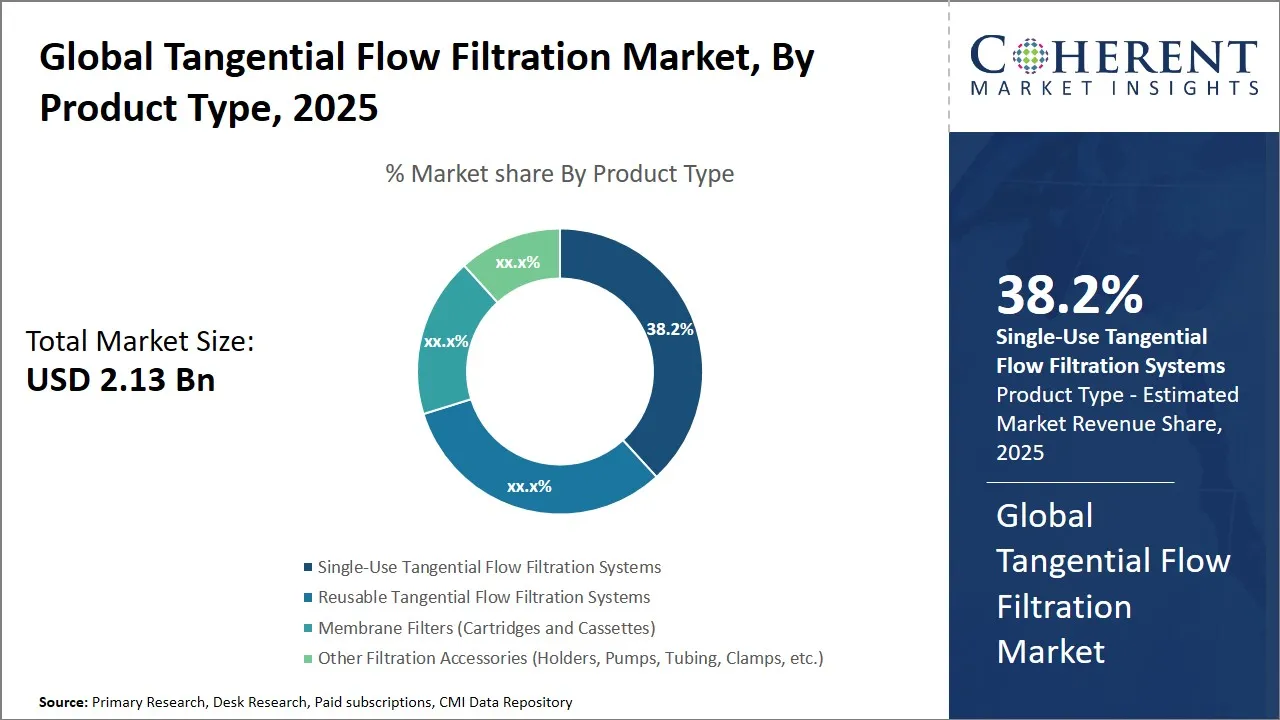
- In 2026, within the product type category, single-use tangential flow filtration systems are expected to account for the largest market share at 39.2 %, driven by their increasing adoption in biopharmaceutical manufacturing for efficiency and contamination control.
- In the technique segment, ultrafiltration is expected to lead the market with 27.2 % share, supported by its wide applicability in concentrating and separating biomolecules through size exclusion.
- Under the material classification, polyethersulfone (PES) is expected to dominate with a 35.2 % share, attributed to its strong chemical resistance and suitability for diverse bioprocessing applications.
- North America is expected to lead the market, holding a share of 39.3 % in 2026. Asia Pacific is anticipated to be the fastest-growing region, with a market share of 24.2% in 2025.
Market Overview
A key market trend in tangential flow filtration is the growing adoption of single-use tangential flow filtration systems, which offer enhanced sterility, lower contamination risks, and reduced cleaning requirements, thereby improving operational efficiency. Additionally, advancements in membrane technology, such as improved pore structures and novel materials, are driving better filtration performance and longer membrane lifespans. The surge in biologics production and stringent regulatory standards are also pushing manufacturers to adopt tangential flow filtration solutions for scalable, cost-effective downstream processing, reinforcing the market’s dynamic growth trajectory.
Current Events and Its Impact
Current Events | Description and its impact |
Uptick in global contract manufacturing activity |
|
Advances in membrane technology for tangential flow filtration systems |
|
Segmental Insights
- Current Industry Events of 2026
- Market Size Estimation
- Regional Breakdown
- Competitive Landscape
- Customer Intelligence
- Segmental Analysis
- Pricing Analysis
- Key Market Drivers, Challenges & Future Trends
- Customized Insights Section
Tangential Flow Filtration Market Insights, By Product Type - Single-Use Tangential Flow Filtration Systems Drive Efficiency and Contamination Control in Bioprocessing
In terms of product type, single-use tangential flow filtration systems are expected to contribute the highest share of the global market with 39.2% in 2026 primarily due to their growing adoption in biopharmaceutical manufacturing and other sterile processing industries. The single-use format allows for substantial improvements in operational efficiency, reducing the need for time-consuming cleaning and sterilization protocols typically associated with reusable systems. This attribute becomes particularly valuable in multiproduct facilities, where alternating different batches or varying products demands rapid turnaround and minimal risk of cross-contamination.
The pharmaceutical and biotechnology sectors have embraced single-use tangential flow filtration systems because these systems help streamline processes by offering pre-sterilized and disposable components that ensure consistent performance with minimal maintenance. This mitigates the risk of contamination, a critical concern in biologics production where product purity is paramount. Moreover, single-use tangential flow filtration supports flexible manufacturing strategies, allowing companies to scale up or down quickly depending on demand without heavy capital investments in cleaning infrastructure.
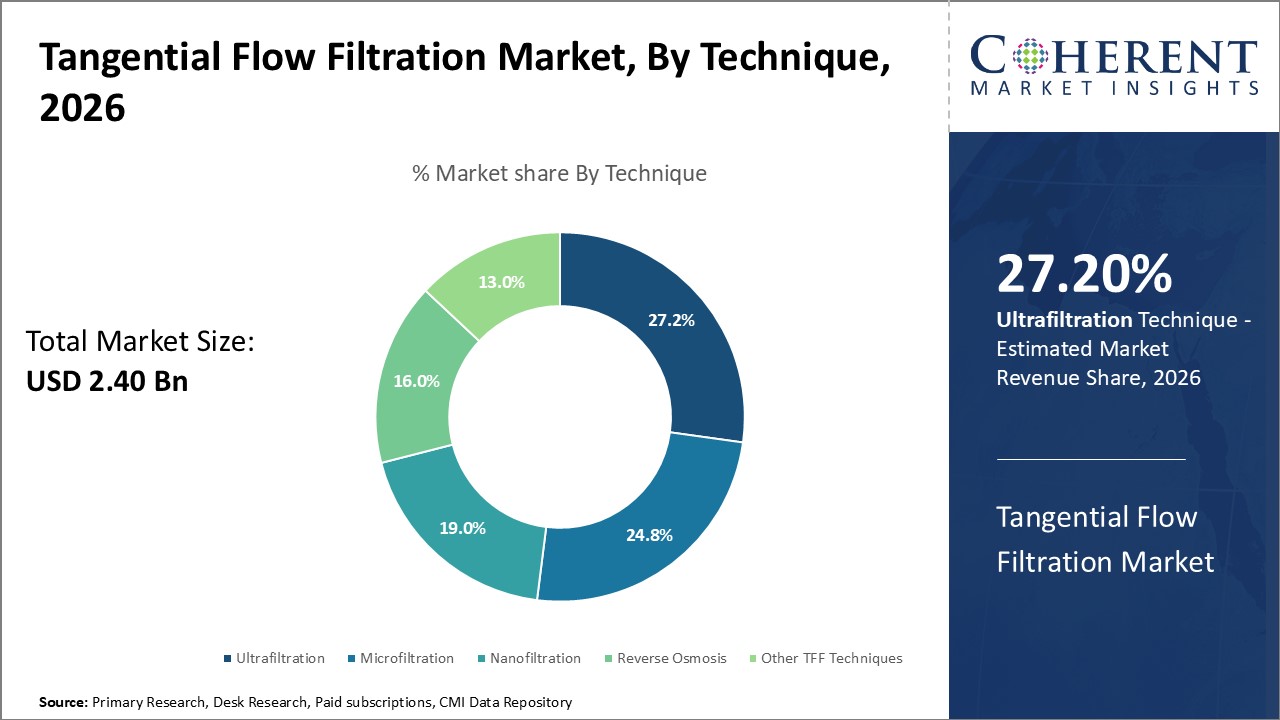
Tangential Flow Filtration Market Insights, By Technique - Ultrafiltration Technique Leads Due to Versatility in Separation and Purification
Within the technique segment, ultrafiltration is expected to dominate the tangential flow filtration market share with 27.2% in 2026 because of its broad applicability in separating and concentrating biomolecules based on size exclusion principles. Ultrafiltration membranes, which typically have pore sizes ranging from 1 to 100 nanometers, are highly suitable for fractionating proteins, enzymes, viruses, and other macromolecules integral to bioprocessing, water treatment, and food industries.
The increasing complexity of biologics, including monoclonal antibodies and recombinant proteins, requires purification technologies capable of handling large biomolecules without compromising their structural integrity. Ultrafiltration uniquely fulfills this requirement by providing selective permeability that retains valuable product molecules while allowing smaller impurities and solvents to pass through, enabling effective concentration and diafiltration processes.
In June 2024, Ecolab Life Sciences, a global leader in water, hygiene, and infection prevention solutions, partnered with Repligen to launch the DurA Cycle affinity resin. This next-generation resin is designed to improve the purification process of monoclonal antibodies by delivering higher durability and efficiency in multiple purification cycles.
Tangential Flow Filtration Market Insights, By Material - Polyethersulfone (PES) Materials Lead with Balance of Performance and Compatibility
By material, the Polyethersulfone (PES) segment is expected to hold the largest share in the tangential flow filtration market due to its excellent blend of chemical resistance with share of 35.2% in 2026, mechanical strength, and biocompatibility. PES membranes offer a unique combination of properties making them ideal for demanding filtration applications, particularly in life sciences and pharmaceuticals.
One of the primary factors driving PES dominance is its hydrophilic nature, which ensures high water flux and reduced fouling compared to more hydrophobic membrane materials. This property contributes to prolonged membrane life and consistent filtration performance, critical parameters in processes requiring high throughput and reproducibility.
Regional Insights
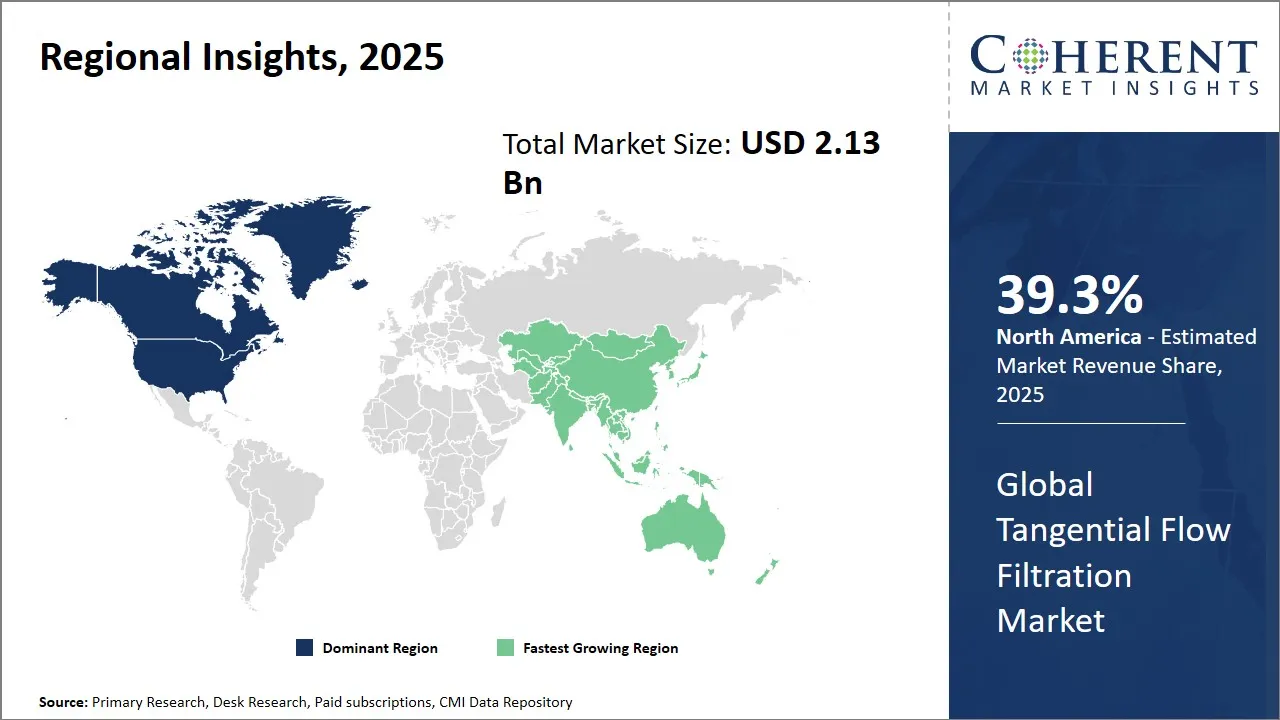
North America Tangential Flow Filtration Market Analysis and Trends
In North America, the dominance in the global tangential flow filtration market is driven by a well-established biopharmaceutical industry and a favorable regulatory environment with an estimated share of 39.3% in 2026. The presence of numerous biotech hubs across the U.S. and Canada creates a robust market ecosystem supported by extensive R&D activities and advanced infrastructure. Strong government initiatives aimed at promoting bioprocessing technologies, like funding for vaccine production and biologics manufacturing, further bolster market demand. Additionally, North America benefits from the presence of leading industry players such as Pall Corporation, Sartorius Stedim Biotech, and GE Healthcare Life Sciences, who continuously innovate tangential flow filtration solutions to meet stringent quality and scale requirements.
Pall Corporation (U.S.), Introduced the Cadence BioSMB system, which integrates tangential flow filtration technology to enable continuous bioprocessing, widely adopted by biopharma companies for monoclonal antibody and vaccine production.
Asia Pacific Tangential Flow Filtration Market Analysis and Trends
Asia Pacific exhibits the fastest growth in the tangential flow filtration market with an estimated share of 24.2% in 2026 driven by increasing investments in biopharmaceutical manufacturing and expanding life sciences research activities, especially in countries like China, Japan, and India. Rapid industrialization, improving healthcare infrastructure, and government support through favorable policies and subsidies significantly contribute to market expansion.
Moreover, the growing presence of contract manufacturing organizations (CMOs) and contract research organizations (CROs) in this region accelerates the adoption of advanced filtration technologies. Asia Pacific’s dynamic trade environment allows the import and export of critical filtration equipment and consumables necessary for scale-up or commercial production. Prominent companies including Merck KGaA (MilliporeSigma), Cytiva (formerly GE Healthcare Life Sciences), and local innovators are actively increasing their footprint, thus stimulating growth.
Tangential Flow Filtration Market Outlook for Key Countries
U.S. Tangential Flow Filtration Market Trends
The U.S. leads tangential flow filtration market with significant contributions from a mature biotechnology sector and advanced healthcare research. The country hosts global leaders like Pall Corporation and Cytiva, which drive innovation and supply high-performance filtration systems critical for biologics and vaccine manufacturing. The U.S. government’s focus on bioprocessing modernization and pandemic preparedness accelerates adoption, while extensive clinical trials further expand demand for scalable filtration solutions.
In January 2026, Donaldson Company, a U.S.-based filtration specialist with a strong presence in industrial and life sciences markets, acquired Solaris Biotechnology, an Italian bioprocessing equipment manufacturer, to expand its capabilities in single-use filtration and bioprocess solutions.
Germany Tangential Flow Filtration Market Trends
Germany serves as a vital hub in Europe for the tangential flow filtration market, supported by its strong pharmaceutical and life sciences industries. The country’s stringent regulatory standards ensure demand for high-quality tangential flow filtration systems used in biopharmaceutical production. Companies such as Sartorius Stedim Biotech, headquartered in Germany, play a pivotal role in advancing filtration technology. Additionally, government initiatives aimed at fostering innovation in biotech and manufacturing enhance the country’s market position.
In September 2024, Sartorius AG, an international pharmaceutical company, further expanded its portfolio by launching the Vivaflow SU tangential flow filtration (tangential flow filtration) cassette, designed for enhanced ease of use and flexibility in laboratories, enabling more efficient and sustainable ultrafiltration and diafiltration processes for feed volumes ranging between 100 ml and 1,000 ml.
India Tangential Flow Filtration Market Trends
India’s tangential flow filtration market is gaining momentum propelled by a rapidly growing pharmaceutical manufacturing sector and increasing contract biomanufacturing services. Government initiatives to boost biotechnology and healthcare infrastructure improvements are enabling wider application of tangential flow filtration in vaccine and biosimilar production. The presence of key contract manufacturers adopting advanced filtration platforms is notable, with multinational companies expanding partnerships to cater to the local and export markets.
In October 2023, Cytiva opened a 33,000 sq. ft. manufacturing facility in Pune, India, dedicated to producing bioprocessing equipment such as tangential flow filtration systems, virus filtration systems, and inactivation systems, reinforcing its manufacturing capabilities in the Asia Pacific region.
Japan Tangential Flow Filtration Market Trends
Japan maintains a strong position in the Asian biopharmaceutical market, supported by a well-established pharma industry and an increasing focus on regenerative medicine and biologics manufacturing. Leading filtration technology providers such as Pall Corporation and Sartorius are active in this market, offering tailored solutions for high-purity applications. Government support for healthcare innovation and stringent quality regulations further promote the use of advanced tangential flow filtration technologies in Japan’s well-developed bioprocessing ecosystem.
In April 2024, GVS Japan K.K., the Tokyo-based subsidiary of GVS Group, a global filtration manufacturer founded in Bologna, Italy in 1979, announced the launch of its new single-use hollow fiber tangential flow filtration (tangential flow filtration) filters. Designed for concentration and desalination of large-volume biomolecules, the tangential flow filtration series supports ultrafiltration for molecular weights from 1kD to 750kD and microfiltration with pore sizes from 0.10µm to 0.65µm.
End User Feedback and Unmet Needs in Tangential Flow Filtration Market
- End users across biopharmaceutical, vaccine manufacturing, and academic research facilities often recognize the efficiency and scalability that Tangential Flow Filtration brings to purification and concentration processes. A common theme in positive feedback highlights how single-use tangential flow filtration systems reduce downtime and cleaning requirements, enabling faster product changeovers and greater flexibility for multiproduct facilities. For instance, process development teams in mid-sized biologics firms have expressed satisfaction with modular tangential flow filtration skids that allow them to seamlessly scale experiments from benchtop to pilot-scale production. This adaptability not only saves time but also instills confidence during technology transfer, a critical factor when moving a therapy from clinical to commercial manufacturing. Government-supported vaccine programs have similarly noted that newer tangential flow filtration membranes optimized for mRNA and lipid nanoparticle formulations provide high recovery rates, which is seen as essential for meeting production timelines during public health campaigns.
- On the other hand, recurring concerns emerge around membrane fouling, consumable costs, and integration with legacy manufacturing lines. Industrial users in large-scale protein purification frequently point to the high operating expenses of replacing single-use cassettes and the need for more durable, cost-effective alternatives. Another challenge raised by both government bodies and academic labs is the lack of standardized regulatory data packages for novel membranes, which slows down adoption and increases the burden of validation. Beyond these pain points, unmet needs revolve around more intelligent monitoring tools that could automate buffer exchange optimization, lower-cost systems for smaller institutions, and greater customization for niche applications such as gene therapy. Addressing these gaps could strengthen customer retention by reducing total cost of ownership, inspire innovation in smart bioprocessing solutions, and open opportunities in underpenetrated markets where cost sensitivity and regulatory clarity play decisive roles in purchasing decisions.
Market Players, Key Developments, and Competitive Intelligence
Key Developments
- In June 2025, Merck Millipore Molsheim, the division of Merck KGaA specializing in biomonitoring, water purification, single-use assemblies, and pharmaceutical filtration systems, unveiled the next generation of its Cogent Lab tangential flow filtration (tangential flow filtration) systems, designed for process development scale purification.
- In June 2025, Cytiva, a global leader in bioprocessing solutions and part of Danaher Corporation, expanded its operations across the U.S., Europe, and the Asia Pacific to support advanced therapeutics manufacturing. Recent investments include new filtration lines in Pensacola, Florida, which are set to boost North American membrane production capacity by 20% by August 2025, ensuring top products remain readily stocked.
- In January 2024, FUJIFILM Holdings America Corporation, specializing in fine chemicals, diagnostics, and laboratory solutions, launched the MassivEV Purification Buffer Set and MassivEV EV Purification Column PS. These products are designed for high-purity extracellular vesicle purification to advance exosome research.
- In November 2024, Tezalon, an emerging innovator in bioprocessing technologies, announced the launch of its Modular tangential flow filtration Benchtop System, a next-generation tangential flow filtration solution designed to deliver flexibility, ease of use, and optimized performance. The new system offers seamless adaptability for diverse workflows, giving researchers and biomanufacturers enhanced control and efficiency in their filtration processes.
Top Strategies Followed by Global Tangential Flow Filtration Market Players
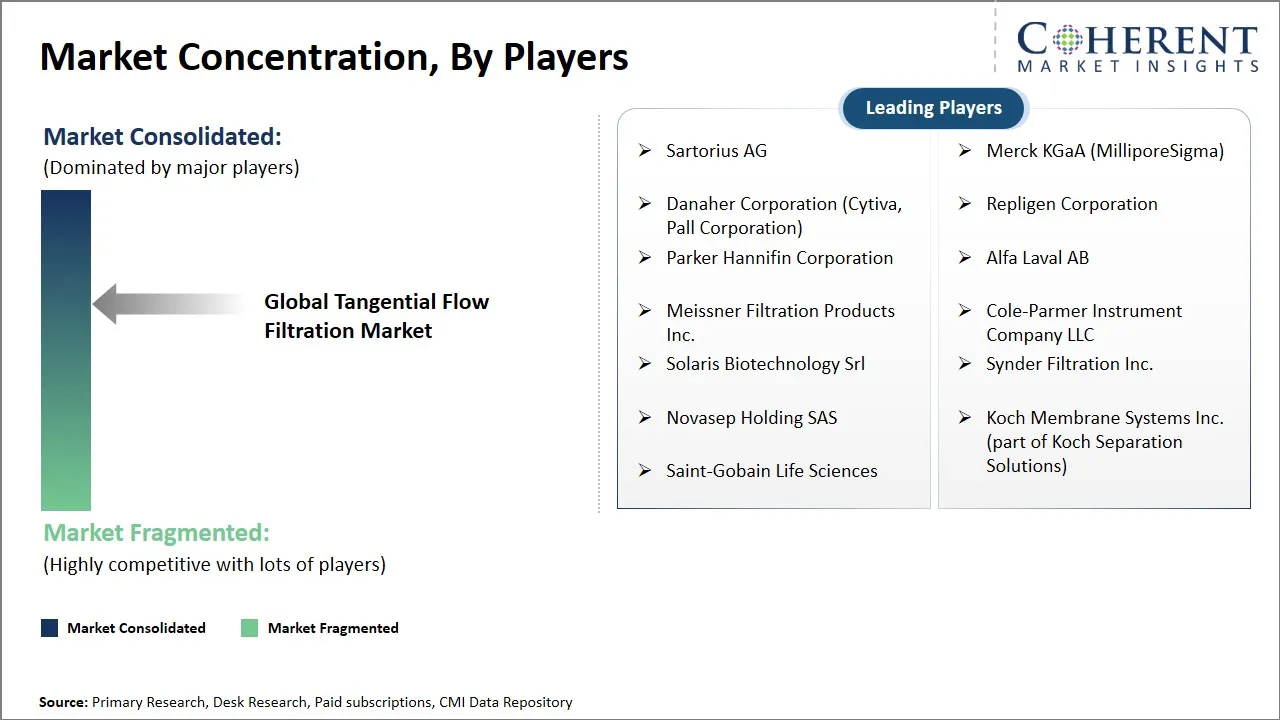
- The global tangential flow filtration market is characterized by a dynamic and competitive landscape where key market players employ diverse strategies tailored to their scale and capabilities. Established players dominate the market by leveraging substantial investments in research and development (R&D), aimed at innovating high-performance and customized tangential flow filtration solutions that meet the stringent demands of biopharmaceutical, food and beverage, and other end-use industries. These companies continually enhance product efficiency, scalability, and automation features, maintaining their technological edge.
- In February 2025, Thermo Fisher Scientific, a global leader in life sciences tools and bioprocessing solutions, completed its USD 4.1 billion acquisition of Solventum’s purification and filtration business, strengthening its portfolio in advanced bioprocessing and tangential flow filtration technologies.
- Mid-level players in the tangential flow filtration market primarily concentrate on delivering cost-effective filtration systems that balance solid performance with affordability. Recognizing the needs of price-sensitive consumers such as smaller biotech firms, research institutions, and regional manufacturers, these companies optimize their production processes to reduce manufacturing costs without compromising essential quality and reliability. By focusing on modular and scalable tangential flow filtration platforms, they offer flexible solutions suited for varied application requirements and budgets. To enhance their competitive stance, mid-sized companies increasingly engage in collaborations with technology firms and contract manufacturers.
- In October 2022, High Purity New England (HPNE), a U.S.-based manufacturer known for its single-use technologies and bioprocessing equipment, launched the MicroMaxx tangential flow filtration (tangential flow filtration) lab-scale screening system. Compact and user-friendly, the system was designed as an alternative to labor-intensive methods, offering both manual and automatic modes for hollow fiber screening. This type of innovation reflects how mid-level players in the tangential flow filtration market are carving out their space by delivering cost-effective yet performance-driven solutions tailored to the needs of smaller biotech firms, research institutions, and regional manufacturers.
- Small-scale players carve out unique niches within the global tangential flow filtration market by concentrating on specialized product features or cutting-edge technologies often overlooked by larger competitors. These companies tend to develop innovative solutions tailored for specific industries or applications, such as single-use tangential flow filtration cassettes or ultra-compact filtration units that cater to laboratory-scale and pilot production needs.
- WaterSep BioSeparations (USA), initially a small innovator focused on single-use hollow fiber tangential flow filtration modules, WaterSep developed ultra-compact systems tailored for lab-scale and pilot-scale biologics manufacturing. Its success in this niche eventually led to its acquisition by Sartorius, highlighting the value of specialized innovation.
Market Report Scope
Tangential Flow Filtration Market Report Coverage
| Report Coverage | Details | ||
|---|---|---|---|
| Base Year: | 2025 | Market Size in 2026: | USD 2.40 Bn |
| Historical Data for: | 2020 To 2024 | Forecast Period: | 2026 To 2033 |
| Forecast Period 2026 to 2033 CAGR: | 12.7% | 2033 Value Projection: | USD 5.54 Bn |
| Geographies covered: |
| ||
| Segments covered: |
| ||
| Companies covered: | Sartorius AG, Merck KGaA (MilliporeSigma), Danaher Corporation (Cytiva, Pall Corporation), Repligen Corporation, Parker Hannifin Corporation, Alfa Laval AB, Meissner Filtration Products Inc., Cole-Parmer Instrument Company LLC, Solaris Biotechnology Srl, Synder Filtration Inc., Novasep Holding SAS, Koch Membrane Systems Inc. (part of Koch Separation Solutions), and Saint-Gobain Life Sciences | ||
| Growth Drivers: |
| ||
| Restraints & Challenges: |
| ||
Tangential Flow Filtration Market Dynamics
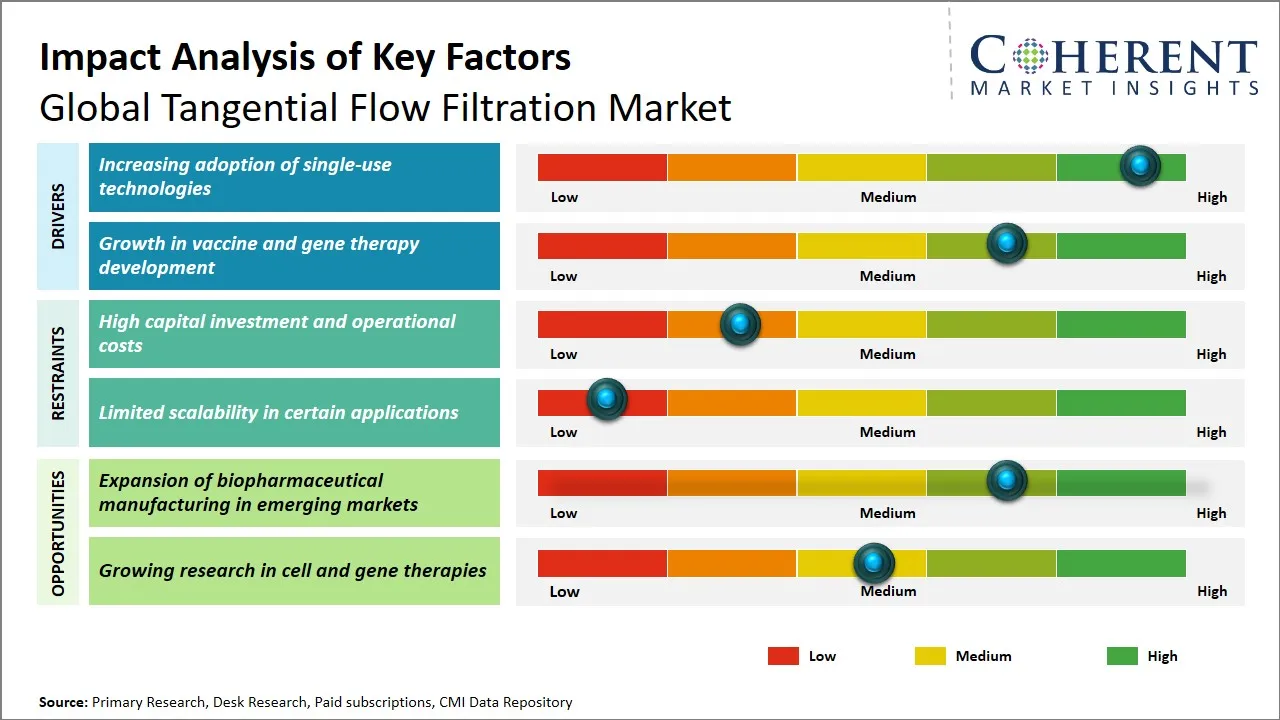
Tangential Flow Filtration Market Driver - Increasing Adoption of Single-use Technologies
The growing adoption of single-use technologies (SUT) in biopharmaceutical manufacturing is significantly driving the demand for tangential flow filtration (tangential flow filtration) systems. Single-use components offer enhanced flexibility, reduced risk of cross-contamination, and streamlined cleaning processes, which align well with the dynamic nature of modern bioprocessing environments. As manufacturers increasingly prioritize speed and efficiency in process development and scale-up, the integration of single-use tangential flow filtration modules becomes essential to meet these requirements. These disposable systems facilitate quicker changeovers, lower capital expenditure, and reduced validation efforts, making them especially attractive for contract development and manufacturing organizations (CDMOs) and small-to-medium biopharma companies. Additionally, the push towards personalized medicine and smaller batch production further supports the transition to single-use tangential flow filtration setups that can easily accommodate varying production volumes without the need for extensive reconfiguration.
On July 10, 2025, Wautoma Biotech, a bioprocess technology company specializing in advanced filtration and single-use solutions, announced the launch of its benchtop single-use tangential flow filtration (tangential flow filtration) system designed to streamline ultrafiltration and diafiltration (UF/DF) workflows for biopharmaceutical manufacturers. The compact system integrates a fully single-use flow path with customizable features, real-time process monitoring, and digital twin technology, enabling efficient concentration and buffer exchange while maintaining stable transmembrane pressure.
Tangential Flow Filtration Market Opportunity - Expansion of Biopharmaceutical Manufacturing in Emerging Markets
The growing biopharmaceutical manufacturing sector in emerging markets presents a significant opportunity for the global tangential flow filtration market. Countries in regions such as Asia-Pacific, Latin America, and parts of Eastern Europe are witnessing rapid advancements in their healthcare infrastructure and increased investment in biopharmaceutical facilities. This expansion is driven by rising demand for biologics, vaccines, and biosimilars, fueled by growing populations, increasing prevalence of chronic diseases, and improved healthcare access. As biopharmaceutical manufacturers in these markets strive to enhance production efficiency and product quality, the adoption of advanced downstream processing technologies like tangential flow filtration is becoming crucial.
In September 2024, Merck KGaA, a global science and technology leader with a strong portfolio in life sciences and bioprocessing, launched the Mobius ADC Reactor, the first scalable single-use mixer specifically designed for antibody drug conjugate (ADC) manufacturing. Tailored to the complex requirements of linking ADC components, the reactor utilizes Ultimus Film for superior leak resistance and delivers up to 70% greater efficiency compared to stainless steel or glass systems. Alongside its established single-use Mobius Tangential Flow Filtration (tangential flow filtration) platforms, this launch strengthens Merck’s bioprocessing portfolio by providing integrated solutions that accelerate biologics and ADC production with enhanced safety, flexibility, and process efficiency.
Analyst Opinion (Expert Opinion)
- The tangential flow filtration market is expanding rapidly, supported by continuous improvements in membrane materials, system automation, and single-use technologies that are helping biopharmaceutical companies streamline purification and scale-up processes. The strong regulatory emphasis on product purity and safety is further pushing adoption, especially in vaccines, cell and gene therapies, and antibody production. At the same time, rising demand for flexible, modular, and cost-efficient systems is creating opportunities for innovation, while challenges remain in terms of high capital costs, scalability limits for certain applications, and technical complexities in system integration. Knowledge exchange at forums such as the BioProcess International Conference, CPhI Worldwide, and INTERPHEX over the past few years has been vital in showcasing new technologies, shaping regulatory understanding, and connecting industry leaders to discuss future directions in bioprocessing and filtration solutions.
- Real-world developments continue to shape the market outlook, with companies like Cytiva expanding filtration manufacturing capacity in the US and India, Sartorius launching next-generation Vivaflow SU cassettes, and Merck Millipore Molsheim working with Actemium to bring greater automation into its CogentLab systems. Similarly, FUJIFILM Wako Pure Chemical Corporation’s introduction of MassivEV solutions for exosome purification and Tezalon’s modular benchtop tangential flow filtration system demonstrate how innovation is addressing both efficiency and scalability needs. These initiatives, along with supportive policies encouraging biologics manufacturing and collaborations between technology providers and CMOs, are expected to strengthen the global adoption of tangential flow filtration, making it an essential enabler in the evolving landscape of advanced therapeutics.
Speak to the analyst
Want personalized insights?
Take the findings above to one of our principal consultants, or have the report rebuilt around the segments, geographies and competitors you actually track.
Market Segmentation
- Product Type Insights (Revenue, USD Bn, 2021 - 2033)
- Single-Use Tangential Flow Filtration Systems
- Reusable Tangential Flow Filtration Systems
- Membrane Filters (Cartridges and Cassettes)
- Other Filtration Accessories (Holders, Pumps, Tubing, Clamps, etc.)
- Technique Insights (Revenue, USD Bn, 2021 - 2033)
- Ultrafiltration
- Microfiltration
- Nanofiltration
- Reverse Osmosis
- Other TFF Techniques
- Material Insights (Revenue, USD Bn, 2021 - 2033)
- Polyethersulfone (PES)
- Regenerated Cellulose (RC)
- Polyvinylidene Fluoride (PVDF)
- Others (e.g., polypropylene, ceramic, etc.)
- Application Insights (Revenue, USD Bn, 2021 - 2033)
- Bioprocessing
- Downstream Processing
- Upstream Processing
- Viral Vector and Vaccine Purification
- Antibody and Protein Purification
- Oligonucleotide and Plasmid DNA Purification
- Raw Material Filtration (media, buffer, reagents)
- Others (small molecule filtration, sample prep, etc.)
- End User Insights (Revenue, USD Bn, 2021 - 2033)
- Pharmaceutical and Biotechnology Companies
- Contract Research Organizations (CROs) and Contract Manufacturing Organizations (CMOs/CDMOs)
- Academic and Research Institutes
- Regional Insights (Revenue, USD Bn, 2021 - 2033)
- North America
- U.S.
- Canada
- Latin America
- Brazil
- Argentina
- Mexico
- Rest of Latin America
- Europe
- Germany
- U.K.
- Spain
- France
- Italy
- Russia
- Rest of Europe
- Asia Pacific
- China
- India
- Japan
- Australia
- South Korea
- ASEAN
- Rest of Asia Pacific
- Middle East
- GCC Countries
- Israel
- Rest of Middle East
- Africa
- South Africa
- North Africa
- Central Africa
- North America
- Key Players Insights
- Sartorius AG
- Merck KGaA (MilliporeSigma)
- Danaher Corporation (Cytiva, Pall Corporation)
- Repligen Corporation
- Parker Hannifin Corporation
- Alfa Laval AB
- Meissner Filtration Products Inc.
- Cole-Parmer Instrument Company LLC
- Solaris Biotechnology Srl
- Synder Filtration Inc.
- Novasep Holding SAS
- Koch Membrane Systems Inc. (part of Koch Separation Solutions)
- Saint-Gobain Life Sciences
Sources
Primary Research Interviews
- Industry Stakeholders list
- Bioprocess engineers from leading biopharmaceutical companies
- Product managers from filtration and membrane technology suppliers
- Quality assurance and regulatory professionals from biologics facilities
- End-users list
- Academic researchers from biotechnology institutes
- Manufacturing heads from CDMOs
- Government laboratory officials in biologics and vaccine programs
Government and International Databases
- U.S. Food and Drug Administration (FDA)
- European Medicines Agency (EMA)
- World Health Organization (WHO)
- National Institutes of Health (NIH)
- Organisation for Economic Co-operation and Development (OECD)
- United Nations Industrial Development Organization (UNIDO)
- Japan Pharmaceuticals and Medical Devices Agency (PMDA)
- India Central Drugs Standard Control Organization (CDSCO)
Trade Publications
- BioProcess International
- Pharmaceutical Technology
- Biopharm International
- Contract Pharma
- Labiotech.eu
Academic Journals
- Journal of Membrane Science
- Biotechnology and Bioengineering
- Applied Microbiology and Biotechnology
- Journal of Biotechnology
- Separation and Purification Technology
- Biochemical Engineering Journal
- mAbs Journal
Reputable Newspapers
- The New York Times
- The Guardian
- Financial Times
- The Wall Street Journal
- Reuters
- Bloomberg
Industry Associations
- International Society for Pharmaceutical Engineering (ISPE)
- Bio-Process Systems Alliance (BPSA)
- Parenteral Drug Association (PDA)
- American Society for Microbiology (ASM)
- American Chemical Society (ACS)
- European Federation of Pharmaceutical Industries and Associations (EFPIA)
- International Society for Cell & Gene Therapy (ISCT)
Public Domain Resources
- ScienceDirect
- Google Scholar
- ResearchGate
- World Bank Data
Proprietary Elements
- CMI Data Analytics Tool: Proprietary analytics tool to analyze real-time market trends, consumer behavior, and technology adoption in market
- Proprietary CMI Existing Repository of Information for Last 8 Years
Get access to 250+ pages report
Every segment, forecast, competitor profile and data table behind the analysis above — available for instant download.
- ESOMAR Member
- ISO 9001:2015 Certified
- D-U-N-S Registered
- GDPR & CCPA Compliant
Missing comfort of reading report in your local language? Find your preferred language:
Transform your Strategy with Exclusive Trending Reports
Frequently Asked Questions
The global tangential flow filtration market is estimated to be valued at USD 2.40 Bn in 2026 and is expected to reach USD 5.54 Bn by 2033.
The CAGR of global tangential flow filtration market is projected to be 12.7% from 2026 to 2033.
Increasing adoption of single-use technologies and growth in vaccine and gene therapy development are the major factors driving the growth of the global tangential flow filtration market.
High capital investment and operational costs and limited scalability in certain applications are the major factors hampering the growth of the global tangential flow filtration market.
In terms of product type, single-use tangential flow filtration systems are estimated to dominate the market revenue share in 2026.
Tangential flow filtration offers higher efficiency, scalability, and better product recovery. It prevents filter clogging, extends membrane life, and is highly adaptable to both small lab-scale and full-scale production.
Single-use systems are gaining popularity because they reduce the need for cleaning validation, lower the risk of cross-contamination, and enable faster turnaround in multiproduct facilities. This trend is particularly strong in cell therapy, vaccines, and contract manufacturing.