

Global Thermal Cycler Market Size and Forecast – (2026 to 2033)
According to Coherent Market Insights, the global thermal cycler market is estimated to be valued at USD 1.21 Bn in 2026 and is expected to reach USD 2.14 Bn by 2033, expanding at a compound annual growth rate (CAGR) of 8.5% from 2026 to 2033. This significant market growth is driven by increasing applications in molecular biology, diagnostics, and personalized medicine, alongside rising investments in research and development across biotechnology and pharmaceutical sectors worldwide.
Key Takeaways of the Thermal Cycler Market:
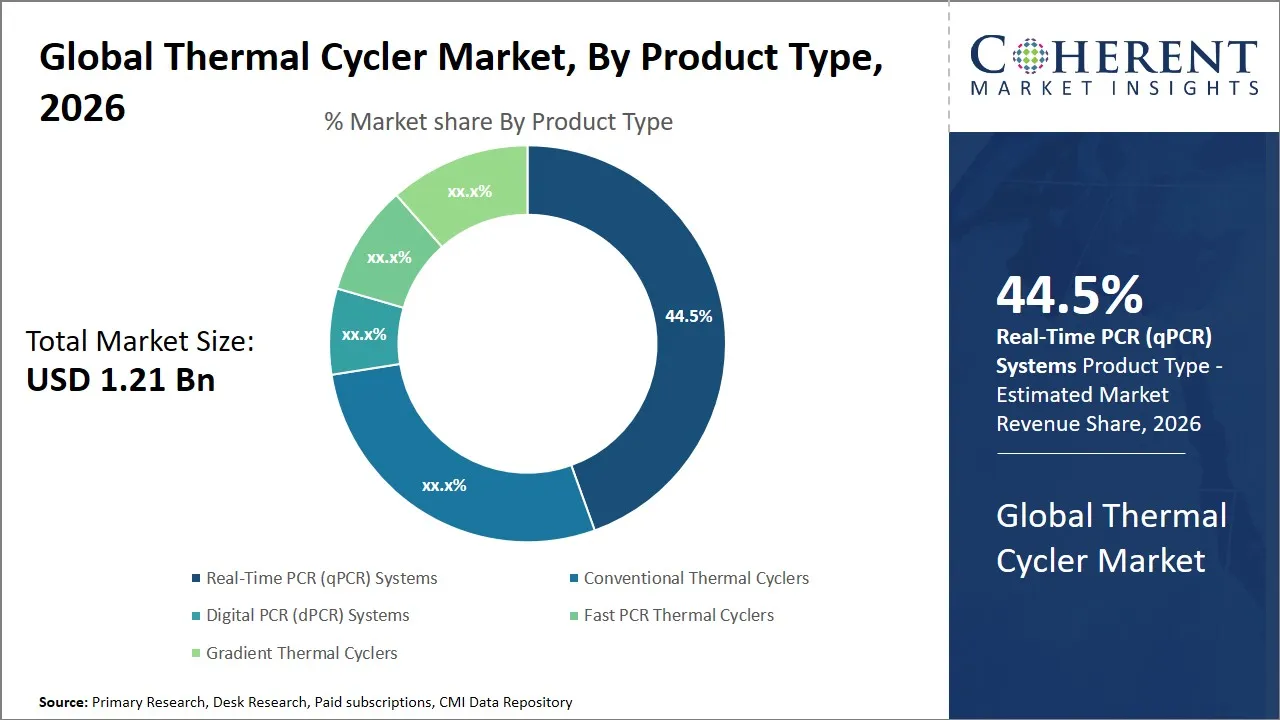
- Real-Time PCR (qPCR) systems segment is expected to account for the largest share of the global thermal cycler market, holding 44.5 % share in 2026.
- Block-based thermal cyclers segment is estimated to dominate the market with 34.6 % share in 2026.
- The SYBR green-based detection segment is projected to capture 26.7 % of the market share in 2026.
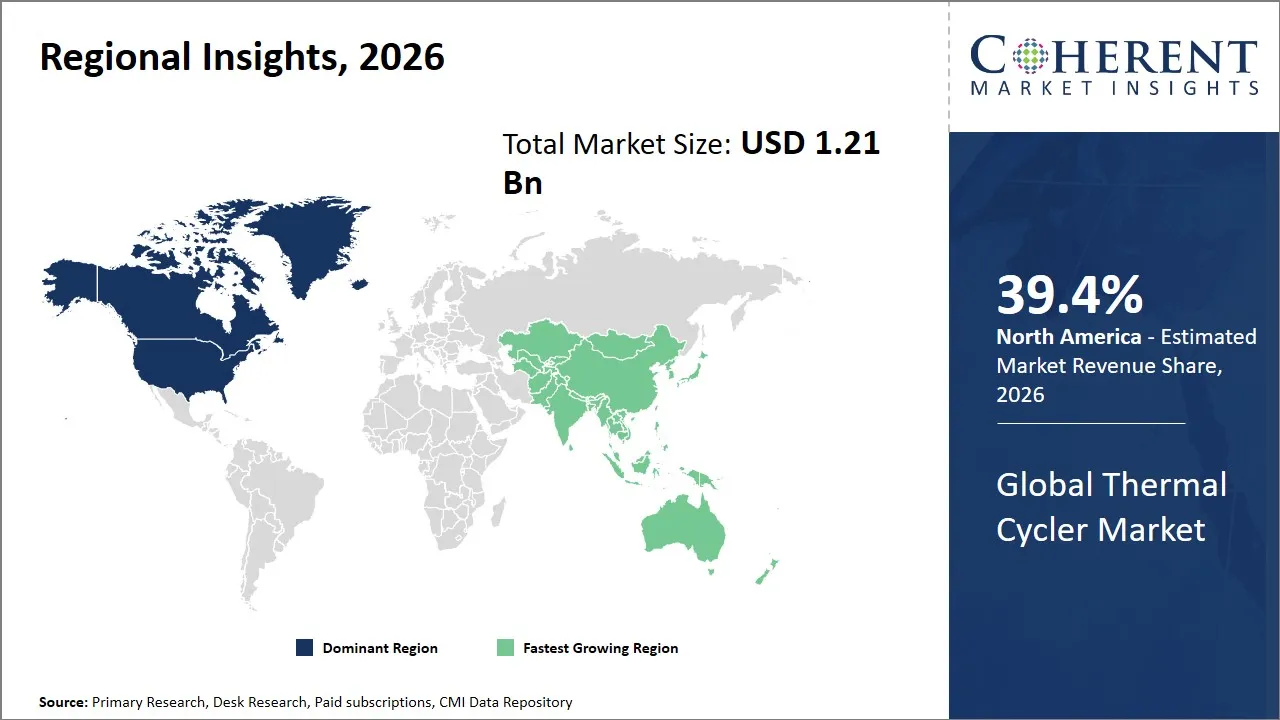
- North America is expected to lead the market, holding a share of 39.4% in 2026. Asia Pacific is anticipated to be the fastest-growing region, with 24.5% share in 2026.
Market Overview
- A prominent trend shaping the thermal cycler market is the integration of advanced technologies such as digitalization and automation, which enhance precision and throughput in PCR testing.
- Additionally, growing demand for rapid and accurate disease detection, especially amid global health concerns, is accelerating product innovation.
- The shift towards portable and user-friendly thermal cyclers also reflects the market’s move to cater to point-of-care diagnostics, making these devices more accessible across clinical and research environments.
Currents Events and Its Impact
Current Events | Description and its Impact |
Technological Convergence with Digital Platforms |
|
Rise of Multiplex PCR in Infectious Disease Diagnostics |
|
Segmental Insights
- Current Industry Events of 2026
- Market Size Estimation
- Regional Breakdown
- Competitive Landscape
- Customer Intelligence
- Segmental Analysis
- Pricing Analysis
- Key Market Drivers, Challenges & Future Trends
- Customized Insights Section
Why do Real-Time PCR (qPCR) Systems Dominate the Thermal Cycler Market in 2026?
Real-time PCR (qPCR) systems dominate the market with an estimated 44.5% share in 2026, due to the fact that they are very sensitive, specific and quick to carry out a quantitative analysis than the conventional PCR systems.
Real-Time PCR allows the detection and quantification of nucleic acids in real time providing researchers with accurate results on gene expression, detection of pathogens and genetic variation without having to perform any additional processing in post-amplification. This real-time data capture has redefined the use of diagnostic and research applications and qPCR systems are now indispensable in clinical diagnostics, testing of infectious diseases, and development of personalized medicine.
In September 2024, Takara Bio USA launched the SmartChip ND Real-Time PCR System, a high-throughput, automated solution for monitoring antimicrobial resistance (AMR). This flexible system can process up to 5,184 reactions per chip in under 30 minutes, reducing costs and variability by eliminating preamplification. The platform is designed to support broad surveillance panels, with applications in environmental safety and sustainability.
Block-Based Thermal Cyclers Segment Dominates the Thermal Cycler Market
The block-based thermal cyclers segment is projected to capture 34.6% share in 2026. The reason behind their use is their flexibility and flexibility in the standard PCR protocols thus they are the workhorse of research, clinical and industrial labs.
Block Based thermal cyclers are built by using a temperature controlled heating block, usually with PCR tubes or plates and provide uniform heating and cooling cycles necessary to obtain reproducible outcomes with a wide set of sample format and volume capabilities
What Drives SYBR Green-Based Detection Market Leadership?
In the perspective of detection method, SYBR Green-based detection is projected to hold the largest market share of 26.7% of the global thermal cycler market share in 2026, because it is easy, economical, and can be utilized in diverse applications of the PCR. The SYBR Green dye binds to the two-strands of DNA, which causes a fluorescence reaction relative to the quantity of the amplified fragment.
This simple method does not require costly, sequence specific probes and greatly reduces the cost of the assays without compromising on the sensitivity and specificity of the assays in most experimental designs. The extensive use of the method in the quantification of gene expression, mutation analysis and genotyping makes the method widely used in academic and clinical molecular biology laboratories.
Cost Per Test and Sample Workflow Economics
- Cost per Test Economics: The cost per test primarily includes direct expenses such as consumables, labor, equipment wear and tear, and administrative overheads. These costs are variable depending on the test complexity, frequency, and resource consumption. For high-volume tests, unit costs can be reduced through economies of scale, whereas specialized tests with low throughput incur higher per-unit costs due to less efficient resource utilization.
- Sample Workflow Economics: The workflow of sample processing involves various stages, including sample collection, preparation, testing, and reporting. Costs accumulate at each stage, driven by labor, equipment usage, and consumables. Efficient workflows that minimize bottlenecks and optimize equipment use can reduce overall costs, especially when automation or streamlined protocols are implemented.
Regional Insights
North America Thermal Cycler Market Analysis and Trends
North America's strong market ecosystem, with an estimated 39.4% share in 2026, driven by advanced research infrastructure, a high concentration of biotech and pharma firms, and substantial government funding, is key to dominating the thermal cycler market. The U.S. has several internationally acclaimed institutions and research centers in its own, which purchase a significant amount of thermal cyclers used in the field of molecular diagnosis, genetic studies, and clinical trials.
Market leadership is further reinforced by supportive government policies, such as generous granting by government agencies such as the NIH and the U.S. FDA regulatory frameworks that have made easy the introduction of innovative diagnostic tools into the market. Also, North America has an established presence of the industry, with the most successful organizations, including Thermo Fisher Scientific, Bio-Rad Laboratories, and Agilent Technologies, being located in the area.
Asia Pacific Thermal Cycler Market Analysis and Trends
The thermal cycler market has the highest growth rate in the Asia Pacific region with an estimated share of 24.5% in 2026, due to the fast growing research activities, growing healthcare spending, and developing biotechnology and pharmaceutical industries. Emerging markets like China, India, Japan, and South Korea are increasing their concentration on molecular biology studies and personalized medicine, and hence the increased demand of thermal cyclers.
Positive governmental efforts to encourage innovation, including the made in China 2025 initiative in China and the Biotech vision 2025 initiative in India, are a key driver to speed up the market penetration. This is due to the existence of both new local firms and the existing multinationals, which contribute to making the market more competitive and growing in size.
Global Thermal Cycler Market Outlook for Key Countries
What are the Key Trends in the U.S. Thermal Cycler Market?
The thermal cycler market in the U.S. is influenced by the domination of innovation and prevalence of research. The presence of major players in the industry such Thermo Fisher Scientific and Bio-Rad Laboratories is also high and they are always launching new thermal cyclers that incorporate digital technologies and automation.
There is a wide range of academic institutions and biotech companies in the country that have expanded to a large extent catalyzing the use of the instruments in both diagnostics and research applications. There is also strict regulatory procedures that guarantee quality standards of products, which have enhanced the confidence of the market and the long-term demand.
How is China’s Thermal Cycler Market Growing with Expanding Diagnostics and Research Demand?
The market in China is booming with respect to the thermal cycler because of high investments in healthcare facilities and the increase in the number of molecular diagnostic tests. Domestic companies, together with overseas companies like Eppendorf and Qiagen are intensifying their localization through product development, and provision of low quality solutions to address the needs of the region.
The Chinese government policies that promote the development of biotechnology and genomics research become a great support to the market expansion, along with the rising number of collaborations between higher education institutions and business corporations.
Germany Thermal Cycler Market Trends
Germany has remained the market leader in thermal cycler in Europe exploiting its good industrial background and research institutes. Such companies like Analytik Jena and QIAGEN have a great contribution with the innovative products aimed at clinical diagnostics and research in life sciences.
The rigorous compliance to quality standards and regulatory requirements in the country, together with the government measures that encourage biotech research, are likely to secure a constant demand of thermal cyclers. Germany is also enjoying the offers of well-developed export infrastructure that allows the trade within Europe and further.
India Thermal Cycler Market Trends
The market of thermal cyclers in India is developing with high pace because of the growth of biotech and pharmaceutical industry and the growing number of diagnostic laboratories specializing in infectious diseases and genetic-testing. This growth is supported by the government programs that have worked on enhancing access to healthcare and encourage research in the field of genomics.
Multinational corporations and local rising manufacturers including Mylab Discovery Solutions are fighting harder to penetrate cost-sensitive segments and rural markets, as they encourage wider adoption. The fact that the infrastructure in the country has been improving and the awareness of health is also on the rise is another factor that drives market dynamics.
Assay Precision vs. Repeat Test Avoidance Cost: Balancing Accuracy and Efficiency
Factor | Description | Impact on Cost |
Assay Precision | The accuracy and consistency of test results. High precision reduces errors and the need for repeated tests. | Lower cost due to fewer repeat tests and higher reliability. |
Repeat Test Avoidance | Avoiding the need for retesting by improving initial test precision. | Lower cost from minimizing retesting, reducing labor, reagents, and equipment usage. |
Cost of Precision | Investment in quality control, calibration, and training to enhance precision. | Higher initial cost, but reduces long-term costs through fewer retests. |
Cost of Repeat Testing | Additional expenses incurred for each repeat test, including materials, labor, and equipment. | Higher cost due to redundant resource consumption and delayed results. |
Market Players, Key Developments, and Competitive Intelligence
Key Developments
- In November 2025, Henkel, a global leader in adhesives, launched two new thermal potting solutions for EV powertrain components. The Loctite SI 5643 and Loctite SI 5637 are designed for power conversion components like inverters and on-board chargers. These two-component, fast-curing silicone potting compounds offer different levels of thermal conductivity. They provide excellent protection against heat and vibration, ensuring long-term reliability for sensitive components in high-power applications.
- In September 2023, Bio-Rad Laboratories Inc., a leading provider of life science and clinical diagnostic products, launched the PTC Tempo 48/48 and PTC Tempo 384 Thermal Cyclers. These new thermal cyclers are designed to support PCR applications in research, process development, and quality control. The PTC Tempo 48/48 model features dual blocks for independent protocols, while the PTC Tempo 384 is optimized for higher throughput with automation compatibility.
- In August 2025, Infineon Technologies AG, a global semiconductor leader in power systems and IoT, expanded its CoolSiC MOSFET 650 V G2 portfolio by introducing new 75 mΩ industrial CoolSiC MOSFETs. The devices are offered in multiple package options including TOLL, ThinTOLL 8×8, TOLT, D2PAK, TO247‑3 and TO247‑4 to support both top‑side and bottom‑side cooling approaches and provide designers flexibility.
- In June 2025, Unitemp, a leading distributor in the U.K., announced the availability of Espec’s new TCC-151W-20 rapid thermal cycle chamber. Designed for semiconductor and electronics reliability testing, this chamber meets international standards with a controlled ramp rate of 20 kelvins per minute. It features a temperature range from -70°C to +180°C, precise ramp control at 15K/min and 20K/min, and a 160L internal test volume. The chamber uses R-449A refrigerant, reducing its global warming potential by 64%, and supports key testing protocols.
Top Strategies Followed by Global Thermal Cycler Market Players
Player Type | Strategic Focus | Examples |
Established Market Leaders | Heavy R&D investment in high-performance thermal cyclers; strategic partnerships and collaborations with OEMs; aggressive global expansion into emerging markets like Asia-Pacific and Latin America | Bio-Rad invests heavily in precision and speed for thermal cyclers; Thermo Fisher partners with global OEMs for expanded distribution in Asia and Latin America |
Mid-Level Players | Focus on cost-effective products that balance quality with affordability; collaborations to boost production, technology, and market reach; cater to price-sensitive segments | Mid-level players develop reliable thermal cyclers for academic and smaller research labs; seek partnerships to enhance technology and supply chain capabilities |
Small-Scale Players | Niche-focused innovation with unique designs and features; focus on applications like point-of-care diagnostics or field research; agile with emerging technologies; local alliances for market access | Small manufacturers focus on portable, user-friendly thermal cyclers for specific research or diagnostic applications; collaborate with universities or startups to improve market visibility |
Market Report Scope
Global Thermal Cycler Market Report Coverage
| Report Coverage | Details | ||
|---|---|---|---|
| Base Year: | 2025 | Market Size in 2026: | USD 1.21 Bn |
| Historical Data for: | 2020 To 2024 | Forecast Period: | 2026 To 2033 |
| Forecast Period 2026 to 2033 CAGR: | 8.5% | 2033 Value Projection: | USD 2.14 Bn |
| Geographies covered: |
| ||
| Segments covered: |
| ||
| Companies covered: | Thermo Fisher Scientific, Bio Rad Laboratories, Roche Diagnostics, QIAGEN, Agilent Technologies, Eppendorf, Analytik Jena, Takara Bio, Bio Molecular Systems, Bioneer, Bioer Technology, Cepheid, Abbott Molecular, Hologic, and BD | ||
| Growth Drivers: |
| ||
| Restraints & Challenges: |
| ||
Thermal Cycler Market Dynamics
Thermal Cycler Market Driver - Growing Molecular Diagnostics Volumes
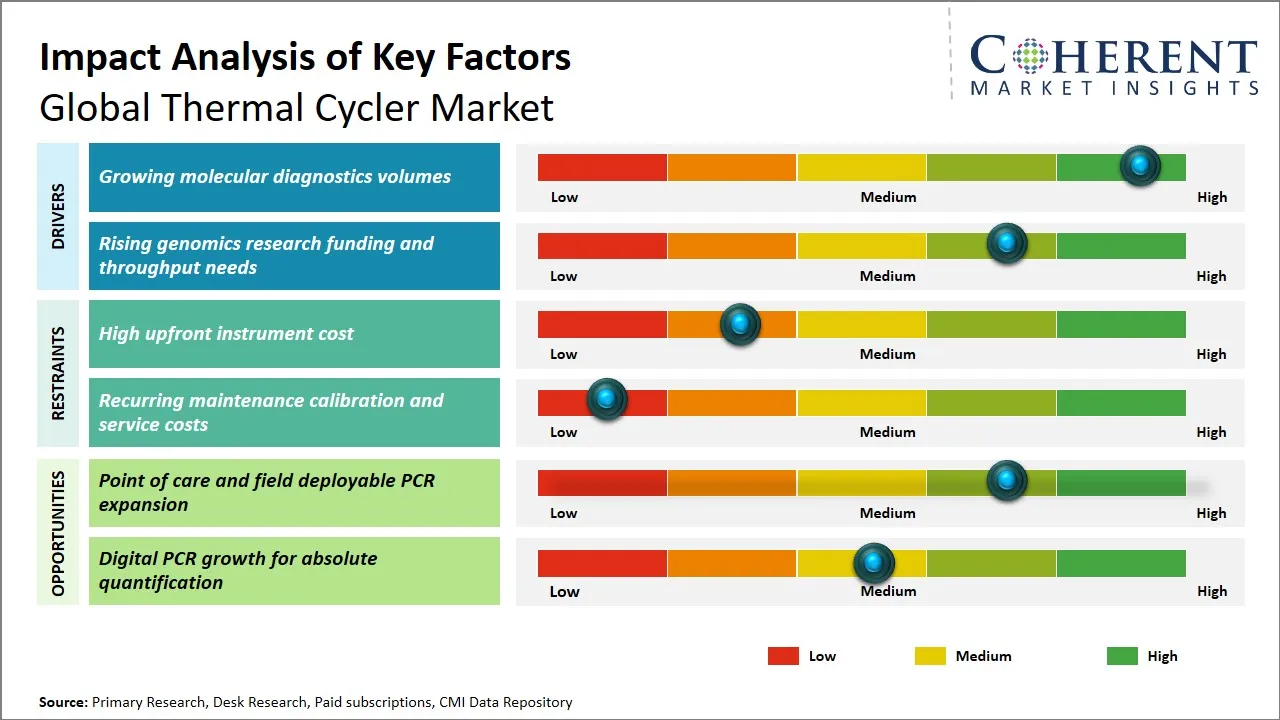
The expanding adoption of molecular diagnostics is a key factor driving the demand for thermal cyclers globally. As healthcare systems increasingly rely on precise and rapid diagnostic techniques for infectious diseases, genetic disorders, and oncology, molecular testing volumes have surged significantly. Thermal cyclers, essential for polymerase chain reaction (PCR) processes, enable the amplification of DNA and RNA sequences, making them indispensable tools in laboratories conducting these tests. Advances in personalized medicine and the growing emphasis on early disease detection further contribute to the rise in molecular diagnostic testing, requiring high-throughput and reliable thermal cycler systems.
In June 2024, Fast MDx launched a low-cost, fully automated molecular diagnostic system for rapid pathogen detection. The Fast MDx platform, developed by the London-based social enterprise, uses Festo’s automation technology, including pipetting and dispensing systems. This system offers fast testing, reducing the wait time from 24-48 hours to just 1-2 hours. Fast MDx’s ultra-fast NGX2 qPCR thermal cycler is crucial for accurate pathogen detection.
Thermal Cycler Market Opportunity - Expansion of Point-of-Care and Field-Deployable PCR Technologies
The global thermal cycler market stands to benefit significantly from the growing demand for point-of-care (POC) and field-deployable PCR (polymerase chain reaction) technologies. Evolving healthcare landscapes, especially in remote and resource-limited regions, are driving the need for rapid, accurate, and on-site molecular diagnostics. Traditional laboratory-bound thermal cyclers often face limitations in accessibility and turnaround times, which can delay critical decision-making in clinical and outbreak scenarios. Portable and user-friendly thermal cyclers tailored for POC settings enable healthcare providers to perform timely nucleic acid testing directly at the patient’s location, thereby accelerating diagnosis and treatment initiation.
In November 2023, Roche launched the LightCycler PRO System, advancing qPCR technology for clinical diagnostics and research. Roche, a global leader in biotechnology and in-vitro diagnostics, created this system to enhance diagnostic accuracy and flexibility in research and clinical settings. The LightCycler PRO features improved temperature uniformity, new software algorithms, and a redesigned user interface.
Analyst Opinion (Expert Opinion)
- The thermal cycler market is growing rapidly, fueled by technological advancements in PCR systems, real-time PCR integration, and increasing demand for diagnostic tools in healthcare and biotechnology. Technological innovations, regulatory support, and the rise of personalized medicine are key drivers, while challenges like high costs and regulatory compliance remain.
- Recent events like the AACC Annual Meeting and BioTechX have been crucial in advancing discussions on PCR technologies and diagnostics. Industry initiatives, including government-funded R&D and partnerships between manufacturers and healthcare providers, are shaping the market's future, with pilot projects aimed at improving diagnostic access in underserved regions playing a key role in market expansion.
Speak to the analyst
Want personalized insights?
Take the findings above to one of our principal consultants, or have the report rebuilt around the segments, geographies and competitors you actually track.
Market Segmentation
- Product Type Insights (Revenue, USD Bn, 2021 - 2033)
- Real-Time PCR (qPCR) Systems
- Conventional Thermal Cyclers
- Digital PCR (dPCR) Systems
- Fast PCR Thermal Cyclers
- Gradient Thermal Cyclers
- Technology Insights (Revenue, USD Bn, 2021 - 2033)
- Block-Based Thermal Cyclers
- Rotary Thermal Cyclers
- Microfluidic-Based Thermal Cyclers
- Detection Method Insights (Revenue, USD Bn, 2021 - 2033)
- SYBR Green-Based Detection
- TaqMan Probe-Based Detection
- Molecular Beacon-Based Detection
- Scorpion Probe-Based Detection
- Sample Throughput Insights (Revenue, USD Bn, 2021 - 2033)
- Low Throughput (≤48 samples)
- Medium Throughput (49–96 samples)
- High Throughput (96 samples)
- Block Configuration Insights (Revenue, USD Bn, 2021 - 2033)
- Single-Block Systems
- Dual-Block Systems
- Multi-Block Systems
- Heating and Cooling Mechanism Insights (Revenue, USD Bn, 2021 - 2033)
- Peltier-Based Systems
- Resistive Heating Systems
- Hybrid Heating Systems
- Application Insights (Revenue, USD Bn, 2021 - 2033)
- Clinical Diagnostics
- Research Applications
- Forensic Testing
- Agricultural and Food Testing
- Environmental Testing
- Pharmaceutical and Biotechnology R and D
- End User Insights (Revenue, USD Bn, 2021 - 2033)
- Hospitals and Diagnostic Laboratories
- Academic and Research Institutes
- Pharmaceutical and Biotechnology Companies
- Contract Research Organizations (CROs)
- Workflow Type Insights (Revenue, USD Bn, 2021 - 2033)
- Standalone Thermal Cyclers
- Integrated Sample-to-Result Systems
- Automated/Robotic-Compatible Systems
- Portability Insights (Revenue, USD Bn, 2021 - 2033)
- Benchtop Systems
- Compact/Portable Systems
- Sales Channel Insights (Revenue, USD Bn, 2021 - 2033)
- Online
- Offline
- Regional Insights (Revenue, USD Bn, 2021 - 2033)
- North America
- U.S.
- Canada
- Latin America
- Brazil
- Argentina
- Mexico
- Rest of Latin America
- Europe
- Germany
- U.K.
- Spain
- France
- Italy
- Russia
- Rest of Europe
- Asia Pacific
- China
- India
- Japan
- Australia
- South Korea
- ASEAN
- Rest of Asia Pacific
- Middle East
- GCC Countries
- Israel
- Rest of Middle East
- Africa
- South Africa
- North Africa
- Central Africa
- North America
- Key Players Insights
- Thermo Fisher Scientific
- Bio Rad Laboratories
- Roche Diagnostics
- QIAGEN
- Agilent Technologies
- Eppendorf
- Analytik Jena
- Takara Bio
- Bio Molecular Systems
- Bioneer
- Bioer Technology
- Cepheid
- Abbott Molecular
- Hologic
- BD
Sources
Primary Research Interviews – Industry Stakeholders List
- Heads of PCR/Genomics Labs at diagnostic chains
- R&D Directors at biotech firms
- Laboratory Operations Managers in clinical testing facilities
- Procurement Leads for molecular diagnostics equipment
- Heads of Core Research Facilities at universities
- Technical Heads at pharmaceutical bioresearch divisions
Primary Research Interviews – End‑Users List
- Senior Clinical Microbiologists in hospital labs
- Principal Investigators using PCR technologies in research institutes
- Lead Forensic Scientists in government forensic labs
- Quality Assurance Heads in food testing labs
- Agricultural genomics lab leads
- Environmental testing lab managers
Government and International Databases
- World Health Organization (WHO) data portals
- U.S. Centers for Disease Control and Prevention (CDC) data sets
- European Centre for Disease Prevention and Control (ECDC) surveillance reports
- UNESCO Science Reports
- National Institutes of Health (NIH) research data repositories
- India National Health Mission epidemiology statistics
Trade Publications
- Nature Biotechnology
- The Scientist
- Genetics and Genomics Weekly
- Lab Manager magazine
- BioTechniques
- GenomeWeb
Academic Journals
- Nature Methods
- Journal of Clinical Microbiology
- PCR Methods and Applications
- Trends in Biotechnology
- Scientific Reports
Reputable Newspapers
- The New York Times science section
- The Guardian science coverage
- Financial Times health technology pages
- The Washington Post health & science
- Times of India science desk
- BBC News science & environment
Industry Associations
- American Society for Microbiology (ASM)
- European Molecular Biology Organization (EMBO)
- Clinical and Laboratory Standards Institute (CLSI)
- Association of Biomolecular Resource Facilities (ABRF)
- Indian Association of Biomedical Scientists (IABS)
- International Union of Pure and Applied Chemistry (IUPAC)
Public Domain Resources
- NIH Open Access Repository
- Government patent databases (e.g., USPTO)
- OpenFDA device and lab data
- UN data portal
- World Bank open data
Proprietary Elements
- CMI Data Analytics Tool: Proprietary analytics tool to analyze real-time market trends, consumer behavior, and technology adoption in market
- Proprietary CMI Existing Repository of Information for Last 8 Years
Get access to 250+ pages report
Every segment, forecast, competitor profile and data table behind the analysis above — available for instant download.
- ESOMAR Member
- ISO 9001:2015 Certified
- D-U-N-S Registered
- GDPR & CCPA Compliant
Missing comfort of reading report in your local language? Find your preferred language:
Transform your Strategy with Exclusive Trending Reports
Frequently Asked Questions
The global thermal cycler market is estimated to be valued at USD 1.21 Bn in 2026 and is expected to reach USD 2.14 Bn by 2033.
The CAGR of global thermal cycler market is projected to be 8.5% from 2026 to 2033.
Growing molecular diagnostics volumes and rising genomics research funding and throughput needs are the major factors driving the growth of the global thermal cycler market.
High upfront instrument cost and recurring maintenance calibration and service costs are the major factors hampering the growth of the global thermal cycler market.
In terms of product type, real-time PCR (qPCR) systems are estimated to dominate the market revenue share in 2026.
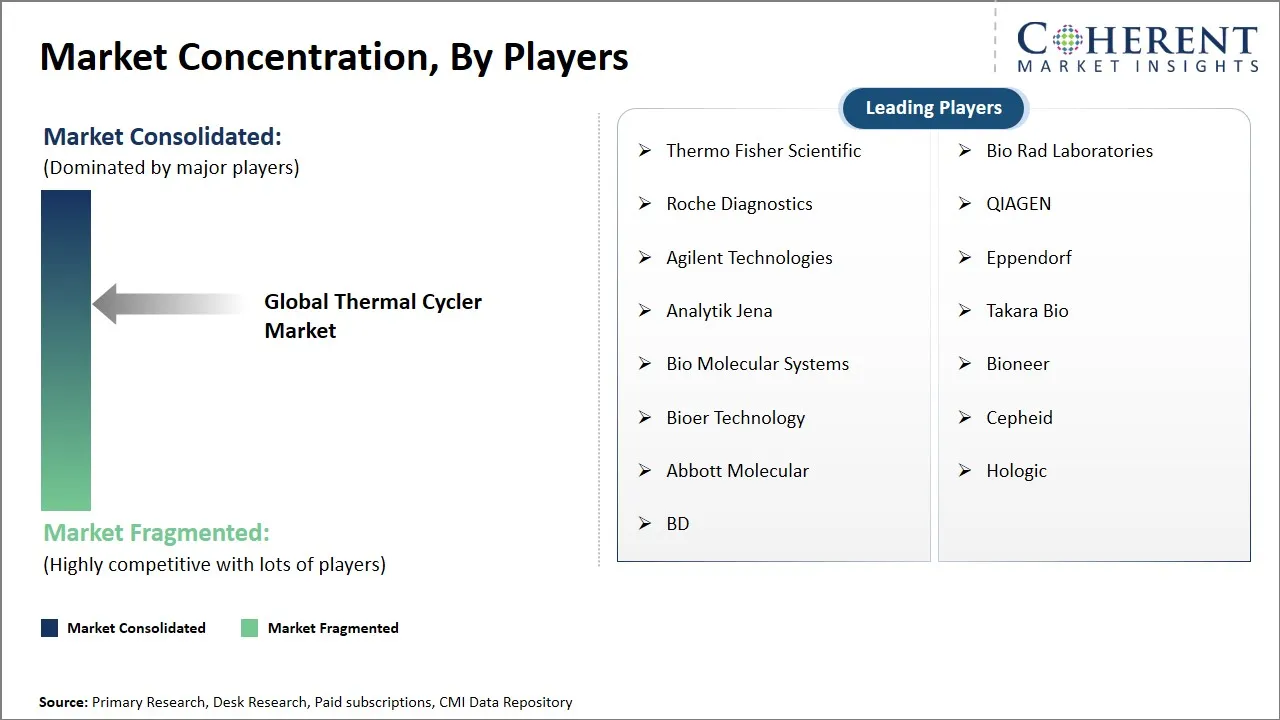
Thermo Fisher Scientific, Bio Rad Laboratories, Roche Diagnostics, QIAGEN, Agilent Technologies, Eppendorf, Analytik Jena, Takara Bio, Bio Molecular Systems, Bioneer, Bioer Technology, Cepheid, Abbott Molecular, Hologic, and BD are the major players.
North America is expected to lead the global thermal cycler market in 2026.