

Global Tibetan Medicine Market Size and Forecast – 2026 to 2033
The global tibetan medicine market is estimated to be valued at USD 2.1 Bn in 2026 and is expected to reach USD 5.3 Bn by 2033, exhibiting a compound annual growth rate (CAGR) of 14.1% from 2026 to 2033. This significant expansion underscores the increasing popularity of traditional and holistic approaches to healthcare. This interest is driven by a combination of increasing global awareness and consumer acceptance. The market's growth is also bolstered by a rising preference for natural and plant-based treatments, the expansion of wellness tourism, and government support for traditional medicine systems.
Key Takeaways of the Global Tibetan Medicine Market
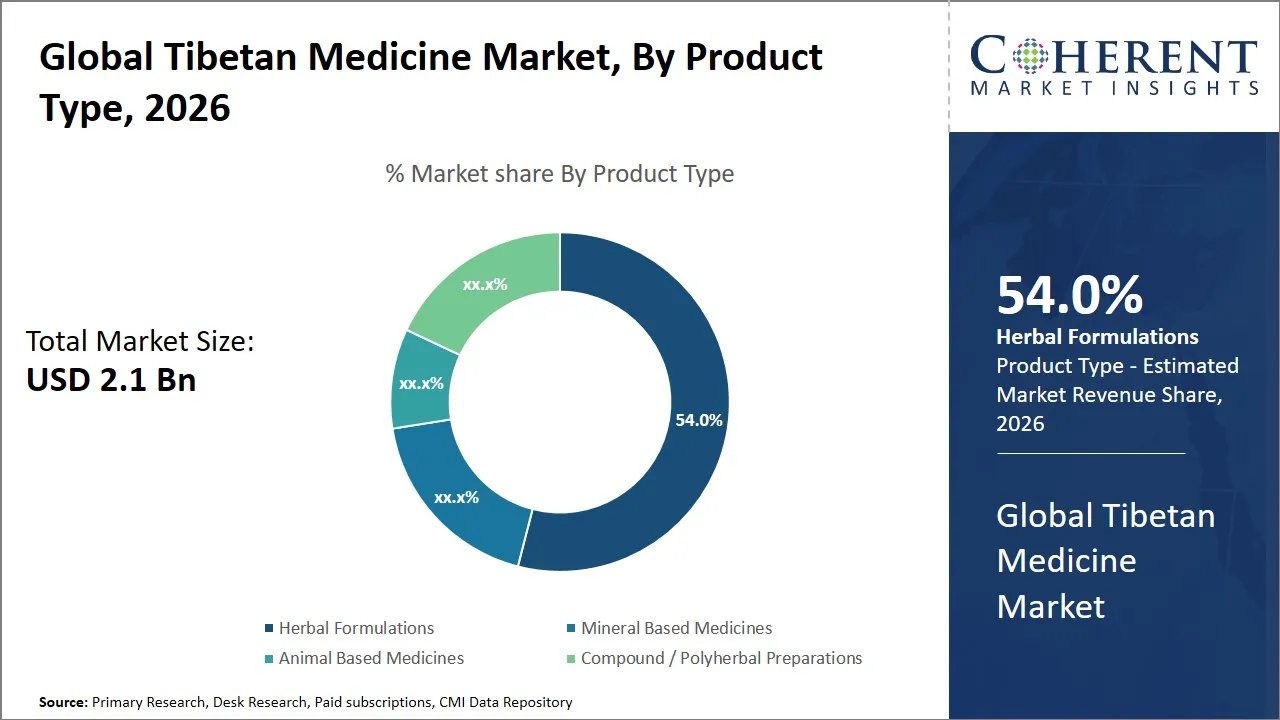
- The herbal formulations segment is expected to dominate the global tibetan medicine market, accounting for 54.0% share in 2026
- The digestive disorders segment is projected to dominate with 34.0% of the global tibetan medicine market share in 2026.
- The hospitals and specialty clinics segment is expected to hold the largest share of 46% of the global tibetan medicine market share in 2026.
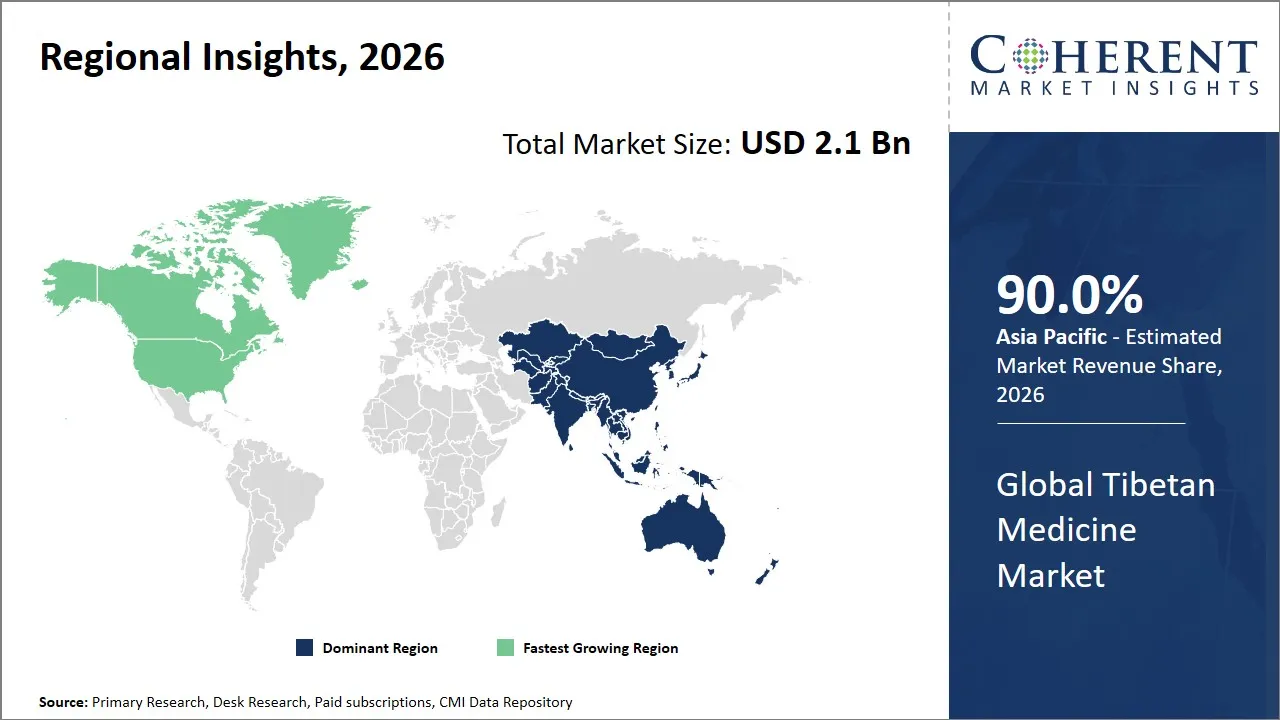
- Asia Pacific is expected to dominate the global Tibetan medicine market in 2026, accounting for 90.0% share.
- North America is anticipated to register the fastest growth during the forecast period, exhibiting a 8.25% share in 2026.
Market Overview
- Tibetan medicine is a form of traditional medicine in which herbal formulations, mineral-based medicine, and animal-based medicine are used to regain balance in the body and treat various types of chronic health conditions. It is mostly used in the treatment of gastrointestinal diseases, respiratory problems, and musculoskeletal problems.
- The demand for natural medicine, herbal medicine, and alternative medicine in the market is contributing greatly to the growth of the Tibetan medicine market. The demand for herbal medicine and natural medicine in the market is high, and consumers as consumers are opting for these types of medicine. Therefore, Tibetan medicine formulations are gaining popularity in various parts of the world.
- Tibetan medicine is not only applied in the treatment of different diseases, but it is also applied in preventive care and wellness programs.
- Research on traditional herbal medicine, governmental endorsement of traditional medical systems, and the establishment of herbal medicine pharmacies alongside e-commerce healthcare platforms are significantly fostering the expansion of the Tibetan medicine sector.
Currents Events and their Impact
Current Events | Description and its Impact |
Increasing Global Recognition of Traditional Medicine |
|
Expansion of Wellness Tourism and Holistic Healthcare |
|
Rising Scientific Research on Traditional Herbal Formulations |
|
Segmental Insights
- Current Industry Events of 2026
- Market Size Estimation
- Regional Breakdown
- Competitive Landscape
- Customer Intelligence
- Segmental Analysis
- Pricing Analysis
- Key Market Drivers, Challenges & Future Trends
- Customized Insights Section
Why Does the Herbal Formulations Segment Dominate the Global Tibetan Medicine Market in 2026?
Herbal formulations hold the largest share of 54% of the Tibetan medicine market share in 2026, owing to their natural composition, wide scope of application in medicine, and compatibility with the recent shift in the international community toward herbal medicine. Herbal medicine is more popular among consumers than chemical medicine because of its safety and ability to cure multiple physiological problems simultaneously. Tibetan medicine focuses on the restoration of balance in the human body through the use of natural botanicals.
The popularity of herbal medicine in the Tibetan medicine market can also be attributed to the high biodiversity of medicinal plants in the Himalayan and Tibetan plateaus. These plateaus offer a wide range of medicinal plants used in Tibetan medicine. Tibetan medicine practitioners have the advantage of using multiple herbs in a single formula to treat multiple physiological problems in a single dose. These problems include gastrointestinal problems, respiratory problems, inflammation, and metabolism.
Scientific research confirms the pharmacological properties of Tibetan medicinal plants that further boost the market position of herbal formulations. For instance, in December 2023, the pharmacological properties of the Tibetan medicinal plant "Shengdeng" were studied and confirmed in the National Center for Biotechnology Information (NCBI). The pharmacological properties of the medicinal plant "Shengdeng" include anti-inflammatory, antimicrobial, antioxidant, and anti-rheumatic properties. Therefore, the medicinal plant "Shengdeng" is effective in the treatment of inflammatory and rheumatic diseases.
(Source- National Library of Medicine)
Why Does the Digestive Disorders Segment Dominate the Global Tibetan Medicine Market in 2026?
The digestive disorders segment is expected to hold the largest share of 34% in 2026 due to the historical importance that has been accorded to the maintenance of digestive health as a part of the philosophy of Tibetan medicine. According to Tibetan medicine, it is believed that the equilibrium of the entire organism depends upon the maintenance of digestive health. In this regard, a variety of medicinal preparations have been formulated to ensure digestive health and thus re-establish the innate balance of the body. Furthermore, the increase in digestive problems like indigestion, gastritis, and irritable bowel syndrome among the global population due to changes in dietary habits and lifestyles has also generated more interest in Tibetan medicine.
The medicinal formulations of Tibetan medicine that help in the maintenance of digestive health are various herbal compounds that act synergistically to ensure health to the digestive system. The holistic approach of Tibetan medicine in dealing with both the symptoms and the imbalances in the systems of the body aligns with the current interest in the global population in preventive medicine.
To support this interest in Tibetan medicine, various scientific studies have explored the therapeutic value of Tibetan herbal medicine in promoting gastrointestinal wellness. For example, in an article published by the National Library of Medicine in February 2013, in-depth research on the Tibetan herbal medicine formulation known as Padma Digestin was conducted, and it was found that it possessed anti-inflammatory and carminative properties.
(Source- National Library of Medicine)
The Hospitals and Specialty Clinics Segment Dominates the Global Tibetan Medicine Market
The hospitals and specialty clinics segment is expected to hold the largest share of 46% in 2026, owing to their ability to deliver structured Tibetan medical therapies to patients. These institutions ensure that Tibetan medical therapies are provided by trained practitioners, thereby ensuring that patients are confident about the safety and efficacy of Tibetan medicine. Hospitals and specialty clinics are increasingly using Tibetan medicine along with conventional medical therapies to treat chronic diseases such as gastrointestinal disorders, musculoskeletal disorders, and respiratory disorders. This is because Tibetan medicine is able to offer patients the benefits of conventional medical therapies as well as traditional Tibetan therapies.
Moreover, the increase in government support for traditional medicines has led to an increase in the establishment of specialized traditional medicine departments in hospitals. As such, Tibetan therapies are becoming increasingly accepted within these institutions. With regard to the future prospects of Tibetan medicine, hospitals and specialty clinics are likely to be instrumental in ensuring that Tibetan medicine is accepted globally.
International Medical Tourism for Tibetan Therapies
International medical tourism for Tibetan medicine therapies provides a tremendous opportunity for the Tibetan medicine market. The interest in Tibetan medicine, which is a holistic healing practice, is gaining momentum on a global basis. Sowa-Rigpa is the name for Tibetan medicine that provides a holistic practice that includes herbal medicine, dietary advice, meditation techniques, and external treatments that work together to bring balance back into the body.
Patients from around the world are traveling to India, Nepal, and Bhutan, where authentic Tibetan medical institutions and wellness centers are located. They're seeking treatments for a range of health issues, including digestive troubles, stress-related ailments, and musculoskeletal problems, to name a few. Men-Tsee-Khang, located in Dharamshala, is attracting visitors from places like Europe, America, and other Asian countries who are seeking alternative or complementary medicine for their health conditions. Another aspect that is adding more value to Tibetan medicine is its association with wellness tourism, as more and more people are seeking spiritual experiences as part of their travel experiences.
Regional Insights
Asia Pacific Tibetan Medicine Market Analysis and Trends
In the Asia Pacific region, the global Tibetan medicine market is in a leading position holding an estimated market share of 90% in 2026 owing to the rich cultural heritage and tradition of using alternative forms of medical practices. Countries like China, India, Nepal, and Bhutan are using Tibetan medicine, and it is further promoted by traditional medicine institutes and government policies that promote alternative forms of medical practices. The presence of established companies like Lhasa Tibetan Medicine, Tibet Jun Kang Industrial Group, and Yunnan Baiyao Group is further strengthening the market in the region.
The role of government policies is significant in the growth of the market. For instance, in January 2026, China issued a national standard for “Tibetan Medicine Disease Classification and Code” for the first time, which includes over 3,000 types of diseases that can be treated with Tibetan medicine. This will standardize the diagnosis and treatment of diseases through Tibetan medicine. Along with that, the region is rich in biodiversity, which is further providing a boost to the market with increased trade, and hence leading.
(Source- China Daily Information Co (CDIC))
North America Tibetan Medicine Market Analysis and Trends
The North America region is expected to exhibit the fastest growth of 8.25% share in 2026, propelled by increasing interest of consumers in natural and alternative health remedies. There is an increase in awareness of the importance of maintaining a healthy lifestyle and the use of herbal and alternative medicine. Therefore, the demand for traditional medicine is on the rise. Additionally, the presence of various wellness centers and naturopaths that offer herbal and alternative health solutions contributes to the growth of the market in the region.
For example, according to the National Center for Complementary and Integrative Health (NCCIH), based in the U.S., about 34% of adults in the U.S. use various complementary health practices such as herbal medicine and traditional medicine. Moreover, various firms such as Himalaya Herbal Healthcare and Tibetan Healing LLC are contributing to the availability of their products and the awareness of consumers regarding the use of Tibetan medicine.
(Source- National Center for Complementary and Integrative Health)
Tibetan Medicine Market Outlook for Key Countries
How is the China Helping in the Growth of the Tibetan Medicine Market?
The tibetan medicine market in China is highly impacted by the government’s strategic endorsement of Tibetan medicine under Traditional Chinese Medicine initiatives. As the world's most populous nation, steeped in traditional medicine, China has poured substantial resources into research, certification processes, and the construction of supporting infrastructure. Major companies like Tibet Jun Kang Industrial Group and Lhasa Tibetan Medicine have made significant use of biotechnology in improving the efficacy and shelf life of products, thus gaining consumer trust. China has an abundance of herbs and dedicated areas for cultivation, thus making it easy to maintain sustainability. Moreover, healthcare reforms in China, including Tibetan medicine, have contributed significantly to the growth of the market.
How is India Helping in the Growth of the Tibetan Medicine Market?
India's tibetan medicine market benefits significantly from its historical connection to Tibetan medicine, especially in Ladakh and Sikkim, which have large Tibetan populations. In addition, the government's support for traditional medicine, including Tibetan medicine, through the AYUSH ministry, offers a further advantage. The clinical validation and commercial use of herbal medicine are currently gaining traction. Local industries are collaborating with practitioners of Tibetan medicine, striving to preserve the traditional recipes while simultaneously enhancing the products' market appeal. Ladakh Herbal and Quantum Tibetan Medicine, for instance, blend contemporary technology with the age-old practices of their healing arts. India’s demographic landscape and its inclination towards the use of wellness products make it an exciting market for Tibetan medicine.
Registered Tibetan Herbal Formulations and Manufacturing Companies
The presence of registered Tibetan herbal formulation and manufacturing companies is significant for the promotion of Sowa-Rigpa medicine. The companies formulate standardized herbal products based on classical Tibetan medical texts. The services of these companies are helpful for the promotion of Tibetan medicine in the domestic as well as global market. The companies usually combine the procurement of medicinal plants with pharmaceutical manufacturing services. The services of these companies are helpful for the promotion of Tibetan medicine. The companies also offer consultation services to patients. The services of these companies are helpful for the promotion of Tibetan medicine.
Key Drivers for the Growth of the Germany Tibetan Medicine Market
The market for Tibetan medicine in Germany has started moving forward owing to the high cultural affinity towards natural and alternative forms of medicines. The government of Germany is very stringent in enforcing the law, and the products of Tibetan medicine are of very high quality and safety. There is a lot of government support for alternative forms of medical practices, and universities and traditional medical institutions are working in conjunction with each other, thus proving the viability of Tibetan medicine products. Distributors and importers are very significant for the promotion of Tibetan medicine products in the market, and Herba Himalaya is a company that is working towards importing and marketing Tibetan medicine products and educating the consumers. Thus, Germany is an emerging market in Europe.
U.S. Tibetan Medicine Market Trends
The American public's increasing interest in holistic and alternative medicine has opened doors for Tibetan medicine to flourish. Recognition by government agencies, such as the FDA, enables companies to promote standardized herbal supplements under a framework. Many wellness centers and practitioners are promoting Tibetan medicine and its philosophies, in addition to other alternative forms of medicine, such as acupuncture and Ayurvedic medicine. Himalaya Herbal Healthcare and other key players have built strong distribution channels and are busy raising awareness. The country's well-developed logistics and retail infrastructure make it easier for Tibetan medicine to be both available and embraced.
Market Players, Key Developments, and Competitive Intelligence
Key Developments
- In December 2025, China inaugurated state-of-the-art facility in Xizang namely the Trans-Himalaya Tibetan Medicine Research Center. The facility advances Sowa Rigpa medicine research, disease classification, and validation of herbs such as Corydalis alkaloids for protecting the liver amid surging global interest.
- In May 2025, researchers from the Northwest Institute of Plateau Biology, Chinese Academy of Sciences have isolated seven active alkaloids from Tibetan medicine plant Corydalis conspersa Maxim., which include a newly isolated compound known as acetylcorynoline, bulbocapnine, and scoulerine. The study published in May 2025, revealed that these compounds, especially acetylcorynoline and total alkaloids, significantly protect against CCl4-induced acute liver injury in mice via STAT3 and HSP90AA1.
- In February 2025, a team of researchers, hailing from Tibetan medicine research institutions, undertook the creation of a knowledge graph. Their focus was on calming prescriptions within Tibetan medicine, and they drew upon the "Four Medical Tantras" and other classical texts as their primary sources. There are four types of entities like formulae, drugs, diseases, and symptoms, and three types of relationships in it, which can be efficiently processed by AI for complex calming formulae.
Top Strategies Followed by Global Tibetan Medicine Market Players
Player Type | Strategic Focus | Examples |
Established Market Leaders | The leading Tibetan medicine manufacturing companies and institutes are striving to maintain the traditional medicine formulations while improving the standardization and quality of the products. They are investing more in clinical research and strengthening the distribution network and presence of their products in the global market and various wellness centers and healthcare facilities. | Men-Tsee-Khang (Tibetan Medical & Astro Institute) and Qinghai Tibetan Medicine Co., Ltd. are the leading companies that are striving to expand the market of traditional medicine products globally and promote research and education on Tibetan pharmacology. |
Mid-Level Players | Mid-sized firms focus on the expansion of their product offerings through herbal formulations and the development of manufacturing capabilities. Mid-sized firms also engage in partnerships with local distributors and traditional medicine practitioners to enhance the penetration of the market for Tibetan medicines. | Regional Tibetan herbal product manufacturers in China, India, and Nepal engage in partnerships with wellness centers and pharmacies to expand the market reach of traditional medicine formulations. |
Small-Scale Players | Small-scale producers are concentrating on niche herbal remedies, drawing from the wellspring of traditional Tibetan medical wisdom. These enterprises typically cater to the wellness tourism sector and those seeking alternative medicine, offering bespoke herbal products and therapies via local clinics and wellness centers. | Small herbal medicine makers and Tibetan clinics are dedicated to delivering specialized traditional medical services and herbal preparations, primarily through wellness centers and integrative medicine clinics such as Men-Tsee-Khang (Tibetan Medical & Astro Institute), Sorig Khang International, and the Shang Shung Institute School of Tibetan Medicine. |
Market Report Scope
Tibetan Medicine Market Report Coverage
| Report Coverage | Details | ||
|---|---|---|---|
| Base Year: | 2025 | Market Size in 2026: | USD 2.1 Bn |
| Historical Data for: | 2020 To 2024 | Forecast Period: | 2026 To 2033 |
| Forecast Period 2026 to 2033 CAGR: | 14.1% | 2033 Value Projection: | USD 5.3 Bn |
| Geographies covered: |
| ||
| Segments covered: |
| ||
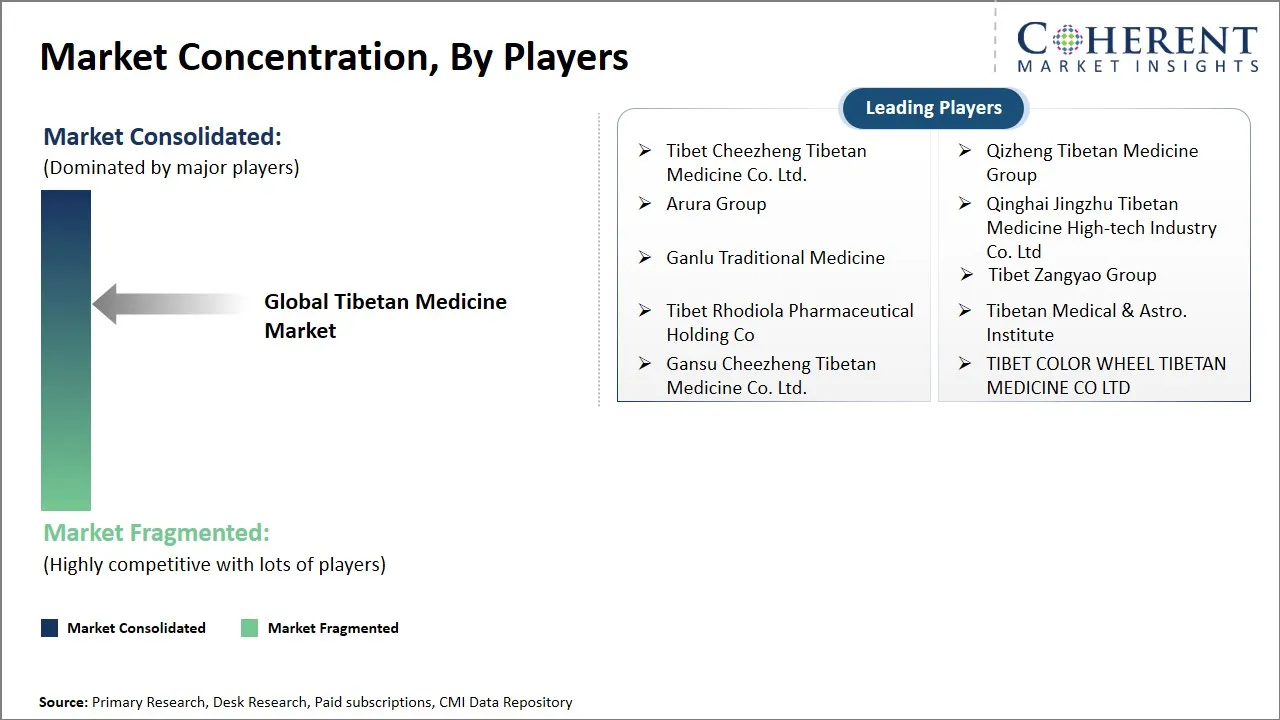
| Companies covered: | Tibet Cheezheng Tibetan Medicine Co. Ltd., Qizheng Tibetan Medicine Group, Arura Group, Qinghai Jingzhu Tibetan Medicine High-tech Industry Co. Ltd, Ganlu Traditional Medicine, Tibet Zangyao Group, Tibet Rhodiola Pharmaceutical Holding Co, Tibetan Medical & Astro. Institute, Gansu Cheezheng Tibetan Medicine Co. Ltd., and TIBET COLOR WHEEL TIBETAN MEDICINE CO LTD | ||
| Growth Drivers: |
| ||
| Restraints & Challenges: |
| ||
Global Tibetan Medicine Market Dynamics
Tibetan Medicine Market Driver - Surging Demand for Natural and Traditional Therapies
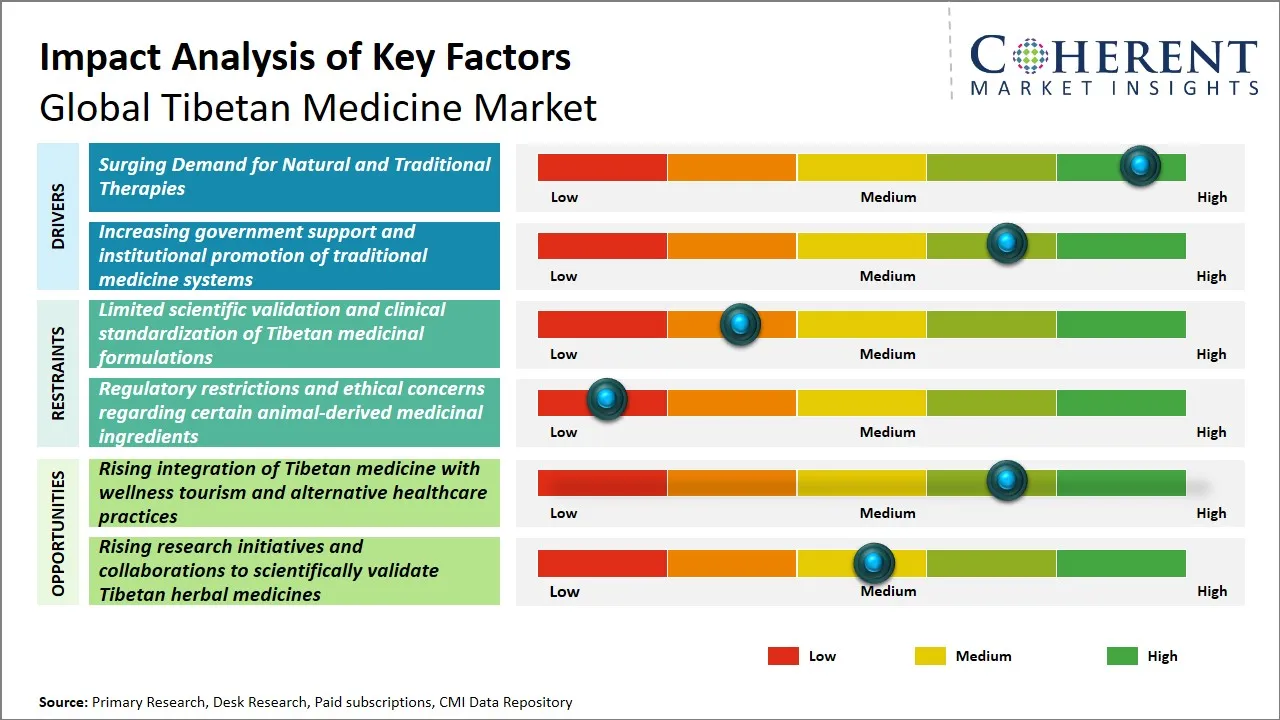
The rising trend of embracing a holistic approach to health and wellness is significantly contributing to the demand for natural and traditional medicine therapies, which is positively affecting the global tibetan medicine market. The global population is becoming more health-conscious about the long-term adverse effects of synthetic medicine. In this regard, Tibetan medicine is a traditional form of medicine that has been around for a long time and focuses on harmony between the human body, mind, and nature. The traditional approach of Tibetan medicine is more aligned with the current global shift toward integrative medicine and alternative medicine.
In addition, the rising prevalence of lifestyle diseases such as digestive diseases, metabolic diseases, and stress-related diseases is prompting patients to seek medicine therapies that have fewer adverse effects while promoting health and well-being.
Government initiatives are also positively affecting the Tibetan medicine market. For instance, in January 2026, China unveiled its inaugural national standard for "Tibetan Medicine Disease Classification and Code." This framework organizes more than 3,000 treatable ailments into 15 primary and 97 secondary categories. The goal to bring consistency to how Tibetan medicine diagnoses and treats illnesses, to bolster clinical research, and to further weave Tibetan traditional therapies into the fabric of the national healthcare system.
(Source- China Daily Information Co.)
Tibetan Medicine Market Opportunity - Rising Integration of Tibetan Medicine with Wellness Tourism and Alternative Healthcare Practices
The global tibetan medicine market is on the rise, propelled by its connections to wellness tourism and alternative medicine. With a heightened awareness of health and well-being, the global tibetan medicine sector is finding new avenues for growth. This evolution stems largely from a broader embrace of its holistic and natural approaches to healing. Wellness tourism hubs in Tibet, Nepal, Bhutan, and India are increasingly integrating Tibetan medicine practices—herbal remedies, meditation, and traditional diagnostic methods into their wellness packages, thereby broadening its global appeal.
Furthermore, the increasing acceptability and recognition of complementary and integrative medicine are also creating new opportunities for the global tibetan medicine industry, with wellness tourism and healthcare providers entering into new partnerships with Tibetan medicine practitioners. This is enabling the creation of new and specialized treatment programs, thus increasing its acceptability and creating new avenues for its global tibetan medicine industry.
For instance, in October 2025, the National Institute of Sowa-Rigpa (NISR) in Leh conducted a complimentary medical camp in seven villages in Ladakh, enhancing access to Tibetan medicine services and raising awareness, therefore fostering growth potential for the Tibetan medicine market.
Analyst Opinion (Expert Opinion)
- Tibetan medicine is considered a niche segment in the traditional and herbal medicine market. The market has been in existence for a long time, and its use of herbal medicine and holistic treatment methods has been recognized, especially in recent times due to the recognition of alternative healthcare systems. There is a surging demand for Tibetan medicine owing to the rise in demand for natural medicine. Many people seek alternative medicine to treat their health conditions like stomach upsets and arthritis.
- The surge in support for institutions and research projects is prompting a modernization of Tibetan medical practices. To build trust and help incorporate these ancient methods into modern medicine, governments and academic institutions are actively researching medicinal plants, recording traditional knowledge, and refining production methods.
- The Tibetan medicine market is set to grow, driven by the increasing global interest in herbal remedies and alternative healing methods. In short, the Tibetan medicine market is expected to expand, fueled by the rising global interest in herbal treatments and alternative medicine.
- In conclusion, the Tibetan medicine market is expected to grow, driven by the increasing global interest in herbal treatments and alternative medicine.
Speak to the analyst
Want personalized insights?
Take the findings above to one of our principal consultants, or have the report rebuilt around the segments, geographies and competitors you actually track.
Market Segmentation
- Product Type Insights (Revenue, USD Bn, 2021 - 2033)
- Herbal Formulations
- Mineral Based Medicines
- Animal Based Medicines
- Compound / Polyherbal Preparations
- Application Insights (Revenue, USD Bn, 2021 - 2033)
- Digestive Disorders
- Respiratory Disorders
- Musculoskeletal Disorders
- Cardiovascular and Metabolic Disorders
- Mental and Nervous System Disorders
- General Wellness and Preventive Care
- End User Insights (Revenue, USD Bn, 2021 - 2033)
- Hospitals and Specialty Clinics
- Wellness Centers and Retreats
- Home Care
- Distribution Channel Insights (Revenue, USD Bn, 2021 – 2033)
- Hospitals and Clinics
- Traditional Medicine Pharmacies
- E-Commerce
- Direct Sales and Wellness Centers
- Regional Insights (Revenue, USD Bn, 2021 - 2033)
- North America
- U.S.
- Canada
- Latin America
- Brazil
- Argentina
- Mexico
- Rest of Latin America
- Europe
- Germany
- U.K.
- Spain
- France
- Italy
- Russia
- Rest of Europe
- Asia Pacific
- China
- India
- Japan
- Australia
- South Korea
- ASEAN
- Rest of Asia Pacific
- Middle East
- GCC Countries
- Israel
- Rest of Middle East
- Africa
- South Africa
- North Africa
- Central Africa
- North America
- Key Players Insights
- Tibet Cheezheng Tibetan Medicine Co. Ltd.
- Qizheng Tibetan Medicine Group
- Arura Group
- Qinghai Jingzhu Tibetan Medicine High-tech Industry Co. Ltd
- Ganlu Traditional Medicine
- Tibet Zangyao Group
- Tibet Rhodiola Pharmaceutical Holding Co
- Tibetan Medical & Astro. Institute
- Gansu Cheezheng Tibetan Medicine Co. Ltd.
- TIBET COLOR WHEEL TIBETAN MEDICINE CO LTD
Sources
Primary Research Interviews
Industry Stakeholders
- Tibetan medicine practitioners
- Herbal medicine manufacturers and distributors
- Traditional medicine research scholars
- Pharmaceutical formulation specialists
- Natural product researchers
- Regulatory experts in traditional and herbal medicine
End Users
- Integrative medicine physicians
- Alternative medicine practitioners
- Wellness center therapists
- Traditional medicine pharmacists
- Healthcare researchers specializing in ethnomedicine
- Patients using traditional or herbal therapies
Government and International Databases
- World Health Organization (WHO) – Traditional Medicine Global Strategy
- Ministry of AYUSH (India) – Sowa-Rigpa and traditional medicine database
- National Center for Complementary and Integrative Health (NCCIH)
- National Institutes of Health (NIH) – Herbal medicine research database
- Chinese National Administration of Traditional Chinese Medicine
- Global Health Observatory (WHO) – Traditional medicine statistics
Trade Publications
- Journal of Herbal Medicine
- Integrative Medicine: A Clinician’s Journal
- Natural Medicine Journal
- HerbalGram – American Botanical Council
- Traditional Medicine Research Journal
Academic Journals
- Journal of Ethnopharmacology
- Frontiers in Pharmacology
- Evidence-Based Complementary and Alternative Medicine
- Journal of Alternative and Complementary Medicine
- Phytomedicine
Reputable Newspapers
- The New York Times – Health Section
- The Guardian – Science & Health
- Financial Times – Global Health
- South China Morning Post – Health & Wellness
- The Hindu – Health & Lifestyle
Industry Associations
- World Federation of Chinese Medicine Societies (WFCMS)
- International Society for Ethnopharmacology (ISE)
- American Botanical Council
- Society for Medicinal Plant and Natural Product Research
- Global Wellness Institute
Public Domain Resources
- ClinicalTrials.gov
- WHO Reports and Traditional Medicine Fact Sheets
- NIH PubMed Database
- Men-Tsee-Khang (Tibetan Medical & Astro Institute) publications
- Government AYUSH research reports
Proprietary Elements
- CMI Data Analytics Tool: Proprietary analytics tool to analyze real-time market trends, consumer behavior, and technology adoption in market
- Proprietary CMI Existing Repository of Information for Last 8 Years
Get access to 250+ pages report
Every segment, forecast, competitor profile and data table behind the analysis above — available for instant download.
- ESOMAR Member
- ISO 9001:2015 Certified
- D-U-N-S Registered
- GDPR & CCPA Compliant
Missing comfort of reading report in your local language? Find your preferred language:
Transform your Strategy with Exclusive Trending Reports
Frequently Asked Questions
The global Tibetan medicine market is estimated to be valued at USD 2.1 billion in 2026 and is expected to reach USD 5.3 billion by 2033.
The CAGR of the global Tibetan medicine market is projected to be 14.1% from 2026 to 2033.
Surging demand for natural and traditional therapies, and increasing government support and institutional promotion of traditional medicine systems are the major factors driving the growth of the global Tibetan medicine market.
Limited scientific validation and clinical standardization of tibetan medicinal formulations, and regulatory restrictions and ethical concerns regarding certain animal-derived medicinal ingredients are the major factors hampering the growth of the global Tibetan medicine market.
In terms of product type, herbal formulations are estimated to dominate the market revenue share in 2026.
Tibet Cheezheng Tibetan Medicine Co. Ltd., Qizheng Tibetan Medicine Group, Arura Group, Qinghai Jingzhu Tibetan Medicine High-tech Industry Co. Ltd, Ganlu Traditional Medicine, Tibet Zangyao Group, Tibet Rhodiola Pharmaceutical Holding Co, Tibetan Medical & Astro. Institute, Gansu Cheezheng Tibetan Medicine Co. Ltd., and TIBET COLOR WHEEL TIBETAN MEDICINE CO LTD are the major players.
Asia Pacific is expected to lead the global Tibetan medicine market in 2026.