

Global Tofacitinib Market Size and Forecast – 2026 to 2033
The global tofacitinib market is estimated to be valued at USD 3.94 Bn in 2026 and is expected to reach USD 8.72 Bn by 2033, exhibiting a compound annual growth rate (CAGR) of 12.0% from 2026 to 2033. This robust growth trajectory reflects increasing adoption of tofacitinib across various therapeutic areas, driven by rising prevalence of autoimmune disease and expanding approval for new indications worldwide.
Key Takeaways of the Global Tofacitinib Market
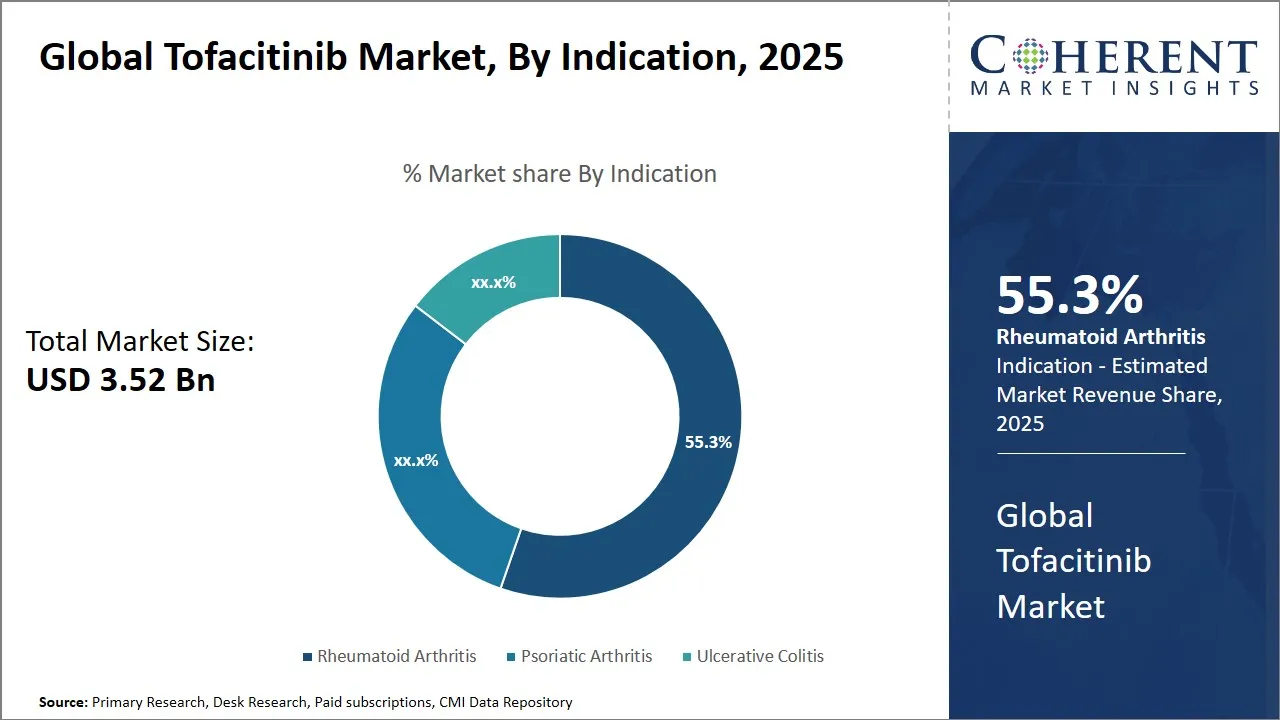
- The rheumatoid arthritis segment is projected to account for 56.3 % of the market share in 2026.
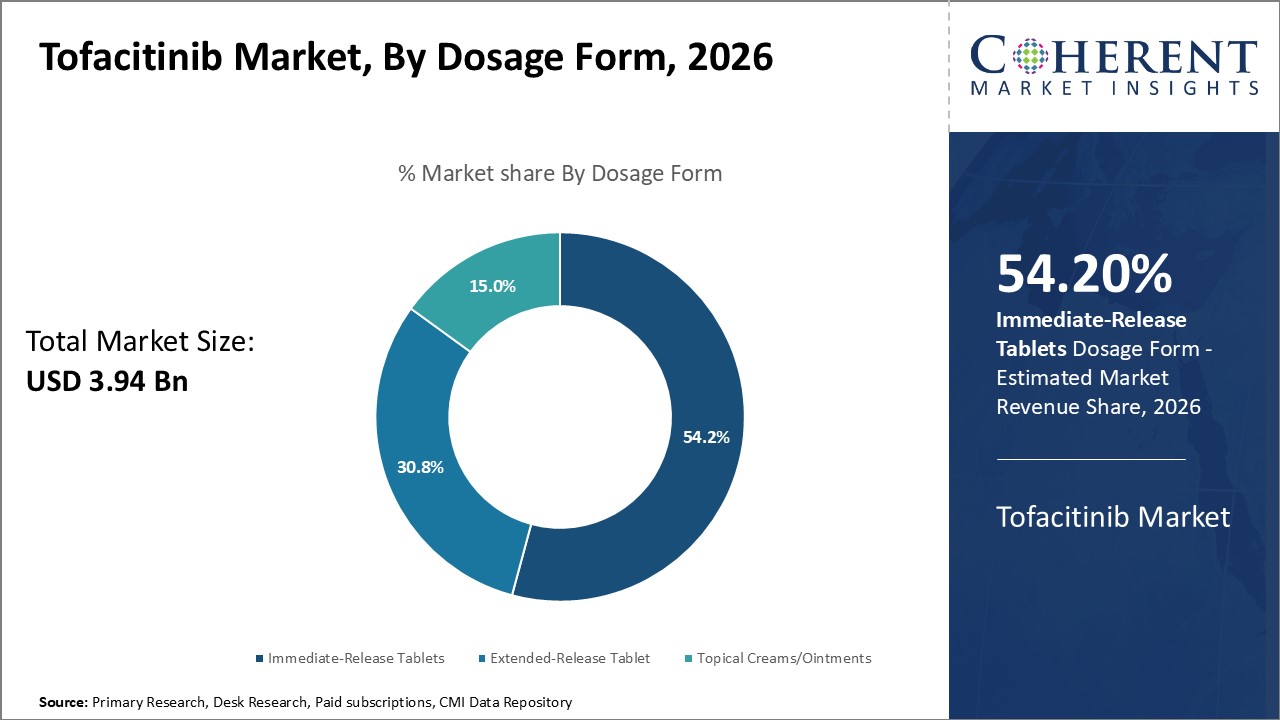
- By dosage form, immediate-release tablets segment is expected to capture 54.2 % share in 2026.
- The 5 mg dosage segment is projected to hold 44.2 % share in 2026.
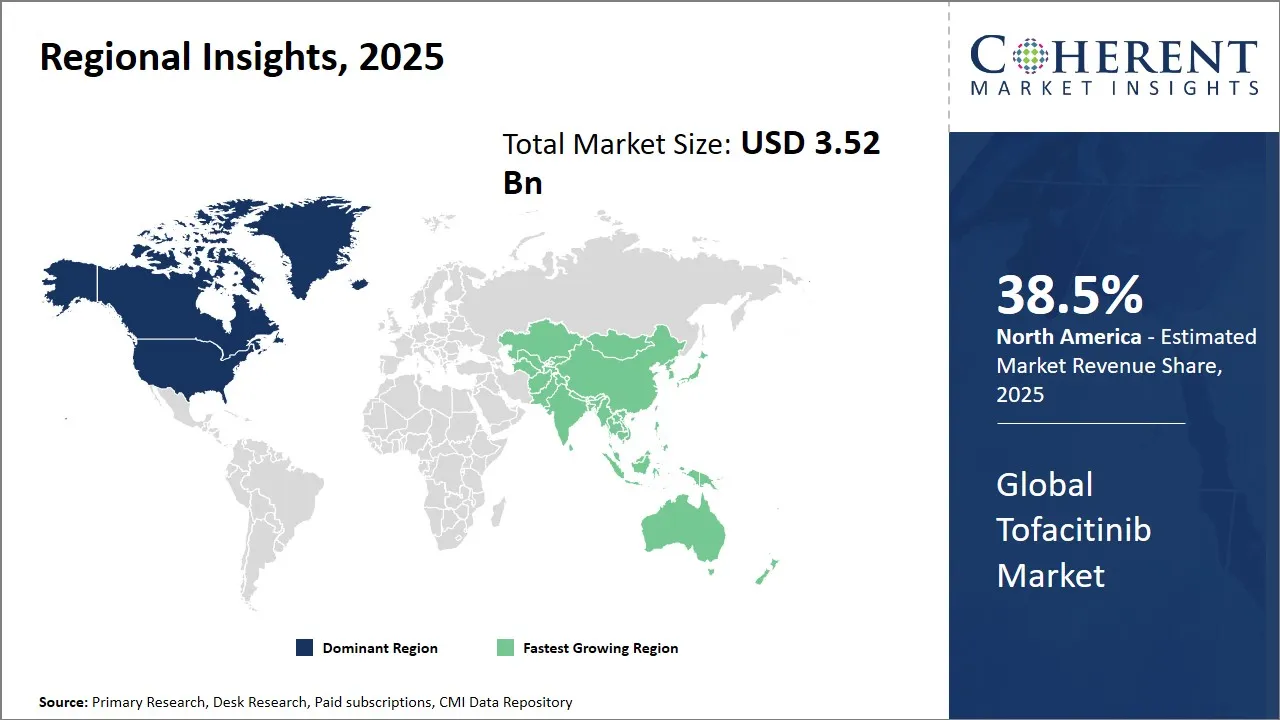
- North America is expected to lead the market, holding a share of 38.5 % in 2026. Asia Pacific is anticipated to be the fastest-growing region, with an estimated market share of 24.5% in 2026.
Market Overview
Market trends indicate a significant shift towards personalized medicine and targeted therapies, with tofacitinib gaining prominence due to its efficacy in treating conditions like rheumatoid arthritis and ulcerative colitis. Additionally, ongoing clinical trials and advancements in Janus kinase inhibitor formulations are fueling the market expansion. Strategic collaborations and increasing healthcare awareness in emerging markets also contribute to sustained the demand, positioning the tofacitinib market for substantial growth in the coming years.
Current Events and Its Impact
Current Events | Description and its Impact |
U.S. FDA Maintains Class-Wide Boxed Warnings for JAK Inhibitors (incl. tofacitinib) |
|
Patent Expiry and Generic Entry |
|
Segmental Insights
- Current Industry Events of 2026
- Market Size Estimation
- Regional Breakdown
- Competitive Landscape
- Customer Intelligence
- Segmental Analysis
- Pricing Analysis
- Key Market Drivers, Challenges & Future Trends
- Customized Insights Section
Tofacitinib Market Insights, by Indication - Rheumatoid Arthritis Segment Contributes the Highest Share of the Market Owning to Increasing Prevalence and Unmet Therapeutic Needs
The Rheumatoid Arthritis (RA) segment is expected to capture 56.3% of the market share in 2026, due to the high prevalence and the chronic nature of this autoimmune condition. Rheumatoid Arthritis is a systemic inflammatory disorder characterized by joint inflammation and progressive damage, leading to significant morbidity and disability if untreated. The aging population, along with heightened awareness and advancements in diagnostic methods, has led to the escalation in RA diagnosis worldwide. This increased detection fuels the demand for effective treatment options such as Tofacitinib.
Tofacitinib, as a Janus kinase (JAK) inhibitor, addresses the underlying immune deregulation in RA by targeting intracellular signaling pathways, thus exhibiting potent anti-inflammatory and immunomodulatory effects. Moreover, the segment's growth is spurred by the demand for targeted therapies that offer an alternative to traditional Disease-Modifying Anti-Rheumatic Drugs (DMARDs) and biologics, which may have limitations including administration challenges and adverse side effects.
In January 2022, a study by the New England Journal of Medicine reported that older rheumatoid arthritis patients with heart risk factors who took Pfizer’s Xeljanz (tofacitinib) had more cases of serious heart problems and cancer compared to those on TNF inhibitors, although both treatments worked equally well in controlling the disease.
Tofacitinib Market Insights, by Dosage Form - Immediate-Release Tablets Segment Dominate Owing to Patient Compliance and Rapid Therapeutic Onset
The immediate-release tablets segment is projected to account for 54.2% share in 2026, driven by factors that center around ease of use, convenience, and pharmacokinetic advantages. IR tablets are preferred by practitioners and patients alike due to their rapid absorption, leading to a quicker onset of action, which is critical in managing symptoms of autoimmune diseases such as Rheumatoid Arthritis, Psoriatic Arthritis, and Ulcerative Colitis.
Patient compliance is considerably higher with immediate-release tablets because they typically involve simpler dosing regimens and are easier to integrate into daily routines compared to more complex formulations. This is particularly relevant for chronic conditions requiring long-term medication adherence to control disease progression and improve quality of life. Furthermore, the existing clinical experience and robust data supporting the efficacy and safety of immediate-release tablets have reinforced physician confidence in prescribing this dosage form.
Tofacitinib Market Insights, by Strength - 5 mg Strength Segment Lead the Market Driven by Balanced Efficacy and Safety Profile Favored in Treatment Protocols
The 5 mg dosage segment is projected to hold 44.2% share in 2026, because it aligns best with the therapeutic requirements and safety considerations for most patients. The 5 mg strength provides an optimal balance between efficacy and tolerability, often being the starting dose recommended in clinical practice for conditions such as Rheumatoid Arthritis and Psoriatic Arthritis.
Clinicians prefer initiating treatment at 5 mg to minimize the risk of adverse effects while closely monitoring patient response. This conservative approach is especially important given the immune-modulating mechanism of Tofacitinib, which carries potential risks such as infections and laboratory abnormalities. The 5 mg dose is often adequate for achieving symptom control in a substantial proportion of patients, enabling them to maintain disease remission or low disease activity with fewer safety concerns.
Reimbursement Policy for Tofacitinib
- Reimbursement for tofacitinib varies widely by region and insurer, but access has improved in recent years as health authorities recognize its role in treating autoimmune conditions such as rheumatoid arthritis, ulcerative colitis, and psoriatic arthritis. In the U.S., Pfizer supports access through its XELSOURCE program, offering coverage guidance, patient affordability options, and field reimbursement managers to assist with prior authorizations and copay support. Across Europe and Japan, updated reimbursement policies have expanded coverage for approved indications, allowing more patients to benefit from oral JAK inhibitor therapies. These programs are crucial in offsetting high treatment costs and ensuring broader patient access to advanced therapies.
- Pfizer offers U.S. patients several ways to lower out-of-pocket costs for XELJANZ. Eligible, commercially insured patients may pay as little as USD 0 per month through the Co-Pay Savings Program, with annual savings caps that typically range from about USD 4,000 to USD 15,000. If you’re uninsured or on government insurance, XELSOURCE can screen you for programs such as Medicare Extra Help, Medicaid, or the Pfizer Patient Assistance Program, which may provide medicine at no cost if you qualify. XELSOURCE also helps with prior authorizations, checks coverage and estimated copays, and lets you track prescription status via its patient portal.
Regional Insights
North America Tofacitinib Market Analysis and Trends
North America region is projected to lead the market with a 38.5% share in 2026, driven by a well-established healthcare infrastructure, high awareness and adoption of advanced therapies, and significant investment in biopharmaceutical research and development. The presence of leading pharmaceutical companies such as Pfizer, which markets tofacitinib under the brand name Xeljanz, reinforces the region’s leadership. Robust regulatory frameworks including the U.S. FDA’s streamlined approval processes support faster market entry for innovative drugs. Additionally, comprehensive insurance coverage and government healthcare programs provide patients with better access to tofacitinib for autoimmune conditions like rheumatoid arthritis and ulcerative colitis. The strong presence of specialty pharmacies and advanced distribution networks further strengthen market penetration and product availability.
For example, in North America, government healthcare programs such as Medicare and Medicaid in the U.S. and Canada’s publicly funded healthcare system play a key role in improving patient access to tofacitinib for autoimmune conditions like rheumatoid arthritis and ulcerative colitis.
Asia Pacific Tofacitinib Market Analysis and Trends
The Asia Pacific region exhibits the fastest growth in the tofacitinib market with 24.5% share in 2026, propelled by increasing prevalence of autoimmune diseases, expanding healthcare access, and rising healthcare expenditure across emerging economies like China and India. Government initiatives aimed at improving healthcare infrastructure and fostering pharmaceutical innovation, along with gradual regulatory harmonization, are facilitating quicker drug approvals and increasing patient accessibility. Local pharmaceutical companies are increasingly entering into collaborations or licensing agreements with global players to manufacture generic or branded forms of tofacitinib at competitive prices, which is fueling market expansion. Growth in urban populations, rising health awareness, and improved diagnostic capabilities are also key factors supporting market momentum in this region.
Tofacitinib Market Outlook for Key Countries
U.S. Tofacitinib Market Analysis and Trends
The U.S. tofacitinib market remains the global leader due to its advanced healthcare system and early adoption of novel therapies. Pfizer’s dominance in the U.S. is complemented by aggressive clinical research programs and extensive educational efforts to familiarize physicians with tofacitinib’s benefits. Reimbursement policies, including Medicare and private payers, facilitate patient access to the drug for conditions such as rheumatoid arthritis and psoriatic arthritis. Additionally, strategic partnerships between pharmaceutical companies and specialty clinics enhance outreach and patient management, solidifying the U.S. as a critical market base.
For instance, in January 2022 VYNE Therapeutics, a U.S.-based biopharmaceutical company, reported Phase 1b results from its FMX114 trial for mild-to-moderate atopic dermatitis, showing the topical combination gel of tofacitinib and fingolimod had substantially lower systemic exposure than oral versions, with mean Cmax of tofacitinib 50-fold lower on Day 1 and 1500-fold lower on Day 14 compared to oral Xeljanz. Both FMX114 and the vehicle gel were well-tolerated with no serious adverse events, supporting continuation into Phase 2a, with topline data expected in Q1 2022.
Canada Tofacitinib Market Analysis and Trends
The Canada tofacitinib market is shaped by a combination of strong regulatory oversight, expanding therapeutic adoption, and supportive healthcare access. Health Canada’s safety reviews and updated label warnings have influenced prescribing patterns, with physicians increasingly cautious in recommending tofacitinib for patients at risk of cardiovascular events or cancer. Despite these restrictions, adoption continues in cases where alternative treatments are ineffective, particularly for rheumatoid arthritis, psoriatic arthritis, and ulcerative colitis. The country’s publicly funded healthcare system, coupled with private insurance coverage, supports broader patient access to advanced therapies like tofacitinib.
For instance, in January 2022, Health Canada, the national health regulator overseeing drug safety, confirmed that Pfizer’s Xeljanz and Xeljanz XR, oral medicines for arthritis and ulcerative colitis, are linked to higher risks of serious heart problems and cancer, especially in older patients, smokers, and those with existing risk factors. Pfizer, a global biopharmaceutical company, has updated product labels with stronger warnings, and Health Canada has restricted use in rheumatoid arthritis to patients who cannot tolerate other treatments, while limiting the higher 10 mg dose to ulcerative colitis cases where other drugs have failed.
China Tofacitinib Market Analysis and Trends
China tofacitinib market is rapidly evolving with increasing government focus on innovative drug approvals and health insurance expansion. Multinational pharmaceutical firms, along with thriving domestic biopharma players such as Jiangsu Hengrui Medicine, contribute to making tofacitinib more accessible. Regulatory reforms by the National Medical Products Administration (NMPA) have expedited approval pathways, encouraging market entry for both originator and biosimilar drugs. Rising incidence of autoimmune diseases combined with urbanization and improved diagnostic facilities amplifies demand within hospital networks and specialty clinics.
For instance, in November 2024, Minghui Pharmaceutical, a China-based late-stage biopharma company, announced positive Phase 3 results for MH004 (tofacitinib etocomil) ointment 1.0% in adolescents and adults with mild to moderate atopic dermatitis. The trial enrolled 377 patients and met primary endpoints at Week 4, with significantly more participants on MH004 achieving clear or almost clear skin (IGA-TS) and EASI-75 response versus vehicle, supporting its potential as a new topical treatment option in AD.
U.K. Tofacitinib Market Analysis and Trends
In the U.K., the NHS’s role as a primary healthcare provider shapes the adoption and use of tofacitinib therapies. Regulatory oversight by the Medicines and Healthcare products Regulatory Agency (MHRA) and guidance from the National Institute for Health and Care Excellence (NICE) ensure therapies are both effective and cost-efficient. Collaboration between Pfizer and local healthcare bodies facilitates established supply chains and patient education programs. The country’s emphasis on evidence-based medicine leads to cautious but steady uptake, supported by clinical guidelines recommending tofacitinib for specific autoimmune indications.
For instance, in October 2021, the UK’s Medicines and Healthcare products Regulatory Agency (MHRA) issued new safety measures for Pfizer’s Xeljanz (tofacitinib), advising it should not be prescribed to patients over 65, current or past smokers, or those with cardiovascular or cancer risk factors unless no suitable alternatives are available, to reduce risks of major adverse heart events and malignancies.
Market Players, Key Developments, and Competitive Intelligence
Key Developments
- In April 2025, researchers from the U.K. JIA Biologics Register reported early real-world data on Pfizer’s tofacitinib, marketed as Xeljanz, for Juvenile Idiopathic Arthritis (JIA). Pfizer is a global biopharmaceutical company known for developing innovative therapies. The analysis included 36 children, mostly with prior biologic treatment, and showed that half of the patients remained on tofacitinib after six months, with improvements in active joint counts observed. These findings suggest tofacitinib could be a useful treatment option for JIA even in patients who had already tried multiple therapies.
- In January 2025, Adalvo Limited, a global pharmaceutical company focused on differentiated generics, announced plans to submit a Decentralized Procedure (DCP) for Tofacitinib film-coated tablets, aiming for a Day-1 launch once regulatory exclusivity ends. Based on Pfizer’s Xeljanz, the oral JAK inhibitor generated USD 3.3 billion in global sales in 2023, and Adalvo’s move positions it to expand access to this key therapy for inflammatory conditions.
- In June 2023, Intas Pharmaceuticals Ltd., one of India’s leading global pharmaceutical companies, launched TOFATAS, a DCGI-approved 2% tofacitinib ointment for treating mild to moderate atopic dermatitis in adults. This marks the first topical JAK inhibitor approved in India for the condition, offering patients a steroid-free option after more than 15 years without a new topical therapy, addressing unmet needs in managing itching, flare-ups, and quality-of-life challenges linked to the disease.
- In May 2023, Australia’s Therapeutic Goods Administration (TGA), the national regulator for medicines and medical devices, issued a class-wide boxed warning for all JAK inhibitors, including Pfizer’s Xeljanz (tofacitinib), Eli Lilly’s Olumiant, and AbbVie’s Rinvoq, following safety concerns. The update was prompted by trial data showing Xeljanz increased risks of heart attack, stroke, cancer, blood clots, infections, and death. The TGA advised doctors to avoid prescribing JAK inhibitors to patients aged 65 or older, or those with cardiovascular or cancer risk factors, unless no alternatives exist, and recommended regular skin checks for patients on these therapies.
Top Strategies Followed by Global Tofacitinib Market Players
- Established players dominate the scene by investing heavily in research and development (R&D) to innovate and enhance tofacitinib formulations and delivery systems. This emphasis on high-performance products ensures these firms maintain a strong competitive edge by addressing unmet medical needs and improving patient adherence. Additionally, these market leaders often form strategic partnerships and alliances with major pharmaceutical companies, Original Equipment Manufacturers (OEMs), and Contract Research Organizations (CROs) to strengthen their market presence.
- For instance, in December 2021, Pfizer Inc, a leading global biopharmaceutical company, announced that the U.S. FDA approved its oral medicine XELJANZ (tofacitinib) for treating adults with active ankylosing spondylitis who did not respond to or could not tolerate TNF blockers. The approval was supported by a Phase 3 trial showing significantly higher response rates with XELJANZ compared to placebo, marking it as the first and only JAK inhibitor approved in the U.S. for five different immuno-inflammatory conditions.
- Mid-level players adopt a pragmatic approach by focusing on cost-effective tofacitinib solutions that balance quality with affordability, catering to price-sensitive segments in both developing and cost-conscious developed markets. These companies rely on collaborations and joint ventures with established manufacturers and technology providers to strengthen production capacities, integrate advanced manufacturing technologies, and reduce regulatory hurdles. Such partnerships enable faster time-to-market and geographic expansion with minimized risks, while ensuring competitive positioning against larger global players.
- For instance, in August 2021, Zydus Cadila, a leading India-based pharmaceutical company, received final approval from the U.S. FDA to market tofacitinib extended-release tablets in 11 mg and 22 mg strengths, securing 180-day exclusivity for the 22 mg version. This approval, covering a generic of Pfizer’s Xeljanz XR, targeted a U.S. market worth about USD 2.08 billion as of June 2021, according to IQVIA. Manufactured at Zydus’ SEZ facility in Ahmedabad, the launch added to its robust portfolio of over 320 U.S. approvals, showcasing how mid-level players leverage regulatory approvals and cost-efficient manufacturing to compete effectively in the global tofacitinib market.
- Small-scale players occupy a unique position in the global tofacitinib market by carving out specialized niches through innovation and agility. Often lacking the extensive resources of larger companies, these firms focus on developing specialized features in their products, such as tailored dosage forms or enhanced bioavailability, which cater to specific patient needs or underserved segments.
- Examples of small and mid-sized firms active in this space include Hetero Healthcare, which markets its branded generic Jakura in India, Ajanta Pharma with its tofacitinib formulation approved in select markets, and MSN Laboratories, which launched Tofadoz as part of its specialty generics portfolio.
Market Report Scope
Tofacitinib Market Report Coverage
| Report Coverage | Details | ||
|---|---|---|---|
| Base Year: | 2025 | Market Size in 2026: | USD 3.94 Bn |
| Historical Data for: | 2020 To 2024 | Forecast Period: | 2026 To 2033 |
| Forecast Period 2026 to 2033 CAGR: | 12.0% | 2033 Value Projection: | USD 8.72 Bn |
| Geographies covered: |
| ||
| Segments covered: |
| ||
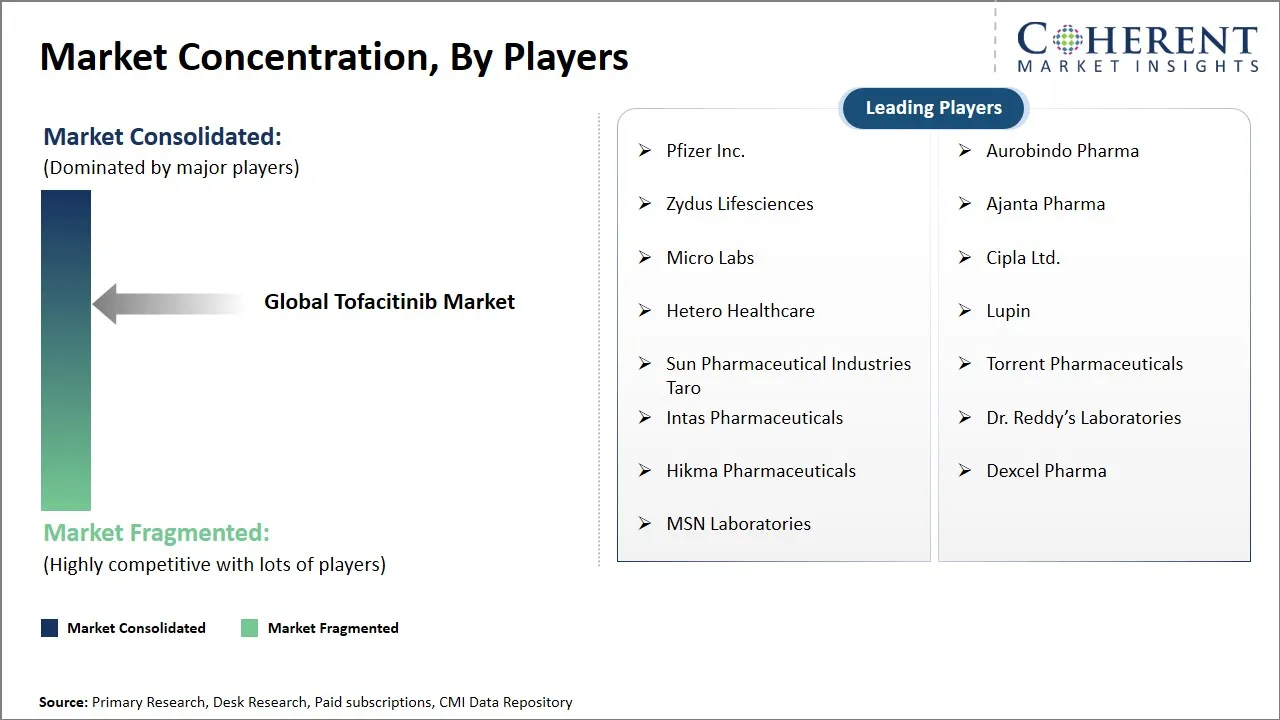
| Companies covered: | Pfizer Inc., Aurobindo Pharma, Zydus Lifesciences, Ajanta Pharma, Micro Labs, Cipla Ltd., Hetero Healthcare, Lupin, Sun Pharmaceutical Industries Taro, Torrent Pharmaceuticals, Intas Pharmaceuticals, Dr. Reddy’s Laboratories, Hikma Pharmaceuticals, Dexcel Pharma, and MSN Laboratories | ||
| Growth Drivers: |
| ||
| Restraints & Challenges: |
| ||
Tofacitinib Market Dynamics
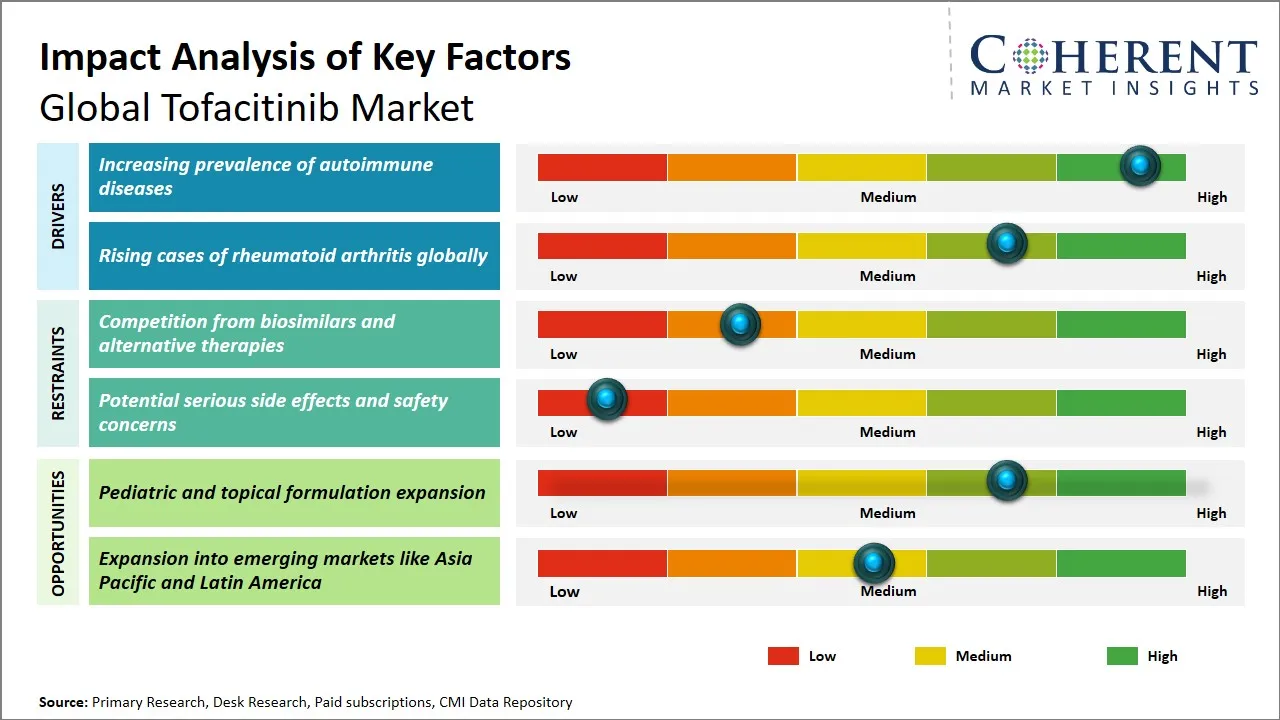
Tofacitinib Market Driver - Increasing Prevalence of Autoimmune Diseases
The rising prevalence of autoimmune diseases worldwide significantly propels the demand for tofacitinib, a targeted therapy known for its efficacy in managing conditions such as rheumatoid arthritis, psoriatic arthritis, and ulcerative colitis. As lifestyle changes, environmental factors, and genetic predispositions contribute to the growing incidence of these chronic inflammatory disorders, the need for advanced treatment options has become increasingly critical. Tofacitinib’s oral administration and ability to inhibit Janus kinase enzymes make it a preferred therapeutic choice among clinicians seeking to provide patients with effective disease management and improved quality of life. Furthermore, the expanded application of tofacitinib in various autoimmune diseases beyond its initial indications highlights its versatility and potential as a cornerstone treatment.
In March 2025, the Sjögren’s Foundation, a U.S.-based nonprofit focused on advocacy and education, reported in a blog that autoimmune diseases now affect more than 50 million Americans, or 8% of the population. The post emphasized that conditions such as Sjögren’s, lupus, rheumatoid arthritis, and type 1 diabetes are rising globally, with rheumatological diseases increasing 7.1% each year. It also highlighted that women account for 80% of cases, with X chromosome–linked genes playing a key role in higher susceptibility, as shown by the greater prevalence of Sjögren’s in men with Klinefelter Syndrome and women with triple X syndrome.
Tofacitinib Market Opportunity - Pediatric and Topical Formulation Expansion
The global tofacitinib market presents a significant opportunity through the expansion of pediatric and topical formulations. Traditionally focused on adult populations, the development and approval of pediatric formulations can open new avenues by addressing unmet medical needs among children suffering from autoimmune conditions such as Juvenile Idiopathic Arthritis (JIA) and pediatric psoriasis. Given the increasing prevalence of these chronic inflammatory diseases in pediatric patients, pharmaceutical companies have a promising potential to broaden their market base. Additionally, topical formulations of Tofacitinib offer considerable advantages, especially in treating localized dermatological conditions like atopic dermatitis and vitiligo, where systemic exposure needs to be minimized. Topical applications not only improve patient compliance due to ease of use and reduced systemic side effects, but they also cater to patients who are contraindicated for oral or injectable therapies.
In January 2024, researchers from Skin Research and Technology, an international dermatology journal, reported a case study showing successful treatment of severe pediatric alopecia areata with Pfizer’s tofacitinib, marketed as Xeljanz. Pfizer is a global biopharmaceutical company known for developing innovative therapies in immunology. The study described a 6-year-old girl who achieved over 90% hair regrowth within three months of oral tofacitinib therapy, with full regrowth at six months and no relapse after dose reduction, suggesting the drug could offer a promising future option for children with severe alopecia areata.
Analyst Opinion (Expert Opinion)
- The tofacitinib market is being shaped by a mix of scientific progress and evolving healthcare priorities. Increasing prevalence of autoimmune disorders such as rheumatoid arthritis and ulcerative colitis has boosted the demand, while ongoing regulatory approvals across different regions continue to support wider access. At the same time, pharmaceutical companies are investing in new formulations and patient-friendly dosage options, helping to improve adherence and treatment outcomes. Opportunities are emerging in expanding indications and in markets with rising healthcare infrastructure, though challenges remain around safety concerns, cost pressures, and competition from alternative therapies. Platforms such as the European League Against Rheumatism (EULAR) Congress and the American College of Rheumatology (ACR) Annual Meeting in recent years have provided vital forums for clinicians, researchers, and industry leaders to exchange knowledge, discuss long-term safety data, and shape guidelines that directly influence how drugs like tofacitinib are prescribed worldwide.
- On the ground, several initiatives underline the market’s momentum. Pfizer’s continued expansion of tofacitinib’s label to cover additional autoimmune conditions has broadened treatment access, while collaborations between regional health authorities and drugmakers have improved availability in Asia Pacific and Latin America. Government programmes aimed at reducing the burden of chronic inflammatory diseases are also creating a more favorable environment for adoption. For instance, recent reimbursement updates in parts of Europe and Japan have allowed patients wider access to advanced oral therapies, while clinical trial networks in the U.S. and China are accelerating evidence generation. Together, these developments highlight a market that is not only growing but also evolving through active partnerships, policy shifts, and scientific exchange.
Speak to the analyst
Want personalized insights?
Take the findings above to one of our principal consultants, or have the report rebuilt around the segments, geographies and competitors you actually track.
Market Segmentation
- Indication Insights (Revenue, USD Bn, 2021 - 2033)
- Rheumatoid Arthritis
- Psoriatic Arthritis
- Ulcerative Colitis
- Dosage Form Insights (Revenue, USD Bn, 2021 - 2033)
- Immediate-Release Tablets
- Extended-Release Tablet
- Topical Creams/Ointments
- Strength Insights (Revenue, USD Bn, 2021 - 2033)
- 5 mg
- 10 mg
- 11 mg
- Others
- Age Group Insights (Revenue, USD Bn, 2021 - 2033)
- Adults
- Geriatric
- Type Insights (Revenue, USD Bn, 2021 - 2033)
- Brand
- Generic
- Distribution Channel Insights (Revenue, USD Bn, 2021 - 2033)
- Hospital Pharmacies
- Retail Pharmacies
- Online Pharmacies
- Specialty Clinics
- Regional Insights (Revenue, USD Bn, 2021 - 2033)
- North America
- U.S.
- Canada
- Latin America
- Brazil
- Argentina
- Mexico
- Rest of Latin America
- Europe
- Germany
- U.K.
- Spain
- France
- Italy
- Russia
- Rest of Europe
- Asia Pacific
- China
- India
- Japan
- Australia
- South Korea
- ASEAN
- Rest of Asia Pacific
- Middle East
- GCC Countries
- Israel
- Rest of Middle East
- Africa
- South Africa
- North Africa
- Central Africa
- North America
- Key Players Insights
- Pfizer Inc.
- Aurobindo Pharma
- Zydus Lifesciences
- Ajanta Pharma
- Micro Labs
- Cipla Ltd.
- Hetero Healthcare
- Lupin
- Sun Pharmaceutical Industries Taro
- Torrent Pharmaceuticals
- Intas Pharmaceuticals
- Reddy’s Laboratories
- Hikma Pharmaceuticals
- Dexcel Pharma
- MSN Laboratories
Sources
Primary Research Interviews
Industry Stakeholders list
- U.S. Food & Drug Administration (CDER) reviewers / regulatory affairs liaisons
- National competent authorities clinical reviewers
- Hospital pharmacy directors / formulary committee members
- Clinical trial investigators for JAK inhibitors (rheumatology & dermatology)
- Health technology assessment (HTA) evaluators
End User List
- Rheumatologists in academic medical centers
- Dermatologists managing alopecia areata / atopic dermatitis cohorts
- Gastroenterologists treating ulcerative colitis
- Clinical pharmacists in specialty clinics
- Patients enrolled in tofacitinib patient-support programs
- Nurse practitioners managing autoimmune clinics
Government and International Databases
- European Public Assessment Reports (EMA EPAR)
- PMDA Review Reports (Japan)
- Health Canada Drug Product Database (DPD)
- ClinicalTrials.gov (NIH)
- EU Clinical Trials Register / CTIS
Trade Publications
- RAPS Regulatory Focus
- FDA CDER News & Updates
- EMA Newsroom and Safety Communications
- MHRA Drug Safety Update
- Health Canada Recalls and Safety Alerts
- WHO Drug Information
Academic Journals
- The New England Journal of Medicine (NEJM)
- The Lancet
- JAMA
- Annals of the Rheumatic Diseases (EULAR)
- Arthritis & Rheumatology (ACR)
- Clinical and Experimental Rheumatology
Reputable Newspapers
- The New York Times
- The Wall Street Journal
- Financial Times
- The Guardian
- Reuters
- Bloomberg
Industry Associations
- American College of Rheumatology (ACR)
- European Alliance of Associations for Rheumatology (EULAR)
- International Society for Pharmacoeconomics and Outcomes Research (ISPOR)
- Drug Information Association (DIA)
- Regulatory Affairs Professionals Society (RAPS)
- International Generic and Biosimilar Medicines Association (IGBA)
Public Domain Resources
- WHO International Clinical Trials Registry Platform (ICTRP)
- WHO Global Health Observatory (GHO)
- World Bank Open Data
Proprietary Elements
- CMI Data Analytics Tool: Proprietary analytics tool to analyze real-time market trends, consumer behavior, and technology adoption in market
- Proprietary CMI Existing Repository of Information for Last 8 Years
Get access to 250+ pages report
Every segment, forecast, competitor profile and data table behind the analysis above — available for instant download.
- ESOMAR Member
- ISO 9001:2015 Certified
- D-U-N-S Registered
- GDPR & CCPA Compliant
Missing comfort of reading report in your local language? Find your preferred language:
Transform your Strategy with Exclusive Trending Reports
Frequently Asked Questions
The global tofacitinib market is estimated to be valued at USD 3.94 Bn in 2026 and is expected to reach USD 8.72 Bn by 2033.
The CAGR of the global tofacitinib market is projected to be 12.0% from 2026 to 2033.
Increasing prevalence of autoimmune diseases and rising cases of rheumatoid arthritis globally are the major factors driving the growth of the global tofacitinib market.
Competition from biosimilars and alternative therapies and potential serious side effects and safety concerns are the major factors hampering the growth of the global tofacitinib market.
In terms of indication, the rheumatoid arthritis segment is estimated to dominate the market revenue share in 2026.
Pfizer Inc., Aurobindo Pharma, Zydus Lifesciences, Ajanta Pharma, Micro Labs, Cipla Ltd., Hetero Healthcare, Lupin, Sun Pharmaceutical Industries Taro, Torrent Pharmaceuticals, Intas Pharmaceuticals, Dr. Reddy’s Laboratories, Hikma Pharmaceuticals, Dexcel Pharma, and MSN Laboratories are the major players.
North America is expected to lead the global tofacitinib market in 2026.