

Global Transition Metal Dichalcogenides Market Size and Forecast – 2026-2033
The global transition metal dichalcogenides market is estimated to be valued at USD 1.52 Bn in 2026 and is expected to reach USD 3.50 Bn by 2033, exhibiting a compound annual growth rate (CAGR) of 12.7% from 2026 to 2033.
Key Takeaways of the Transition Metal Dichalcogenides Market
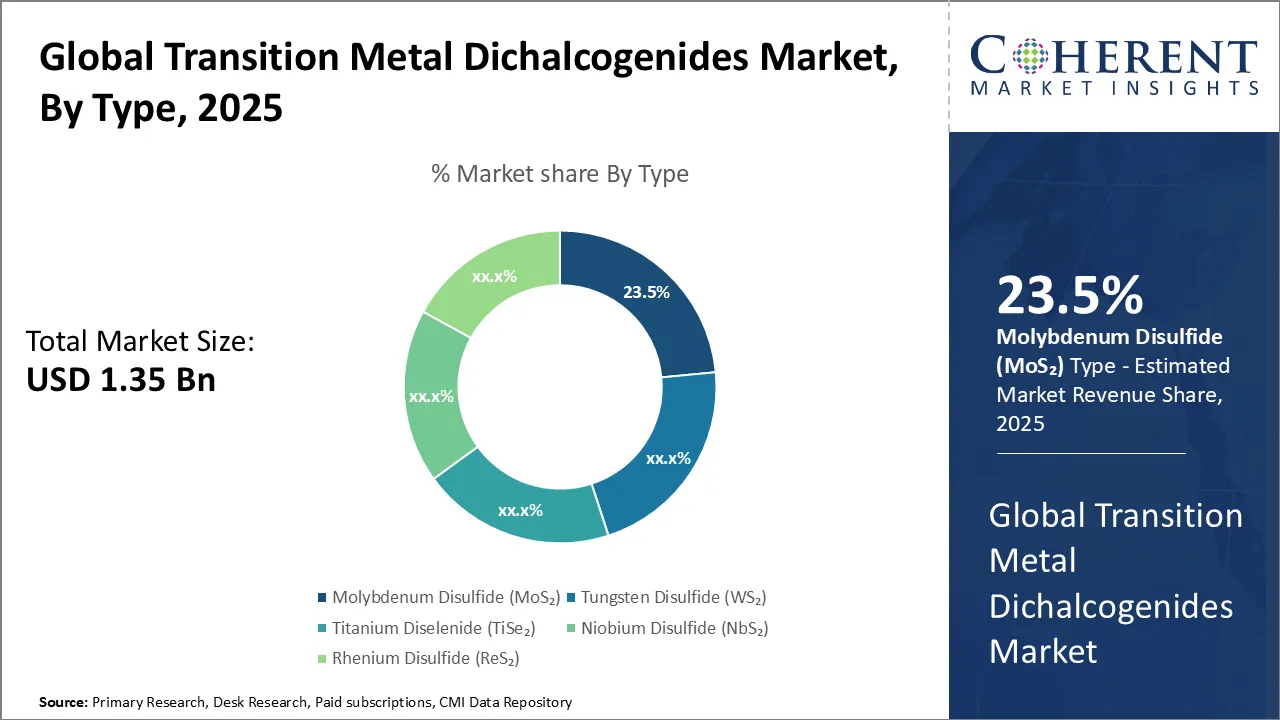
- The Molybdenum Disulfide (MoS₂) segment is projected to capture a 24.5% of the market share in 2026.
- The electronics segment is expected to account for 32.7% share in 2026.
- The bulk TMDCs segment is expected to capture 29.6% share in 2026.
- Asia Pacific is set to lead the global transition metal dichalcogenides market in 2026 with a 32.1% share. North America, with an estimated share of 20.5% in 2026, will be the fastest-growing region.
Market Overview
The market trend is characterized by a surge in research and development activities aimed at enhancing the performance of transition metal dichalcogenides in applications such as semiconductors, flexible electronics, and energy storage devices. Advancements in nanotechnology and increasing investments in next-generation electronic devices are propelling demand. Additionally, growing emphasis on miniaturization and sustainable materials is steering the market towards innovative solutions, fueling sustained expansion over the forecast period.
Current Events and Its Impact
Current Events | Description and its Impact |
Major Foundries Pilot 2D-CMOS Test Chips |
|
Battery Makers Trial transition metal dichalcogenides (TMDs) for Next-Gen Anodes/Catalysts |
|
Segmental Insights
- Current Industry Events of 2026
- Market Size Estimation
- Regional Breakdown
- Competitive Landscape
- Customer Intelligence
- Segmental Analysis
- Pricing Analysis
- Key Market Drivers, Challenges & Future Trends
- Customized Insights Section
Transition Metal Dichalcogenides Market Insights, by Type - Molybdenum Disulfide (MoS₂) Segment Dominates the Market due to Growing Demand of the Electronics Application
The Molybdenum Disulfide (MoS₂) segment is expected to hold a 24.5% share in 2026, due to its remarkable electronic and physical properties that allow for broad use in industrial applications. MoS2 offers the unique two-dimensional layered structure common to other transition metal dichalcogenides, allowing for exceptional mechanical flexibility combined with high chemical stability. MoS2 is an optimal material for next-generation semiconductor devices, particularly as silicon-based materials hit their limits of performance. Furthermore, MoS2 primarily exists as a monolayer exhibiting a direct bandgap - an unusual characteristic among transition metal dichalcogenides - to enable high electron mobility and improved optical properties for electronic and optoelectronic applications.
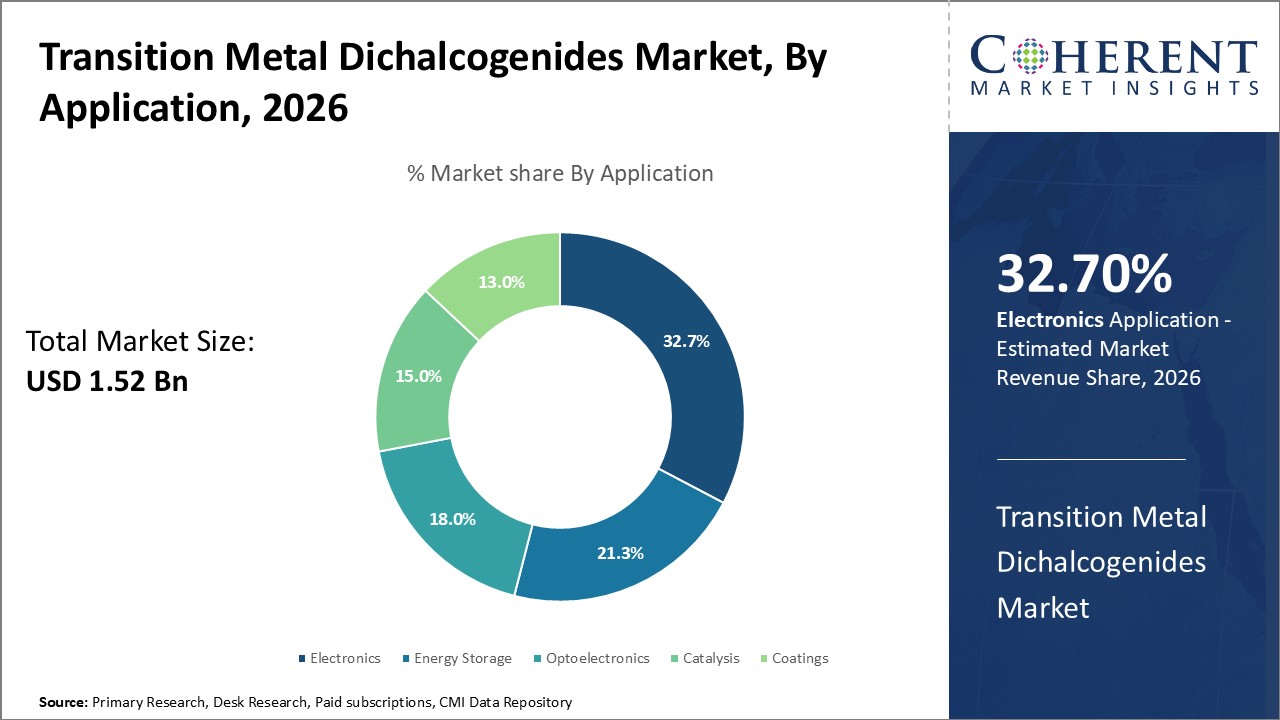
Transition Metal Dichalcogenides Market Insights, by Application – Electronics Segment Dominates the Market due to Demand for Electronic Components
The electronics segment is projected to account for 32.7% share in 2026, owing to increasing demand for high-performance, low-power and miniaturized electronic asset components. A significant trend influencing the future of the electronics industry is shifting away from traditional silicon semiconductors to two-dimensional materials such as Transition Metal Dichalcogenides (TMDCs). TMDCs, such as Molybdenum Disulfide (MoS₂) and Tungsten Disulfide (WS₂), possess valuable properties including high on/off current ratios, superior mechanical flexibility, and low-energy consumption that support the advancement of flexible electronics, wearable devices, and next-generation integrated circuits.
Transition Metal Dichalcogenides Market Insights, by Form - Bulk TMDCs Segment Dominates the Market due to Growing Processing Applications
The bulk TMDCs segment is expected to capture 29.6% share in 2026, as they provide the foundation for the supply of raw TMDC material into downstream processing applications. Bulk forms provide the source for the production of nanosheets, thin films, powders, and suspensions, which can be used to modify material properties for specific applications. The inherent properties of bulk TMDCs lead to their stability, good handling, and generally low cost, facilitating their use in research, industrial syntheses, and preliminary characterization of material properties.
The utilization of bulk TMDCs is also driven in part by their utility and position in lubrication and protective coatings. Bulk TMDCs, being layered in structure, can easily shear under a load, which leads to excellent friction and wear properties that are useful in industries such as automotive, aerospace, and machinery. Moreover, bulk TMDCs provide consistent properties when subjected to varying conditions and can be implemented into many industrial processes.
Regional Insights
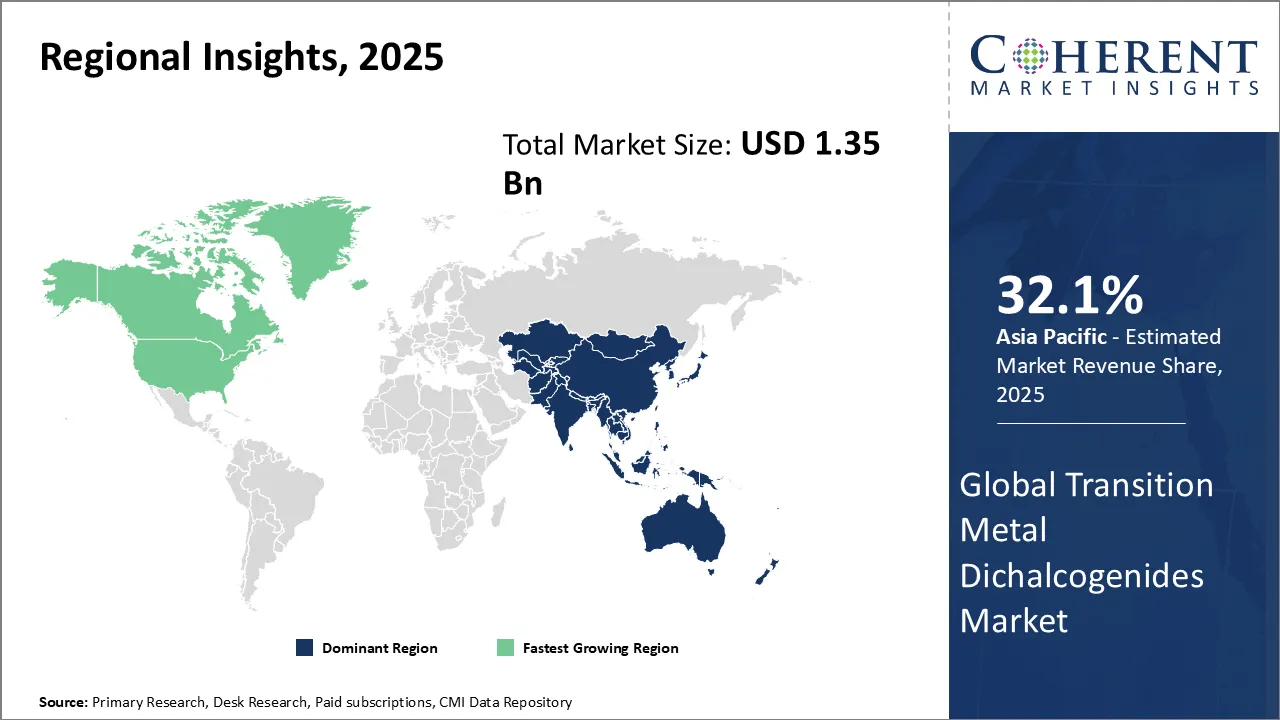
Asia Pacific Transition Metal Dichalcogenides Market Analysis and Trends
Asia Pacific region is projected to lead the market with a 32.1% share in 2026, due to its established electronics and semiconductor manufacturing ecosystem. China, Japan, and South Korea all contain substantial shares of global semiconductor fabs and electronics device manufacturers, helping to drive the demand for advanced materials, like TMDs. In addition, government policies to spur innovation in nanotechnology, materials science, and next-generation electronics help to drive growth in the market.
This includes extensive support for research and development in the form of funding and policies that make it easier to export and import advanced materials. Leading technology companies, such as Samsung Electronics (South Korea), Toshiba (Japan), and Semiconductor Manufacturing International Corporation (SMIC, China) aid in strengthening TMD usage across various applications, including flexible electronics and high-performance transistors.
North America Transition Metal Dichalcogenides Market Analysis and Trends
The North America region is projected to have the highest growth in the market contributing 20.5% share in 2026, driven by its vibrant innovation ecosystem and a robust R&D infrastructure. The United States and Canada contain the world’s leading research institutions and many startups focused on 2D materials and their various applications including electronics, energy storage, and optoelectronics.
Several government initiatives, including substantial funding lift from the National Science Foundation (NSF) and Department of Energy (DOE) programs, incentivize developing advanced semiconductor materials, including TMDs. North America also has an established venture capital ecosystem that fosters the commercialization of novel realistic applications. Major market participants including Intel, IBM, and 2D semiconductor startups, such as 2D Materials Inc., will continue to positively impacted innovation and adoption of TMD in new technologies.
Transition Metal Dichalcogenides Market Outlook for Key Countries
China Transition Metal Dichalcogenides Market Analysis and Trends
China is a powerhouse in the transition metal dichalcogenides market due to its vast semiconductor manufacturing industry and growing focus on advanced materials. The government’s “Made in China 2026” initiative promotes domestic development of high-tech materials, including 2D semiconductors like TMDs. Chinese companies such as SMIC and Huawei are increasingly integrating TMDs into next-generation microchips and flexible electronics products. Additionally, China’s extensive supply chain for raw materials and components supports efficient, large-scale production and export.
South Korea Transition Metal Dichalcogenides Market Analysis and Trends
South Korea transition metal dichalcogenides market benefits from its strong electronics and semiconductor industries, dominated by conglomerates like Samsung Electronics and LG Display. The country prioritizes nanomaterial research, with government-backed innovation clusters and centers specializing in 2D materials. Samsung’s active R&D in TMD-enabled transistors and photodetectors underpins South Korea’s leadership in pushing TMD applications in consumer electronics and mobile devices, reinforcing its dominant market position in Asia Pacific.
U.S. Transition Metal Dichalcogenides Market Analysis and Trends
The U.S. leads in innovation and commercialization of TMD technologies, propelled by university research hubs such as MIT, Stanford, and the University of California system. Advanced startups and companies like Intel and IBM collaborate closely with academic institutions to pioneer TMD-based semiconductors, energy conversion devices, and sensors. Strong government support for clean energy and next-gen electronics drives research translation into commercial products, positioning the U.S. as the leading frontier for TMD advancement.
Japan Transition Metal Dichalcogenides Market Analysis and Trends
Japan continues to lead the global transition metal dichalcogenides landscape with its well-established semiconductor equipment and chemicals industries. Corporations such as Toshiba, Sony, and NTT Advanced Technology contribute to the advancement and integration of TMDs in high-end optics, flexible displays, and advanced sensor technologies. Japan’s strategic government initiatives on national innovation systems and partnerships between industry and academia foster a sustainable ecosystem for developing TMD materials at a commercial scale.
Germany Transition Metal Dichalcogenides Market Analysis and Trends
Germany transition metal dichalcogenides market is noted for its strong focus on industrial applications including automotive semiconductors, energy storage, and sensor technology. The country benefits from its precision manufacturing capabilities and strong governmental support via institutions like the Fraunhofer Society. Collaborations between multinational corporations such as Infineon Technologies and Bosch with research institutes are driving the adaptation of TMDs in industrial electronics and sustainable energy solutions, highlighting Germany’s growing influence in the European segment of the market.
Macro and Micro Economic Factors Impacting on Transition Metal Dichalcogenides Market Growth
Macroeconomic Factors
- Global Industrialization: Expansion of industries, particularly in electronics, energy storage, automotive, and aerospace, is fueling TMDC adoption worldwide.
- Economic Growth and R&D Investment: Accelerating GDPs in Asia Pacific and North America, alongside substantial investments in material science and manufacturing technologies, support the market expansion.
- Regulatory Environment: Increasingly strict environmental and safety regulations are pushing demand for eco-friendly TMDC materials and sustainable production practices.
- Geopolitical Events & Supply Chains: Trade disputes and global crises (e.g., pandemics) disrupt supply chains, impacting production costs and capacity utilization in TMDC manufacturing.
- Currency Fluctuations: Globalized sourcing and sales expose the market to forex risks, affecting profitability and investment decisions.
Microeconomic Factors
- Production Costs and Scalability: High capital requirements and complex synthesis processes (especially for advanced TMDC types) limit widespread adoption; improving manufacturing efficiency is essential for competitiveness.
- Technological Innovations: New applications in flexible electronics, photonics, and catalysis (driven by TMDCs’ unique 2D properties) spur niche-market growth and product diversification.
- Quality and Consistency: Reliable material purity and standardized size distribution are critical for market acceptance, especially across demanding electronics and lubricant segments.
- Buyer Power and Substitutes: Buyers can access alternative advanced materials (such as graphene), but TMDCs offer unique cost and performance advantages in some use cases.
Market Players, Company Insights, and Competitive Intelligence
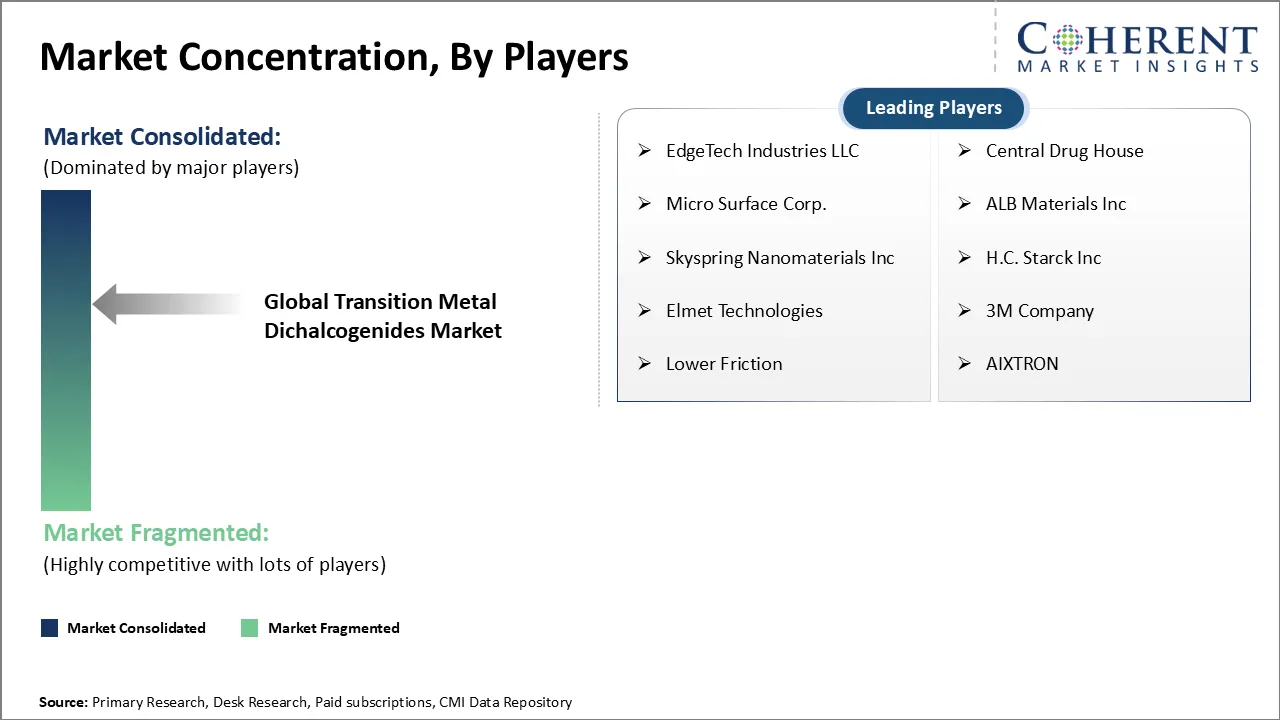
Company Insights
- Edgetech Industries LLC is a supplier/manufacturer of advanced materials (rare earths, refractory metals, deposition materials) including sputtering targets, evaporation materials, and various metals, alloys, ceramics. Edgetech Industries LLC, their product range lists “sulfide ceramic, telluride ceramic” under deposition materials.
- Central Drug House (CDH) is an Indian company which manufactures and markets laboratory fine chemicals and culture media, and acts also as importer/distributor of pharmaceutical raw materials. Their portfolio includes acids, bases, reagents, enzymes, etc. There is no sign from the information located that they are involved in TMD materials such as MoS₂, WS₂, or in coatings, dry film lubricants, or semiconductor‐grade dichalcogenides.
Top Strategies Followed by Global Transition Metal Dichalcogenides Market Players
- Well-established corporations are leading the way by investing significantly in research and development to create high-performance TMD products for high-tech applications in electronics, energy storage, and optoelectronics,
- For example, the active expansion of their brands internationally into new and emerging markets also plays a significant role in their leadership position in the market (e.g., Merck KGaA continues to advance their development of new forms of nanomaterials, such as tungsten diselenide (WSe₂) and MoS₂ for several semiconductor and photonics applications, in 2023).
- For mid-level competitors in the market, differentiation arises from a focus on developing competitive products using lower-cost processes that prioritize affordability over performance or perhaps focus on low price and acceptable performance standards. Mid-level market competitors are in a great position to serve a large volume of price-sensitive consumers and industrial sectors needing products that meet minimum standards of performance with acceptable cost. While it might be assumed that to enable performance improvement, mid-level competitors would invest in capacity upgrades or develop their own R&D program to leverage product improvement, in fact, many mid-level competitors feel empowered by partnership, association, or sponsorship with technology developers, research scientists, or manufacturers.
- For example, Sixonia Tech GmbH (Germany) sustains the ability to scale-up the production of 2D nanomaterials and develop low-cost TMD products for the industry, which supports affordable options for R&D.
- Small or start-up companies in the transition metal dichalcogenides market encounter a comparatively specialized and lightweight approach. Most often, small businesses operationalize on niche segments by focusing the development of TMD products with specific or unique features that fill the need of the market and/or respond to early applications. Small businesses thrive by small flexible adjustments within TMD products, deployment or application.
Market Report Scope
Transition Metal Dichalcogenides Market Report Coverage
| Report Coverage | Details | ||
|---|---|---|---|
| Base Year: | 2025 | Market Size in 2026: | USD 1.52 Bn |
| Historical Data for: | 2020 To 2024 | Forecast Period: | 2026 To 2033 |
| Forecast Period 2026 to 2033 CAGR: | 12.7% | 2033 Value Projection: | USD 3.50 Bn |
| Geographies covered: |
| ||
| Segments covered: |
| ||
| Companies covered: | EdgeTech Industries LLC, Central Drug House, Micro Surface Corp., ALB Materials Inc, Skyspring Nanomaterials Inc, H.C. Starck Inc, Elmet Technologies, 3M Company, Lower Friction, and AIXTRON | ||
| Growth Drivers: |
| ||
| Restraints & Challenges: |
| ||
Transition Metal Dichalcogenides Market Dynamics
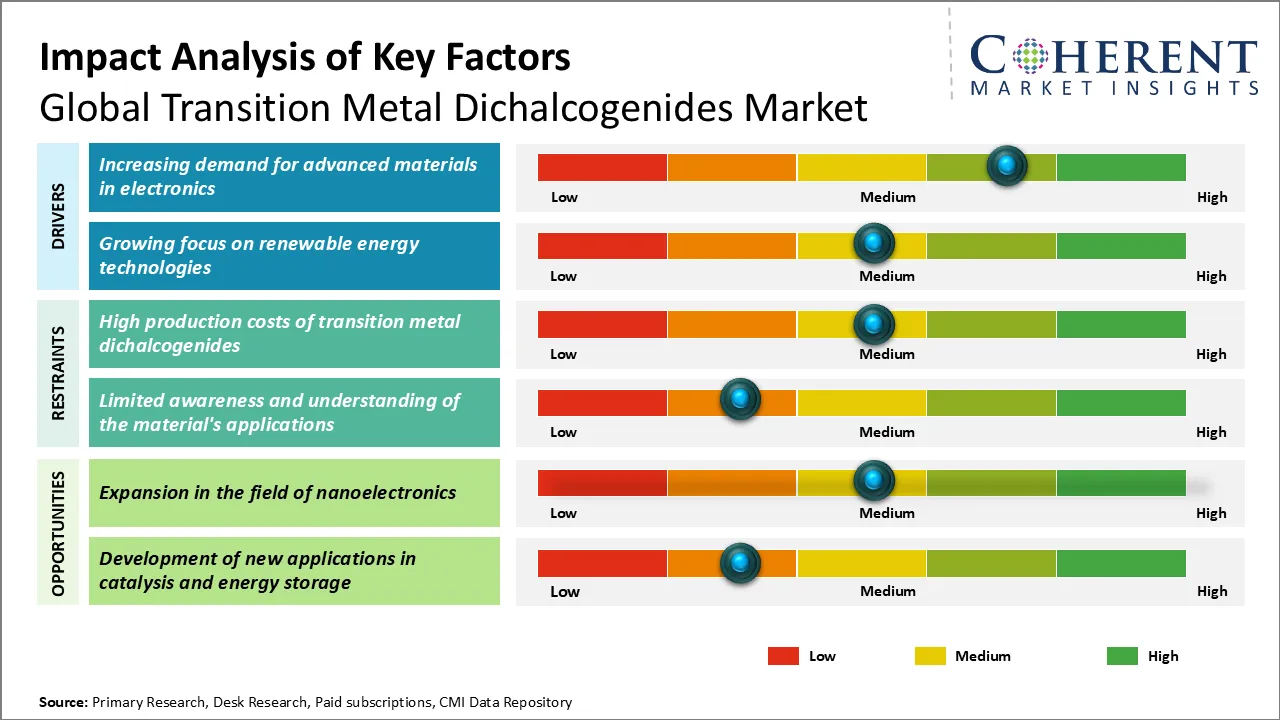
Transition Metal Dichalcogenides Market Driver - Increasing Demand for Advanced Materials in Electronics
The escalating demand for advanced materials in the electronics industry drives the growth of the global transition metal dichalcogenides market. As electronic devices become smaller, faster, and more efficient, traditional silicon-based materials, silicon metal reach their physical and performance limits, pushing manufacturers to adopt alternatives that meet evolving requirements. Transition metal dichalcogenides, with their two-dimensional layered structures and exceptional electrical, optical, and mechanical properties, provide promising solutions for next-generation applications such as flexible electronics, optoelectronics, and semiconductors. In 2023, Samsung Advanced Institute of Technology (SAIT) showcased flexible and stretchable displays built with TMD materials like Molybdenum Disulfide (MoS₂).
Transition Metal Dichalcogenides Market Opportunity - Expansion in the Field of Nanoelectronics
The global transition metal dichalcogenides market gains momentum from expanding applications in nanoelectronics. As the semiconductor industry approaches scaling limits of silicon-based technologies, TMDs — including MoS₂ and tungsten diselenide (WSe₂) — emerge as strong alternatives because of their excellent electrical, mechanical, and optical properties at the atomic scale. These materials deliver a sizable bandgap and high carrier mobility, making them ideal for next-generation transistors, flexible electronics, and ultra-thin integrated circuits. For instance, in 2022, TSMC demonstrated MoS₂-based Field-Effect Transistor (FET) prototypes designed for 1nm node chips.
Analyst Opinion (Expert Opinion)
- The global transition metal dichalcogenides market now stands on the brink of a major upswing, fueled by their unique properties and expanding applications in microelectronics, energy storage, and catalysis. Companies such as 2D Materials and SABIC actively push the limits of TMD applications.
- At the Materials Research Society Meeting (2023) and the Graphene Conference (2022), researchers highlighted the breakthroughs these companies achieved, including 2D Materials’ development of a high-performance TMD-based semiconductor. The conferences also addressed large-scale production challenges, integration issues, and the critical role of industry-academia collaboration in fostering innovation.
- The market increasingly focuses on sustainability, as experts call for environmentally friendly synthesis methods. Businesses that invest in scalable production techniques and build strategic partnerships will likely lead the market. Ultimately, the ability of TMDs to drive innovation, overcome production hurdles, and satisfy the rising demand for advanced materials will determine the pace of market growth in the years ahead.
Speak to the analyst
Want personalized insights?
Take the findings above to one of our principal consultants, or have the report rebuilt around the segments, geographies and competitors you actually track.
Market Segmentation
- Type Insights (Revenue, USD Bn, 2021 - 2033)
- Molybdenum Disulfide (MoS₂)
- Tungsten Disulfide (WS₂)
- Titanium Diselenide (TiSe₂)
- Niobium Disulfide (NbS₂)
- Rhenium Disulfide (ReS₂)
- Application Insights (Revenue, USD Bn, 2021 - 2033)
- Electronics
- Energy Storage
- Optoelectronics
- Catalysis
- Coatings
- Form Insights (Revenue, USD Bn, 2021 - 2033)
- Bulk TMDCs
- Nanosheets
- Powder
- Thin Films
- Suspensions
- End Use Industry Insights (Revenue, USD Bn, 2021 - 2033)
- Electronics and Semiconductors
- Energy Sector
- Aerospace and Defense
- Automotive
- Healthcare
- Regional Insights (Revenue, USD Bn, 2021 - 2033)
- North America
- U.S.
- Canada
- Latin America
- Brazil
- Argentina
- Mexico
- Rest of Latin America
- Europe
- Germany
- U.K.
- Spain
- France
- Italy
- Russia
- Rest of Europe
- Asia Pacific
- China
- India
- Japan
- Australia
- South Korea
- ASEAN
- Rest of Asia Pacific
- Middle East
- GCC Countries
- Israel
- Rest of Middle East
- Africa
- South Africa
- North Africa
- Central Africa
- North America
- Key Players Insights
- EdgeTech Industries LLC
- Central Drug House
- Micro Surface Corp.
- ALB Materials Inc
- Skyspring Nanomaterials Inc
- C. Starck Inc
- Elmet Technologies
- 3M Company
- Lower Friction
- AIXTRON
Sources
Primary Research Interviews
- R&D Director – Advanced 2D Materials Manufacturer
- Procurement Manager – Electronics & Semiconductor Device Company
- Product Development Head – Leading Energy Storage & Battery Materials Brand
- Sustainability Manager – Materials Innovation & Green Nanotechnology Association
Stakeholders
- Manufacturers (TMD-based material producers, 2D materials suppliers)
- End Use Sectors:
- Electronics & Semiconductors (transistors, sensors, optoelectronic devices)
- Energy Storage & Batteries (lithium-ion, sodium-ion, solid-state batteries)
- Catalysis & Chemical Applications (hydrogen evolution reaction, electrocatalysis)
- Medical & Biotechnology (drug delivery, biosensors)
- Regulatory & Certification Bodies
- E-commerce & Specialized Materials Platforms
- Technology Integration Players – AI-driven material design & simulation providers
Databases
- UN Comtrade Database – Trade statistics on TMD materials & raw materials
- India Import Export (EXIM) Database – Transition metal & nanosheet material imports/exports
Magazines
- Nature Nanotechnology – Advances in 2D TMDs for electronics and energy storage
- Materials Today – Market trends and industrial applications of TMDs
- Advanced Materials Magazine – Breakthroughs in synthesis & scalability of TMDs
- Nano Energy – Developments in TMD-based batteries and energy applications
- Semiconductor Digest – Adoption of TMDs in next-generation transistors
Journals
- ACS Nano – Research on TMD nanosheets and applications
- Journal of Materials Chemistry C – Optoelectronic & photonic properties of TMDs
- Nano Letters – Device integration and TMD nanostructures
- Advanced Energy Materials – TMDs in hydrogen generation & energy storage
Newspapers
- The Financial Times – Global investment trends in advanced materials
- MIT Technology Review – Breakthroughs in nanomaterials including TMDs
- The Guardian – Environmental impact and green applications of nanomaterials
- Asia Times – Growth of 2D materials markets in Asia-Pacific
Associations
- International Association of Advanced Materials (IAAM)
- The Materials Research Society (MRS)
- Graphene & 2D Materials International Conference Networks
- American Chemical Society (ACS) Nanomaterials Division
Public Domain Sources
- U.S. Department of Energy (DOE) – Reports on advanced energy materials including TMDs
- European Commission – Nanotechnology & advanced materials regulation
- World Health Organization (WHO) – Safety guidelines for nanomaterials in biomedical use
Proprietary Elements
- CMI Data Analytics Tool, Proprietary CMI Existing Repository of information for last 8 years
Get access to 250+ pages report
Every segment, forecast, competitor profile and data table behind the analysis above — available for instant download.
- ESOMAR Member
- ISO 9001:2015 Certified
- D-U-N-S Registered
- GDPR & CCPA Compliant
Missing comfort of reading report in your local language? Find your preferred language:
Transform your Strategy with Exclusive Trending Reports
Frequently Asked Questions
The global transition metal dichalcogenides market is estimated to be valued at USD 1.52 Bn in 2026 and is expected to reach USD 3.50 Bn by 2033.
The CAGR of the global transition metal dichalcogenides market is projected to be 12.7% from 2026 to 2033.
Increasing demand for advanced materials in electronics and growing focus on renewable energy technologies are the major factors driving the growth of the global transition metal dichalcogenides market.
High production costs of transition metal dichalcogenides and limited awareness and understanding of the material's applications are the major factors hampering the growth of the global transition metal dichalcogenides market.
In terms of type, the Molybdenum Disulfide (MoS₂) segment is estimated to dominate the market revenue share in 2026.
EdgeTech Industries LLC, Central Drug House, Micro Surface Corp., ALB Materials Inc, Skyspring Nanomaterials Inc, H.C. Starck Inc, Elmet Technologies, 3M Company, Lower Friction, and AIXTRON are the major players.
Asia Pacific is expected to lead the global transition metal dichalcogenides market in 2026.