

Global Urinary Incontinence Therapeutics Market Size and Forecast – 2026 to 2033
The Global Urinary Incontinence Therapeutics Market is estimated to be valued at USD 4.90 Bn in 2026 and is expected to reach USD 6.76 Bn by 2033, exhibiting a compound annual growth rate (CAGR) of 4.7% from 2026 to 2033. This steady growth is driven by the increasing prevalence of urinary incontinence, rising awareness about treatment options, and advancements in therapeutic interventions that improve patient outcomes and quality of life.
Key Takeaways of the Global Urinary Incontinence Therapeutics Market
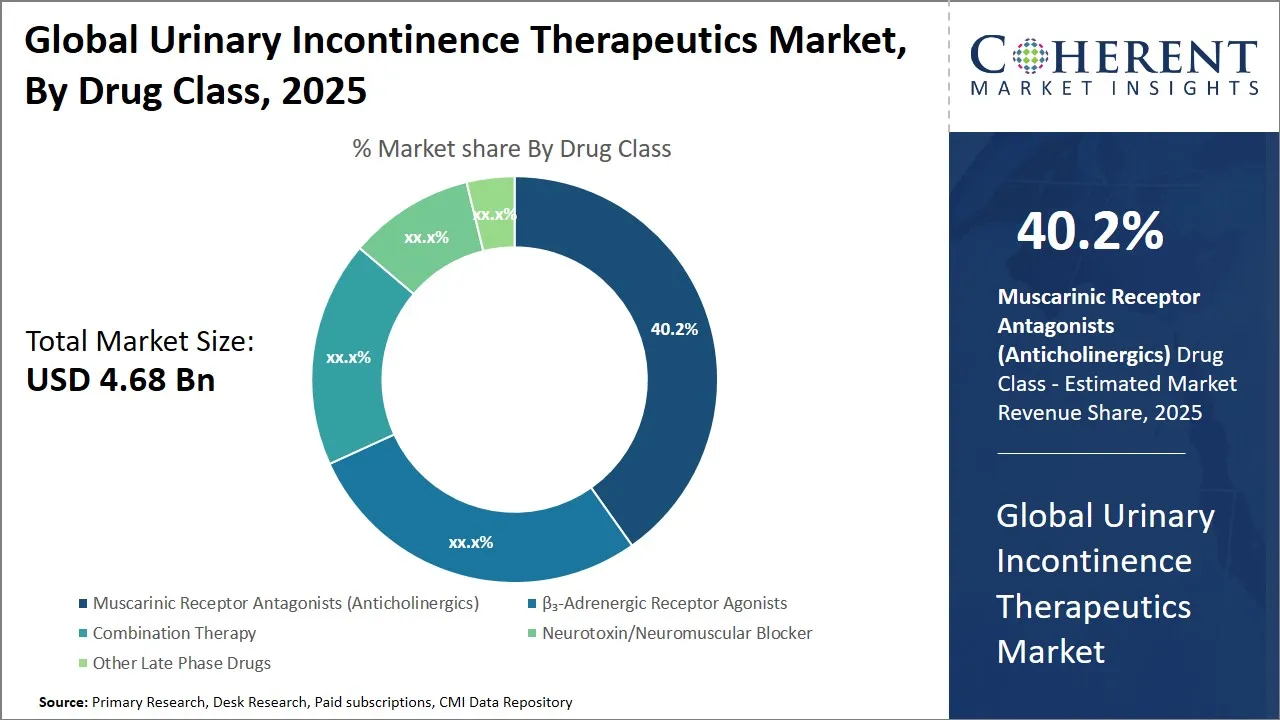
- In 2026, the Muscarinic Receptor Antagonists (Anticholinergics) segment is expected to account for the largest share of the global urinary incontinence therapeutics market at 41.2%.
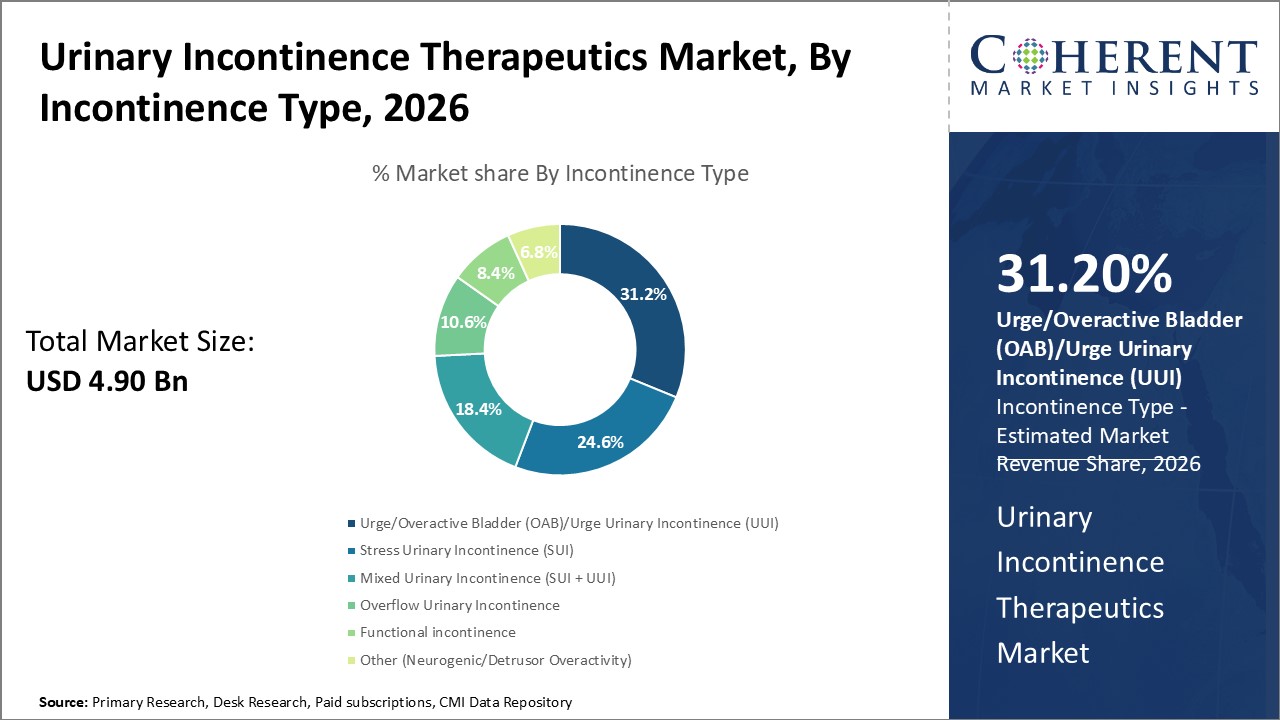
- Across incontinence types, the Urge/Overactive Bladder (OAB)/Urge Urinary Incontinence (UUI) category is projected to lead with a 31.2% share in 2026.
- By route of administration, the oral segment is expected to dominate the market with a 31.4% share in 2026.
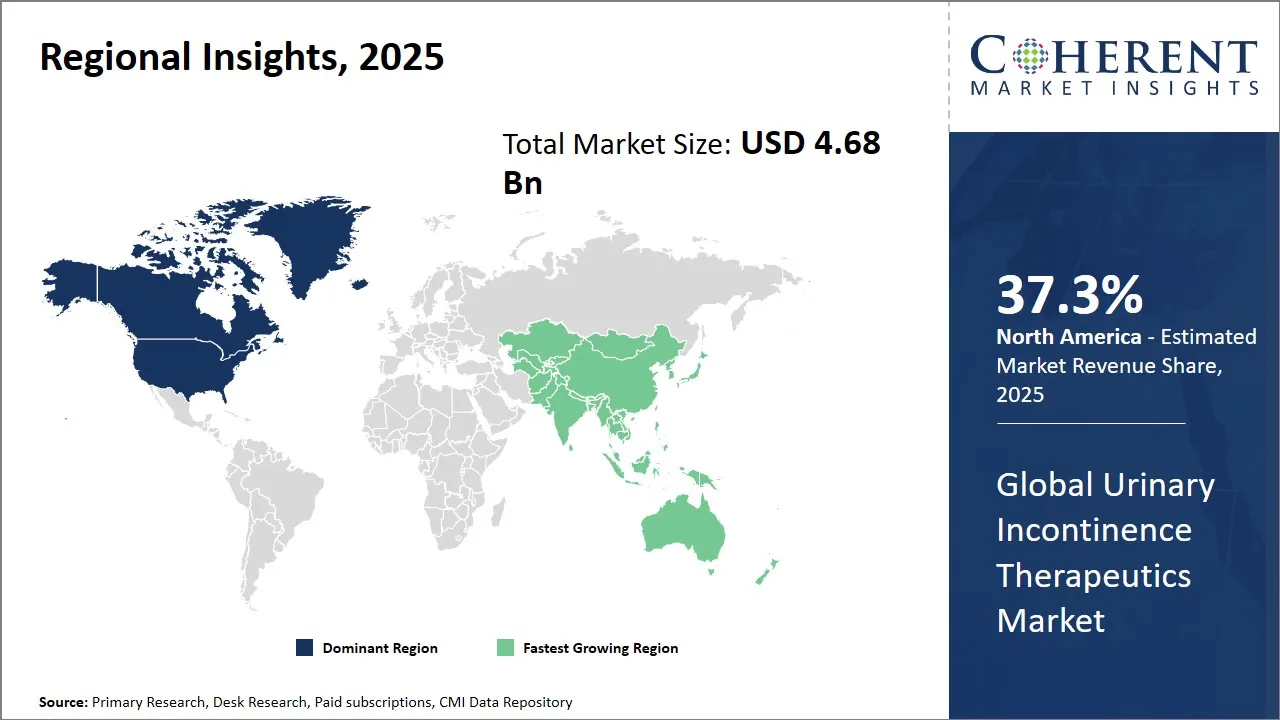
- North America is expected to lead the market, holding a share of 37. 3% in 2026. Asia Pacific is anticipated to be the fastest-growing region, with an estimated market share of 24.5% in 2026.
Market Overview
Market trends in urinary incontinence therapeutics highlight a shift towards minimally invasive procedures and personalized medicine. Innovations such as neuromodulation devices and combination drug therapies are gaining traction, addressing diverse patient needs more effectively. Furthermore, the growing aging population and higher healthcare expenditure are fueling demand, while digital health integration and telemedicine are enhancing patient management and adherence to treatment regimens, supporting sustained market expansion over the forecast period.
Current Events and Its Impact
Current Events | Description and its Impact |
Rising investment in app-based OAB/urinary incontinence digital therapeutic |
|
Patent Expirations of Blockbuster Drugs |
|
Segmental Insights
- Current Industry Events of 2026
- Market Size Estimation
- Regional Breakdown
- Competitive Landscape
- Customer Intelligence
- Segmental Analysis
- Pricing Analysis
- Key Market Drivers, Challenges & Future Trends
- Customized Insights Section
Urinary Incontinence Therapeutics Market Insights, By Drug Class - Dominance of Muscarinic Receptor Antagonists (Anticholinergics) is Driven by Established Efficacy and Wide Therapeutic Acceptance
Muscarinic Receptor Antagonists (Anticholinergics) are expected to hold the biggest market share of 41.2% in the global urinary incontinence therapeutics market in 2026. This is mainly attributed to their proven efficacy in the treatment of symptoms associated with overactive bladder (OAB) and urge urinary Incontinence (UUI). The mechanism of action of these drugs is through the inhibition of muscarinic receptors in the detrusor muscle of the bladder to minimize involuntary bladder contractions that lead to frequent and urgent urination.
In March 2023, MSN Labs, an India-based global pharmaceutical company known for its R&D-driven affordable therapies, launched Fesobig, India’s first bioequivalent generic version of Fesoterodine Fumarate for treating overactive bladder and urinary incontinence. The drug is recognized as a first-line pharmacotherapy by international treatment guidelines and aims to provide an affordable, effective solution for millions of Indian men and women affected by OAB.
Urinary Incontinence Therapeutics Market Insights, By Incontinence Type - Urge/Overactive Bladder (OAB)/Urge Urinary Incontinence (UUI) Segment Growth is Fueled by Growing Patient Awareness and Expanding Treatment Options
Out of the various types of incontinence, the Urge/Overactive Bladder (OAB)/Urge Urinary Incontinence (UUI) category is expected to hold the largest market share of 31.2% in 2026, particularly because of the high prevalence rate and growing awareness about the treatment options.
OAB/UUI is a condition where patients experience sudden and intense urges to urinate and the urine is often involuntary, which is very impactful on the daily life of patients and their mood. Growing awareness of these symptoms as indicators of medical conditions is driving more patients to consult healthcare professionals.
Urinary Incontinence Therapeutics Market Insights, By Route of Administration - Predominance of Oral Administration in Urinary Incontinence Therapeutics is Supported by Convenience and Patient Preference
In the route of administration dimension, the market for urinary incontinence therapeutics is dominated by the oral segment with an estimated share of 31.4% in 2026 due to the convenience and preference of patients who use oral drugs.
Oral therapy also enables patients to administer their own therapy with no specific healthcare environment required and make it easier to comply with the prescribed therapy. The delivery mode is especially beneficial when dealing with chronic diseases such as urinary incontinence, in which treatment should be long-term to attain symptomatic management.
Regional Insights
North America Urinary Incontinence Therapeutics Market Analysis and Trends
North America is expected to boast the highest market share at 37.3% in 2026. This is attributed to the fact that it has a well-established healthcare infrastructure, a high awareness of the issue of urinary health, and substantial investment in R&D of both the private and the public sectors.
The U.S. and Canada possess strong medical ecosystems that are enhanced with the developed diagnostics, the high level of insurance coverage, and the effective governmental healthcare policy aimed at managing chronic diseases. The availability of the large pharmaceutical and medical device companies, including Medtronic and Boston Scientific stimulates innovation in therapeutics, surgical devices and wearables.
Asia Pacific Urinary Incontinence Therapeutics Market Analysis and Trends
Asia Pacific is expected to exhibit the fastest growth rate in the urinary incontinence therapeutics market with 24.5% of the market share in 2026. Rising healthcare awareness, improved medical infrastructure, and higher disposable incomes in emerging economies like China and India are key growth drivers. Market growth is further fueled by government efforts to increase access to healthcare and chronic disease management programs.
In March 2023, Kyorin Pharmaceutical Co. Ltd., a Japan-based subsidiary of Kyorin Holdings known for its urological drug innovations, and Sumitomo Pharma Co. Ltd., a leading Japanese pharmaceutical company with a strong presence across Asia Pacific, entered into a license agreement for Vibegron, a treatment for overactive bladder and urinary incontinence.
Urinary Incontinence Therapeutics Market Outlook for Key Countries:
U.S. Urinary Incontinence Therapeutics Market Trends
The urinary incontinence therapeutics market in the U.S. is influenced by the development of healthcare systems of the country and the investments made in the field of medical innovations. The leadership of some of the major players like Medtronic and Boston scientific justifies a dynamic therapeutic environment of minimally invasive devices, pharmaceuticals and new biologics. There are clear regulatory ways offered by government bodies such as the U.S. FDA to promote innovation as well as providing safety.
In June 2021, Urovant Sciences Inc., a U.S.-based biopharmaceutical company specializing in urologic disorders, and Sunovion Pharmaceuticals Inc., a Massachusetts-based firm focused on neurology and respiratory therapies, jointly launched the co-promotion of GEMTESA (vibegron) in the U.S. for overactive bladder and urinary incontinence.
Germany Urinary Incontinence Therapeutics Market Trends
The healthcare system is highly developed and the regulatory environment is favorable in Germany and this has led to the success of the urinary incontinence therapeutics market. The focus on quality healthcare and well-developed insurance-based reimbursement has made it easier to use advanced therapeutics in the country. Large European manufacturers like Coloplast and B. Braun possess solid operations and production facilities in Germany, leading to the advancement of innovations that directly cater to the local patient needs.
In October 2023, Rohto Pharmaceutical Co. Ltd., a healthcare company, invested in Australis Scientific Pty Ltd., an Australian startup from Harvard’s Innovation Lab, to develop the In-Confidence Smart Patch, a discreet device for managing urinary incontinence symptoms. As lead investor, Rohto plans to introduce the innovation in Japan, Germany, and Asian markets, reinforcing its focus on elderly care and advanced digital health solutions.
India Urinary Incontinence Therapeutics Market Trends
The India urinary incontinence therapeutics is experiencing stable growth due to the increased awareness in bladder health, the prevalence of overactive bladder in aging women, and the extended availability of urological therapeutics. The industry is beginning to move away from the traditional anticholinergic drugs to newer 3-receptors agonists like mirabegron and vibegron that have better performance and minimum side effects.
In April 2024, Zydus Lifesciences Ltd., a leading India-based pharmaceutical company known for its global generics portfolio, launched Mirabegron Extended-Release Tablets (25 mg) in the U.S. market following the FDA approval for both 25 mg and 50 mg strengths. The drug, used to treat overactive bladder and urge urinary incontinence, helps manage symptoms such as urgency and urinary frequency.
Japan Urinary Incontinence Therapeutics Market Trends
Japan’s strong technological innovation and advanced geriatric healthcare system, combined with its rapidly aging population, are major factors driving the urinary incontinence therapeutics market. Japanese companies like the Terumo and the Nipro are the first to invent the advanced medical equipment designed to meet the needs of incontinence treatment. The high attention of the government to the elderly healthcare and insurance of the long-term care contributes to the broad availability of the therapeutic means. The patient awareness and compliance rates are also high in Japan.
In July 2024, Taiho Pharmaceutical Co. Ltd., a Japan-based company known for developing innovative prescription and OTC drugs, launched BUP-4 LADY, the country’s first over-the-counter medication for urinary urgency and incontinence. The product, derived from the prescription drug BUP-4, is available as a Pharmacist Intervention Required Medicine (PIRM) and can be purchased at pharmacies with pharmacist consultation.
End User Feedback and Unmet Needs in the Urinary Incontinence Therapeutics Market
- End users in hospital, clinic and home care environments all note that they want effective, convenient and well-tolerated therapies. Clinicians have reported good results on newer drugs such as Vibegron and attributed this to improved compliance and lesser side effects than the traditional anticholinergics. Concerns of durability of the treatment, side effects like constipation and dry mouth and the inability to adjust dosage flexibly in elderly patients still exist.
- These are also the major unmet needs, such as affordable, more personalized, and more accessible treatment options. Users also want more convenient administration and connection with the digital tools to track compliance. These gaps may be addressed to enhance patient retention, long-term care, and innovation toward user-friendly next-generation urinary incontinence treatment.
- As an example, in October, 2024, ViMUT Hospital, which is one of the biggest healthcare facilities in Thailand, launched its Urology Center with the UROLIFT treatment of benign prostatic hyperplasia (BPH) and urinary incontinence. The launch will help in the rise of the men health trend, where end users are able to access safer, advanced, and minimal invasive procedures that enhance urinary health and overall living conditions.
Market Players, Key Developments, and Competitive Intelligence
Key Developments
- On October 06, 2025, AbbVie Inc., a global biopharmaceutical company headquartered in Illinois, S., announced positive topline results from its Phase 2 ELATE trial evaluating onabotulinumtoxinA (BOTOX) for the treatment of upper limb essential tremor.
- In July 2025, Eisai Co. Ltd., a leading Japan-based pharmaceutical company, together with Kyorin Pharmaceutical Co. Ltd., a Japan-based drug developer focused on urological and respiratory treatments, launched Beova Tablets (vibegron) in Thailand for the treatment of overactive bladder and urinary incontinence
- In December 2024, Sumitomo Pharma America Inc., a U.S.-based subsidiary of Japan’s Sumitomo Pharma focused on innovative therapies in neurology and urology, announced that the U.S. FDA approved GEMTESA (vibegron) for men with overactive bladder and urinary incontinence symptoms who are receiving pharmacological treatment for benign prostatic hyperplasia (BPH)
- In July 2024, the Medicines and Healthcare products Regulatory Agency (MHRA) in the U.K. approved vibegron (brand name Obgemsa) for the treatment of overactive bladder and urinary incontinence symptoms in adults. The once-daily 75 mg β3-adrenergic receptor agonist acts as a bladder muscle relaxant, helping reduce urgency, urinary frequency, and incontinence.
Top Strategies Followed by Global Urinary Incontinence Therapeutics Market Players
- There is a presence of established players in the market, who use their huge resources to continue growing and innovating. The companies place a lot of investments in research and development (R&D) and new product launches to develop high-performance products that are more efficacious, comfortable to the patient, and easy to use. The technological advantage of these key players is through product innovation, particularly by creating new high-technology absorbent fabrics, intelligent monitoring, or low-invasive treatment..
- For example, in November 2023, Versameb AG, a Switzerland-based preclinical biotechnology company focused on RNA therapeutics, received U.S. FDA approval for its Investigational New Drug (IND) application for VMB-100, an mRNA therapy designed to treat stress urinary incontinence (SUI).
- Mid-level market participants normally take a distinct course and focus more on cost-effective urinary incontinence therapeutical measures aimed at providing balance between quality and cost. This is one strategy that is attractive to price-sensitive consumer markets in both developed and developing nations, where the evidence of economic constraints may restrict access to premium products.
- For mid-level players, companies such as Cipla Ltd., Glenmark Pharmaceuticals, and Dr. Reddy’s Laboratories exemplify this cost-focused strategy in the urinary incontinence therapeutics market. These firms manufacture and market affordable generic versions of drugs like Mirabegron, Fesoterodine, and Oxybutynin, catering to both domestic and international markets.
- Small-scale market players in urinary incontinence therapeutics market segment by pursuing special features or new product differentiation based on the use of a particular market or patient need. These companies as opposed to bigger competitors frequently use innovative technologies like wearable devices, biodegradable substances or customized treatment apps to distinguish their items.
- For small-scale players, firms such as RENALP Pharma (Germany), InControl Medical (U.S.), and Atlantic Therapeutics (Ireland) represent niche innovation. These companies specialize in advanced solutions like non-invasive pelvic floor stimulation devices, wearable incontinence sensors, and smart therapeutic systems that offer targeted and personalized treatment for urinary incontinence.
Market Report Scope
Urinary Incontinence Therapeutics Market Report Coverage
| Report Coverage | Details | ||
|---|---|---|---|
| Base Year: | 2025 | Market Size in 2026: | USD 4.90 Bn |
| Historical Data for: | 2020 To 2024 | Forecast Period: | 2026 To 2033 |
| Forecast Period 2026 to 2033 CAGR: | 4.7% | 2033 Value Projection: | USD 6.76 Bn |
| Geographies covered: |
| ||
| Segments covered: |
| ||
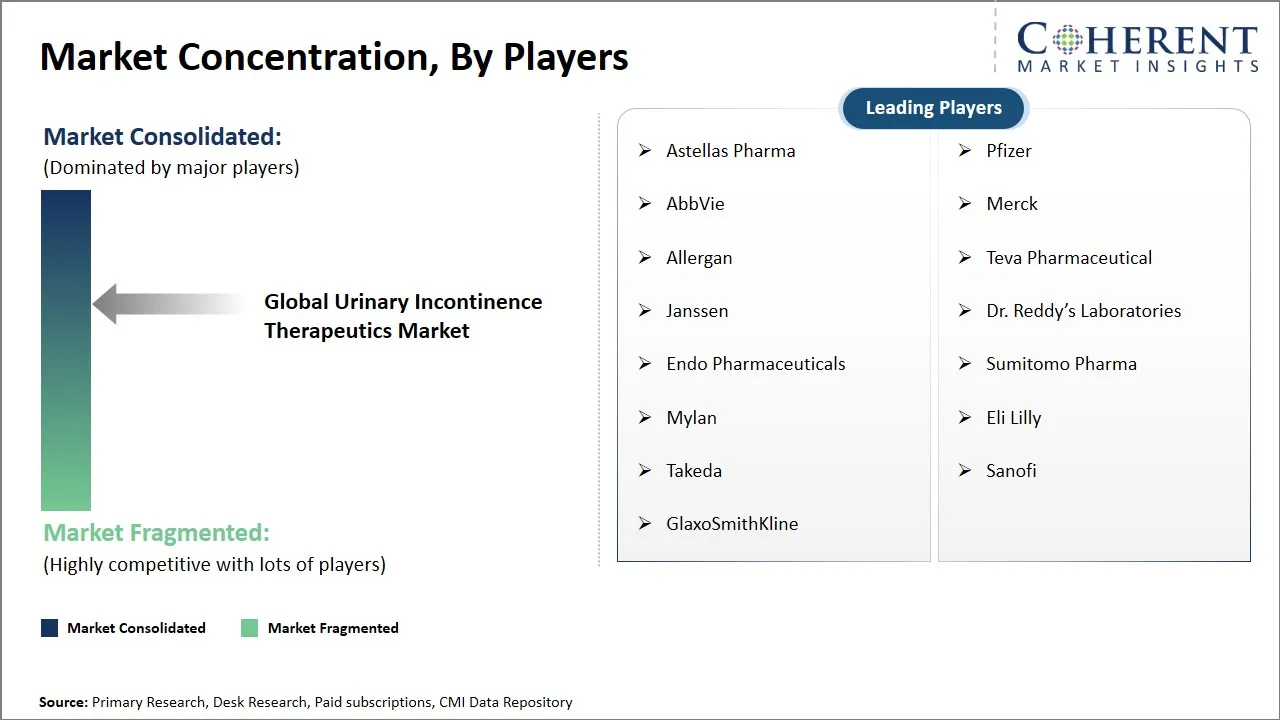
| Companies covered: | Astellas Pharma, Pfizer, AbbVie, Merck, Allergan, Teva Pharmaceutical, Janssen, Dr. Reddy’s Laboratories, Endo Pharmaceuticals, Sumitomo Pharma, Mylan, Eli Lilly, Takeda, Sanofi, and GlaxoSmithKline | ||
| Growth Drivers: |
| ||
| Restraints & Challenges: |
| ||
Urinary Incontinence Therapeutics Market Dynamics
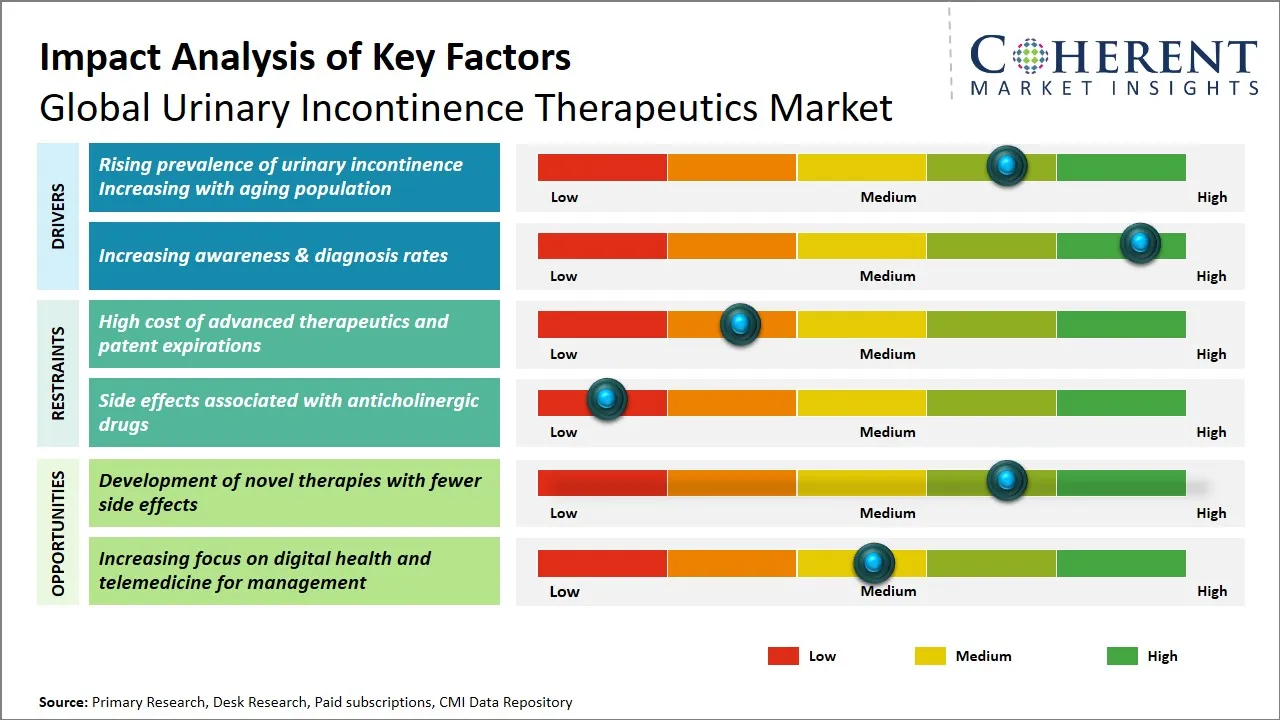
Urinary Incontinence Therapeutics Market Driver - Rising Prevalence of Urinary Incontinence Increasing with Aging Population
The rising incidence of urinary incontinence is a major driving force behind the need to seek therapeutics of efficacy in the world market, mostly due to the rising number of aging people. As the world is becoming ageing, there has been an increase in the percentage of people who are getting older in age and these are the people who are more vulnerable to urinary incontinence because of the age related physiological changes of weakened pelvic floor muscles, reduced bladder capacity, and neurological impairment.
According to study published by National Library of Medicine, in August 2024, urinary incontinence affects about 423 million adults worldwide, though the true number is likely higher due to underreporting. In the United States, roughly 13 million people are affected, with prevalence exceeding 50% in nursing home residents. Women are twice as likely as men to experience urinary leakage, with stress incontinence being the most common type, followed by urge and mixed forms. Risk factors include pregnancy, childbirth, obesity, diabetes, and aging, with rates rising sharply in older adults and those undergoing prostate surgery.
Urinary Incontinence Therapeutics Market Opportunity - Development of Novel Therapies with Fewer Side Effects
The global urinary incontinence therapeutics market is experiencing an opportunity that is huge brought about by the rising demand of the novel therapies that present better efficacy with minimal adverse effects. Existing medications, such as anticholinergics and beta-3 adrenergic agonists, tend to have adverse effects of dry mouth, constipation, and cardiovascular risks, which restrain the compliance of patients and overall effectiveness of the treatment. This has brought about an urgent requirement in seeking new therapeutic agents that can be effective in managing urinary incontinence and lessening the adverse effects on the quality of life of patients.
In August 2025, the U.S. National Institute on Aging (NIA) awarded funding to Dignify Therapeutics LLC, a Research Triangle Park–based biotech company, for a project titled “Novel treatment for urinary incontinence and overactive bladder symptoms in the elderly.” Led by Dr. Qiaojuan Zhang, the study focuses on developing new intravesical (bladder-administered) drug formulations designed to provide long-term relief lasting over three months for elderly patients with urinary incontinence and overactive bladder who do not respond to current treatments.
Analyst Opinion (Expert Opinion)
- The urinary incontinence therapeutics market is on a roll with a reshaped treatment environment being created through the development of pharmacology, device technology and patient-centered care. Growth is being stimulated by increasing awareness, an ageing world population, and accessible healthcare, and the efficacy and safety standards of the new 3-adrenergic receptor agonists, Vibegron and Mirabegron, are being established. The U.S., the U.K., and Japan regulatory authorities have endorsed a number of recent drug approvals, which have broadened therapeutic choices of both sexes. Nevertheless, diagnosis and adoption of treatment are still hindered by social stigma and underreporting.
- The most recent years have seen the European Association of Urology Congress, the American Urological Association Annual Meeting and the Asia-Pacific Continence Society Conference holding important positions in facilitating collaboration, policy formulation and presenting technologies that positively influence the care of the continency. Other examples of investments in this direction include Rohto Pharmaceutical financing the smart patch project at Australis Scientific and NIH-funded intravesical drug delivery research in the elderly patients, both of which indicate that more cross-sectoral attention is being paid to addressing this condition in a more effective manner on a global scale.
Speak to the analyst
Want personalized insights?
Take the findings above to one of our principal consultants, or have the report rebuilt around the segments, geographies and competitors you actually track.
Market Segmentation
- Drug Class Insights (Revenue, USD Bn, 2021 - 2033)
- Muscarinic Receptor Antagonists (Anticholinergics)
- Solifenacin
- Fesoterodine
- Oxybutynin
- Darifenacin
- Tolterodine
- Trospium
- β₃-Adrenergic Receptor Agonists
- Mirabegron
- Vibegron
- Combination Therapy
- Mirabegron + Solifenacin
- Neurotoxin/Neuromuscular Blocker
- OnabotulinumtoxinA
- Other Late Phase Drugs
- Muscarinic Receptor Antagonists (Anticholinergics)
- Incontinence Type Insights (Revenue, USD Bn, 2021 - 2033)
- Urge/Overactive Bladder (OAB)/Urge Urinary Incontinence (UUI)
- Stress Urinary Incontinence (SUI)
- Mixed Urinary Incontinence (SUI + UUI)
- Overflow Urinary Incontinence
- Functional incontinence
- Other (Neurogenic/Detrusor Overactivity)
- Route of Administration Insights (Revenue, USD Bn, 2021 - 2033)
- Oral
- Intravesical/bladder instillation
- Topical
- Injectable/intradetrusor
- Gender Insights (Revenue, USD Bn, 2021 - 2033)
- Male
- Female
- Age Group Insights (Revenue, USD Bn, 2021 - 2033)
- Adult (19–64 years)
- Pediatric (≤18 years)
- Geriatric (≥65 years)
- Drug Type Insights (Revenue, USD Bn, 2021 - 2033)
- Brand
- Generic
- End User Insights (Revenue, USD Bn, 2021 - 2033)
- Hospitals
- Specialty/Urology clinics
- Ambulatory surgical centers
- Home care/outpatient use
- Long-term care facilities
- Distribution Channel Insights (Revenue, USD Bn, 2021 - 2033)
- Hospital Pharmacies
- Retail Pharmacies
- Online Pharmacies
- Regional Insights (Revenue, USD Bn, 2021 - 2033)
- North America
- U.S.
- Canada
- Latin America
- Brazil
- Argentina
- Mexico
- Rest of Latin America
- Europe
- Germany
- U.K.
- Spain
- France
- Italy
- Russia
- Rest of Europe
- Asia Pacific
- China
- India
- Japan
- Australia
- South Korea
- ASEAN
- Rest of Asia Pacific
- Middle East
- GCC Countries
- Israel
- Rest of Middle East
- Africa
- South Africa
- North Africa
- Central Africa
- North America
- Key Players Insights
- Astellas Pharma
- Pfizer
- AbbVie
- Merck
- Allergan
- Teva Pharmaceutical
- Janssen
- Reddy’s Laboratories
- Endo Pharmaceuticals
- Sumitomo Pharma
- Mylan
- Eli Lilly
- Takeda
- Sanofi
- GlaxoSmithKline
Sources
Primary Research Interviews
Industry Stakeholders
- Leaders in urology pharmaceutical R&D
- Clinical pharmacology heads at drug companies
- Regulatory affairs executives in pharma
- Medical device innovators in continence care
- CRO executives in urology trials
- Key opinion leaders in continence drug development
End Users
- Urologists and urogynecologists in hospitals
- Pelvic floor physiotherapists in clinics
- Geriatric care physicians
- Nurses in incontinence care units
- Home healthcare providers
- Patient and advocacy group representatives
Government and International Databases
- World Health Organization (WHO)
- National Center for Health Statistics (NCHS) – CDC
- CDC WONDER Database
- U.S. Department of Health and Human Services (HHS) Open Data
- National Library of Medicine (NLM)/NIH Databases
Trade Publications
- Journal of Urology
- Neurourology and Urodynamics
- International Urogynecology Journal
- European Urology Today
- Urology News
- Continence Foundation Bulletins
Academic Journals
- JAMA Urology
- BMC Geriatrics
- Springer’s Ageing & Society
- MDPI Health
- Urology (Elsevier)
- Journal of Clinical Pharmacology
Reputable Newspaper/Media Outlets
- The Lancet (Medical News Section)
- New England Journal of Medicine (News & Perspective)
- The Guardian – Health Section
- The New York Times – Health Section
- The Wall Street Journal – Healthcare Coverage
- Financial Times – Pharma & Biotech Coverage
Industry Associations
- International Continence Society (ICS)
- National Association for Continence (NAFC)
- American Urological Association (AUA)
- European Association of Urology (EAU)
- Continence Foundation (UK)
- Society of Urodynamics, Female Pelvic Medicine & Urogenital Reconstruction (SUFU)
Public Domain Resources
- NIH RePORTER
- WHO Public Health Reports
- Open Access Theses and Dissertations (OATD)
- National Health Statistics Reports
Proprietary Elements
- CMI Data Analytics Tool: Proprietary analytics tool to analyze real-time market trends, consumer behavior, and technology adoption in market
- Proprietary CMI Existing Repository of Information for Last 8 Years
Get access to 250+ pages report
Every segment, forecast, competitor profile and data table behind the analysis above — available for instant download.
- ESOMAR Member
- ISO 9001:2015 Certified
- D-U-N-S Registered
- GDPR & CCPA Compliant
Missing comfort of reading report in your local language? Find your preferred language:
Transform your Strategy with Exclusive Trending Reports
Frequently Asked Questions
The global urinary incontinence therapeutics market is estimated to be valued at USD 4.90 Bn in 2026 and is expected to reach USD 6.76 Bn by 2033.
The CAGR of the global urinary incontinence therapeutics market is projected to be 4.7% from 2026 to 2033.
Rising prevalence of urinary incontinence increasing with aging population and increasing awareness & diagnosis rates are the major factors driving the growth of the global urinary incontinence therapeutics market.
High cost of advanced therapeutics and patent expirations and side effects associated with anticholinergic drugs are the major factors hampering the growth of the global urinary incontinence therapeutics market.
In terms of drug class, muscarinic receptor antagonists (anticholinergics) segment is estimated to dominate the market revenue share in 2026.
Astellas Pharma, Pfizer, AbbVie, Merck, Allergan, Teva Pharmaceutical, Janssen, Dr. Reddy’s Laboratories, Endo Pharmaceuticals, Sumitomo Pharma, Mylan, Eli Lilly, Takeda, Sanofi, and GlaxoSmithKline are the major players.
North America is expected to lead the global urinary incontinence therapeutics market in 2026.