

U.S. Ambulatory Infusion Center Market Size and Forecast – 2026 To 2033
The U.S. ambulatory infusion center market is expected to grow from USD 12,507.5 Mn in 2026 to USD 21,090.4 Mn by 2033, registering a compound annual growth rate (CAGR) of 7.7% from 2026 to 2033. The U.S. ambulatory infusion center market is poised for significant expansion, fueled by the rising prevalence of chronic diseases requiring long-term infusion therapies and the rising shift toward cost-effective outpatient care settings.
Inflammatory arthritis, particularly moderate-to-severe rheumatoid arthritis (RA), is commonly treated with intravenous biologic therapies when patients have an inadequate response to conventional disease-modifying antirheumatic drugs (DMARDs). Biologic agents such as infliximab (Remicade), rituximab (Rituxan), abatacept (Orencia), and tocilizumab (Actemra) are administered through scheduled infusions in ambulatory infusion centers, supporting demand for these facilities.
According to the U.S. Centers for Disease Control and Prevention (CDC), approximately 53 million U.S. adults have doctor-diagnosed arthritis, highlighting the substantial patient population that includes individuals with inflammatory arthritis requiring advanced infusion-based treatment.
(Source: Centers for Disease Control and Prevention)
Key Takeaways of the U.S. Ambulatory Infusion Center Market
- Chemotherapy is projected to hold 37.0% of the U.S. ambulatory infusion center market share in 2026, making it the dominant therapy segment, due to the increasing shift toward outpatient oncology care and the growing adoption of infusion-based cancer therapies. For instance, in April 2025, The University of Texas MD Anderson Cancer Center and Texas Oncology expanded their collaboration to provide patients with greater access to advanced cancer care through community-based outpatient settings, reflecting the broader trend toward decentralized oncology treatment and supporting demand for ambulatory infusion centers.
- Hospital based infusion centers are projected to hold 55.0% of the U.S. ambulatory infusion center market share in 2026, making it the dominant type of centers segment, owing to their comprehensive clinical infrastructure and ability to manage complex infusion therapies. For instance, in January 2025, IVX Health expanded its Chicago footprint by opening four new outpatient infusion centers, increasing its presence to nine centers across the metropolitan area and improving patient access to ambulatory infusion services.
- Cancer is projected to hold 31.1% of the U.S. ambulatory infusion center market share in 2026, making it the dominant application segment, driven by the increasing demand for outpatient oncology treatment. For instance, according to the American Cancer Society, approximately 2.04 million new cancer cases are expected to be diagnosed in the U.S. in 2025, increasing the need for chemotherapy and other infusion-based cancer therapies delivered through ambulatory infusion centers.
- Growth of Infusion Centers for Rare Disease Therapies: The expanding pipeline of orphan drugs and advanced biologic therapies for rare diseases presents a significant opportunity for ambulatory infusion centers. Many enzyme replacement therapies, immunoglobulins, and gene therapy-related supportive infusions require specialized monitoring but do not necessitate hospital admission, making AICs an ideal care setting. As more rare disease therapies receive FDA approval, infusion centers can broaden their service portfolio and establish partnerships with specialty pharmaceutical manufacturers to support patient access and long-term treatment adherence.
- Expansion of Clinical Trial Infusion Services: The increasing number of decentralized and hybrid clinical trials is creating new opportunities for ambulatory infusion centers to administer investigational biologics and specialty therapies. Pharmaceutical companies and contract research organizations are increasingly partnering with outpatient infusion centers to provide protocol-compliant infusion services closer to patients' homes. This trend improves patient recruitment and retention while enabling infusion centers to diversify revenue streams beyond routine clinical care.
Segmental Insights
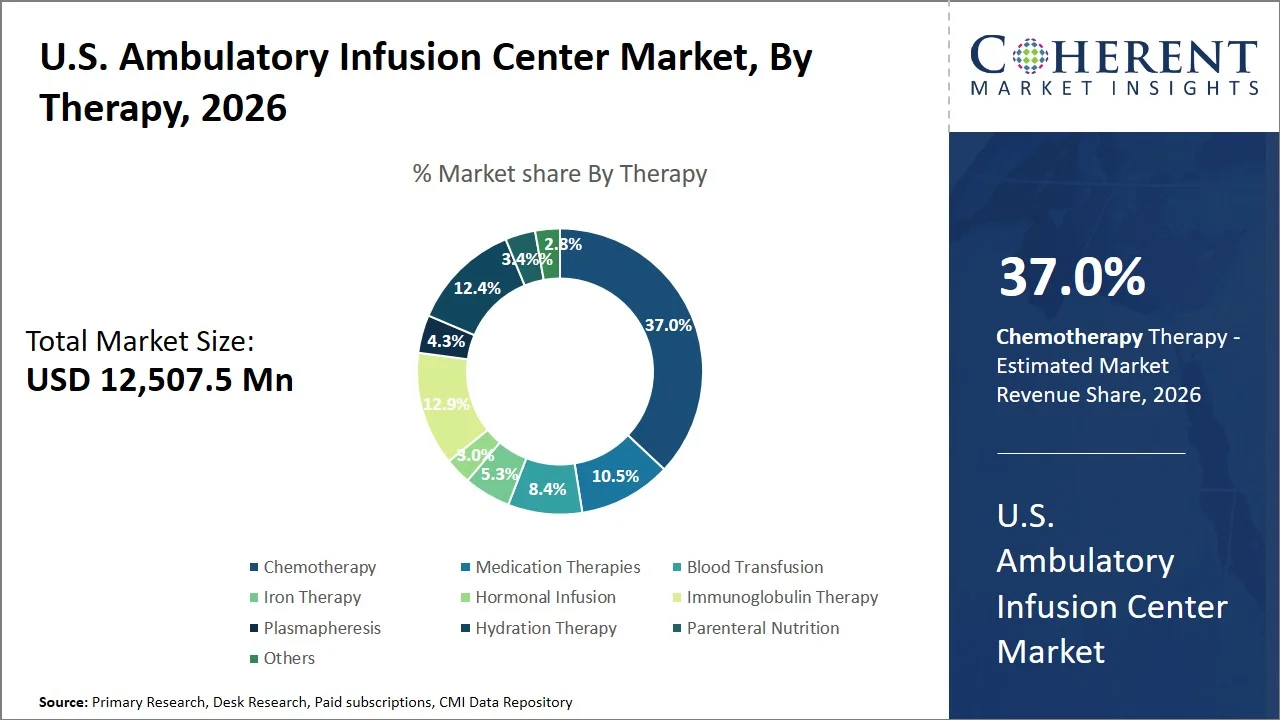
Why Does Chemotherapy Dominate the U.S. Ambulatory Infusion Center Market?
Chemotherapy is projected to hold a market share of 37.0% in 2026, driven by the increasing adoption of ambulatory infusion-based therapies as part of an overall cancer treatment, coupled with an increased desire to receive treatment in a non-facility setting for outpatients. The ambulatory centers’ specialized clinician supervision, ease of care, and cost efficiency relative to hospital inpatient settings have led them to be a frequent site of care delivery for multiple rounds of both chemotherapy and infusion-based treatments. For instance, in In April 2025, the combination of Opdivo (nivolumab) and Yervoy (ipilimumab) received U.S. FDA approval for use in the first-line treatment of adult patients with unresectable or metastatic hepatocellular carcinoma, offering additional flexibility for infusion-based cancer treatments to be administered in outpatient settings. (Source: Food and Drug Administration)
- Current Industry Events of 2026
- Market Size Estimation
- Regional Breakdown
- Competitive Landscape
- Customer Intelligence
- Segmental Analysis
- Pricing Analysis
- Key Market Drivers, Challenges & Future Trends
- Customized Insights Section
Why are Hospital based Infusion Centers the Most Preferred Type of Centers in the U.S. Ambulatory Infusion Center Market?
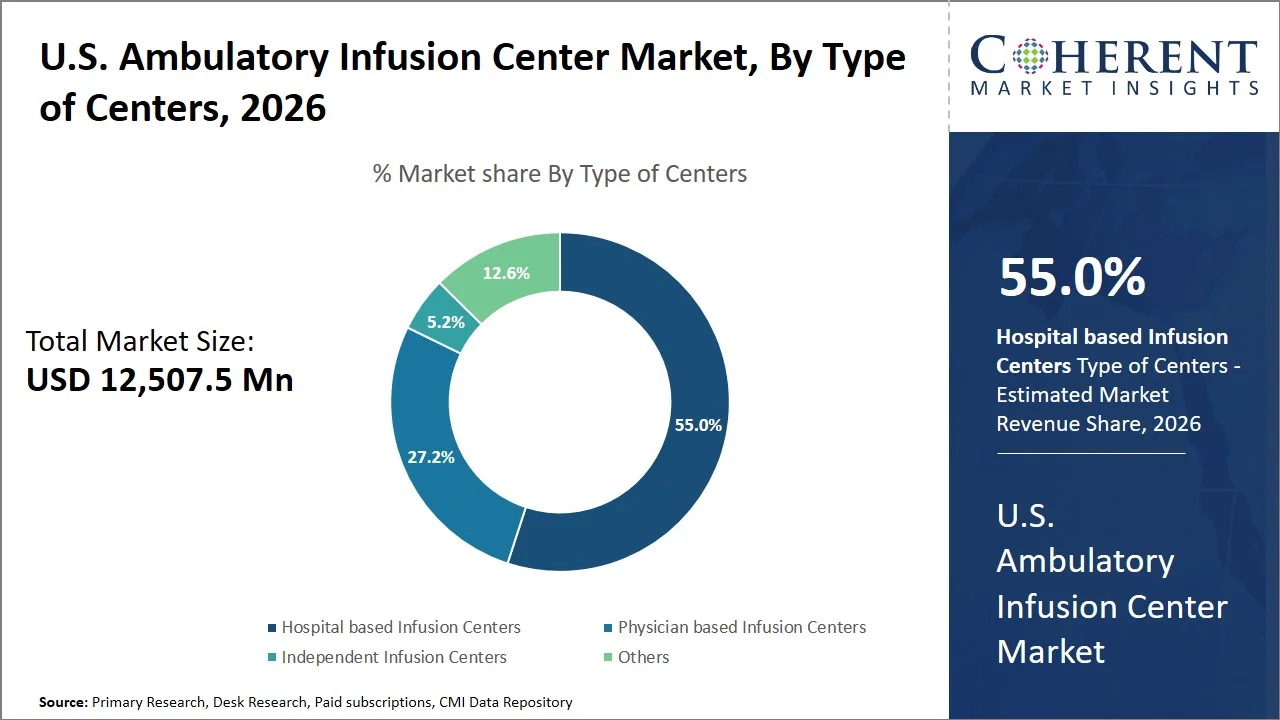
Hospital based infusion centers are projected to hold 55.0% of the market share in 2026, due to their combination of the most holistic care models, sophisticated infrastructure for continuous monitoring, and prompt availability of emergency services for dispensing advanced biologic treatments, chemotherapy, and immunoglobulins. They work collaboratively with hospital inpatient departments to care for highest risk patient cases requiring specific infusion treatment. For instance, the U.S. Department of Veterans Affairs (VA) continues expanding its Close to Me Novel Infusion Care Delivery across several veterans’ affairs (VA) medical centers to provide enhanced access for veterans to hospital-affiliated outpatient infusion services while reducing travel burden. (Source: U.S. Department of Veterans Affairs)
Cancer Segment Dominates the U.S. Ambulatory Infusion Center Market
The cancer segment is expected to hold 31.1% of the U.S. ambulatory infusion center market share in 2026, due to the increasing popularity of ambulatory-based administration of infusion-based chemotherapies, antibody-drug conjugates, immunotherapies and supportive oncology therapeutics. Ambulatory infusion centers are designed to be a low-cost outpatient setting with specialized clinical observation and are typically chosen for any recurrent cancer infusions. For instance, in May 2026, the U.S. FDA approved Datroway (datopotamab deruxtecan-dlnk) for adult patients with unresectable or metastatic triple-negative breast cancer, continuing the outpatient and IV infusion of oncology medicines. (Source: Food and Drug Administration)
Currents Events and their Impact
Current Events | Description and its Impact |
Centers for Medicare & Medicaid Services (CMS) Expands Site-Neutral Payment Policy for Drug Administration Services (November 2025) |
|
Centers for Medicare & Medicaid Services (CMS) Finalizes 2027 Medicare Advantage & Part D Payment Policies (April 2026) |
|
U.S. Ambulatory Infusion Center Market Dynamics
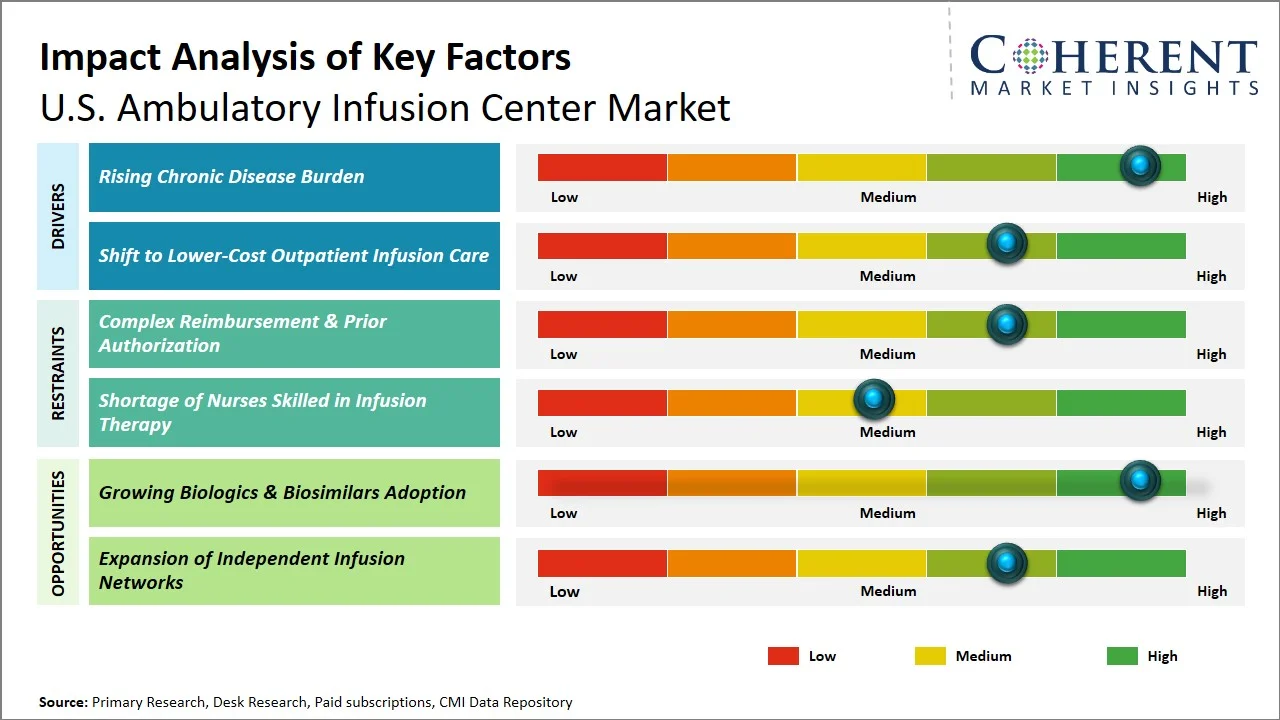
Market Drivers
Rising Chronic Disease Burden
Increasing incidence of chronic conditions requiring ongoing biological or specialty infusion therapies is driving the demand for U.S. ambulatory infusion centers. The centers are often a more cost-effective option that allows patients to receive chronic intravenous medications on an outpatient basis, limiting hospital reliance. For instance, according to the U.S. Centers for Disease Control and Prevention, three in four American adults have at least one chronic condition, and over half have two or more chronic conditions, highlighting the consistent demand for outpatient infusion services. (Source: Centers for Disease Control and Prevention)
Shift to Lower-Cost Outpatient Infusion Care
Payers are increasingly shifting infusion therapies from hospital outpatient departments to lower-cost ambulatory infusion centers to achieve value-based, cost-effective care. This includes both Medicare Advantage and commercial insurers that continue to promote site-of-care optimization to improve affordability while maintaining quality outcomes. For instance, the Centers for Medicare & Medicaid Services (CMS) introduced the WISeR (Wasteful and Inappropriate Service Reduction) Model, which will operate across six U.S. states over six performance years to promote evidence-based utilization management and reduce unnecessary Medicare spending, supporting greater adoption of cost-efficient outpatient care settings. (Source: Centers for Medicare & Medicaid Services)
Emerging Trends
Integration of Specialty Pharmacy with Infusion Centers
By integrating specialty pharmacy services into their infusion practices, ambulatory infusion providers are gaining greater efficiencies in drug acquisition, reimbursement, and patient coordination, which, in turn, optimize medication access, hasten patient start dates, and increase the operational efficiency of high-cost specialty infusions.
Expansion of Disease-Specific Infusion Centers
Providers are building standalone infusion facilities dedicated to specialty therapeutic areas - including oncology, neurology, gastroenterology and rheumatology that are concentrated at site-of-care solutions, providing therapeutic specificity, standardized pathways and improved patient experience to enhance clinical outcomes and referral volumes.
Regulatory & Reimbursement Landscape Shaping the U.S. Ambulatory Infusion Center Market
Market Aspect | Current Landscape | Impact on Ambulatory Infusion Centers | Future Outlook |
Site-of-Care Optimization | Commercial payers increasingly direct eligible patients from hospital outpatient departments (HOPDs) to ambulatory infusion centers. | Increases patient volumes while lowering overall treatment costs. | Expected to remain the primary growth catalyst for outpatient infusion care. |
Medicare & Commercial Reimbursement | Reimbursement policies increasingly favor lower-cost outpatient infusion settings for eligible therapies. | Improves affordability and supports expansion of independent infusion center networks. | Continued reimbursement reforms are likely to accelerate market adoption. |
Biologics & Biosimilars Coverage | Expanding insurance coverage for infused biologics and biosimilars across multiple therapeutic areas. | Drives higher utilization of infusion-administered therapies in outpatient settings. | Broader biosimilar adoption will improve patient access and reduce therapy costs. |
Prior Authorization & Utilization Management | Payers continue implementing stricter authorization requirements for specialty infusion therapies. | Increases administrative burden and may delay treatment initiation. | Digital prior authorization and care coordination are expected to improve workflow efficiency. |
Quality & Value-Based Care | Increasing emphasis on patient outcomes, quality metrics, and cost-efficient care delivery. | Encourages infusion centers to invest in digital care coordination and standardized clinical protocols. | Value-based reimbursement models will become increasingly important for provider competitiveness. |
How is the growing biologics & biosimilars adoption creating new growth opportunities in the U.S. ambulatory infusion center market?
The proliferation of FDA-approved interchangeable biosimilars allows ambulatory infusion centers to extend their capacity for specialty infusion treatments and lower treatment prices. Increased uptake of interchangeable biosimilars supports pharmacies to substitute the pharmacist’s discretion, facilitating timely uptake of care. This increased opportunity for outpatient substitutions could streamline infusions for infusion centers by expediting patient acceptance of biologic drugs, as more payers seek lower-priced biologic alternatives. Further, the infusion centers are well positioned to capture higher patient volumes for autoimmune and inflammatory disease indications. For instance, in May 2025, Teva Pharmaceutical Industries Ltd and Alvotech were granted U.S. FDA approval on the interchangeability between SELARSDI (ustekinumab-aekn) and Stelara to promote utilization of biosimilar infusion therapies in the U.S (Source: Teva Pharmaceutical Industries Ltd)
Market Players, Key Development, and Competitive Intelligence
Key Developments
- In June 2026, Singlepoint Healthcare acquired Healix to expand its national infusion capabilities and strengthen its ambulatory infusion center footprint across the U.S. The acquisition combines Healix's physician-office and ambulatory infusion expertise with Singlepoint's specialty pharmacy and infusion services, enhancing access to outpatient infusion care and supporting continued market expansion.
- In November 2025, AleraCare and Pure Healthcare completed their merger, creating a leading national ambulatory infusion platform with 77 ambulatory infusion centers across 14 U.S. states. The combined organization strengthened its outpatient infusion, specialty pharmacy, and home infusion capabilities, expanding patient access to infusion therapies.
Competitive Landscape
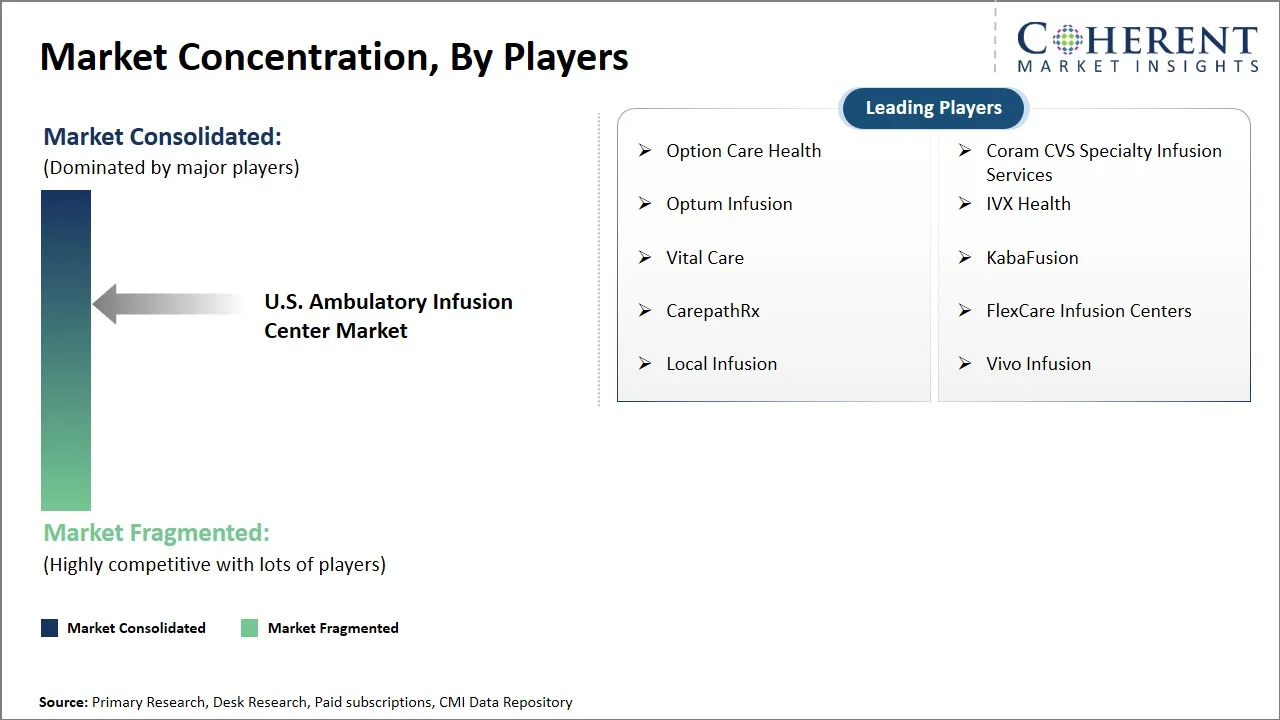
The U.S. ambulatory infusion center market is extremely competitive and key players in the space are seeking network expansion, specialty pharmacy integration, and strategic alliances to grow market share. Payers, employers, and health systems are driving growth of state-of-the-art outpatient infusion centers, digital care management, and value-based care solutions that are improving the accessibility of therapies and minimizing their costs. In addition, several players are growing nationally via acquisitions, de novo center openings, partnerships with biopharmaceutical companies, and health system agreements. Key focus areas include:
- Expansion of ambulatory infusion center networks through acquisitions and new center openings
- Integration of specialty pharmacy, infusion services, and care coordination platforms
- Partnerships with biopharmaceutical companies and health systems for specialty biologics delivery
- Adoption of digital scheduling, remote patient monitoring, and value-based outpatient infusion care models
Market Report Scope
U.S. Ambulatory Infusion Center Market Report Coverage
| Report Coverage | Details | ||
|---|---|---|---|
| Base Year: | 2025 | Market Size in 2026: | USD 12,507.5 Mn |
| Historical Data for: | 2020 To 2024 | Forecast Period: | 2026 To 2033 |
| Forecast Period 2026 to 2033 CAGR: | 7.7% | 2033 Value Projection: | USD 21,090.4 Mn |
| Segments covered: |
| ||
| Companies covered: | Option Care Health, Coram CVS Specialty Infusion Services, Optum Infusion, IVX Health, Vital Care, KabaFusion, CarepathRx, FlexCare Infusion Centers, Local Infusion, and Vivo Infusion | ||
| Growth Drivers: |
| ||
| Restraints & Challenges: |
| ||
Analyst Opinion (Expert Opinion)
- The further trajectory of the U.S. ambulatory infusion center market will experience steady growth from increased migration of infusion services from the hospital outpatient department setting to a less-costly ambulatory setting for infusion care by the payors and providers. Trends in biosimilar biologics utilization, biologic therapy utilization, specialty biologics therapy utilization, and value-based care models will determine the future trajectory of the U.S. ambulatory infusion center market. These infusion centers will remain the pivotal entity in providing these complicated therapies while improving patient ease and lowering healthcare cost.
- The maximum opportunities will probably exist within immunoglobulin therapy and the management of autoimmune diseases across the U.S. as biologics become increasingly widely used to treat rheumatoid arthritis, Crohn’s disease and other primary immunodeficiency disorders. In addition, underserved suburban and rural markets represent solid opportunities for expansion since healthcare providers aim to deliver expanded access to outpatient infusion services outside the most populous U.S. regions.
- In order to obtain a competitive advantage, market participants must develop extensive multi-state infusion center networks, infuse specialty pharmacy and digital care coordination solutions within the operations and collaborate with biopharmaceutical partners and healthcare systems. Investments in innovative patient-focused programs, reimbursement optimization strategies and the latest patient scheduling technologies as well as remote monitoring solutions would enable them to increase efficiency and competitive potential over time.
Speak to the analyst
Want personalized insights?
Take the findings above to one of our principal consultants, or have the report rebuilt around the segments, geographies and competitors you actually track.
Market Segmentation
- Therapy Insights (Revenue, USD Mn, 2021 - 2033)
- Chemotherapy
- Medication Therapies
- Blood Transfusion
- Iron Therapy
- Hormonal Infusion
- Immunoglobulin Therapy
- Plasmapheresis
- Hydration Therapy
- Parenteral Nutrition
- Others
- Type of Centers Insights (Revenue, USD Mn, 2021 - 2033)
- Hospital based Infusion Centers
- Physician based Infusion Centers
- Independent Infusion Centers
- Others
- Application Insights (Revenue, USD Mn, 2021 - 2033)
- Cancer
- Infectious Disease
- Autoimmune Disorders
- Neurological Conditions
- Pain Disorders
- Hemophilia
- Immunology / Primary Immune
- Deficiencies (Including Nutritional Deficiencies)
- Blood Related disorders
- Dehydration
- Diabetes
- Others
- Payment Model Insights (Revenue, USD Mn, 2021 - 2033)
- Fee-for-Service
- Value-Based Contracts
- Medicare/Medicaid
- Private Insurance
Sources
Primary Research Interviews
- Director / VP – Ambulatory Infusion Center Networks (e.g., Option Care Health, IVX Health, Vital Care)
- Medical Director – Oncology Infusion Centers (U.S. cancer hospitals & infusion clinics)
- Director – Specialty Pharmacy & Infusion Services
- Infusion Nurse Managers – Outpatient infusion centers
- Rheumatologists / Gastroenterologists / Neurologists – referral patterns for biologic infusion therapies
- Health System Outpatient Services Administrators – ambulatory infusion operations
- Payer Medical Directors / Pharmacy Benefit Managers (PBMs) – site-of-care optimization and reimbursement
- Biopharmaceutical Commercial & Market Access Leaders – infused biologics strategy
Stakeholders
- Ambulatory Infusion Center Operators (Option Care Health, IVX Health, Vital Care, KabaFusion, CarepathRx)
- Specialty Pharmacy Providers
- Hospital Outpatient Infusion Centers
- Health Systems & Integrated Delivery Networks (IDNs)
- Commercial Payers, Medicare Advantage Plans & PBMs
- Biopharmaceutical Manufacturers (infused biologics and specialty therapies)
- End-use Sectors
- Hospital-based Ambulatory Infusion Centers
- Independent Ambulatory Infusion Centers
- Physician Office-Based Infusion Centers
- Specialty Pharmacy-Integrated Infusion Centers
- Oncology & Multi-specialty Infusion Clinics
- Regulatory & Health Bodies
- U.S. Food and Drug Administration (FDA) – biologic approvals, infusion therapy safety, REMS programs
- Centers for Medicare & Medicaid Services (CMS) – reimbursement policies, OPPS, physician fee schedule, site-of-care policies
- Centers for Disease Control and Prevention (CDC) – chronic disease prevalence and cancer statistics
- Agency for Healthcare Research and Quality (AHRQ) – outpatient care quality and healthcare utilization
- National Cancer Institute (NCI) – oncology treatment guidelines and cancer burden
Databases
- Centers for Medicare & Medicaid Services (CMS) – reimbursement and outpatient infusion payment data
- Healthcare Cost and Utilization Project (HCUP) – outpatient visits and healthcare utilization
- ClinicalTrials.gov – biologics, immunotherapy, and infusion therapy clinical trials
- FDA Drugs@FDA Database – biologics and infusion drug approvals
- SEER Program Database – U.S. cancer incidence and survival statistics
Magazines
- Drug Topics – specialty pharmacy and infusion market developments
- Specialty Pharmacy Continuum – infusion pharmacy trends
- Pharmacy Times – biologics, biosimilars, and infusion care
- Becker's Hospital Review – outpatient infusion center and hospital strategy
Journals
- Journal of Infusion Nursing
- Journal of Oncology Practice (JCO Oncology Practice)
- The Oncologist
- American Journal of Health-System Pharmacy (AJHP)
- Journal of Managed Care & Specialty Pharmacy (JMCP)
Newspapers
- The Wall Street Journal – healthcare services, specialty pharmaceuticals, and outpatient care trends
- The New York Times – U.S. healthcare policy and healthcare delivery
- The Washington Post – Medicare, Medicaid, and healthcare reimbursement developments
- USA Today – healthcare access, hospital services, and patient care trends
- Financial Times – healthcare investments, M&A, and specialty care markets
- The Boston Globe – biotechnology, life sciences, and infusion therapy developments
Associations
- National Home Infusion Association (NHIA)
- Infusion Nurses Society (INS)
- American Society of Clinical Oncology (ASCO)
- National Community Oncology Dispensing Association (NCODA)
- American Society of Health-System Pharmacists (ASHP)
Public Domain Sources
- U.S. Food and Drug Administration (FDA) – biologic approvals, infusion therapy safety, and regulatory guidance
- Centers for Medicare & Medicaid Services (CMS) – outpatient reimbursement policies and site-of-care initiatives
- Centers for Disease Control and Prevention (CDC) – chronic disease prevalence and public health statistics
- National Cancer Institute (NCI) – cancer incidence, treatment trends, and oncology statistics
- Agency for Healthcare Research and Quality (AHRQ) – healthcare quality, outpatient care, and utilization data
Proprietary Elements
- CMI Data Analytics Tool
- Proprietary CMI Existing Repository of information for last 10 years.
Get access to 250+ pages report
Every segment, forecast, competitor profile and data table behind the analysis above — available for instant download.
- ESOMAR Member
- ISO 9001:2015 Certified
- D-U-N-S Registered
- GDPR & CCPA Compliant
Missing comfort of reading report in your local language? Find your preferred language:
Transform your Strategy with Exclusive Trending Reports
Frequently Asked Questions
The U.S. ambulatory infusion center market is estimated to be valued at USD 12,507.5 Mn in 2026 and is expected to reach USD 21,090.4 by 2033.
Chemotherapy dominates due to the high prevalence of cancer and the increasing shift of oncology infusions from hospitals to cost-effective outpatient infusion centers.
An ambulatory infusion center is a specialized outpatient facility that administers intravenous (IV) medications, biologics, chemotherapy, and other infusion therapies without requiring hospital admission.
The CAGR of the U.S. ambulatory infusion center market is projected to be 7.7% from 2026 to 2033.
Rising chronic disease burden, and shift to lower-cost outpatient infusion care are the major factors driving the growth of the U.S. ambulatory infusion center market.
Complex reimbursement & prior authorization, and shortage of nurses skilled in infusion therapy are the major factors hampering the growth of the U.S. ambulatory infusion center market.
In terms of application, cancer is estimated to dominate the market revenue share in 2026.