

U.S. Fluoroscopy System Market Size and Forecast - 2026-2033
According to Coherent Market Insights, the U.S. fluoroscopy system market is estimated to be valued at USD 724.0 Mn in 2026 and is expected to reach USD 921.1 Mn by 2033, exhibiting a compound annual growth rate (CAGR) of 3.9% from 2026 to 2033. This steady growth reflects increasing adoption of advanced imaging technologies in diagnostic and interventional procedures, supported by rising incidences of chronic diseases and growing demand for minimally invasive surgeries across healthcare settings in the U.S.
Key Takeaways of the U.S. Fluoroscopy System Market
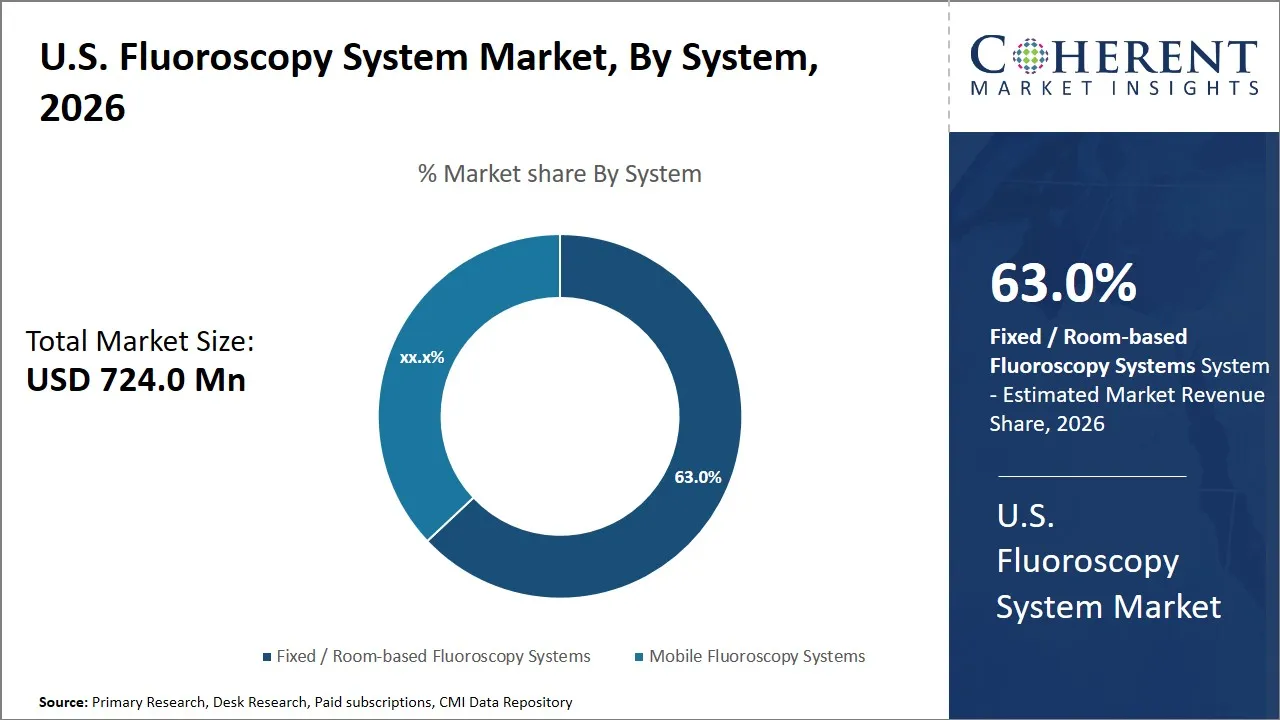
- Fixed / room-based fluoroscopy systems segment is expected to lead the U.S. fluoroscopy system market, capturing 63% share in 2026.
- The C-arm systems segment is estimated to represent 33% of the market share in 2026.
- The Flat Panel Detector (FPD) segment is projected to dominate with 61% of the U.S. fluoroscopy system market share in 2026.
Market Overview
- AI-assisted imaging, radiation dose-reduction technologies, and digital fluoroscopy systems are the key innovations expanding the market, improving both the accuracy and safety of procedures.
- Rising prevalence of chronic diseases and the growing demand for minimally invasive procedures in fields like cardiology, orthopedics, and gastroenterology are major drivers of market growth.
- The U.S. FDA’s clearance of new fluoroscopy systems and ongoing regulatory advancements encourage the adoption of newer, safer, and more efficient imaging technologies.
- Growing adoption of mobile fluoroscopy systems and the push to replace legacy equipment in hospitals, outpatient clinics, and surgical facilities offer substantial opportunities for growth.
Current Events and Its Impact
Current Events | Description and its Impact |
U.S. FDA Approval of Advanced Fluoroscopy Systems |
|
Integration of AI in Fluoroscopy for Real-time Imaging |
|
Segmental Insights
- Current Industry Events of 2026
- Market Size Estimation
- Regional Breakdown
- Competitive Landscape
- Customer Intelligence
- Segmental Analysis
- Pricing Analysis
- Key Market Drivers, Challenges & Future Trends
- Customized Insights Section
Why Does the Fixed / Room-based Fluoroscopy Systems Segment Dominate the U.S. Fluoroscopy System Market in 2026?
The fixed / room-based fluoroscopy systems segment is expected to hold the largest share of 63% in 2026, driven by advanced imaging capabilities and comprehensive clinical applications. Fixed systems are permanently installed in specific imaging suites and have higher image quality as well as a higher spatial resolution and more control over imaging parameters than comparable mobile or portable systems. These functional benefits ensure that they are impossible to dispense in a high-volume hospital where accuracy and consistency are paramount.
The increasing use of complex diagnostic and interventional processes contributes to the use of fixed fluoroscopy systems. Gastrointestinal studies, orthopedic imaging, vascular interventions, and procedures of pain management are some of the procedures whose procedures are more and more dependent on the detailed real-time visualization of these systems.
For instance, Philips Fluoroscopy 7000 R is a fixed digital radiography and fluoroscopy platform installed in a dedicated imaging room that supports high‑quality continuous X‑ray imaging for diagnostic and interventional procedures such as gastrointestinal exams and catheter guidance.
(Source-https://www.philips.ca/healthcare/product/HC709031/combidiagnost-r90-cross-functional-drf-system)
Why Does the C-arm Systems Segment Dominate the U.S. Fluoroscopy System Market in 2026?
The c-arm systems segment is projected to capture 33% share in 2026, due to its unmatched versatility and adaptability across diverse clinical applications. C-arm design is flexible and can be positioned around the patient and is therefore suitable in standard and complicated diagnostic and therapeutic procedures. C-arm systems have become an essential part of operating rooms, interventional radiology suites, and outpatient facilities due to this flexibility.
Full-size C-arm is one of the subtypes that have good imaging features which can be used in large procedures like orthopedic operations, cardiovascular operations as well as neurovascular imaging. It’s bigger imaging area and improved fluoroscopic functions render it necessary in making the intraoperative images accurate in areas where real-time guidance is vital.
For instance, GE Healthcare announced continued global adoption of its OEC 9900 Elite Mobile C-arm system across hospitals and surgical centers, citing strong demand for reliable real-time fluoroscopy and high-quality intraoperative imaging.
Flat Panel Detector (FPD) Segment Dominates the U.S. Fluoroscopy System Market
Flat Panel Detector (FPD) segment is expected to capture the highest share of 61% in 2026, attributable to its advanced imaging technology that delivers superior image resolution, broader dynamic range, and reduced radiation doses compared to Image Intensifier (II)-based systems. The adoption of FPD technology in fluoroscopy is also indicative of a larger trend in medical imaging, which is the focus on increased diagnostic accuracy and safer patient care.
FPDs apply digital flat panel sensors which obtain images with a high fidelity giving a sharper image with reduced noise and distortion. Dynamic real-time imaging with great frame rates is also facilitated by these detectors, thus playing a key role in identifying slight change in the anatomy during interventional processes. The quality of images in this context is the benefit of better diagnostic confidence and precision of the procedure, particularly in vascular imaging and orthopedic imaging.
Revolutionizing Medical Imaging: The Role of AI-Assisted Fluoroscopy and Dose Optimization
- AI-assisted fluoroscopy is revolutionizing the medical imaging profession by utilizing novel algorithms to enhance accuracy and efficiency of the activities. It is a type of technology that combines artificial intelligence (AI) and conventional fluoroscopic systems to improve the quality of images, automation of work and diagnostic opportunities. AI algorithms can optimize the positioning, minimize noise and real-time control of the image acquisition parameters, which not only makes the procedures of an image acquisition process quicker and more accurate but also improves the decision-making process of the physician. This technological revolution is especially useful in interventions that are complex and precise and clear.
- Dose optimization is one of the major advantages of AI-assisted fluoroscopy. Artificial intelligence can compute and optimize dose of radiations to achieve quality imaging, such that patients are not exposed to excessive radiations that would harm their health. This aspect is especially relevant in minimally invasive interventions, in which repeated imaging can be required. Introduction of dose-reduction algorithms allows medical professionals to reduce radiation exposure and maintain image quality that facilitates safer and more efficient care delivery. This is increasingly becoming adopted especially in areas with strict radiation safety measures, which will continue to push towards more AI-enhanced systems in the clinical scene.
Enhancing Healthcare Efficiency: The Rise of Remote Diagnostics and Predictive Maintenance
- Remote diagnostics and predictive maintenance are the new aspects of the modern healthcare system and can be used to monitor and intervene in real time. Such technologies will allow the healthcare providers to access patient data remotely, evaluate the work of equipment, and diagnose the problems without visiting the site. With the help of AI-driven algorithms and IoT-based equipment, medical care teams are able to monitor the status of medical equipment, monitor early indicators of failures, and avoid unplanned downtime, keeping the key devices, such as fluoroscopy machines, operational.
- The use of predictive maintenance is also contributing to the cost reduction and efficiency of the operations through the ability to repair equipment in time and avoiding expensive equipment breakdowns. Based on information regarding usage characteristics, environmental factors, and performance, predictive maintenance systems utilize this data to predict when the equipment will malfunction and allow healthcare providers to schedule maintenance before the problems occur. This method is beneficial as it enhances the care provided to patients by minimizing downtimes of equipment as well as increasing the life span of medical equipment, among other advantages of maximizing resources and ensuring fluent clinical practices.
Market Players, Key Developments, and Competitive Intelligence
Key Developments
- In December 2025, Philips announced the expansion of LumiGuide 3D navigation across the U.S. and Europe. Integrated with the Azurion platform, this AI‑enabled, radiation‑free solution offers real‑time light‑based guidance for image‑guided therapies, enhancing precision and safety in complex procedures.
- In July 2025, Siemens Healthineers received U.S. FDA clearance for its Luminos Q.namix R and T fluoroscopy systems, showcased at RSNA 2024. The new systems are designed to enhance workflow efficiency and image quality while reducing radiation exposure.
- In March 2025, Canon Medical Systems USA announced the U.S. FDA clearance of the Adora DRFi hybrid imaging system in December 2024, with the product now commercially available in the U.S. The system combines real‑time fluoroscopy with radiography in one platform, offering enhanced flexibility and improved workflow for healthcare providers.
Top Strategies Followed by U.S. Fluoroscopy System Market Players
Player Type | Strategic Focus | Examples |
Established Market Leaders | Established players dominate the U.S. fluoroscopy system market by investing heavily in R&D to develop high-performance systems with improved imaging quality and reduced radiation exposure. These companies also form strategic alliances with OEMs and healthcare providers to enhance their market presence | Siemens Healthineers invested in developing its Luminos 3D fluoroscopy system, integrating advanced AI for enhanced imaging and radiation safety, and formed strategic alliances with leading healthcare providers to expand its reach in global markets like Asia Pacific and Africa. |
Mid-Level Players | Mid-level players in the U.S. fluoroscopy system market focus on delivering cost-effective solutions that balance reliability, performance, and affordability to target price-sensitive segments like smaller hospitals and outpatient clinics. These companies form strategic partnerships with technology providers and contract manufacturers to optimize production, integrate advancements, and scale output efficiently, boosting competitiveness. | OrthoScan, a mid-level player, offers affordable C-arm systems to smaller healthcare facilities, leveraging collaborations with contract manufacturers to enhance product quality and reduce costs, expanding its market presence in budget-conscious segments. |
Small-Scale Players | Small-scale players in the U.S. fluoroscopy system market focus on niche strategies, offering specialized features like portable fluoroscopy units or systems with enhanced software for specific medical specialties. They leverage cutting-edge technologies such as AI, cloud-based diagnostics, and miniaturized hardware to remain competitive. | Xoran Technologies is a smaller manufacturer that focuses on miniaturized fluoroscopy systems for intraoperative use in dental and maxillofacial surgeries. It integrates advanced AI algorithms to assist in real-time diagnosis, making its products appealing to niche markets requiring specialized imaging. |
Market Report Scope
U.S. Fluoroscopy System Market Report Coverage
| Report Coverage | Details | ||
|---|---|---|---|
| Base Year: | 2025 | Market Size in 2026: | USD 724.0 Mn |
| Historical Data for: | 2020 To 2024 | Forecast Period: | 2026 To 2033 |
| Forecast Period 2026 to 2033 CAGR: | 3.9% | 2033 Value Projection: | USD 921.1 Mn |
| Segments covered: |
| ||
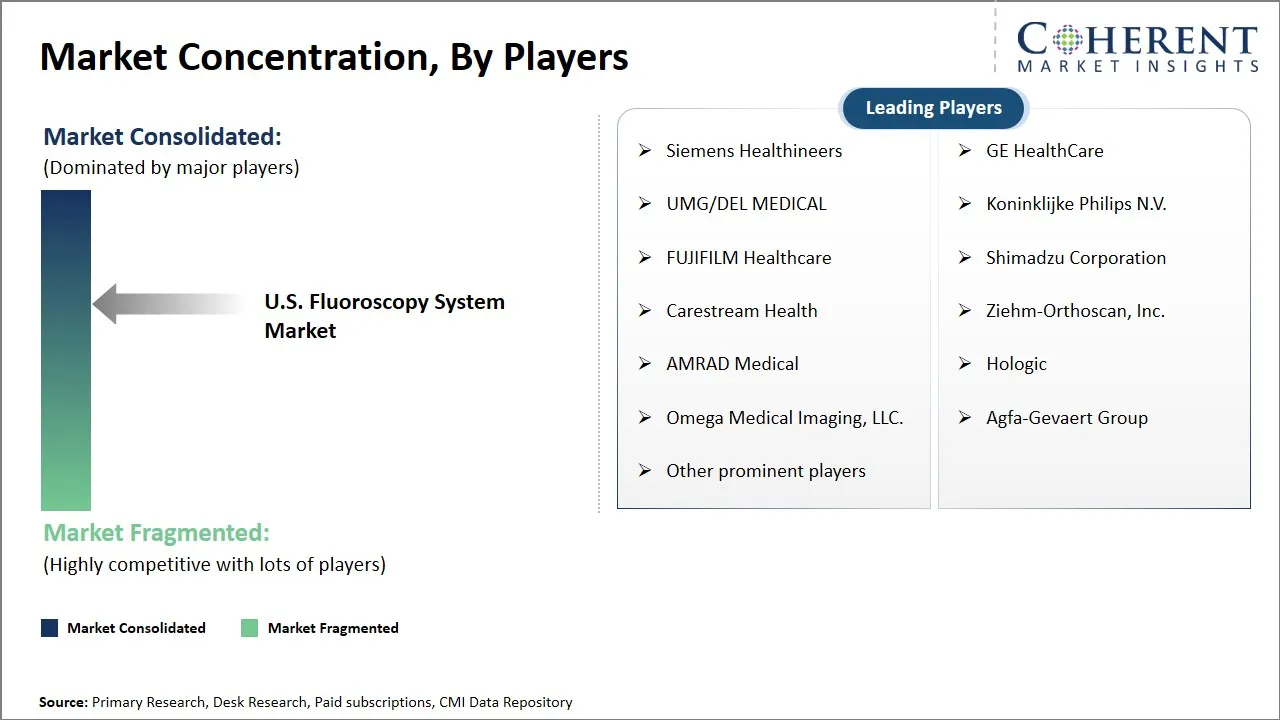
| Companies covered: | Siemens Healthineers, GE HealthCare, UMG/DEL MEDICAL, Koninklijke Philips N.V., FUJIFILM Healthcare, Shimadzu Corporation, Carestream Health, Ziehm-Orthoscan, Inc., AMRAD Medical, Hologic, Omega Medical Imaging, LLC., and Agfa-Gevaert Group. | ||
| Growth Drivers: |
| ||
| Restraints & Challenges: |
| ||
U.S. Fluoroscopy System Market Dynamics
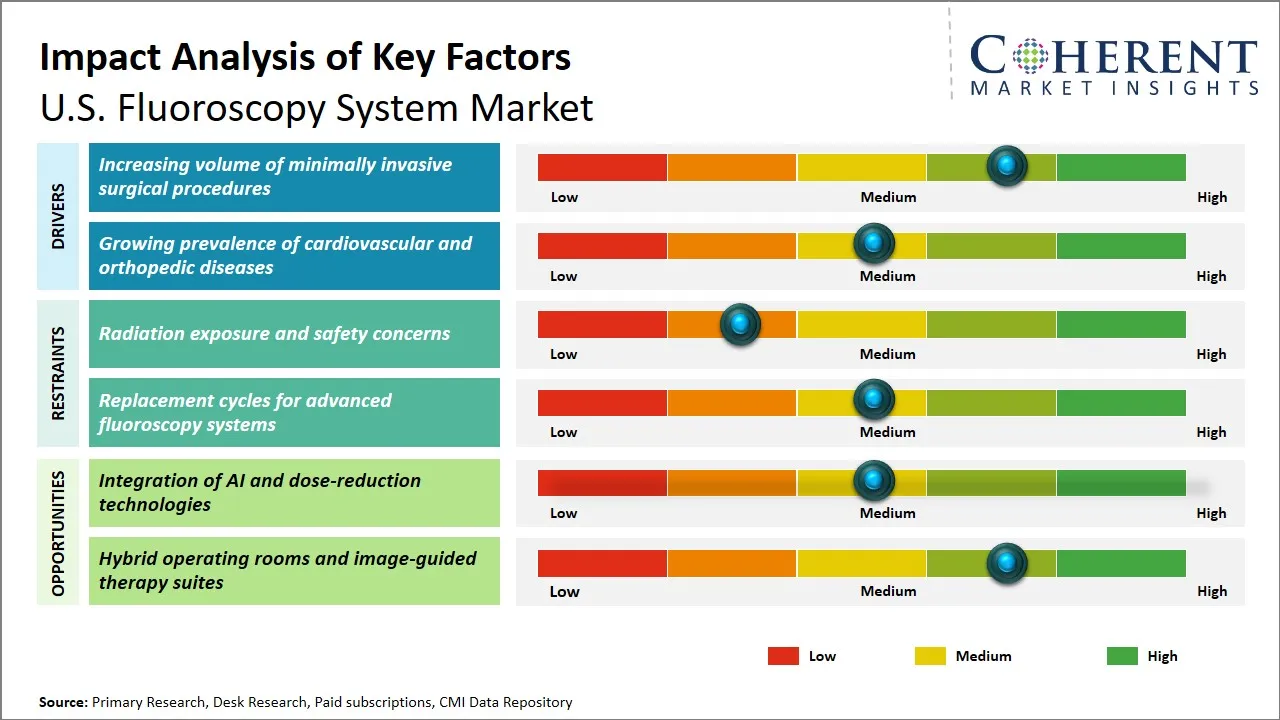
U.S. Fluoroscopy System Market Driver - Increasing Volume of Minimally Invasive Surgical Procedures
One of the major factors that is driving the demand for fluoroscopy systems within the U.S. healthcare market is the increasing usage of minimally invasive surgical techniques. Minimally invasive surgeries rely heavily on real-time fluoroscopic imaging, as precise visualization enables surgeons to accurately guide instruments through small incisions, improving procedural safety while minimizing tissue damage and recovery time for patients. Angiography, orthopedic surgeries, and interventional cardiology are some of the procedures that are increasingly these days because of their advantages like less recovery time, less chances of getting an infection, and less pain after the surgery. With a tendency of the surgeons to adopt minimal invasive surgery over the traditional open surgeries, the usage of modernized systems of fluoroscopy is also going on the increase.
For instance, in the U.S., data from healthcare procedure records indicate that the proportion of minimally invasive surgeries (MIS) performed in ambulatory settings increased from 16.9% to 18% over a recent multi‑year period, reflecting a consistent upward trend in MIS utilization. This growth mirrors broader shifts toward less invasive procedures that rely on real‑time imaging tools such as fluoroscopy for visualization and guidance during interventions.
(Source- https://pmc.ncbi.nlm.nih.gov/articles/PMC9691544/)
U.S. Fluoroscopy System Market Opportunity - Integration of AI and Dose-Reduction Technologies in the U.S. Fluoroscopy System Market
The introduction of the artificial intelligence (AI) and innovative dose-reduction technologies will make the U.S. market of fluoroscopy systems highly advantageous. With the growing number of healthcare providers focusing on patient safety and accuracy in the diagnostic imaging process, the need to have fluoroscopy systems that have the ability to provide high quality of images coupled with reduced radiation exposure is increasing at a high rate.
The AI-based algorithms can be applied to image processing and increase its quality, allowing the real-time modification of the images and automatic identification of anatomical features that does not only improve the accuracy of the diagnosis, but also decreases the number of necessary repeated scans. The development assists in reducing cumulative doses of radiation to patients, countering tough regulatory and safety provisions placed on patients by the U.S. FDA and the American College of Radiology.
Analyst Opinion (Expert Opinion)
- The fluoroscopy system market in the U.S. is performing well with the major players being the technological advancements and the rise in the demand for the minimally invasive procedures. The new technologies such as AI-assisted imaging, digital flat-panel detectors, and radiation-cutting technologies are increasing both the accuracy of the diagnosis and the safety of patients. Also, the expansion of the market is being promoted by regulatory encouragement by regulatory agencies such as the U.S. FDA, and an increased need for diagnostic imaging as the population is growing older. Such systems have found their way into various clinical practices, including orthopedic surgeries and cardiovascular surgery, and are therefore becoming essential in the contemporary healthcare environment. Integration of AI and machine learning is improving fluoroscopic image quality and workflow efficiency, enabling faster and more accurate clinical decision-making. Adoption of predictive maintenance technologies is enhancing fluoroscopy equipment reliability and reducing downtime through early detection of performance issues.
- However, the market has challenges such as difficulties with high capital cost and maintenance concerns on complex imaging systems. Although players in the industry are working towards coming up with cost effective solutions, the initial investment of the advanced fluoroscopy systems may be out of reach to the small clinics and hospitals. Recent activities such as the RSNA 2024 and conferences held by the Radiological Society of North America have been significant in influencing the knowledge in the industry by displaying new technologies and avenues through which they can collaborate and debate on policy. Siemens Healthineers continues to secure U.S. FDA approvals for advanced imaging technologies, strengthening innovation in clinical diagnostics and interventional imaging. Philips is advancing AI-based imaging systems to improve workflow efficiency, diagnostic precision, and overall patient care outcomes.
Speak to the analyst
Want personalized insights?
Take the findings above to one of our principal consultants, or have the report rebuilt around the segments, geographies and competitors you actually track.
Market Segmentation
- System Insights (Revenue, USD Mn, 2021 - 2033)
- Fixed / Room-based Fluoroscopy Systems
- R/F (Radiography–Fluoroscopy) Rooms
- Interventional Suites
- Table Configurations
- Mobile Fluoroscopy Systems
- Full-size C-arms
- Mini C-arms
- Portable “compact” Mobile Units
- Platform Type Insights (Revenue, USD Mn, 2021 - 2033)
- C-arm systems
- Full-size C-arm
- Mini C-arm
- U-arm systems
- O-arm / 3D intraoperative imaging platforms
- Angiography/fluoroscopy hybrids
- Detector Type Insights (Revenue, USD Mn, 2021 - 2033)
- Flat Panel Detector (FPD)
- Image Intensifier (II)–based systems
- Fluoroscopy Mode Insights (Revenue, USD Mn, 2021 - 2033)
- Continuous Fluoroscopy
- Pulsed Fluoroscopy
- Application Area Insights (Revenue, USD Mn, 2021 - 2033)
- Diagnostic fluoroscopy
- Gastrointestinal (GI) studies
- Urology
- General radiology
- Interventional procedures
- Interventional radiology (IR)
- Vascular interventions
- Cardiology / cath lab procedures
- Others (Electrophysiology (EP) procedures, etc.)
- Surgical & intraoperative guidance
- Orthopedics & trauma
- Spine surgery
- Others (General surgery, etc.)
- Diagnostic fluoroscopy
- End User Insights (Revenue, USD Mn, 2021 - 2033)
- Hospitals
- Radiology Department
- Operating rooms (OR)
- Others (Cath labs / EP labs, etc.)
- Ambulatory Surgical Centers (ASCs)
- Diagnostic imaging centers
- Others (Academic & research centers, etc.)
- Hospitals
- Key Players Insights
- Siemens Healthineers
- GE HealthCare
- UMG/DEL MEDICAL
- Koninklijke Philips N.V.
- FUJIFILM Healthcare
- Shimadzu Corporation
- Carestream Health
- Ziehm-Orthoscan, Inc.
- AMRAD Medical
- Hologic
- Omega Medical Imaging, LLC.
- Agfa-Gevaert Group
Sources
Primary Research Interviews
Industry Stakeholders List
- American College of Radiology (ACR)
- Radiological Society of North America (RSNA)
Government and International Databases
- Centers for Medicare & Medicaid Services (CMS)
- U.S. Food and Drug Administration (FDA)
- World Health Organization (WHO)
- U.S. National Institutes of Health (NIH)
- U.S. Census Bureau
- European Commission (for cross-region comparison)
Trade Publications
- Radiology Today
- Imaging Technology News (ITN)
- Medical Imaging
- Journal of Medical Imaging
- Diagnostic Imaging
- Health Imaging
Academic Journals
- Journal of the American College of Radiology (JACR)
- European Radiology
- Radiology
- The Journal of Clinical Imaging Science
- Journal of Medical Imaging and Radiation Sciences
- The British Journal of Radiology
Reputable Newspapers
- The New York Times
- The Washington Post
- The Wall Street Journal
- USA Today
- The Guardian
- Los Angeles Times
Industry Associations
- American College of Radiology (ACR)
- Radiological Society of North America (RSNA)
- American Society of Radiologic Technologists (ASRT)
- Health Industry Distributors Association (HIDA)
- Medical Imaging and Technology Alliance (MITA)
- Society of Interventional Radiology (SIR)
Public Domain Resources
- National Library of Medicine (NLM)
- U.S. National Cancer Institute (NCI)
- U.S. Department of Health & Human Services (HHS)
- ClinicalTrials.gov
Proprietary Elements
- CMI Data Analytics Tool: Proprietary analytics tool to analyze real-time market trends, consumer behavior, and technology adoption in market
- Proprietary CMI Existing Repository of Information for Last 8 Years
Get access to 250+ pages report
Every segment, forecast, competitor profile and data table behind the analysis above — available for instant download.
- ESOMAR Member
- ISO 9001:2015 Certified
- D-U-N-S Registered
- GDPR & CCPA Compliant
Missing comfort of reading report in your local language? Find your preferred language:
Transform your Strategy with Exclusive Trending Reports
Frequently Asked Questions
The U.S. fluoroscopy system market is estimated to be valued at USD 724.0 million in 2026 and is expected to reach USD 921.1 million by 2033.
The CAGR of U.S. fluoroscopy system market is projected to be 3.9% from 2026 to 2033.
Modern fluoroscopy systems, particularly those with dose-reduction technologies, incorporate features such as AI-assisted image enhancement, real-time radiation monitoring, and improved detector technology to reduce radiation exposure to patients and medical staff, enhancing the safety of procedures.
Primary end users of fluoroscopy systems in the U.S. include hospitals, outpatient diagnostic centers, ambulatory surgical centers, and interventional radiology departments, with growing use in orthopedic surgeries, cardiology, and gastrointestinal procedures.
Increasing volume of minimally invasive surgical procedures and growing prevalence of cardiovascular and orthopedic diseases are the major factors driving the growth of the U.S. fluoroscopy system market.
Radiation exposure and safety concerns and replacement cycles for advanced fluoroscopy systems are the major factors hampering the growth of the U.S. fluoroscopy system market.
In terms of system, fixed / room-based fluoroscopy systems are estimated to dominate the market revenue share in 2026.