

U.S. Genetic Testing Market Size and Forecast – 2026 To 2033
The U.S. genetic testing market is expected to grow from USD 5,290.6 Mn in 2026 to USD 9,150.7 Mn by 2033, registering a compound annual growth rate (CAGR) of 8.1% from 2026 to 2033. The U.S. genetic testing market is poised for significant expansion, fueled by the widespread adoption of precision medicine and surging demand for early disease detection and personalized treatment approaches.
According to the U.S. Centers for Disease Control and Prevention, birth defects are common, affecting 1 in every 33 babies born in the U.S. each year. They are also the leading cause of infant deaths, accounting for 20%, or 1 in 5, of all infant deaths. The increased focus on early identification of genetic abnormalities and inherited disorders is expected to support the adoption of genetic testing across the country.
(Source: Centers for Disease Control and Prevention)
Key Takeaways of the U.S. Genetic Testing Market
- Products are projected to hold 62.8 % of the U.S. genetic testing market share in 2026, making it the dominant offering segment, driven by increasing demand for genetic testing kits, sequencing consumables, reagents, and sample preparation products used in oncology, reproductive health, and rare disease diagnostics. Rising testing volumes across hospitals and laboratories continue to support product sales. For instance, in May 2025, the U.S. FDA authorized 23andMe's direct-to-consumer pharmacogenetic test, allowing consumers to obtain information on how their genetics may influence responses to certain medications. The approval reflects growing regulatory support for innovative genetic testing products and broader market adoption in the U.S.
- Genetic testing panels are projected to hold 46.0 % of the U.S. genetic testing market share in 2026, making it the dominant type of testing segment, attributed to their ability to analyze multiple genes simultaneously, improving diagnostic efficiency and reducing testing time for hereditary cancers, cardiovascular disorders, and rare diseases. Growing physician preference for comprehensive genomic profiling is further driving adoption of genetic testing panels. For instance, the National Cancer Institute highlights multigene panel testing as a valuable approach for identifying inherited cancer risk genes such as BRCA1 and BRCA2, supporting more personalized risk assessment and treatment planning across U.S. healthcare settings.
- Next Generation Sequencing (NGS) is projected to hold 46.0 % of the U.S. genetic testing market share in 2026, making it the dominant technology segment, due to its high-throughput capabilities, ability to analyze multiple genes simultaneously, and declining sequencing costs. Its growing use in oncology, rare disease diagnosis, reproductive health, and precision medicine continues to drive market expansion. For instance, the U.S. Centers for Medicare & Medicaid Services (CMS) expanded reimbursement coverage for several NGS-based tests used in cancer diagnostics through its Molecular Diagnostics Services Program, supporting broader clinical adoption of genomic sequencing technologies across the U.S.
- Growing Adoption of Pharmacogenomic Testing in Clinical Practice: The increasing use of pharmacogenomic testing to optimize drug selection and dosing is emerging as a key growth driver for the U.S. genetic testing market. Healthcare providers are increasingly incorporating genetic information into treatment decisions to improve therapeutic outcomes and reduce adverse drug reactions. The growing focus on personalized medicine and value-based healthcare is accelerating the adoption of pharmacogenomic testing across oncology, psychiatry, cardiology, and pain management applications.
- Expansion of Genetic Testing for Organ Transplant Compatibility and Monitoring: Innovative genomic technologies are expanding the potential for genetic testing in the field of transplant medicine. Genetic testing for transplant is currently being used in donor recipient matching, analysis of rejection risks and monitoring posttransplant with cfDNA. Increased rates of organ transplantation in the U.S. and a focus on precise post-transplant monitoring has driven the market for specific genetic testing solutions in transplant management, driving strong growth during the forecast period.
Segmental Insights
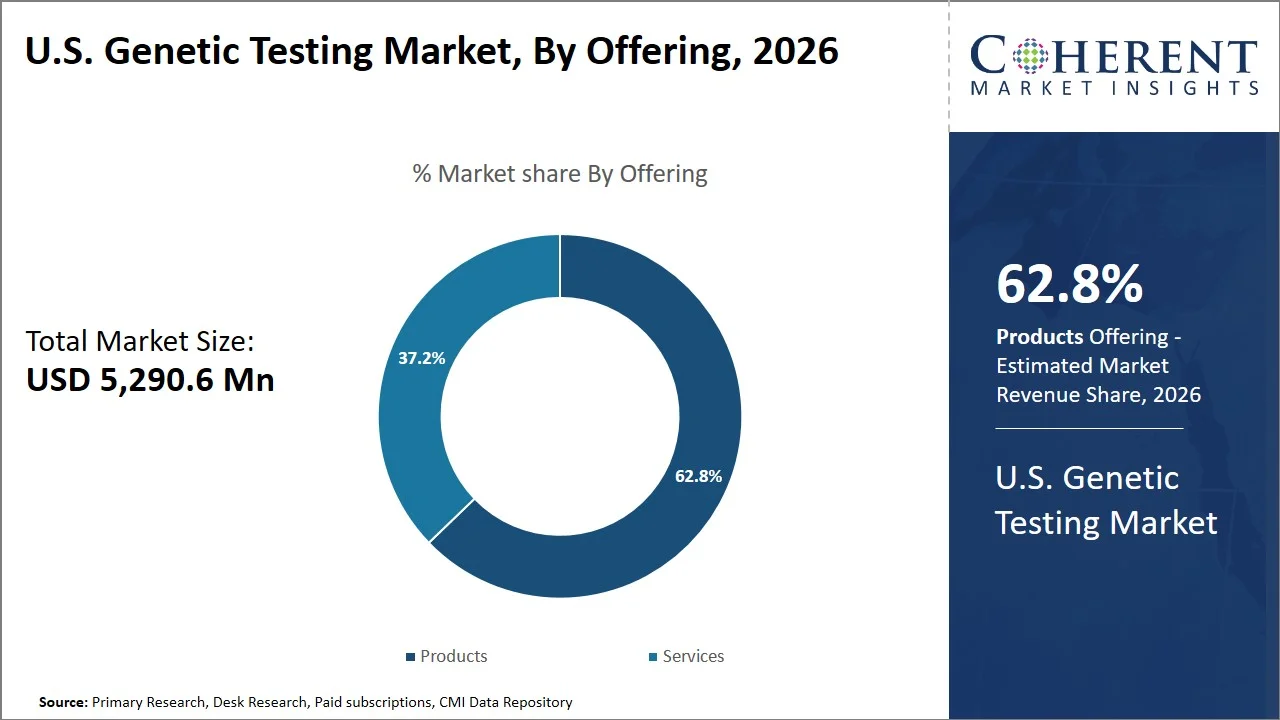
Why Do Products Dominate the U.S. Genetic Testing Market?
Products are projected to hold a market share of 62.8% in 2026, owing to its importance at all stages of the testing workflow, encompassing sample preparation, sequencing, genomics analysis, and interpretation. The market for genomic data services continues to rise owing to the ever-increasing prevalence of genetic testing for oncology, diagnosing genetic disorders, pregnancy, and hereditary disorders which fuels the sales of testing consumables, such as sequencing reagent, gene panel and assay kits. Furthermore, continuous advancements in technologies and frequent launch of new products are the major factors contributing to the sector growth by enhancing test throughput, accuracy and clinical use. For instance, in October 2025, Illumina, Inc. unveiled its 5-base solution, allowing genomic and epigenomic data to be accessed in the same sequencing workflow. Multi-omics analyses using multi-omics research workflow is promoted in new combined gene methylation, genetic and epigenetic sequencing testing solution. This trend supports high expectations for Illumina’s innovations in genomic testing products, as products dominate the genetic testing products market in the U.S. (Source: Illumina, Inc.)
- Current Industry Events of 2026
- Market Size Estimation
- Regional Breakdown
- Competitive Landscape
- Customer Intelligence
- Segmental Analysis
- Pricing Analysis
- Key Market Drivers, Challenges & Future Trends
- Customized Insights Section
Why Do Genetic Testing Panels Represent the Largest Type of Testing Segment in the U.S. Genetic Testing Market?
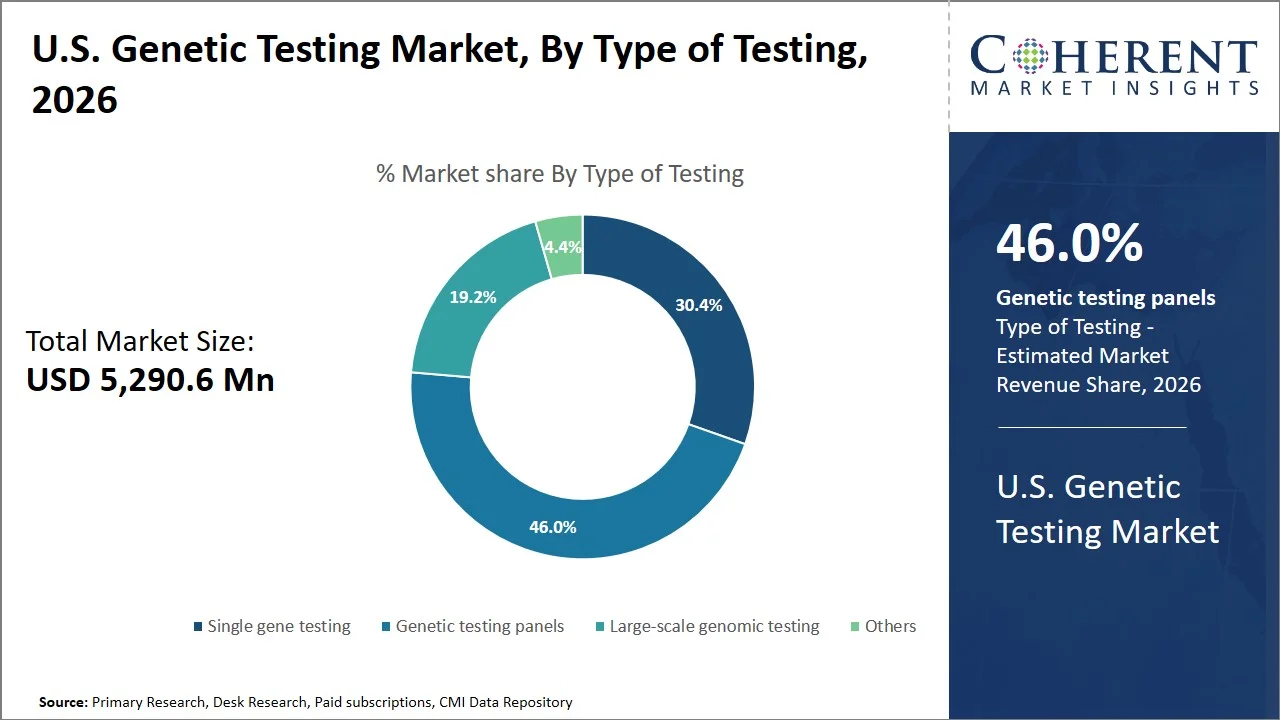
Genetic testing panels are projected to hold 46.0% of the market share in 2026, as they provide integrated analysis of multiple genes linked to a disease with the help of a single test. Genetic testing panels have facilitated improved efficiency of diagnosis and reduced the turnaround time, in comparison to the single gene testing approach, due to offering more comprehensive gene analysis information for clinical decisions. Genetic testing panels are becoming the preferred testing mode by diagnostic labs and health providers in the treatment of the various diseases like cancer, rare genetic diseases, cardiac diseases and prenatal or pregnancy disorders. For instance, in March 2025, Oxford Nanopore Technologies and Bio-Techne Corporation introduced a next generation genetically sensitive panel, the AmplideX Nanopore Carrier Plus Kit, for complex carrier screening targets utilizing nanopore sequencing. This launch underlines the momentum within multi-gene panels and the industry trend toward highly specific, comprehensive screening solutions targeting multiple diseases. (Source: Bio-Techne)
Next Generation Sequencing (NGS) Segment Dominates the U.S. Genetic Testing Market
The Next Generation Sequencing (NGS) segment is expected to hold 46.0% of the U.S. genetic testing market share in 2026, owing to its capacity to simultaneously screen multiple genes and perform cost effective, high throughput and accurate DNA sequencing and amplification processes. The adoption for next generation sequencing (NGS) in applications such as oncology testing, rare disease diagnosis, carrier screening and prenatal testing is expected to drive the segment’s growth. Further, precision medicine and the wide clinical usage will ensure the enhanced uptake of next generation sequencing (NGS) test platforms in hospitals and in clinical diagnostic centers. For instance, in March 2026, Devyser launched its first IVDR-compliant NGS assay for the testing of thalassemia and sickle cell disease. The assay provides comprehensive detection of disease-causing variants through a single workflow to identify genetic variation in these conditions. (Source: Devyser)
Currents Events and their Impact
Current Events | Description and its Impact |
U.S. FDA Rescinds Laboratory Developed Tests (LDTs) Final Rule (September 2025) |
|
National Government Services (NGS) Finalizes Medicare Coverage for Pharmacogenomic (PGx) Testing (July 2025) |
|
(Source: Food and Drug Administration, Lab Revenue Navigator)
U.S. Genetic Testing Market Dynamics
Market Drivers
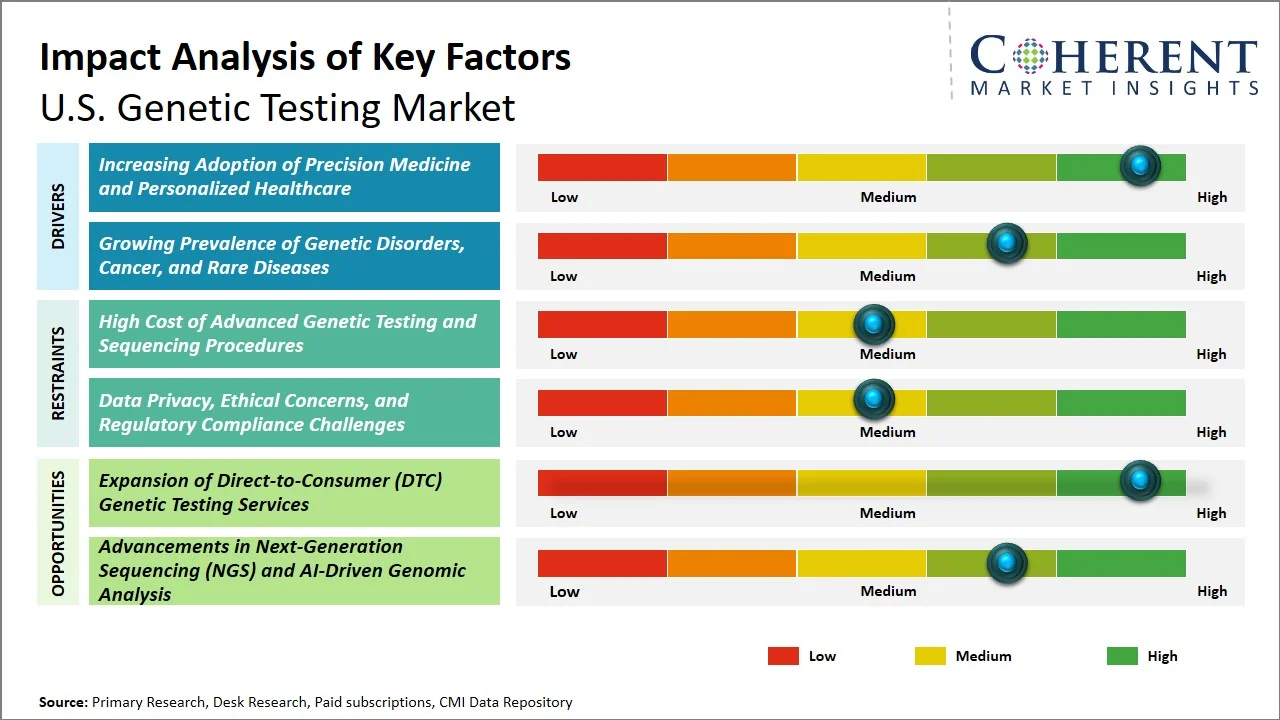
- Increasing Adoption of Precision Medicine and Personalized Healthcare: Increasing adoption of precision medicine drives U.S. genetic testing market, fueled by health organizations adopting genomic information to support the understanding of disease diagnoses, selection of treatments, and patient stratifications of the risk for development of a disease. A gene sequencing can detect clinically applicable variations for personalized medicine to promote enhanced outcomes through targeted therapy treatments, driving the increasing use of genetics and genomics for various diseases like rare diseases, and oncology. For instance, with its expansion to incorporate genome and health data from more than one million veterans, the Million Veteran Program (MVP) is among the largest precision medicine projects in the world. This U.S. Department of Veterans Affairs initiative utilizes genetic data as a tool for understanding disease susceptibility and response to treatment to help make a more ubiquitous and widespread implementation of genomics across the U.S.
- Growing Prevalence of Genetic Disorders, Cancer, and Rare Diseases: The growth in the prevalence of hereditary conditions, cancer and rare disease is accelerating the demand for genetic screening, diagnostics, and genomic profiling. As it becomes critical to identify a gene that causes disease risk or has a predisposition for it, in cancer and rare disease, genetics has become integral in decision making for therapy selection and disease management. Genetic tests are increasingly an integral part of the decision-making process as clinicians increase their use of precision diagnostics. For instance, according to U.S. Food and Drug Administration, an estimated 10,000+ rare diseases affect more than 30 million people, approximately one out of every 10 people in the U.S., and about half of these people are children.
Emerging Trends
- Integration of Artificial Intelligence in Genomic Interpretation: In recent years, artificial intelligence has been used for gene sequencing tests to increase the rate of interpretation of mutations that can be identified as important for diagnosis. Artificial intelligence-driven bioinformatics tools have been assisting laboratories in analyzing big genomic data sets more quickly, thus enhancing the practice of precision medicine.
- Rising Adoption of Multi-Gene Panel and Comprehensive Genomic Testing: Healthcare professionals are moving from single-gene tests to multiple genes and broad genomic analysis as these new technologies analyze multiple genes and the potential cause of several diseases. Multi-gene panels and large genome analyses have emerged as standards for many oncology applications, as well as for screening individuals who have family members with heritable diseases and those who have a risk of cardiac disease.
Key Regulatory Programs Influencing the U.S. Genetic Testing Market
Regulatory Program / Initiative | Governing Body | Key Focus Area | Impact on the U.S. Genetic Testing Market |
FDA Oversight of Genetic Tests and In Vitro Diagnostics (IVDs) | U.S. Food and Drug Administration (FDA) | Test safety, effectiveness, and regulatory compliance | Strengthens confidence in genetic testing products and supports commercialization of innovative diagnostic solutions |
Clinical Laboratory Improvement Amendments (CLIA) | Centers for Medicare & Medicaid Services (CMS) | Laboratory quality and testing standards | Ensures accuracy, reliability, and consistency of genetic testing services across laboratories |
Molecular Diagnostics Services (MolDX) Program | Centers for Medicare & Medicaid Services (CMS) | Coverage and reimbursement for molecular and genetic tests | Expands patient access to reimbursable genetic testing and promotes clinical adoption |
All of Us Research Program | National Institutes of Health (NIH) | Population genomics and precision medicine research | Accelerates genomic data generation and supports development of personalized healthcare solutions |
Newborn Screening Programs | Centers for Disease Control and Prevention (CDC) and State Health Agencies | Early detection of inherited and genetic disorders | Increases utilization of genetic testing for pediatric and preventive healthcare applications |
How is the expansion of direct-to-consumer (DTC) genetic testing services creating new growth opportunities in the U.S. genetic testing market?
The proliferation of large-scale genomic databases is increasing new opportunities for the development of genetic tests, discovery of new biomarkers, and applicability of personal genomics in clinical care. Efforts combining genomic, clinical, and biospecimen data are helping researchers and physicians improve understanding of disease risk and treatment response as it pertains to diverse populations. For instance, the "All of Us Research Program" of the National Institutes of Health (NIH) has enrolled more than 883,000 individuals, out of which more than 598,000 have fulfilled the basic criteria of the program, such as donation of their biospecimen and access to electronic health records. It is anticipated that increased availability of these large genomic databases will accelerate the process of developing cutting-edge genetic testing technologies. (Source: U.S. Department of Health and Human Services)
Market Players, Key Development, and Competitive Intelligence
Key Developments
- On June 22, 2026 Labcorp launched the first-to-market, U.S.FDA-approved RNA based, in-home testing solution – ColoSense to enable eligible individuals nationwide to access a new approach to colon cancer screening. ColoSense is an at-home collected RNA-based diagnostic test that can aid in detecting colorectal cancer and advanced adenomas in the body using RNA biomarkers. The test builds on Labcorp’s portfolio to provide accessible and advanced molecular diagnostics and the increasing trend of adopting precision medicine solutions that enable early cancer detection in the US health ecosystem.
- In February 2026, PharosAI and 10x Genomics announced a strategic partnership to advance cancer research through artificial intelligence and spatial biology technologies. The collaboration aims to create one of the world's largest multimodal cancer datasets and develop integrated AI tools to accelerate biomarker discovery and precision medicine. The initiative is expected to strengthen genomic data analysis capabilities and support innovation across the genetic testing and oncology research landscape.
Competitive Landscape
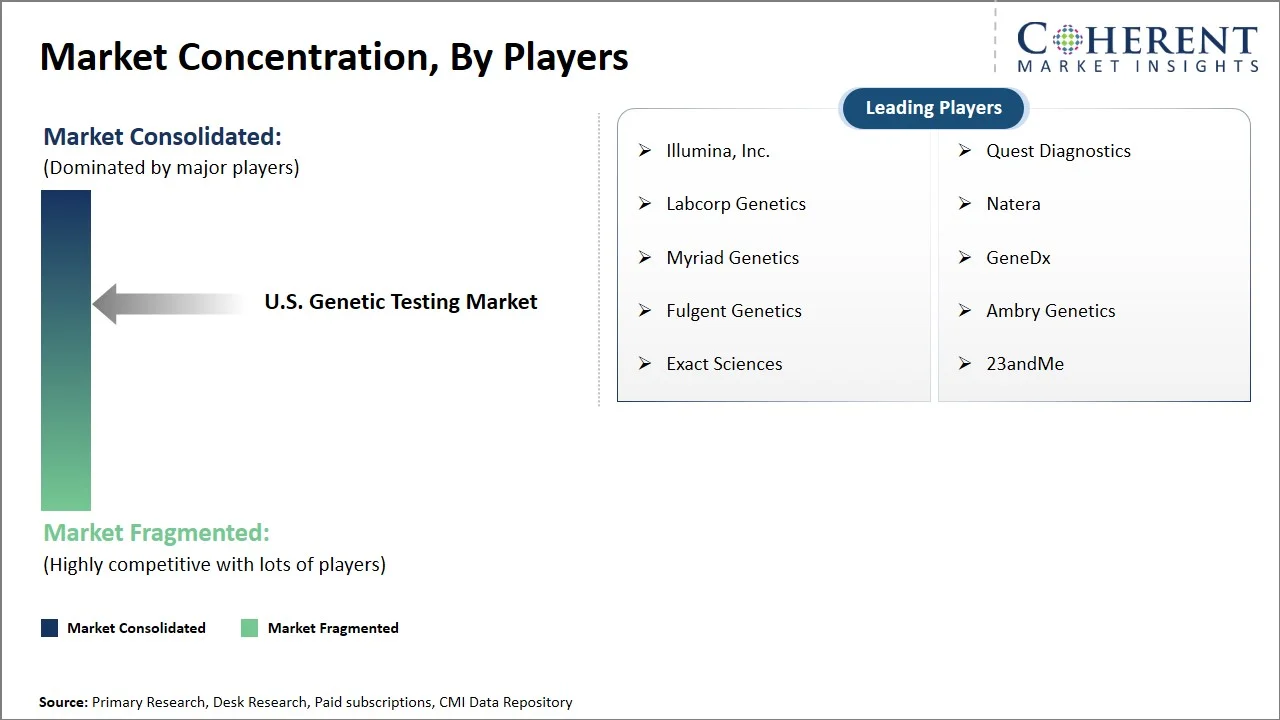
The U.S. genetic testing market is highly competitive, with diagnostic laboratories, suppliers of sequencing technologies, and specialty genomics firms seeking to capture market share through innovations in test accuracy, comprehensiveness of their genomic testing portfolios, turnaround times, reimbursement coverage, bioinformatics offerings, and regulatory adoption. Genomics firms and laboratories are investing to expand their genomic testing portfolios and customer bases across the entire spectrum of precision medicine applications. Key focus areas include:
- Expansion of next-generation sequencing (NGS) and multi-gene testing capabilities
- Development of AI- and bioinformatics-enabled genomic interpretation platforms
- Strengthening oncology, rare disease, reproductive health, and pharmacogenomics testing portfolios
- Expansion of direct-to-consumer genetic testing and at-home sample collection services
- Strategic collaborations with healthcare providers, research institutions, and pharmaceutical companies
- Investment in large-scale genomic databases and precision medicine initiatives
Market Report Scope
U.S. Genetic Testing Market Report Coverage
| Report Coverage | Details | ||
|---|---|---|---|
| Base Year: | 2025 | Market Size in 2026: | USD 5,290.6 Mn |
| Historical Data for: | 2020 To 2024 | Forecast Period: | 2026 To 2033 |
| Forecast Period 2026 to 2033 CAGR: | 8.1% | 2033 Value Projection: | USD 9,150.7 Mn |
| Segments covered: |
| ||
| Companies covered: | Illumina, Inc., Quest Diagnostics, Labcorp Genetics, Natera, Myriad Genetics, GeneDx, Fulgent Genetics, Ambry Genetics, Exact Sciences, and 23andMe | ||
| Growth Drivers: |
| ||
| Restraints & Challenges: |
| ||
Analyst Opinion (Expert Opinion)
- The future of the U.S. genetic testing market will be driven by the widespread adoption of genomic testing in general health management in the form of precision medicine, advancement in oncology, reproductive health and rare disease diagnosis. Development in next-generation sequencing (NGS), AI-enabled genomic interpretation, and multi-omics technologies are anticipated to enhance test reliability, accessibility, and clinical relevance, thus cementing genetic testing as a key aspect of disease prevention and treatment.
- The maximum growth opportunity lies within NGS-based oncology tests segment and multi-gene panel testing segment in the U.S. The sharp rise in cancer prevalence, increased acceptance of companion diagnostics and personalized therapies, and growing utilization of tests requiring comprehensive genome analysis are some of the common factors expected to propel demand in these segments. Furthermore, the advent of pharmacogenomics and direct-to-consumer genetic tests are expected to contribute to this growth.
- In order to create an advantage for themselves, the competitors should emphasize increasing their NGS/bioinformatics expertise, provide AI-based genomic interpretation solutions, and build solid relationships with healthcare providers, pharma/biotech partners, and research organizations. The companies offering wide array of testing products, rapid results, actionable clinical information, superior reimbursement support will be the best positioned to benefit from the evolving U.S. genetic testing market.
Speak to the analyst
Want personalized insights?
Take the findings above to one of our principal consultants, or have the report rebuilt around the segments, geographies and competitors you actually track.
Market Segmentation
- Offering Insights (Revenue, USD Mn, 2021 - 2033)
- Products
- Services
- Type of Testing Insights (Revenue, USD Mn, 2021 - 2033)
- Single gene testing
- Genetic testing panels
- Large-scale genomic testing
- Others
- Technology Insights (Revenue, USD Mn, 2021 - 2033)
- Next Generation Sequencing (NGS)
- PCR-Based Technologies
- SNP Chip Technology
- Supporting Technologies
- Application Insights (Revenue, USD Mn, 2021 - 2033)
- Prenatal and Newborn Testing
- Ancestry and Ethnicity Testing
- Diagnostic Testing
- Others
- End User Insights (Revenue, USD Mn, 2021 - 2033)
- Hospitals
- Independent and Diagnostic Laboratories
- Academic and Research Institutes
- Direct-to-Consumer
- Key Players Insights
- Illumina, Inc.
- Quest Diagnostics
- Labcorp Genetics
- Natera
- Myriad Genetics
- GeneDx
- Fulgent Genetics
- Ambry Genetics
- Exact Sciences
- 23andMe
Sources
Primary Research Interviews
- Clinical Geneticists and Medical Genetic Specialists – hereditary disease diagnosis, clinical utility of genetic testing, and patient management trends
- Molecular Pathologists and Genomic Medicine Experts – genomic testing workflows, biomarker testing, and precision medicine adoption
- Directors of Genetic Testing Laboratories – testing volumes, reimbursement trends, and operational challenges
- Oncology Specialists and Precision Medicine Practitioners – companion diagnostics, cancer genomics, and treatment selection applications
- Reproductive Health and Prenatal Screening Specialists – carrier screening, NIPT adoption, and prenatal testing utilization
- Bioinformatics and Genomics Data Scientists – genomic interpretation, AI-enabled analysis, and sequencing data management
Stakeholders
- Genetic Testing Providers (e.g., Illumina, Quest Diagnostics, Labcorp, Natera, Myriad Genetics)
- Hospitals and Integrated Healthcare Systems
- Independent and Specialty Diagnostic Laboratories
- Academic Medical Centers and Research Institutions
- Pharmaceutical and Biotechnology Companies
- Direct-to-Consumer (DTC) Genetic Testing Companies
- End-use Sectors
- Oncology and Precision Medicine Programs
- Prenatal and Reproductive Health Services
- Rare Disease and Inherited Disorder Diagnostics
- Newborn Screening Programs
- Pharmacogenomics and Personalized Therapy Programs
- Population Genomics and Preventive Healthcare Initiatives
- Regulatory & Health Bodies
- U.S. Food and Drug Administration (FDA)
- Centers for Medicare & Medicaid Services (CMS)
- Centers for Disease Control and Prevention (CDC)
- National Institutes of Health (NIH)
- National Human Genome Research Institute (NHGRI)
- College of American Pathologists (CAP)
Databases
- CDC Genomics and Precision Health Data – genetic disease prevalence and screening information
- NIH All of Us Research Program – population genomics and precision medicine data
- National Center for Biotechnology Information (NCBI) – genomic research and genetic variant databases
- ClinicalTrials.gov – genetic testing, genomics, and precision medicine clinical studies
- CMS Coverage Database – reimbursement and coverage policies for genetic testing
- FDA Device and Diagnostic Databases – genetic test approvals and regulatory updates
Magazines
- Genome Web – genomics, sequencing, and molecular diagnostics developments
- Genetic Engineering & Biotechnology News (GEN)
- BioCentury
- The Pathologist
- Clinical Lab Products
Journals
- Genetics in Medicine
- The American Journal of Human Genetics
- Nature Genetics
- Genome Medicine
- The Journal of Molecular Diagnostics
Newspapers
- The Wall Street Journal – healthcare and biotechnology developments
- The New York Times – genomics and healthcare policy coverage
- USA Today – healthcare innovation and diagnostics news
- The Washington Post – public health and genomic medicine developments
Associations
- American College of Medical Genetics and Genomics (ACMG)
- American Society of Human Genetics (ASHG)
- Association for Molecular Pathology (AMP)
- National Society of Genetic Counselors (NSGC)
- Clinical Genome Resource (ClinGen)
Public Domain Sources
- U.S. Food and Drug Administration (FDA)
- Centers for Disease Control and Prevention (CDC)
- National Institutes of Health (NIH)
- National Human Genome Research Institute (NHGRI)
- Centers for Medicare & Medicaid Services (CMS)
- National Center for Biotechnology Information (NCBI)
Proprietary Elements
- CMI Data Analytics Tool, Proprietary CMI Existing Repository of information for last 10 years.
Get access to 250+ pages report
Every segment, forecast, competitor profile and data table behind the analysis above — available for instant download.
- ESOMAR Member
- ISO 9001:2015 Certified
- D-U-N-S Registered
- GDPR & CCPA Compliant
Missing comfort of reading report in your local language? Find your preferred language:
Transform your Strategy with Exclusive Trending Reports
Frequently Asked Questions
The U.S. genetic testing market is estimated to be valued at USD 5,290.6 Mn in 2026 and is expected to reach USD 9,150.7 by 2033.
Products dominate due to the growing demand for genetic testing kits, sequencing consumables, reagents, and assay products used across oncology, reproductive health, and rare disease diagnostics.
Genetic testing is the analysis of DNA, RNA, chromosomes, or genes to identify genetic variations associated with inherited disorders, disease risk, and treatment response.
The CAGR of the U.S. genetic testing market is projected to be 8.1% from 2026 to 2033.
NGS is a high-throughput genomic technology that enables the simultaneous sequencing of millions of DNA fragments, allowing comprehensive genetic analysis.
A genetic testing panel is a diagnostic test that evaluates multiple genes simultaneously to identify genetic mutations associated with specific diseases or conditions.
Increasing adoption of precision medicine and personalized healthcare, and growing prevalence of genetic disorders, cancer, and rare diseases are the major factors driving the growth of the U.S. genetic testing market.