

Global Venous Leg Ulcer Market Size and Forecast – 2026 to 2033
According to Coherent Market Insights, the global venous leg ulcer market is estimated to be valued at USD 2.62 Bn in 2026 and is expected to reach USD 6.64 Bn by 2033, expanding at a compound annual growth rate (CAGR) of 14.2% from 2026 to 2033. This substantial growth trajectory reflects increasing prevalence of venous leg ulcers, rising geriatric population, and advances in wound care technologies, driving demand for effective treatment solutions and healthcare interventions worldwide.
Key Takeaways of the Venous Leg Ulcer Market
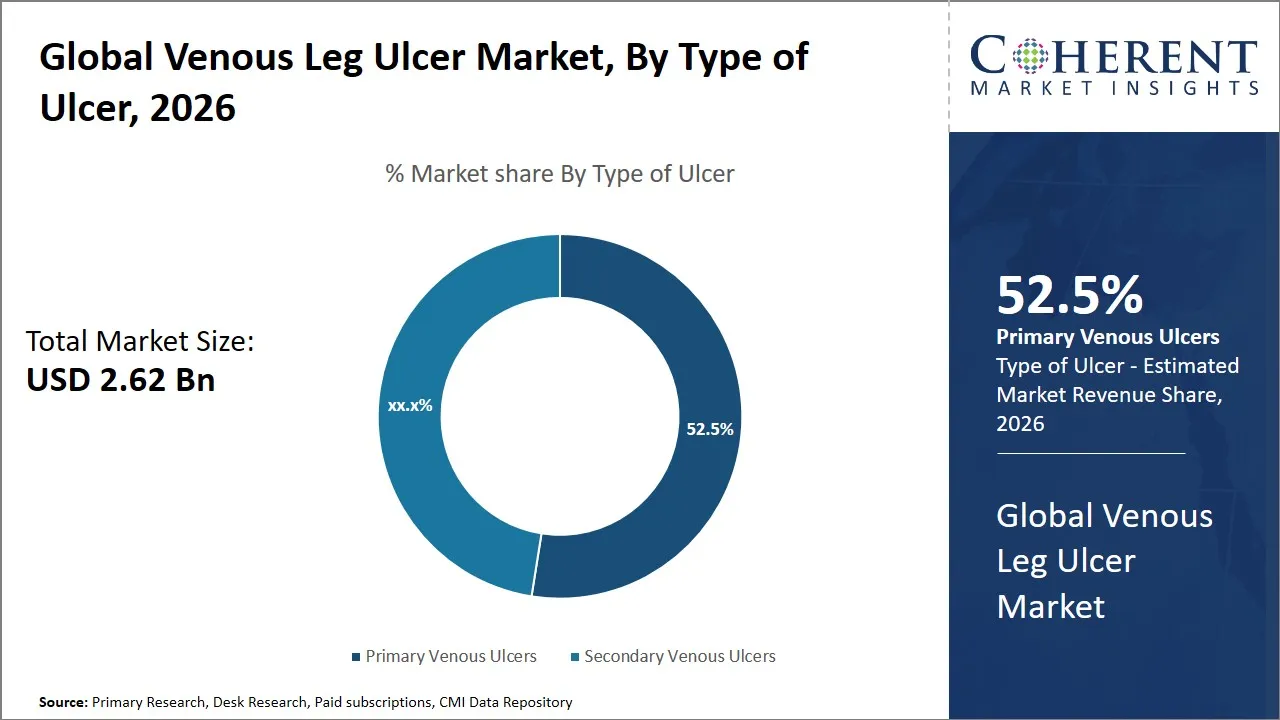
- Primary venous ulcers segment is expected to lead the venous leg ulcer market, accounting for 52.5 % share in 2026.
- Compression therapy segment is estimated to capture 23.5 % of the market share in 2026.
- Hospitals segment is projected to represent 32.4 % of the global venous leg ulcer market share in 2026.
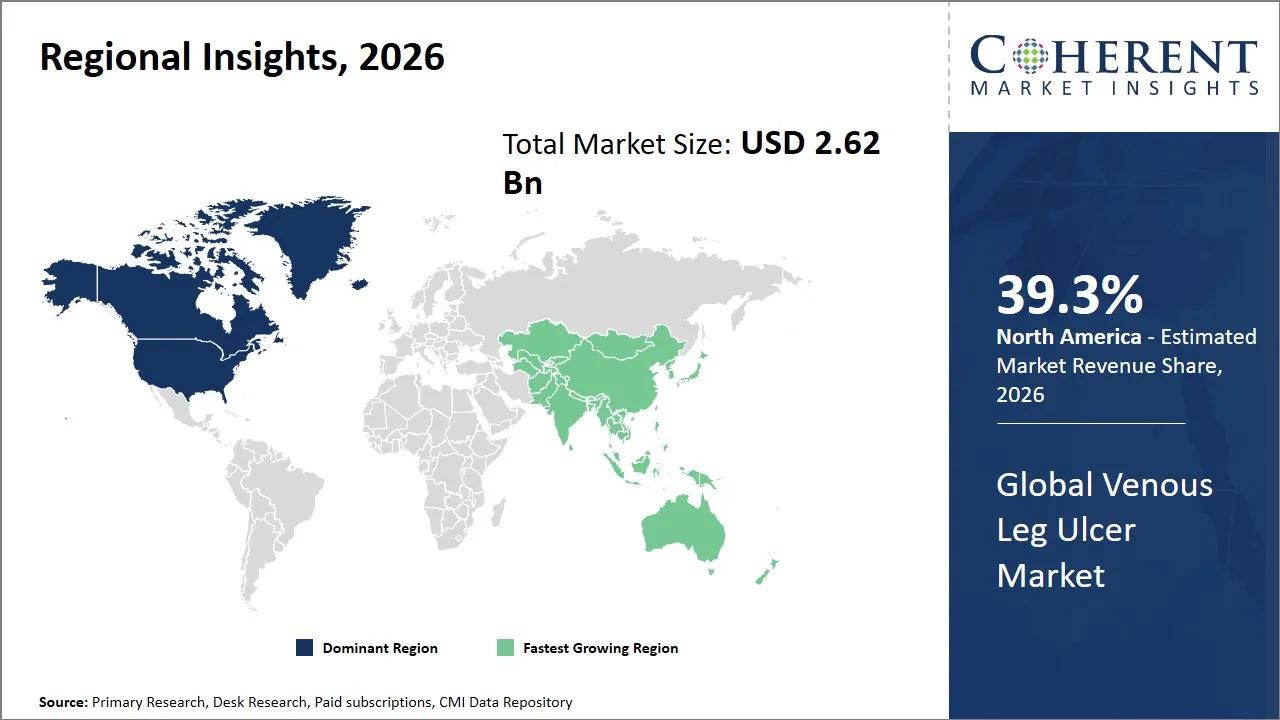
- North America is expected to lead the market, holding a share of 39.3 % in 2026. Asia Pacific is anticipated to be the fastest-growing region, with 24.4% share in 2026.
Market Overview
- A significant market trend is the growing adoption of advanced wound care products, including bioengineered skin substitutes and negative pressure wound therapy systems, which enhance healing outcomes.
- Moreover, increasing awareness regarding early diagnosis and preventive care, coupled with rising government initiatives to support chronic wound management, is further propelling market expansion.
- The integration of digital health technologies for remote monitoring and personalized treatment plans is also gaining momentum, reshaping the venous leg ulcer care landscape.
Currents Events and Its Impact
Current Events | Description and its Impact |
Expansion of advanced venous interventions for chronic ulcers |
|
Rapid Integration of AI and Digital Wound Monitoring Tools |
|
Segmental Insights
- Current Industry Events of 2026
- Market Size Estimation
- Regional Breakdown
- Competitive Landscape
- Customer Intelligence
- Segmental Analysis
- Pricing Analysis
- Key Market Drivers, Challenges & Future Trends
- Customized Insights Section
Venous Leg Ulcer Market Insights, By Type of Ulcer - Primary Venous Ulcers Contributes the Highest Share of the Market Owing to the Prevalence and Complexity of these Ulcers Among Affected Patients
Primary venous ulcers are projected to dominate the venous leg ulcer market with a dominant share of 52.5% in 2026, since they are the first disorder that is manifested in chronic venous insufficiency (CVI), which is a widespread vascular disorder particularly in the aging population. This market share is higher due to the fact that primary venous ulcers usually constitute the initial clinical manifestation of venous disease, which stimulates the increased number of diagnosis, treatment, and management interventions.
These ulcers occur as a result of venous hypertension, which is a result of valve incompetency or occlusion in the superficial or deep venous system, which causes skin breakdown resulting into the development of ulcers. These ulcers are chronic and recurrent and therefore demand the continuity of medical care, thereby maintaining the demand of therapeutic products and services.
In April 2025, Medtronic, a global medical technology leader, reported strong venous leg ulcer outcomes from the VenaSeal Spectrum study. Presented at the Charing Cross International Symposium, the study showed effective healing in advanced venous leg ulcer patients. VenaSeal achieved an 81.3% ulcer healing rate and 82.7% vein closure within one year. The results confirm VenaSeal’s safety and effectiveness in treating severe venous leg ulcers by addressing underlying venous disease.
(Source: https://news.medtronic.com/)
Why Does Compression Therapy Hold the Highest Market Share in the Venous Leg Ulcer Market?
The compression therapy segment is projected to capture 23.5% share in 2026, because it has been confirmed to enhance the venous backflow and decrease edema. Considering that it is venous hypertension and compromised circulation that are the main causes of venous leg ulcers, controlled external pressure directly addresses the problem and promotes the acceleration of the healing process.
The lack of invasiveness, its inexpensive nature, and the high recommendations of compression therapy as one of the primary forms of care in the global clinical guidelines make this option the first-line standard of care. It has become the mainstay of management of venous leg ulcers in hospital, outpatient, and homecare environments due to its wide clinician acceptance, and minimal variability in outcome.
Hospitals Segment Dominates the Global Venous Leg Ulcer Market
The hospitals segment is projected to dominate with a share of 32.4% in 2026, due to the fact that they offer a centralized market with the required infrastructure to handle complicated cases that need a set of different specialty care.
Leg ulcers that occur in a vein are mostly accompanied by complications, including infections, co-morbid conditions such as diabetes, or surgical procedures that require highly-developed facilities and expertise, which hospitals are in the best positions to offer. This has made hospitals to be the main point of diagnosing, high-level treatment, and long-term management of these ulcers.
Advanced Wound Care ROI vs Standard Dressings - Venous Leg Ulcer Market
Evaluation Parameter | Advanced Wound Care (Bioengineered Dressings, Regenerative Therapies) | Standard Dressings |
Initial Treatment Cost | Higher upfront product and procedural costs | Low upfront material costs |
Healing Time | Faster wound closure and reduced chronicity | Longer healing cycles with frequent dressing changes |
Recurrence Rate | Lower recurrence due to improved tissue regeneration | Higher recurrence, especially in complex patients |
Overall Cost of Care | Lower total cost over time due to fewer clinic visits and complications | Higher cumulative costs from prolonged treatment duration |
Patient Outcomes | Improved healing rates and quality of life | Moderate outcomes with higher discomfort |
Resource Utilization | Reduced hospital visits and clinician time | Increased outpatient visits and nursing workload |
Return on Investment | High ROI driven by faster healing and lower long-term costs | Lower ROI due to extended care and repeat treatments |
Suitability | Best for hard-to-heal or recurrent venous leg ulcers | Suitable for early-stage or uncomplicated ulcers |
Regional Insights
North America Venous Leg Ulcer Market Analysis and Trends
North America leads the global venous leg ulcer market with an estimated 39.3% share in 2026, driven by advanced healthcare infrastructure, high investment in premium wound care technologies, and strong government initiatives supporting chronic wound management. Healthcare providers and research institutions, which exist in large numbers, make it easy to adopt innovative treatment modalities, such as advanced dressings, compression therapies, and biologics.
The positive reimbursement programs in the U.S. and Canada boost accessibility to effective solutions of venous leg ulcers by patients. Also, the presence of major industry leaders including Smith and Nepley, 3M, and Mollnlyke Healthcare in the region has helped the industry gain a strong presence in the region, where the firms constantly enhance product development and clinical research to enhance patient outcomes.
In February 2022, Acera Surgical, a regenerative medical materials developer in North America, began a clinical study for Venous Leg Ulcer treatment. The trial evaluates Restrata, a fully synthetic wound matrix, against a living cellular skin substitute. The study measures complete wound closure within 16 weeks across multiple centers. The research supports advanced synthetic therapies for Venous Leg Ulcer care in North America.
(Source: https://acera-surgical.com/pages/compendium/default.aspx)
Asia Pacific Venous Leg Ulcer Market Analysis and Trends
The Asia Pacific region is expected to exhibit the fastest growth in the market contributing 24.4% share in 2026, as a result of the growth in the healthcare awareness, the healthcare infrastructure and the prevalence of venous diseases that are caused by aging and lifestyle shifts. Market expansion is being triggered by gradual governmental support of the development of wound care facilities and an increased participation of the private sector.
The developing markets such as India, China, and other countries within the Southeast Asian region are characterized by increased expenditures in healthcare and increased demand of cost effective and innovative methods of treatment of venous leg ulcers. Multinationals and local firms like ConvaTec, Medtronic and Taro Pharmaceutical are busy in this region increasing their share and collaborating with local distributors and healthcare providers to exploit the increasing demand.
Global Venous Leg Ulcer Market Outlook for Key Countries
What are the Key Trends Shaping the U.S. Venous Leg Ulcer Market?
The market of the U.S. on the venous leg ulcer has an advantage in the form of robust medical facilities, patient awareness, and favorable regulatory policies. The main firms such as Smith and Nephew and 3M have come up with state-of-the-art wound care solutions such as antimicrobial dressings and sophisticated compression systems through rigorous research and development.
The availability of the extensive reimbursement programs within Medicare and private plans augments access to new treatment. There is also a high level of clinical research that takes place in the U.S and this helps in the implementation of new therapeutic methods and standards that are used to manage venous leg ulcers.
Which Trends are Defining Germany’s Venous Leg Ulcer Market?
Germany is also leading in the European continent owing to the well-developed medical technology industries and good healthcare investments. The nation has advanced wound care centers and extensive chain of special clinics. Quality management of chronic diseases is heavily promoted by the government policies, making it easy to use established methods of treating venous leg ulcers.
Large competitors, such as Mollnlycke Healthcare, and Paul Hartmann AG use Germany as a source of industrial skills to create and produce wound care products of high quality. Market strength is further provided by a strong distribution network and compliance with high EU medical standards.
China Venous Leg Ulcer Market Trends
The market of venous leg ulcer in China is developing swiftly with the government efforts to enhance the access to healthcare and update the clinical practice. The major demand drivers include growing urbanization, ageing population and rising cases of chronic venous diseases.
Global firms, such as ConvaTec and Medtronic, are collaborating with local manufacturers and distributors to address regulatory systems and serve the variety of healthcare ecosystem. The use of cost-effective wound care products and new therapies is on the rise due to the growing infrastructure of hospitals and increasing consumer health awareness.
India Venous Leg Ulcer Market Trends
The venous leg ulcer market in India is characterized by increasing investments in healthcare, as well as the increased awareness level of the patients, mainly in urban areas. The opportunities in the market are presented by a disjointed healthcare ecosystem, and the growing number of chronic venous insufficiency cases.
Firms such as Taro Pharmaceutical and Smith and Nephew are concentrating on the growth of distribution channels and low-cost portfolio of products to suit the needs of various patients. The policies by government that promote better infrastructures on public health and insurance coverage slowly increase access to sophisticated venous leg ulcer services to patients.
Comorbidity-Driven Treatment Failure Mapping in the Venous Leg Ulcer Market
- Comorbidity-driven treatment failure mapping highlights how coexisting conditions such as diabetes, obesity, chronic venous insufficiency, cardiovascular disease, and limited mobility directly reduce venous leg ulcer healing rates. These conditions impair circulation, delay tissue regeneration, and increase infection risk, often leading to poor response to compression therapy and advanced dressings.
- In the venous leg ulcer market, this mapping is increasingly used to guide stratified care pathways, helping clinicians identify patients likely to experience delayed healing or recurrence. The approach supports targeted use of advanced therapies, multidisciplinary intervention, and personalized treatment protocols, improving outcomes while reducing long-term treatment costs.
Market Players, Key Developments, and Competitive Intelligence
Key Developments
- On January 5, 2026, the Centers for Medicare and Medicaid Services, the U.S. federal health coverage authority, reversed guidance on skin substitutes. The decision created uncertainty for Venous Leg Ulcer and diabetic foot ulcer reimbursement. Providers now face stricter documentation, flat reimbursement rates, and inconsistent coverage interpretations across Medicare contractors.
- In October 2025, AOP Health, an Austria based biopharmaceutical group focused on unmet medical needs, highlighted the silent burden of venous leg ulcer in older adults. Marking International Day of Older Persons, the company stressed early diagnosis, compression care, and multidisciplinary management for chronic venous ulcers. AOP Health also confirmed collaboration with RHEACELL, a Germany based stem cell biopharma company, to address therapy resistant venous leg ulcers through advanced regenerative research.
- In February 2025, MediWound, an Israel based biopharmaceutical company focused on advanced wound therapies, initiated a Phase III trial for venous leg ulcer treatment. The multicenter VALUE study is evaluating EscharEx safety and efficacy across European and U.S. clinical sites. The trial aims to improve wound debridement outcomes and support regulatory approval for venous leg ulcer care.
- In October 2023, Aurealis Therapeutics, a Swiss Finnish clinical stage synthetic biology company, launched a Venous Leg Ulcer scientific expert group. The initiative supports planning of the AUP-16 Phase 2 clinical trial for venous leg ulcer treatment. Formed during the European Wound Management Association conference, the group brings leading wound care experts together. The collaboration aims to address unmet needs and advance innovative bacteria based therapies for chronic venous leg ulcers.
Top Strategies Followed by Global Venous Leg Ulcer Market Players
Player Type | Strategic Focus | Examples |
Established Market Leaders | Heavy R&D investment in advanced wound dressings, compression systems, and bioengineered skin substitutes; focus on superior clinical outcomes and patient comfort; strategic partnerships with OEMs and healthcare stakeholders; aggressive global expansion across developed and emerging markets | Leading players invest in next-generation compression therapies and regenerative skin products; expand distribution networks across North America, Europe, and Asia Pacific |
Mid-Level Players | Emphasis on cost-effective wound care solutions without major quality compromise; targeting price-sensitive healthcare systems; collaborations and joint ventures to strengthen manufacturing efficiency and technical capabilities; region-specific market strategies | Mid-sized companies develop affordable compression and dressing solutions for public hospitals; partner with regional manufacturers to optimize production costs |
Small-Scale Players | Focus on niche segments and specialized wound care needs; adoption of advanced biomaterials, digital wound monitoring, and personalized care approaches; collaborations with research institutions and local partners; strong regional or therapeutic focus | Emerging players develop digital wound management tools for homecare settings; collaborate with academic centers on innovative biomaterial-based therapies |
Market Report Scope
Global Venous Leg Ulcer Market Report Coverage
| Report Coverage | Details | ||
|---|---|---|---|
| Base Year: | 2025 | Market Size in 2026: | USD 2.62 Bn |
| Historical Data for: | 2020 To 2024 | Forecast Period: | 2026 To 2033 |
| Forecast Period 2026 to 2033 CAGR: | 14.2% | 2033 Value Projection: | USD 6.64 Bn |
| Geographies covered: |
| ||
| Segments covered: |
| ||
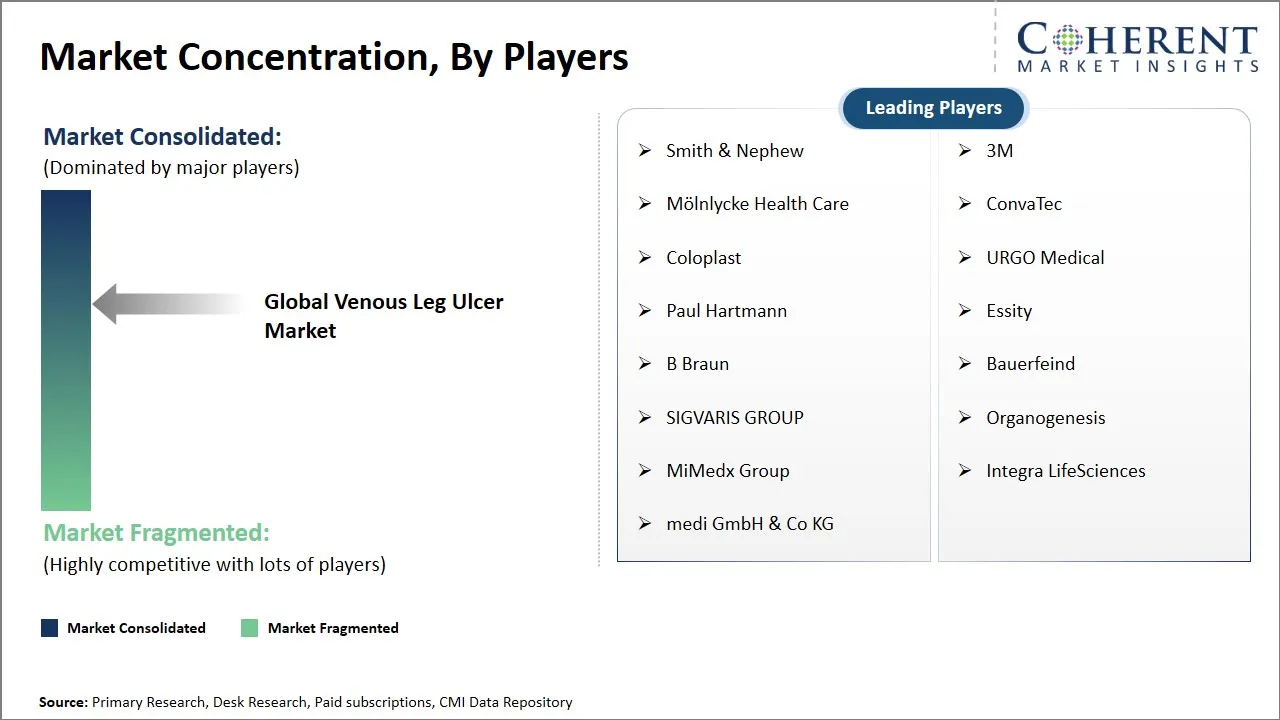
| Companies covered: | Smith & Nephew, 3M, Mölnlycke Health Care, ConvaTec, Coloplast, URGO Medical, Paul Hartmann, Essity, B Braun, Bauerfeind, SIGVARIS GROUP, Organogenesis, MiMedx Group, Integra LifeSciences, and medi GmbH & Co KG | ||
| Growth Drivers: |
| ||
| Restraints & Challenges: |
| ||
Venous Leg Ulcer Market Dynamics
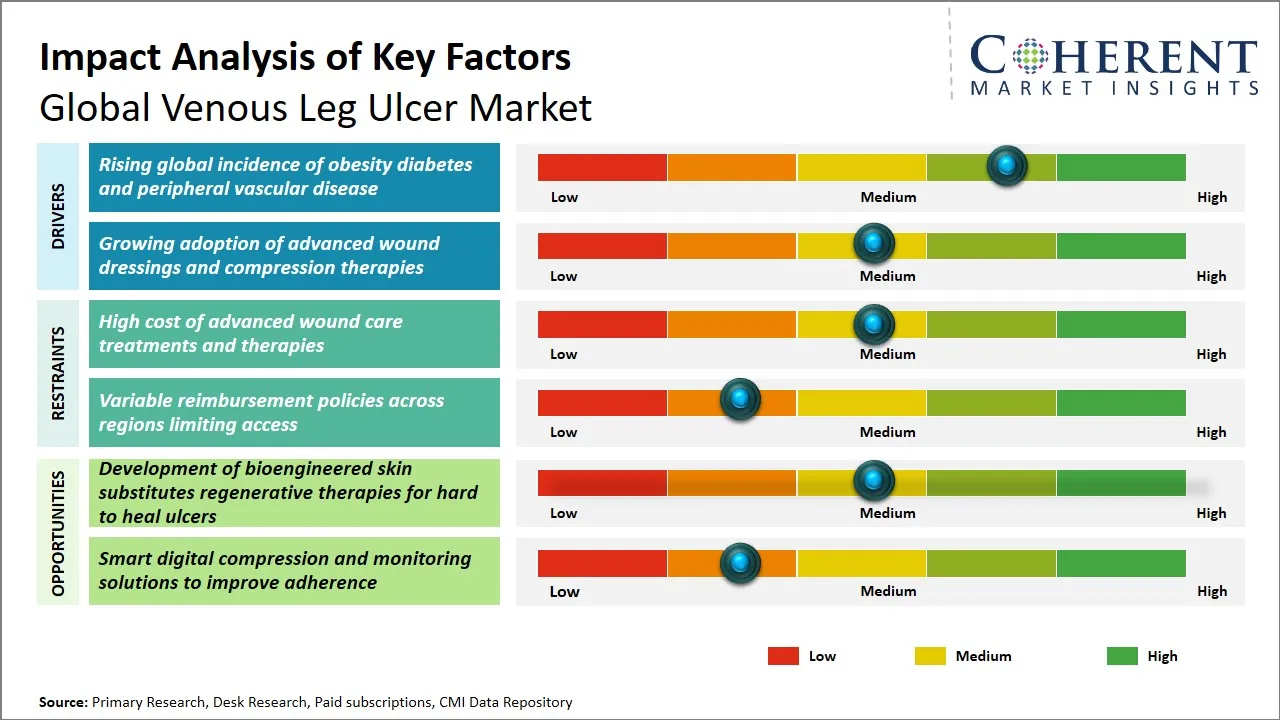
Venous Leg Ulcer Market Driver - Rising Global Incidence of Obesity Diabetes and Peripheral Vascular Disease
The increasing rate of obesity, diabetes, and peripheral vascular disease in the world contributes greatly to the venous leg ulcer market. Obesity is associated with the effects of hindered blood flow and a rise of pressure on the veins and this increases the chances of developing venous deficiency and later developing ulcers. At the same time, the rising global health issue of diabetes compounds the problem in that complications slow down wound healing and make people more vulnerable to infections, making chronic wounds causing venous leg ulcers even heavier.
Although both obesity and diabetes are usually linked to peripheral vascular disease, which worsens the circulation in lower extremities, the patients become more susceptible to the development of ulcers and unsatisfying recovery. The interplay of these circumstances not only escalates the prevalence of venous leg ulcers, but also makes sense of the necessity of more sophisticated treatment methods, holistic management plans, and sophisticated diagnostic measures, which eventually contributes to the market demand at the international level.
In November 2024, the World Health Organization, the United Nations public health agency, warned of rising diabetes risks linked to venous leg ulcer burden. New data published in The Lancet, a leading medical journal, showed global diabetes cases exceeded 800 million. The surge increases complications such as venous leg ulcers, especially in low- and middle-income countries. WHO urged urgent prevention, early diagnosis, and treatment to reduce chronic wound risks.
(Source: https://www.who.int/news/)
Venous Leg Ulcer Market Opportunity - Development of Bioengineered Skin Substitutes and Regenerative Therapies for Hard-to-Heal Ulcers
The global market of the venous leg ulcer is experiencing a tremendous opportunity attributed to developments in bioengineered skin substitutes and regenerative therapies to overcome the issues of hard-to-heal ulcers. The conventional therapy most of the times is inadequate to handle chronic and non- healing VLUs, resulting in the patient experiencing extended pain and raising the healthcare expenses. The use of bioengineered skin substitutes consisting of both cellular and acellular matrices is a promising remedy as it promotes quicker tissue healing, lessens chances of infection and increases wound healing.
The products mostly consist of biological materials along with artificial scaffoldings to aid in an ideal setting with regard to cell growth and differentiation. There is also the increasing popularity of regenerative therapies known as stem cell applications and growth factor therapies because of their capacity to induce natural healing mechanisms on the molecular scale.
One recent market instance is the growing clinical use of fish skin–based regenerative matrices for hard-to-heal venous leg ulcers. Kerecis has expanded adoption of its intact fish skin grafts, which support tissue regeneration and wound closure by providing a natural scaffold rich in omega-3 fatty acids.
Analyst Opinion (Expert Opinion)
- The venous leg ulcer market is changing to structured and outcome-oriented care as opposed to individual wound products. The future is entrenched in the demographic ageing, increasing cases of chronic venous insufficiency associated with obesity and vascular diseases, and the broader use of compression therapy combined with advanced dressing in clinical practice. Advances in bioactive materials, multilayer compression, and regenerative skin solutions have enhanced the healing schedules and have minimized recurrence risk, which favor the wider acceptance of reimbursement in developed markets. Nevertheless, there are still challenges in the market like inadequate long-term patient adherence, the lack of specialists, and cost pressure in the governmental health systems, where the home-based care models, intelligent compression technologies, and simplified treatment regimes would have a clear opportunity.
- The recent forums held as the European Wound Management Association conference, Symposium on Advanced Wound Care, and Wound Healing Society meetings have helped in building industry alignment and innovation by enhancing clinical guidelines and presenting digital wound assessment and monitoring tools. At the implementation level, national chronic wound registries, multidisciplinary wound clinics, and pilot home-compression programs in Europe and North America are transforming care delivery. These efforts are gradually re-positioning the market to more integrated care pathways aimed at quicker healing, reduced recurrence as well as quantifiable health-economic worth.
Speak to the analyst
Want personalized insights?
Take the findings above to one of our principal consultants, or have the report rebuilt around the segments, geographies and competitors you actually track.
Market Segmentation
- Type of Ulcer Insights (Revenue, USD Bn, 2021 - 2033)
- Primary Venous Ulcers
- Secondary Venous Ulcers
- Treatment Type Insights (Revenue, USD Bn, 2021 - 2033)
- Compression Therapy
- Dressings and Bandages
- Skin Grafts and Flaps
- Medication and Topical Agents
- Surgical Procedures
- Others
- End User Insights (Revenue, USD Bn, 2021 - 2033)
- Hospitals
- Specialty Clinics and Dermatology Centers
- Home Care Settings
- Ambulatory Surgical Centers
- Disease Severity Insights (Revenue, USD Bn, 2021 - 2033)
- Mild
- Moderate
- Severe
- Regional Insights (Revenue, USD Bn, 2021 - 2033)
- North America
- U.S.
- Canada
- Latin America
- Brazil
- Argentina
- Mexico
- Rest of Latin America
- Europe
- Germany
- U.K.
- Spain
- France
- Italy
- Russia
- Rest of Europe
- Asia Pacific
- China
- India
- Japan
- Australia
- South Korea
- ASEAN
- Rest of Asia Pacific
- Middle East
- GCC Countries
- Israel
- Rest of Middle East
- Africa
- South Africa
- North Africa
- Central Africa
- North America
- Key Players Insights
- Smith & Nephew
- 3M
- Mölnlycke Health Care
- ConvaTec
- Coloplast
- URGO Medical
- Paul Hartmann
- Essity
- B Braun
- Bauerfeind
- SIGVARIS GROUP
- Organogenesis
- MiMedx Group
- Integra LifeSciences
- medi GmbH & Co KG
Sources
Primary Research Interviews
Industry Stakeholders list
- Wound Healing Society
- American Venous Forum
- European Wound Management Association
- International Compression Club
- Association for the Advancement of Wound Care
- Society for Vascular Surgery
End-users list
- Hospital wound care centers
- Vascular surgery departments
- Dermatology clinics
- Home healthcare providers
- Long-term care facilities
- Rehabilitation and chronic care clinics
Government and International Databases
- World Health Organization
- Centers for Disease Control and Prevention
- National Institutes of Health
- Eurostat
- U.K. National Health Service
- Organization for Economic Co-operation and Development
Trade Publications
- Journal of Wound Care
- Wounds International
- Vascular Specialist
- European Journal of Vascular and Endovascular Surgery
- Phlebology
- Advances in Skin and Wound Care
Academic Journals
- The Lancet
- The BMJ
- Journal of Vascular Surgery
- Wound Repair and Regeneration
- International Wound Journal
- Journal of Clinical Nursing
Reputable Newspapers
- The New York Times
- The Guardian
- The Wall Street Journal
- Financial Times
- The Washington Post
- The Hindu
Industry Associations
- International Union of Phlebology
- American College of Phlebology
- European Society for Vascular Surgery
- Wounds Australia
- Canadian Association of Wound Care
- Asia Pacific Wound Care Society
Public Domain Resources
- ClinicalTrials.gov
- Cochrane Library
- OpenGrey
- Data.gov
- European Data Portal
Proprietary Elements
- CMI Data Analytics Tool: Proprietary analytics tool to analyze real-time market trends, consumer behavior, and technology adoption in market
- Proprietary CMI Existing Repository of Information for Last 8 Years
Get access to 250+ pages report
Every segment, forecast, competitor profile and data table behind the analysis above — available for instant download.
- ESOMAR Member
- ISO 9001:2015 Certified
- D-U-N-S Registered
- GDPR & CCPA Compliant
Missing comfort of reading report in your local language? Find your preferred language:
Transform your Strategy with Exclusive Trending Reports
Frequently Asked Questions
The global venous leg ulcer market is estimated to be valued at USD 2.62 Bn in 2026 and is expected to reach USD 6.64 Bn by 2033.
The CAGR of global venous leg ulcer market is projected to be 14.2% from 2026 to 2033.
Rising global incidence of obesity diabetes and peripheral vascular disease and growing adoption of advanced wound dressings and compression therapies are the major factors driving the growth of the global venous leg ulcer market.
High cost of advanced wound care treatments and therapies and variable reimbursement policies across regions limiting access are the major factors hampering the growth of the global venous leg ulcer market.
In terms of type of ulcer, primary venous ulcers are estimated to dominate the market revenue share in 2026.
Smith & Nephew, 3M, Mölnlycke Health Care, ConvaTec, Coloplast, URGO Medical, Paul Hartmann, Essity, B Braun, Bauerfeind, SIGVARIS GROUP, Organogenesis, MiMedx Group, Integra LifeSciences, and medi GmbH & Co KG are the major players.
North America is expected to lead the global venous leg ulcer market in 2026.