

Global Veterinary Reference Laboratory Market Size and Forecast – 2026-2033
The global veterinary reference laboratory market is estimated to be valued at USD 5.78 Bn in 2026 and is expected to reach USD 12.42 Bn by 2033, exhibiting a compound annual growth rate (CAGR) of 11.6% from 2026 to 2033. This significant growth is mainly due to the rising need for precise and efficient diagnostic services in veterinary sciences, a rise in pet ownership rates, and a growing concern about zoonotic diseases all over the world. The growth of the livestock business and advances in laboratory tests are also contributing factors for this market’s growth.
Key Takeaways of the Global Veterinary Reference Laboratory Market
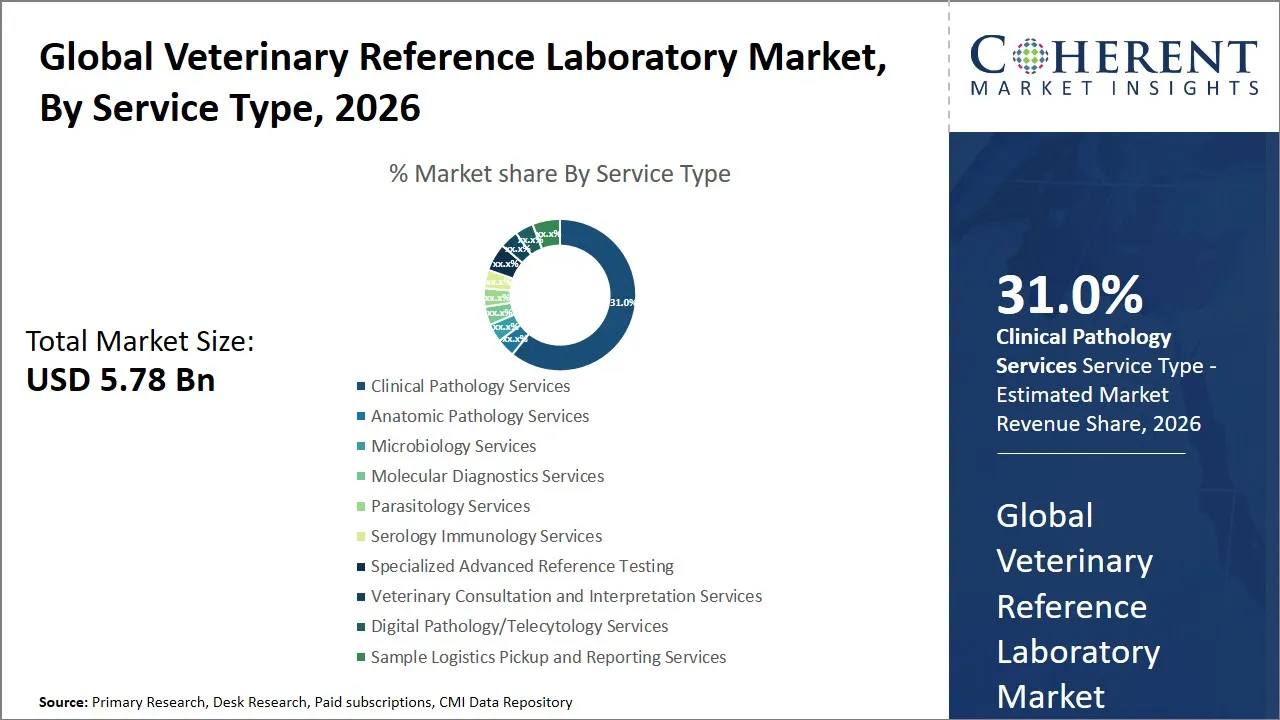
- The clinical pathology services segment is expected to dominate the global veterinary reference laboratory market, capturing 31.0% share in 2026.
- The conventional laboratory testing segment is expected to dominate with 40.0% of the global veterinary reference laboratory market share in 2026.
- The companion animals segment is projected to represent 58.0% of the global veterinary reference laboratory market share in 2026.
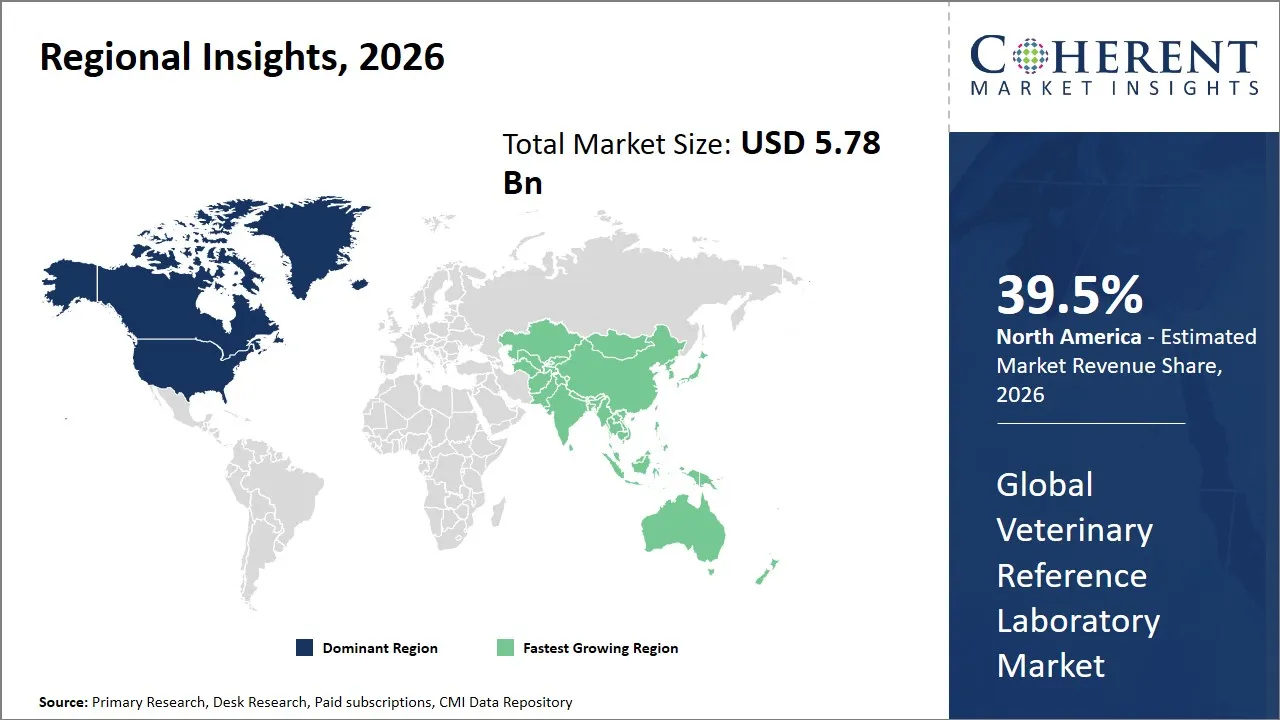
- North America is expected to dominate the global veterinary reference laboratory market in 2026, accounting for 39.5% share.
- Asia Pacific is anticipated to witness the fastest growth region, holding a market share of 24.0% in 2026.
Market Overview
- Veterinary reference laboratories are testing facilities that provide advanced testing services in the field of animal health. This includes clinical pathology, microbiology, molecular diagnostics, and immunoassays. Veterinary reference laboratories are helpful to veterinarians, livestock producers, and research organizations as they provide timely and accurate diagnostic information to aid in disease detection, monitoring, and treatment.
- The veterinary reference laboratory market is expanding at a rapid rate due to the increase in the incidence of infectious and zoonotic diseases, an increase in the number of pets, and an increase in awareness about animal health. The need for the early and accurate detection of diseases in animals is another major factor that is driving the market for such sophisticated services like PCR, real-time PCR, and AI technologies.
- Furthermore, an increase in the scale of livestock farming and the importance of food safety and regulatory compliance are also driving the veterinary reference laboratory market for large-scale testing services. With the advent of automation technology in the laboratory and the emergence of digital pathology technology, veterinary reference laboratories have become an essential part of the veterinary healthcare system.
Currents Events and their Impact
Current Events | Description and its Impact |
Rising Prevalence of Zoonotic and Infectious Animal Diseases |
|
Expansion of Pet Ownership and Companion Animal Healthcare |
|
Segmental Insights
- Current Industry Events of 2026
- Market Size Estimation
- Regional Breakdown
- Competitive Landscape
- Customer Intelligence
- Segmental Analysis
- Pricing Analysis
- Key Market Drivers, Challenges & Future Trends
- Customized Insights Section
Why Does the Clinical Pathology Services Segment Dominate the Global Veterinary Reference Laboratory Market in 2026?
The clinical pathology services segment is anticipated to hold a market share of 31.0% in 2026, due to the importance of these services in the regular and routine diagnosis of diseases and health conditions in animals. These services involve a variety of tests such as hematology, clinical chemistry, urinalysis, cytology, and coagulation tests that provide essential information about the physiological and biochemical condition of the animals. The increasing incidence of infectious diseases, metabolic disorders, and chronic health conditions in animals is a major factor that contributes to the growth of the clinical pathology services market.
In addition, the increasing focus on preventive veterinary care and the need for the early detection of diseases is also acting as a key factor that supports the clinical pathology services sector. The increasing number of pets and the willingness of pet owners to spend on the latest diagnostic tests for their pets is also a factor that contributes to the growth of the clinical pathology services sector. The increasing advancements in laboratory technologies and the services provided by veterinarians and consultants also act as a key factor that supports the clinical pathology services.
For instance, the American Animal Hospital Association states, "The role of routine diagnostic testing, including blood work and urinalyses, is crucial in the early detection and preventative care of companion animals, allowing veterinarians to diagnose underlying problems before clinical signs are severe."
(Source: American Animal Hospital Association)
Why Does the Conventional Laboratory Testing Segment Dominate the Global Veterinary Reference Laboratory Market in 2026?
The conventional laboratory testing segment is projected to hold the highest market share of 40.0% in 2026, attributed to its traditional use, reliability, and cost-effectiveness. It includes traditional and fundamental diagnostic practices such as microscopy, manual culture, and biochemical testing, which are considered to be the core of veterinary diagnostics. It is also noteworthy that, despite advances in other sophisticated diagnostic practices, a considerable number of veterinary laboratories and clinics, especially in developing countries, still prefer conventional testing owing to its ease of availability and ability to detect a variety of diseases in animal samples.
Conventional laboratory testing validation and acceptance by a larger section of the veterinary community further add to its market and popularity, and conventional testing is known to cover a variety of diagnostic practices such as parasitology, microbiology, and clinical chemistry, among others, with its application in a variety of animal samples such as blood, tissue, feces, and urine samples.
Another major factor that has contributed to the success of conventional laboratory testing is the high degree of cost sensitivity exhibited by service providers as well as owners of pets. Compared to other technologies like automated and molecular diagnostic systems, conventional laboratory testing requires a lower degree of investment, infrastructure, and training. Even though high-end technologies provide quick and highly accurate outcomes, conventional laboratory testing also offers a high degree of accuracy, which is further supported by the expertise of veterinarians.
The Companion Animals Segment Dominates the Global Veterinary Reference Laboratory Market
The companion animals segment is expected to dominate the global veterinary reference laboratory market, accounting for 58.0% share in 2026, owing to the increasing human-animal bond and the rise in pet ownership worldwide. Dogs and cats are now being treated like family members, and thus pet owners are demanding the best and most advanced medical care for their pets, including sophisticated laboratory tests for the diagnosis of diseases and health conditions.
The awareness level concerning pet health is increasing at a rapid rate, and this factor has led to an increased need for laboratory tests that help in the timely detection of health complications and the management of diseases and health conditions. Moreover, the incidence of lifestyle and age-related health complications such as diabetes, arthritis, and cancer in pets is increasing, and thus the need for regular laboratory interventions is also increasing.
Veterinary reference laboratories are capitalizing on this trend by providing specialized tests for companion animals, including hormonal tests, infectious disease tests, genetic tests, and advanced molecular tests. Veterinary telemedicine and remote monitoring have also expanded to include laboratory tests, further increasing their use. In comparison to other animal types and livestock, companion animals have higher expenditures due to their emotional value. This ensures that the demand for diagnostic tests remains high.
Regulatory & Diagnostic Standards Framework Governing Veterinary Reference Laboratories Globally
Aspect | Key Standard/Authority | Description & Market Impact |
International Animal Health Standards | World Organization for Animal Health | Sets global guidelines for animal disease diagnostics, validation of tests, and reporting protocols. Drives standardization across veterinary laboratories and supports international trade compliance. |
Laboratory Accreditation & Quality Standards | ISO/IEC 17025 (Testing & Calibration Labs) | Ensures accuracy, reliability, and technical competence of veterinary laboratories. Accreditation enhances credibility and is often mandatory for reference labs handling official disease testing. |
National Regulatory Oversight | U.S. Department of Agriculture | Oversees veterinary diagnostic labs through networks like NAHLN, ensuring disease surveillance, test validation, and outbreak response capabilities. |
European Regulatory Framework | European Commission | Implements Animal Health Law and food safety regulations, mandating diagnostic standards, traceability, and laboratory compliance across EU member states. |
Zoonotic Disease & One Health Guidelines | World Health Organization, Food and Agriculture Organization | Promote integrated surveillance systems linking animal and human health, increasing reliance on advanced veterinary diagnostics for early detection and prevention. |
Antimicrobial Resistance (AMR) Standards | World Organization for Animal Health, World Health Organization | Establish protocols for AMR monitoring, susceptibility testing, and reporting, driving demand for specialized laboratory testing services. |
Trade & Export Compliance Requirements | WOAH, WTO SPS Agreement | Require certified diagnostic testing and disease-free status validation for livestock trade, increasing the importance of accredited reference laboratories globally. |
Regional Insights
North America Veterinary Reference Laboratory Market Analysis and Trends
The North America region is projected to lead the market with a 39.5% share in 2026, attributed to the highly developed veterinary healthcare system in the region, significant investments in research related to animal health, and the high level of diagnostic facilities available. The strong presence of major veterinary drug and diagnostic firms in the region, combined with the high level of government regulations in place to protect animal health and food safety, also adds to the market growth in the region. The role played by the U.S. Department of Agriculture and the Food and Drug Administration in maintaining quality and driving innovation in the market also adds to the growth. The major players in the market, such as IDEXX Laboratories and Zoetis, are already highly established in the region, making it the dominating region in the global veterinary reference laboratory market.
For instance, the U.S. Department of Agriculture has established the National Animal Health Laboratory Network (NAHLN), a network of veterinary diagnostic labs across the U.S. that provides constant disease surveillance, as well as response to disease outbreaks, and large-scale testing, thereby enhancing the region’s veterinary labs.
(Source: U.S. Department of Agriculture)
Asia Pacific Veterinary Reference Laboratory Market Analysis and Trends
Asia Pacific is anticipated to witness the fastest growth holding a market share of 24.0% in 2026, driven by an increase in animal population, pet ownership, and veterinary health care in countries like China, India, Japan, and Southeast Asia. There has been rapid urbanization and awareness of animal diseases in the Asia Pacific, hence the demand for advanced veterinary diagnostics. Some governments in Asia Pacific have actively supported animal health care through subsidies and infrastructure development to ensure animal disease control and food safety. This has enhanced the veterinary reference lab ecosystem due to the partnerships between local companies and multinational corporations like VCA Animal Hospitals and IDEXX. In addition, the export-based animal industries and trade in animal products also drive the veterinary reference lab ecosystem due to the need to conduct rigorous tests and disease surveillance.
Veterinary Reference Laboratory Market Outlook for Key Countries
How is the U.S. Helping in the Growth of the Veterinary Reference Laboratory Market?
The U.S. is a notable market leader with a special focus on research-oriented veterinary diagnostics and reference laboratory services. The key players in the market, such as IDEXX Laboratories, Antech Diagnostics, and Zoetis, have driven many technologies in the field of veterinary diagnostics, such as molecular diagnostics, digital pathology, and rapid infectious disease testing. The market also has a robust regulatory environment and a high level of investment in animal health research from both the private and government sectors. The country has a well-developed veterinary system with a high number of hospitals and clinics, thus increasing the consumption of reference laboratory services.
How is China Helping in the Growth of the Veterinary Reference Laboratory Market?
China is at the forefront in the expanding veterinary reference laboratory market with increased investments in veterinary infrastructure and a rising demand for animal protein products, thereby requiring reference laboratory services. The government's emphasis on controlling zoonotic diseases has resulted in increased diagnostic capacity in the country. Local companies are also working alongside multinational companies like IDEXX and Zoetis in developing diagnostic tests that are specific to the region’s needs. The importance of the country in the global livestock trade also requires that laboratory standards be followed for export purposes.
Key Drivers for the Growth of the Germany Veterinary Reference Laboratory Market
The veterinary reference laboratory market in Germany is driven by the country’s strong biotechnology industry, strong animal farming industry, and strict animal health regulations, which are also supported at the European Union level. Laboklin and Synlab Veterinary Diagnostics are two companies that contribute significantly to the market, especially in the provision of specialized diagnostic services, genetics, and antimicrobial resistance testing, respectively. The government initiatives aimed at ensuring animal welfare and safety also contribute to the demand for quality veterinary laboratory diagnostics services in Germany, which is a trade hub in Europe.
For instance, the Federal Ministry of Agriculture, Food and Regional Identity has a complete animal health monitoring and disease control system with strict regulations and coordinated laboratory diagnostics for the health of livestock and foodstuffs and for compliance with EU regulations, thus increasing the need for sophisticated veterinary laboratory services.
(Source: Federal Ministry of Agriculture, Food and Regional Identity)
India Veterinary Reference Laboratory Market Trends
The India veterinary reference laboratory market has an agricultural economy with a high cattle population, which is a major contributor to the rural economy. There is a rising awareness about animal healthcare and zoonotic disease prevention that is contributing to the growth of the India veterinary reference laboratory market. Indian companies such as Indian Immunologicals Ltd and other major diagnostic labs are contributing to the growth of the market in the country. The India veterinary reference laboratory market is getting a boost from working with international companies that are driving technology in this market, as technology is the way to overcome challenges in rural animal healthcare service provision.
Antimicrobial Resistance (AMR) Monitoring Framework and Diagnostic Guidelines in Veterinary Laboratories
Aspect | Key Guidelines / Authorities | Description & Market Impact |
Global AMR Surveillance Framework | World Health Organization, World Organization for Animal Health | Establish global strategies for monitoring antimicrobial usage and resistance trends, driving demand for standardized diagnostic testing across veterinary labs. |
Antimicrobial Susceptibility Testing (AST) | CLSI (Clinical & Laboratory Standards Institute), World Organization for Animal Health | Defines protocols for culture-based susceptibility testing, ensuring accurate identification of resistant pathogens and guiding treatment decisions. |
Molecular AMR Detection | World Health Organization, World Organization for Animal Health | Encourages adoption of PCR and sequencing-based methods to detect resistance genes, improving early detection and surveillance efficiency. |
Regulatory Restrictions on Antibiotic Use | European Commission, U.S. Food and Drug Administration | Implementation of restrictions on antibiotic use in livestock increases reliance on diagnostic validation and monitoring services. |
National AMR Surveillance Programs | USDA, EU, World Health Organization | Veterinary labs contribute data to national and global AMR databases, supporting policy-making and public health strategies. |
One Health Integration | Food and Agriculture Organization, World Health Organization, World Organization for Animal Health | Promotes integrated monitoring across animal, human, and environmental health, expanding the role of veterinary labs in cross-sector surveillance. |
Market Players, Key Developments, and Competitive Intelligence
Key Developments
- On March 2, 2026, Zoetis completed its purchase of Neogen Corporation's animal genomics division, a move that bolstered its precision animal health portfolio. This acquisition enhanced Zoetis's proficiency in animal genetic testing, consequently broadening its reach within animal diagnostic services. The deal underscored the increasing significance of genomics-driven diagnostic tools in the realm of animal healthcare.
- In January 2026, Antech launched RapidRead Dental for Feline, an AI-based diagnostic tool for radiology interpretation and decision-making in veterinary diagnostics. This is an enhancement of the diagnostic capabilities of reference laboratories, which will help in early and accurate disease detection. This is an example of the incorporation of AI-based diagnostic tools in reference laboratory services.
- In November 2025, Zoetis acquired Veterinary Pathology Group, which is a renowned veterinary diagnostic laboratory network in the U.K. and Ireland. This acquisition helped the company strengthen its position in the diagnostics market. This acquisition was a part of the increasing trend of consolidation and expansion in the market of reference laboratories across the globe.
Top Strategies Followed by Global Veterinary Reference Laboratory Market Players
Player Type | Strategic Focus | Examples |
Established Market Leaders | Established market leaders are focusing on continuous innovations by investing more in R&D activities. This helps them introduce more advanced diagnostic technologies such as molecular diagnostics, digital pathology, and AI-based testing. Strategic acquisitions/partnerships are another key focus area of these firms. Geographic presence in regions such as Asia Pacific and Latin America, which are witnessing growth, and establishing centralized reference labs are another key focus area of these firms. | In June 2024, Zoetis broadened its diagnostics offerings by improving its Vetscan platform and reference laboratory services. These upgrades bolstered their ability to provide advanced, integrated diagnostic solutions. |
Mid-Level Players | The mid-tier companies are focused on providing cost-competitive scalable diagnostic solutions to price-sensitive markets like small clinics and rural veterinary services. The business model of mid-tier companies is based on providing fundamental tests at a price which is optimized but still within acceptable quality parameters. They are also focused on strategic partnerships which provide access to technology and manufacturing scale without significant capital investment. | In March 2024, Virbac improved its business in the companion animal diagnostics and healthcare segment with a strong focus on delivering cost-effective and accessible solutions to customers. This move by the company has strengthened its position in the market for veterinary diagnostics and healthcare services, helping the company to deliver effective and reliable diagnostic services to price-conscious veterinary clinics and emerging markets |
Small-Scale Players | Small players and new market entrants compete through specialization and technology malleability. They are likely to specialize in innovative and high-value opportunities such as cancer diagnostics, rapid test kits, and point-of-care technologies. They are also likely to benefit from local alliances and academic relationships to help address the challenges associated with limited resources and speed up the commercialization process. The ability of these players to access the latest technologies such as AI and POC technologies gives them the ability to compete in these areas. | In April 2024, Heska Corporation bolstered its diagnostic offerings for both in-clinic and reference laboratory settings. This was achieved through a series of new product improvements and service upgrades. The company thus solidified its standing in the realm of advanced veterinary diagnostics. |
Market Report Scope
Veterinary Reference Laboratory Market Report Coverage
| Report Coverage | Details | ||
|---|---|---|---|
| Base Year: | 2025 | Market Size in 2026: | USD 5.78 Bn |
| Historical Data for: | 2020 To 2024 | Forecast Period: | 2026 To 2033 |
| Forecast Period 2026 to 2033 CAGR: | 11.6% | 2033 Value Projection: | USD 12.42 Bn |
| Geographies covered: |
| ||
| Segments covered: |
| ||
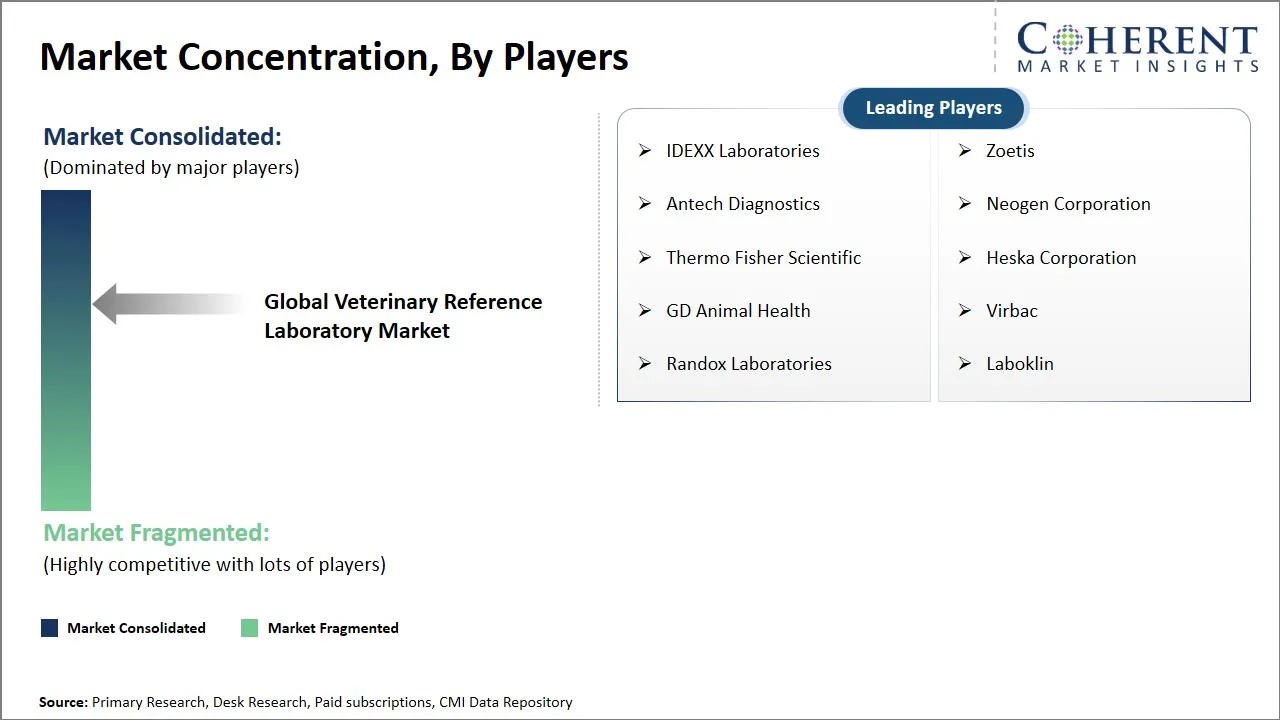
| Companies covered: | IDEXX Laboratories, Zoetis, Antech Diagnostics, Neogen Corporation, Thermo Fisher Scientific, Heska Corporation, GD Animal Health, Virbac, Randox Laboratories, and Laboklin | ||
| Growth Drivers: |
| ||
| Restraints & Challenges: |
| ||
Global Veterinary Reference Laboratory Market Dynamics
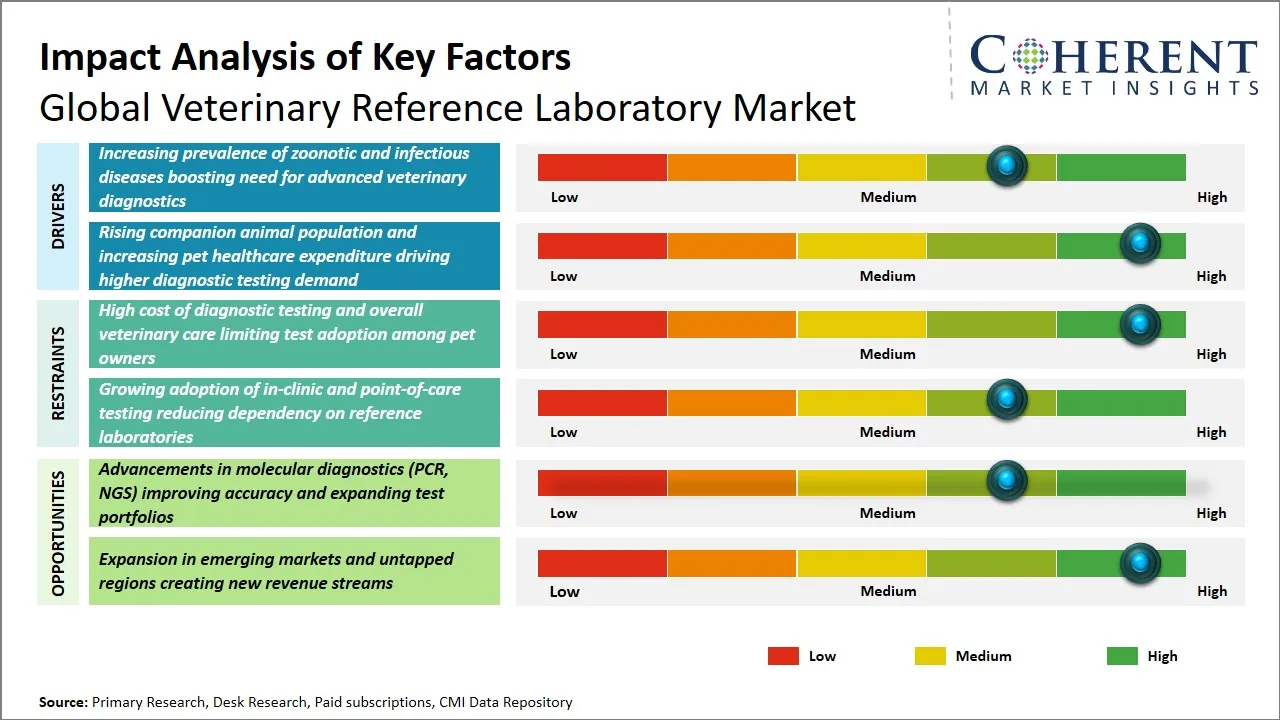
Global Veterinary Reference Laboratory Market Driver – Increasing Prevalence of Zoonotic and Infectious Diseases Boosting Need for Advanced Veterinary Diagnostics
The rising incidence of zoonotic and infectious diseases is a major factor contributing to the increased need for sophisticated veterinary reference labs around the world. The fact that infectious diseases that have the potential to be transmitted from animals to humans continue to emerge and re-emerge has never been more important than it is today. This rising threat not only affects the health of animals but also poses a major threat to the health of humans. As a result, there is a growing need for sophisticated veterinary reference labs that offer cutting-edge technologies for the quick identification of infectious pathogens such as viruses, bacteria, and parasites that affect animals and humans alike.
The increased rate of animal rearing and the close association that exists between humans and animals in both urban and rural areas have increased the risk of infectious diseases, thus making it essential for the development of precise diagnostic technologies that can help to curb the emergence and spread of infectious diseases. As a result, sophisticated veterinary reference labs have become indispensable in the fight against infectious diseases that affect both animals and humans around the world.
For instance, the Food and Agriculture Organization (FAO) states that more than 60% of human infectious diseases are derived from animals, and 75% of emerging infectious diseases are zoonotic, which emphasizes the importance of a robust veterinary diagnostic and laboratory infrastructure.
(Source: Food and Agriculture Organization (FAO))
Global Veterinary Reference Laboratory Market Opportunity - Advancements in Molecular Diagnostics (PCR, NGS) Improving Accuracy and Expanding Test Portfolios
The rapid advancement in molecular diagnostic technology, especially in Polymerase Chain Reaction (PCR) and Next Generation Sequencing (NGS) technology, provides an immense opportunity for the veterinary reference laboratory market to grow. These technologies are highly efficient in identifying and diagnosing pathogens, genetic variations, and infectious diseases in animals.
The introduction of PCR technology in veterinary medicine is a revolution in this field. This technology enables the early and precise detection of infectious diseases in animals. Similarly, Next Generation Sequencing technology is a comprehensive tool in genetic analysis. This technology is highly efficient in identifying and diagnosing various types of pathogens.
The application of this technology in veterinary reference laboratories is helpful in the early detection of zoonotic and emerging infectious diseases. This is very important in controlling and managing infectious diseases in humans and animals. The increase in the number of pets and livestock provides an opportunity for reference laboratories to expand their services and generate additional revenue streams.
For instance, in January 2026, IDEXX Laboratories unveiled a suite of mast cell tumor testing options for dogs. This development significantly advanced veterinary oncology diagnostics through precision and thorough testing methods. The launch underscored the growing trend of integrating sophisticated diagnostic technologies into veterinary practice.
(Source: IDEXX Laboratories)
Analyst Opinion (Expert Opinion)
- The veterinary reference laboratory market is likely to grow at a steady rate, primarily owing to the trend of industrialization of animal husbandry systems, particularly in poultry, swine, and aqua farming.
- The implementation of stringent regulations on the use of antibiotic growth promoters globally is resulting in a paradigm shift in animal health management systems, which may increase the role of reference laboratories in ensuring such regulations are adhered to.
- The trend of producing animal protein without the use of antibiotics and residues is resulting in a significant increase in the role of veterinary reference laboratories, as animal producers are becoming more dependent on reference laboratory services to ensure quality and export standards.
- The trend of precision livestock farming and advances in microbiome research are likely to revolutionize the role of reference laboratories, particularly in terms of ensuring a data-driven, predictive, and preventive testing paradigm, which may result in a significant increase in productivity, along with a reduction in disease outbreaks.
Speak to the analyst
Want personalized insights?
Take the findings above to one of our principal consultants, or have the report rebuilt around the segments, geographies and competitors you actually track.
Market Segmentation
- Service Type Insights (Revenue, USD Bn, 2021 - 2033)
- Clinical Pathology Services
- Anatomic Pathology Services
- Microbiology Services
- Molecular Diagnostics Services
- Parasitology Services
- Serology Immunology Services
- Specialized Advanced Reference Testing
- Veterinary Consultation and Interpretation Services
- Digital Pathology/Telecytology Services
- Sample Logistics Pickup and Reporting Services
- Technology Platform Insights (Revenue, USD Bn, 2021 - 2033)
- Conventional Laboratory Testing
- Automated Analyzer Based-Testing
- Culture Based-Diagnostics
- PCR/Real Time PCR
- Immunoassay Based-Testing
- Digital Pathology
- AI-Enabled Diagnostic Interpretation
- Telepathology/Telecytology
- Lab Information Management/Online Reporting Platforms
- Animal Type Insights (Revenue, USD Bn, 2021 - 2033)
- Companion Animals
- Equine
- Livestock Animals
- Avian
- Exotic Animals
- Indication Insights (Revenue, USD Bn, 2021 - 2033)
- Infectious Diseases
- Parasitic Diseases
- Gastrointestinal Disorders
- Renal Kidney Disorders
- Endocrine Disorders
- Liver Disorders
- Cardiac Disorders
- Oncology
- Dermatological Disorders
- Reproductive Disorders
- Respiratory Disorders
- Hematologic Disorders
- Preventive Wellness Screening
- Others
- Sample Type Insights (Revenue, USD Bn, 2021 - 2033)
- Whole Blood
- Serum
- Plasma
- Urine
- Fecal Samples
- Swabs
- Tissue Biopsy Samples
- Bone Marrow Samples
- Body Fluid
- Other Specialty Specimens
- End User Insights (Revenue, USD Bn, 2021 - 2033)
- Veterinary Hospitals
- Veterinary Clinics
- Specialty and Referral Veterinary Centers
- Emergency Veterinary Centers
- Livestock Farms and Integrated Animal Production Companies
- Breeding Centers
- Zoos and Wildlife Centers
- Academic and Research Institutes
- Government Public Health Agencies
- Animal Shelters and Welfare Organizations
- Regional Insights (Revenue, USD Bn, 2021 - 2033)
- North America
- U.S.
- Canada
- Latin America
- Brazil
- Argentina
- Mexico
- Rest of Latin America
- Europe
- Germany
- U.K.
- Spain
- France
- Italy
- Russia
- Rest of Europe
- Asia Pacific
- China
- India
- Japan
- Australia
- South Korea
- ASEAN
- Rest of Asia Pacific
- Middle East
- GCC Countries
- Israel
- Rest of Middle East
- Africa
- South Africa
- North Africa
- Central Africa
- North America
- Key Players Insights
- IDEXX Laboratories
- Zoetis
- Antech Diagnostics
- Neogen Corporation
- Thermo Fisher Scientific
- Heska Corporation
- GD Animal Health
- Virbac
- Randox Laboratories
- Laboklin
Sources
Primary Research Interviews
Industry Stakeholders
- Veterinary diagnostic laboratory service providers
- Animal health companies and diagnostic solution providers
- Contract research and testing laboratories
- Laboratory equipment and reagent manufacturers
- Regulatory and compliance experts in veterinary diagnostics
- Distributors and veterinary service providers
End Users
- Veterinary clinics and hospitals
- Livestock producers (poultry, swine, ruminants, aquaculture)
- Companion animal owners
- Research institutions and academic laboratories
- Government veterinary departments
Government and International Databases
- Food and Agriculture Organization – Animal health, livestock production, and disease surveillance data
- World Organization for Animal Health – Animal disease monitoring, laboratory standards, and antimicrobial resistance data
- U.S. Department of Agriculture – Veterinary diagnostics infrastructure and livestock health statistics
- Food and Drug Administration – Veterinary diagnostics regulations and approvals
- European Commission – Animal health policies and diagnostic regulations
Trade Publications
- Veterinary Practice News
- Today’s Veterinary Business
- Animal Health International Journal
- Diagnostics World News
- Veterinary Economics
Academic Journals
- Journal of Veterinary Diagnostic Investigation
- Veterinary Clinical Pathology
- Frontiers in Veterinary Science
- Preventive Veterinary Medicine
- Transboundary and Emerging Diseases
Reputable Newspapers
- Financial Times – Global healthcare and life sciences trends
Industry Associations
- American Veterinary Medical Association
- World Small Animal Veterinary Association
- Animal Health Institute
- HealthforAnimals
Public Domain Resources
- Food and Agriculture Organization Reports-Livestock, animal health, and disease data
- World Health Organization Reports (AMR & food safety)
- U.S. Department of Agriculture Databases – Animal health and livestock statistics
Proprietary Elements
- CMI Data Analytics Tool: Proprietary analytics tool to analyze real-time market trends, consumer behavior, and technology adoption in market
- Proprietary CMI Existing Repository of Information for Last 10 Years
Get access to 250+ pages report
Every segment, forecast, competitor profile and data table behind the analysis above — available for instant download.
- ESOMAR Member
- ISO 9001:2015 Certified
- D-U-N-S Registered
- GDPR & CCPA Compliant
Missing comfort of reading report in your local language? Find your preferred language:
Transform your Strategy with Exclusive Trending Reports
Frequently Asked Questions
The global veterinary reference laboratory market is estimated to be valued at USD 5.78 billion in 2026 and is expected to reach USD 12.42 billion by 2033.
The CAGR of the global veterinary reference laboratory market is projected to be 11.6% from 2026 to 2033.
Increasing prevalence of zoonotic and infectious diseases boosting need for advanced veterinary diagnostics and rising companion animal population and increasing pet healthcare expenditure driving higher diagnostic testing demand are the major factors driving the growth of the global veterinary reference laboratory market.
The molecular diagnostic methods, such as Polymerase Chain Reaction (PCR) and Next-Generation Sequencing (NGS), aid in the improvement of diagnostic accuracy, as they are highly sensitive and specific methods for the identification of pathogens at the molecular level. Unlike other diagnostic methods, molecular diagnostic methods can identify infections even at low pathogen loads, i.e., in the early stage of infection. In addition, NGS is a simultaneous diagnostic method for detecting multiple pathogens, which aids in the profiling of diseases.
Veterinary reference laboratories have an important role to play in the monitoring of antimicrobial resistance, in which culture and antimicrobial susceptibility tests, as well as molecular methods, are conducted to detect resistant strains of bacteria. The data obtained from reference labs provide support for surveillance, regulatory, and compliance activities, as well as evidence-based recommendations for treatment. In monitoring antimicrobial resistance in animals, veterinarians are in a position to improve antimicrobial use by utilizing the data to mitigate the risks associated with antimicrobial resistance (AMR).
High cost of diagnostic testing and overall veterinary care limiting test adoption among pet owners and growing adoption of in-clinic and point-of-care testing reducing dependency on reference laboratories are the major factors hampering the growth of the global veterinary reference laboratory market.
In terms of service type, the clinical pathology services segment is estimated to dominate the market revenue share in 2026.