

Global Virtual Medical Assistant Service Market Size and Forecast – 2026-2033
The global virtual medical assistant service market is expected to grow from USD 1,900.5 Mn in 2026 to USD 3,337.3 Mn by 2033, registering a compound annual growth rate (CAGR) of 9.8%. The global virtual medical assistant service market is poised for significant expansion, fueled by rising global healthcare digitalization.
For instance, more than 120 countries have embraced national digital health strategies, as outlined in the World Health Organization's Global Strategy on Digital Health (2020–2027). This widespread adoption is speeding up the incorporation of AI-powered tools, including virtual medical assistants, to improve healthcare efficiency and boost patient engagement.
(Source: World Health Organization)
Key Takeaways of the Global Virtual Medical Assistant Service Market
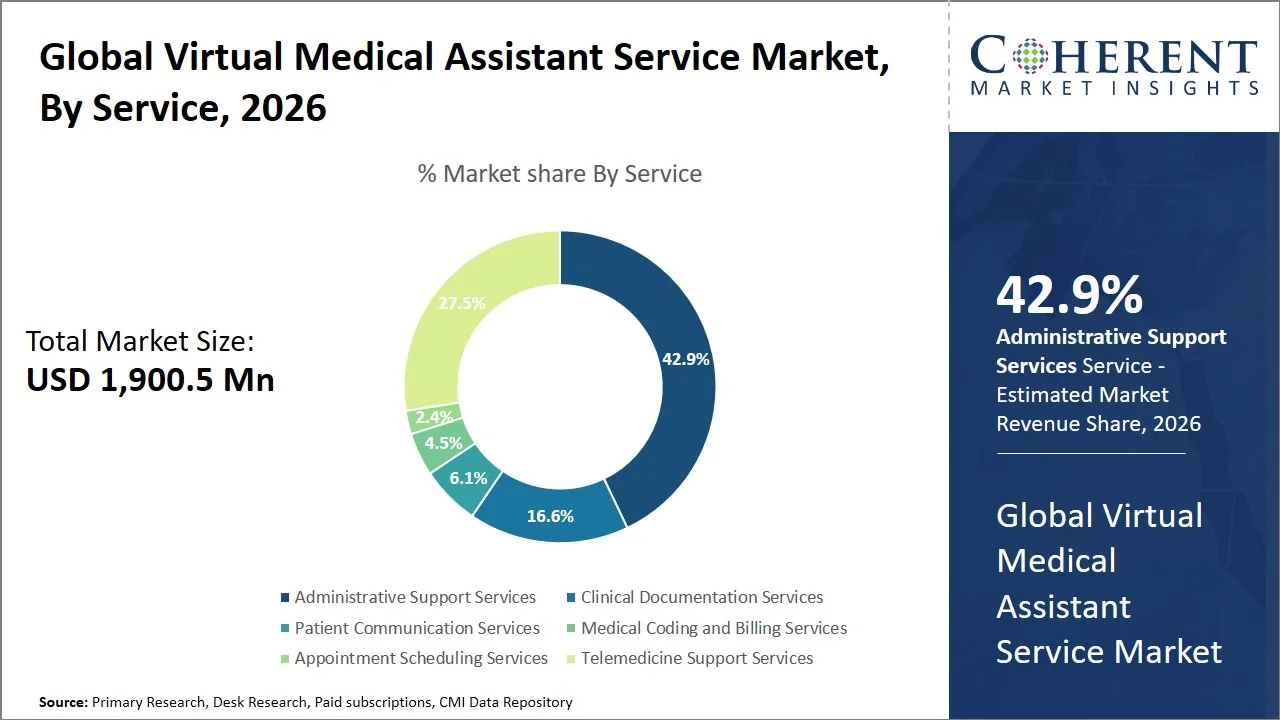
- Administrative support services are projected to hold 42.9 % of the global virtual medical assistant service market share in 2026, making it dominant service segment. The dominance is especially pronounced in North America where hospitals are facing pressure to trim administrative costs because of soaring labor expenses and a shortage of staff. Virtual Medical Assistants (VMAs) are being brought in to manage insurance verification, claims processing, and documentation that helps to streamline operations within expansive hospital systems.
- Chatbot solutions are projected to hold 42.9 % of the global virtual medical assistant service market share in 2026, making it dominant assistance type segment. The adoption rates are fast gaining pace in the Asia Pacific region in nations such as India and China (over 1.1 billion smartphone users in China and more than 750 million in India), due to a high volume of patients coupled with growing use of smartphones, which make immediate and scalable solutions for patient engagement essential for appointments, symptoms management, and multi-language services.
- The on-premise solutions segment is projected to hold 49.3 % of the global virtual medical assistant service market share in 2026, making it dominant deployment segment. This tendency can be seen prominently in Europe, with strict data protection policies like General Data Protection Regulation (GDPR) and increasing awareness about the cross-border transfer of data leading to healthcare institutions opting for localized storage of their data.
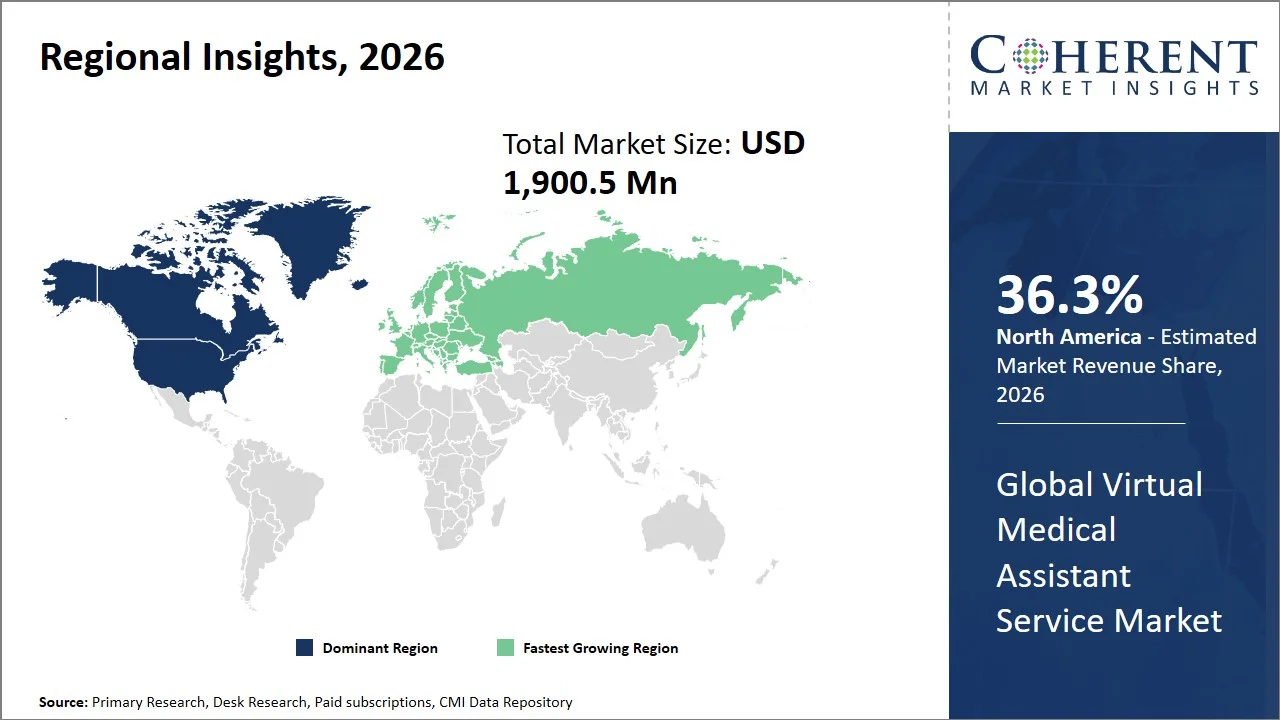
- North America market maintains dominance with an expected share of 36.3 % in 2026, owing to region’s advanced digitization of the local healthcare system due to the popularity of electronic health records (EHRs). The use of EHRs is encouraged by various government programs (such as the U.S. Medicare and Medicaid Promoting Interoperability Program, the HITECH Act, and initiatives by the Office of the National Coordinator for Health Information Technology (ONC)) aimed at ensuring better coordination in providing services to patients. As a result of such a favorable situation, implementation of virtual medical assistants becomes easier for organizations.
- Asia Pacific is expected to exhibit the fastest growth with an estimated contribution of 21.5 % share in 2026, attributed mainly to massive digital health projects undertaken by the government, for example, the Ayushman Bharat Digital Mission project (India) that seeks to develop a unified digital health framework through the integration of patient-provider networks via health record systems. The exponential growth in telemedicine and digital platforms, where physicians have embraced telehealth solutions up to 85%, has greatly boosted the adoption of AI virtual assistants in healthcare delivery. (Source: World Bank)
- Integration with Legacy Hospital IT Infrastructure: The large hospitals and public health care systems are continuing using their traditional IT structure along with their internal electronic health record (HER) systems. The capability of in-house virtual medical assistants (VMAs) in being able to integrate with these systems without requiring cloud migration makes them ideal options.
- Rising Adoption in Government & Defense Healthcare Facilities: The military health care systems and defense departments require complete security and privacy of data. In-house virtual medical assistants (VMAs) are ideal choices for them because of the restricted access feature that will allow them to maintain complete security of their data.
Segmental Insights
Why Do Administrative Support Services Dominate the Global Virtual Medical Assistant Service Market?
Administrative support services are projected to hold the market share of 42.9% in 2026, owing to the sheer number of administrative activities within healthcare, especially those related to billing and insurance claims.
According to the Centers for Medicare & Medicaid Services, more than one billion Medicare fee-for-service claims are processed each year, illustrating the enormous workload of healthcare organizations (Source: Centers for Medicare & Medicaid Services). The workload is multiplied in multi-insurer environments, where prior authorization is mandatory and coding revisions are frequent. In response to this situation, healthcare organizations have turned to virtual medical assistants who can efficiently conduct insurance verification, eligibility checks, and instant communication with patients, thus minimizing claim denials and speeding up reimbursement. For instance, in August 2024, Northwestern Medicine employed Microsoft’s Nuance Dragon Ambient eXperience (DAX Copilot) throughout its enterprise to automate clinical documentation and ease administrative burdens. This tool allows doctors to transform patient interactions into organized notes, which in turn cuts down on the time they spend on paperwork and boosts overall workflow. (Source: Northwestern Medicine)
- Current Industry Events of 2026
- Market Size Estimation
- Regional Breakdown
- Competitive Landscape
- Customer Intelligence
- Segmental Analysis
- Pricing Analysis
- Key Market Drivers, Challenges & Future Trends
- Customized Insights Section
Why are Chatbot Solutions the Most Preferred Assistance Type?
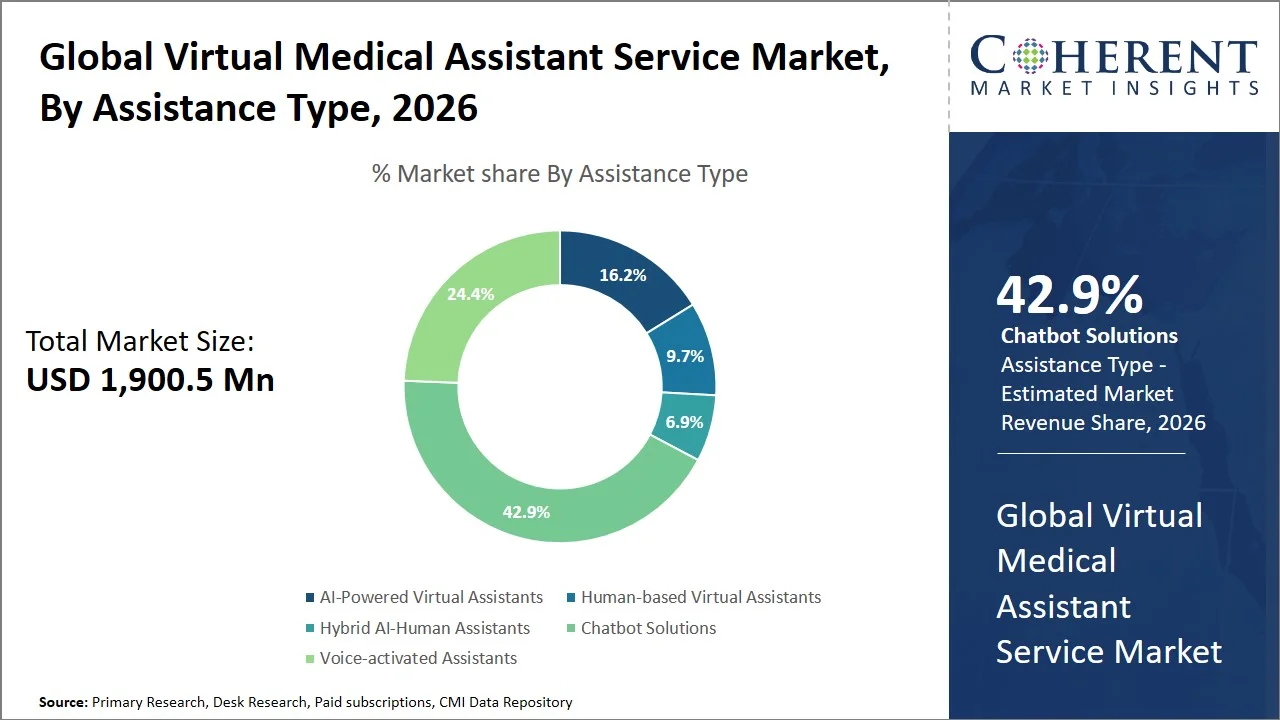
Chatbot solutions are projected to hold a market share of 42.9% in 2026, primarily because they offer immediate, scalable, and round-the-clock patient interaction, thereby alleviating the burden on healthcare providers.
A study published by the National Library of Medicine in January 2024, indicates that chatbots substantially enhance healthcare navigation and automate various tasks, including appointment scheduling and patient inquiries, which in turn boosts operational efficiency (Source: National Library of Medicine). Furthermore, a systematic review published in the Journal of Medical Internet Research (JMIR) in February 2023, revealed that AI chatbots are effective in promoting health behavior change; numerous studies have shown improvements in medication adherence, lifestyle modifications, and patient engagement (Source: Journal of Medical Internet Research (JMIR)). Consequently, these capabilities, coupled with the increasing demand for digital health access and the need for cost optimization, position chatbots as the most favored type of assistance worldwide.
On-premise Solutions Segment Dominates the Global Virtual Medical Assistant Service Market
The on-premise solutions segment is projected to hold a market share of 49.3% in 2026, significantly influenced by the increasing number of government reports about cybersecurity issues in healthcare. According to the U.S. Department of Health & Human Services breach data (via HIPAA reporting), there has been a general upward trend in the number of individuals affected by healthcare data breaches each year. In 2024, trend reached its peak affecting nearly 192.7 million people, mainly due to widespread cyber-attacks which had an unprecedented number of health record exposures (Source: The HIPPA Journal).
The recent spate of massive data breaches has forced healthcare organizations to focus on secure, controlled, and compliant deployment environments. This shift has, in turn, accelerated the use of on-premise virtual medical assistant solutions. These solutions provide better data protection, lower the risk of external exposure, and offer more robust regulatory oversight.
Currents Events and their Impact
Current Events | Description and its Impact |
AI Governance and Digital Health Regulations Expansion (2024–2025) |
|
Global Healthcare Workforce Shortage Driving Automation (2023–2030) |
|
(Source: European Commission, World Health Organization)
Global Virtual Medical Assistant Service Market Dynamics
Market Drivers
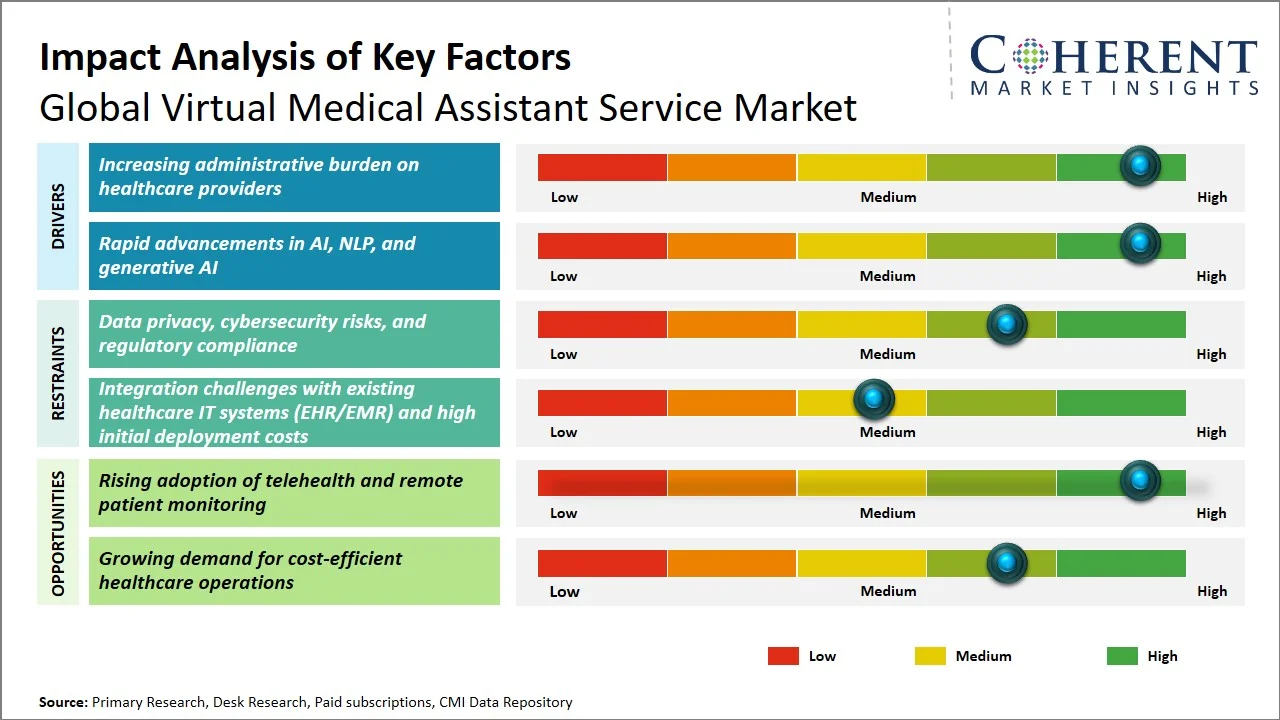
- Increasing administrative burden on healthcare providers: The increasing workload on medical practitioners due to administrative activities has contributed significantly to the growth in the uptake of virtual medical assistants. According to the research published by National Library of Medicine in October 2025, physicians, who are in short supply and high demand, spend more than half their workday documenting in the EHR and only a quarter of their time is spent face to face with patients (Source: National Library of Medicine). While, another study published by the National Library of Medicine in February 2025, stated that the burden of clinical documentation is well-documented; evidence suggests that health care professionals spend on average 2 hours outside the official working day on documentation tasks (Source: National Library of Medicine). As a result, the increasing need for automation in healthcare facilities is spurring the use of virtual assistants in medical practices.
- Rapid advancements in AI, NLP, and generative AI: The fast pace of development in Artificial Intelligence, Natural Language Processing, and Generative Artificial Intelligence has helped to increase the speed of growth of the virtual medical assistant service market through automation of various complex tasks in clinical and administrative activities. Leveraging the power of artificial intelligence techniques like ambient scribing and generative technology can help carry out tasks such as dictation, clinical note creation, and analysis in real-time, thereby saving a lot of time. Studies reveal that the use of artificial intelligence solutions helps prevent the chances of burnout among clinicians and reduces their cognitive load, as well as increases the participation of patients.
Emerging Trends
- Integration of Generative AI and Advanced NLP: Generative AI and sophisticated natural language processing are transforming virtual medical assistants, allowing them to provide interactions that feel more human. They're also streamlining clinical documentation and aiding in clinical decision-making providing greater efficiency, a lighter load for physicians, and less administrative hassle.
- Expansion of Multilingual and Omnichannel Support: These virtual assistants are now more than just chatbots. They're multilingual and integrated across various platforms: mobile apps, telehealth, and messaging services. This broadens patient engagement, makes care more accessible, and ensures continuity, particularly for diverse and underserved communities.
Regional Insights
Why is North America a Strong Market for Virtual Medical Assistant Service?
North America leads the global virtual medical assistant service market, accounting for an estimated 36.3% share in 2026, fueled by a well-established digital health landscape, a significant prevalence of chronic illnesses, and substantial federal backing for healthcare digitization initiatives (such as the HITECH Act and the Medicare and Medicaid Promoting Interoperability Program). The Centers for Disease Control and Prevention reports that 60% of American adults are living with at least one chronic disease, and almost 90% of healthcare expenditures are associated with managing these conditions. (Source: Centers for Disease Control and Prevention)
Additionally, data from national surveys conducted by the National Library of Medicine suggests that approximately 37% to 39% of American adults have availed telemedicine services, providing a strong platform for the provision of healthcare digitally (Source: National Library of Medicine). The presence of a high burden of disease coupled with the use of virtual care continues to increase the uptake of virtual medical assistants powered by artificial intelligence in the healthcare systems of North America.
Why Does Asia Pacific Virtual Medical Assistant Service Market Exhibit High Growth?
The Asia Pacific virtual medical assistant service market is expected to exhibit the fastest growth with an estimated contribution of 21.5% share to the global market in 2026, owing to its digital revolution in healthcare, large patient base, and the presence of numerous healthcare digitization programs by governments (e.g., Ayushman Bharat Digital Mission of India and the Healthy China 2030 initiative of China). According to the Organization for Economic Cooperation and Development (OECD), the number of physicians in several economies of the Asia Pacific region is quite small at ~1.1 to 1.6 physicians per 1,000 population, which is quite low compared to those of advanced nations (Source: Organization for Economic Cooperation and Development (OECD)). This substantial shortage in the availability of skilled professionals, coupled with advancements in digital technology, is driving the adoption of AI-based virtual health assistants to improve healthcare accessibility and efficiency in managing large volumes of patients in the region.
Global Virtual Medical Assistant Service Market Outlook for Key Countries
Why is the U.S. Leading Innovation and Adoption in the Virtual Medical Assistant Service Market?
The U.S. has been on the leading edge of development and application in virtual medical assistant service market because of the considerable efforts made by its government regarding digital health care and artificial intelligence (such as the 21st Century Cures Act, HITECH Act, National Artificial Intelligence Initiative Act, and initiatives by the Office of the National Coordinator for Health Information Technology and U.S. Food and Drug Administration Digital Health Center of Excellence).
The Office of the National Coordinator for Health Information Technology indicates that almost 88% of physicians working in office settings have adopted certified electronic health record technology with added capabilities like patient portals and interoperability, thereby making the adoption of virtual assistants much easier. Additionally, the U.S. Food and Drug Administration has made a considerable expansion in its Digital Health Center of Excellence, resulting in rapid approvals and guidance regarding artificial intelligence-based medical devices (including initiatives such as the AI/ML-Based Software as a Medical Device Action Plan, Digital Health Software Precertification Program, and evolving guidance on Clinical Decision Support Software).
Is China a Favorable Market for Virtual Medical Assistant Service Market?
China has established itself as an up-and-coming high growth market for virtual medical assistant service through extensive implementation of digital healthcare services and the presence of various initiatives from the government. The Chinese government’s Internet + Healthcare approach has led to a fast integration of AI, telemedicine, and digitalization into hospital and primary healthcare institutions.
According to the China Internet Network Information Center (CNNIC), there were approximately 418 million people using online medical services in China by December 2024, representing 37.7% of the population (Source: China Internet Network Information Center (CNNIC)). In addition to investments in digital hospitals and healthcare infrastructure in the country, the investments in AI-driven healthcare services (including smart hospital initiatives, AI-powered diagnostic systems, clinical decision support tools, and government-backed “Internet + Healthcare” programs) are facilitating the growth of the market.
Is India Emerging as a Key Growth Hub for the Virtual Medical Assistant Service Market?
India is emerging as a major player in the virtual medical assistant service market fueled by the swift embrace of digital health, the sheer number of patients, and robust government support. The National Health Authority's initiatives, particularly the Ayushman Bharat Digital Mission, are building a nationwide digital health infrastructure that allows for easy integration of AI-driven solutions. By 2024, over 568 million digital health IDs, or ABHAs, had been issued, while government's eSanjeevani platform, meanwhile, has enabled more than 270 million teleconsultations, a clear sign of the rapid shift toward virtual healthcare. (Source: National Health Authority, Ministry of Health and Family Welfare)
Why Does Germany Top the European Virtual Medical Assistant Service Market?
Germany leads in the European virtual medical assistant service market due to its strong digital health environment, high spending on healthcare services (spending ~12.3% of its GDP on healthcare in 2024), and market regulation (e.g., Digital Healthcare Act (DVG), Digital Health Applications Ordinance (DiGAV), General Data Protection Regulation, Federal Institute for Drugs and Medical Devices).
Germany has led in the adoption of digital health solutions at the national level through the Digital Healthcare Act (DVG), which makes it possible for the reimbursement of digital health services. In addition, Germany has one of the biggest healthcare sectors in Europe, with a very high per capita spending on healthcare services. Hospitals in Germany have been digitized, making it easy to integrate virtual medical assistants in hospital settings. Furthermore, the implementation of GDPR makes it easy to safeguard the data generated by artificial intelligence in virtual medical assistants.
Is Virtual Medical Assistant Service Market Developing in Brazil?
Brazil is backed by the expansion of its digital health network and the implementation of telehealth systems in the country. The initiatives implemented by the government (e.g., Telemedicine Law No. 13,989/2020, Conecte SUS, Digital Health Strategy for Brazil 2020–2028), which include the establishment of telemedicine as well as the reinforcement of digital health approaches within the national healthcare system, will allow the use of healthcare technology through AI. In addition, Brazil’s substantial number of people and the development of healthcare accessibility further contribute to the rising need for remote patient engagement and automation assistance services.
Regulatory Landscape Governing the Global Virtual Medical Assistant Service Market
Region | Key Regulations | Regulatory Overview | Impact on Market |
North America | Health Insurance Portability and Accountability Act (HIPAA), Office for Civil Rights (OCR) | Strict data privacy and security requirements for handling patient information, mandating encryption and compliance protocols. | High compliance costs but strong trust and widespread adoption of virtual medical assistants across hospitals and clinics. |
Europe | General Data Protection Regulation (GDPR), European Medicines Agency (EMA) | Strong focus on consent, data minimization, and cross-border data restrictions. | Slower deployment of AI-driven assistants but ensures high data security standards, fostering long-term market credibility. |
Asia Pacific | National Health Authority (NHA), Personal Information Protection Law (PIPL) | Rapidly evolving frameworks emphasizing digital health expansion and data localization. | Accelerates market growth due to government-backed digital health initiatives, though regulatory fragmentation poses challenges. |
Latin America | Lei Geral de Proteção de Dados (LGPD), Federal Commission for the Protection against Sanitary Risk (COFEPRIS) | Increasing alignment with global data protection standards and digital health policies. | Encourages foreign investments and digital adoption, though implementation gaps may limit short-term growth. |
Middle East & Africa | Saudi Food and Drug Authority (SFDA), Department of Health – Abu Dhabi (DOH) | Emerging telehealth regulations focusing on licensing and patient data protection. | Encourages foreign investments and digital adoption, though implementation gaps may limit short-term growth. |
How is the rising adoption of telehealth and remote patient monitoring creating new growth opportunities in the virtual medical assistant service market?
Growing adoption of telehealth and remote patient monitoring plays a crucial role in contributing to the growth of the virtual medical assistant service market owing to the rising need for solutions that automate the processes involved in interacting with patients and coordinating their treatment. According to the data provided by Centers for Medicare and Medicaid Services, the usage rate of telehealth among the Medicare population is estimated to reach nearly 25% in 2024 (Source: Centers for Medicare and Medicaid Services). The increasing availability of patient-generated health data, which arises from remote monitoring systems, is driving the implementation of virtual assistants to manage continuous data assessment, prioritize alerts, and coordinate follow-up actions.
Additionally, the rise in the adoption of telehealth services are adding to the documentation and patient communication demands placed on clinicians, which is fueling the use of AI-driven assistants for transcribing, scheduling, and managing care pathways. For instance, the Microsoft product, Nuance Dragon Ambient eXperience (DAX Copilot), has been implemented in more than 150 health systems where it performs clinical documentation not only for in-office visits but for telehealth visits too, thus easing the workload of physicians and helping them concentrate on their patients (Source: Microsoft).
Market Players, Key Development, and Competitive Intelligence
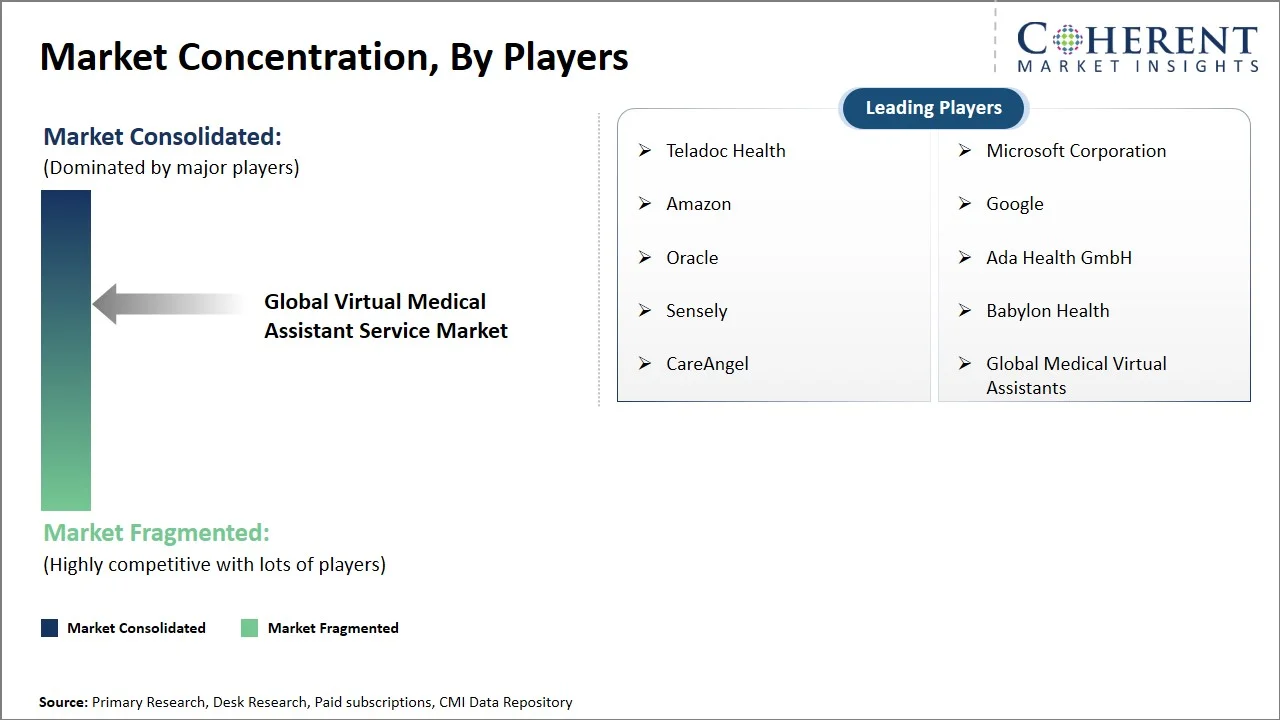
Key Developments
- On April 7, 2026, Concord Medical Group teamed up with DocAssistant. They implemented an AI-driven medical scribe, hoping to cut down on the time doctors spent on paperwork and boost revenue. This move highlights a growing trend: the use of AI-powered virtual assistants in clinical settings, all in the name of better efficiency and improved patient care.
- In July 2024, DocVA, LLC unveiled its sophisticated virtual medical assistant services. These were crafted to both simplify administrative tasks and elevate patient engagement within the healthcare landscape. The offering utilizes AI-powered automation, aiming to boost efficiency, lighten the load on healthcare professionals, and facilitate the worldwide embrace of digital health technologies.
Competitive Landscape
The virtual medical assistant service market is characterized as highly competitive. Established companies, leveraging robust technological capabilities and the growing integration of AI within healthcare, are scaling their solutions and navigating regulatory and clinical shifts with relative ease. To solidify their position, these firms are concentrating on refining automation precision and streamlining workflow integration. Key focus areas include:
- AI-powered clinical documentation and workflow automation
- Integration with EHR/EMR systems and telehealth platforms
- Strategic partnerships and product innovation
Market Report Scope
Virtual Medical Assistant Service Market Report Coverage
| Report Coverage | Details | ||
|---|---|---|---|
| Base Year: | 2025 | Market Size in 2026: | USD 1,900.5 Mn |
| Historical Data for: | 2020 To 2024 | Forecast Period: | 2026 To 2033 |
| Forecast Period 2026 to 2033 CAGR: | 9.8% | 2033 Value Projection: | USD 3,337.3 Mn |
| Geographies covered: |
| ||
| Segments covered: |
| ||
| Companies covered: | Teladoc Health, Microsoft Corporation, Amazon, Google, Oracle, Ada Health GmbH, Sensely, Babylon Health, CareAngel, and Global Medical Virtual Assistants | ||
| Growth Drivers: |
| ||
| Restraints & Challenges: |
| ||
Analyst Opinion (Expert Opinion)
- Virtual medical assistant service is set to shift from being a supporting utility for healthcare organizations to a core part of clinical practice. With the increasing emphasis on efficiency in the healthcare sector, virtual medical assistants would develop into advanced forms that can perform tasks such as interacting with patients, recording clinical information, performing triaging functions, and decision-making. The success of this industry would depend upon its integration with EHR, voice-based interfaces, and generative artificial intelligence.
- The potential for high financial gains exists in AI-driven documentation and clinical workflow solutions within hospitals and telemedicine platforms in the U.S., due to physician burnout, the workload of administrators, and a robust digital healthcare ecosystem. Patient engagement assistants for chronic conditions could also become popular in Europe and Asia Pacific regions, where digital healthcare models are being scaled to cope with rising patient numbers.
- The organization can derive a competitive advantage through the creation of AI applications designed for the healthcare sector. The compatibility of these AI applications with the IT systems of the hospitals would prove to be a crucial aspect for the success of such AI applications. In addition, data privacy and compliance would be other aspects that would have to be taken into consideration by firms when making plans for their growth in other areas. It is also important for firms to form alliances with healthcare facilities and telehealth applications.
Speak to the analyst
Want personalized insights?
Take the findings above to one of our principal consultants, or have the report rebuilt around the segments, geographies and competitors you actually track.
Market Segmentation
- Service Insights (Revenue, USD Mn, 2021 - 2033)
- Administrative Support Services
- Clinical Documentation Services
- Patient Communication Services
- Medical Coding and Billing Services
- Appointment Scheduling Services
- Telemedicine Support Services
- Assistance Type Insights (Revenue, USD Mn, 2021 - 2033)
- AI-Powered Virtual Assistants
- Human-based Virtual Assistants
- Hybrid AI-Human Assistants
- Chatbot Solutions
- Voice-activated Assistants
- Deployment Insights (Revenue, USD Mn, 2021 - 2033)
- Cloud-based Solutions
- On-premise Solutions
- Hybrid Solutions
- Web-based Platforms
- Mobile Applications
- Service Platform Insights (Revenue, USD Mn, 2021 - 2033)
- Software as a Service (SaaS)
- Platform as a Service (PaaS)
- Infrastructure as a Service (IaaS)
- Healthcare Provider Type Insights (Revenue, USD Mn, 2021 - 2033)
- Hospitals
- Private Practice Clinics
- Specialty Clinics
- Urgent Care Centers
- Mental Health Practices
- Specialty Insights (Revenue, USD Mn, 2021 - 2033)
- Medical
- Dental
- Mental Health
- Veterinary
- Wellness
- Regional Insights (Revenue, USD Mn, 2021 - 2033)
- North America
- U.S.
- Canada
- Latin America
- Brazil
- Argentina
- Mexico
- Rest of Latin America
- Europe
- Germany
- U.K.
- Spain
- France
- Italy
- Russia
- Rest of Europe
- Asia Pacific
- China
- India
- Japan
- Australia
- South Korea
- ASEAN
- Rest of Asia Pacific
- Middle East
- GCC Countries
- Israel
- Rest of Middle East
- Africa
- South Africa
- North Africa
- Central Africa
- North America
- Key Players Insights
- Teladoc Health
- Microsoft Corporation
- Amazon
- Oracle
- Ada Health GmbH
- Sensely
- Babylon Health
- CareAngel
- Global Medical Virtual Assistants
Sources
Primary Research Interviews
- Virtual medical assistant service providers
- Healthcare IT solution providers
- Hospital administrators and digital health managers
- AI and healthcare automation experts
Stakeholders
- Providers of Virtual Medical Assistant Services (e.g., Nuance Communications, eClinicalWorks, Suki AI, DeepScribe)
- End-use Sectors
- Hospitals and Clinics
- Telehealth Providers
- Pharmaceutical & Biotech Companies
- Regulatory & Health Bodies: World Health Organization, U.S. Food and Drug Administration, European Medicines Agency
- Technology Providers: AI and cloud companies (e.g., Microsoft, Google Health, Amazon Web Services)
Databases
- World Bank Healthcare Expenditure Database
- World Health Organization Global Health Observatory (GHO)
- OECD Health Statistics
- Centers for Medicare & Medicaid Services Healthcare Spending Data
Magazines
- Healthcare IT News – Digital health transformation trends
- HIMSS Insights – AI adoption in healthcare
- Becker’s Hospital Review – Hospital digitalization trends
- Healthcare Business Today – Virtual care advancements
- Medical Economics – Physician workflow automation
Journals
- Journal of Medical Internet Research (JMIR) – Digital health and AI adoption
- NPJ Digital Medicine – AI applications in healthcare
- The Lancet Digital Health – Virtual care models
- Journal of Healthcare Informatics Research – Clinical automation
- IEEE Journal of Biomedical and Health Informatics – AI-based healthcare systems
Newspapers
- The Wall Street Journal – Healthcare technology investments
- Financial Times – Global digital health market trends
- Business Standard – Growth in telehealth and AI healthcare adoption
- The Economic Times – India digital health ecosystem
Associations
- Healthcare Information and Management Systems Society
- American Medical Association
- Digital Medicine Society
- International Society for Telemedicine and eHealth
Public Domain Sources
- World Health Organization – Global Strategy on Digital Health (2020–2027)
- Centers for Disease Control and Prevention – Chronic disease statistics
- U.S. Department of Health and Human Services – Digital health initiatives
- European Commission – eHealth framework
- OECD – Digital health adoption insights
Proprietary Elements
- CMI Data Analytics Tool, Proprietary CMI Existing Repository of information for last 10 years.
Get access to 250+ pages report
Every segment, forecast, competitor profile and data table behind the analysis above — available for instant download.
- ESOMAR Member
- ISO 9001:2015 Certified
- D-U-N-S Registered
- GDPR & CCPA Compliant
Missing comfort of reading report in your local language? Find your preferred language:
Transform your Strategy with Exclusive Trending Reports
Frequently Asked Questions
The global virtual medical assistant service market is estimated to be valued at USD 1,900.5 Mn in 2026 and is expected to reach USD 3,337.3 Bn by 2033.
Administrative support services dominate due to extensive use in appointment scheduling, billing, insurance verification, and workflow automation, helping healthcare providers reduce operational burden and improve efficiency.
A virtual medical assistant service leverages technology, or human input, to aid healthcare providers from a distance. This support encompasses administrative duties, the creation of clinical documentation, and communication with patients.
The CAGR of global virtual medical assistant service market is projected to be 9.8% from 2026 to 2033.
Increasing administrative burden on healthcare providers and rapid advancements in AI, NLP, and generative AI are the major factors driving the growth of the global virtual medical assistant service market.
Data privacy, cybersecurity risks, and regulatory compliance and integration challenges with existing healthcare IT systems (EHR/EMR) and high initial deployment costs are the major factors hampering the growth of the global virtual medical assistant service market.
In terms of assistance type, chatbot solutions are estimated to dominate the market revenue share in 2026.