Medical Carts Market Analysis & Forecast: 2026-2033

The global medical carts market is estimated to be valued at USD 3.51 Bn in 2026 and is expected to reach USD 6.89 Bn by 2033, growing at a compound annual growth rate (CAGR) of 10.1% from 2026 to 2033.
To learn more about this report, Download Free Sample
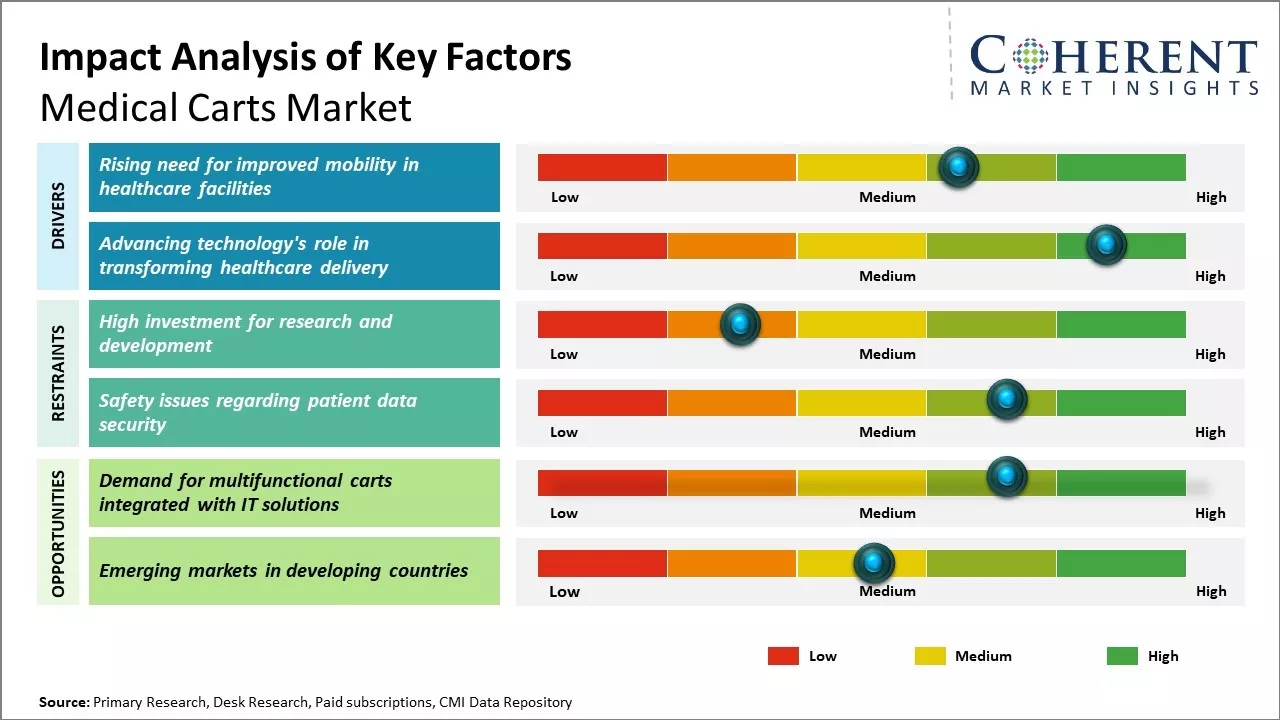
The rising demand for improved patient care and mobility along with the growing need to better organize and securely store medical equipment and supplies in hospitals is driving the increased adoption of medical carts. Key factors such as rising geriatric population, growing prevalence of chronic diseases, increasing number of hospitals, and technological advancements in cart designs to improve functionality and mobility will boost demand. However, high costs associated may hinder market growth to some extent.
|
Current Events |
Description and its impact |
|
Global Supply Chain Disruptions and Tariff Policies |
|
|
Regulatory Overhauls in Key Markets |
|
Uncover macros and micros vetted on 75+ parameters: Get instant access to report
The growing demand for advanced mobile medical equipment is being driven by the increasing need among healthcare providers to improve the mobility of various medical devices and supplies within their facilities. Modern healthcare settings, especially large multi-specialty hospitals, require seamless movement of items between departments, floors, and wings to help facilitate efficient patient care services. Medical carts have emerged as an ideal solution to carry a variety of medical tools, supplies, pharmaceuticals, and accessories directly to the point of patient care. Having all necessary items readily available on carts helps save precious time for doctors and nurses and enables them to focus maximum time and attention on treating patients. This is proving particularly useful in emergency rooms and operating rooms where every second is critical.
Moreover, medical carts allow for grouping of multiple supplies and equipment together in an organized manner, thus promoting better inventory management. Their maneuverability allows staff to simply wheel the carts between patient beds, treatment areas, and storage locations. Leading healthcare providers are recognizing how mobile medical carts can help streamline clinical workflows and optimize resource utilization.
Across the world, technology is gradually but profoundly changing the way healthcare is delivered. With digitization gaining a stronger foothold, there is growing emphasis on deploying various smart medical devices and automated solutions to enhance the quality and outcomes of patient care. Technology is serving to make processes more efficient as well as introduce new and advanced forms of diagnosis, treatment planning, and remote monitoring.
This digital healthcare revolution is bringing about higher standards and expectations from both providers and consumers alike. As a result, there is increasing investment in medical equipment integration technologies that can support real-time access to patient data, facilitate clinical collaboration, aid clinical decision making, and enable telehealth services. In this environment, medical carts that offer platform flexibility for different medical peripherals are gaining traction.
The medical carts market is witnessing strong opportunity driven by rising healthcare spending, a growing geriatric population, and increasing demand for multifunctional carts integrated with IT solutions. Hospitals are shifting toward smart carts with features like EHR integration, wireless connectivity, and real-time data access to improve workflow and reduce errors. Compact, portable carts are also gaining traction in home healthcare and ambulatory settings where space is limited. Additionally, robotic medical carts such as those from Diligent Robotics are emerging as a solution to address healthcare workforce shortages by automating routine tasks, further enhancing efficiency and care delivery.
To learn more about this report, Download Free Sample
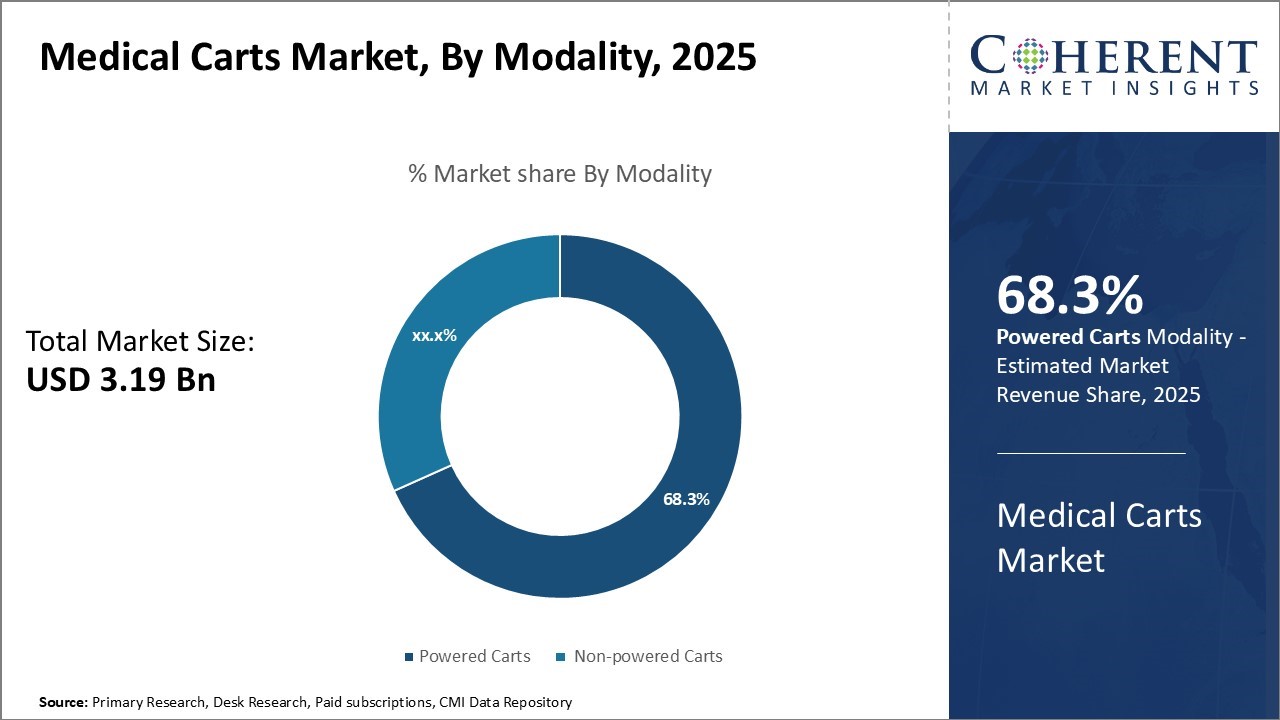
The modality segment includes powered carts and non-powered carts. Powered carts segment is anticipated to hold 69.3% of the market share in 2026.
Powered carts are equipped with advanced batteries and efficient engines that provide enhanced mobility and maneuverability within healthcare premises. Regular software upgrades further optimize the performance of powered carts. Their ability to navigate uneven floors and tight spaces while carrying heavy loads of medical equipment make them indispensable for hospitals and clinics. Features like customizable racks, drawers and platforms allow powered carts to be effectively utilized across departments for diverse needs.
To learn more about this report, Download Free Sample
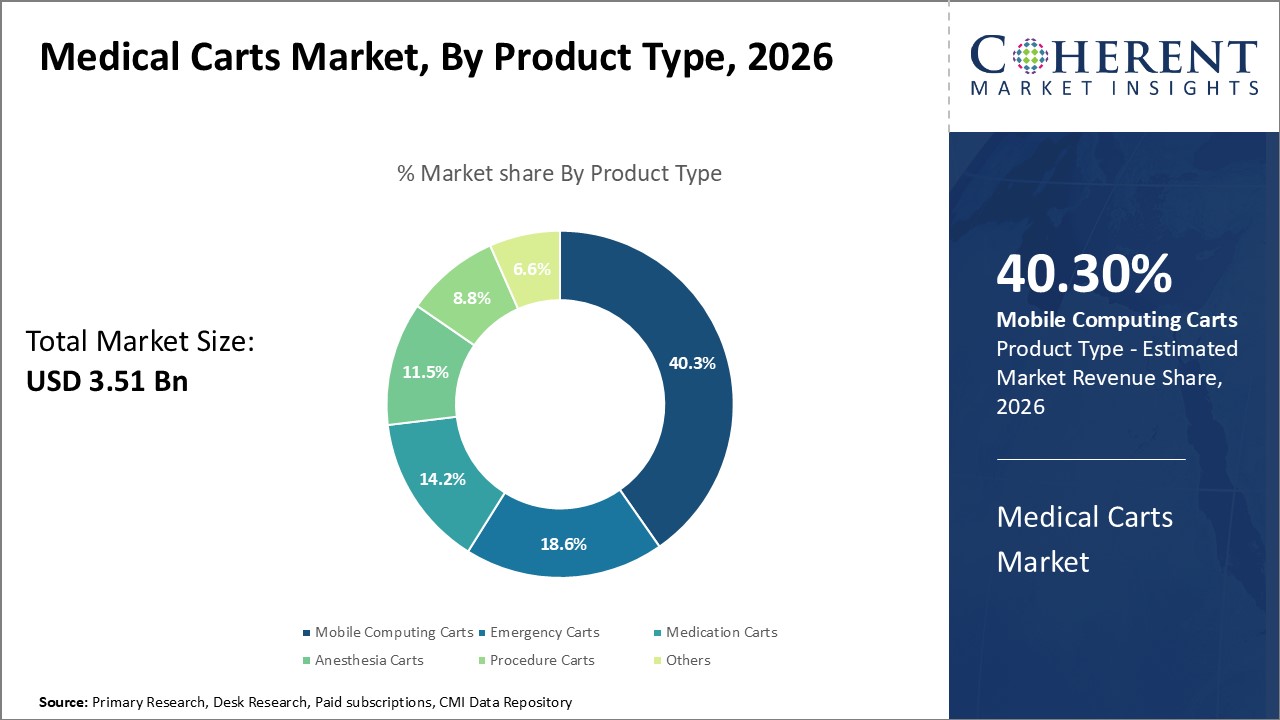
The product type segment includes mobile computing carts, emergency carts, medication carts, anesthesia carts, procedure carts, and others. Mobile computing carts contributes the highest share of the medical carts market and is projected to hold 40.3% of the market share in 2026.
Mobile computing carts promote telehealth and facilitate remote monitoring. Their movable design facilitates back-to-back deployment at ward rounds and emergency response. Built-in computer systems, drawers, and storage enhances efficiency of documentation, inventory management and treatment planning. Dual monitor fittings ensure seamless access to electronic health records and diagnostic images. Anti-microbial surfaces maintain infection control. Wireless connectivity supports uninterrupted consultations and virtual rounds. Ongoing advancements in compact devices, interfaces and network technologies are driving further deployment of mobile computing carts.
The end user segment includes hospitals & clinics, diagnostic centers, ambulatory surgical centers, and others. Hospitals & clinics contributes the highest share of the medical carts market and is projected to hold 55.7% of the market share in 2026.
Large patient footfall and multidisciplinary needs result in higher demand for carts across departments. Versatile designs suiting unit-specific workflows optimize efficiency. Centralized inventory management facilitated by carts aids cost control. Their movable nature supports effective space utilization. Periodic modernization programs by hospitals to upgrade fleets further propels the market growth. The growing number of specialty hospitals and super-specialty facilities also contributes to higher demand.
To learn more about this report, Download Free Sample
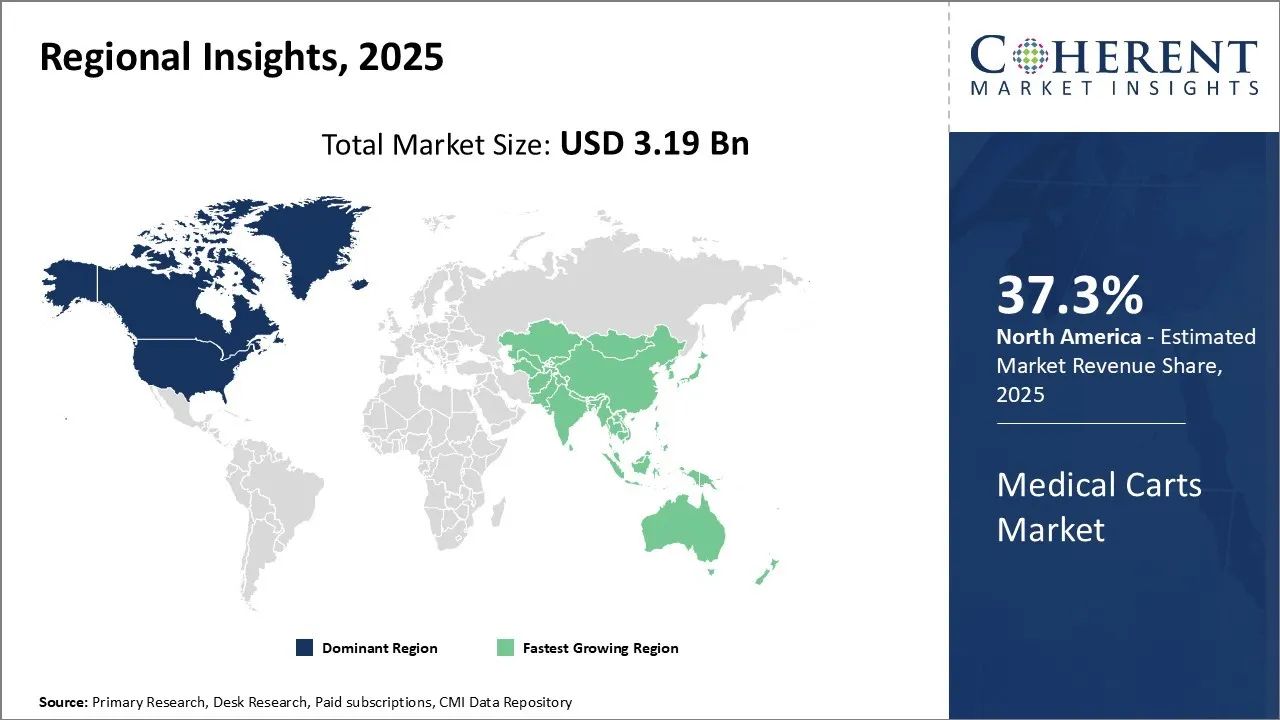
North America has established itself as the dominant regional market for medical carts and is anticipated to hold 37.3% of the market share in 2026. With a well-developed healthcare infrastructure and high healthcare spending, the U.S. and Canada have a large demand for medical carts from hospitals, private clinics, and long-term care facilities. Several leading medical equipment manufacturers are headquartered in North America, giving the region an advantage in terms of industry presence and manufacturing capabilities.
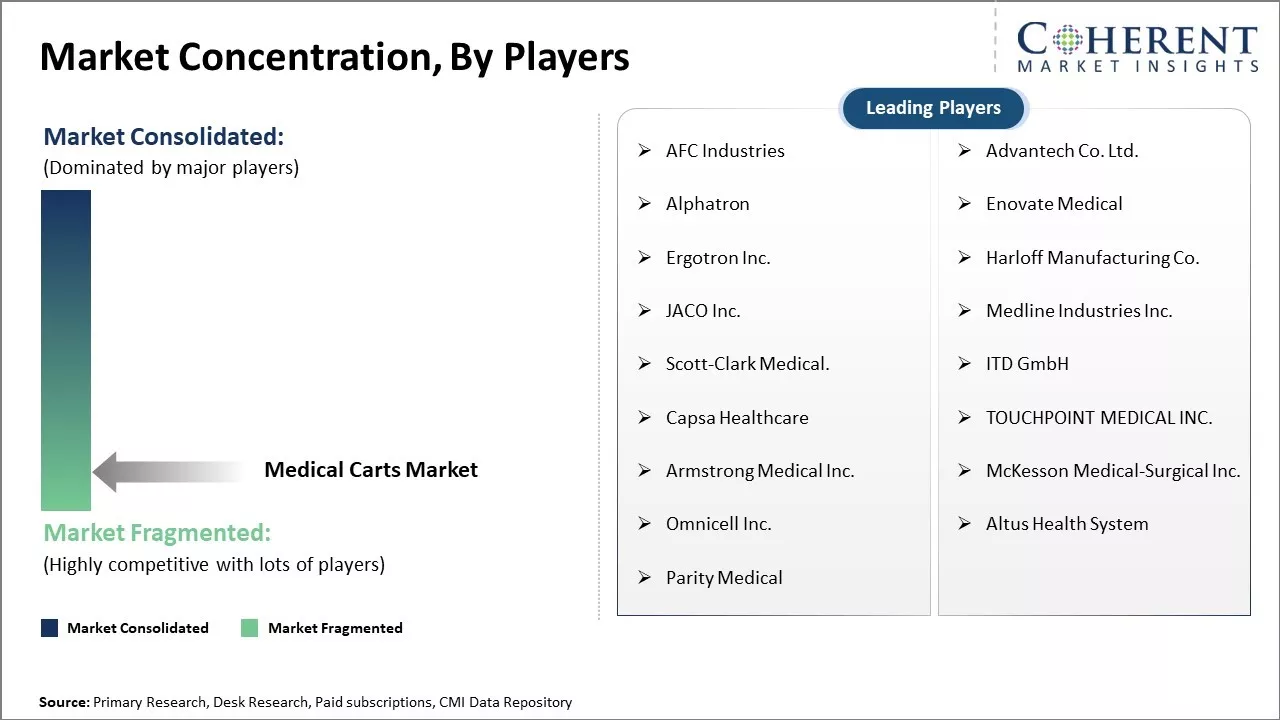
For instance, companies like AFC Industries, Ergotron, and InterMetro Industries have a major presence across hospitals in the U.S., allowing them seamless distribution and strong customer relationships.
North America is also at the forefront of adopting new technologies in medical carts, with items like powered carts and digital medical carts gaining popularity. However, high initial costs and stringent regulatory approvals continue to impact market penetration in this region.
The Asia Pacific region has emerged as the fastest growing market for medical carts globally. Countries like China, India, Japan, and South Korea are witnessing increased healthcare infrastructure investments as well as a rise in medical tourism. This has significantly boosted the demand for medical carts from both public and private hospitals.
Several global medical cart manufacturers have established manufacturing facilities or tied up with local partners in Asia Pacific to cater to the growing demand. Countries like China and India also have a flourishing domestic medical devices industry that contributes to the regional supply landscape. The increasing healthcare awareness and expenditure in Asia Pacific is expected to continue propelling the demand for innovative medical carts in the coming years.
For instance, in 2024, Bengaluru-based Diligent Robotics successfully deployed its Moxi robotic assistant in selected Asia Pacific hospitals, automating medicine delivery and supply management to alleviate staff shortages.
The U.S. medical carts market is witnessing a strong shift toward advanced, IT-integrated solutions aimed at improving workflow efficiency and clinical safety. Hospitals are increasingly adopting powered carts with EHR access, ergonomic height adjustment, and antimicrobial surfaces to meet both functional and infection control needs. The rise in telehealth and remote care has also driven demand for video-enabled and tablet-compatible carts. Additionally, there is growing focus on cloud-based fleet management and secure staff authentication to optimize asset use and minimize downtime. Overall, innovation in design and digital functionality continues to define purchasing trends in the U.S. market.
China’s medical carts market is expanding fast, supported by increased hospital automation, public healthcare funding, and the country’s strong domestic device manufacturing base. Carts with IoT-enabled inventory tracking, powered functions, and electronic medication systems are being rolled out at scale. Hospitals are replacing traditional trolleys with smart mobile workstations to streamline patient workflows.
For instance, in 2026, nearly 90 tertiary hospitals across China deployed the AI-driven DeepSeek platform, incorporated into smart carts and workflows to improve patient follow-ups by up to 40× demonstrating rapid integration of digital solutions into traditional cart systems.
India’s medical carts market is being driven by rising investments in hospital infrastructure and digital health adoption. There’s high demand for EMR-compatible carts, battery-powered mobile workstations, and compact carts for crowded facilities. Growth is especially strong in telemedicine and remote consultation setups.
For instance, Apollo Hospitals’ TeleHealth division has deployed tablet-equipped carts across its telemedicine network of 350,000+ touchpoints enabling virtual consultations at bedside and expanding remote specialist access in both urban and rural settings.
Japan is a significant market for medical carts within the Asia Pacific region, driven primarily by its rapidly aging population and increasing demand for advanced healthcare solutions. With a well-developed healthcare infrastructure, there's a continuous need for efficient tools like medical carts to enhance patient care, streamline workflows, and manage chronic diseases. The country is seeing a growing adoption of electronic medical records (EMR) and digital health technologies, which in turn fuels the demand for mobile computing carts and workstations. This focus on technological integration, coupled with government support for improving healthcare facilities, positions Japan to hold a substantial share of the Asia Pacific medical carts market.
| Report Coverage | Details | ||
|---|---|---|---|
| Base Year: | 2025 | Market Size in 2026: | USD 3.51 Bn |
| Historical Data for: | 2020 To 2024 | Forecast Period: | 2026 To 2033 |
| Forecast Period 2026 to 2033 CAGR: | 10.1% | 2033 Value Projection: | USD 6.89 Bn |
| Geographies covered: |
|
||
| Segments covered: |
|
||
| Companies covered: |
AFC Industries, Advantech Co. Ltd., Alphatron, Enovate Medical, Ergotron Inc., Harloff Manufacturing Co., JACO Inc., Medline Industries Inc., Scott-Clark Medical., ITD GmbH, Capsa Healthcare, TOUCHPOINT MEDICAL INC., Armstrong Medical Inc., McKesson Medical-Surgical Inc., Omnicell Inc., Altus Health System, and Parity Medical |
||
| Growth Drivers: |
|
||
| Restraints & Challenges: |
|
||
Uncover macros and micros vetted on 75+ parameters: Get instant access to report
|
Segment |
System (Manufacturer) |
Estimated Cost (USD) |
Recurring Costs |
|
Mobile Computing Carts |
Capsa Healthcare (e.g., T7 Powered Cart) |
4,000 – 9,000 |
Battery replacement every ~2 years (USD 300–600), software license/support USD 500–1,200/year, IT integration, parts (wheels, handles) |
|
Medication Carts |
Capsa Healthcare |
2,500 – 8,000 |
Consumables (bins, labels USD 200–500/year), locking systems, yearly servicing USD 200–400 |
|
Anesthesia Carts |
Ergotron, AFC Industries (per analyst) |
4,000 – 10,000 |
Drawer recalibration, lock servicing USD 300–700/year, parts replacements |
|
Emergency (Crash) Carts |
Harloff, ITD |
3,500 – 9,000 |
Restocking meds/IV supplies (USD 500–2,500/year), compliance checks, cleaning |
|
Procedure Carts |
Capsa Healthcare (Avalo series) |
2,000 – 6,000 |
Consumables, sterilization, accessory replacement USD 300–800/year |
|
Wall-Mounted Workstations |
Ergotron, Capsa Healthcare |
1,000 – 3,500 |
IT updates, display replacements, mounting inspections USD 100–300/year |
|
Medical Monitor/Tablet Carts |
Capsa (Tryten series) |
2,500 – 7,000 |
Device mounting upkeep, software integration ~USD 500/year |
Uncover macros and micros vetted on 75+ parameters: Get instant access to report
Share
Share
Manisha Vibhute is a consultant with over 5 years of experience in market research and consulting. With a strong understanding of market dynamics, Manisha assists clients in developing effective market access strategies. She helps medical device companies navigate pricing, reimbursement, and regulatory pathways to ensure successful product launches.
Joining thousands of companies around the world committed to making the Excellent Business Solutions.
View All Our Clients