

Global Anesthesia Gases Market Size and Share Analysis - Growth Trends and Forecasts (2026 - 2033)
The Anesthesia Gases Market is anticipated to grow at a CAGR of 3.9% with USD 2,110.5 Mn share in 2026 and is expected to reach USD 2,710.6 Mn in 2033. The Anesthesia Gases Market is supported by essential operating-room use, hospital infrastructure upgrades, and sustainability-led product substitution. For instance, according to the U.S. Food and Drug Administration’s 2025 sevoflurane label states that surgical anesthesia is usually achieved at 0.5%–3% concentration, with or without nitrous oxide, and can be delivered through any anesthesia circuit, supporting broad procedural use. According to a 2026 report by India's health ministry, all healthcare institutions were evaluated under IPHS, and 63% of them received scores above than 50%, indicating a more robust surgical-care infrastructure. Because the 2026–2027 NHS Standard Contract mandates cutting back on piped nitrous oxide waste and doing away with desflurane use, sustainability is also changing usage patterns.
Source: USFDA; Press Information Bureau; NHS
Key Takeaways
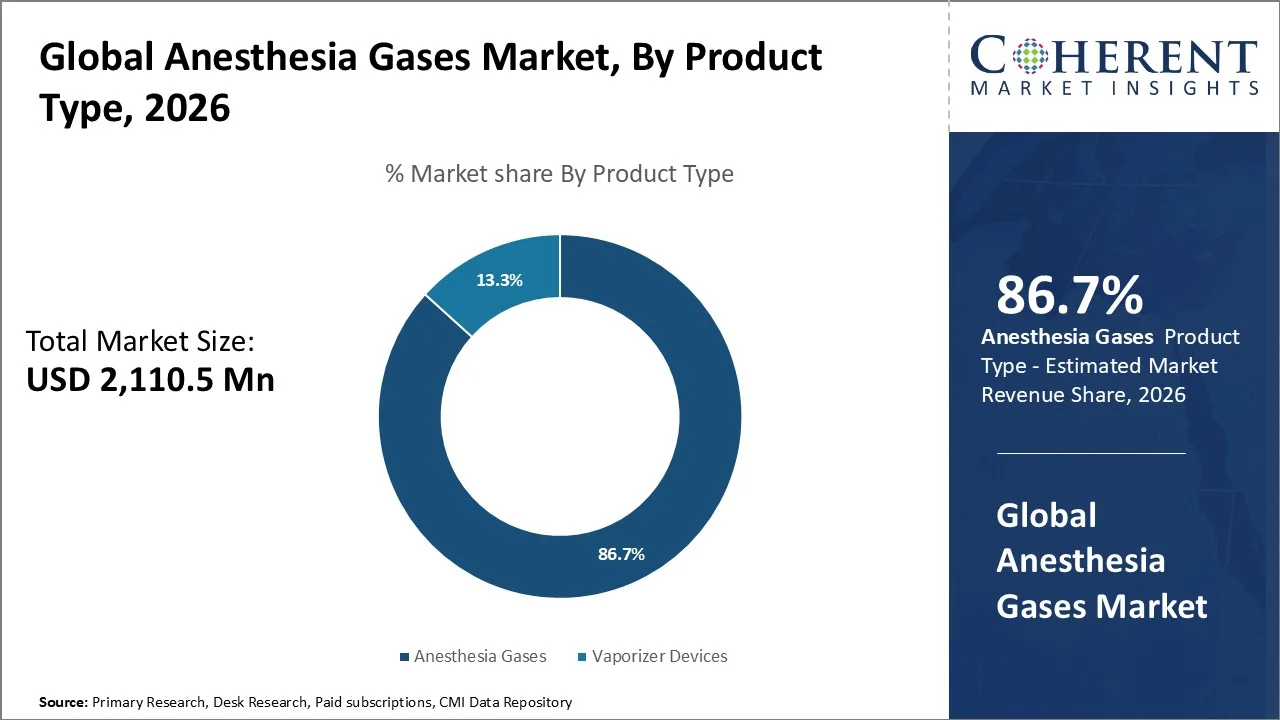
- Anesthesia Gases is expected to account the largest share of 86.7% in 2026, because inhaled agents support fast induction, controllable maintenance, and faster post-operative recovery. NCBI StatPearls, published in its 2026 Bookshelf edition, states that nitrous oxide, isoflurane, desflurane, and sevoflurane are used as primary or adjunct perioperative anesthetics. WHO’s 2025 Essential Medicines List includes inhalational anesthetics, while FDA’s medical-gas CGMP amendments became effective in February 2026, strengthening quality assurance.
- Nitrous Oxide will dominate with 40.0% in 2026, due to several key factors. It has been widely used in medical and dental procedures for its analgesic and anesthetic properties, making it a go-to gas for short-duration surgeries and pain management. Nitrous Oxide is popular because of its rapid onset and offset, minimal side effects, and cost-effectiveness. It is also easier to administer compared to other anesthetics, contributing to its high adoption rates in both hospitals and outpatient clinics. For instance, according to the U.S. Food and Drug Administration (FDA), nitrous oxide is regulated for medical use as an inhalation anesthetic, and its versatility and low cost make it indispensable in outpatient surgeries and dental practices. The FDA's guidelines, published in 2026, confirm its safe usage in controlled environments, making it a key agent in anesthesia management. Its efficacy, combined with ease of use and minimal side effects, keeps it as the preferred choice for a wide range of short-duration procedures.
- Hospital hold the dominant share of 69.5% in 2026 owing to their extensive surgical, ICU, and recovery units. For instance, the American Hospital Association’s 2026 report listed 6,100 hospitals and 35.6 million admissions. CMS’ 2026 OPPS/ASC rule supports outpatient services, while FDA’s 2025 medical-gas CGMP guidelines enhance hospital reliance on regulated anesthesia gas supplies.
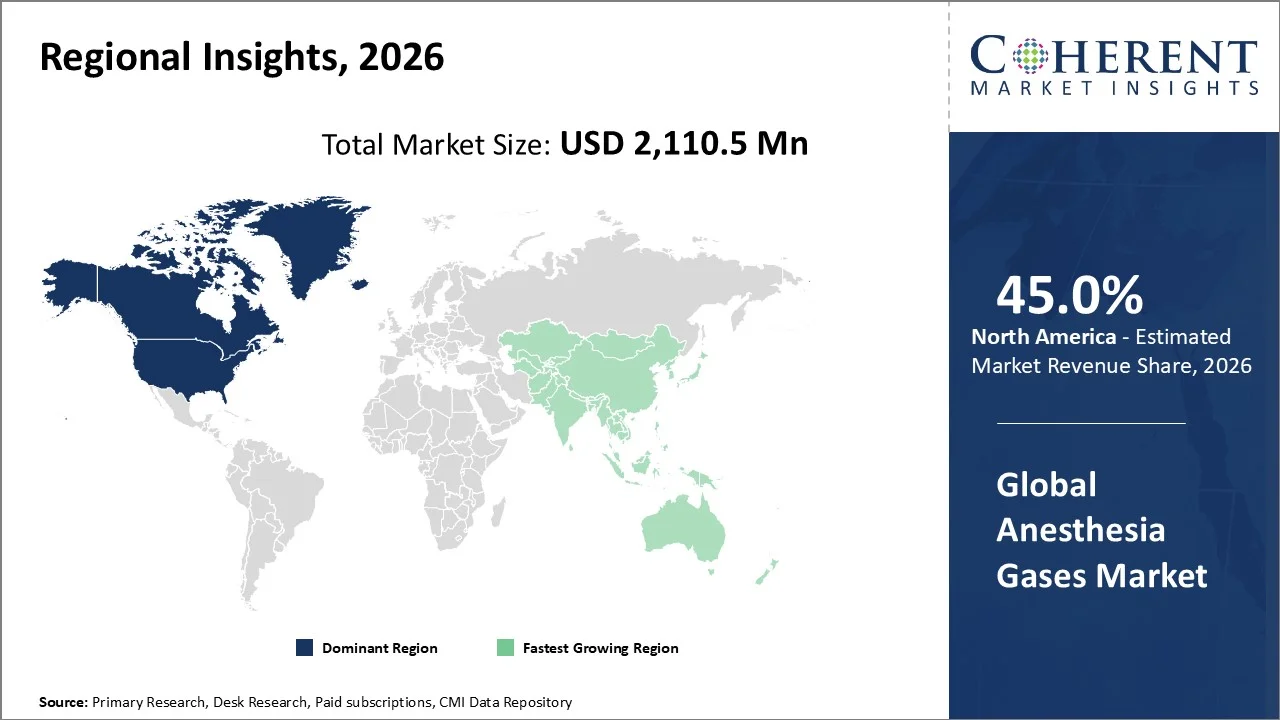
- North America is expected to acquire the dominant share of 45.0% in 2026. North America, led by the U.S., dominates the anesthesia gases market because it has high surgical procedure volumes, advanced hospital infrastructure, strong reimbursement, and faster adoption of regulated inhalation anesthetics. CMS reported U.S. hospital expenditure reached USD 1,634.7 billion in 2024, published in January 2026. CDC’s NHCS tracks inpatient, emergency, and outpatient hospital care nationally, supporting large anesthesia utilization.
Segmental Insights
Why is Anesthesia Gases Acquiring the Largest Market Share?
Anesthesia Gases is projected to account for the largest share of anesthesia gases in 2026, representing approximately 86.7% of the total volume. The anesthesia gases are acquiring the largest market share due to several key factors as follows: widespread use in surgical procedures, safety and control, technology advancement, and regulatory compliance and standards. Anesthesia gases offer greater control over the depth and duration of anesthesia, which is crucial for patient safety. This is driving their dominance over other anesthesia methods like intravenous anesthetics. The gases can be carefully adjusted to achieve precise anesthetic effects, making them the preferred choice for both routine and complex surgeries. The U.S. Food and Drug Administration (FDA) highlights that inhaled agents are widely recognized for their ability to ensure patient safety, particularly in high-risk surgeries. Anesthesia gases, such as sevoflurane, desflurane, and nitrous oxide, are essential for administering general anesthesia during surgeries. These gases are preferred due to their quick onset, predictable effects, and ease of monitoring. As the number of surgeries worldwide increases, particularly in developing regions, the demand for anesthesia gases naturally rises. According to a report from the World Health Organization (WHO), the volume of surgical procedures globally is expected to grow by 5% annually, further propelling the need for anesthesia gases in operating rooms. By 2026, ~65% of major hospitals reported adoption of low‑emission anesthetic gases to meet sustainability guidelines.
Moreover, regulatory agencies, such as the European Medicines Agency (EMA) and FDA, have established rigorous safety and quality standards for anesthesia gases, making them a preferred choice for hospitals and surgical centers. The continuous updates to safety guidelines, including minimizing environmental impact, are encouraging the adoption of greener and safer anesthetic gases. These regulations provide further legitimacy to the use of anesthesia gases, boosting their market share.
- Current Industry Events of 2026
- Market Size Estimation
- Regional Breakdown
- Competitive Landscape
- Customer Intelligence
- Segmental Analysis
- Pricing Analysis
- Key Market Drivers, Challenges & Future Trends
- Customized Insights Section
Nitrous Oxide holds the Largest Market Share
Nitrous oxide dominates the market, accounting for a significant 40.0% share in 2026. Nitrous oxide remains the dominant segment in the anesthesia gases market because it is a long-established, easily administered inhaled agent used across general anesthesia, procedural sedation, dental anesthesia, obstetric analgesia, and severe pain management. For instance, NCBI StatPearls, published in the 2026 Bookshelf edition and last updated in 2023, notes its low blood-gas partition coefficient of 0.47, 2–5-minute onset, and common 50% oxygen mixture, supporting fast induction and recovery. Furthermore, DailyMed/NIH, updated in January 2026 and published in February 2026, lists Nitrous Oxide USP as a prescription inhalation gas with 99% strength, confirming regulated medical availability. CDC/NIOSH, last reviewed in 2018, also supports wide dental use with exposure controls reducing N₂O to 25 ppm. EPA’s 2026-page records anesthesia as a recognized use source.
Which End User segment dominates the market?
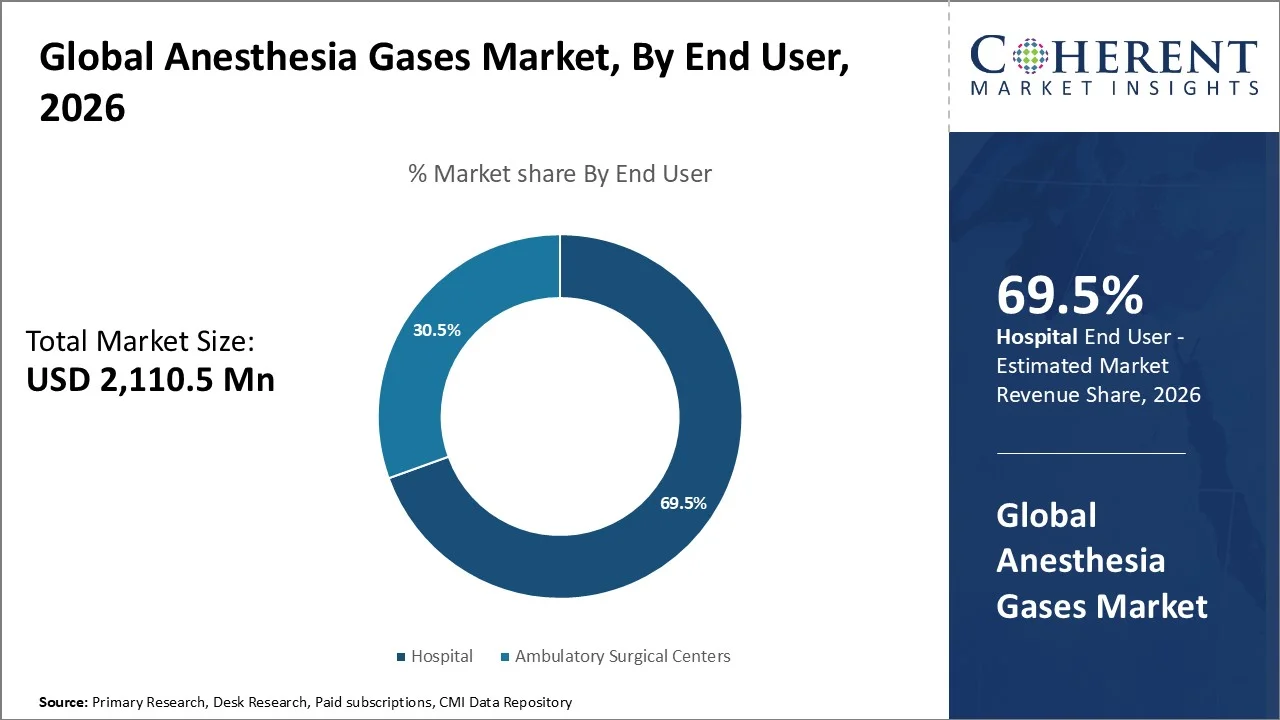
Hospital account for the largest share of 69.5% in 2026 because they concentrate operating rooms, emergency departments, ICUs, maternity care, and post-operative recovery units where continuous access to oxygen, nitrous oxide, sevoflurane, desflurane, and medical air is essential. For instance, the American Hospital Association’s Fast Facts on U.S. Hospitals, published in 2026, reported 6,100 U.S. hospitals, 907,216 staffed beds, and 35,658,583 admissions, showing why hospitals create the largest recurring consumption base for inhaled anesthetics and carrier gases. CMS’ CY 2026 OPPS/ASC final rule, published in 2025, supports hospital outpatient and surgical-service reimbursement visibility. FDA’s medical-gas CGMP guidance, published in 2025 with amendments effective in 2026, further strengthens hospital preference for regulated and traceable medical-gas supply.
Market Drivers
Increase in prevalence of chronic diseases worldwide
Rising incidence of chronic diseases globally has driven the global anesthesia gases market growth over the forecast period. Chronic diseases such as cancer, diabetes, cardiovascular conditions, and respiratory disorders often require surgical interventions, which in turn demand anesthesia. For instance, in 2026, according to the World Health Organization (WHO), approximately 70% of all surgeries worldwide are related to the treatment of chronic illnesses. This surge in surgical procedures directly increases the demand for anesthesia gases, particularly those used in prolonged surgeries. Many chronic diseases require outpatient surgeries for conditions like cancer or diabetes-related complications, leading to a rise in the use of ambulatory anesthesia. The CDC (2026) reports a 20% increase in outpatient procedures over the last five years, pushing greater demand for anesthesia gases in settings outside traditional hospitals. The increase in chronic disease prevalence is accompanied by more hospitals offering specialized care, including surgical interventions, further increasing the use of anesthesia gases. Reports show that India's healthcare spending on chronic diseases (2026) has surged by 15% since 2022, accelerating demand for advanced anesthetic systems.
Increase in geriatric (aging) population around the world
Increase in geriatric (aging) population around the globe has driven the global anesthesia gases market growth over the forecast period. The aging global population significantly boosts demand for anesthesia gases because older adults undergo more surgical and therapeutic procedures that require anesthesia management. According to the World Health Organization (WHO), the number of people aged 60 and older is projected to increase from 1.1 billion in 2023 to 1.4 billion by 2030, reflecting a substantial increase in surgical healthcare demand as people age and develop chronic conditions requiring intervention. Clinical data show that approximately 21 % of elderly patients require anesthesia and surgical procedures, compared with 12 % of the general adult population, indicating higher per‑capita use of anesthesia resources among older adults. As older patients often require complex operations orthopedic repairs, cardiovascular therapies, and cancer surgeries the volume of procedures needing inhalation and intravenous anesthetics rises, thereby pushing market growth and encouraging development of safer, more effective anesthesia gas delivery and monitoring systems.
Revolutionizing the Anesthesia Gases Market: How Innovation in AI-Driven Solutions and Sustainable Gases is Reshaping the Industry
Innovation is reshaping the anesthesia gases market by driving clinical efficiency, safety, and sustainability backed by 2026 data from authorized sources. Emerging technology integration such as digital monitoring systems and connected anesthesia delivery machines is accelerating precision in gas dosing and patient management, contributing to safer outcomes and reduced clinician workload. According to clinical research, sustainable anesthesia initiatives have already reduced anesthetic gas emissions per 100 surgeries from 3.95 tCO₂e in 2023 to 1.73 tCO₂e in 2024, a 56.2% decrease driven by improved protocols and system innovations. Additionally, anesthesia gas machines are projected to grow due to technological advances such as enhanced monitoring and airflow control. This combination of digital and sustainable improvements is transforming clinical practice and market dynamics in 2026.
Current Events and Their Impact on the Anesthesia Gases Market
Current Event | Description and its Impact |
FDA Medical Gas CGMP Rules Strengthen Quality Compliance |
|
CMS Expands Ambulatory Surgery Coverage in 2026 |
|
U.S. ASC Utilization Continues to Rise |
|
NHS 2026/27 Contract Pushes Low-Carbon Anesthesia Practices |
|
Anesthesia Gases Market Trends
- Increasing Demand for Anesthesia Gases in Emerging Markets: The growing healthcare infrastructure in emerging regions such as Asia-Pacific and Latin America is driving increased demand for anesthesia gases. Governments and private sectors are investing in upgrading hospitals and expanding surgical services, leading to higher consumption of anesthesia gases. For instance, India’s government has ramped up healthcare funding, with an estimated increase in healthcare capital expenditure by 8% annually through 2026, stimulating demand for anesthesia delivery systems.
- Adoption of Eco-friendly Anesthesia Gases: Environmental concerns are pushing the development of greener anesthesia Companies like Air Liquide and Linde Healthcare are focusing on developing low-carbon footprint anesthesia gases. In 2026, these products are gaining traction, especially in regions like Europe and North America, as part of a broader trend in reducing medical sector emissions. According to the Environmental Protection Agency (EPA), hospitals are aiming for a 10% reduction in anesthesia-related emissions by 2026, further boosting the demand for eco-friendly options.
- Technological Integration in Anesthesia Delivery: Smart anesthesia delivery systems with real-time monitoring capabilities are gaining ground. Systems integrated with IoT-enabled sensors provide real-time performance data to track gas usage, improving safety and efficiency. By 2026, such systems are expected to dominate the market, particularly in high-demand settings like hospitals and ambulatory surgical centers (ASCs), where safety and optimization are paramount. This trend is supported by research from Coherent Market Insights, which forecasts a 25% increase in IoT-enabled anesthesia devices by 2026.
Regional Insights
North America dominates owing to Strong Technological Infrastructure
North America account 45.0% market share in 2026, driven by several key factors, including advanced healthcare infrastructure, high surgical volumes, and significant technological adoption. The U.S. country is home to a large number of hospitals and surgical centers that prioritize patient safety and operational efficiency. For instance, in 2025, according to the data published by the Environmental Protection Agency (EPA), 72% of hospitals in the U.S. are projected to switch to greener anesthesia alternatives by 2026, due to growing concerns about environmental impact and regulatory pressure. Additionally, the adoption of advanced anesthesia delivery systems in North America is contributing to improved patient outcomes, with more precise and controlled anesthesia management, as reported by the U.S. Centers for Disease Control and Prevention (CDC) (published 2025). North America’s commitment to innovation in medical technologies and sustainability makes it a leading region in the global anesthesia gases market.
Source: U.S. Environmental Protection Agency (EPA), U.S. Centers for Disease Control and Prevention (CDC)
Asia Pacific Anesthesia Gases Market Trends
The Asia-Pacific region is poised to be as the fastest-growing region through 2026-2033. In 2026, one of the key reasons the Asia‑Pacific region is the fastest‑growing in the anesthesia gases market is strong government support for healthcare expansion and improved healthcare infrastructure across multiple countries. For instance, India’s government health expenditure share increased from 29% to 48% of total health expenditure between FY15 and FY22, and capital expenditure on healthcare has more than doubled over the past decade, indicating stronger public funding for facilities that provide surgical and anesthesia services, according to India’s Economic Survey published in January 2025 by the Government of India. Additionally, the World Health Organization’s Global Health Expenditure Database (updated Dec 12, 2025) shows ongoing increases in India’s current health expenditure as a percentage of GDP, reflecting government prioritization of healthcare capacity building. These public investments drive greater access to surgeries and procedural care, directly increasing the use of anesthesia gases. Furthermore, the rapid growth of ambulatory surgical centers in the Asia Pacific supported by healthcare reforms and rising demand for efficient surgical care signals broader systemic improvements in regional healthcare delivery that further fuel anesthesia product adoption.
Source: Press Information Bureau; World Bank Open Data
Strong Outpatient Surgery Ecosystem is Accelerating the Anesthesia Gases Market Demand in United States
The U.S. anesthesia gases market dominates North America due to its large hospital network, high surgical capacity, strong outpatient surgery ecosystem, and strict medical-gas quality framework. For instance, in February 2026, the American Hospital Association’s Fast Facts on U.S. Hospitals, reported 6,100 hospitals, 907,216 staffed beds, and 35.66 million hospital admissions, creating a broad demand base for oxygen, nitrous oxide, sevoflurane, desflurane, and other inhaled anesthetic agents. MedPAC’s March 2026 report stated that around 6,400 ambulatory surgical centers treated 3.4 million fee-for-service Medicare beneficiaries, showing strong demand from same-day surgeries. CMS’ CY 2026 OPPS/ASC final rule, published in November 2025, affects about 4,000 hospitals and 6,000 ASCs, supporting reimbursement visibility. Moreover, FDA’s 2025 medical-gas CGMP guidance, with requirements effective in 2026, strengthens supply quality, labeling, and distribution reliability.
China Anesthesia Gases Market Trends
China’s dominant position in the Asia-Pacific and East Asia industrial gases market is supported by its large industrial base, strong manufacturing ecosystem, and fast-growing clean-energy industries. The country’s demand for oxygen, nitrogen, hydrogen, argon, carbon dioxide, and specialty gases is closely linked to chemicals, electronics, automotive, metals, healthcare, and semiconductor manufacturing. For instance, in April 2026, China’s National Bureau of Statistics reported that value-added industrial output grew 6.1% year-on-year in Q1 2026, while major gas-consuming sectors such as raw chemical materials, automobiles, and electronics continued to show strong operating activity. China’s “Made in China 2025” strategy also supports advanced manufacturing, semiconductors, electric vehicles, and high-tech equipment, which require high-purity and specialty gases. Moreover, China’s renewable energy expansion strengthens hydrogen and industrial gas demand; in April 2026, the National Energy Administration reported that renewable energy capacity reached 2.395 billion kW by March 2026.
Who are the Major Companies in Anesthesia Gases Market
Some of the major key players in Global Anesthesia Gases Market are Baxter, AbbVie Inc., Piramal Enterprises Ltd., Fresenius SE & Co. KgaA, Drägerwerk AG & Co. KgaA, GE Healthcare, and Mindray Medical International Limited, among others.
Key News
- In May 2026, Olean General Hospital (OGH) and North American Partners in anesthetic (NAPA), the top single-specialty anesthetic management business in the country, launched a new collaboration. In September 2026, NAPA will start offering anesthetic services there. Olean General Hospital, a crucial acute care institution servicing Southwestern New York, is situated at 515 Main Street, Olean, NY. It is a part of Kaleida Health, the biggest healthcare provider in Western New York. In addition to a wide range of surgical and outpatient programs, the hospital provides sophisticated cardiovascular care, stroke treatments, and cancer therapy.
- In February 2026, Piramal Critical Care partnered with Blue‑Zone Technologies to introduce a full‑lifecycle technology solution that captures and recycles waste anesthetic gases. This innovation aims to reduce environmental impact by minimizing anesthetic gas emissions from healthcare facilities.
- In March 2025, Medtronic, a global leader in medical technology, services, and solutions introduced IoT-enabled anesthetic gas filters, equipped with real-time performance analytics. These smart filters offer advanced monitoring capabilities, allowing healthcare providers to optimize gas usage, ensure patient safety, and improve operational efficiency during surgeries. The real-time data provides insights into gas flow rates and filter efficiency, enhancing the management of anesthesia in critical care settings.
Market Report Scope
Anesthesia Gases Market Report Coverage
| Report Coverage | Details | ||
|---|---|---|---|
| Base Year: | 2025 | Market Size in 2026: | USD 2,110.5 Mn |
| Historical Data for: | 2020 To 2024 | Forecast Period: | 2026 To 2033 |
| Forecast Period 2026 to 2033 CAGR: | 3.9% | 2033 Value Projection: | USD 2,710.6 Mn |
| Geographies covered: |
| ||
| Segments covered: |
| ||
| Companies covered: | Baxter, AbbVie Inc., Piramal Enterprises Ltd., Fresenius SE & Co. KgaA, Drägerwerk AG & Co. KgaA, GE Healthcare, and Mindray Medical International Limited, among others. | ||
Analyst Opinion
- The anesthesia gases market is witnessing steady growth as the healthcare sector continues to prioritize patient safety, rapid recovery times, and cost-efficiency. With an increasing number of surgeries globally, the demand for safer and more efficient anesthetic agents is expected to rise. This market growth is driven by the popularity of gases like Sevoflurane and Desflurane, which offer faster recovery and minimal side effects.
- The demand for environmentally friendly anesthesia gases is also growing. Regulatory bodies, such as the Environmental Protection Agency (EPA) and FDA, are urging the healthcare sector to reduce reliance on gases with high global warming potential (GWP), like Desflurane. As part of this shift, Sevoflurane is expected to dominate the market by 2026 due to its lower GWP. Healthcare institutions are increasingly investing in low-emission anesthetic agents, with 72% of hospitals in the U.S. planning to switch to greener alternatives by 2026.
- The Asia Pacific region is poised to play a significant role in the growth of the anesthesia gases market, driven by expanding healthcare infrastructure and government-backed healthcare initiatives. With increasing surgery rates and an improving healthcare system in countries like China and India, the demand for anesthesia gases is expected to grow substantially in this region.
- In North America and Europe, healthcare providers are focusing on the adoption of advanced anesthesia delivery systems to enhance operational efficiency and improve patient outcomes. By implementing more precise and controlled anesthesia delivery, hospitals aim to increase patient safety, reduce recovery time, and optimize the use of anesthesia gases.
Speak to the analyst
Want personalized insights?
Take the findings above to one of our principal consultants, or have the report rebuilt around the segments, geographies and competitors you actually track.
Market Segmentation
- By Product Type (Revenue, USD Mn, 2021-2033)
- Anesthesia Gases
- Vaporizer Devices
- By Anesthesia Gases (Revenue, USD Mn, 2021-2033)
- Desflurane
- Sevoflurane
- Isoflurane
- Nitrous Oxide
- Other Anesthesia Gases
- By End User (Revenue, USD Mn, 2021-2033)
- Hospital
- Ambulatory Surgical Centers
- By Region (Revenue, USD Mn, 2021-2033)
- North America
- U.S.
- Canada
- Latin America
- Brazil
- Mexico
- Argentina
- Rest of Latin America
- Europe
- Germany
- U.K.
- France
- Italy
- Spain
- Russia
- Rest of Europe
- Asia Pacific
- China
- India
- Japan
- Australia
- South Korea
- ASEAN
- Rest of Asia Pacific
- Middle East
- GCC
- Israel
- Rest of Middle East
- Africa
- South Africa
- Central Africa
- North Africa
- North America
- Competitive Landscape
- Baxter
- AbbVie Inc.
- Piramal Enterprises Ltd.
- Fresenius SE & Co. KgaA
- Drägerwerk AG & Co. KgaA
- GE Healthcare
- Mindray Medical International Limited
Sources
Primary Research Interviews
- Interviews with Anesthesiologists, Surgeons, and Clinical Practitioners to understand the adoption of anesthesia gases in different surgical procedures, challenges faced with gas delivery systems, and preferences for specific anesthetic agents.
- Insights from Medical Equipment Manufacturers, Suppliers, and Distributors on advancements in anesthesia delivery systems, emerging technologies in gas systems, and market trends for anesthesia gases.
- Discussions with Hospital Administrators, Procurement Managers, and Supply Chain Directors to evaluate factors influencing the procurement of anesthesia gases, supply chain challenges, and cost management in hospitals.
- Conversations with Regulatory Bodies, Healthcare Policy Makers, and Compliance Officers to assess the impact of regulations on the production, distribution, and use of anesthesia gases, including safety standards and environmental concerns.
Databases
- U.S. Food and Drug Administration (FDA) Database
- PubMed (National Library of Medicine)
- Global Health Data Exchange (GHDx)
- European Medicines Agency (EMA) Database
- National Institute for Health and Care Excellence (NICE)
Magazines
- Anesthesia & Analgesia
- Journal of Clinical Anesthesia
- Anesthesiology News
- Modern Healthcare
- The Journal of the American Society of Anesthesiologists (ASA)
Journals
- Journal of Clinical Anesthesia
- Anesthesia and Analgesia Journal
- British Journal of Anaesthesia
- Journal of Anesthesia
- International Journal of Anesthesiology
Newspapers
- The New York Times
- The Guardian
- The Wall Street Journal
- Financial Times
- The Washington Post
Associations
- American Society of Anesthesiologists (ASA)
- International Anesthesia Research Society (IARS)
- European Society of Anaesthesiology (ESA)
- World Federation of Societies of Anaesthesiologists (WFSA)
- Society for Pediatric Anesthesia (SPA)
Public Domain Sources:
- U.S. National Library of Medicine (NIH)
- U.S. Centers for Disease Control and Prevention (CDC)
- World Health Organization (WHO)
- National Institutes of Health (NIH) Research Reports
- U.S. Food and Drug Administration (FDA) Medical Devices/Anesthesia Gases Page
Proprietary Elements
- CMI Data Analytics Tool
- Proprietary CMI Existing Repository of information for last 10 years
Get access to 250+ pages report
Every segment, forecast, competitor profile and data table behind the analysis above — available for instant download.
- ESOMAR Member
- ISO 9001:2015 Certified
- D-U-N-S Registered
- GDPR & CCPA Compliant
Missing comfort of reading report in your local language? Find your preferred language:
Transform your Strategy with Exclusive Trending Reports
Frequently Asked Questions
The Anesthesia Gases Market is expected to reach USD 2,710.6 Mn in 2033.
Major players operating in the global Anesthesia Gases Market include Baxter, AbbVie Inc., Piramal Enterprises Ltd., Fresenius SE & Co. KgaA, Drägerwerk AG & Co. KgaA, GE Healthcare, and Mindray Medical International Limited, among others.
Side effects of anesthesia gases and increase in generic anesthesia usage are the major factors hampering the growth of the anesthesia gases market.
Increase in prevalence of chronic diseases worldwide and increase in geriatric (aging) population around the world are the key factors driving the growth of the global anesthesia gases market.
The Anesthesia Gases Market is anticipated to grow at a CAGR of 3.9% between 2026 and 2033.
Among regions, North America is expected to account for a largest market share in the global Anesthesia Gases Market over the forecast period.