

Global Apheresis Equipment Market Size and Forecast
Apheresis Equipment Market size is estimated to be valued at USD 5.30 Bn in 2026 and is expected to reach USD 11.29 Bn in 2033, exhibiting a compound annual growth rate (CAGR) of 11.4% from 2026 to 2033.
Key Takeaways
- Based on Equipment Type, the Disposable Apheresis Kits segment leads the market, holding an estimated share of 64.0% in 2026, due to their critical role in ensuring safety, efficiency, and hygiene in blood component separation procedures.
- Based on Technology Type, the Membrane Filtration segment is projected to account for highest share of the market in 2026, driven by its ability to offer superior performance in complex separations.
- Based on Procedure Type, the Plasmapheresis segment is expected to hold largest share of the market in 2026, largely driven by wide clinical applications, and innovative device performance.
- Based on Application, the Hematological Disorders segment is expected to lead the global apheresis equipment market in 2026 with great share, driven by the rising prevalence of blood disease.
- Based on End User, the Hospitals and Clinics segment is set to dominate the market holding the largest share in 2026, driven by comprehensive procedural capabilities, and high patient throughput.
- Based on Region, North America is expected to lead the global apheresis equipment market in 2026 with a 40. 5% share. While, Asia Pacific, with 10.2% share in 2026, is projected to be the fastest growing region during the forecast period.
Market Overview
Apheresis is a medical technology that involves separating different components of blood ex vivo for different therapeutic purposes. The main products in the apheresis equipment industry are apheresis machines and disposable apheresis kits. Apheresis machines are advanced automated blood component separators that separate desired components from whole blood based on centrifugal force or membrane filtration. The two major types of apheresis machines are centrifugation equipment and membrane separation equipment.
Centrifugation equipment uses centrifugal force to separate components based on their density, while membrane separation uses a semi permeable filter to separate components based on molecular weight. Recent data show that strong investments in therapeutic plasma exchange services across the U.S. with all new Adia Med clinics now including TPE are boosting regional device procurement, reflecting rising apheresis equipment market demand.
Current Events and their Impact on the Apheresis Equipment Market
Current Event | Description and its Impact |
Economic Trends |
|
Public Health and Epidemiological Events |
|
Reimbursement Policy
In the United States, reimbursement for apheresis (such as therapeutic plasma exchange or red-cell exchange) is complex and evolving, with several key policy dynamics shaping access:
AABB, America’s Blood Centers, and the AABB have urged the Centers for Medicare & Medicaid Services (CMS) to establish a dedicated labor code for therapeutic apheresis nurses, stating current codes under-reimburse for the clinical complexity and cost involved in procedures like TPE, photopheresis, and immunoadsorption.
In September 2024, AABB expressed support for CMS updates that better reflect the resource intensity of apheresis used in CAR‑T and other cell therapies, indicating potential coverage improvements from 2025 onward.
- Current Industry Events of 2026
- Market Size Estimation
- Regional Breakdown
- Competitive Landscape
- Customer Intelligence
- Segmental Analysis
- Pricing Analysis
- Key Market Drivers, Challenges & Future Trends
- Customized Insights Section
Segmental Insights
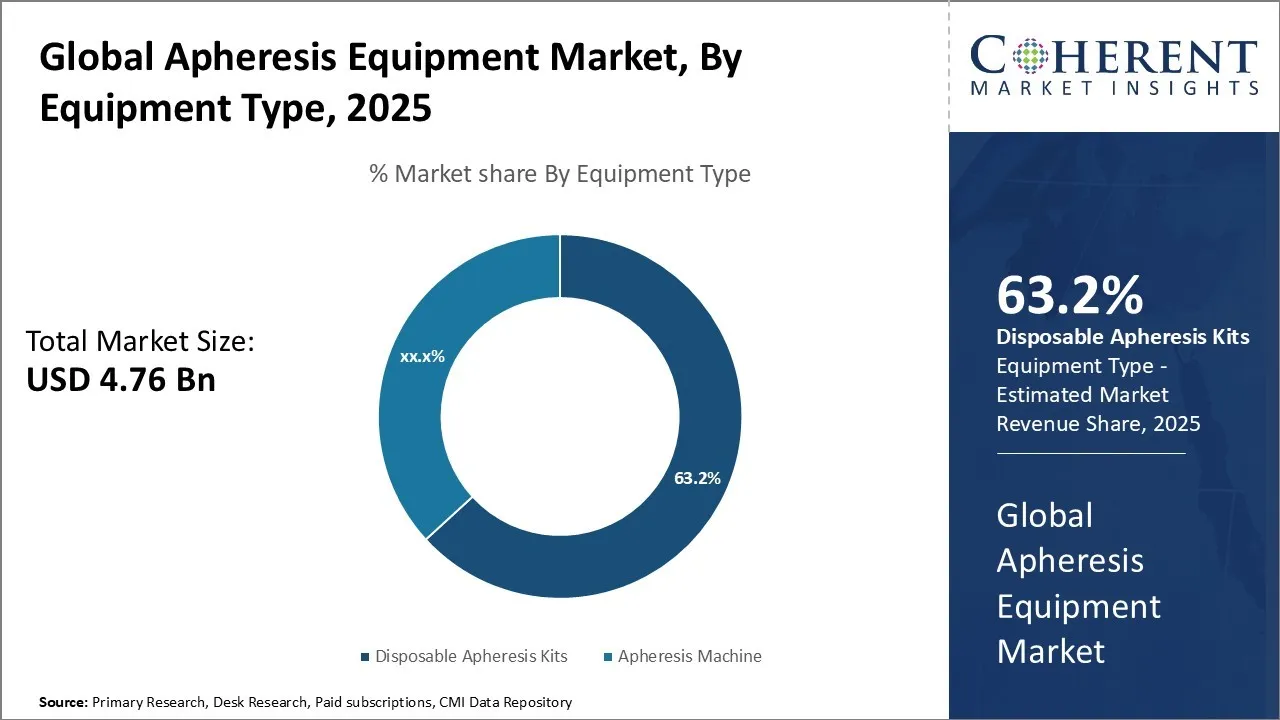
Apheresis Equipment Market Insights, By Equipment Type
Disposable Apheresis Kits Dominates the Overall Market
In terms of equipment type, the disposable apheresis kits segment estimated to contribute 64.0% share of the market in 2026, due to their critical role in ensuring safety, efficiency, and hygiene in blood component separation procedures. Single-use kits eliminate the risk of cross-contamination and bloodborne infections, which complies with strict hospital hygiene protocols and regulatory standards. Blood banks and donation centers prefer disposable kits for plasma, platelets, and RBC separation due to their convenience and safety. This is particularly important in developing countries where infrastructure for sterilization is limited.
In January 2024, Inspira Technologies announced its plan to introduce a single-use, disposable blood oxygenation kit designed for cardiopulmonary bypass and ECMO procedures. The kit, tailored for the company’s FDA-cleared INSPIRA ART100 system, includes integrated performance monitoring to alert users of functional changes during use.
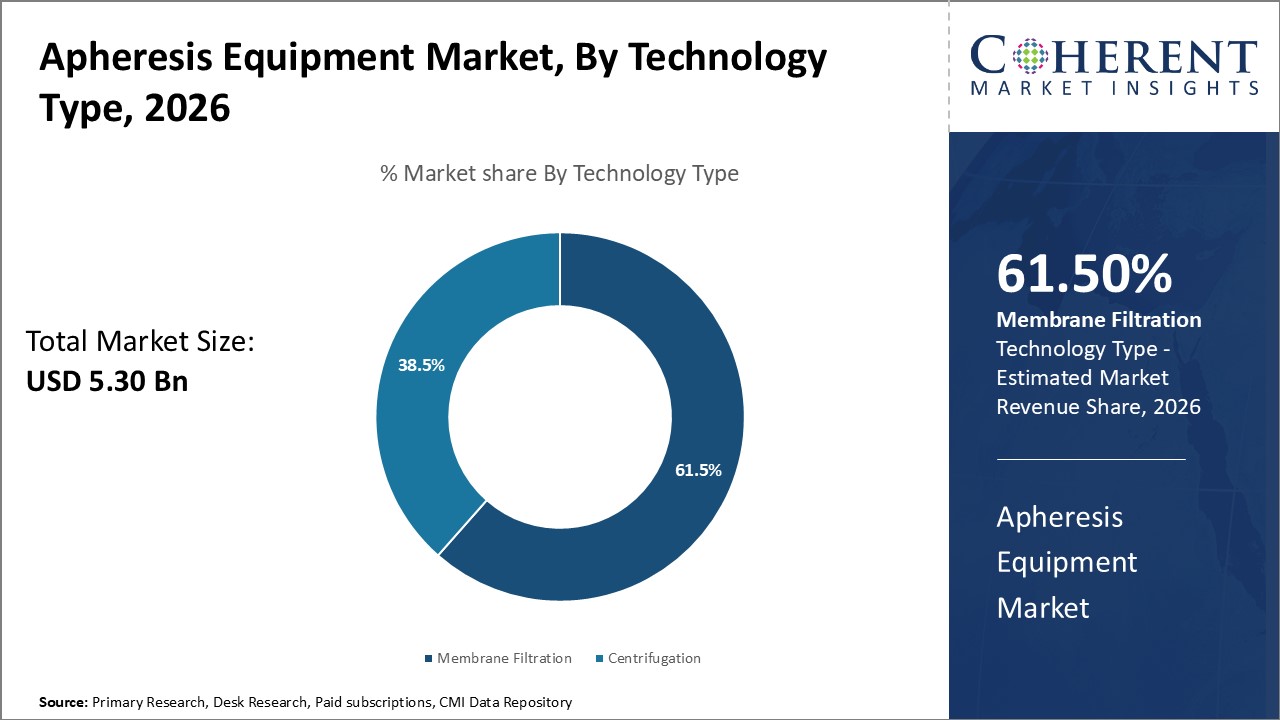
Apheresis Equipment Market Insights, By Technology Type
Membrane Filtration Holds the Largest Market Share
In terms of technology type, the membrane filtration segment is expected to hold the highest marker share in 2026. The membrane filtration segment is driven by its ability to offer superior performance in complex separations. Membrane filtration excels at reducing cell trauma, complement activation, and membrane fouling, providing safer and more precise separations during procedures like plasmapheresis and leukapheresis. The adoption of membrane filtration system has favored healthcare systems including Western Europe, Japan, and North America because of their scalability, safety, and compatibility with regenerative medicine applications.
For instance, Scientists at the Indian Institute of Information Technology, Allahabad (IIIT‑A) have developed an innovative, membrane‑based micro‑filtration device capable of separating plasma from whole blood within minutes. Utilizing hydrodynamic micro‑channels rather than conventional replaceable filters, the patented system swiftly isolates red and white blood cells, platelets, and plasma at approximately one drop per second.
Apheresis Equipment Market Insights, By Procedure Type
Plasmapheresis Acquires the Most Prominent Market Share
In terms of procedure type, the plasmapheresis segment is expected to hold the highest share of the market in 2026, largely driven by wide clinical applications, and innovative device performance. Plasmapheresis, also known as therapeutic plasma exchange (TPE), which is extensively used to treat various conditions, including autoimmune and neurological disorders such as Guillain–Barré Syndrome, myasthenia gravis, and thrombotic thrombocytopenic purpura, making it the most performed apheresis procedure. According to Red Cross Blood Donation, every 2 seconds someone in the U.S. needs blood and or platelets. Approximately 29,000 units of red blood cells are needed every day in the U. S. Nearly 5,000 units of platelets and 6,500 units of plasma are needed daily in the U.S.
For instance, Mandaya Puri Hospital in Indonesia has become the country’s first private hospital to offer plasma exchange (plasmapheresis) for patients with advanced multiple myeloma and autoimmune diseases such as myasthenia gravis. The procedure separates and replaces patients’ blood plasma to remove harmful antibodies and proteins, relieving severe symptoms, including kidney complications and respiratory challenges. This is further propelling the apheresis market share.
Apheresis Equipment Market Insights, By Application
Hematological Disorders Acquires the Largest Market Share owing to the Growing Prevalence of Blood Disorders
In terms of application, the hematological disorders segment is set to dominate the market with the highest share of the market in 2026, driven by rising prevalence of blood disease. Apheresis devices are extensively used for treating blood group disorders such as sickle cell disease, thalassemia, leukemia, lymphoma, and platelet disorders, where frequent blood processing or component removal is required. Apheresis equipment is used in the treatment of blood disease such as hemophilia A, sickle cell, and various hematological malignancies are on the rise globally, fuelling increased demand for leukapheresis and plateletpheresis in both clinical and transfusion settings.
In August 2024, a dedicated haematology lab with an apheresis machine launched at the district hospital of Pandit Ram Sumer Shukla Government Medical College, Rudrapur, US Nagar.
Apheresis Equipment Market Insights, By End User
Hospitals and Clinics Dominates the Overall Market Comprehensive Procedural Capability
In terms of end user, the hospitals and clinics segment are expected to contribute the largest shares of the market in 2026, due to their comprehensive procedural capabilities, high patient throughput, and integrated infrastructure. Hospitals and clinics are equipped for a wide range of apheresis procedures including plasma exchange, platelet collection, leukapheresis for autoimmune, hematological, neurological, and other disorders. With escalating rates of chronic diseases such as sickle cell, leukemia, Guillain-Barré syndrome, hospitals register high volume of apheresis procedures, driving strong demand for equipment.
In June 2025, UK hospitals expanded access to automated red blood cell exchange (RCX) machines to tackle long-standing inequalities in sickle cell disease treatment. Now, several NHS hospitals including Manchester Royal Infirmary and Homerton Hospital, no longer rely solely on manual emergency exchanges, enabling rapid, 24/7 exchange therapy close to patients' homes. This investment reduces critical care admissions, eases hospital pressure, and delivers lifesaving care more equitably.
Regional Insights
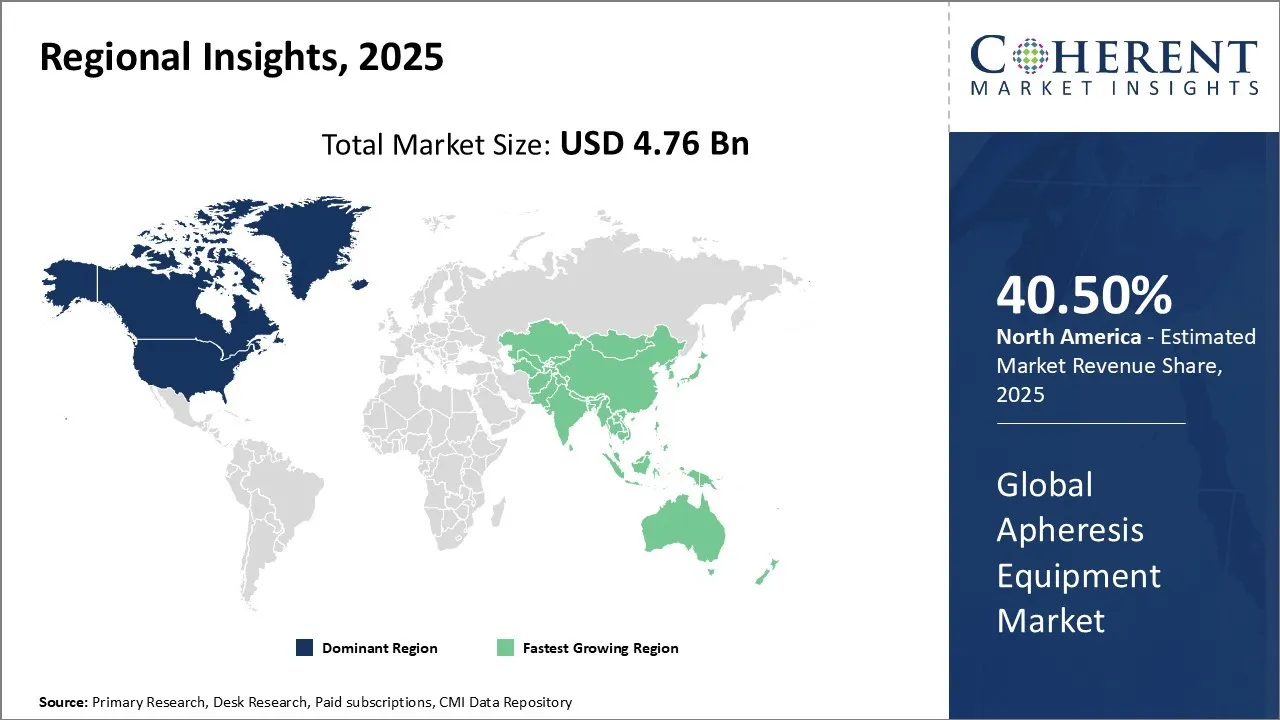
North America Apheresis Equipment Market Analysis & Trends
North America is expected to be the largest market for apheresis equipment during the forecast period, accounting for over 40.50% of the market share in 2026. North America has dominated the global apheresis equipment market for many years due to a strong presence of leading players in the region. The U.S. is home to many large multinational companies, such as Haemonetics Corporation and Terumo BCT, which have a significant market share in blood component collection and therapeutic apheresis products globally. Additionally, North America has a higher healthcare spend per capita as compared to other regions, enabling faster adoption of new and advanced apheresis technologies.
Asia Pacific Apheresis Equipment Market Analysis & Trends
Asia Pacific is expected to be the fastest-growing market for apheresis equipment, which is expected to grow at a CAGR of over 10.2% during the forecast period. The growth of the market in Asia Pacific is attributed to the large patient pool, increasing healthcare expenditure, and improving healthcare infrastructure in the region. Asia Pacific region has rising rate of blood-related disease in countries like China and India face growing incidences of leukemia, thalassemia, and other hematologic disorders, fueling needs for therapeutic apheresis and component collection. Asia pacific region is expanding its healthcare infrastructure and government support by improving hospital networks, especially in tier‑2/3 cities, and proactive government investment such as state-sponsored plasma donation drives in China resulting in enhancing access to apheresis.
For instance, in January 2023, Australian Red Cross Lifeblood issued a nationwide appeal for plasma donors, responding to record-high demand and ongoing shortages in blood and plasma supplies. Plasma donations now exceed whole blood in usage, doubling as the primary life-saving treatment for conditions like cancer, immune disorders, and trauma. The organization aims to recruit 100,000 new donors within a year and deploys awareness campaigns—including partnerships with sports teams—to raise visibility. This is further propelling the apheresis market share.
Apheresis Equipment Market Outlook Country-Wise
The U.S. Apheresis Equipment Market Trends
The United States continues to acquire the prominent share in global demand of the apheresis equipment, fueled by rising cases of leukemia, autoimmune disorders, and therapeutic plasma exchange (TPE). According to Leukemia & Lymphoma Society, an estimated combined total of 187,740 people in the US are expected to be diagnosed with leukemia, lymphoma or myeloma in 2024. Hospitals and research institutions are rapidly adopting automated and AI-powered apheresis systems, particularly the popular Spectra Optia platform, which supports CAR-T cell collections and plasma therapy trials. For instance, Adia Med recently announced that all upcoming clinics across the U.S. will offer TPE services, focusing on advanced conditions such as Alzheimer’s and autoimmune diseases. This reflects strong infrastructure for blood donation, cell therapy, and cutting-edge clinical research making the U.S. the largest and fastest adopter of next-generation apheresis technology.
China Apheresis Equipment Market Trends
China demonstrates remarkable momentum through increased focus on plasma-derived therapies, prompting expansion of automated apheresis systems to supply immunoglobulins, albumin, coagulation factors, and more. With the support of Chinese government and improved collection standards, the market is growing under the Healthy China 2030 strategy, China has strengthened regulations and funded infrastructure for plasma collection, boosting domestic production capacity and reducing imports of plasma-derived therapies.
Market Report Scope
Apheresis Equipment Market Report Coverage
| Report Coverage | Details | ||
|---|---|---|---|
| Base Year: | 2025 | Market Size in 2026: | USD 5.30 Bn |
| Historical Data for: | 2020 To 2024 | Forecast Period: | 2026 To 2033 |
| Forecast Period 2026 to 2033 CAGR: | 11.4% | 2033 Value Projection: | USD 11.29 Bn |
| Geographies covered: |
| ||
| Segments covered: |
| ||
| Companies covered: | Asahi Kasei Medical Co., Ltd., Terumo Corporation, Inc., Fenwal, Inc., Haemonetics Corp., Therakos, Inc., B. Braun Melsungen AG, HemaCare Corporation, Haemonetics Corporation, Cerus Corporation, Kawasumi Laboratories, Miltenyi Biotec, NxStage Medical, and Kaneka Medix Corporation | ||
| Growth Drivers: |
| ||
| Restraints & Challenges: |
| ||
Global Apheresis Equipment Market Drivers
- Growing demand for blood components: The demand for blood components like plasma, platelets, and red blood cells is increasing rapidly across the globe owing to the rising incidences of chronic diseases, trauma cases, and increasing number of complex surgeries performed every year. Apheresis is a specialized blood collection process that separates blood into its various components and allows the medical practitioner to collect only the required components while returning the rest to the donor. With the rising demand for blood components, the need for advanced apheresis equipment that can efficiently perform this separation is growing.
- Rising number of therapeutic apheresis procedures: The increasing number of therapeutic apheresis procedures being performed globally is a major factor driving the growth of the apheresis equipment market. Therapeutic apheresis involves removing harmful components such as antibodies, immune complexes, lipoproteins, or blood cells from the blood through an extracorporeal medical device and returning the remaining purified blood to the patient. Apheresis procedures are widely used in conditions like neurological disorders, autoimmune diseases, kidney diseases, and cancer.
- Technological advancements: Technological advancements are significantly driving the growth of the global apheresis equipment market. Various advanced technologies are helping physicians to perform complex apheresis procedures more efficiently and effectively. For instance, automated blood component extractors are being integrated with advanced robotics and artificial intelligence technologies. This is allowing operators to separate blood into various components like plasma, platelets, and red blood cells through touchscreen interfaces with minimum human errors and oversight. Some advanced extractors can even detect problems during processing and make real-time adjustments to ensure the optimal separation of blood components.
Global Apheresis Equipment Market Opportunities
- Growing demand for platelet rich plasma therapy: The growing demand for platelet rich plasma therapy is a promising opportunity for the global apheresis equipment market. Platelet rich plasma therapy is an innovative and effective regenerative treatment that involves centrifuging a blood sample to obtain platelet-rich plasma which can then be injected into injured areas. It has been effectively used for a variety of conditions like tennis elbow, chronic Achilles tendinitis, and knee osteoarthritis to speed up natural healing and reduce pain. A recent example includes the expansion of PRP services by Mayo Clinic and several orthopedic centers in the U.S., highlighting its growing acceptance in mainstream medicine. This trend significantly contributes to the apheresis equipment market forecast, as demand for specialized devices capable of efficiently extracting and separating blood components continues to rise across sports medicine, orthopedics, and cosmetic procedures.
- Adoption of automated devices: The increasing prevalence of chronic diseases, such as cancer and autoimmune disorders, has significantly driven the demand for apheresis procedures in recent years. Apheresis is an important therapeutic treatment that involves extracting plasma and returning blood cells back to the patient. However, existing manual processes for donor collection and therapeutic apheresis are time-consuming and require extensive human resources and monitoring. The adoption of advanced automated devices promises to streamline these processes while achieving higher efficiency and accuracy. Automated systems allow for walk-away capabilities and provide standardized, high-quality collection with minimal human error compared to manual methods. This reduces the hands-on time for medical professionals and improves procedure consistency.
Global Apheresis Equipment Market Trends
- Increasing adoption of disposable apheresis kits: The increasing adoption of disposable apheresis kits is substantially shaping the apheresis equipment market growth. Disposable kits streamline the blood collection process—eliminating sterilization downtime and improving infection control which has led these kits to dominate over 70% of sales in the U.S. market in 2023. For instance, Terumo BCT’s FDA-cleared Reveos automated system, paired with single-use soft kits, is already enhancing workflow and taking pressure off hospital resources. In the Asia-Pacific region, rising chronic illness rates have spurred demand for disposable kits that ensure safety and convenience, making them the leading product segment in 2023. With innovations in user-friendly design and pathogen-safe disposables, the global market continues to expand, driven by a shift toward safer, more efficient apheresis procedures.
- Rising demand for therapeutic plasma exchange procedures: The increasing demand for therapeutic plasma exchange procedures is having a significant impact on the global apheresis equipment market. Plasma exchange therapy is used extensively to treat various autoimmune disorders such as Guillain-Barre syndrome, myasthenia gravis, chronic inflammatory demyelinating polyneuropathy, and TTP. It helps remove pathogenic autoantibodies or immunoglobulins from circulating blood which are responsible for these conditions. In April 2025, hospitals in Japan began expanding the use of plasma exchange in critical care units for neurological autoimmune disorders, driving the adoption of advanced apheresis systems. This growing clinical acceptance is directly influencing the apheresis equipment market value, with increased demand for high-throughput, patient-friendly devices capable of supporting complex procedures across intensive care settings.
Recent Developments
- In May 2025, Terumo Interventional Systems launched its advanced ROADSAVER™ dual-layer micromesh carotid stent system in Europe and the Asia-Pacific region. Featuring a closed-cell design with open-cell flexibility, the stent enhances scaffolding and embolic protection during carotid artery procedures. Its introduction comes as stroke prevention strategies take center stage, and clinicians demand safer, more effective neurovascular interventions.
- In May 2025, BioLife Plasma Services, a Takeda subsidiary, begun implementing Fresenius Kabi’s new Adaptive Nomogram across its U.S. centers equipped with the Aurora Xi plasmapheresis system.
- In May 2025, BioRewards Plasma Services, backed by investor Alpha‑1 Plasma Holdings, unveiled a USD 100 million expansion plan to open more than 20 state-of-the-art plasma collection centers across the U.S. over the next three years. The new centers will incorporate AI-driven site selection, CRM donor engagement, and operational optimization tools to enhance donor experience and boost efficiency.
- In May 25, 2023, Terumo Corporation a medical device company launched the first training program of its kind to help cell and gene therapy manufacturers improve their cell collection processes and accelerate the commercialization of therapeutics. This new program trains the participants in apheresis.
Analyst Opinion (Expert Opinion)
The apheresis equipment market is undergoing a pivotal transformation is one that reflects a broader shift toward precision-driven, resource-efficient, and patient-centric blood component management. The momentum is not only sustained by clinical demand, but increasingly by the convergence of reimbursement reforms, digital integration, and biologics pipeline expansion, particularly in high-yield geographies such as the Asia-Pacific and Eastern Europe.
Moreover, the traditional use of apheresis in therapeutic plasma exchange is being rapidly outpaced by its integration into the collection of cell-based therapies and plasma-derived biologics. Consider this: in the U.S. alone, plasma collection centers have more than doubled over the last five years, reaching over 1,000 sites as of 2024. These centers are heavily reliant on automated plasmapheresis systems. Manufacturers that fail to integrate features like customizable protocols and donor-centric interfaces are at risk of being bypassed in procurement processes dominated by vertically integrated biologics producers.
Apart from this, regulatory alignment in markets such as China and India has sharply reduced adoption friction. For example, India’s National Blood Policy has incentivized public-private partnerships to install apheresis devices in Tier-II hospitals for the treatment of conditions like sickle cell anemia and dengue hemorrhagic fever. These diseases are not episodic in nature; they represent a recurring demand pool for plateletpheresis and leukapheresis systems. The implications are clear: manufacturers must pivot product portfolios toward mobile, modular, and scalable equipment suitable for decentralized settings.
Besides this, the North American and Western European markets are no longer solely driven by hardware innovation. Instead, the value is shifting toward interoperability with hospital information systems (HIS) and real-time patient monitoring. Haemonetics’ NexSys PCS system, for example, now integrates biometric screening and AI-based donor health assessments, setting a new standard for what is expected in both fixed and mobile setups. Competitive differentiation is now less about centrifuge speed and more about machine learning models that predict adverse donor events or optimize anticoagulant ratios on-the-fly.
Speak to the analyst
Want personalized insights?
Take the findings above to one of our principal consultants, or have the report rebuilt around the segments, geographies and competitors you actually track.
Market Segmentation
- By Equipment Type (Revenue, USD Bn, 2021 - 2033)
- Disposable Apheresis Kits
- Apheresis Machines
- By Technology Type (Revenue, USD Bn, 2021 - 2033)
- Centrifugation
- Membrane Filtration
- By Procedure Type (Revenue, USD Bn, 2021 - 2033)
- Photopheresis
- Plasmapheresis
- LDL Apheresis
- Plateletpheresis
- Leukapheresis
- Erythrocytapheresis
- Others (Lymphopheresis, lipidpheresis)
- By Application (Revenue, USD Bn, 2021 - 2033)
- Renal disorders
- Neurological disorders
- Hematological disorders
- Other disorders
- By End User (Revenue, USD Bn, 2021 - 2033)
- Hospitals and Clinics
- Ambulatory Surgical Centers
- Blood Donation Centers
- Others
- By Region (Revenue, USD Bn, 2021 - 2033)
- North America
- U.S.
- Canada
- Latin America
- Brazil
- Argentina
- Mexico
- Rest of Latin America
- Europe
- Germany
- U.K.
- Spain
- France
- Italy
- Russia
- Rest of Europe
- Asia Pacific
- China
- India
- Japan
- Australia
- South Korea
- ASEAN
- Rest of Asia Pacific
- Middle East
- GCC Countries
- Israel
- Rest of Middle East
- Africa
- South Africa
- North Africa
- Central Africa
- North America
- Company Profiles
- Asahi Kasei Medical Co., Ltd.
- Terumo Corporation, Inc.
- Fenwal, Inc.
- Haemonetics Corp.
- Therakos, Inc.
- Braun Melsungen AG
- HemaCare Corporation
- Haemonetics Corporation
- Cerus Corporation
- Kawasumi Laboratories
- Miltenyi Biotec
- NxStage Medical
- Kaneka Medix Corporation.
Sources
Primary Research Interviews from the following stakeholders
Stakeholders
- Interviews with hospital administrators, hematologists, nephrologists, transfusion medicine specialists, biomedical engineers, and procurement heads across major healthcare systems.
Databases
- U.S. Food and Drug Administration (FDA) – Medical Device Database
- European Medicines Agency (EMA) – Medical Device and Blood Product Regulations
- National Blood Authority, Australia – Equipment Procurement and Usage Reports
- Indian Ministry of Health and Family Welfare – Transfusion Services Statistics
- WHO Global Database on Blood SafetyJapan Pharmaceuticals and Medical Devices Agency (PMDA)
- National Health Service (UK) Clinical Procurement Database
- OECD Health Statistics
- China National Medical Products Administration (NMPA)
Magazines
- Medical Device Network
- MedTech Innovation News
- Transfusion Today
- LabMedica International
- HealthTech Magazine
- Biomedical Instrumentation & Technology
- Nephrology News & Issues
- CAP Today
Journals
- Transfusion (AABB)
- Journal of Clinical Apheresis (Wiley)
- Blood Reviews (Elsevier)
- Journal of Thrombosis and Haemostasis
- Kidney International Reports
- Hematology/Oncology Clinics of North America
- Journal of Biomedical Science and Engineering
Newspapers
- The Economic Times – Healthcare & Life Sciences
- The Hindu Business Line – Hospitals & Medtech
- The Wall Street Journal – Health & Medicine
- Financial Times – Global Health Reports
- South China Morning Post – Medtech and Biotech News
Associations
- AABB (formerly American Association of Blood Banks)
- World Apheresis Association (WAA)
- International Society of Blood Transfusion (ISBT)
- Association for the Advancement of Blood & Biotherapies
- International Society of Nephrology (ISN)
- Biomedical Engineering Society (BMES)
- Indian Society of Nephrology
- European Society for Organ Transplantation (ESOT)
Public Domain Sources
- U.S. Centers for Medicare & Medicaid Services (CMS) – Device Reimbursement Codes
- Ministry of Health, Labour and Welfare (Japan) – Device Procurement Trends
- National Health Authority (India) – Ayushman Bharat Infrastructure Reports
- European Commission – Health Technology Assessments
- NHS Digital – Clinical Equipment Utilization Statistics
- Health Canada – Medical Device License Search
- NITI Aayog – Healthcare Infrastructure Expansion Plans
- U.S. Centers for Disease Control and Prevention (CDC) – Blood Safety and Availability Reports
Proprietary Elements
- CMI Data Analytics Tool, and Proprietary CMI Existing Repository of information for last 8 years
Get access to 250+ pages report
Every segment, forecast, competitor profile and data table behind the analysis above — available for instant download.
- ESOMAR Member
- ISO 9001:2015 Certified
- D-U-N-S Registered
- GDPR & CCPA Compliant
Missing comfort of reading report in your local language? Find your preferred language:
Transform your Strategy with Exclusive Trending Reports
Frequently Asked Questions
The Apheresis Equipment Market is estimated to be valued at USD 5.30 Bn in 2026, and is expected to reach USD 11.29 Bn by 2033.
The key factors hampering the growth of the global apheresis equipment market are high cost of apheresis procedures, lack of awareness, and stringent government regulations.
The major factors driving the growth of the market are the growing demand for blood components, rising number of therapeutic apheresis procedures, and technological advancements.
The disposable apheresis kits segment is the leading equipment type segment in the market owing to the continuous launch of new products.
The major players operating in the market are Asahi Kasei Medical Co., Ltd., Terumo Corporation, Inc., Fenwal, Inc., Haemonetics Corp., Therakos, Inc., B. Braun Melsungen AG, HemaCare Corporation, Haemonetics Corporation, Cerus Corporation, Kawasumi Laboratories, Miltenyi Biotec, NxStage Medical, and Kaneka Medix Corporation.
North America is expected to continue leading the market during the forecast period.
The CAGR of the Apheresis Equipment Market is projected to be 11.4% from 2026 to 2033.