

Interventional Radiology Market Analysis & Forecast
The Global Interventional Radiology Market size is estimated to be valued at USD 30.88 Bn in 2026 and is expected to reach USD 49.91 Bn by 2033, exhibiting a compound annual growth rate (CAGR) of 7.1% from 2026 to 2033.
Key Takeaways
- By Product, the MRI systems segment is projected to lead the global Interventional Radiology Market outlook with a 37.3% share in 2026.
- By Application, The Cardiology Segment is expected to dominate the market, accounting for 33.1% of the market share in 2026.
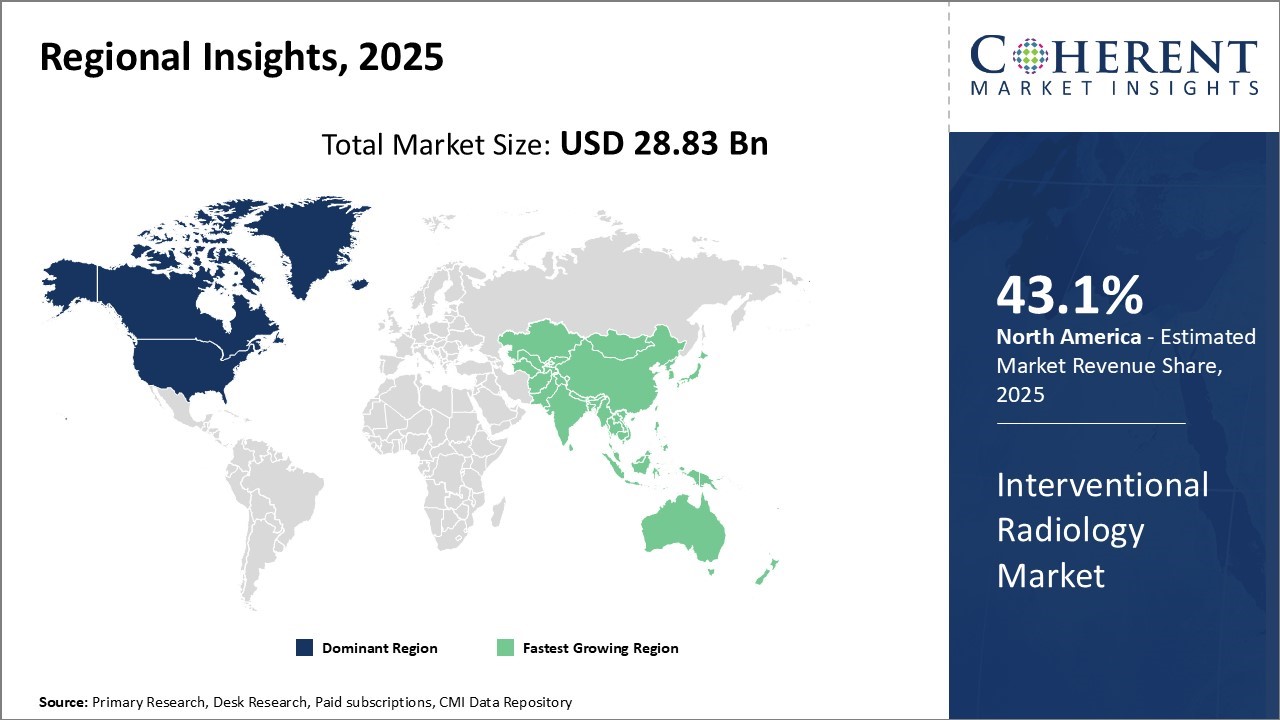
- By Region, North America is forecasted to hold the largest market share at 43.1% in 2026.
Market Overview
The Global interventional radiology market forecast is witnessing positive growth trends over the past few years. There has been a steady rise in the demand for minimally invasive procedures for the treatment of various diseases. Advancements in image-guided technology and the development of novel embolic agents, catheters, and guidewires are helping interventional radiologists to treat conditions that were traditionally managed surgically. Furthermore, the rising geriatric population prone to chronic diseases and the increasing healthcare expenditure in developing nations are some of the key factors driving the demand for interventional radiology procedures worldwide.
Current Events and Its Impact on the Global Interventional Radiology Market
Event | Description and Impact |
Regulatory and Reimbursement Shifts |
|
Emerging Market Access and Equity |
|
Regional Healthcare Investments |
|
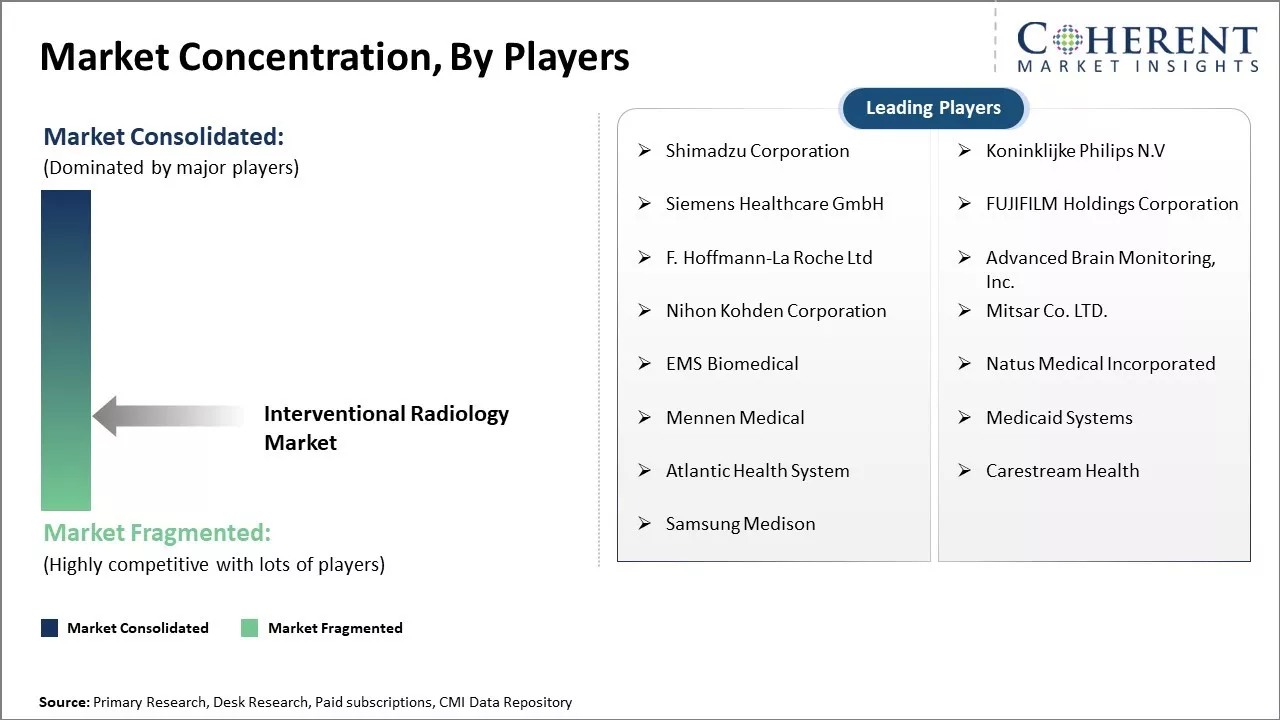
Market Concentration and Competitive Landscape
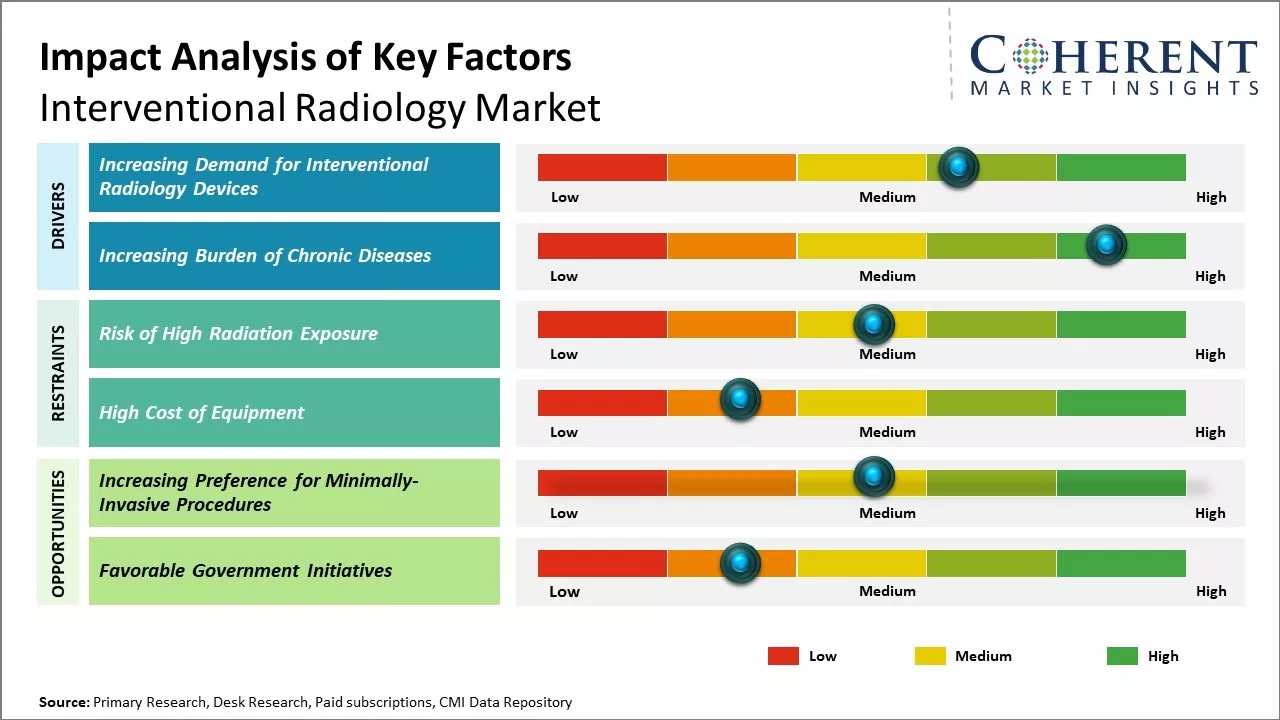
Increasing Demand for Interventional Radiology Devices
Increasing demand for interventional radiology devices is expected to propel the growth of the global interventional radiology market over the forecast period. Interventional radiology (IR) is a way to diagnose and treat a variety of chronic disorders without major surgery, and thus, there is an increasing demand for IR devices. In December 2020, Samsung Electronics Co. Ltd., an electronics company, launched its premium diagnostic imaging solutions in ultrasound, digital radiography, and mobile computed tomography at the Radiological Society of North America (RSNA) 2020, to expand its product portfolio in the interventional radiology market.
Increasing Burden of Chronic Diseases
Increasing burden of chronic diseases, such as cancer, is expected to boost the growth of the global interventional radiology market during the forecast period. For instance, interventional radiology uses imaging techniques, such as real-time X-rays, computed tomography, ultrasound, or magnetic resonance imaging, to guide treatments right to the cancer site.
According to the National Cancer Institute, the number of new cancer cases per year is expected to rise to 29.5 million and the number of cancer-related deaths to 16.4 million by 2040. Thus, with the increasing prevalence of cancer, the use of IR devices is also expected to increase at a rapid pace.
- Current Industry Events of 2026
- Market Size Estimation
- Regional Breakdown
- Competitive Landscape
- Customer Intelligence
- Segmental Analysis
- Pricing Analysis
- Key Market Drivers, Challenges & Future Trends
- Customized Insights Section
Market Opportunities: Increasing Preference for Minimally-Invasive Procedures
Increasing preference for minimally-invasive procedures is expected to provide significant growth opportunities for players in the global interventional radiology market. For instance, the concept behind interventional radiology is to diagnose and treat patients using minimally-invasive techniques to improve health outcomes.
In April 2021, Genesis MedTech, a medical device company, announced the launch of the novel laparoscopic technology, allowing physicians to conduct minimally invasive surgery instead of open surgery to reduce risk of patients and enhance recovery time.
Segmental Insights
Interventional Radiology Market Insights, By Product
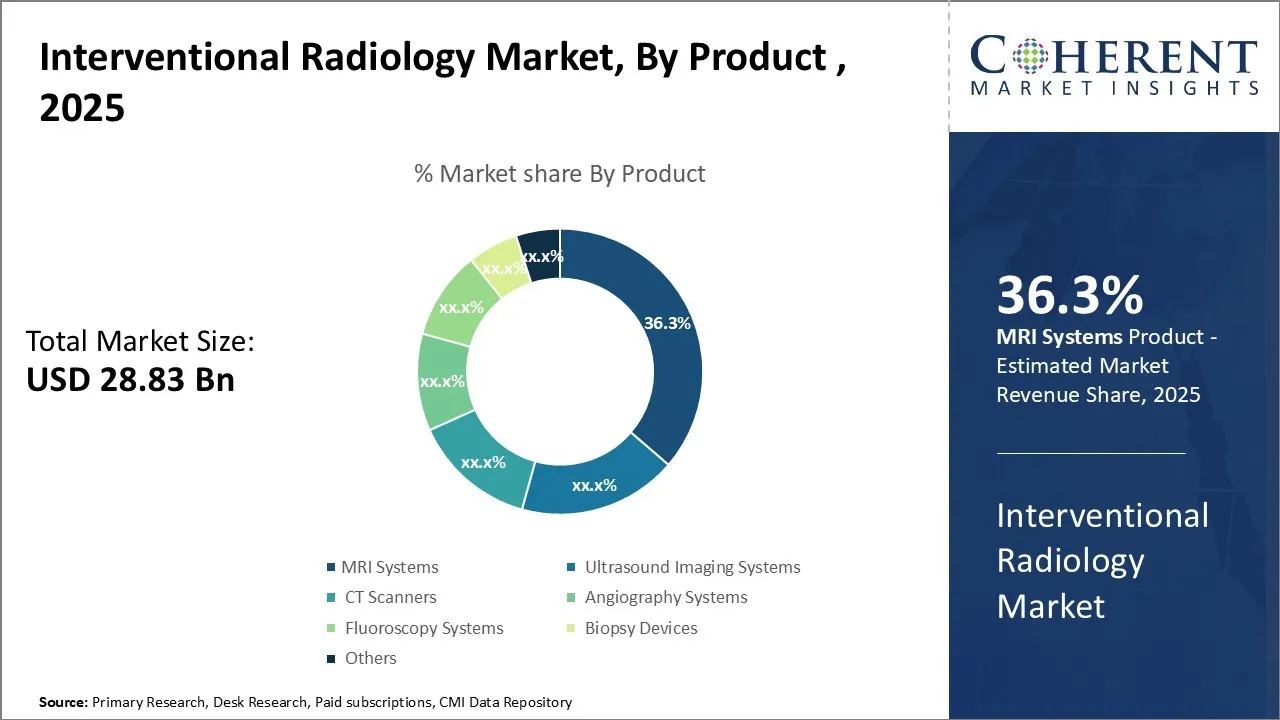
The product segment includes MRI systems, ultrasound imaging systems, CT scanners, angiography systems, fluoroscopy systems, biopsy devices, and others. The MRI systems sub-segment is estimated to hold 37.3% of the Interventional Radiology Market share in 2026 owing to its advanced capabilities. MRI provides excellent soft tissue contrast resolution without using ionizing radiation like CT or fluoroscopy. This makes MRI the preferred imaging modality for a variety of interventional procedures.
MRI also has the key advantage of multidirectional imaging which allows physicians to visualize tissues and pathologies from any angle during a procedure for precise guidance. Recent innovations have further enhanced MRI's clinical value for interventional applications. Open architecture platforms now integrate advanced visualization tools that offer real-time imaging and 3D reconstruction of target anatomies.
This level of anatomical detail helps interventional radiologists more accurately navigate devices and place implants or perform biopsies of small lesions that were previously difficult to target. Upgraded coils and coils arrays also provide higher resolution images, enabling interventional procedures in smaller or more complex regions of the body.
As technology advances, MRI is poised to take on an even greater role across more areas of interventional radiology. Its superior tissue imaging without ionizing radiation will continue attracting clinicians as they develop new minimally invasive techniques. This expanding scope along with ongoing enhancements in capabilities explains the strong and growing demand for MRI systems in the global interventional radiology marketplace.
Interventional Radiology Market Insights, By Application
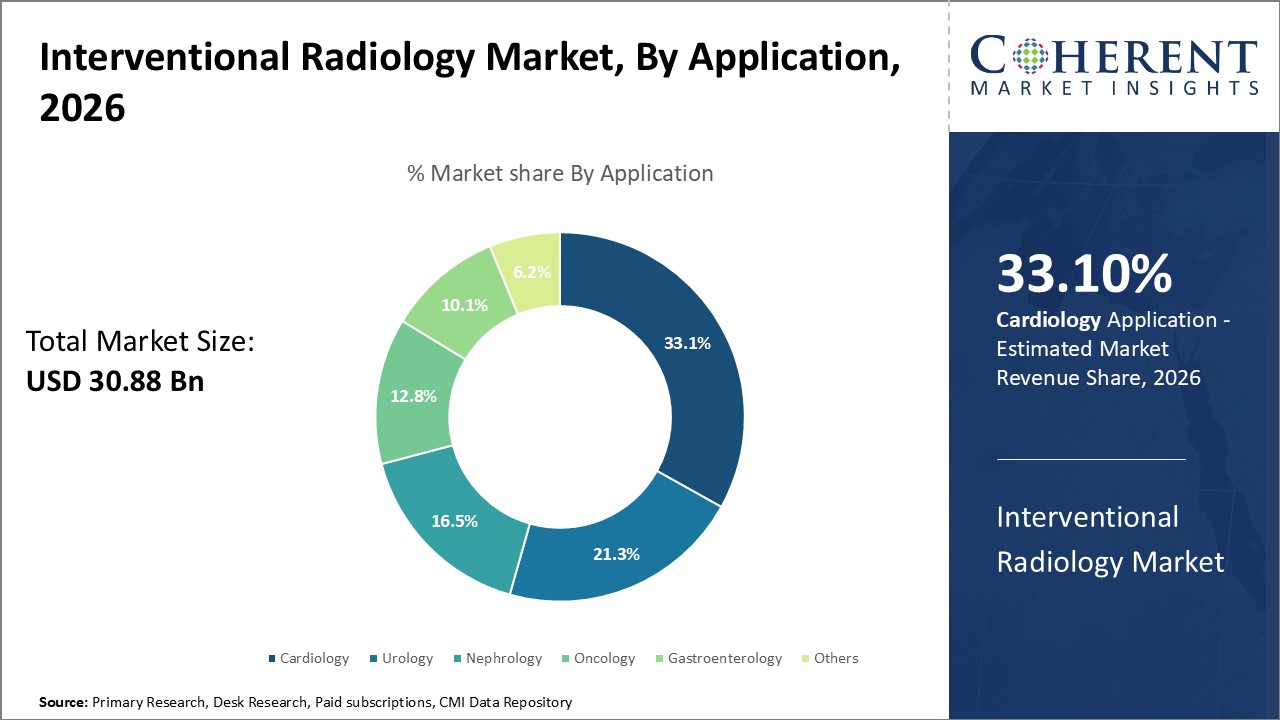
The application segment includes cardiology, urology, nephrology, oncology, gastroenterology, and others. The cardiology sub-segment is estimated to hold 33.1% of the Interventional Radiology Market demand share in 2026. This segment encompasses a wide range of minimally-invasive diagnostic and treatment procedures performed using image guidance to access the cardiovascular system.
The rising worldwide prevalence of heart disease, blockages, valve problems, and other cardiac conditions has prompted greater use of these techniques. Key drivers include the increasing geriatric population base that is highly susceptible to cardiovascular problems. Age-related declines in heart health coupled with sedentary lifestyles have amplified demands for interventional cardiology approaches.
These allow treating cardiac issues using small incisions rather than open-heart surgery, thus reducing risks, recovery times, and costs. Continuous technical improvements also support segment expansion. Newer guidewires, balloon catheters, and stent platforms facilitate treating complex blockages or abnormalities with higher success rates.
Bioabsorbable stents and drug-eluting varieties further minimize in-stent restenosis risks. Robotic cardiac catheterization systems and MRI-guided technologies now enable interventional cardiology in more challenging patient cases or anatomical contexts than before
Interventional Radiology Market - Regional Insights
North America Interventional Radiology Market Analysis and Trends
North America is projected to lead the global interventional radiology market trend with a 43.1% share in 2026, anchored by the U.S. and Canada’s advanced healthcare infrastructure and strong presence of leading medical device manufacturers such as Medtronic and Siemens Healthineers. The region benefits from rapid knowledge exchange between top research institutions and practicing interventional radiologists, which accelerates the adoption of innovative procedures.
Favorable reimbursement policies further enhance the economic feasibility of interventional treatments for patients. Continuous investments in R&D and collaborations among healthcare providers and technology firms reinforce North America’s dominant position, even as other regions demonstrate rapid growth.
Asia Pacific Interventional Radiology Market Analysis and Trends
Asia Pacific, led by China and India, is recognized as the fastest-growing market in interventional radiology in 2026. Growing government initiatives aimed at addressing the rising cancer burden have prioritized expanding access to advanced interventional oncology treatments. Economic development in the region has increased hospital purchasing power for cutting-edge medical devices, while rising disposable incomes are driving patient demand for quality care.
International medical device companies such as GE Healthcare and Philips are capitalizing on these trends by introducing next-generation products supported through regional clinical research collaborations. These factors collectively contribute to Asia Pacific’s rapid expansion and innovation adoption in the market.
Dominating Countries in the Interventional Radiology Market
United States Interventional Radiology Market Analysis and Trends The U.S. commands the North American market, supported by a mature healthcare ecosystem, substantial R&D investments, and leading transplant centers. Robust reimbursement frameworks and high procedure volumes enable ongoing innovation in interventional radiology devices and techniques. The country’s leadership is bolstered by collaboration between academic institutions, hospitals, and industry, driving continuous improvements in clinical outcomes.
China Interventional Radiology Market Analysis and Trends China stands out within Asia Pacific’s interventional radiology segment due to government-backed programs targeting cancer care and healthcare infrastructure expansion. Significant investments in clinical research and manufacturing capacity by both domestic and international medical device companies have enhanced the availability of advanced interventional radiology technologies. A growing patient population with increasing healthcare access and affordability further propel China’s market growth.
Market Report Scope
Interventional Radiology Market Report Coverage
| Report Coverage | Details | ||
|---|---|---|---|
| Base Year: | 2025 | Market Size in 2026: | USD 30.88 Bn |
| Historical Data for: | 2020 To 2024 | Forecast Period: | 2026 To 2033 |
| Forecast Period 2026 to 2033 CAGR: | 7.1% | 2033 Value Projection: | USD 49.91 Bn |
| Geographies covered: |
| ||
| Segments covered: |
| ||
| Companies covered: | Shimadzu Corporation, Koninklijke Philips N.V, Siemens Healthcare GmbH, FUJIFILM Holdings Corporation, F. Hoffmann-La Roche Ltd, Advanced Brain Monitoring, Inc., Nihon Kohden Corporation, Mitsar Co. LTD., EMS Biomedical, Natus Medical Incorporated, Mennen Medical, Medicaid Systems, Atlantic Health System, Carestream Health, and Samsung Medison | ||
| Growth Drivers: |
| ||
| Restraints & Challenges: |
| ||
Analyst Viewpoint
- The global interventional radiology market has strong growth potential driven by the rising geriatric population and increasing prevalence of chronic diseases like cancer, cardiovascular disease (CVD), and others.
- The market is expected to be dominated by North America owing to advanced healthcare infrastructure and favorable reimbursement policies for minimally invasive procedures. Asia Pacific is anticipated to be the fastest growing region with India and China likely to be at the forefront of growth due to rising healthcare expenditure and large patient pools.
- High costs associated with interventional radiology devices, coupled with lengthy approval times from regulatory bodies continue to restrain the market growth to some extent.
- Nonetheless, market players could gain opportunities from the increasing use of robot-assisted surgery and ongoing R&D to develop advanced imaging technologies for improved clinical outcomes.
- Further, the demand for refurbished equipment from price-sensitive developing nations remains untapped.
- Reimbursement uncertainties in some regions also pose a challenge. Nonetheless, the growing popularity of medical tourism and increasing healthcare access in emerging countries are likely to boost adoption.
- The market is very competitive with focus on new product launches, partnerships, and mergers and acquisitions for technology upgrades and geographic expansion. Overall, the global interventional radiology market has a bright future if major restraints around costs and regulations are addressed.
Interventional Radiology Market - Key Development
- In February 2024, Koninklijke Philips N.V, a health technology company, announced the launch of the Azurion neuro biplane system, designed to streamline neurovascular procedures and help care teams make the right decisions faster, treat more patients, and achieve better outcomes. The new interventional system features enhanced 2D and 3D imaging and X-ray detector positioning flexibility.
- In May 2021, ESAOTE launched the MyLab X9 ultrasound system to provide the highest level of image quality and data processing quality. It is based on advanced X ULTRA technology.
- In April 2021, Carestream Health, a medical imaging company, and Ziehm Imaging, manufacturer of mobile C-arms teamed up to provide Ziehm Vision RFD C-arm, a surgical imaging system to the company’s mobile and fluoroscopic product offerings for exceptional image quality and reducing exposure significantly
Market Segmentation
- Product Insights (Revenue, USD Bn, 2021 - 2033)
- MRI Systems
- Ultrasound Imaging Systems
- CT Scanners
- Angiography Systems
- Fluoroscopy Systems
- Biopsy Devices
- Others
- Application Insights (Revenue, USD Bn, 2021 - 2033)
- Cardiology
- Urology
- Nephrology
- Oncology
- Gastroenterology
- Others
- Regional Insights (Revenue, USD Bn, 2021 - 2033)
- North America
- U.S.
- Canada
- Latin America
- Brazil
- Argentina
- Mexico
- Rest of Latin America
- Europe
- Germany
- U.K.
- Spain
- France
- Italy
- Russia
- Rest of Europe
- Asia Pacific
- China
- India
- Japan
- Australia
- South Korea
- ASEAN
- Rest of Asia Pacific
- Middle East
- GCC Countries
- Israel
- Rest of Middle East
- Africa
- South Africa
- North Africa
- Central Africa
- Key Players Insights
- Shimadzu Corporation
- Koninklijke Philips N.V
- Siemens Healthcare GmbH
- FUJIFILM Holdings Corporation
- F. Hoffmann-La Roche Ltd
- Advanced Brain Monitoring, Inc.
- Nihon Kohden Corporation
- Mitsar Co. LTD.
- EMS Biomedical
- Natus Medical Incorporated
- Mennen Medical
- Medicaid Systems
- Atlantic Health System
- Carestream Health
- Samsung Medison
Sources
Primary Research Interviews
- Key Opinion Leaders (KOLs) in the Interventional Radiology industry
- Interventional Radiologists
- Hospital Administrators
- Medical Device Manufacturers
- Others
Databases
- National Library of Medicine (PubMed)
- Cochrane Library
- Scopus
- Web of Science
- Others
Magazines
- Interventional News
- Endovascular Today
- Vascular Disease Management
- Diagnostic and Interventional Radiology
- Others
Journals
- Journal of Vascular and Interventional Radiology (JVIR)
- Cardiovascular and Interventional Radiology (CVIR)
- European Journal of Radiology
- Others
Newspapers
- The Wall Street Journal
- The New York Times
- The Guardian
- The Financial Times
- Others
Associations
- Society of Interventional Radiology (SIR)
- Cardiovascular and Interventional Radiological Society of Europe (CIRSE)
- American College of Radiology (ACR)
- European Society of Radiology (ESR)
- Others
Public Domain Sources
- World Health Organization (WHO)
- Centers for Disease Control and Prevention (CDC)
- National Institutes of Health (NIH)
- U.S. Food and Drug Administration (FDA)
- Others
Proprietary Elements
- CMI Data Analytics Tool
- Proprietary CMI Existing Repository of information for last 8 years
*Definition: Interventional radiology (IR) is a medical sub-specialty of radiology using minimally-invasive image-guided procedure to diagnose & treat diseases in nearly every organ system. Examples of treatments administered by interventional radiologists include angioplasty, stenting, image-guided thermal ablation, embolization, thrombolysis, and biopsies. These minimally invasive treatments can cure or alleviate symptoms of vascular disease, cancer, stroke, uterine fibroids, and others. The concept behind interventional radiology is to diagnose and treat patients using minimally-invasive techniques to improve health outcomes. These procedures have less risk, less pain, and less recovery time in comparison to open surgery. Thus, interventional radiology is widely used to detect and treat several diseases.
Get access to 250+ pages report
Every segment, forecast, competitor profile and data table behind the analysis above — available for instant download.
- ESOMAR Member
- ISO 9001:2015 Certified
- D-U-N-S Registered
- GDPR & CCPA Compliant
Missing comfort of reading report in your local language? Find your preferred language:
Transform your Strategy with Exclusive Trending Reports
Frequently Asked Questions
The Interventional Radiology Market size is estimated to be valued at USD 30.88 Bn in 2026, and is expected to reach USD 49.91 Bn by 2033.
The CAGR of the global Market is projected to be 7.1% from 2026 to 2033.
Increasing demand for interventional radiology devices and increasing burden of chronic diseases are the major factors driving the growth of the market.
Risk of high radiation exposure and high cost of equipment are the major factors hampering the growth of the market.
In terms of product, MRI systems is estimated to dominate the market revenue share in 2026.
Shimadzu Corporation, Koninklijke Philips N.V, Siemens Healthcare GmbH, FUJIFILM Holdings Corporation, F. Hoffmann-La Roche Ltd, Advanced Brain Monitoring, Inc., Nihon Kohden Corporation, Mitsar Co. LTD., EMS Biomedical, Natus Medical Incorporated, Mennen Medical, Medicaid Systems, Atlantic Health System, Carestream Health, and Samsung Medison are the major players.
North America is expected to lead the interventional radiology industry.