Asia Pacific Cycling Wear Market Analysis & Forecast: 2026-2033

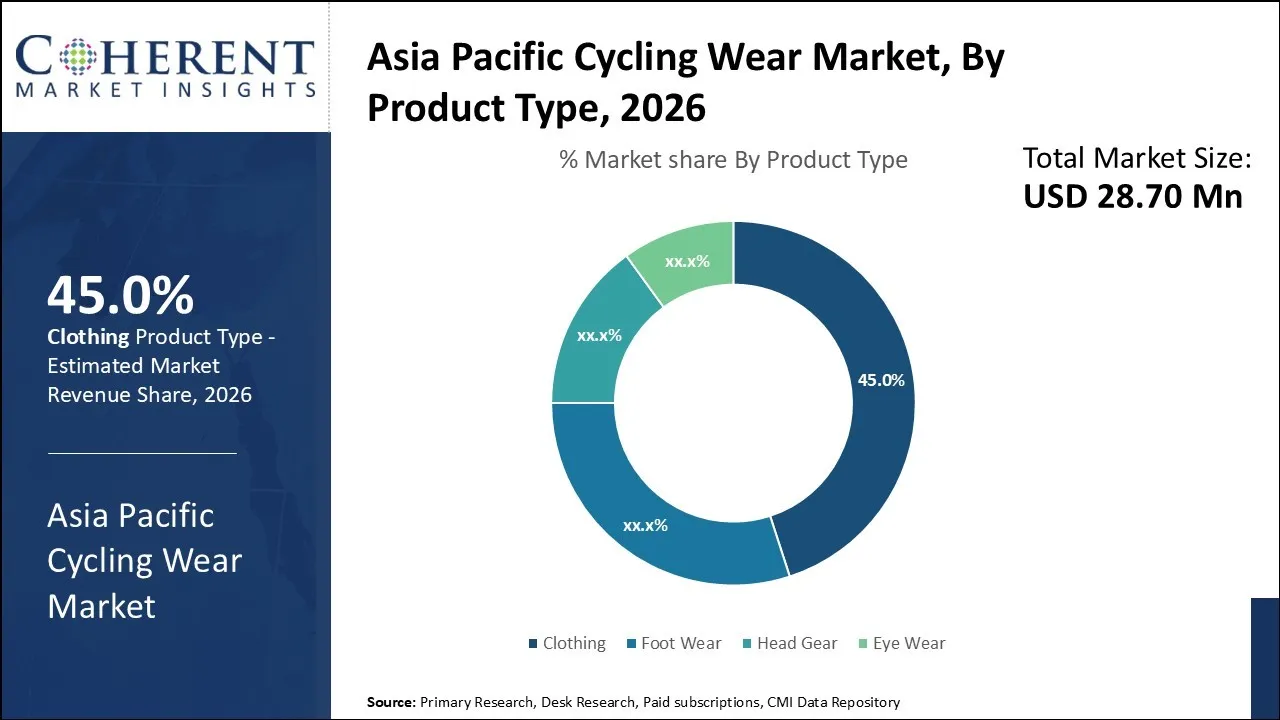
The Asia Pacific cycling wear market size is estimated to reach around USD 28.70 Mn in 2026 and is projected to grow at a CAGR of 7% during the forecast period (2026-2033), totaling USD 44.03 Mn by 2033.
The Asia Pacific cycling wear market presents a compelling investment thesis driven by structural urbanization trends and shifting consumer preferences toward sustainable mobility solutions. Key market drivers include rising disposable incomes, accelerating health and fitness consciousness, and substantial government investments in cycling infrastructure, particularly through initiatives like India's Smart Cities Mission, which has catalyzed demand for functional cycling apparel.
The rising awareness around health and fitness in the Asia Pacific region is significantly fueling the demand for cycling wear, reflecting a broader shift toward active wear and wellness-oriented lifestyles. With escalating concerns over sedentary behavior and lifestyle diseases such as diabetes and cardiovascular conditions, more individuals, especially in urban areas, are adopting cycling not only as a mode of transport but as a preferred form of exercise and recreation. For instance, according to a 2024 the World Health Organization report, the highest rates of physical inactivity were observed in the high-income Asia Pacific region (48%) and South Asia (45%), highlighting a large population that is actively seeking ways to become more physically active. In comparison, levels of inactivity in other regions ranged from 28% in high-income Western countries to 14% in Oceania.
The rising disposable income across countries in the Asia Pacific region has been a critical factor fueling the expansion of the cycling wear market. As economic development accelerates, particularly in emerging economies such as India, China, and Southeast Asian nations, a larger middle-class population enjoys enhanced purchasing power. This shift allows consumers to invest more in lifestyle and recreational activities, including cycling, which has transformed from merely a mode of transportation to a popular fitness and leisure activity.
Innovations such as moisture-wicking fabrics, UV protection, anti-bacterial treatments, and temperature regulation materials have become increasingly prevalent in cycling wear, catering to the diverse climatic conditions across the region, which ranges from humid tropical zones in Southeast Asia to colder mountainous areas in countries like Japan and South Korea.
|
Current Event |
Description and its Impact |
|
Urban Mobility and Active Transport Policies |
|
|
Rising Health and Fitness Awareness |
|
Uncover macros and micros vetted on 75+ parameters: Get instant access to report
Based on product type, clothing segment is expected to dominate the market, with a revenue share of about 45% in 2026. The dominance of the Clothing segment can be closely linked to the growing popularity of cycling as both a recreational activity and a professional sport in the region. Cycling clothing, which includes jerseys, shorts, tights, jackets, and gloves, is specifically designed to enhance performance and comfort by offering moisture-wicking, breathability, and aerodynamic benefits.
This specialized apparel significantly reduces rider fatigue and improves endurance, which has been widely acknowledged by cyclists ranging from enthusiasts to elite athletes. For example, government-backed initiatives in countries like Japan and South Korea have promoted cycling-friendly urban environments, encouraging more people to take up cycling, which in turn fuels the demand for high-quality cycling clothing.
By distribution channel, online segment is slated to hold a dominant position in market over the forecast period. Owing to multiple influential factors that have reshaped consumer purchasing behavior across the region. The proliferation of internet connectivity and smartphone penetration in countries like China, India, Japan, South Korea, and Australia has empowered consumers with easier access to a broad variety of cycling wear products without the geographic constraints that physical stores impose.
Additionally, the growing preference for contactless shopping experiences, accelerated by global health concerns, has driven more consumers to utilize ecommerce platforms for their cycling apparel needs. For instance, major sports brands such as Decathlon and specialized cycling wear companies like Castelli have significantly expanded their online footprint to serve Asia Pacific consumers more effectively, implementing seamless digital experiences including virtual fitting rooms, personalized recommendations, and flexible return policies, further cementing the attractiveness of online retailing.
The Asia is expected to remain the market leader, accounting for a share of about 85% in 2026. This dominance is driven by a massive population base, rapid urbanization, and growing health and fitness awareness among urban residents. Countries such as China, Japan, South Korea, and India lead this subsegment due to their well-established cycling culture, extensive infrastructure, and government policies supporting sustainable and active transport.
For instance, Beijing launched China’s first citywide MaaS digital platform, which allows seamless trip planning across buses, metro, and shared bikes, rewarding users for choosing green transport options. Between 2019 and 2025, the platform helped reduce more than 1 million metric tons of CO₂ emissions, equivalent to taking up to 500,000 passenger cars off the road annually. By 2025, it reached 30 million active users, who took 5.5 million daily “green” trips using shared bikes, buses, or the metro, a 45% increase since 2019. The platform also enrolled 6 million users in a carbon-reduction incentive program that rewards environmentally friendly travel. This increasing use of shared bikes and active commuting clearly indicates a growing market for cycling wear, as more urban residents adopt cycling as part of their daily fitness and transport routines.
| Report Coverage | Details | ||
|---|---|---|---|
| Base Year: | 2025 | Market Size in 2026: | USD 28.70 Mn |
| Historical Data for: | 2020 To 2024 | Forecast Period: | 2026 To 2033 |
| Forecast Period 2026 to 2033 CAGR: | 7% | 2033 Value Projection: | USD 44.03 Mn |
| Geographies covered: |
|
||
| Segments covered: |
|
||
| Companies covered: |
JRD Cycling, Castelli Cycling, Giro Sport Design, Champion System, Conquest Cycle Wear Ltd., 2XU Pty. Ltd., Endura Limited, Isadore Apparel, Rapha Racing Limited, Attaquer Pty Ltd., Lumiere Cycling, Panache Cyclewear Co., Cadence Collection, Voler Inc., and Ornot |
||
| Growth Drivers: |
|
||
| Restraints & Challenges: |
|
||
Uncover macros and micros vetted on 75+ parameters: Get instant access to report
The increasing participation in cycling sports and recreational activities across the Asia Pacific region is significantly propelling the demand for specialized cycling wear. Urbanization, rising health consciousness, and sustainability initiatives have collectively contributed to making cycling a popular mode of exercise and commuting.
For instance, a 2022 global survey by Ipsos found that 67% of urban Indians ride a bicycle at least once a week, the highest rate among 28 countries surveyed, highlighting the strong adoption of cycling in urban India and supporting the growth of the cycling wear market.
Governments in the Asia Pacific region have increasingly prioritized sustainable urban mobility, investing in initiatives such as dedicated cycling lanes, bike-sharing programs, and bike-friendly public spaces.
For example, according to the ITDP 2025 report, Guangzhou, with over 18 million residents, has become a leader in urban mobility by combining high-capacity public transport with active mobility initiatives, including the expansion of connected urban cycle lanes. The city’s Bus Rapid Transit (BRT) system, Asia’s first Gold Standard BRT to achieve metro-level ridership, reflects Guangzhou’s broader commitment to sustainable and efficient transport. Such policies create an environment that encourages cycling, supporting the growth of the Asia Pacific cycling wear market.
The integration of smart textiles and wearable technology has significantly propelled the expansion of the Asia Pacific cycling wear market by revolutionizing the functionality and user experience of cycling apparel. Smart textiles embedded with sensors and conductive fibers enable real-time monitoring of vital signs such as heart rate, body temperature, and muscle activity, providing cyclists with critical data to optimize their performance and safety.
The proliferation of e-commerce channels in the Asia Pacific region represents a significant growth lever for the cycling apparel market, driven by increasing internet penetration, smartphone adoption, and changes in consumer purchasing behavior. As physical retail remains limited in many emerging economies due to infrastructure and geographic constraints, online platforms provide an accessible and convenient alternative for consumers to explore and buy specialized cycling wear.
The rising trend of eco-friendly and sustainable cycling wear presents a significant opportunity within the Asia Pacific cycling wear market, driven by increasing environmental awareness and governmental pushes toward sustainability. Consumers in the region are becoming more conscious of their ecological footprint, with younger demographics, especially millennials and Gen Z, prioritizing products that support sustainability. This shift is also reinforced by urbanization trends and government policies aimed at reducing carbon emissions, which are encouraging cycling as a preferred mode of eco-friendly transportation.
Share
Share
Sakshi Suryawanshi is a Research Consultant with 6 years of extensive experience in market research and consulting. She is proficient in market estimation, competitive analysis, and patent analysis. Sakshi excels in identifying market trends and evaluating competitive landscapes to provide actionable insights that drive strategic decision-making. Her expertise helps businesses navigate complex market dynamics and achieve their objectives effectively.
Joining thousands of companies around the world committed to making the Excellent Business Solutions.
View All Our Clients