

Barley Flakes Market Size and Forecast — 2026-2033
Barley flakes market is estimated to be valued at USD 9.17 Bn in 2026 and is expected to reach USD 14.07 Bn by 2033, exhibiting a compound annual growth rate (CAGR) of 6.3% from 2026 to 2033.
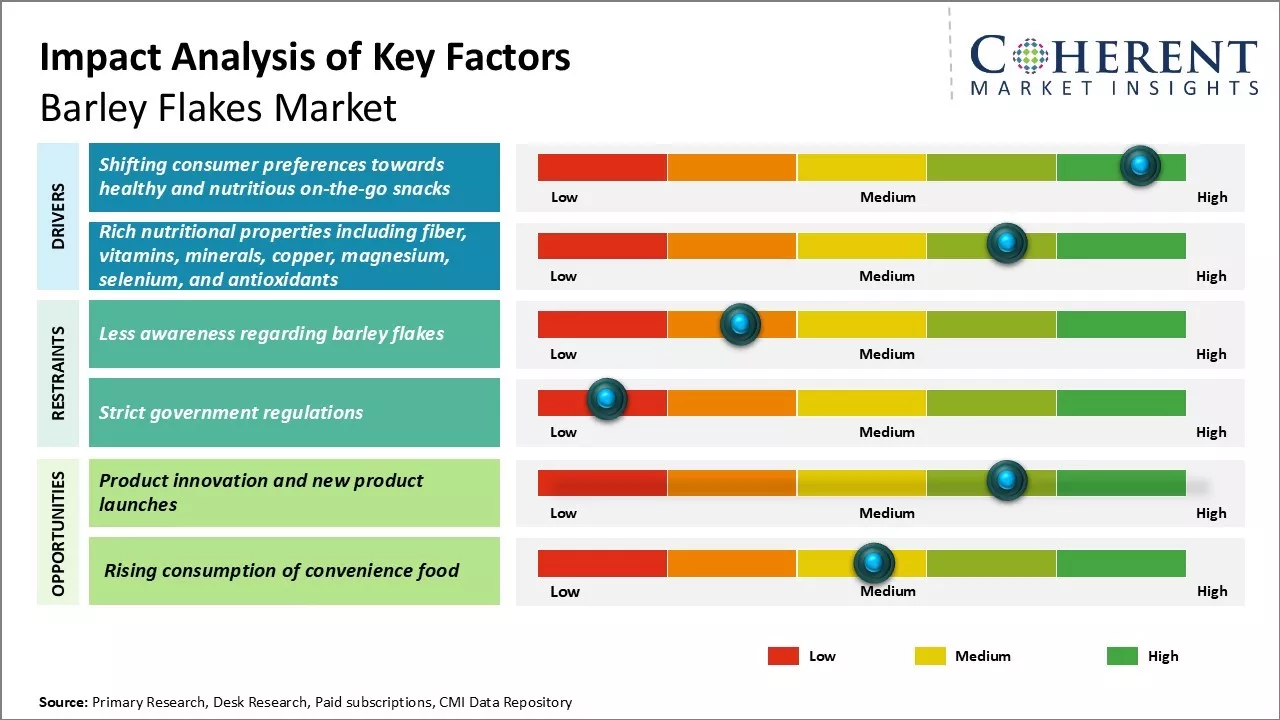
There has been an increasing awareness among consumers regarding the various health benefits of barley flakes such as high fiber content, low glycemic index which helps in weight management and reducing cholesterol levels. Moreover, the rising consumption of convenience foods and breakfast cereals has been driving the demand for barley flakes. Various players such as bob’s mill in the market are focusing on new product launches with additional nutritional value in order to cater to dynamic consumer preferences. For instance, introduction of barley flakes with fruits and nuts. This is expected to support the market growth during the forecast period.
Insights, By Product
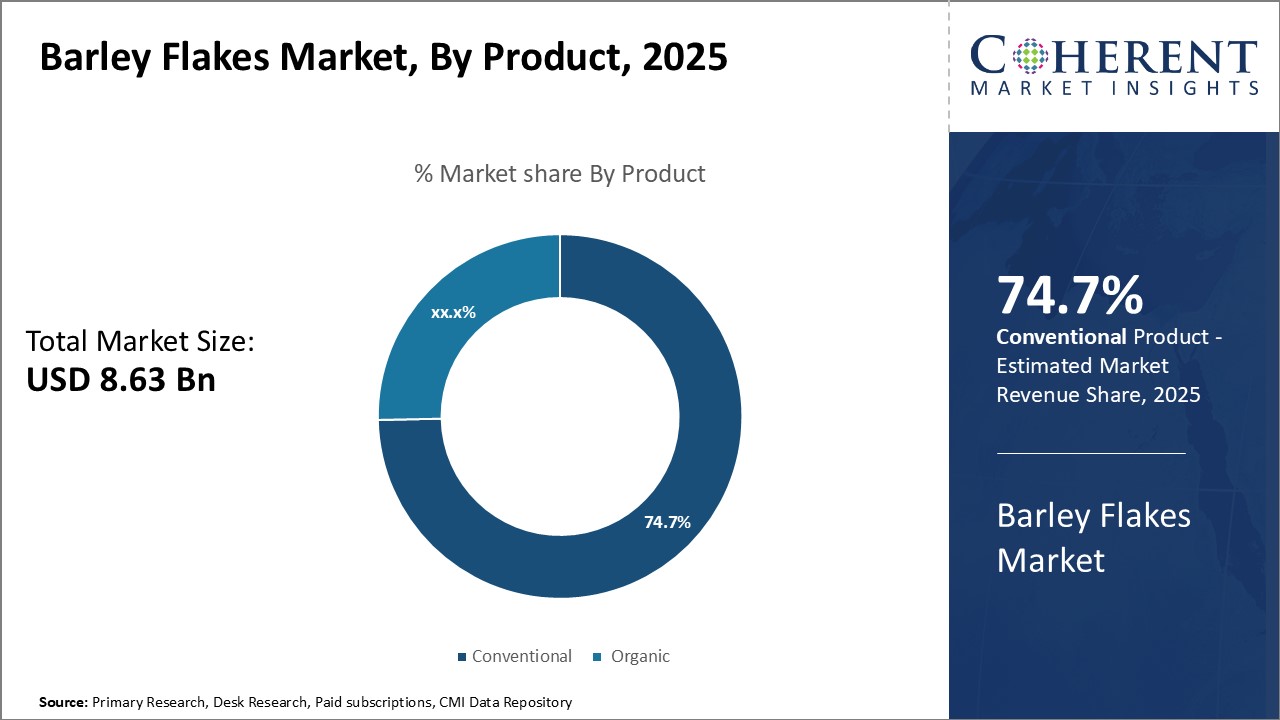
Insights, By Product - Consumer Preference Drives the Conventional Segment Share
In terms of product, conventional segment is estimated to contribute the highest market share of 75.7% in 2026, owing to strong consumer preference for the barley flakes. While organic options are growing in popularity driven by health and sustainability trends, conventional barley flakes appeal to the tastes of most shoppers. The familiar flavor profile and lower price point compared to organic varieties give conventional flakes an advantage in winning household purchases. Familiarity breeds loyalty in the grocery aisle, and consumers stick to what they know works when it comes to breakfast cereals. This consistent demand allows conventional flakes to maintain pole position in market share. Food manufacturers also favor conventional due to lower ingredient costs, contributing to further availability on retail shelves. Additionally, shoppers may perceive organic as unnecessary for products like barley flakes that are not heavily processed. The simplicity of conventional flakes satisfies consumers without added costs or attributes that organic aims to provide.
Insights, By End-use Industry
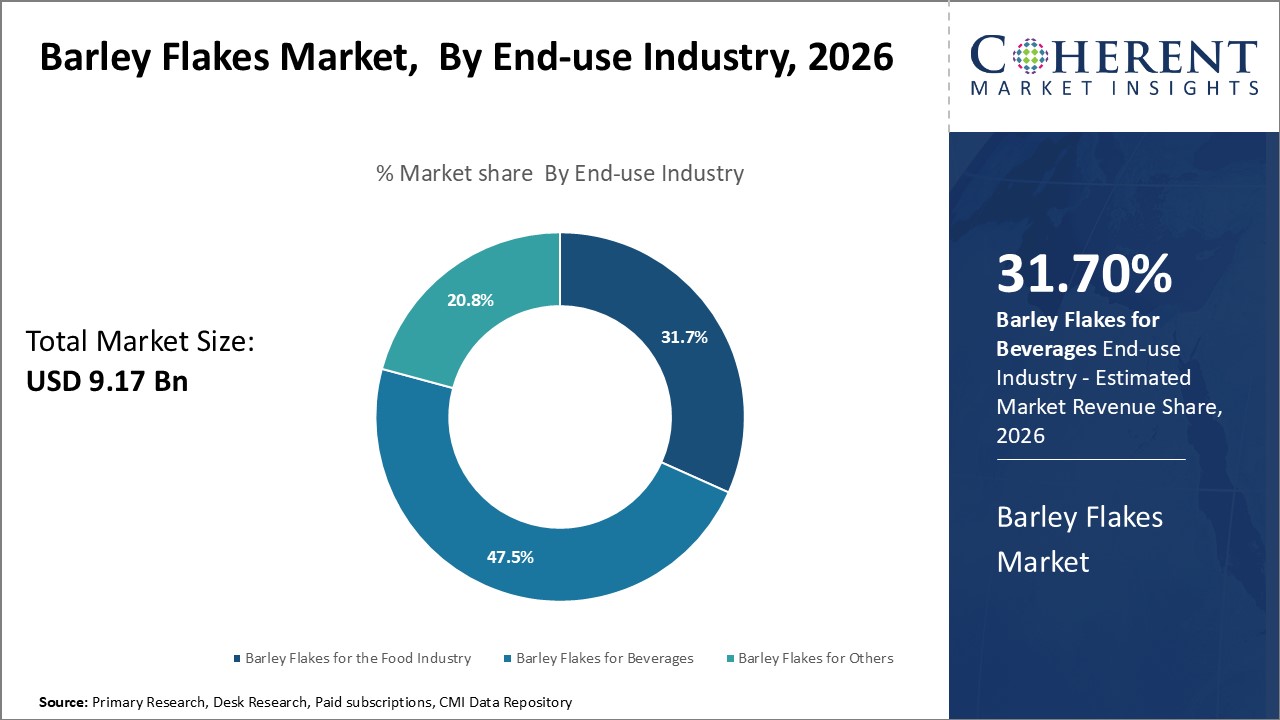
Insights, By End-use Industry - Increasing Food Industry Innovation Drives Barley Flakes Usage
In terms of end-use industry, barley flakes for the food industry segment is estimated to contribute the 31.7% market share in 2026, due to ongoing innovation in food products. The experience growing usage from food manufacturers exploring plant-based ingredients and seeking ways to add texture, nutrition, and flavor to items like granola, baked goods, cereals, and snack mixes. Flakes impart a pleasantly crunchy element and subtle nutty taste that pairs well with many applications. Additionally, barley offers mineral and fiber benefits that food companies highlight in newer product formulations. Ingredient suppliers also offer a variety of flake sizes, textures, and flavors to suit different needs. Innovative snacks topped with barley flakes or baked goods containing flakes appeal to health-conscious tastes and drive incremental demand. While beverage and animal feed use exist, the food industry constantly debuts new product lines incorporating barley flakes for their flavor and functional benefits. This ongoing creativity within food product development expands barley flakes' addressable market and establishes the food industry as its primary end user segment.
Insights By Distribution Channel
Insights By Distribution Channel - Supermarkets Offer Convenience and Selection
In terms of distribution channel, supermarket/hypermarket segment is estimated to contribute the highest market share of 35% in 2026, owing to convenient one-stop shopping and diverse selections under one roof. For households doing major weekly grocery trips, supermarkets offer time savings compared to making multiple stops. Their expansive aisles provide access to a variety of barley flake products from different brands side by side. Shoppers appreciate assessing nutrition facts, ingredients statements, and prices across options all in the same shopping experience.
Regional Insights
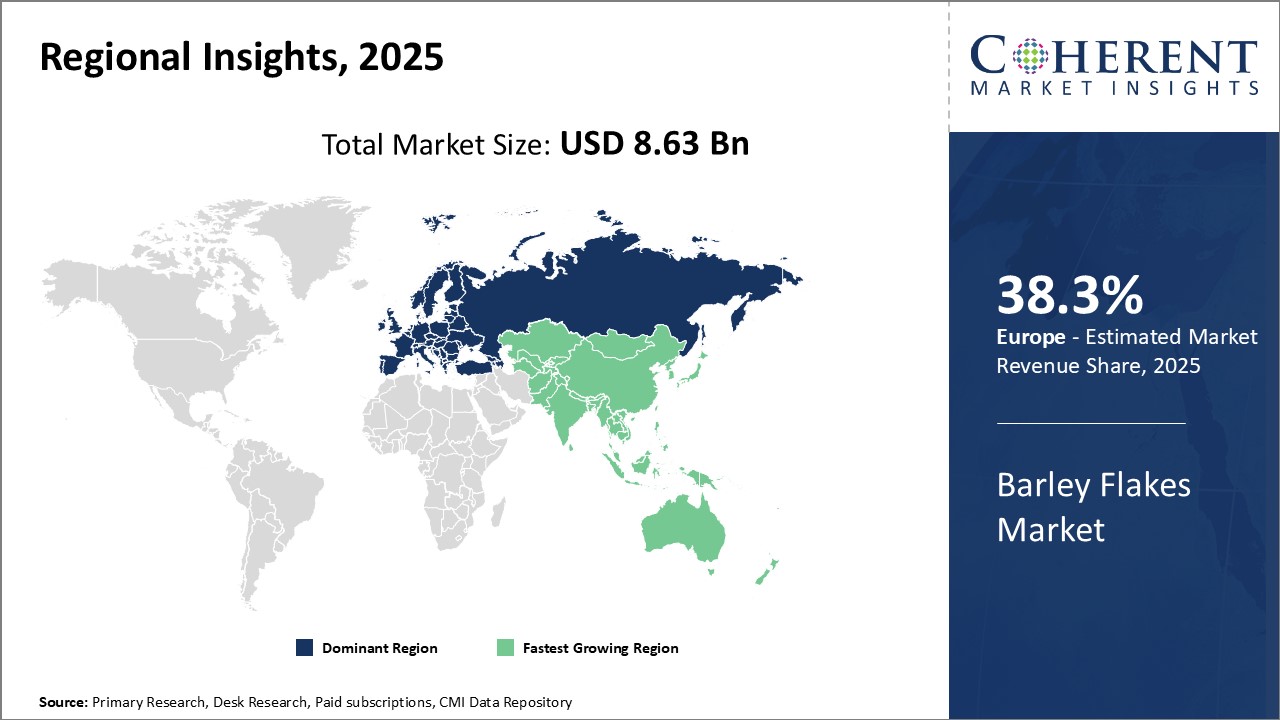
Dominating Region: Europe
Europe is expected to account for the greatest revenue share, with 38.3% in 2026. The dominance of Europe in the barley flakes market can be attributed to factors such as high consumption of breakfast cereals along with demand for grains with nutritional benefits. Countries such as the U.K. have seen rising popularity of barley-based products due to increasing health consciousness. Major players such as Kellogg and Post Holdings have established strong distribution networks and brand presence in the region over the years.
Fastest-Growing Region: Asia Pacific
The Asia Pacific region exhibits the fastest growth in the barley flakes market owing to rising living standards and growing popularity of Western food trends. Countries like India have witnessed increased intake of healthy cereal-based breakfast foods. Local companies have also expanded their barley portfolio targeting domestic health-savvy consumers.
Barley Flakes Market Outlook for Key Countries
U.S.: The U.S. market is led by prominent brands that offer barley flakes with a range of flavors and formats to suit varying tastes. Companies are launching product lines focused on naturalness and specialty ingredients to appeal more customers.
India: The India market is expanding rapidly due to nutritional benefit-driven consumption and convenient packaging driving impulse purchases.
China: The China market continues to lead in global barley production and companies are leveraging this homegrown advantage to promote locally produced barley flakes. Increasing availability through online and retail channels augurs well for future growth prospects.
Japan: The Japan market is impacted by prevalent snack and breakfast food culture and rising preference for gluten-free ingredients. Players focus on customization options to explore new use cases amid evolving dietary trends.
Market Players, Key Development, and Competitive Intelligence

Top Strategies Followed by Barley Flakes Market Players
Established players in the barley flakes market focus heavily on research and development to drive product innovation. Companies like Kellogg's, Nestle, and General Mills invest over 5% of annual revenues into R&D. This allows them to develop and launch new barley flake varieties with enhanced nutrition, novel flavors, and functional benefits. Strategic partnerships are also important. For example, Kellogg's has collaborations with major agriculture suppliers to ensure a consistent supply of high-quality barley grains for its products.
Mid-sized companies adopt a cost-effective approach, targeting price-conscious consumers. Firms produce good-value private label products for retailers. They leverage economies of scale through shared production facilities and bulk-buying of materials. Partnerships are also key - smaller producers may collaborate to boost efficiencies and margins.
Emerging players target niche segments neglected by larger rivals. They specialize in specialty styles like gluten-free or high-protein flakes. These small brands adopt modern techniques like germ removal during milling to cater to specific diets. Some leverage online channels and direct-to-consumer models for effective marketing on tight budgets.
Emerging Startups in the Barley Flakes Market
Several startups are advancing new technologies in the barley flakes sector. Companies like Cero Foods are developing smart sensor-based packaging solutions that help optimize freshness and prolong shelf life. Meanwhile, players like NewCereal are applying artificial intelligence to design personalized flake recipes tailored to individual nutritional needs and preferences. Such innovations will reshape how they are manufactured and consumed in the future.
Sustainability is another focus area for startups. Firms such as GoodMills have launched biodegradable barley flake varieties produced using Non-Genetically Modified Organism (non-GMO), regeneratively grown grains. Their emphasis on reduce-reuse-recycle approaches aims to lower the industry's environmental footprint. Similarly, companies such as Barleyology focus on upcycling spent grains into new products, limiting food waste.
- Current Industry Events of 2026
- Market Size Estimation
- Regional Breakdown
- Competitive Landscape
- Customer Intelligence
- Segmental Analysis
- Pricing Analysis
- Key Market Drivers, Challenges & Future Trends
- Customized Insights Section
Market Report Scope
Barley Flakes Market Report Coverage
| Report Coverage | Details | ||
|---|---|---|---|
| Base Year: | 2025 | Market Size in 2026: | USD 9.17 Bn |
| Historical Data for: | 2020 To 2024 | Forecast Period: | 2026 To 2033 |
| Forecast Period 2026 to 2033 CAGR: | 6.3% | 2033 Value Projection: | USD 14.07 Bn |
| Geographies covered: |
| ||
| Segments covered: |
| ||
| Companies covered: | King Arthur Flour, Shiloh Farms, Bob's Red Mill, Honeyville, Inc., Naturally Yours, Vee Green Organic Life Care Private Limited, Helsinki Mylly Oy, Briess Malt & Ingredients Co., Rude Health, and Hodmedod's British Pulses & Grains | ||
| Growth Drivers: |
| ||
| Restraints & Challenges: |
| ||
Market Dynamics
Market Driver - Shifting consumer preferences towards healthy and nutritious on-the-go snacks
With rising health consciousness among consumers globally, people are increasingly opting for healthier snack options that provide energy and satiety. Barley flakes, being a whole grain, are high in fiber and vitamins and are gaining popularity as a convenient on-the-go snack. As people become more health-conscious, demand for whole grains and functional foods with proven health benefits is increasing globally. According to data published by the Food and Agriculture Organization of the United Nations in 2022, global whole grain consumption has risen by 25% from 2000 levels, with many countries especially in Asia seeing over 50% increases. The growing body of research linking whole grain intake to reduced risk of obesity, heart disease and certain cancers has influenced consumer choices.
Market Challenge - Less awareness regarding barley flakes
Compared to more popular choices like corn flakes, oats, and wheat biscuits, they have relatively low household penetration globally. Many consumers are simply not familiar with the nutritional profile and health benefits of barley. The lack of marketing and promotional activities around barley flakes has meant that it remains a niche product confined to health food stores and organic food sections of supermarkets.
This lack of awareness is reflected in sales numbers. According to the UN Food and Agriculture Organization (FAO), domestic consumption of barley in major markets like the United States, China and India is primarily as animal feed and not as a health food for human consumption. Only 13% of the barley produced is utilized for malting and brewing purposes.
Market Opportunity - Product innovation and new product launches
With growing health and wellness trends influencing food choices, there exists demand for more nutritious breakfast options. Flavored varieties with natural flavors could make barley flakes more appealing for children. Ready-to-eat packs with additional toppings would boost convenience. Manufacturers may also focus on specialty produce like gluten-free or organic barley flakes to target niche consumer segments. For example, a whole grain report by the Old ways Whole Grains Council states over 80% Americans fail to consume the recommended three servings of whole grains daily, indicating demand for tasty whole grain products that fit different meal occasions and routines. Barley has several nutritional advantages like high fiber and antioxidant content, regulating cholesterol and blood sugar levels. Leveraging these health attributes through innovative barley flakes mixes for different meal-replacement shakes or breakfast parfaits can aid morning meal solutions as busy lifestyles reduce cooking time.
Analyst Opinion (Expert Opinion)
Key Takeaways from Analyst
High fiber and protein content of barley flakes makes it a popular choice for health-conscious consumers. As lifestyle diseases rise, the demand for nutritional cereals is expected to increase.
Europe dominates the barley flakes market currently. Countries like Germany have barley flakes as a staple breakfast food for a long time. Changing lifestyles and busier routines are driving working individuals to opt for ready-to-eat breakfast options like barley flakes. Production is also increasing in India to meet the growing domestic demand.
Asia Pacific is another major region for barley flakes. Countries like India consume barley flakes regularly due to the high cereal eating culture. New product launches with flavors and formats like organic barley flakes aim to attract newer consumers. However, low awareness about the benefits of barley flakes can restrain market growth in some regions.
Speak to the analyst
Want personalized insights?
Take the findings above to one of our principal consultants, or have the report rebuilt around the segments, geographies and competitors you actually track.
Market Segmentation
- By Product Insights (Revenue, USD, 2021 - 2033)
- Conventional
- Organic
- By End-use Industry Insights (Revenue, USD, 2021 - 2033)
- Barley Flakes for the Food Industry
- Barley Flakes for Beverages
- Barley Flakes for Others
- By Distribution Channel Insights (Revenue, USD, 2021 - 2033)
- Supermarket/Hypermarket
- Convenience Stores
- Online
- By Regional Insights (Revenue, USD, 2021 - 2033)
- North America
- U.S.
- Canada
- Latin America
- Brazil
- Argentina
- Mexico
- Rest of Latin America
- Europe
- Germany
- U.K.
- Spain
- France
- Italy
- Russia
- Rest of Europe
- Asia Pacific
- China
- India
- Japan
- Australia
- South Korea
- ASEAN
- Rest of Asia Pacific
- Middle East
- GCC Countries
- Israel
- Rest of Middle East
- Africa
- South Africa
- North Africa
- Central Africa
- North America
- Key Players Insights
- King Arthur Flour
- Shiloh Farms
- Bob's Red Mill
- Honeyville, Inc.
- Naturally Yours
- Vee Green Organic Life Care Private Limited
- Helsinki Mylly Oy
- Briess Malt & Ingredients Co.
- Rude Health
- Hodmedod's British Pulses & Grains
Get access to 250+ pages report
Every segment, forecast, competitor profile and data table behind the analysis above — available for instant download.
- ESOMAR Member
- ISO 9001:2015 Certified
- D-U-N-S Registered
- GDPR & CCPA Compliant
Missing comfort of reading report in your local language? Find your preferred language:
Transform your Strategy with Exclusive Trending Reports
Frequently Asked Questions
The Barley Flakes Market is estimated to be valued at USD 9.17 Bn in 2026, and is expected to reach USD 14.07 Bn by 2033.
The CAGR of the Barley Flakes Market is projected to be 6.3% from 2026 to 2033.
Shifting consumer preferences towards healthy and nutritious on-the-go snacks and rich nutritional properties including fiber, vitamins, minerals, copper, magnesium, selenium, and antioxidants are the major factors driving the growth of the barley flakes market.
Less awareness regarding barley flakes and strict government regulations are the major factors hampering the growth of the barley flakes market.
In terms of product, the conventional segment is estimated to dominate the market revenue share in 2026.
King Arthur Flour, Shiloh Farms, Bob's Red Mill, Honeyville, Inc., Naturally Yours, Vee Green Organic Life Care Private Limited, Helsinki Mylly Oy, Briess Malt & Ingredients Co., Rude Health, and Hodmedod's British Pulses & Grains are the major players.
Europe is expected to lead the barley flakes market in 2026.