

Bath Bombs Market Size and Forecast — 2026-2033
The Global Bath Bombs Market size is estimated to be valued at USD 1.31 billion in 2026 and is expected to reach USD 2.3 billion by 2033, exhibiting a compound annual growth rate (CAGR) of 9.5% from 2026 to 2033.
Overview
Bath bombs are effervescent bath additives made from citric acid, baking soda, essential oils, fragrances, colorants, and moisturizing ingredients like shea butter or coconut oil. Designed to dissolve in water, they create a sensory bathing experience with aroma, color, and skin-nourishing benefits. The market covers organic, aromatherapy, CBD-infused, glitter, kids’ bath bombs, and themed gift sets distributed across beauty retail, spas, e-commerce, and personal care brands.
Key Takeaways
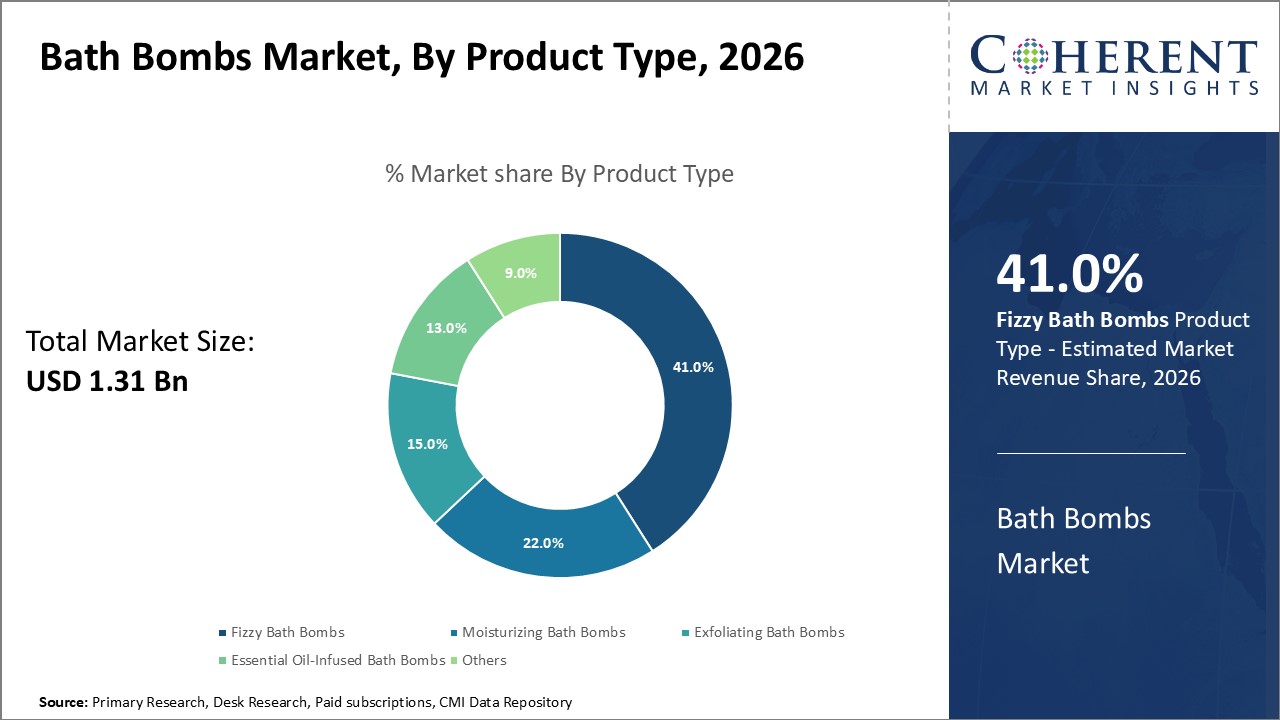
The Fizzy Bath Bombs segment holds a commanding 41% market share, underscoring its enduring consumer popularity due to its sensory appeal and variety.
Moisturizing Bath Bombs show rapid growth thanks to increasing awareness about skin hydration benefits, particularly among adult consumers.
The Online Retail distribution channel is emerging as the fastest-growing, supported by significant e-commerce infrastructure investments in Asia Pacific and North America.
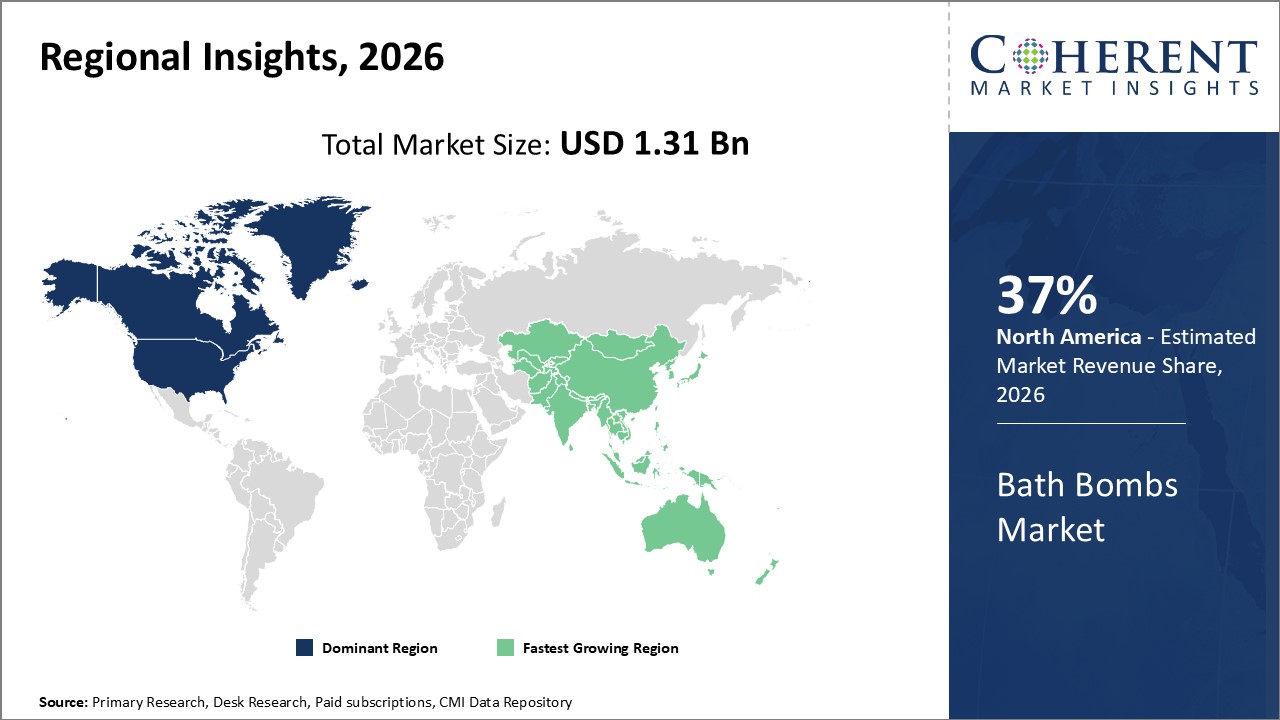
Regionally, North America dominates with approximately 37% market share owing to high consumer spending and premium product adoption.
Simultaneously, the Asia Pacific is the fastest-growing region, driven by increasing disposable incomes and e-commerce penetration with a CAGR of 11%.
These factor-driven insights reveal the evolving market scope and affirm key drivers behind current and future market momentum.
Bath Bombs Market Segmentation Analysis
Bath Bombs Market Insights, By Product Type
Fizzy Bath Bombs dominate the market share due to their sensory appeal, extensive flavor variants, and ability to create visually attractive experiences during usage. This subsegment benefits from high consumer engagement driven by social media trends and strong repeat purchase behavior. Moisturizing Bath Bombs are the fastest-growing segment, fueled by rising skin hydration awareness and the demand for bath products that offer skincare benefits. These products cater to health-conscious consumers seeking functional personal care solutions. Exfoliating Bath Bombs provide gentle skin exfoliation and are gaining niche traction, especially in premium and spa settings.
Bath Bombs Market Insights, By Distribution Channel
Online Retail is dominating market share, fueled by convenience, wider product variety, and competitive pricing. The rapid rise of e-commerce, especially in emerging markets like the Asia Pacific, supports this dominance. Specialty Stores, including health and beauty shops, remain significant for consumers seeking expert advice and niche products. Supermarkets & Hypermarkets cater to mass-market convenience and bulk purchase behavior. Salons & Spas serve as experiential touchpoints offering premium and bespoke bath bomb selections.
Bath Bombs Market Insights, By End-User
In terms of end-user, the market is segmented into Adult, Children, and Others, with the Adult segment dominating the market share given its broad demographic and emphasis on wellness and self-care. Adults invest in bath bombs for relaxation, skincare benefits, and gifting purposes. The Children segment, while smaller, is rapidly gaining traction with products featuring fun shapes, colors, and safe formulations designed specifically for younger users.
Bath Bombs Market Trends
The Bath Bombs market trend in recent years highlights rapid digital transformation, with online platforms facilitating direct consumer engagement and accelerating market revenue growth.
For instance, the proliferation of subscription services offering bespoke assortments reflects consumer desires for personalization.
Additionally, the emphasis on natural, cruelty-free, and vegan formulations has spurred innovation, with companies introducing adaptogen-infused and probiotic-enhanced bath bombs to capture the wellness-conscious demographic.
Influencer-driven marketing campaigns have also redefined brand-customer relationships, especially among millennials and Gen Z buyers, generating increased social media traction in 2025 and 2026.
Bath Bombs Market Insights, By Geography
North America Bath Bombs Market Analysis and Trends
In North America, the dominance in the Bath Bombs market is underscored by a mature consumer base with high wellness adoption, premiumization trends, and extensive retail infrastructure, resulting in an approximate 37% market share. Market companies benefit from established distribution networks and advanced e-commerce platforms that facilitate product availability and consumer reach. Additionally, government regulations on ingredient safety and sustainability align closely with consumer expectations, further boosting product innovation.
Asia Pacific Bath Bombs Market Analysis and Trends
Meanwhile, the Asia Pacific exhibits the fastest growth with a CAGR of 11%, driven by rising disposable incomes, urbanization, and digital penetration. Increasing consumer awareness regarding self-care, coupled with expanding online marketplaces in countries like China and India, significantly amplify market accessibility. Local players and international entrants collaborate on tailored products to capture regional preferences, marking a swift expansion of market presence.
Bath Bombs Market Outlook for Key Countries
USA Bath Bombs Market Analysis and Trends
The USA’s market is a major contributor to global Bath Bombs market revenue, exhibiting substantial consumer adoption of premium and natural bath products. In 2025, sales of CBD-infused and aromatherapy bath bombs increased by over 27%, demonstrating the innovative scope and growing wellness trends that shape U.S. demand. Companies such as Bath & Body Works and Lush leverage omnichannel strategies, blending physical and digital retail for market growth. Regulatory frameworks ensuring ingredient transparency and environmental compliance add further impetus to sustainable product launches, creating a robust market environment.
India Bath Bombs Market Analysis and Trends
India’s bath bombs market is emerging strongly within the Asia Pacific region due to changing lifestyles and growing influence of Western self-care habits. Growing internet penetration and e-commerce growth have led to a 38% increase in online sales in 2026, with urban youth driving demand for personalized and natural formulations. Domestic market players emphasize herbal and ayurvedic ingredients, catering to region-specific preferences, while multinational brands are increasingly localizing offerings for competitive advantage.
Analyst Opinion
Rising consumer preference for natural and organic ingredients is reshaping the Bath Bombs market dynamics. Recent data from 2025 shows a 35% increase in penetration of organic bath bomb products in North America alone, confirming strong demand for clean-label personal care formulations.
The surge in e-commerce platforms in Asia Pacific is playing a critical role in market expansion. Online sales of bath bombs rose by approximately 45% in 2026 compared to 2023, signaling a transformative shift in consumer purchase behavior and accessibility of niche market players.
Product innovation remains a pivotal growth driver, with companies exploring formulations infused with CBD and essential oils gaining traction. For example, the U.S. market witnessed a 28% increase in sales of CBD-infused bath bombs in 2025, highlighting new use cases elevating market appeal.
Supply chain agility, influenced by raw material availability and packaging innovation, is proving instrumental. In 2026, the adoption of biodegradable packaging increased by 31%, aligning with consumer values and regulatory changes, and supporting sustainable business growth.
- Current Industry Events of 2026
- Market Size Estimation
- Regional Breakdown
- Competitive Landscape
- Customer Intelligence
- Segmental Analysis
- Pricing Analysis
- Key Market Drivers, Challenges & Future Trends
- Customized Insights Section
Market Scope
| Report Coverage | Details | ||
|---|---|---|---|
| Base Year: | 2025 | Market Size in 2026: | USD 1.31 billion |
| Historical Data for: | 2020 To 2024 | Forecast Period: | 2026 To 2033 |
| Forecast Period 2026 to 2033 CAGR: | 9.5% | 2033 Value Projection: | USD 2.3 billion |
| Geographies covered: |
| ||
| Segments covered: |
| ||
| Companies covered: | Twinkle Bath Bombs, Beauty Bakerie, Soap & Glory, A Wild Soap Bar, Meow Meow Tweet, Femme Fatale, Zum Soap, Herbivore Botanicals, Bomb Cosmetics, Nordic Naturals. | ||
| Growth Drivers: |
| ||
Bath Bombs Market Growth Factors
The rising inclination towards natural and organic personal care products is a prime growth driver, with a 2026 consumer survey revealing that 48% of bath bomb buyers prioritize ingredient transparency. Expansion of e-commerce channels globally, especially in the Asia Pacific and Latin America, has unlocked new business growth avenues, evidenced by a 40% year-on-year online sales increase in 2026. Innovation in product formulations, including aromatherapy and skincare benefits, continues to attract premium consumers; essential oil-infused bath bombs reported a 25% revenue surge in the U.S. market in early 2026. Additionally, environmental sustainability is influencing purchasing decisions, driving demand for biodegradable and plastic-free bath bombs with a 30% increase in eco-friendly product launches in the last two years.
Bath Bombs Market Development
In March 2026, influencer Dylan Mulvaney collaborated with Lush to launch a limited-edition bath bomb infused with rose and citrus notes. The product combined Lush’s handmade, ethically sourced ingredients with Mulvaney’s signature aesthetic, creating strong social engagement and driving increased visibility among younger, inclusivity-focused consumer groups.
In August 2025, Lush Cosmetics introduced a new line of CBD-infused bath bombs along with an augmented reality (AR)–enhanced bathing experience to celebrate World Bath Bomb Day. The launch blended wellness benefits with immersive digital interaction, allowing users to activate AR visuals during bath time, marking Lush’s shift toward tech-integrated self-care products.
Key Players
Leading Companies of the Market
Twinkle Bath Bombs
Beauty Bakerie
Soap & Glory
A Wild Soap Bar
Meow Meow Tweet
Femme Fatale
Zum Soap
Herbivore Botanicals
Bomb Cosmetics
Nordic Naturals
Competitive strategies such as product line diversification and sustainability initiatives are prominent. For instance, Lush Fresh Handmade Cosmetics expanded its portfolio to include 101% vegan and packaging-free options in 2025, boosting brand loyalty and market revenue. Meanwhile, Bath & Body Works adopted aggressive omni-channel sales tactics integrating in-store and online experiences, contributing to a 16% sales uplift in 2026. These strategies exemplify how market companies are leveraging innovation and consumer engagement to strengthen market share.
Bath Bombs Market Future Outlook
Looking forward, the bath bombs market is expected to evolve through premiumization, clean-label formulations, and functional wellness benefits. Brands will increasingly develop bath bombs infused with vitamins, CBD oils, botanicals, and dermatologically tested ingredients for sensitive skin. Sustainability will become a key differentiator, driving demand for plastic-free packaging, biodegradable glitter, and natural fragrances. E-commerce and subscription boxes will continue fueling growth, and children's bath products with playful themes will become a major segment. The expansion of spas and wellness tourism will further create opportunities for premium, aromatherapy-based bath products.
Bath Bombs Market Historical Analysis
The bath bombs market has historically grown from the broader personal care and aromatherapy industry. Originally positioned as niche luxury items, bath bombs gained popularity through beauty influencers, social media, and wellness trends that emphasized relaxation and self-care. Over the past decade, demand increased sharply due to the rise of natural and organic cosmetics, DIY beauty culture, and gifting categories. Major retail and e-commerce platforms expanded product accessibility, while brands introduced new varieties featuring essential oils, skin-soothing ingredients, and visually appealing colors and designs.
Sources
Primary Research Interviews:
Cosmetic Chemists
Personal Care Brand Managers
Retail Buyers
Spa Product Specialists
Dermatological Consultants
Databases:
Mintel Beauty & Personal Care
Statista Cosmetics Data
Euromonitor Beauty Reports
UN Comtrade Cosmetics
Allied Market Databases
Magazines:
Cosmetics Business
Happi Magazine
Allure (Beauty Industry)
Beauty Packaging
Global Cosmetic Industry
Journals:
International Journal of Cosmetic Science
Cosmetics Journal
Journal of Dermatology Research
Chemical Engineering in Cosmetics
Personal Care Science Journal
Newspapers:
The Guardian (Lifestyle)
The New York Times (Beauty)
Financial Times (Consumer Goods)
Reuters Consumer Products
The Wall Street Journal (Retail)
Associations:
Personal Care Products Council
Cosmetic Chemists Society
Natural Products Association
Spa Industry Associations
European Cosmetics Association
Get access to 250+ pages report
Every segment, forecast, competitor profile and data table behind the analysis above — available for instant download.
- ESOMAR Member
- ISO 9001:2015 Certified
- D-U-N-S Registered
- GDPR & CCPA Compliant
Missing comfort of reading report in your local language? Find your preferred language:
Transform your Strategy with Exclusive Trending Reports
Frequently Asked Questions
The dominant players include Bath & Body Works, Lush Fresh Handmade Cosmetics, and The Body Shop, who lead in innovation, sustainability initiatives, and multi-channel distribution networks.
The Bath Bombs market is projected to reach USD 2.3 billion by 2033, growing at a CAGR of 9.5% from 2026 to 2033, supported by rising demand for organic, sustainable bath products.
The adult segment represents the largest growth opportunity due to increasing interest in self-care and wellness routines bolstered by premium and therapeutic bath bombs.
Trends will evolve toward products combining skincare with aromatherapy benefits, expansion of online retailing, greater customization, and sustainability-driven innovation shaping market growth.
The competitive landscape is marked by product innovation, eco-friendly packaging, and omnichannel strategies. Challenges include raw material sourcing constraints and regulatory compliance in different regions.
Market players employ product diversification, influencer marketing, sustainability commitments, and direct-to-consumer e-commerce models as common growth strategies.