

Global Bio-implant Market Size and Share Analysis
Bio-implant Market is estimated to be valued at USD 108.76 Bn in 2026 and is expected to reach USD 165.71 Bn in 2033, exhibiting a compound annual growth rate (CAGR) of 6.2% from 2026 to 2033.
Key Takeaways
- Based on Product Type, Cardiovascular Implants Segment is expected to dominate the global bio-implant market with 31.1% shares during the forecast period.
- North America is expected to dominate the global bio-implant market over the forecast period with 35. 10%market share.
Market Overview
The market for bio-implants is expected to record high growth during the forecast period, on account of increasing prevalence of chronic diseases, orthopedic disorders, and increased need for complex reconstructive and restorative operations. Bio-implants—synthetic medical devices that are engineered within the human body to complement, assist, or substitute biological structures—are extensively used in orthopedics, cardiovascular, dental restoration, and neurology treatments. Growing populations of elderly people, rising incidence of lifestyle diseases, and advancements in biomaterial and 3D printing technologies are fueling the demand for bio-implants in the developed and emerging economies.
Current Events and Its Impact on Bio-implant Market
Current Events | Description and its impact |
Regenerative Implant Breakthrough Drives Innovation in Biocompatible Materials
|
|
Smart Orthopedic Implants Gain Momentum with Digital Health Integration
|
|
Pipeline Analysis – Bio-Implants Market
The bio-implants market boasts a robust pipeline of upcoming products being developed, due to sustained R&D efforts to enhance functionality, biocompatibility, and patient outcomes. Orthopedic implants remain the largest segment, as a number of companies have created intelligent, sensor-based joint replacements to monitor real-time information after surgery—such as Zimmer Biomet's Persona IQ and Stryker's intelligent hip technology in advanced stages of development.
Cardiovascular bio-implants are also gaining speed, with new-generation bioresorbable heart valves and stents with promising clinical trial results. Abbott and Boston Scientific are helping to deliver better long-term vascular restoration and reduce chronic inflammation.
In neurology, products in the pipeline are bioelectronic implants for epilepsy and Parkinson's disease disorders. Medtronic and NeuroPace are also aggressively broadening indications for implantable neurostimulators. Other new indications such as ophthalmic and dental implants are also experiencing innovation in materials such as graphene composites and antimicrobial coatings.
A few of the pre-clinical and early-stage products are 3D-printed patient-specific implants and tissue-engineered scaffolds, which have the potential to transform reconstructive methods. Clearances from regulators will likely accelerate as personalized medicine and digital health integration turn into a theme of implant design. Increasing global investment in regenerative medicine along with implant tracking with AI, the pipeline shows a shift towards smarter, safer, and more robust implant offerings.
- Current Industry Events of 2026
- Market Size Estimation
- Regional Breakdown
- Competitive Landscape
- Customer Intelligence
- Segmental Analysis
- Pricing Analysis
- Key Market Drivers, Challenges & Future Trends
- Customized Insights Section
Patent Landscape – Bio-Implants Market
The bio-implants industry is experiencing a surge in patents driven by advances in biomaterials, digitalization, and minimally invasive implant designs. Leading players such as Medtronic, Stryker, Zimmer Biomet, Johnson & Johnson, and Boston Scientific are driving the global patent race, especially in orthopedic, cardiovascular, and neurostimulator implants. The principal drivers of innovation are biocompatible coatings, smart sensor integration, bioresorbable biomaterials, and patient-specific implant anatomy printed through 3D printing.
Between 2020 and 2024, both the United States Patent and Trademark Office (USPTO) and European Patent Office (EPO) have witnessed a steady rise in filings for implantable biosensors, tissue-engineered scaffolds, and drug-eluting implants. Companies are also gaining patents for AI-based post-operative monitoring systems, as the market shifts toward digital health integration. For example, Zimmer Biomet's latest patents include embedded microelectronic systems for collection of mobility information in real time in knee implants.
In emerging markets such as China and India, educational institutions and domestic innovators alike are now filing patents for low-cost, next-generation dental and spinal implants. Growing worldwide interest in personalized medicine, regulatory approval of new devices, and increased R&D spending are likely to further expand the bio-implant patent space, reinforcing the market's long-term innovation trend.
Reimbursement Scenario
- NORTH AMERICA– UNITED STATES & CANADA
- Reimbursement Codes and Regulations
- Reimbursement for bio-implants in North America is mainly driven by three uniform coding systems
- CPT Codes (Current Procedural Terminology)
- Basically, classify surgeries/procedures related to bio-implants. Examples:
- Knee & Hip Implants: CPT 27447 (total knee arthroplasty), CPT 27130 (total hip arthroplasty)
- Dental Implants: CPT 21245-21249 (reconstructive & maxillofacial implants)
- HCPCS Codes (Healthcare Common Procedure Coding System)
- Individual implants/devices bear specific codes; some examples are:
- C1776 for Joint Device implants
- Justification codes for implants
- Osteoarthritis of Knee: (M17.11)
- Regulatory Agencies
- United States - Centers for Medicare & Medicaid Services (CMS), Food and Drug Administration (FDA)
- Canada - Canadian Agency for Drugs and Technologies in Health (CADTH), Health Canada
- Processes & Agencies
- United States
- Medicare Coverage determination is handled by CMS via National and Local Coverage Determinations (NCDs/LCDs).
- Private insurers (Blue Cross Blue Shield, United Healthcare, Aetna, Cigna) follow CMS guidelines with minor differences in coverage.
- Hospitals and providers typically submit directly via clearinghouses, and reimbursable figures are determined by insurers or CMS on an annual basis.
- Canada
- Provincial Health Authorities are responsible for reimbursement, with guidelines provided by Health Canada and CADTH.
- Hospitals submit claims via province-level reimbursement systems.
- United States
- Insurance Plans, Spend, and Percentage Coverage (with supporting data)
- Medicare
- Covers 80-90% of bio-implant procedures on average; patient liability is 10-20%.
- US Medicare implant procedure spending annually: around USD 9 billion (2022).
- Medicaid
- Reimburses up to 85-95% costs (state-dependent); procedure-specific reimbursement threshold is less than private plans.
- Private Insurance
- Typically, 70-90% coverage; more lavish than government-funded programs.
- Implant-based procedure spending by private healthcare accounted for USD 15 billion (2022).
- Medicare
- Reimbursement Codes and Regulations
- ASIA (China, Japan, India)
- Reimbursement Codes and Regulations
- China
- National Medical Insurance (NMI) system has special codes for medical implants; implantable device ICD & CPT codes are almost in line with international standards.
- Provincial reimbursement codes differ slightly between areas.
- Japan
- Reimbursement by procedure and implant under Japan National Health Insurance has fee-for-service codes under Diagnosis Procedure Combination (DPC), which is governed by Ministry of Health, Labour, and Welfare (MHLW).
- India
- ICD-10 is mainly used in private/government hospitals.
- Reimbursement by Ayushman Bharat Yojana (National Health Insurance Scheme) and Common Procedural Codes (CPCs).
- China
- Reimbursement Codes and Regulations
- SOUTHEAST ASIA (Indonesia, Thailand, Malaysia, Singapore)
- Reimbursement Codes and Regulations
- Malaysia and Singapore use ICD-10 coding as well as international implant-related coding (adapted versions of CPT/HCPCS).
- Thailand Universal Coverage Scheme (UCS) uses International ICD-10 & Thailand-specific reimbursement codes via National Health Security Office (NHSO).
Prescribers’ preference
- Treatment Lines and Prescriber Preferences in Bio-implantation
- Prescribers typically exhibit a multi-step or multi-line pattern of treatment based largely on the severity of the patient's condition, age, comorbidities, and disease or lesion characteristics. Implant selection is directly attributed to where the patient is placed along the treatment continuum. There are three main lines of treatment that are generally identified: first-line, second-line, and further treatments or salvage regimes.
- First-Line Treatment Preferences
- First-line bio-implants are generally favored in initial-stage diseases where minimally invasive and bio-compatible materials are highly sought after. Doctors favor implants that provide maximum biological compatibility, minimum immunogenicity, rapid recovery, and predictable results.
- Examples:
- Cardiovascular: Drug-eluting stents (DES) like the XIENCE (Abbott Laboratories) and SYNERGY (Boston Scientific), as they provide safe biocompatible coatings along with medication-releasing features.
- Orthopedic: Bio-absorbable pins and screws (companies such as Arthrex or Smith & Nephew) are indicated for ligament fixation and joint reconstruction procedures since they have the ability to degrade naturally with time, which facilitates healing.
- Preferred Adjunctive Medications at this Stage
- Prescribers often supplement these implants with preoperative prophylactic antibiotics such as Cefazolin (Ancef) to reduce the risk of infection. Anti-inflammatory medications like ibuprofen or celecoxib (Celebrex) and anticoagulants such as rivaroxaban (Xarelto) for preventing clots after surgery are prevalent during this phase.
- Examples:
- First-line bio-implants are generally favored in initial-stage diseases where minimally invasive and bio-compatible materials are highly sought after. Doctors favor implants that provide maximum biological compatibility, minimum immunogenicity, rapid recovery, and predictable results.
- Second-Line Treatment Preferences
- Conditions that advance to the second-line intervention are usually those not well handled by initial therapy or implants that develop complications. In such a case, prescribers opt for advanced bio-implants tailored specifically for the more complicated stages, usually featuring a more robust biomechanical reinforcement and higher tolerance against rejection.
- Examples
- Orthopedic: Titanium-based implants like DePuy Synthes (Johnson & Johnson) artificial joints and Infuse Bone Graft by Medtronic, selected for their mechanical strength, biocompatibility, and established clinical effectiveness in demanding surgical situations.
- Dental: Nobel Biocare and Straumann dental implants are preferred once initial conservative measures (like crowns or bridges) fail to satisfactorily restore tooth function or periodontal health.
- Examples
- Preferred Adjunctive Medications at this Stage
- Second-line therapy requires more potent antibiotics to control possible infections and inflammatory processes. Therefore, broad-spectrum antibiotics such as amoxicillin-clavulanate (Augmentin) and newer NSAIDs or opioid analgesics, for example, oxycodone (OxyContin), can be used in the control of severe postoperative pain.
- Conditions that advance to the second-line intervention are usually those not well handled by initial therapy or implants that develop complications. In such a case, prescribers opt for advanced bio-implants tailored specifically for the more complicated stages, usually featuring a more robust biomechanical reinforcement and higher tolerance against rejection.
- Subsequent or Salvage Treatment Preferences
- In salvage situations where primary and second-line treatments have been unsatisfactory, prescribers look for sophisticated bio-implant modalities that reflect intricate therapeutic solutions and advanced technological sophistication. They prioritize reliability, internationally acclaimed clinical evidence, and higher order material composition.
- Examples:
- Orthopedic Revision Surgery: Implants made from advanced alloys (Cobalt-Chromium alloys in Exactech or Zimmer Biomet revision implants) are preferred because of their mechanical strength and structural integrity.
- Cardiovascular: Transcatheter valves (such as Edwards Lifesciences' SAPIEN valves or Medtronic's CoreValve) prevail in salvage treatment when previous valves and interventions have failed.
- Examples:
- Preferred Adjunctive Medications at this Stage:
- Immunosuppressants (such as prednisone or azathioprine), closely monitored anticoagulants (warfarin/Coumadin) and powerful analgesics (hydromorphone/Dilaudid) are strictly added to control immune responses, excessive clotting risks, and intense postoperative pain in these complex cases.
- In salvage situations where primary and second-line treatments have been unsatisfactory, prescribers look for sophisticated bio-implant modalities that reflect intricate therapeutic solutions and advanced technological sophistication. They prioritize reliability, internationally acclaimed clinical evidence, and higher order material composition.
- Disease Stages Influencing Prescribers' Choices
- Apart from treatment lines, disease stage also determines physician choice for bio-implants. Physicians discriminate their implant selection distinctly based on three broad categories of disease complexity stages: Early, Intermediate, and Advanced stage conditions.
- Early-stage diseases: Physicians opt for less invasive implants such as biodegradable stents (Abbott's Absorb GT1 bioresorbable vascular scaffold preferred at early plaque build-up).
- Intermediate-stage diseases: The move to more robust materials like permanent stents (Medtronic's Resolute Integrity or Abbott's XIENCE Sierra) is in vascular situations where there is moderate plaque buildup.
- Advanced-stage diseases: Choice moves to robust implants offering structural solutions and long-term survival ('last-resort' implants), i.e., mechanical heart valves (Sorin Carbomedics or Abbott's Masters Valve) or hip replacements like Zimmer Biomet's Taperloc and Stryker's Exeter.
- Other Influencing Factors Affecting Prescriber Preferences
- A number of other issues have an important impact on bio-implant prescribing, which should also be taken into account:
- Clinical Efficacy and Evidence-based Outcomes: Clinicians select products with robust clinical evidence from published clinical trials. Similar positive patient outcome data serves to distinguish high-end products over more generic or elemental equivalents.
- Patient's Comorbidities and Patient-Derived Preferences: The prescriber will often analyze the patient's personal preference, age, activity level, co-morbidities, and subsequent QoL prognosis prior to advising on a particular bio-implant or attendant pharmaceutical regimen.
Segmental Insights
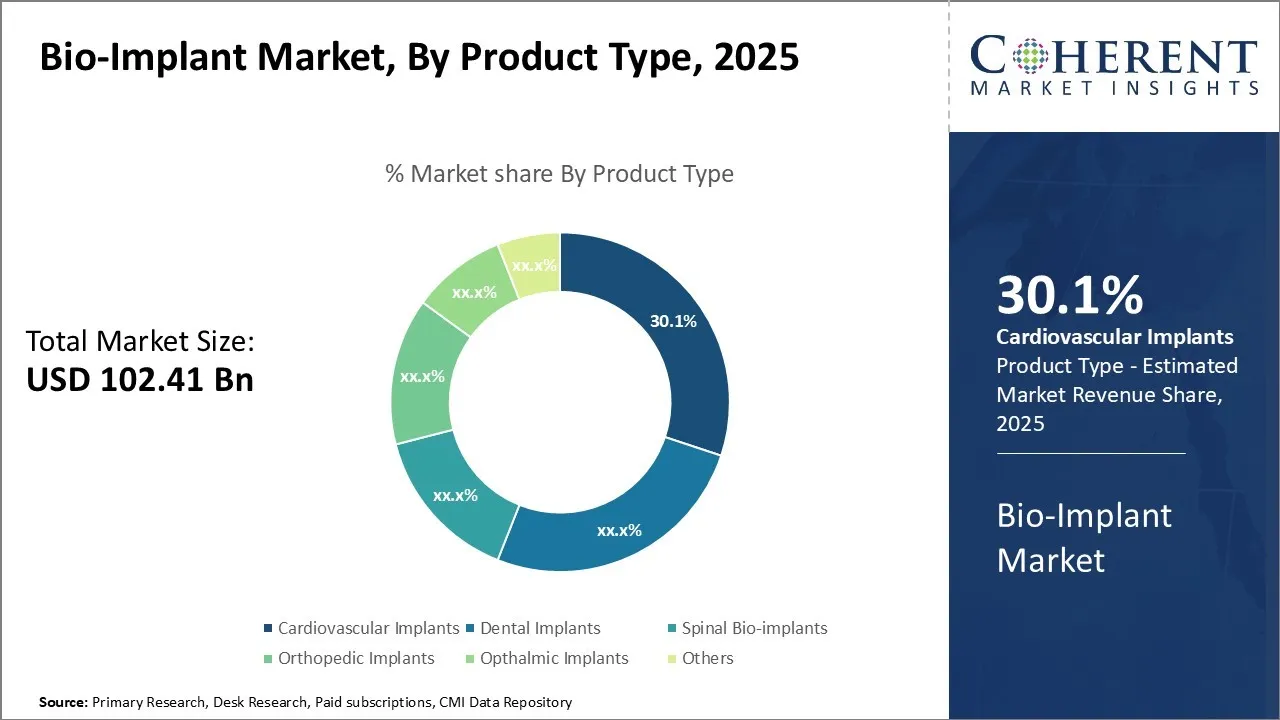
Global Bio-implant Market insights, by product type
By Product Type, the market is segmented into cardiovascular implants, dental implants, spinal bio-implants, orthopedic implants, ophthalmic implants, and others. Out of which, cardiovascular implants segment is expected to dominate the global bio-implant market during the forecast period, owing to increasing research and development to develop novel cardiac implant products.
For instance, in February 2026, Abbott, a medical device company, announced the world's first patient implant of a dual-chamber leadless pacemaker system as part of its AVEIR DR i2i pivotal clinical study. The implant of Abbott's investigational Aveir dual-chamber leadless pacemaker represents a significant technological milestone for leadless pacing technology, and is the first to occur around the world within the pivotal trial.
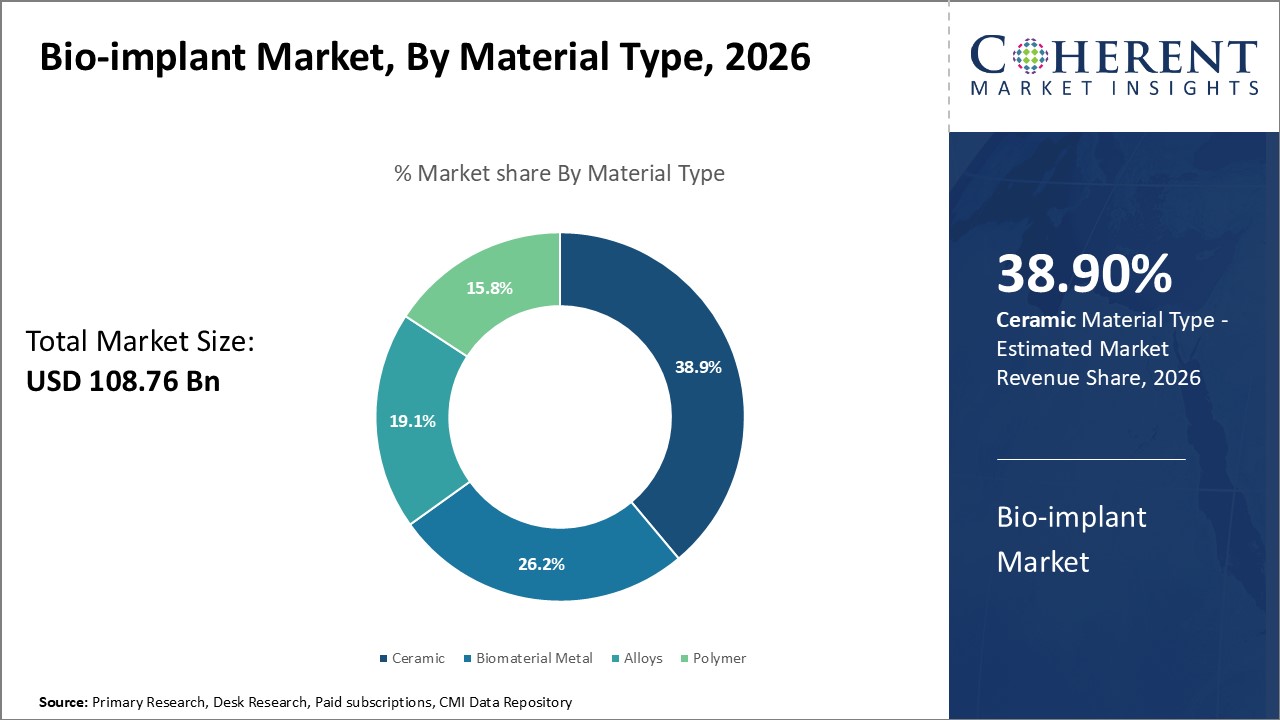
Global Bio-implant Market insights, by material type
By Material Type, the market is segmented into Biomaterial Metal, Ceramic, Alloys, and Polymer. Out of which, the ceramic segment is expected to hold second largest share in market over the forecast period, owing to increasing ceramic product approvals by the regulatory bodies.
For instance, in December 2021, DentalPoint, the pioneer in two-piece ceramic implants, announced that it has received U.S. FDA approval for its latest productnamed ZERAMEX XT. ZERAMEX XT is a 101% metal-free alternative to titanium implants that is designed for highly cosmetic tooth replacement, especially in the esthetic zone.
Global Bio-implant Market insights, by End User
By End User, the market is segmented into hospitals and clinics, ambulatory surgical centers, and others. Out of which, hospitals and clinics segment is expected to dominate the market over the forecast period. For Instance, in July 2021, Duke University Hospital, announced that a surgical team has successfully implanted a new-generation artificial heart in a 39-year-old man with heart failure, and thus, become the first center in North America to perform the procedure.
Global Bio-implant Market- Cross Sectional Analysis
In the product type, cardiovascular implants segment holds a dominant position in the Europe region due to increasing research and development activities by key market players. For instance, in February, 2022, Abbott, announced the world's first patient implant of a dual-chamber leadless pacemaker system as part of its AVEIR DR i2i pivotal clinical study. The implant of Abbott's investigational Aveir dual-chamber leadless pacemaker represents a significant technological milestone for leadless pacing technology, and is the first to occur around the world within the pivotal trial.
Global Bio-implant Market – Regional Insights
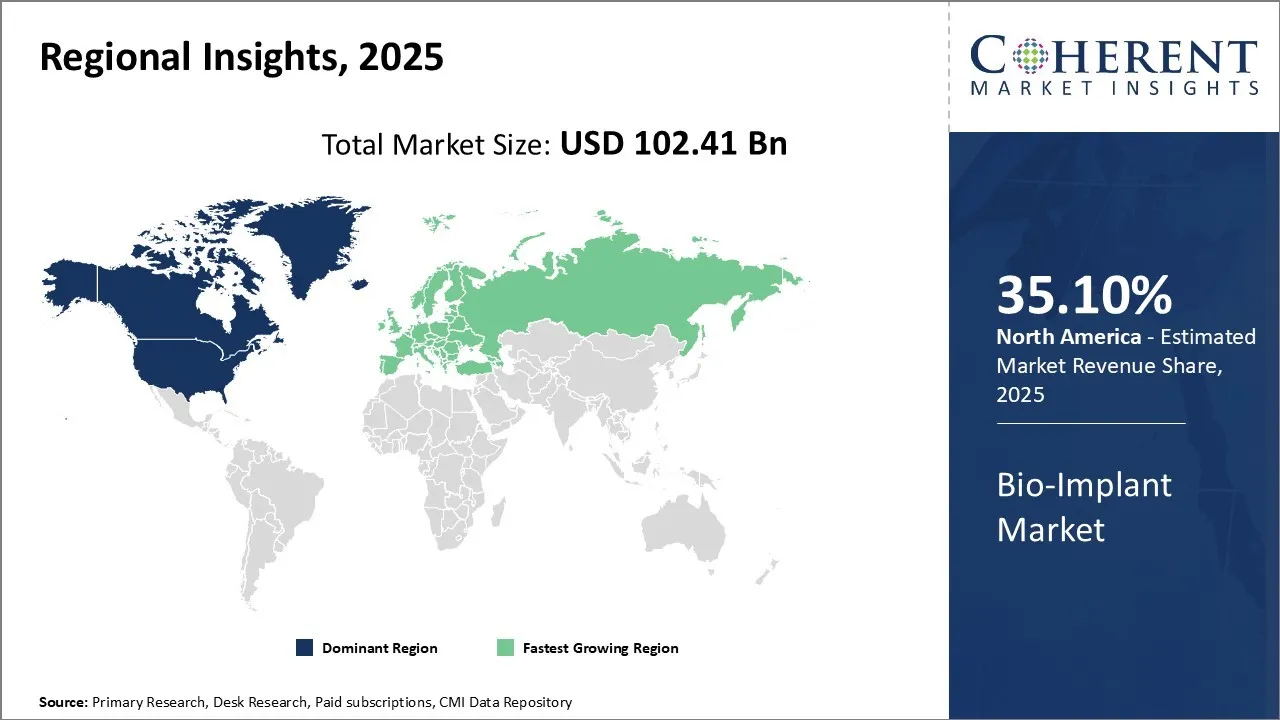
North America Bio-implant Market Analysis and Trends
North America is expected to dominate the global bio-implant market over the forecast period, owing to North America 35.10% market share. High prevalence of cardiovascular diseases such as coronary heart disease, ischemic heart disease, arrhythmias, and others is expected to drive North America bio-implant market growth.
For instance, according to an article published by Circulation Journal, a peer reviewed open access journal, in January 2021, the prevalence of cardiovascular diseases in adults above age of 20 years, in U.S., is around 49.2% (126.9 million in 2018), and increases with age in both males and females. The same source stated that the incidence of valvular heart disease is around 64 per 100, 000 person-years, with aortic stenosis (47.2%), mitral regurgitation (24.2%), and aortic regurgitation (18.0%) contributing most of the valvular diagnoses in 2018, in U.S.
Global Bio-implant Market Dominating Countries
United States Bio-implant Market Analysis and Trend
The U.S. dominates the world bio-implant market with robust healthcare infrastructure, early technology adoption of sophisticated medical devices, and widespread chronic and degenerative disease prevalence. Key industry giants such as Medtronic, Boston Scientific, and Zimmer Biomet have their headquarters here, which promotes ongoing innovation and FDA-approved product pipelines. Pervasive insurance coverage and R&D investments power further market growth.
Germany Bio-implant Market Analysis and Trend
Germany leads the European bio-implant market because of its strong medical device manufacturing base and stringent focus on quality and regulatory compliance. It is a center for orthopedic and dental implants, fueled by well-capitalized public healthcare systems and elderly populations. Players like B. Braun and Ottobock make significant contributions to exports and innovation.
Japan Bio-implant Market Analysis and Trend
Japan is a significant power in the Asia-Pacific region, with an increasingly aging population and strong demand for orthopedic, cardiovascular, and ophthalmic implants. Government policies aimed at encouraging minimally invasive procedures and powerful domestic manufacturers such as Terumo and Nipro are enhancing the nation's competitiveness on the global stage in bio-implants.
India Bio-implant Market Analysis and Trend
India is becoming a rising power in the bio-implant sector, driven by expanding healthcare access, medical tourism, and affordable production. Local entrepreneurship and partnerships with multinational companies are on the rise, especially for dental and orthopedic implants. Still, affordability and regulatory simplification remain major issues for high-end implant technologies.
Market Report Scope
Surface Vision And Inspection Market Report Coverage
| Report Coverage | Details | ||
|---|---|---|---|
| Base Year: | 2025 | Market Size in 2026: | USD 108.76 Bn |
| Historical Data for: | 2020 To 2024 | Forecast Period: | 2026 To 2033 |
| Forecast Period 2026 to 2033 CAGR: | 6.2% | 2033 Value Projection: | USD 165.71 Bn |
| Geographies covered: |
| ||
| Segments covered: |
| ||
| Companies covered: | Abbott., Dentsply Sirona Plc., Medtronic, Stryker Corporation, Zimmer Biomet, B.Braun, Cook Medical, C.R. Bard, Edwards Lifesciences, Wright Medical Technology, and Boston Scientific Corporation. | ||
| Growth Drivers: |
| ||
| Restraints & Challenges: |
| ||
Global Bio-implant Market-Key Developments
- In May 2024, Zimmer Biomet entered into an acquisition agreement for OSSIS, a business focused on custom orthopedic implants manufactured by 3D printing, specifically for sophisticated hip and pelvic reconstructions. This acquisition expands Zimmer Biomet's stature in the personalized orthopedic implant market and underscores the increasing popularity of patient-specific bio-implant solutions.
- In June 2025, CollPlant Biotechnologies, an Israeli regenerative medicines company, successfully 3D-bioprinted commercial-size breast implants with its own proprietary recombinant human collagen (rhCollagen). This represents a significant development in sustainable, biocompatible, and animal-free implant technologies.
Analyst View
- The bio-implant segment is experiencing high growth, led mainly by increasing incidence of chronic illnesses and growing demand for minimally invasive treatments. Developments in biomaterials, such as biodegradable and bioresorbable implant materials, are generating promising opportunities, enabling producers to provide enhanced patient outcomes and compatibility. Similarly, the growing world geriatric population majorly supports overall market forces, as elderly populations are more prone to ailments that call for orthopedic or cardiovascular implants. Additionally, increased uptake of bio-implants through enhanced patient awareness and enhanced healthcare infrastructure further fuels market take-up.
- Nevertheless, some restraints do present challenges to consistent growth. They are rigid regulatory systems within developed economies, which may hinder new innovations' entry. Prohibitive cost of implantation, along with reimbursement policy uncertainties in the developing markets, also serve as market barriers.
- North America leads the bio-implant market, driven by strong healthcare infrastructure, high technology uptake within healthcare modalities, and a significantly aging population base. On the other hand, the Asia-Pacific region offers the most rapid growth opportunities, fueled by fast development in healthcare infrastructure, increasing medical tourism industry, and increasing disposable incomes in nations like China, India, and South Korea.
Market Segmentation
- Global Bio-implant Market, By Product Type (Revenue, USD Bn, 2021 - 2033)
- Cardiovascular Implants
- Dental Implants
- Spinal Bio-implants
- Orthopedic Implants
- Ophthalmic Implants
- Others
- Global Bio-implant Market, By Material Type (Revenue, USD Bn, 2021 - 2033)
- Biomaterial Metal
- Ceramic
- Alloys
- Polymer
- Global Bio-implant Market, By End User (Revenue, USD Bn, 2021 - 2033)
- Hospitals and Clinics
- Ambulatory Surgical Centers
- Others
- Global Bio-implant Market, By Region (Revenue, USD Bn, 2021 - 2033)
- North America
- By Product Type
- Cardiovascular Implants
- Dental Implants
- Spinal Bio-implants
- Orthopedic Implants
- Ophthalmic Implants
- Others
- By Material Type
- Biomaterial Metal
- Ceramic
- Alloys
- Polymer
- By End User
- Hospitals and Clinics
- Ambulatory Surgical Centers
- Others
- By Country
- U.S.
- Canada
- By Product Type
- Latin America
- By Product Type
- Cardiovascular Implants
- Dental Implants
- Spinal Bio-implants
- Orthopedic Implants
- Ophthalmic Implants
- Others
- By Material Type
- Biomaterial Metal
- Ceramic
- Alloys
- Polymer
- By End User
- Hospitals and Clinics
- Ambulatory Surgical Centers
- Others
- By Country
- Brazil
- Mexico
- Argentina
- Rest of Latin America
- By Product Type
- Europe
- By Product Type
- Cardiovascular Implants
- Dental Implants
- Spinal Bio-implants
- Orthopedic Implants
- Ophthalmic Implants
- Others
- By Material Type
- Biomaterial Metal
- Ceramic
- Alloys
- Polymer
- By End User
- Hospitals and Clinics
- Ambulatory Surgical Centers
- Others
- By Country
- Germany
- U.K.
- France
- Italy
- Spain
- Russia
- Rest of Europe
- By Product Type
- Asia Pacific
- By Product Type
- Cardiovascular Implants
- Dental Implants
- Spinal Bio-implants
- Orthopedic Implants
- Ophthalmic Implants
- Others
- By Material Type
- Biomaterial Metal
- Ceramic
- Alloys
- Polymer
- By End User
- Hospitals and Clinics
- Ambulatory Surgical Centers
- Others
- By Country
- China
- India
- Japan
- Australia
- South Korea
- ASEAN
- Rest of Asia Pacific
- By Product Type
- Middle East
- By Product Type
- Cardiovascular Implants
- Dental Implants
- Spinal Bio-implants
- Orthopedic Implants
- Ophthalmic Implants
- Others
- By Material Type
- Biomaterial Metal
- Ceramic
- Alloys
- Polymer
- By End User
- Hospitals and Clinics
- Ambulatory Surgical Centers
- Others
- By Country
- GCC
- Israel
- Rest of Middle East
- By Product Type
- Africa
- By Product Type
- Cardiovascular Implants
- Dental Implants
- Spinal Bio-implants
- Orthopedic Implants
- Ophthalmic Implants
- Others
- By Material Type
- Biomaterial Metal
- Ceramic
- Alloys
- Polymer
- By End User
- Hospitals and Clinics
- Ambulatory Surgical Centers
- Others
- By Country/Region
- South Africa
- Central Africa
- North Africa
- By Product Type
- North America
- Company Profiles
- Abbott.
- Dentsply Sirona Plc.
- Medtronic
- Stryker Corporation
- Zimmer Biomet
- B. Braun
- Cook Medical
- C. R. Bard
- Edwards Lifesciences
- Wright Medical Technology
- Boston Scientific Corporation
Sources
Primary Research Interviews
- Senior Executives from Leading Bio-implant Manufacturers
- Researchers from Bio-medical Institutions
- Orthopedic Surgeons and Healthcare Professionals
- Industry Consultants and Market Analysts
- Others
Databases
- World Health Organization (WHO) Database
- Centers for Disease Control and Prevention (CDC) Database
- Food and Drug Administration (FDA) Database
- Others
Magazines
- Medical Device and Diagnostic Industry (MD&DI) Magazine
- Orthopedic Design & Technology Magazine
- Biotechnology Magazine
- Healthcare Global Magazine
- Others
Journals
- International Journal of Biomaterials
- Journal of Biomedical Materials Research
- Journal of Orthopaedic Research
- Others
Newspapers
- The New York Times (Health Section)
- The Guardian (Medical News Section)
- Business Standard (Pharmaceutical and Healthcare Section)
- Financial Times (Healthcare Section)
- Others
Associations
- American Academy of Orthopaedic Surgeons (AAOS)
- Orthopaedic Research Society (ORS)
- International Society for Biomaterials (ISB)
- American Association of Tissue Banks (AATB)
- Others
Public Domain Sources
- U.S. National Library of Medicine (ClinicalTrials.gov)
- European Medicines Agency (EMA)
- National Institutes of Health (NIH)
- Organization for Economic Co-operation and Development (OECD) Health Database
- Others
Proprietary Elements
- CMI Data Analytics Tool
- Proprietary CMI Existing Repository of information for last 8 years
*Definition: Bio-implants are prosthesis or artificial medical devices that replace missing tissues, and supports a damaged biological structure to improve biological functions of the body, and are made up of material obtained of human or animal origin or biosynthetic materials. Bio-implant is used to assist and regularize human physiological functions.
Get access to 250+ pages report
Every segment, forecast, competitor profile and data table behind the analysis above — available for instant download.
- ESOMAR Member
- ISO 9001:2015 Certified
- D-U-N-S Registered
- GDPR & CCPA Compliant
Missing comfort of reading report in your local language? Find your preferred language:
Transform your Strategy with Exclusive Trending Reports
Frequently Asked Questions
The Bio-implant Market size is estimated to be valued at USD 108.76 Bn in 2026, and is expected to reach USD 165.71 Bn by 2033.
The CAGR of the global Market is projected to be 6.2% from 2026 to 2033.
Increasing adoption of inorganic growth strategies such as collaborations and partnerships by key players in the market, increasing product launches and increasing product approvals from regulatory bodies are expected to drive the market growth.
Cardiovascular implants segment is the leading product type segment in the market.
The major factors that can hamper growth of the market include product recalls from the regulatory authorities.
Major players operating in the market include Abbott., Dentsply Sirona Plc., Medtronic, Stryker Corporation, Zimmer Biomet, B.Braun, Cook Medical, C.R. Bard, Edwards Lifesciences, Wright Medical Technology, and Boston Scientific Corporation.