

Circadian Rhythm Sleep Disorders Market Size and Share Analysis- Growth Trends and Forecasts (2026-2033)
The Circadian Rhythm Sleep Disorders Market size is anticipated to grow at a CAGR of 6.8% with USD 2.7 Bn in 2026 and is expected to reach USD 4.23 Bn in 2033. The primary drivers are largely defined by the rising burden of sleep deprivation, shift work disorder, and circadian misalignment. Some of the other factors are increasing night-shift employment, growing screen exposure, higher adoption of melatonin and light therapy, and greater diagnosis of sleep-related productivity loss. The CDC reported that 30.5% of U.S. adults slept less than seven hours in 2024, thereby supporting the demand for Circadian Rhythm Sleep Disorders treatment solutions.
Key Takeaways
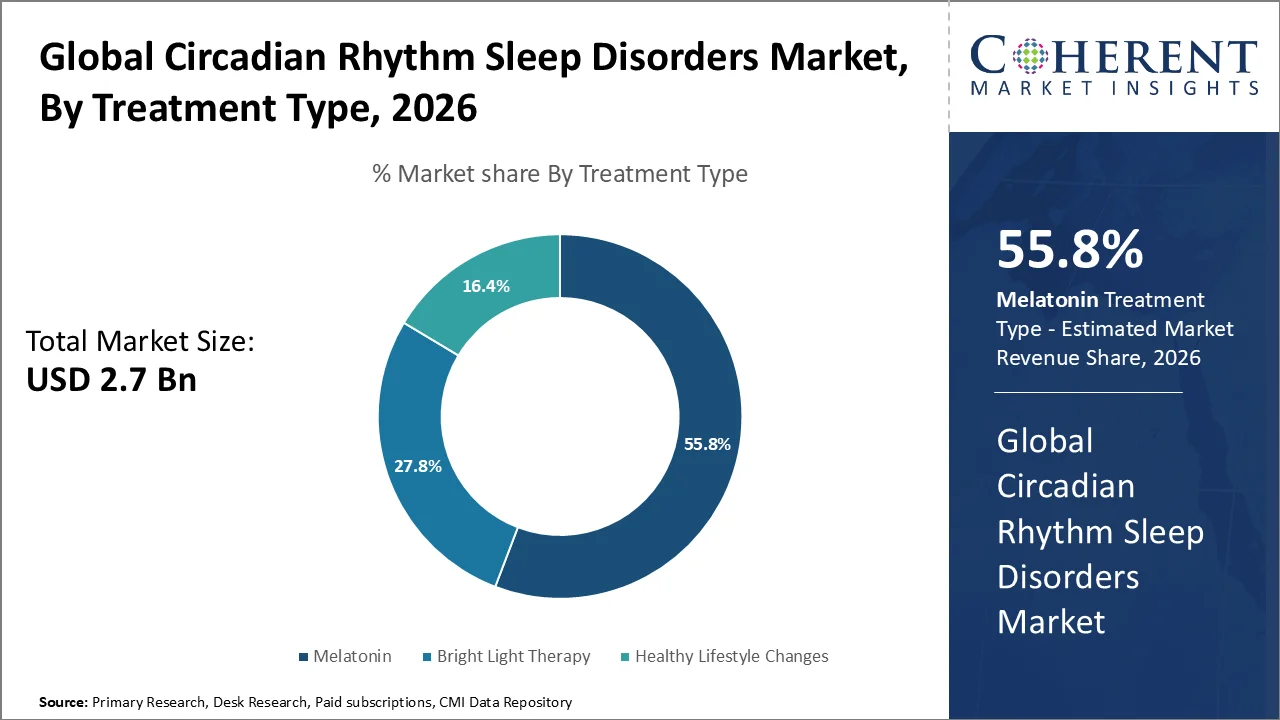
- The melatonin segment is likely to dominate the market with 55.8% in 2026. The segment’s growth is owing to the rising awareness of sleep health, higher adoption of over-the-counter melatonin supplements, and growing recognition of circadian rhythm disorders by healthcare providers. In the U.S., 5.7% of adults reported using over
- The delayed sleep phase disorder segment is set to lead with 32.4% in 2026. The segment’s growth is owing to increasing prevalence of night-shift and rotating-shift workers, greater diagnosis of sleep timing disorders, and the availability of affordable light therapy solutions. Clinical research estimates the prevalence of delayed sleep phase disorder (DSPD) at about 0.13–0.17% in the general population, with 7–16% prevalence among adolescents.
- The retail sales segment is set to lead with 62.3% in 2026. The segment’s growth is owing to the expansion of online pharmacies, rising e-commerce penetration, and consumer preference for self-managed treatments. National health data show that approximately 13% of U.S. adults regularly use some type of sleep aid, making OTC retail access a meaningful vector for distribution of circadian
- The melatonin segment is set to lead with 50.20% in 2026. The segment’s growth is owing to its safety profile, ease of use, and increasing physician recommendations for circadian rhythm regulation. The global melatonin supplements market is forecast to grow at a 14.9% CAGR, reaching USD 13.1 billion by 2035.
- The hospitals segment is set to lead with 39.5% in 2026. The segment’s growth is owing to the specialized sleep clinics, rising patient visits for sleep disorders, and hospital adoption of diagnostic and therapeutic devices for circadian regulation.
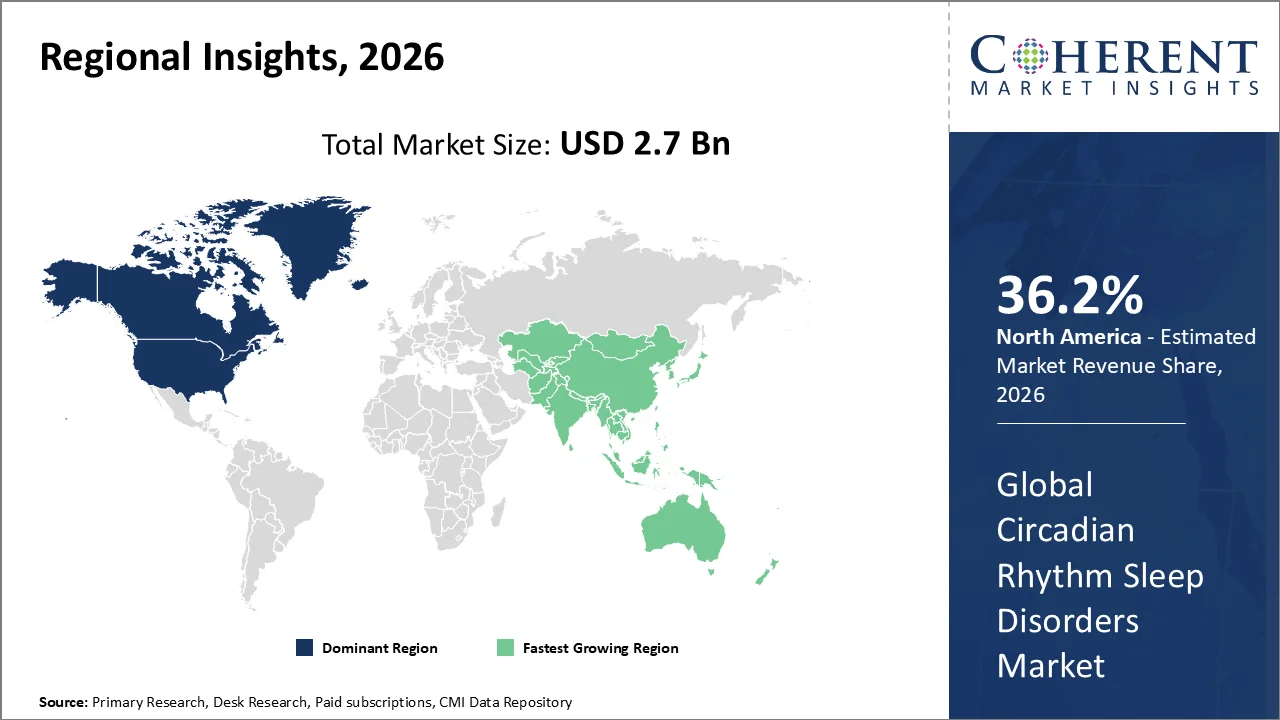
- North America is expected to acquire the prominent share of 36.2% in 2026. The region’s growth is owing to the high awareness of sleep health, established healthcare infrastructure, strong insurance coverage for sleep therapies, and increasing R&D in circadian medicine. 3% of U.S. adults reported having trouble falling asleep at least a few nights per week.
Segmental Insights
Why is Melatonin Acquiring the Largest Share?
On the basis of treatment type, the melatonin segment is projected to account for the largest Circadian Rhythm Sleep Disorders Market share of 55.8% in 2026. The segment’s growth is owing to its central role in regulating the human sleep‑wake cycle and the widespread prevalence of sleep disturbances.
According to the CDC NCHS Data Brief (2026), nearly 60.2% of adults aged 20 and above reported using any dietary supplement in August 2023, which includes melatonin. This highlights the broad consumer reliance on the non‑prescription sleep‑related products.
In addition, the CDC FastStats data show that around 36.8% of adults reported not getting enough sleep, thereby underscoring the persistent public health burden propelling the demand for circadian rhythm interventions.
A key development in the last few years is its ongoing Phase 3 clinical trial evaluating tasimelteon versus placebo in Delayed Sleep‑Wake Phase Disorder (DSWPD), with estimated completion in mid‑2026, which could expand formal indications if successful.
- Current Industry Events of 2026
- Market Size Estimation
- Regional Breakdown
- Competitive Landscape
- Customer Intelligence
- Segmental Analysis
- Pricing Analysis
- Key Market Drivers, Challenges & Future Trends
- Customized Insights Section
Delayed Sleep Phase Disorder hold the Largest Market Share
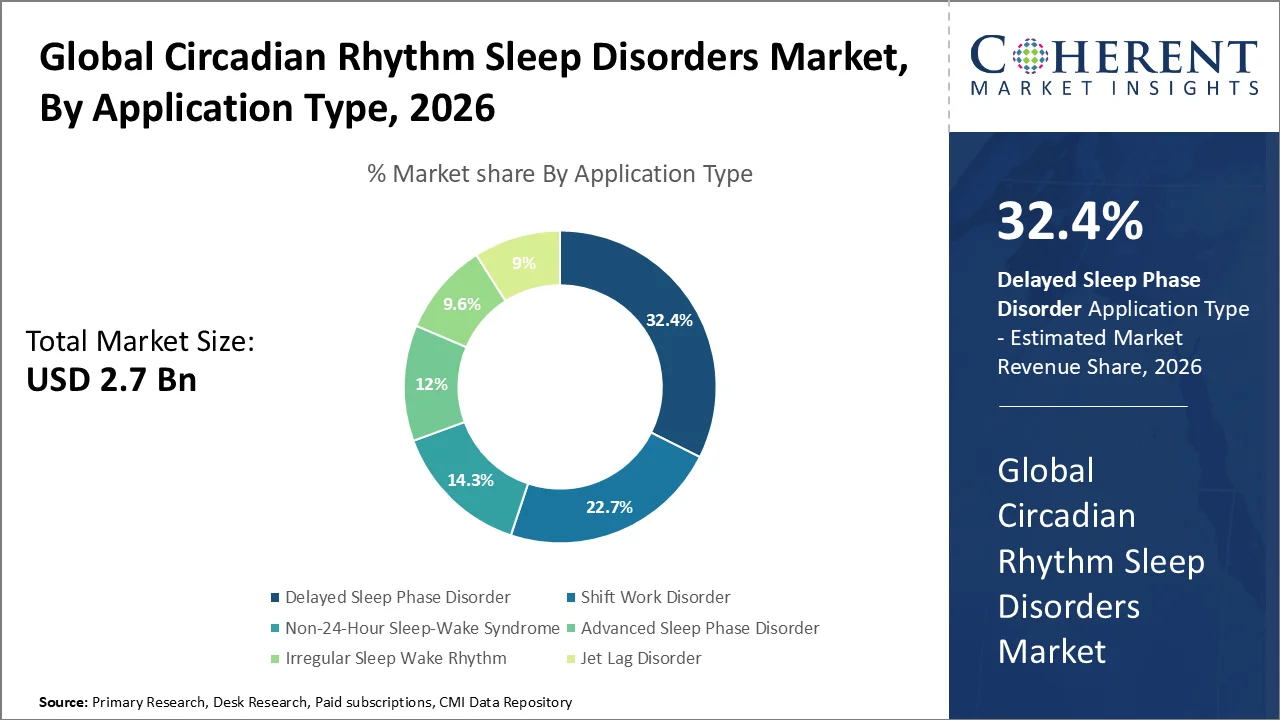
On the basis of application type, the delayed sleep phase disorder segment lead with a major 32.4% share in 2026. The segment’s growth is owing to the prevalence data and rising clinical focus.
Government-linked health sources report that approximately 3% of the general population meets diagnostic criteria for DSPD, with incidence particularly high among adolescents and young adults.
Among individuals presenting with insomnia, nearly 10% are likely to have DSPD, thereby underscoring its clinical significance. The therapeutic approaches are diversifying beyond traditional melatonin treatments, thereby reflecting increased research in alternative interventions.
In 2026, a Phase 4 study of lemborexant, an orexin receptor antagonist, was completed to evaluate its effect on shortening sleep onset latency in DSPD patients. These developments highlight the growing emphasis on non-melatonin therapies and personalized management strategies.
Market Drivers
Shifting Lifestyles and Rising Prevalence of Sleep Disruptions is Transforming the Circadian Rhythm Sleep Disorders Market in the US
The shifting lifestyles and irregular work schedules in the United States are substantially increasing the prevalence of circadian misalignment and sleep disruptions, which in turn is transforming the Circadian Rhythm Sleep Disorders market.
According to the National Center for Health Statistics’ 2024 National Health Interview Survey, nearly 18.1% of adults reported having trouble staying asleep most days or every day, a well‑documented risk factor for circadian rhythm disorders.
Complementing these trends, the CDC data released on April 2026, showed that 12.9% of adults used , thereby reflecting a growing therapeutic engagement for sleep‑related disturbances tied to circadian dysfunction. These behavioral and healthcare utilization patterns are prompting a greater demand for targeted diagnostics as well as interventions.
In clinical developments, an ongoing U.S. trial (NCT03715465) is investigating whether measuring intrinsic circadian clock markers can improve treatment outcomes for delayed sleep
Wearable and AI ‑Enabled Biosensing for Circadian Assessment and Monitoring: A Major Breakthrough in the Circadian Rhythm Sleep Disorders Market
The wearable and AI‑enabled biosensing technologies for circadian assessment and monitoring represent a major breakthrough in the market.
The public health burden of these disorders is very high. According to the U.S. National Heart, Lung, and Blood Institute, an estimated 50, thereby highlighting the persistent unmet need for effective solutions.
In response, the innovators are leveraging advanced sensor fusion and artificial intelligence to capture objective physiological and behavioral patterns in real time, thereby allowing for personalized circadian profiling and dynamic intervention.
A notable recent development is a multicenter prospective study (ClinicalTrials.gov NCT07582809), first posted on May 2026, which is evaluating the long
These advancements underscore the growing interest from clinicians, researchers, and regulators in integrating wearable sleep tech with AI to better assess and manage circadian rhythm disturbances.
Current Events and Their Impact
Current Event | Description and its Impact |
U.S. FDA Final Guidance on Digital Therapeutics Regulation
|
|
EU Health Technology Assessment (HTA) Reform Implementation
|
|
Circadian Rhythm Sleep Disorders Market Trends
- The growing awareness of sleep health and the increasing prevalence of sleep disorders like delayed sleep phase syndrome and non-24-hour sleep wake disorder is propelling the demand for diagnosis as well as the therapeutic interventions. In the U.S., nearly 15% of adults experience chronic circadian rhythm disruption, with prevalence higher amongst the shift workers and the elder population.
- The increased incorporation of melatonin and prescription chronotherapy medications is supporting the personalized treatment approaches, thereby improving the patient sleep outcomes as well as quality of life. According to a 2025 National Sleep Foundation survey, about 56% of adults using sleep aids reported measurable improvements in sleep onset latency.
- The technological innovations like wearable sleep trackers, mobile sleep monitoring apps, and AI-enabled sleep assessment platforms are facilitating the early detection, continual monitoring, as well as personalized therapy adjustments, thus expanding the market penetration. In 2025, Fitbit along with Apple Health reported more than 60 million cumulative active users leveraging sleep tracking features.
- The rising shift work and 24/7 work culture in North America, Europe, and East Asia exacerbate circadian misalignment, thereby increasing the clinical as well as commercial need for targeted interventions. Among the U.S. shift workers, about one in five report chronic sleep phase disruptions.
- The supportive reimbursement frameworks and telehealth adoption are broadening the patient access to treatments like over-the-counter melatonin supplements and clinician-guided therapies. Medicare and several private insurers now cover sleep disorder consultations and chronotherapy prescriptions, thereby boosting diagnosis and adherence rates.
Regional Insights
North America Dominates Owing to the High Prevalence of Circadian Rhythm Disruptions
The North America region accounts for 36.2% of the market share in 2026. The region’s growth is owing to a combination of high prevalence of circadian rhythm disruptions, increasing awareness of sleep health, and robust clinical research activity.
The U.S. government data from 2024 indicate that nearly 37.6% of workers sleep fewer than seven hours per night. The night shift employees disproportionately get affected at 61.8%, thereby highlighting the widespread impact of circadian misalignment.
In addition, about 18.5% of night shift workers report insomnia symptoms associated with disrupted circadian rhythms, thereby underscoring the clinical need for targeted interventions.
A relevant development in the market is ongoing clinical research such as the Healthy Patterns Sleep Study (NCT03682185), exploring behavioral and activity
Asia Pacific Circadian Rhythm Sleep Disorders Market Trends
Asia Pacific is expected to witness strong growth in Circadian Rhythm Sleep Disorders Market over the forecast period. The region’s growth is owing to the to a combination of high prevalence of sleep disorders, expanding awareness of sleep health, and robust healthcare infrastructure.
Regional studies indicate that shift work disorder affects 46.5% of nurses in countries with rotating three-shift hospital models, reflecting a significant workforce burden. Broader economic and industrial evolution has increased night-shift operations across major hubs, with 36.1% of employees in industrialized nations like China and South Korea regularly engaged in shift work, exposing them to circadian misalignment risks. In addition, the insomnia prevalence in Australia ranges from 13.1% to 23.2%, thereby demonstrating a growing need for clinical interventions.
In October 2025, P. D. Hinduja Hospital launched a specialised Sleep Clinic in Asia Pacific, thus providing both comprehensive medical and psychological care. The clinic addresses insomnia,
High Prevalence and Continued Clinical Developments is Accelerating the Circadian Rhythm Sleep Disorders Market in United States
The United States Circadian Rhythm Sleep Disorders Market is experiencing growth owing to the high prevalence among night or irregular shift workers and continued clinical developments. Approximately 9% of Americans engaged in night or irregular shifts are estimated to have shift work sleep disorder, thereby highlighting a substantial affected population with circadian misalignment.
In terms of treatment advancements, a Phase 3 clinical trial evaluating tasimelteon (HETLIOZ®) for delayed sleep
China Circadian Rhythm Sleep Disorders Market Trends
China’s Circadian Rhythm Sleep Disorders Market is driven by a high prevalence of sleep problems, with over 300 million adults affected by insomnia and circadian rhythm disturbances. These disorders substantially impact both the health as well as the quality of life.
In May 2025, Eisai Co., Ltd. secured the regulatory approval and announced the planned China launch of DAYVIGO (lemborexant). It is a dual orexin receptor antagonist which modulates sleep–wake rhythm in adults with insomnia. This marks a significant expansion of treatment options in the Chinese sleep disorder therapeutics landscape.
Who are the Major Companies in Circadian Rhythm Sleep Disorders Industry
Some of the major key players in Circadian Rhythm Sleep Disorders Market are Vanda Pharmaceuticals, Aeroflow, Inc., Cephalon, Inc., Takeda Pharmaceutical Company, Teva Pharmaceutical Industries Ltd., Mylan N.V., The Sunbox Company, Verilux, Inc., Northern Light Technologies, Koninklijke Philips N.V., and Amjo Corp.
Key News
- In June 2026, Resmed completed the acquisition of Noctrix Health, expanding its clinical sleep health portfolio. The deal adds Nidra Tonic Motor Activation (TOMAC) Therapy, an FDA De Novo classified, nonpharmacologic treatment for moderate-to-severe Restless Legs Syndrome, enhancing patient care and access.
- In January 2026, Kye Pharmaceuticals teamed up with
- In August 2024, Re-Time Pty Ltd in Australia launched a Kickstarter campaign for its sleep‑tech wearable, ReTimer Developed with Motherson and Flinders University, the device targets circadian rhythm sleep disorders, aiming to improve sleep quality and overall well‑being.
Market Report Scope
Circadian Rhythm Sleep Disorders Market Report Coverage
| Report Coverage | Details | ||
|---|---|---|---|
| Base Year: | 2025 | Market Size in 2026: | USD 2.7 Bn |
| Historical Data for: | 2020 To 2024 | Forecast Period: | 2026 To 2033 |
| Forecast Period 2026 to 2033 CAGR: | 6.8% | 2033 Value Projection: | USD 4.23 Bn |
| Geographies covered: |
| ||
| Segments covered: |
| ||
| Companies covered: | Vanda Pharmaceuticals, Aeroflow, Inc., Cephalon, Inc., Takeda Pharmaceutical Company, Teva Pharmaceutical Industries Ltd., Mylan N.V., The Sunbox Company, Verilux, Inc., Northern Light Technologies, Koninklijke Philips N.V., and Amjo Corp. | ||
| Growth Drivers: |
| ||
| Restraints & Challenges: |
| ||
Analyst Opinion
- Circadian rhythm sleep disorders affect millions worldwide with delayed sleep phase disorder, advanced sleep phase disorder and non 24 hour sleep wake syndrome being the most prevalent. The market growth is driven by persistent unmet treatment needs rather than transient trends as many patients remain undiagnosed or inadequately treated.
- Melatonin and other chronotherapy treatments are among the most widely used interventions. Estimates suggest that over 25 million adults in North America alone rely on melatonin or light therapy for sleep regulation, highlighting the large treatment pool and ongoing demand.
- Clinical studies show that structured light therapy and timed melatonin administration can normalize sleep wake cycles in over 70 percent of compliant patients. High efficacy, combined with growing awareness of the health risks of untreated circadian disorders including fatigue, cognitive decline and metabolic disruption, continues to boost adoption. These factors collectively encourage innovation, expanded product availability and wider adoption of advanced chronotherapeutic solutions across both mature and emerging markets.
Speak to the analyst
Want personalized insights?
Take the findings above to one of our principal consultants, or have the report rebuilt around the segments, geographies and competitors you actually track.
Market Segmentation
- Treatment Type Insights (Revenue, USD Bn, 2026-2033)
- Healthy Lifestyle Changes
- Bright Light Therapy
- Melatonin
- Application Type Insights (Revenue, USD Bn, 2026-2033)
- Delayed Sleep Phase Disorder
- Advanced Sleep Phase Disorder
- Jet Lag
- Shift Work Disorder
- Irregular Sleep Wake Rhythm
- Non-24-hour Sleep-wake Syndrome
- Distribution Channel Insights (Revenue, USD Bn, 2026-2033)
- Institutional Sales
- Retail Sales
- Drug Insights (Revenue, USD Bn, 2026-2033)
- Melatonin
- Modafinil
- Tasimelteon
- End User Insights (Revenue, USD Bn, 2026-2033)
- Hospitals
- Home Care Settings
- Sleep Centers
- Regional Insights (Revenue, USD Bn, 2026 - 2033)
- North America
- U.S.
- Canada
- Latin America
- Brazil
- Argentina
- Mexico
- Rest of Latin America
- Europe
- U.K.
- Germany
- Italy
- France
- Russia
- Spain
- Rest of Europe
- Asia Pacific
- China
- India
- Japan
- ASEAN
- Australia
- South Korea
- Rest of Asia Pacific
- Middle East
- GCC
- Israel
- Rest of Middle East
- Africa
- North Africa
- Central Africa
- South Africa
- North America
- Key Players Insights
- Vanda Pharmaceuticals
- Aeroflow, Inc.
- Cephalon, Inc.
- Takeda Pharmaceutical Company
- Teva Pharmaceutical Industries Ltd.
- Mylan N.V.
- The Sunbox Company
- Verilux, Inc.
- Northern Light Technologies
- Koninklijke Philips N.V.
- Amjo Corp.
Sources
Primary Research Interviews
- Sleep Disorder Clinics & Sleep Centers
- Neurologists & Sleep Medicine Specialists
- Chronobiology Researchers & Professors
- Digital Sleep Therapy Platform Providers
- Consumer Health & Wellness Technology Developers
- Hospital & Healthcare Procurement Teams
- Others
Databases
- PubMed & MEDLINE
- gov
- GlobalData Healthcare
- IQVIA / IMS Health
- Others
Magazines
- Sleep Review Magazine
- Neurology Today
- Sleep Health Journal (SAGE)
- Nature Sleep Research Highlights
- Others
Journals
- Journal of Circadian Rhythms
- Sleep Medicine Reviews
- Sleep Health: Journal of the National Sleep Foundation
- Chronobiology International
- Others
Newspapers
- The New York Times (Health Section)
- The Guardian (Health & Science Section)
- Reuters Health News
- Bloomberg News (Healthcare Section)
- Others
Associations
- American Academy of Sleep Medicine (AASM)
- Sleep Research Society (SRS)
- European Sleep Research Society (ESRS)
- National Sleep Foundation (NSF)
- International Society for Chronobiology (ISC)
- Others
Public Domain Sources
- U.S. National Institutes of Health (NIH) – National Heart, Lung, and Blood Institute (Sleep Disorders)
- Centers for Disease Control and Prevention (CDC) – Sleep and Health Data
- World Health Organization (WHO) – Sleep & Circadian Health
- European Commission – Public Health Research
- Others
Proprietary Elements
- CMI Data Analytics Tool
- Proprietary CMI Existing Repository (Last 10 Years)
Get access to 250+ pages report
Every segment, forecast, competitor profile and data table behind the analysis above — available for instant download.
- ESOMAR Member
- ISO 9001:2015 Certified
- D-U-N-S Registered
- GDPR & CCPA Compliant
Missing comfort of reading report in your local language? Find your preferred language:
Transform your Strategy with Exclusive Trending Reports
Frequently Asked Questions
The Circadian Rhythm Sleep Disorders Market is expected to reach USD 4.23 Billion in 2033.
The widespread lack of awareness and under-diagnosis, side effects associated with treatments, and high costs of specialized light therapy devices and medications are the key factors hampering growth of the market.
The rising prevalence of sleep disorders due to sedentary lifestyles, a rapidly growing geriatric population, and increased adoption of digital health technologies is boosting the demand for Circadian Rhythm Sleep Disorders solutions.
The Circadian Rhythm Sleep Disorders Market is anticipated to grow at a CAGR of 6.8% between 2026 and 2033.
Among regions, North America is expected to account for a largest market share in the global Circadian Rhythm Sleep Disorders Market over the forecast period.
Melatonin therapies are generally lower-cost, while bright light therapy devices and prescription drugs such as modafinil or tasimelteon are higher-cost.
These are disorders caused by misalignment of the internal circadian clock with external environmental cues, leading to insomnia, excessive sleepiness, and disrupted sleep-wake cycles.