

Global Diabetic Footwear Market Size and Forecast 2026 - 2033
The global diabetic footwear market is estimated to be valued at USD 10.37 Bn in 2026 and is expected to reach USD 17.66 Bn by 2033, exhibiting a compound annual growth rate (CAGR) of 7.9% from 2026 to 2033.
Key Takeaways of the Global Diabetic Footwear Market
- In terms of product type, shoes contribute the highest share of the diabetic footwear market owing to their versatility and functionality with an estimated 41.8% share in 2026.
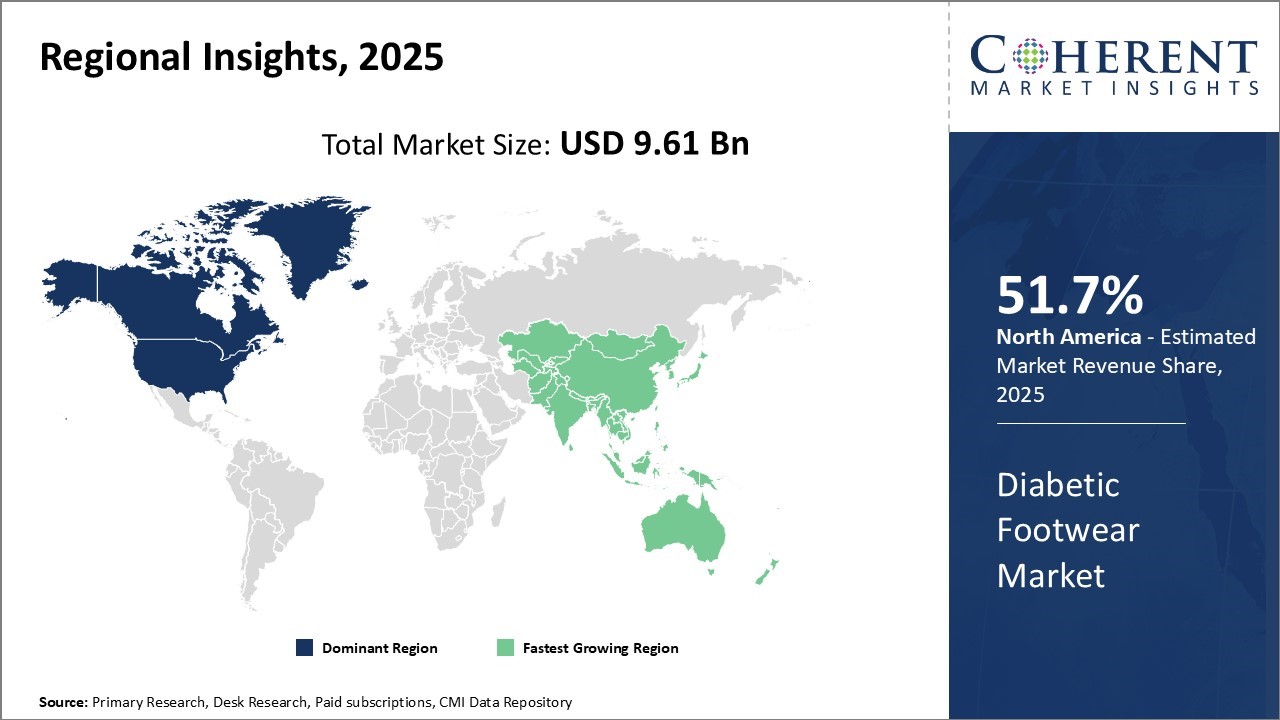
- North America is expected to account for around 51. 7% of the market share in 2026.
Market Overview
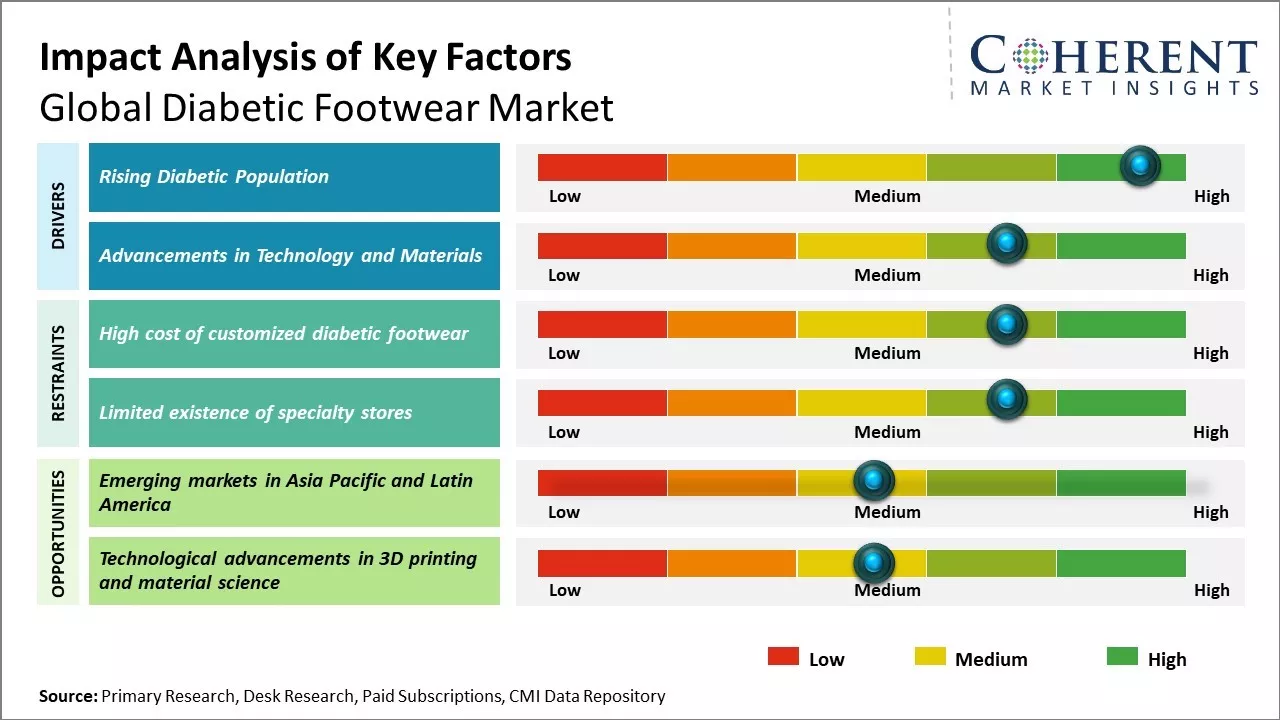
The increasing prevalence of diabetes around the globe is expected to be a key factor driving the demand for diabetic footwear. Additionally, rising awareness regarding the benefits of proper footwear in preventing diabetic foot complications, such as foot ulcers and amputation, is expected to further aid the market growth.
Growing obese and geriatric population prone to develop diabetes also present potential growth opportunities for diabetic footwear manufacturers. However, the availability of alternative treatments and consumer preference towards general footwear may hamper the market growth to some extent during the forecast period.
Current Events and their Impact on the Global Diabetic Footwear Market
Current Events | Description and its impact |
Regulatory Compliance Deadlines (EU & U.K.) |
|
AI and Sensor Technology Integration |
|
Market Trends
- Rising Diabetic Population
The global prevalence of diabetes has surged to over 460 million, reaching pandemic levels. This rise is attributed to lifestyle changes in developed nations and factors like urbanization and Western diets in developing regions. With an aging global population and ongoing nutrition transitions, the number of diabetics is expected to keep growing.
This increase directly fuels the demand for specialized diabetic footwear. Diabetics are highly susceptible to foot complications, where even minor injuries can lead to severe issues like gangrene or amputation. Consequently, there's an urgent need for therapeutic shoes and inserts that offer protection, comfort, and convenience through features like proper support, deep heel cups, cushioned soles, broad toe boxes, and easy-on designs. Growing awareness of self-care is also driving more patients to invest in preventative footwear to avoid serious health problems and future medical expenses.
- Advancements in Technology and Materials
Technological innovations are driving enhanced product offerings in the diabetic footwear segment. Material sciences, cushioning technologies, 3D printing, and digitization of manufacturing processes have allowed brands to develop novel diabetic shoe styles with improved performance and comfort attributes. For example, some companies now use durable yet highly breathable mesh and microfiber uppers combined with lightweight memory foam or specialty gel footbeds molding according to foot contours for personalized cushioning. 3D scanners help create customized 3D printed insoles constructed from responsive polymers delivering targeted pressure relief. Inserts are infused with active ingredients like cinnamon extracts proven to reduce blood glucose levels. Sensor-enabled smart shoes continuously monitor plantar pressures and gait patterns, notifying users of potential problem zones on their feet.
Market Opportunity: Emerging markets in Asia Pacific and Latin America
The emerging markets in Asia Pacific and Latin America possess huge potential for growth in the global diabetic footwear market. These regions are witnessing rising health awareness combined with rapidly growing middle-class populations that are willing to spend more on managing chronic diseases like diabetes.
The footwear industry in these emerging markets has responded proactively to cater to this demand. Local manufacturers have invested in extensive research and development to roll out fashionable yet therapeutic ranges. International brands too have amplified their distribution networks within these fast-growing territories. This ensures availability and affordability of diverse styles across various price points. Meanwhile, e-commerce has empowered customers to conveniently shop from home during the pandemic. Enhanced access through multiple convenient channels is helping to popularize diabetic footwear like never before. For instance, India is home to around 89.8 million adults aged 20–79 with diabetes in 2024, and that number is expected to rise to 156.7 million by 2050, according to the International Diabetes Federation’s Diabetes Atlas.
- Current Industry Events of 2026
- Market Size Estimation
- Regional Breakdown
- Competitive Landscape
- Customer Intelligence
- Segmental Analysis
- Pricing Analysis
- Key Market Drivers, Challenges & Future Trends
- Customized Insights Section
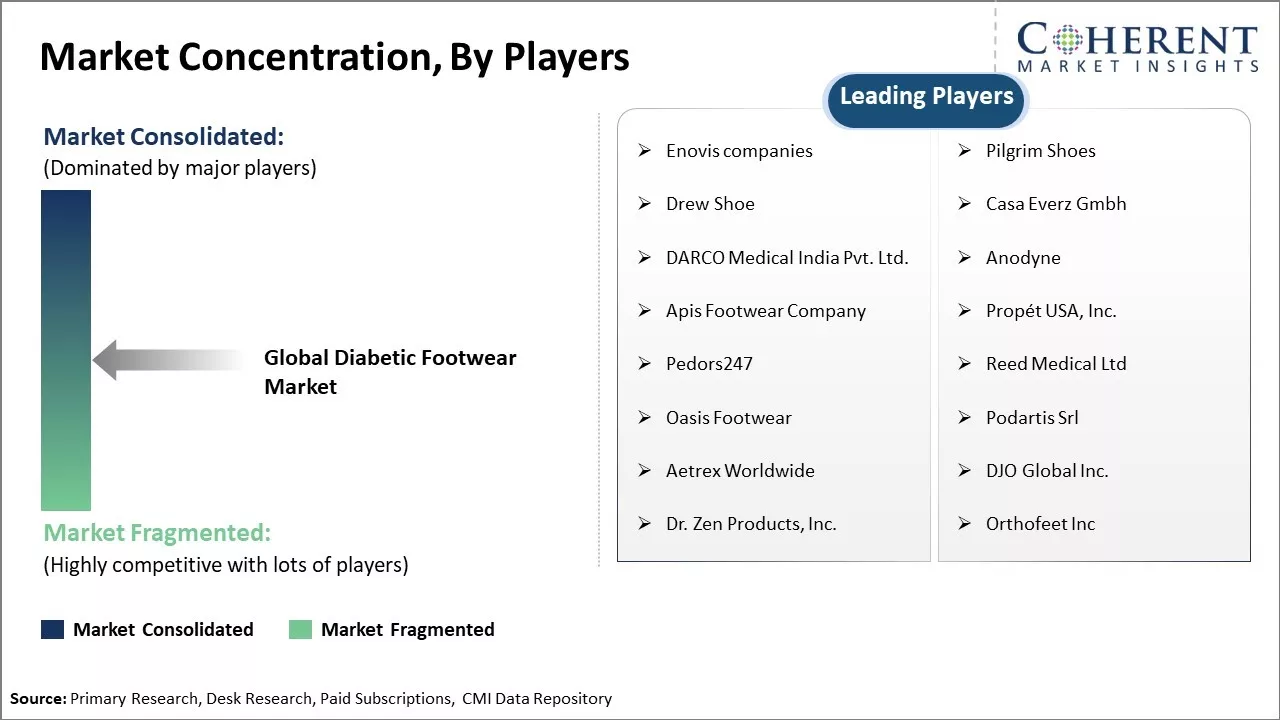
Market Concentration and Competitive Landscape
Segmental Insights
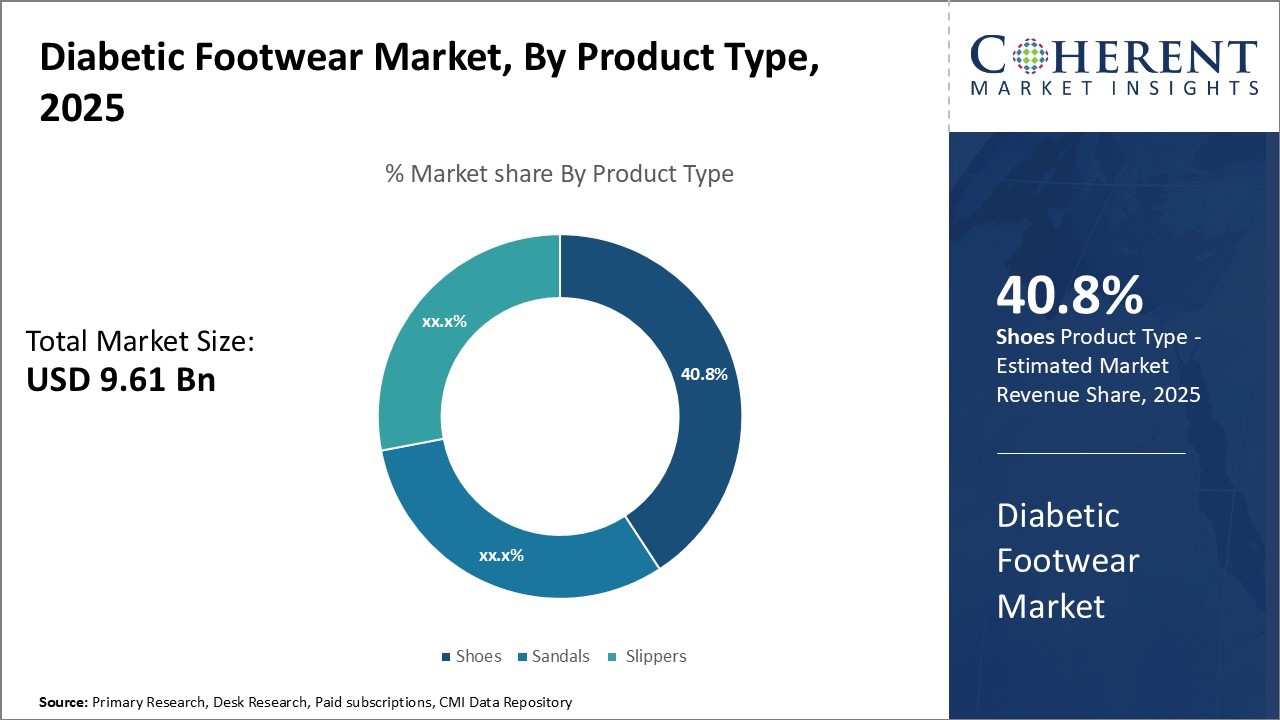
Global Diabetic Footwear Market Insights, By Product Type
In terms of product type, shoes contribute the highest share of the diabetic footwear market owing to their versatility and functionality with an estimated 41.8% share in 2026. Shoes are the most commonly worn style by people with diabetes for day-to-day activities. Their secure closure and full coverage of the foot make shoes preferable over other styles for active lifestyles.
Shoes offer protection, support, and traction that help prevent injuries to sensitive feet. Their snug fit around the heel, ankle and midfoot minimize foot movement and reduce strain on problem areas like blisters and calluses. Built-in arch support and cushioned soles evenly distribute weight to avoid pressure points. Breathable uppers keep feet cool and dry.
The wide assortment of shoe designs caters to different activities from casual wear to sports. Lightweight walking shoes are comfortable for short distances while sturdier athletic shoes work for more strenuous exercise. Fashionable leather dress shoes allow for professional settings. Slip-resistant soles and padded heels enable mobility both indoors and outdoors.
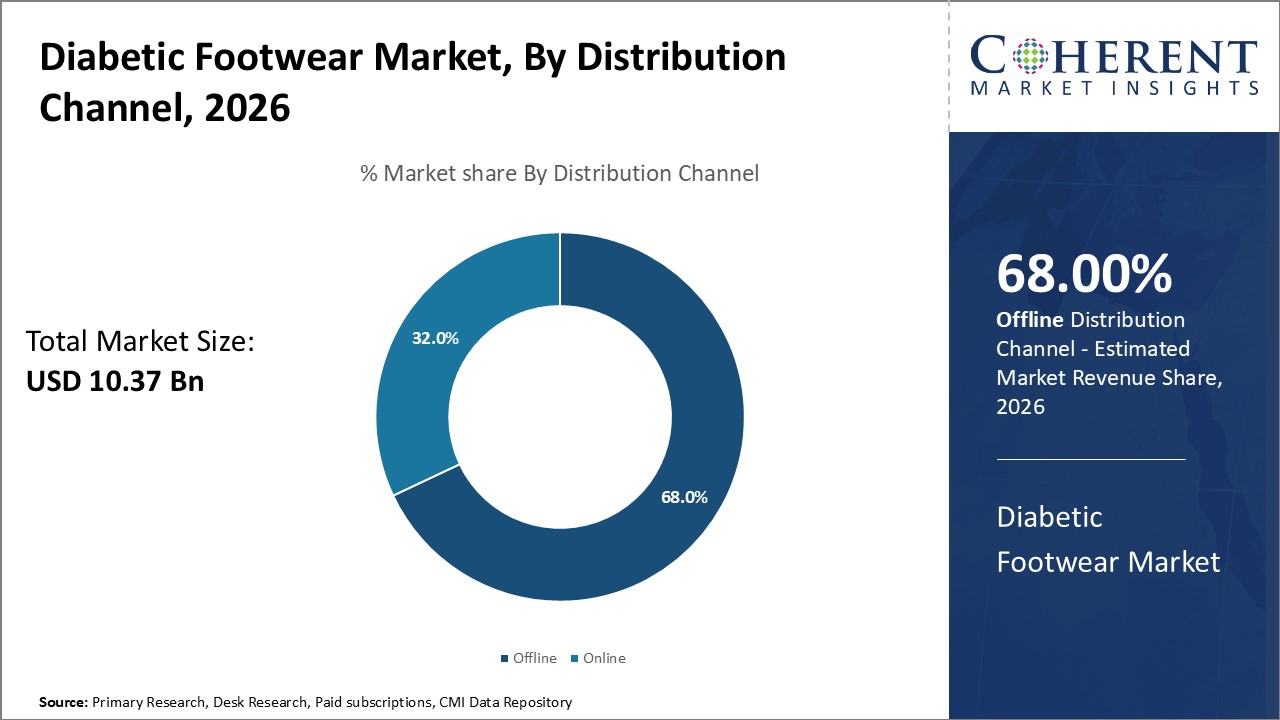
Global Diabetic Footwear Market Insights, By Distribution Channel: Offline Retail Dominates the Diabetic Footwear Market
By distribution channel, the offline segment continues to lead the diabetic footwear market, driven by the need for specialized fitting, medical guidance, and in-person service. Diabetic patients often require expert help from trained staff to select properly sized shoes with custom inserts that reduce the risk of ulcers and foot complications. Specialized healthcare outlets and orthopedic stores employ certified professionals to assess foot shape, gait, and pressure points, offering a wide range of widths and depth sizes, with on-site modifications when needed.
Offline channels are also reinforced by referrals from podiatrists and endocrinologists, ensuring clinical accuracy and trust. Many stores provide ongoing support through follow-up fittings and educational workshops, which enhance patient compliance and brand loyalty. Even in rural areas, mass retail outlets offer basic assistance, helping customers gain confidence in managing their condition. The ability to touch, feel, and compare products, coupled with real-time consultation, gives offline channels a clear edge despite growing online sales by fulfilling the critical demand for personalized, informed care.
Regional Insights
North America Diabetic Footwear Market Trends and Analysis
North America has emerged as the dominant region in the global diabetic footwear market. North America is expected to account for over 51.7% of the market share in 2026, due to the rising prevalence of diabetes and growing awareness about managing the disease. The presence of leading footwear brands, such as Dr. Comfort, Orthofeet, Aetrex, and Drew, has strengthened the distribution and supply chain network across the region. Moreover, several medical insurance policies in the U.S. provide coverage for custom-molded diabetic shoes, which has propelled the sales in the past decade.
Apart from having a large customer base of diabetic population, North America is also a key exporter of diabetic footwear to other developed markets. Leading manufacturers leverage free trade agreements to expand exports from the U.S. and Canada. They focus on European countries, Asia Pacific, and Middle Eastern markets that have high demand but limited local production. The pricing of diabetic shoes varies across different U.S. states, with average footwear cost ranging from USD 200 to USD 500 depending on customization and material used. For instance, under Medicare Part B, eligible U.S. patients can receive one pair of therapeutic shoes and up to three pairs of inserts each year, significantly reducing out-of-pocket expenses. This has helped brands like Dr. Comfort expand their Medicare-approved product offerings across senior care clinics and pharmacies nationwide.
Asia Pacific Diabetic Footwear Market Trends and Analysis
Asia Pacific has emerged as the fastest growing regional market for diabetic footwear. China accounts for the largest share within the region primarily due to rising geriatric population and growing prevalence of diabetes. The Chinese government has incorporated measures to educate people about diabetes management and foot care. This has boosted the adoption of specialty footwear for therapeutic purposes. India is another prominent market in Asia Pacific led by increasing health awareness, rapid urbanization, and large patient pool.
Overall, the Asia Pacific market has high potential owing to unmet needs in diabetes management and an evolving retail landscape for specialty medical products. For instance, in April 2024, researchers at India’s Central Leather Research Institute unveiled a patented ankle‑foot orthosis (AFO) therapeutic shoe designed to redistribute plantar pressure, hasten ulcer healing, and reduce amputation risk available via hospital clinics and low-cost production (approximately INR 10,000) to address diabetic foot complications.
Diabetic Footwear Market Outlook for Key Countries
U.S. Diabetic Footwear Market Trends
The U.S. market remains the global leader in diabetic footwear, supported by comprehensive Medicare coverage and ongoing legislative efforts to expand access. Under Medicare Part B, eligible diabetes patients can receive one pair of therapeutic shoes (custom-molded or extra-depth) and multiple insert replacements annually, once meeting documented clinical criteria. In mid‑2026, Senators Collins and Shaheen introduced bipartisan legislation to allow nurse practitioners and PAs to prescribe diabetic shoes a major policy shift to improve access and reduce delays.
For instance, the proposed Promoting Access to Diabetic Shoes Act would empower NPs and PAs especially in rural communities to certify the need for therapeutic footwear, simplifying the process and accelerating access for Medicare beneficiaries.
China Diabetic Footwear Market Trends
China is rapidly evolving into the major diabetic footwear market in Asia Pacific, fueled by aging demographics, urban migration, and rising disease awareness. National public health campaigns are increasingly incorporating diabetic foot care education, spurring consumer interest in preventive and therapeutic footwear. Local manufacturers are also scaling production of affordable pressure-relieving shoes adapted to regional biomechanics.
Germany Diabetic Footwear Market Trends
Germany stands as Europe's most advanced diabetic footwear market, supported by universal statutory health insurance (covering approximately90% of the population) and structured reimbursement frameworks. Physicians can prescribe podologic foot care, and services by certified podologists are reimbursed under health coverage aiming to prevent ulcers and reduce amputations. High consumer awareness and interdisciplinary diabetes care models foster the provision of certified therapeutic shoes, many bearing quality seals from the German Diabetes Association. Research networks actively promote diabetic foot screening and rehabilitation protocols, further boosting preventive footwear uptake.
Japan Diabetic Footwear Market Trends
Japan's diabetic footwear market is experiencing significant growth, driven by a rising prevalence of diabetes, particularly among its aging population. Increased awareness regarding preventative foot care and the severe complications of diabetic foot ulcers is fueling demand. The market is also seeing innovation with a focus on customizable, technologically advanced, and stylish designs, moving away from traditional bulky options. While offline retail currently dominates due to the need for proper fitting, the online segment is projected to grow rapidly, offering convenience and accessibility for patients seeking specialized footwear.
Market Report Scope
Diabetic Footwear Market Report Coverage
| Report Coverage | Details | ||
|---|---|---|---|
| Base Year: | 2025 | Market Size in 2026: | USD 10.37 Bn |
| Historical Data for: | 2020 To 2024 | Forecast Period: | 2026 To 2033 |
| Forecast Period 2026 to 2033 CAGR: | 7.9% | 2033 Value Projection: | USD 17.66 Bn |
| Geographies covered: |
| ||
| Segments covered: |
| ||
| Companies covered: | Enovis companies, Pilgrim Shoes, Drew Shoe, Casa Everz Gmbh, DARCO Medical India Pvt. Ltd., Anodyne, Apis Footwear Company, Propét USA, Inc., Pedors247, Reed Medical Ltd, Oasis Footwear, Podartis Srl, Aetrex Worldwide, DJO Global Inc., Dr. Zen Products, Inc., and Orthofeet Inc. | ||
| Growth Drivers: |
| ||
| Restraints & Challenges: |
| ||
Global Diabetic Footwear Industry News
- In November 2024, a strategic alliance between Sensoria, Defender, AlexiGen, and Anderson Medical Supplies introduced an integrated care model for diabetic foot health. This includes biologics, offloading smart footwear, and digital monitoring, positioning it as a comprehensive, preventative solution for managing diabetic foot complications.
- In March 2024, nine students from Oman College of Health Sciences, an educational institution based in Oman, developed a smart shoe designed to reduce complications in diabetic patients. This groundbreaking footwear aims to tackle critical health issues related to diabetes, especially diabetic foot complications, which can result in severe outcomes such as foot ulcers and amputations.
- In November 2023, Aetrex launched FitStarter, a personalized footwear recommendation platform developed in partnership with Heeluxe, to assist retailers in improving shoe fitting services, thereby aiming to reduce product returns and enhance customer satisfaction.
- In May 2022, Anodyne, LLC, a major provider of clinical footwear products, announced that HealthEdge Investment Partners, LLC, a healthcare-focused private equity fund, had finalized an investment in the company.
- In May 2022, Enovis, a global medical technology firm, acquired 360 Med Care Pty Ltd, an Australia-based orthopaedic startup. The goal is to improve patient outcomes throughout the orthopaedic care process.
Emerging Applications in the Diabetic Footwear Market
- Diabetic footwear is evolving beyond traditional therapeutic shoes to include smart, sensor-enabled options for real-time foot health monitoring and early detection of complications.
- Companies like Siren Care and X-Dream Medical are developing footwear with embedded temperature and pressure sensors to proactively identify precursors to diabetic foot ulcers.
- Customized 3D-printed insoles and shoes, offered by brands such as Wiivv and Feetz, represent another emerging application, providing personalized fit and improved comfort to enhance long-term foot health outcomes.
Key Factors Driving Diabetic Footwear Price Fluctuations
Factor | Explanation | Impact on Price | Example |
1. Demand-Supply Dynamics | Influenced by diabetes prevalence, material availability, and production capacity | High demand or disrupted supply pushes prices up | In 2020, a 15% price hike in North America due to factory shutdowns amid rising demand |
2. Global Economic Conditions | Inflation, currency volatility, and trade policies affect production costs and retail pricing | Inflation raised raw material costs; tariffs increased import expenses | 2022: Leather prices rose by 20%, contributing to a 6–8% price increase in the Eurozone |
3. Distribution & Retail Channels | Online vs offline models, infrastructure efficiency, and geographic coverage affect pricing | E-commerce offers lower prices; rural areas face higher logistics costs | In India, online diabetic footwear prices were 15–18% lower than those in physical stores |
4. Brand Positioning | Premium brands with innovations charge higher; budget brands remain affordable | Smart or orthopedic features increase prices by 15–25% | OrthoLite insoles raised product prices by 18% in 2022 due to comfort perception |
5. Marketing & Competitive Strategies | Price wars, discounts, bundling, and loyalty campaigns temporarily affect pricing | Aggressive discounting lowers prices by 10–25% | 2022: A Brazilian brand launched with 25% discounts, forcing 12% competitor price cuts |
Analyst View
- Innovation in this segment is stagnant, with most offerings still stuck in basic orthopedic designs. Yet, companies that invest in pressure-mapping insoles, antimicrobial linings, and adaptive closures are creating a sharp differentiation. A U.S.-based player, OrthoFeet, has seen a surge in demand driven by smart customization features that mainstream players in Asia and Latin America have yet to adopt.
- Retailers and brands are underutilizing digital channels for targeted consumer engagement. In Brazil, e-commerce now accounts for 30% of total footwear sales, yet diabetic footwear is still overlooked under generic listings. The brands that will win are those that treat this category as a lifestyle segment, using data-driven platforms to connect with customers not just as patients but as people with style, choice, and long-term care goals.
Market Segmentation
- Product Type Insights (Revenue, USD Bn, 2021 - 2033)
- Sandals
- Shoes
- Slippers
- Distribution Channel Insights (Revenue, USD Bn, 2021 - 2033)
- Offline
- Online
- Regional Insights (Revenue, USD Bn, 2021 - 2033)
- North America
- U.S.
- Canada
- Latin America
- Brazil
- Argentina
- Mexico
- Rest of Latin America
- Europe
- Germany
- U.K.
- Spain
- France
- Italy
- Russia
- Rest of Europe
- Asia Pacific
- China
- India
- Japan
- Australia
- South Korea
- ASEAN
- Rest of Asia Pacific
- Middle East & Africa
- GCC Countries
- Israel
- South Africa
- Rest of Middle East & Africa
- Key Players Insights
- Enovis companies
- Pilgrim Shoes
- Drew Shoe
- Casa Everz Gmbh
- DARCO Medical India Pvt. Ltd.
- Anodyne
- Apis Footwear Company
- Propét USA, Inc.
- Pedors247
- Reed Medical Ltd.
- Oasis Footwear
- Podartis Srl
- Aetrex Worldwide
- DJO Global Inc.
- Dr. Zen Products, Inc.
- Orthofeet Inc.
Sources
Stakeholders
- Diabetic Footwear Man ufacturers
- Orthopedic Specialists and Podiatrists
- Healthcare Supply Chain Experts
- Retail and E-commerce Distributors of Diabetic Footwear
- Others
Magazines
- Footwear News
- Diabetes Care Magazine
- Medical Device and Diagnostic Industry (MDDI)
- Diabetes Health Magazine
- Others
Journals
- Journal of Foot and Ankle Research
- Diabetes Care Journal
- Prosthetics and Orthotics International
- Journal of Diabetes and Its Complications
- Others
Newspapers
- The Wall Street Journal (Healthcare Section)
- The Financial Times (Healthcare & Pharma Section)
- The New York Times (Health Section)
- Bloomberg Healthcare
- Others
Associations
- American Podiatric Medical Association (APMA)
- International Diabetes Federation (IDF)
- American Diabetes Association (ADA)
- Footwear Distributors and Retailers of America (FDRA)
- Others
Public Domain Sources
- World Health Organization (WHO) Reports
- National Institute of Diabetes and Digestive and Kidney Diseases (NIDDK)
- U.S. Food and Drug Administration (FDA)
- Centers for Disease Control and Prevention (CDC)
- Others
Proprietary Elements
- CMI Data Analytics Tool
- Proprietary CMI Existing Repository of information for the last 8 years
*Definition: The diabetic footwear market consists of specialized footwear designed specifically for people with diabetes. The shoes are made with extra depth and width to accommodate swollen, deformed, or sensitive feet caused by diabetes. They have removable insoles to enable inspection of the feet, stretch sides to ease putting on and taking off, and slip-resistant and cushioned soles to minimize foot injuries. The shoes aim to reduce the risk of foot ulcers and lower limb amputations that are common complications of diabetes.
Get access to 250+ pages report
Every segment, forecast, competitor profile and data table behind the analysis above — available for instant download.
- ESOMAR Member
- ISO 9001:2015 Certified
- D-U-N-S Registered
- GDPR & CCPA Compliant
Missing comfort of reading report in your local language? Find your preferred language:
Transform your Strategy with Exclusive Trending Reports
Frequently Asked Questions
The diabetic footwear market is estimated to be valued at USD 10.37 Bn in 2026, and is expected to reach USD 17.66 Bn by 2033.
The CAGR of the diabetic footwear market is projected to be 7.9% from 2026 to 2033.
Rising diabetic population and advancements in technology and materials are the major factors driving the growth of the global diabetic footwear market.
High cost of customized diabetic footwear and limited existence of specialty stores are the major factors hampering the growth of the global diabetic footwear market.
In terms of product type, shoes is estimated to dominate the market revenue share in 2026.
Enovis companies, Pilgrim Shoes, Drew Shoe, Casa Everz Gmbh, DARCO Medical India Pvt. Ltd., Anodyne, Apis Footwear Company, Propét USA, Inc., Pedors247, Reed Medical Ltd, Oasis Footwear, Podartis Srl, Aetrex Worldwide, DJO Global Inc., Dr. Zen Products, Inc., and Orthofeet Inc are the major players in the global diabetic footwear market.
North America is expected to lead the global diabetic footwear market in 2026.