

Global Diesel Exhaust Fluid Market Size and Share Analysis – Growth Trends and Forecasts (2026-2033)
The global diesel exhaust fluid market is estimated to be valued at USD 46.72 Bn in 2026 and is expected to reach USD 81.11 Bn by 2033, growing at a compound annual growth rate (CAGR) of 8.2% from 2026 to 2033.
Key Takeaways
- In terms of Component, DEF Tank Segment contributes 36.7% share of the market during the forecast period. This is due to continuous innovation for meeting stringent emission regulations in 2026.
- In terms of Vehicle Type, Heavy Commercial Vehicles Segment contributes 33.2% share in 2026. This is due to intensive focus on optimizing the total cost of ownership in 2026.
- In terms of Supply Modes, Bulk Supply Segment contributes 33.8% share of the market as it effectively addresses the need for consistent diesel exhaust fluid supply in 2026.
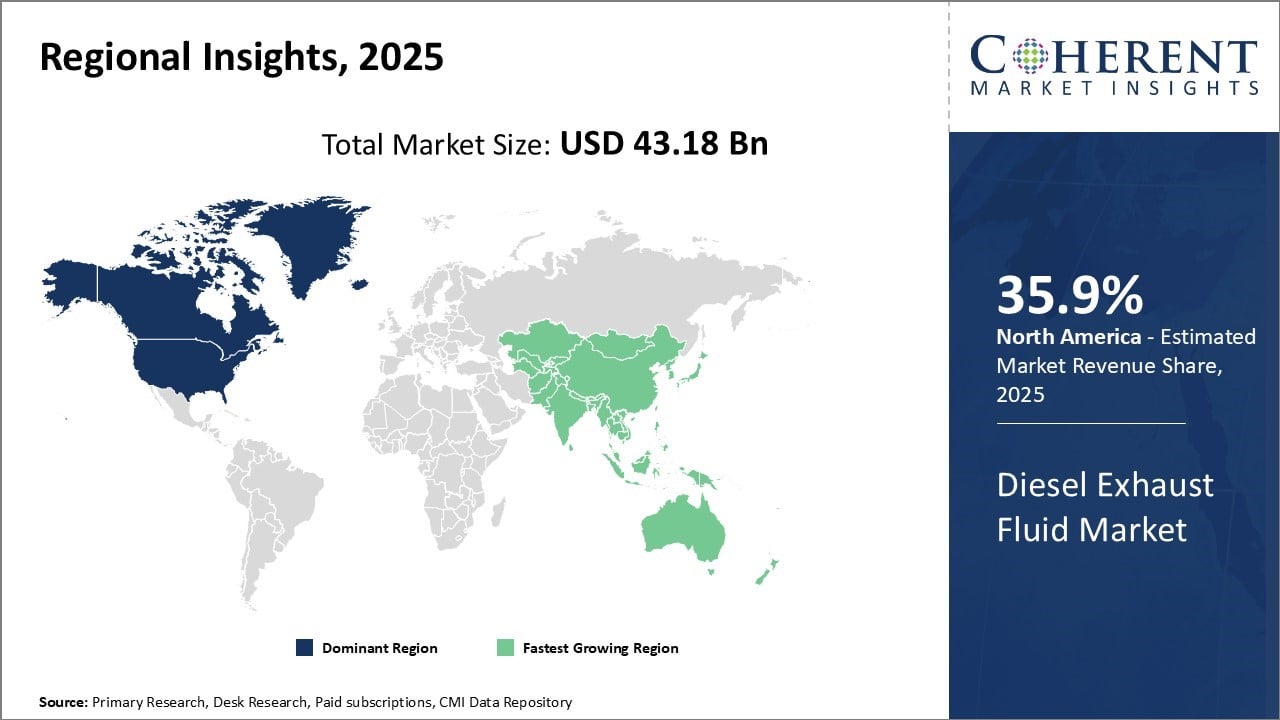
- North America leads the diesel exhaust fluid market in 2026 with 35.9% market share in 2026. This is due to stringent emissions regulations, widespread adoption of SCR technology, and a mature heavy-duty vehicle infrastructure.
Market Overview
Strict emission norms implemented by governments across the globe to curb pollution are expected to drive the diesel exhaust fluid market growth during the forecast period. Many countries in Europe and North America have implemented the Euro 6 and Tier 4 emission standards respectively. These standards promote the usage of selective catalytic reduction (SCR) systems, thereby increasing the consumption of diesel exhaust fluids. The increasing international trade and growing transportation & logistics industries will further drive the demand for commercial vehicles that use diesel exhaust fluids.
In 2024, Europe’s diesel exhaust fluid (DEF) market reached approximately USD 9.58 billion. This growth was driven by strict Euro 6 emission norms mandating the use of selective catalytic reduction (SCR) systems. SCR systems require DEF to reduce harmful nitrogen oxide emissions from diesel engines. As a result, DEF consumption rose significantly across the European commercial vehicle sector.
Current Events and Its Impact on Diesel Exhaust Fluid Market
Current Events | Description and its impact |
India's BPCL Introduces Battery-Powered Mobile AdBlue Dispenser |
|
U.S. Commercial Vehicle Registrations Drive DEF Demand Surge |
|
Pricing Analysis of Diesel Exhaust Fluid (DEF) Market
The diesel exhaust fluid price trends are determined by various critical factors such as raw materials prices, government regulations, supply chain cost, and demand and supply fluctuations of the logistics and transportation industries. DEF primarily comprises 32.5% high purity urea and 67.5% deionized water. The dominant cost driver is urea, which is a nitrogenous fertilizer, and its world price volatility directly relates to DEF prices. For instance, any disruption in global fertilizer market disturbances or energy prices (natural gas, which is utilized for the production of urea) has the potential to induce significant price fluctuations in DEF.
In 2024, the world average price of DEF ranged from USD 0.35 to USD 0.55 per liter and also differed according to region, channel of distribution (packaging vs. bulk), and brand. Prices in North America and Europe were pretty much stagnant as these markets enjoyed well-established supply chains and mass adoption of SCR technology to achieve Tier 4 and Euro 6 standards. Price fluctuations by small margins in the Asia-Pacific markets were the result of supply imbalances and growth in domestic production capacities.
Increased use of heavy-duty commercial trucks, tightened emissions regulations, and expansion of logistics activities continue to drive consistent demand, exerting price pressures upwards. Conversely, advancements in technology in the production of urea and efficient distribution channels are reining in costs. Furthermore, bulk purchases by fleet operators and on-board dispensing systems have also played a part in reducing per-liter costs in commercial road transport markets.
In general terms, the 2024 DEF market experienced stable to moderately increasing price trends, and local raw material prices and supply-demand relationships were the primary driving factors.
- Current Industry Events of 2026
- Market Size Estimation
- Regional Breakdown
- Competitive Landscape
- Customer Intelligence
- Segmental Analysis
- Pricing Analysis
- Key Market Drivers, Challenges & Future Trends
- Customized Insights Section
Technological Advances in the Diesel Exhaust Fluid (DEF) Market
The Diesel Exhaust Fluid (DEF) market has also experienced high-tech development to gain efficiency, reduce emissions, and optimize the system. One of the most notable developments is the integration of advanced Selective Catalytic Reduction (SCR) systems. The systems now incorporate real-time NOₓ sensors and adaptive control modules, which optimize DEF dosing more accurately according to engine load and emissions, resulting in better fuel economy and lower DEF consumption.
There are also smart DEF dispensing solutions, here for fleet operators. These are Internet of Things-based DEF tanks with level sensors, temperature sensors, and remote access control to enable more efficient inventory management and less downtime. This trend towards digitalization is encouraging greater transparency in supply chains and predictive maintenance for large-scale transport fleets.
The other significant development is in the technology of making urea, where optimization of synthesis and purification processes is reducing cost and enhancing purity of DEF. Ureum with high purity guarantees more efficient operation of the SCR systems and reduces the risk of crystallization or blockage of the injector, as was the case in previous systems.
In addition, compact and lightweight DEF storage tanks have also been engineered for off-road use in applications like construction and agriculture to further encourage industries to utilize DEF. Bio-based urea and synthetic alternatives to DEF are also being researched by certain manufacturers to minimize the environmental impact of DEF production.
Together, these technological advancements are increasing the efficiency, cost-effectiveness, and reliability of DEF systems in order to enable the world to achieve more stringent emissions controls and sustain performance while running.
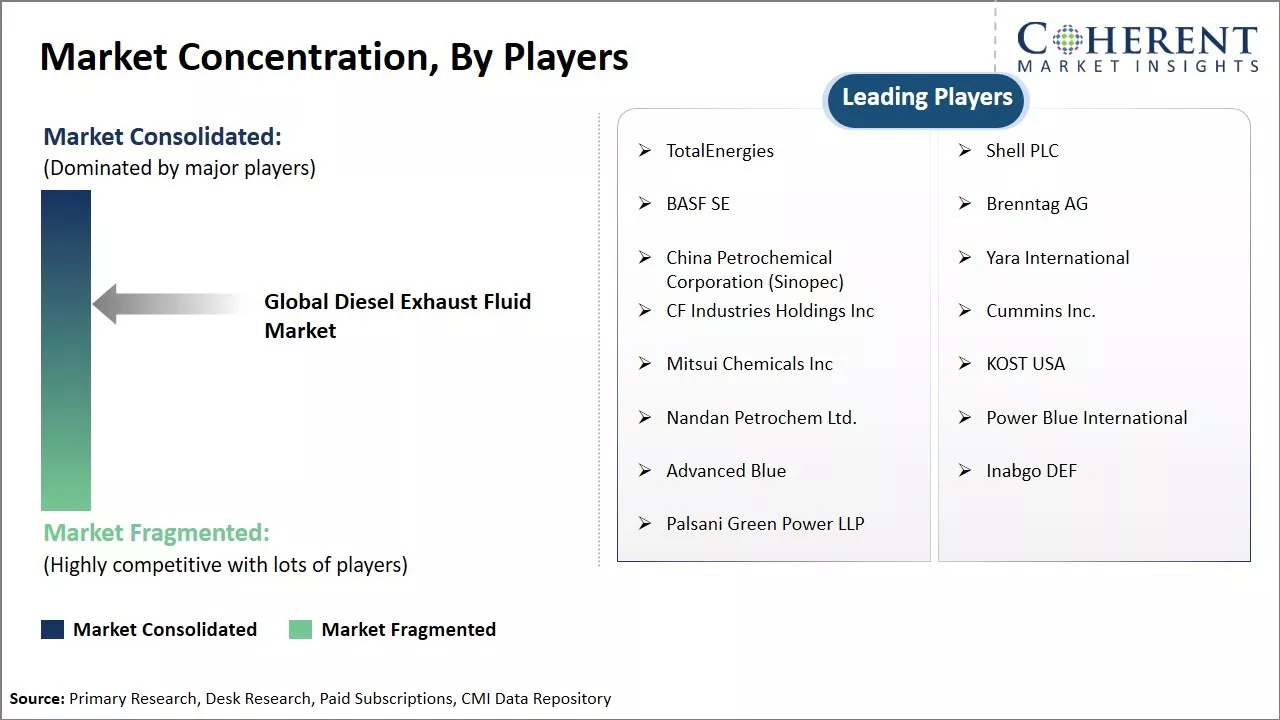
Market Concentration and Competitive Landscape
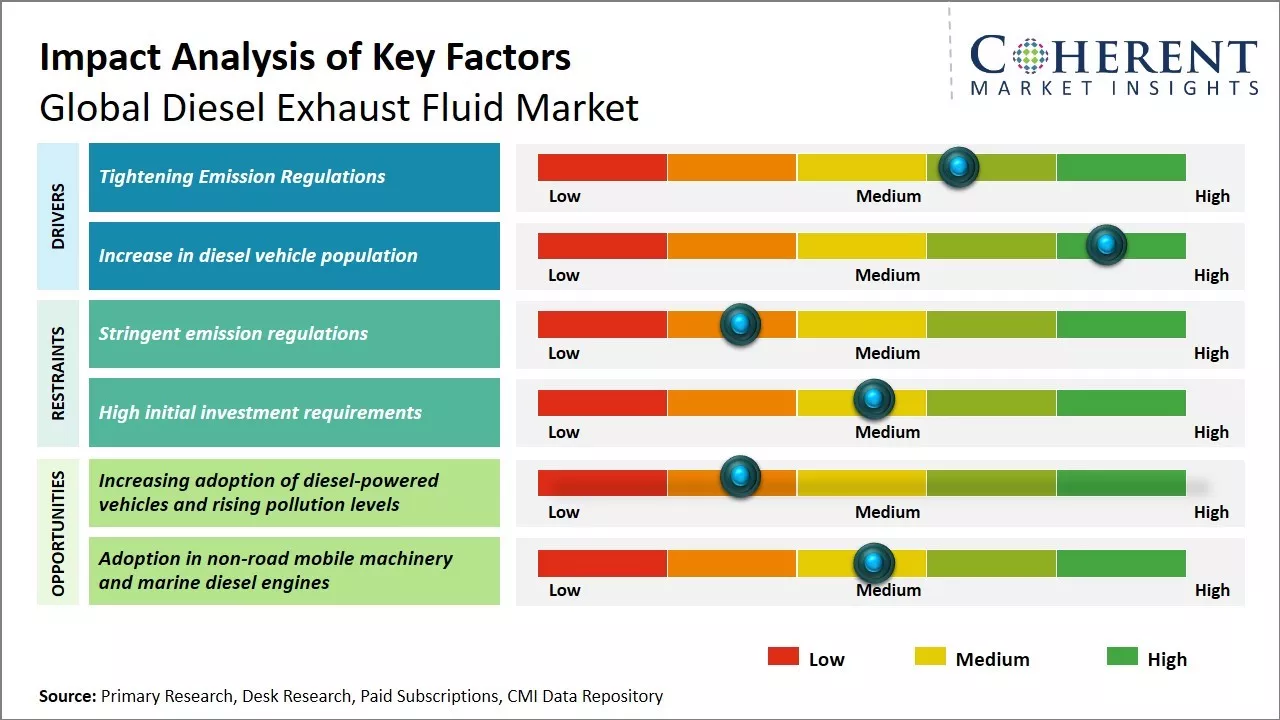
Market Driver
- Tightening Emission Regulations
The tightening of emission regulations across the globe is a major factor driving the growth of the global Diesel Exhaust Fluid (DEF) market. Governments are focusing on reducing vehicular emissions and improving air quality in their countries. Strict emission norms such as Euro 6 by the European Union and Bharat Stage VI by India that have come into effect recently mandate the use of SCR technology in modern diesel vehicles to cut down nitrogen oxide emissions by over 80%.
SCR technology requires diesel vehicles to be fitted with urea-based DEF dosing systems that inject the fluid into the vehicle's exhaust stream to convert nitrogen oxide into harmless nitrogen and water vapor. This has significantly increased the demand for DEF or aqueous urea from the automotive industry.
According to the data from the Environmental Protection Agency, the newly introduced emission standards in the United States under their National Program has led to 95% reduction in nitrogen oxide emissions from long haul trucks and buses which has established the country as one of the largest DEF markets currently.
Renault Group partnered with PUNCH Torino to co-develop Euro VI and Euro VII variants of its 4-cylinder diesel engines for light commercial vehicles, launching production in 2025. These platforms are designed around SCR + EGR architectures, making mandatory use of aqueous urea DEF to cut NOₓ emissions in alignment with the stricter Euro norms.
- Increase in diesel vehicle population
Alongside stricter emission rules, rising environmental consciousness among consumers has prompted automakers to manufacture vehicles with lower carbon footprint. This has contributed to the growing popularity of diesel engines, especially in the commercial vehicle segment. Diesel-powered trucks, buses, and other goods carriers offer better fuel efficiency and load-carrying capability compared to petrol variants.
Regions like Europe and Asia Pacific have witnessed a massive surge in the on-road population of diesel commercial vehicles for the transportation of goods and passengers over the last decade. Moreover, pickup in infrastructure development, e-commerce, and logistics activities has also augmented freight transportation needs. With the number of diesel vehicles constantly increasing, the demand for DEF to meet their emission requirements is poised to rise steadily. Original DEF manufacturers and aftermarket players are capitalizing on this opportunity by expanding their supply and distribution networks globally.
Opportunities: Increasing adoption of diesel-powered vehicles and rising pollution levels
The rising levels of vehicle pollution globally pose a major challenge to the environment. Diesel vehicles in particular contribute significantly to toxic emissions like nitrogen oxide. However, this also opens up a big opportunity for the diesel exhaust fluid market.
Diesel exhaust fluid, also known as AdBlue, is a liquid reagent that is added to selective catalytic reduction systems in diesel vehicles and machinery to convert nitrogen oxide emissions into harmless nitrogen and water vapor. As more countries implement stringent emission regulations on commercial vehicles and trucks to curb air pollution in urban centers, the demand for AdBlue will see a corresponding rise.
Already, many nations in Europe and regions like California have implemented Euro 6 or equivalent emission standards that make AdBlue mandatory for modern diesel engines to function. With growing evidence that toxic vehicle emissions pose serious health risks, other populous developing countries in Asia and Latin America will also look to tighten their diesel vehicle pollution norms in the coming years.
Segmental Insights
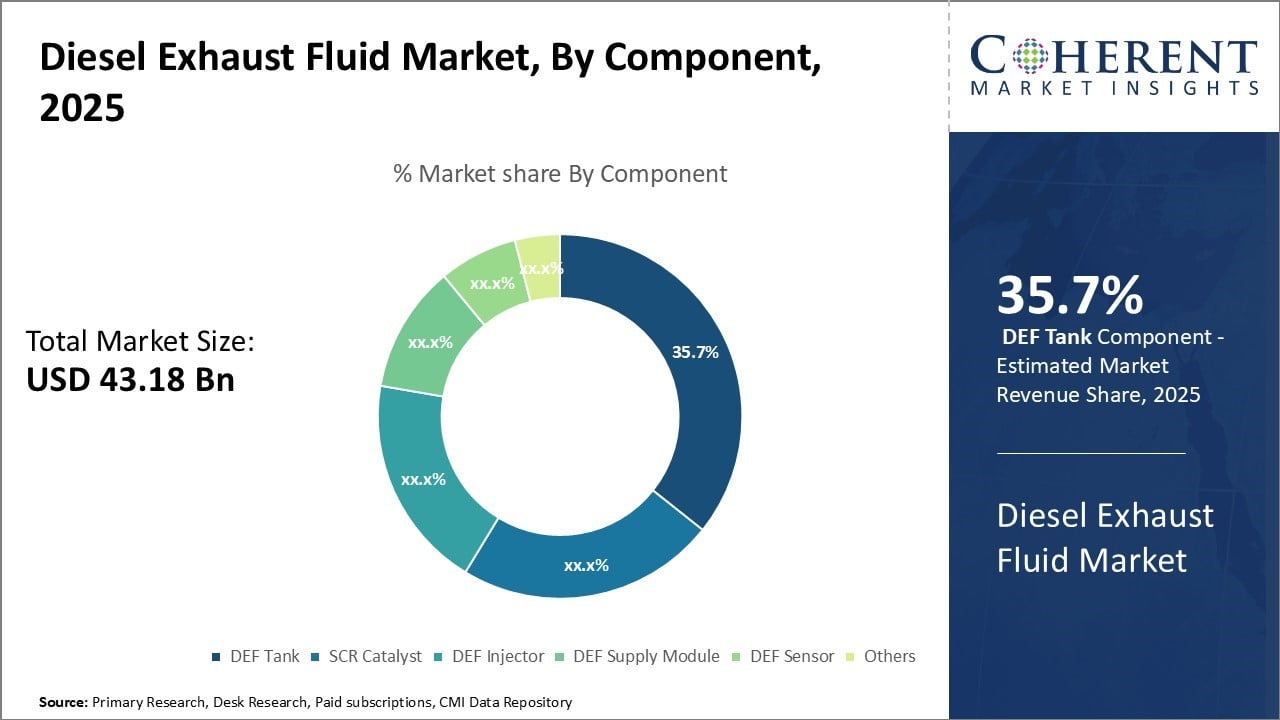
Diesel Exhaust Fluid Market Insights, By Component
In terms of component, DEF tank contributes 36.7% share of the market owing to continuous innovation for meeting stringent emission regulations in 2026. DEF tank plays a critical role in storing the diesel exhaust fluid which is injected into the exhaust system to reduce nitrogen oxide emissions from diesel exhaust. Researchers are continuously developing advanced DEF tank technologies that can withstand high temperatures and pressures over long usage durations.
New materials and coating techniques are enhancing corrosion resistance of DEF tanks allowing them to maintain structural integrity under harsh operating conditions. Auto manufacturers prefer reliable DEF tank systems from tier-1 suppliers that comply with regional emission certifications with minimum downtime. Strong focus on innovation differentiates suppliers and drives market leadership for the DEF tank segment.
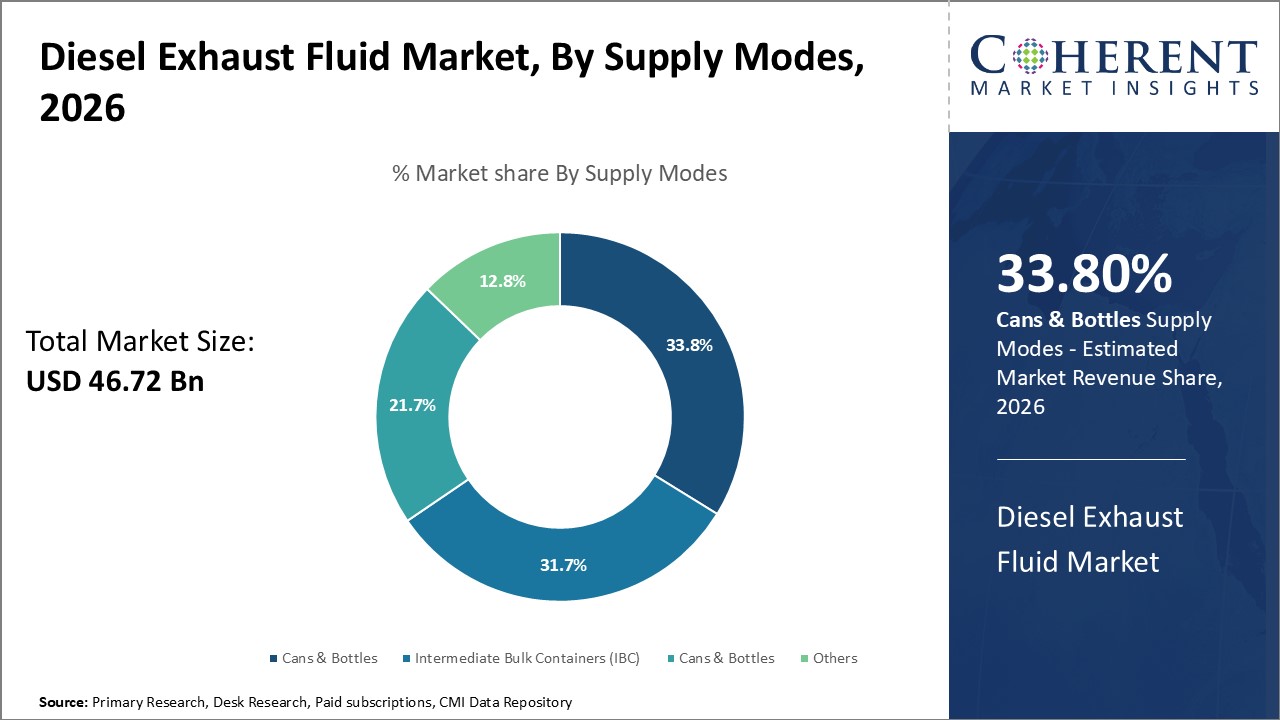
Diesel Exhaust Fluid Market Insights, By Supply Modes
In terms of supply modes, bulk contributes 33.8% share of the market as it effectively addresses the need for consistent diesel exhaust fluid supply in 2026. Heavy Commercial Vehicles require large DEF volumes due to high operational hours and mileage. Bulk delivery in intermediate bulk containers directly from manufacturing facilities ensures just-in-time supply without stock-outs. This delivers cost efficiency compared to multiple small re-fills.
Standard bulk nozzles facilitate easy transfer into large storage tanks. Automated inventory management and telematics further optimize bulk logistics. Central bulk stations at depots consolidate refilling for fleet operators. Consistent supply backed by integrated digital solutions differentiates bulk suppliers and fulfills the demanding needs of commercial vehicle segment.
Diesel Exhaust Fluid Market Insights, By Vehicle Type
In terms of vehicle type, heavy commercial vehicles contribute 33.2% share due to intensive focus on optimizing the total cost of ownership in 2026. Commercial vehicles traverse high mileages with heavy payloads requiring the most effective DEF solution. Higher volumes consumed in trucks warrant preferential bulk pricing.
While upfront costs of larger DEF tanks and premium after treatment systems are unavoidable to meet emission norms, bulk suppliers work closely with OEMs/fleets to value engineer overall DEF consumption. Condition-based DEF replenishment prevents under or overfills. Diagnostic tools monitor after treatment health proactively addressing issues. This lowers repair costs and avoids expensive downtime. Such optimization of affordability through collaboration has captured higher market share for the heavy commercial vehicle segment.
Global Diesel Exhaust Market - Regional Insights
North America Diesel Exhaust Market Analysis and Trends
North America has established itself as the dominant region in the global diesel exhaust fluid market with 35.9% of the market share in 2026. With stringent environmental regulations implemented by the U.S. EPA and Environment Canada mandating the use of Selective Catalytic Reduction (SCR) systems in diesel vehicles and equipment, the adoption of diesel exhaust fluid or DEF has been widespread.
Major auto manufacturers like Ford, GM, and Fiat Chrysler have standardized urea-based DEF injection systems across their diesel product lines to meet Tier 3 and Tier 4 emission norms. Furthermore, the presence of leading DEF producers such as Yara International, CF Industries, and BASF along with a robust retail distribution network ensures reliable supply and pricing stability for customers in the region.
Asia Pacific Diesel Exhaust Market Analysis and Trends
The Asia Pacific region has emerged as the fastest growing market for diesel exhaust fluid globally. Rapid industrialization and infrastructure development have augmented the sales of diesel commercial vehicles, construction equipment, and gensets. Nations with fast expanding economies like India, China, Indonesia, and Vietnam are witnessing major capital expenditures in road and rail projects, special economic zones, ports, etc., substantially increasing the demand for diesel-powered machineries and trucks.
At the same time, these countries are striving to curb air pollution in highly populated urban locales by enforcing Euro emission standards on new diesel registrations, necessitating the deployment of DEF technologies. While setting up bulk storage and retail DEF dispensing stations is a work in progress, many Asian nations have gained self-sufficiency in urea manufacturing which augurs well for supply security. With established marine and land trade routes, Asia Pacific is also an important importer as well as exporter of DEF to other territories across the world.
Diesel Exhaust Fluid Market Dominating Countries
United States Diesel Exhaust Fluid Market Analysis and Trend
The U.S. leads the DEF market with its EPA Tier 4 emission standards and the widespread implementation of SCR systems on heavy-duty trucks. With a big fleet base of commercial vehicles and established DEF infrastructure, the country boasts a strong demand base supported by domestic urea production and extensive distribution networks.
Germany Diesel Exhaust Fluid Market Analysis and Trend
Germany controls the DEF market in Europe with the imposition of Euro 6 standards and robust automotive and logistics sectors. Sophisticated vehicle manufacturing with low-emission technologies and behind-the-scenes support from the country leads to heavy adoption of SCR systems, thereby playing a key role in the consumption of DEF within the EU.
China Diesel Exhaust Fluid Market Analysis and Trend
China is quickly emerging as a major DEF market due to mounting environmental regulations and expanding commercial vehicle markets. China VI emissions regulations have boosted the use of SCR technology, creating a surge in demand for DEF, especially in industrial and freight haulage.
India Diesel Exhaust Fluid Market Analysis and Trend
India's DEF market is increasing steadily with the adoption of Bharat Stage VI emission norms, which are on par with Euro 6. As diesel vehicles dominate commercial transport, and industrial urea production is strong, India has become a growth market of prime significance for DEF producers, particularly in the aftermarket and agricultural segments.
Market Report Scope
Diesel Exhaust Fluid Market Report Coverage
| Report Coverage | Details | ||
|---|---|---|---|
| Base Year: | 2025 | Market Size in 2026: | USD 46.72 Bn |
| Historical Data for: | 2020 To 2024 | Forecast Period: | 2026 To 2033 |
| Forecast Period 2026 to 2033 CAGR: | 8.2% | 2033 Value Projection: | USD 81.11 Bn |
| Geographies covered: |
| ||
| Segments covered: |
| ||
| Companies covered: | TotalEnergies, Shell PLC, BASF SE, Brenntag AG, China Petrochemical Corporation (Sinopec), Yara International, CF Industries Holdings Inc, Cummins Inc., Mitsui Chemicals Inc, KOST USA , Nandan Petrochem Ltd., Power Blue International, Advanced Blue , Inabgo DEF, and Palsani Green Power LLP | ||
| Growth Drivers: |
| ||
| Restraints & Challenges: |
| ||
Diesel Exhaust Fluid Industry News
- In 2024, BPCL introduced the first mobile Adblue dispenser in Kolkata. This battery-powered dispenser reduces the need for commercial vehicle hubs and fuel stations to invest in Adblue filling stations.
- In March 2024, Germany-based lubricant specialist Liqui Moly introduced a new anti-crystal additive concentrate for AdBlue. The product helps prevent urea crystal formation in DEF systems—which can clog SCR injectors—by being added directly to the AdBlue tank, enhancing engine reliability and compliance with emission standards.
Analyst View
- The Diesel Exhaust Fluid (DEF) industry reflects strong momentum fueled by growing emission standards globally, most notably Euro VI regulations in Europe and EPA Tier 4 in North America. The need for compliance among the automotive sector for Selective Catalytic Reduction (SCR) technology in heavy-duty trucks, construction machines, and farm equipment are primary drivers of growth. Commercial vehicle producers are making DEF mandatory to ensure environmental guidelines, which has produced long-term demand in transportation segments.
- But the market is also confronted with tremendous headwinds in the form of the faster-than-expected shift towards electric vehicles and alternate fuel technologies. Emerging market infrastructure constraints and the added operating expense of DEF systems pose continuing challenges towards widespread adoption. Volatility in the price of urea, the key raw material, further limits market dynamics.
- Asia-Pacific becomes the region with the highest growth rate, driven by rapid industrialization, growing commercial fleet sizes, and changing emission regulations in China and India. North America continues to hold leadership in terms of the market due to mature regulations and established SCR technology penetration in heavy-duty markets.
- Strong opportunities lie ahead in building out detailed distribution networks and creative diesel exhaust fluid (DEF) packaging formats, such as drums, totes, bottles, and bulk tanks, to create greater product accessibility. Integration of IoT-based monitoring systems for tracking DEF consumption offers additional revenue opportunities. Strategic alliances between fluid makers and vehicle original equipment manufacturers are becoming more important for marketplace positioning.
Market Segmentation
- Component Insights (Revenue, USD Bn, 2021 - 2033)
- SCR Catalyst
- DEF Tank
- DEF Injector
- DEF Supply Module
- DEF Sensor
- Others
- Supply Modes Insights (Revenue, USD Bn, 2021 - 2033)
- Cans & Bottles
- Intermediate Bulk Containers (IBC)
- Bulk
- Others
- Vehicle Type Insights (Revenue, USD Bn, 2021 - 2033)
- Passenger
- Commercial
- Light Commercial Vehicles
- Heavy Commercial Vehicles
- End-use Insights (Revenue, USD Bn, 2021 - 2033)
- OEM
- Aftermarket
- Regional Insights (Revenue, USD Bn, 2021 - 2033)
- North America
- U.S.
- Canada
- Latin America
- Brazil
- Argentina
- Mexico
- Rest of Latin America
- Europe
- Germany
- U.K.
- Spain
- France
- Italy
- Russia
- Rest of Europe
- Asia Pacific
- China
- India
- Japan
- Australia
- South Korea
- ASEAN
- Rest of Asia Pacific
- Middle East & Africa
- GCC Countries
- Israel
- Rest of Middle East & Africa
- Key Players Insights
- TotalEnergies
- Shell PLC
- BASF SE
- Brenntag AG
- China Petrochemical Corporation (Sinopec)
- Yara International
- CF Industries Holdings Inc.
- Cummins Inc.
- Mitsui Chemicals Inc.
- KOST USA
- Nandan Petrochem Ltd.
- Power Blue International
- Advanced Blue
- Inabgo DEF
- Palsani Green Power LLP
Sources
Primary Research Interviews
- DEF manufacturers and producers
- Automotive OEMs and fleet operators
- Industrial equipment manufacturers
- Distribution channel partners
- Others
Databases
- IBISWorld Industry Research Database
- Others
Magazines
- Fleet Owner Magazine
- Diesel Progress Magazine
- Commercial Carrier Journal
- Heavy Duty Trucking Magazine
- Automotive Industries Magazine
- Others
Journals
- Journal of Cleaner Production
- Transportation Research Part D Transport and Environment
- International Journal of Engine Research
- Others
Newspapers
- The Wall Street Journal
- Financial Times
- Reuters Business News
- Bloomberg News
- Automotive News
- Others
Associations
- Diesel Technology Forum (DTF)
- American Trucking Associations (ATA)
- Equipment Manufacturers Association (EMA)
- International Council on Clean Transportation (ICCT)
- National Association of Fleet Administrators (NAFA)
- Others
Public Domain Sources
- U.S. Environmental Protection Agency (EPA) Reports
- European Environment Agency Publications
- International Energy Agency (IEA) Data
- Government statistical offices and trade departments
- Patent databases and technical specifications
- Others
Proprietary Elements
- CMI Data Analytics Tool
- Proprietary CMI Existing Repository of information for last 8 years
Get access to 250+ pages report
Every segment, forecast, competitor profile and data table behind the analysis above — available for instant download.
- ESOMAR Member
- ISO 9001:2015 Certified
- D-U-N-S Registered
- GDPR & CCPA Compliant
Missing comfort of reading report in your local language? Find your preferred language:
Transform your Strategy with Exclusive Trending Reports
Frequently Asked Questions
The Diesel Exhaust Fluid Market size is estimated to be valued at USD 46.72 Bn in 2026, and is expected to reach USD 81.11 Bn by 2033.
The CAGR of the global Market is projected to be 8.2% from 2026 to 2033.
Tightening emission regulations and increase in diesel vehicle population are the major factors driving the growth of the global market.
Stringent emission regulations and high initial investment requirements are the major factors hampering the growth of the global market.
In terms of component, DEF tank is estimated to dominate the market revenue share in 2026.
TotalEnergies, Shell PLC, BASF SE, Brenntag AG, China Petrochemical Corporation (Sinopec), Yara International, CF Industries Holdings Inc, Cummins Inc., Mitsui Chemicals Inc, KOST USA , Nandan Petrochem Ltd., Power Blue International, Advanced Blue , Inabgo DEF, and Palsani Green Power LLP are the major players.
DEF is injected into the exhaust stream of diesel trucks and buses to reduce harmful nitrogen oxide emissions.