

Diethylene Glycol Market Size and Forecast — 2026-2033
The Global Diethylene Glycol Market size is estimated to be valued at USD 1,015.7 million in 2026 and is expected to reach USD 1,523.9 million by 2033, exhibiting a compound annual growth rate (CAGR) of 7.4% from 2026 to 2033.
Overview
Diethylene Glycol (DEG) is a colorless, hygroscopic, low-volatility liquid widely used as a solvent, humectant, and chemical intermediate. Its excellent solvency for resins, dyes, oils, and nitrocellulose makes it valuable in coatings, printing inks, and polyester polyols manufacturing. DEG also plays a key role in producing plasticizers, polyurethanes, and unsaturated polyester resins. In small controlled quantities, it is used in antifreeze formulations, brake fluids, and heat transfer fluids due to its low freezing point and stable thermal behavior. DEG is distinguished by its high boiling point, miscibility with water and alcohols, and ease of integration into chemical reactions requiring glycol-based intermediates.
Key Takeaways
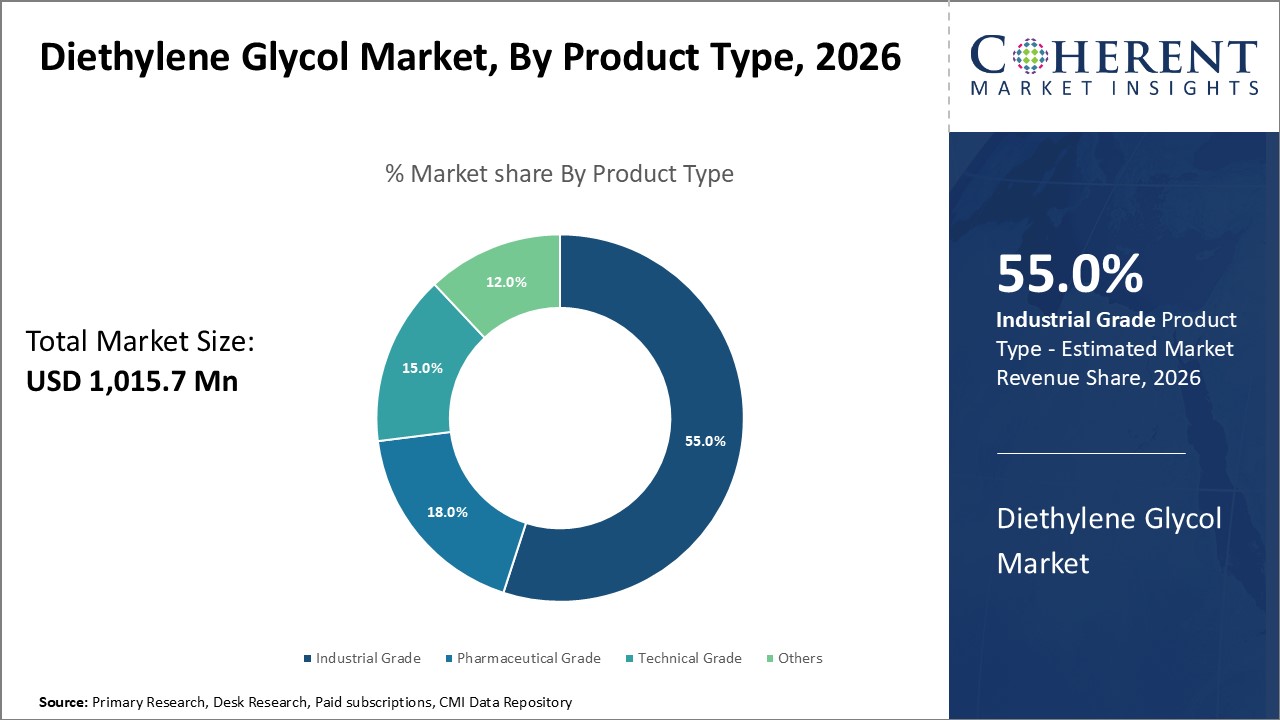
Industrial-grade diethylene glycol dominates the product type segment, representing over 55% of market share, driven by broad application across automotive coolants and solvent industries.
The plasticizer application segment is witnessing the fastest growth, notably due to rising demand in flexible packaging and PVC products.
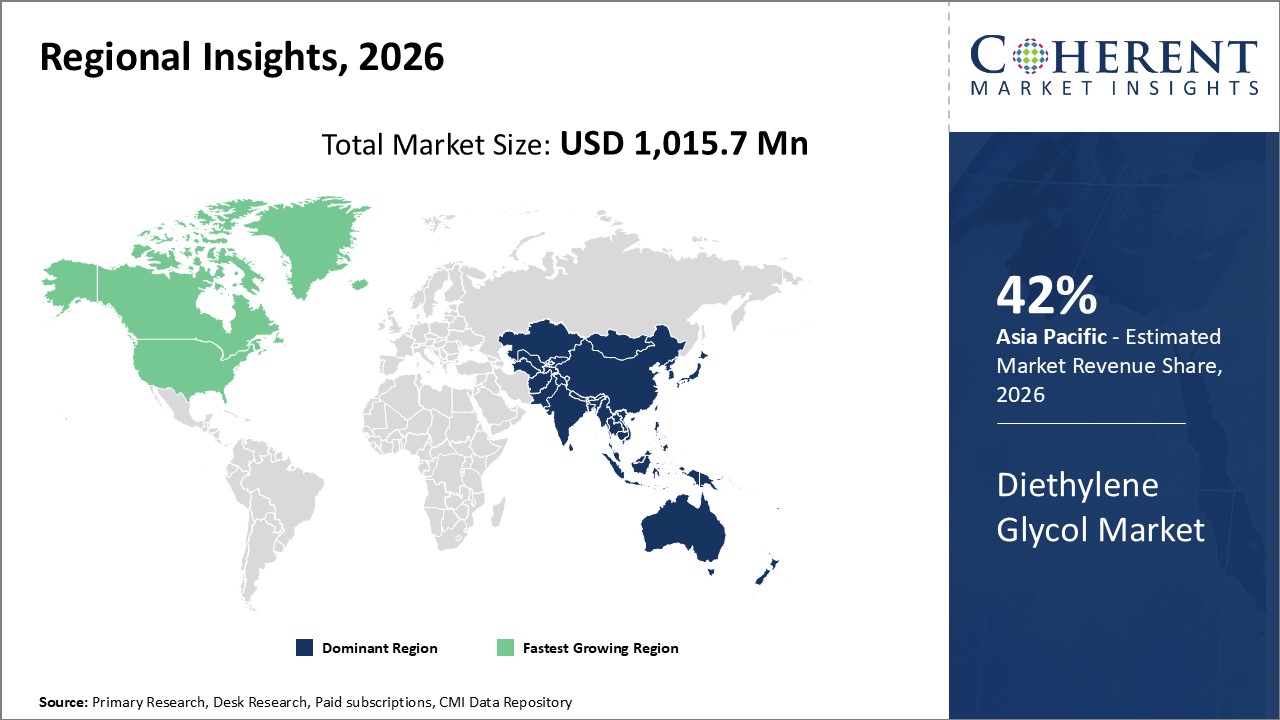
Asia Pacific remains the leading region in terms of market share, holding approximately 42%, credited to rising infrastructure development and automotive manufacturing hubs.
North America is poised for rapid expansion, with a CAGR exceeding 8%, supported by evolving pharmaceutical and green antifreeze product markets.
Diethylene Glycol Market Segmentation Analysis
Diethylene Glycol Market Insights, By Product Type
Industrial Grade dominates the market share, accounting for approximately 55% due to its versatility in applications like plastics, antifreeze, and solvents. Industrial Grade diethylene glycol holds preference because of its cost efficiency and consistent quality, meeting the bulk demand of chemical manufacturing and automotive sectors. Pharmaceutical Grade is the fastest-growing subsegment, driven by heightened demand for high-purity chemicals in medical formulations and laboratory uses. This segment benefits from regulatory stringency and rising healthcare investments. Technical Grade serves niche end-use applications requiring moderate purity, often in construction and personal care products. The surge in pharmaceutical and specialty demand indicates robust market dynamics in both dominating and niche segments, making Product Type a critical factor underlying market growth strategies.
Diethylene Glycol Market Insights, By Application
Plasticizers capture the largest market share due to the surge in flexible PVC applications across automotive, packaging, and construction, supported by innovations in low-toxicity formulations. This dominance is illustrated by an 8.7% increase in plasticizer-grade diethylene glycol consumption reported in 2025. Solvents represent the fastest-growing subsegment as demand grows for environmentally friendly solvent systems in pharmaceutical and personal care manufacturing, fostering an approximate annual growth rate of 9%. Chemical Intermediates maintain steady growth through their role in resin and polymer synthesis, integral for manifold downstream industries. Antifreeze & Coolants apply predominantly in automotive and industrial machinery, witnessing moderate expansion bolstered by green product mandates.
Diethylene Glycol Market Insights, By End-Use Industry
Automotive leads the market share, driven by demand in antifreeze formulations and plasticizer-infused components, crucial for lightweight and durable vehicle manufacturing. Notably, diethylene glycol applications in electric vehicle battery coolants also present emerging growth pockets. Pharmaceuticals serve as the fastest-growing subsegment with high purity specifications fueling growth from contract manufacturing organizations and drug manufacturers, with a pronounced emphasis on biologics and parenteral formulations. The Construction industry uses diethylene glycol primarily for solvent applications in paint and coatings, experiencing steady but moderate growth.
Diethylene Glycol Market Trends
The recent market trend underscores a potent shift towards bio-based diethylene glycol, driven by stringent environmental policies and consumer preference for sustainable chemicals.
For instance, the EU’s new chemical regulation frameworks in 2025 accelerated the adoption of eco-friendly glycol variants by 13%, influencing suppliers to innovate.
Another noteworthy trend is digital transformation in manufacturing, resulting in enhanced yield and product standardization.
Leading manufacturers leveraging Industry 4.0 technologies reported a 8% improvement in operational efficiency over the previous year.
Additionally, heightened demand from the pharmaceutical and automotive sectors in Asia Pacific and North America continues to propel market revenue growth.
Diethylene Glycol Market Insights, By Geography
Asia Pacific Diethylene Glycol Market Analysis and Trends
In the Asia Pacific region, the dominance in the Diethylene Glycol market is evident with approximately 42% market share in 2026, due to Asia’s large-scale industrial activities and expanding automotive and pharmaceutical sectors. China and India are central hubs where government incentives and infrastructural investments foster an enabling ecosystem. Strategic initiatives by companies like Lanxess AG and Henan Tuoxin Chemical have resulted in significant capacity expansions that sustain regional dominance.
North America Diethylene Glycol Market Analysis and Trends
Meanwhile, North America exhibits the fastest growth with an expected CAGR exceeding 8% attributed to innovation in greener antifreeze applications and pharmaceutical manufacturing. The U.S. benefits from robust R&D investments and favorable regulations pushing sustainable chemical production. Companies such as Eastman Chemical Company have enhanced local production efficiencies and diversified product portfolios to capitalize on these trends.
Diethylene Glycol Market Outlook for Key Countries
USA Diethylene Glycol Market Analysis and Trends
The U.S. market remains a pivotal contributor to the Diethylene Glycol industry, driven by advanced pharmaceutical applications and sustainable automotive coolants. In 2025, U.S. pharmaceutical-grade diethylene glycol demand grew by over 9%, underpinned by expansions in drug manufacturing. Additionally, new EPA regulations encouraging eco-friendly chemical production have stimulated local investments. Leading players like Eastman and Dow are spearheading capacity upgrades and R&D, effectively capturing market revenue and optimizing supply chains domestically.
China Diethylene Glycol Market Analysis and Trends
China’s diethylene glycol market exhibits rapid industrial growth fueled by major investments in chemical manufacturing and plastics sectors. Government incentives promoting chemical industry modernization have led to a 15% rise in production capacity as of late 2025. Prominent companies such as Jiangsu Sanmu Group and Shanghai Yien Chemical Technology have expanded product lines targeting export markets. Rising domestic consumption from automotive and pharmaceutical applications is strengthening China’s regional market share and industry scope.
Analyst Opinion
Supply-side indicators reveal that production capacities, particularly in Asia Pacific, have expanded by over 15% in 2025 alone to meet rising global demand, directly impacting market share. Increased manufacturing capabilities in China and India have contributed to a 12% reduction in average production costs, enabling competitive pricing strategies.
Demand-side analytics suggest significant upticks in pharmaceutical and plasticizer application sectors, with pharmaceutical-grade diethylene glycol consumption growing by 9.5% in 2025, supported by increased drug formulation activities. Import volumes of diethylene glycol into North America surged by approximately 7% during 2026 Q1, reflecting strong industrial use.
Micro-market analysis highlights the critical role of emerging small- and medium-scale manufacturers in Latin America, facilitating local supply chains and reducing lead times. Brazil’s internal demand for diethylene glycol injection molding applications increased by nearly 11% in 2025, reinforcing regional market dynamics.
Nano-market trends indicate higher uptake in specialty chemical segments such as resins and antifreeze formulations, where demand elasticity remains high. European manufacturers reported a 6% increase in sales volumes linked to eco-friendly antifreeze products developed in 2026, underscoring an evolving product portfolio.
- Current Industry Events of 2026
- Market Size Estimation
- Regional Breakdown
- Competitive Landscape
- Customer Intelligence
- Segmental Analysis
- Pricing Analysis
- Key Market Drivers, Challenges & Future Trends
- Customized Insights Section
Market Scope
| Report Coverage | Details | ||
|---|---|---|---|
| Base Year: | 2025 | Market Size in 2026: | USD 1,015.7 million |
| Historical Data for: | 2020 To 2024 | Forecast Period: | 2026 To 2033 |
| Forecast Period 2026 to 2033 CAGR: | 7.4% | 2033 Value Projection: | USD 1523.9 million |
| Geographies covered: |
| ||
| Segments covered: |
| ||
| Companies covered: | Henan Tuoxin Chemical Industry Co., Ltd., Shanghai Yien Chemical Technology Co., Ltd., Gujarat Alkalies and Chemicals Limited, Shandong Haohua Chemical Co., Ltd., Jiangsu Sanmu Group Co., Ltd., Nan Ya Plastics Corporation, Dairen Chemical Corporation, Hengyi Petrochemical Co., Ltd., LG Chem Ltd., Mitsubishi Chemical Corporation | ||
| Growth Drivers: |
| ||
Diethylene Glycol Market Growth Factors
Industrial demand for diethylene glycol in plasticizer and solvent manufacturing remains a pivotal driver, with a reported 8.3% uptick in usage over 2025 due to increased automotive and packaging applications. Pharmaceutical formulations continue to require high purity grades, with an approximate 9.1% growth in adoption, aligning with rising global healthcare expenditures. Environmental regulations encouraging greener antifreeze products have accelerated market growth in Europe and North America, pushing innovations that led to a 6% increase in market revenues from 2023 to 2025. Furthermore, expanding infrastructure projects in emerging economies, notably in Asia Pacific, have stimulated growth, with construction sector consumption surging by 7.5% year-over-year.
Diethylene Glycol Market Development
In 2025, BASF SE introduced a new bio-based Diethylene Glycol (DEG) designed to support sustainable formulations across automotive, textile, and industrial chemical applications. The product offers a reduced carbon footprint and improved lifecycle performance compared to conventional petrochemical DEG.
In March 2025, Dow Chemical formed a strategic partnership to develop next-generation high-performance antifreeze solutions, integrating advanced heat-transfer technologies to enhance engine protection, fluid stability, and long-term corrosion resistance for automotive and heavy-duty sectors.
In May 2025, SABIC opened a new Asia Pacific distribution center, expanding its regional logistics capabilities to improve supply chain efficiency, shorten delivery timelines, and support the growing demand for specialty chemicals and polymer solutions across key Asian markets.
Key Players
Leading Companies of the Market
Henan Tuoxin Chemical Industry Co., Ltd.
Shanghai Yien Chemical Technology Co., Ltd.
Gujarat Alkalies and Chemicals Limited
Shandong Haohua Chemical Co., Ltd.
Jiangsu Sanmu Group Co., Ltd.
Nan Ya Plastics Corporation
Dairen Chemical Corporation
Hengyi Petrochemical Co., Ltd.
LG Chem Ltd.
Mitsubishi Chemical Corporation
Most of these market players have adopted aggressive growth strategies, including joint ventures and capacity expansions. For instance, Eastman Chemical Company recently increased its production capacity for industrial-grade diethylene glycol by 20%, directly enhancing its supply capabilities across North America and Asia. Similarly, Sasol Ltd. has focused on process innovation to reduce operational costs, yielding a 5% increase in profit margins in 2025. Both companies have leveraged strategic geographic positioning to optimize logistics and reduce delivery times to key customers.
Diethylene Glycol Market Future Outlook
In the coming years, Diethylene Glycol consumption is expected to grow steadily, driven by rising demand for polyester polyols, resin formulations, and flexible polyurethane production. Increasing automotive production, infrastructure expansion, and growth in construction chemicals will further support DEG consumption. Technological advances in alternative glycols and improved safety monitoring practices are expected to minimize regulatory challenges while enabling safer downstream use. Emerging markets with rapidly expanding plastics and textile manufacturing capacity will create new demand hubs, while the digitalization of chemical plants may improve production efficiency and cost competitiveness.
Diethylene Glycol Market Historical Analysis
Historically, the Diethylene Glycol market has been shaped by its role as a versatile chemical intermediate used in polyester resins, plasticizers, antifreeze formulations, and solvents. Growth was driven by expansion in polyester fiber and PET resin production, particularly in Asia, where large-scale textile and packaging industries relied on DEG-based intermediates. The compound's strong solvency properties and hygroscopicity supported its adoption in brake fluids, lubricants, and chemical synthesis. Over the last two decades, improvements in petrochemical manufacturing and the continued expansion of ethylene oxide production strengthened supply availability. Despite occasional regulatory scrutiny due to toxicity issues in contamination incidents, demand remained robust across industrial applications.
Sources
Primary Research Interviews:
Glycol Producers
Automotive Chemical Experts
Resin Manufacturers
Industrial Solvent Buyers
Chemical Distributors
Databases:
ICIS Glycols Database
UN Comtrade Glycol Trade
Platts Chemicals
Magazines:
Chemical Engineering
Petrochemical Update
Coatings World
Automotive Components Magazine
Industrial Solvents Monthly
Journals:
Journal of Chemical Technology & Biotechnology
Industrial Chemistry Journal
Journal of Polymer Science
Materials Chemistry and Physics
ChemistrySelect
Newspapers:
Business Standard (Industry)
The Wall Street Journal (Chemicals)
The Economic Times (Energy)
Reuters (Commodities), Financial Times (Markets)
Associations:
American Chemistry Council (ACC)
European Chemical Industry Council (CEFIC)
International Petrochemical Association
Society of Automotive Engineers (SAE)
Plastics Industry Association
Get access to 250+ pages report
Every segment, forecast, competitor profile and data table behind the analysis above — available for instant download.
- ESOMAR Member
- ISO 9001:2015 Certified
- D-U-N-S Registered
- GDPR & CCPA Compliant
Missing comfort of reading report in your local language? Find your preferred language:
Transform your Strategy with Exclusive Trending Reports
Frequently Asked Questions
The dominant players include LyondellBasell, Eastman Chemical Company, Sasol Ltd., and BASF SE, who lead in production capacity and technological innovation.
The Diethylene Glycol market is projected to grow from USD 1,015.7 million in 2026 to USD 1,523.9 million by 2033, with a CAGR of 7.4%.
The automotive sector, particularly in plasticizer and antifreeze applications, offers the largest growth potential, driven by green technology adoption.
Sustainability and digitalization will shape future trends, including greater adoption of renewable sources and smart manufacturing processes.
Market competition is intensifying, with key challenges including raw material price volatility and stringent environmental regulations impacting supply chains.
Strategies predominantly include capacity expansions, joint ventures for technological advancements, and geographic diversification to optimize market reach.