

Eastern Europe Surgical Drapes and Gowns Market Size and Share Analysis - 2026 To 2033
The Eastern Europe Surgical Drapes and Gowns Market is anticipated to grow at a CAGR of 3.9% with USD 69.1 Mn in 2026 and is expected to reach USD 89.7 Mn in 2033. The Eastern Europe surgical drapes and gowns market is driven by rising surgical procedures and stringent infection control protocols to reduce surgical site infections (SSI). For instance, in 2025–26, the EU Medical Device Regulation (EU) 2017/745 and Implementing Decision EU 2025/2078 listed harmonized standards including EN 13795‑1:2025 for surgical drapes and gowns, strengthening safety and barrier performance requirements under MDR. EN standards focus on microbial/liquid penetration and product conformity. ECDC’s 2026 surgical site infection guidance continues emphasizing aseptic barriers. WHO and CDC recommend effective sterile barriers to reduce SSIs in surgical settings.
Source: MedEnvoy Global; European Centre for Disease Prevention and Control (ECDC)
Key Takeaways
- Surgical Drapes is expected to account the largest share of 68.0% in 2026, driven by the increasing number of surgical procedures across Eastern European countries; rising focus on infection prevention and as drapes are indispensable in almost every surgical procedure. For instance, according to European Centre for Disease Prevention and Control (ECDC) guidelines (2026) on surgical site infection (SSI) prevention, sterile barriers such as surgical drapes are recommended to reduce HAIs by maintaining aseptic fields during operations. The WHO SSI Prevention Guidelines (2018) note sterile drapes prevent contact with unprepared surfaces and reduce microbial transmission. The CDC SSI guidelines (2017/2024) acknowledge drapes as key to creating sterile fields, and updated EU MDR harmonized standards (EN 13795‑1:2025) set performance and sterility requirements for drapes.
- Disposable will dominate with 73.0% in 2026, supported by the important factors related to convenience, safety and regulatory compliance. According to WHO data from 2021, surgical site infections affect an estimated 11% of patients in low‑ and middle‑income settings, highlighting the need for sterile, single‑use barriers. Furthermore, according to the data published by the ECDC in March 2025 surveillance protocols emphasize standardized SSI monitoring and prevention measures across EU hospitals, reinforcing disposable usage to limit cross‑ Moreover, in January 2026, according to the data published by the CDC HAI data continues to drive adoption of one‑time use protective apparel for safer surgical environments.
- Hospitals & clinics hold the dominant share of 85.0% in 2026 as hospitals perform majority surgical procedures and regulatory standards reinforce hospital demand for compliant products. WHO guidelines emphasize sterile barriers, while updated EU harmonized standards (EN 13795:2025) reinforce hospital procurement of compliant drapes and gowns.
- Russia is expected to acquire the dominant share of 40.0% in 2026, attributed to its strong healthcare infrastructure and strict adherence to EU Medical Device Regulations (MDR). The country follows WHO and CDC guidelines for infection control, emphasizing sterile barriers like drapes. Additionally, ECDC's focus on infection prevention and Russia’s advancements in medical technology further bolster the demand for high-quality surgical drapes and gowns.
Segmental Insights
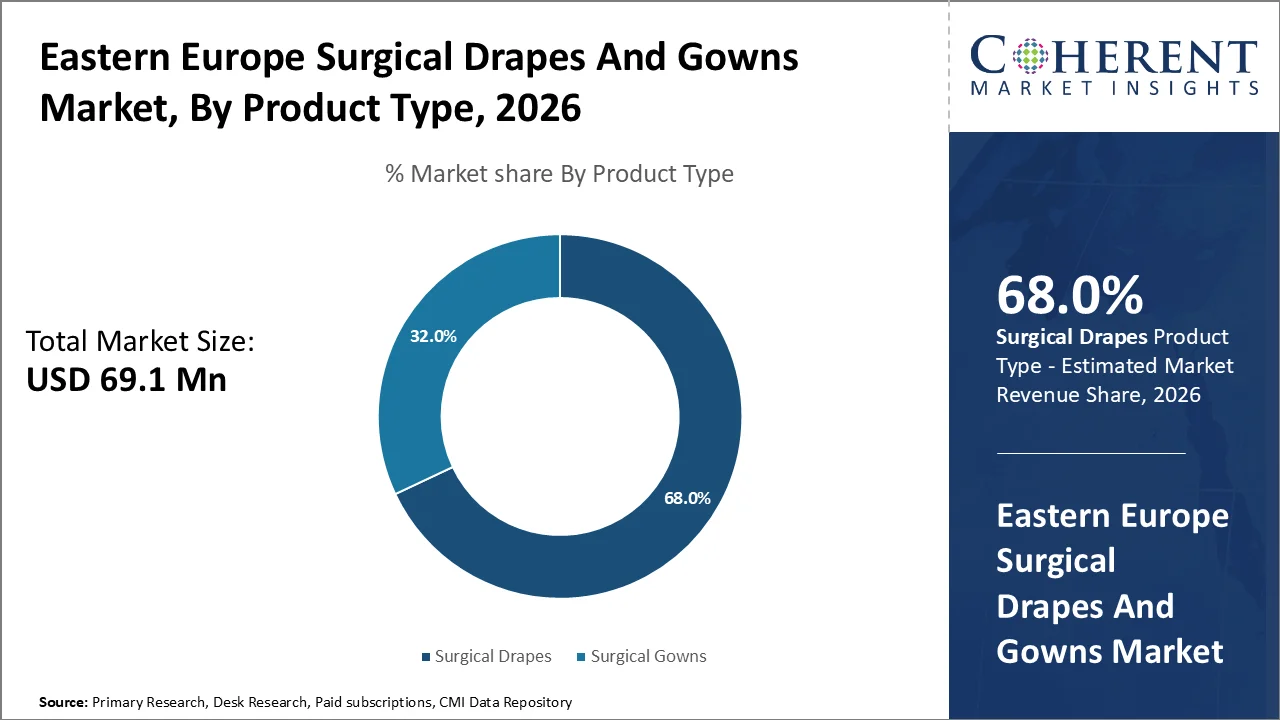
Why is Surgical Drapes Acquiring the Largest Market Share?
Surgical Drapes is projected to account for the largest share of cognitive systems spending in 2026, representing approximately 68.0% of the total volume. The surgical drapes segment remains dominant in the Eastern Europe Surgical Drapes and Gowns Market due to their critical role in infection control and sterile field maintenance across all types of surgeries. Surgical drapes are required for common procedures such as hip replacements, knee surgeries, and caesarean sections all of which are high‑volume operations in Eastern Europe. Eurostat reported over 1.10 million caesarean sections performed annually across the EU, with a significant number in Eastern Europe. In 2022, 1.6 million orthopedic surgeries like knee and hip replacements further emphasized the volume of drapes needed. The ECDC's 2026 update highlights that surgical site infections (SSIs) remain one of the leading healthcare‑associated infections (HAIs) in hospitals, leading to stronger adoption of high‑barrier, disposable surgical drapes. Key players like 3M, Molnlycke Health Care, and Paul Hartmann AG continue advancing product development to meet increased regulatory and clinical demands for drapes with superior microbial resistance.
- Current Industry Events of 2026
- Market Size Estimation
- Regional Breakdown
- Competitive Landscape
- Customer Intelligence
- Segmental Analysis
- Pricing Analysis
- Key Market Drivers, Challenges & Future Trends
- Customized Insights Section
Disposable holds the Largest Market Share
Based on usage pattern, disposable dominate the market, accounting for a significant 73.0% share in 2026, due to increasing healthcare infrastructure, rising surgical procedures, and focus on infection control. The expansion of healthcare facilities in Eastern Europe is driving the demand for disposable surgical drapes and gowns, as hospitals and clinics look for affordable and efficient solutions. The growing number of surgeries in the region is fueling the demand for disposable surgical gowns and drapes, as these items are essential in maintaining a sterile environment. For instance, according to Eurostat, European countries perform more than 23 million inpatient surgical procedures every year. This figure reflects overall surgical activity across the region, indicating substantial clinical throughput that drives demand for consumables such as disposable surgical drapes and gowns. Additionally, Eurostat’s surgical procedures dataset (HLTH_CO_PROC3) is maintained with the latest update in March 2026, providing definitive statistical reporting on the number of procedures performed per 100 000 inhabitants across EU and European countries.
Hence, with the increasing emphasis on infection prevention, disposable surgical gowns and drapes are preferred for their single-use nature, which reduces the risk of cross-contamination and ensures a higher level of hygiene during surgical procedures.
Which End User segment dominates the market?
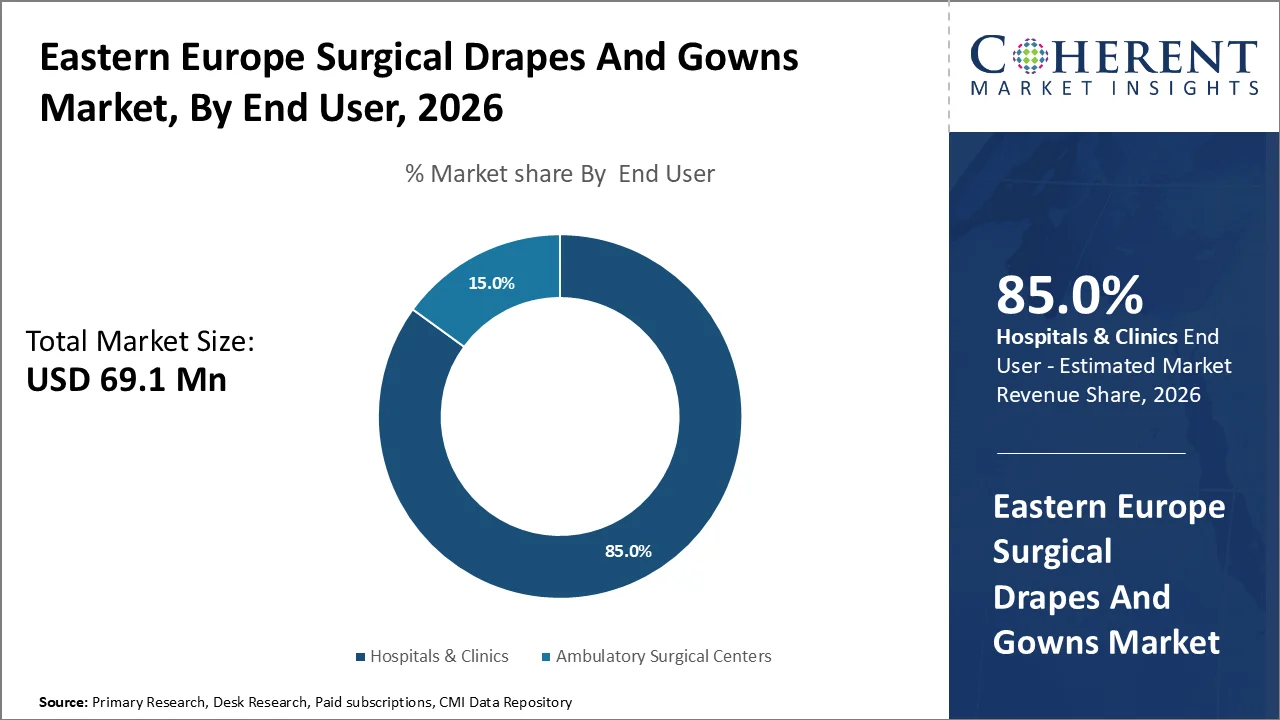
Hospitals & Clinics account for the largest share of 85.0% in 2026 due to its central role in performing a high volume of surgical procedures and delivering comprehensive inpatient and outpatient care. Hospitals and clinics account for the majority of surgical interventions across Eastern Europe, including general surgery, orthopedics, cardiovascular procedures, gynecology, and emergency operations. For instance, National health capacity data shows Poland’s public hospitals accounted for more than 80% of all surgical admissions in 2023, driving bulk institutional purchasing of sterile barriers. Infrastructure expansion initiatives, such as Romania’s US$568.98 million EU‑funded hospital modernization program approved in 2026, further increase operating room capacity, reinforcing hospitals as the largest volume buyers of drapes and gowns.
The Hospitals & Clinics segment dominates the market because these facilities perform the majority of surgical procedures and care for complex, chronic conditions. According to Eurostat’s 2022 surgical operations data (published in 2026), EU hospitals conducted over 1.10 million caesarean sections and millions of orthopedic and general surgeries annually, creating high demand for sterile drapes and gowns. Eastern Europe’s aging population with countries like Bulgaria and Romania reporting over 20% of residents aged 65+ drives increased rates of age‑linked surgeries (e.g., joint replacements), further boosting hospital surgical throughput. Additionally, the Global Burden of Disease Study shows rising chronic diseases (e.g., cardiovascular disease, diabetes) in the region, increasing hospital admissions and surgical interventions.
Market Drivers
Increasing Number of hospital-acquired infections such as nosocomial infections
Rising number of hospital-acquired infections such as nosocomial infections has driven the Eastern Europe surgical drapes and gowns market growth in the near future. For instance, in May 2024, according to the data published by the European Centre for Disease Prevention and Control, up to 4.3 million patients in EU/EEA hospitals acquired at least one HAI during their stay, reinforcing infection control urgency. Furthermore, according to the February 2025, ECDC SSI surveillance shows surgical site infection rates ranging from 0.6% to 9.6% depending on procedure type, highlighting persistent risk. Moreover, in January 2026, according to the CDC HAI data estimates ~110,800 surgical site infections in U.S. acute settings, underscoring global awareness of sterile barriers. These pressures push hospitals toward high‑performance disposable protective apparel. Concurrently, R&D in antimicrobial, fluid‑resistant fabrics and enhanced barrier technologies aligned with EU MDR 2017/745 and EN standards boosts product adoption and efficacy, expanding market uptake.
Increasing number of surgical procedures in Eastern Europe.
Increasing surgical procedures support the Eastern Europe Surgical Drapes and Gowns Market because every operation requires sterile barrier products to protect patients, surgeons, and equipment from contamination. Eurostat’s 2026 update reported 5.01 million cataract surgeries and 1.10 million caesarean sections across the EU in 2023, while Poland was among countries performing 117,600–143,000 caesarean sections. Croatia also recorded a high cardiovascular procedure burden, with 545.0 transluminal coronary angioplasties per 100,000 people. In 2026, Czechia is expanding one-day surgery to around 100 procedures, including hernia repair, gallbladder removal, and varicose vein surgery, increasing demand for disposable drapes and gowns in high-throughput operating settings.
Rising Surgical Volumes and Healthcare Infrastructure Expansion is transforming the Eastern Europe Surgical Drapes and Gowns Market
Increasing surgical volumes and healthcare infrastructure expansion has created significant opportunity for the Eastern Europe surgical drapes and gown market growth over the forecast period. For instance, according to Eurostat’s 2022 figures (cited in 2026 publications), cataract surgery conducted 4.73 million times across the EU and at least 1.10 million caesarean sections were performed in 2022, with many occurring in Eastern European members. The dataset updated 09 March 2026 confirms high volumes of inpatient surgical operations such as general, orthopedic, and minimally invasive procedures, reflecting ongoing clinical throughput growth in hospitals. At the same time, infrastructure expansion trends in 2025‑26 indicate that healthcare systems are investing in facility productivity and capacity enhancements to meet demand, with hospitals increasing operating room utilization and elective care workflows across Europe. This expansion supports more surgeries annually, which, in turn, boosts consumption of surgical drapes and gowns in Eastern European acute care settings.
Romania is experiencing its largest wave of hospital investment in recent decades, driven by European funds and modernization needs for acute facilities and surgical wards. For instance, in March 2026, the European Commission approved €522 million – (US$574.2 million) in EU funds to complete nine new hospitals in Romania, boosting surgical capacity and facility modernization. Furthermore, The Iași Regional Emergency Hospital project, scheduled for completion in 2027, is financed at over €500 million, enhancing surgical and emergency care services. In Slovakia, a major hospital expansion project including new operating rooms, a neonatal intensive care unit, and central sterilization facilities is underway under the national Recovery and Resilience Plan, enhancing surgical throughput. For instance, countries like Romania, Bulgaria, and Poland invest 4.3 %–4.9 % of GDP on healthcare, averaging ~€1,300 per capita in public health expenditure with continued growth signaling broader infrastructure investments. Additionally, average per‑capita healthcare investment in Central and Eastern Europe is rising faster than EU4 averages, reflecting increased public funding for clinical infrastructure that supports higher procedural volumes.
Current Events and Their Impact on the Eastern Europe Surgical Drapes and Gowns Market
Current Event | Description and its Impact |
Regulatory Updates Driving the Market Growth |
|
ECDC & National SSI Surveillance Strengthening |
|
WHO Infection Prevention Prioritisation |
|
National Healthcare Infrastructure Investment Programs |
|
EN Standards Revision & Adoption (EN 14683, EN 13795) |
|
Eastern Europe Surgical Drapes and Gowns Market Trends
- Shift Towards Nonwoven Materials -: The adoption of nonwoven fabrics for surgical drapes and gowns is on the rise. These materials provide enhanced liquid resistance, breathability, and bacterial barrier properties, which are increasingly preferred in hospital settings. Nonwoven surgical drapes and gowns are seen as more efficient and reliable in providing high-quality infection control, and their market share is expected to grow steadily in the coming years. Polyester and polypropylene nonwoven fabrics are becoming the go-to materials for surgical gowns and drapes in Europe, especially post‑pandemic, due to their liquid resistance and bacterial barrier properties. For instance, Mölnlycke Health Care, a major player in the surgical consumables market, introduced BARRIER® Surgical Drapes and Gowns, which are made from nonwoven materials, emphasizing their protective capabilities and efficiency. For instance, in 2026, hospitals across Eastern Europe are increasing the use of nonwoven materials to meet regulatory requirements and improve infection control standards. As part of a major infection prevention initiative, hospitals in countries like Poland and Romania are shifting to high‑performance nonwoven surgical drapes to mitigate risks associated with hospital-acquired infections (HAIs).
- Recovery and Surge in Surgical Procedures -: The number of surgical procedures performed in Eastern Europe continues to increase, driven by both elective and essential surgeries post-pandemic. The rebound in surgical volumes is further fueling the demand for disposable surgical gowns and drapes. As hospitals and healthcare systems stabilize, the need for consumables like surgical drapes and gowns remains high, with 23 million inpatient procedures expected annually across the EU in 2026, reflecting an ongoing surge in clinical activities. Following the pandemic, there was a sharp increase in elective surgeries in Eastern Europe, as hospitals began catching up with delayed procedures. For example, Poland witnessed a 15% rise in elective surgeries in 2025, leading to higher demand for single‑use surgical gowns. In 2026, Eurostat projects that 23 million inpatient procedures will be performed annually across Europe, including Eastern European countries. This surge is expected to fuel demand for disposable surgical drapes and gowns used to ensure sterile environments in surgical settings.
- Growing Demand for Disposable Surgical Gowns and Drapes -: Healthcare facilities prefer disposables due to their cost-effectiveness, convenience, and ability to reduce the risk of cross-contamination. This trend is expected to continue in 2026, with hospitals opting for single-use gowns and drapes as a primary infection control measure. The shift towards disposables aligns with growing regulatory emphasis on infection prevention. A recent survey by Stryker Corporation, a leader in surgical products, found that over 50% of hospitals in Eastern Europe were increasing their disposable product budgets in 2025 due to growing surgical volumes and a higher focus on infection control. This trend was especially evident in Romania, where the government began incentivizing hospitals to upgrade surgical consumables. As part of this strategy, disposable gowns and drapes have become the preferred choice due to their cost-effectiveness and ability to minimize cross‑contamination in high‑risk surgical procedures.
- Sustainability concerns and material innovation – Healthcare systems are also becoming more focused on sustainability, especially as healthcare facilities aim to minimize environmental impact while maintaining high hygiene standards. As a result, the market is witnessing a gradual shift towards bio-based or eco-friendly disposable surgical drapes and gowns. This includes innovations in materials that balance both infection control and environmental sustainability.
- Infection control focus – There is an increasing emphasis on infection control regulations in Eastern Europe. Hospitals are adopting disposable gowns and drapes to mitigate the risk of surgical site infections (SSIs). With healthcare systems increasingly prioritizing patient safety, products that meet stringent hygiene standards, like single-use disposable items, are gaining market share. Regulatory frameworks such as EU Medical Device Regulation (MDR) and EN 14683 are further driving the shift towards high-quality disposable products in clinical settings.
Regional Insights
Russia dominates owing to Expanding Healthcare
Russia account 40.0% market share in 2026, supported by large volume of surgical procedures and expanding healthcare infrastructure, which sustain strong demand for sterile operating supplies. Russia performs significant numbers of interventions annually, particularly in cardiovascular and general surgery, necessitating substantial procurement of drapes and gowns to maintain aseptic conditions during operations. Russia’s leadership in the Eastern Europe surgical drapes and gowns market in 2026 is supported by substantial public investment in healthcare infrastructure, including federal and regional allocations for hospital modernization and medical service expansion for instance, the federal budget earmarked over 6 trillion rubles for healthcare in 2026, with significant funds directed toward hospital infrastructure and primary care upgrades. Major cities like Moscow independently allocated 615 billion rubles to healthcare in 2026, enabling construction of new medical facilities and advanced treatment centers. Additionally, Russia’s aging population, with the share of citizens aged 65+ rising sharply in recent years, is increasing surgical and chronic care demand, driving consistent procurement of sterile surgical drapes and gowns across regional health systems.
Additionally, heightened emphasis on infection control and hospital‑acquired infection prevention has led hospitals across Russia to favors high‑barrier, disposable products, aligning with global best practices and boosting market uptake relative to neighboring countries.
Source: Higher School of Healthcare Organization and Management (VSHOUZ)
Poland Surgical Drapes and Gowns Market Trends
The Poland is poised to be as the fastest-growing region through 2026-2033, owing to strong procurement & regulatory compliance, expansion of hospital infrastructure and large population base & healthcare utilization. With a population of nearly 38 million (2026 estimate) and high hospital utilization rates, Poland’s healthcare system delivers a significant number of inpatient and ambulatory surgeries, increasing consumption of sterile surgical supplies. Polish hospitals adhere closely to EU health and safety regulations such as EU MDR 2017/745 and EN standards (EN 13795, EN 14683), which drives demand for higher‑quality, certified surgical drapes and gowns. This compliance emphasis increases procurement of premium sterile products. Poland has one of the largest healthcare systems in Eastern Europe, with hospitals performing millions of surgical operations annually including orthopedic, cardiovascular, and general surgeries driving substantial demand for surgical drapes and gowns. According to Eurostat’s 2022 surgical operations data (updated in 2026), Poland consistently ranks among the top EU countries for procedure volumes.
Additionally, ongoing investments in hospital modernization and operating theatre upgrades supported by national and EU funds expand surgical capacity. For instance, recent investment programs in Poland have funded new surgical wings and sterilization facilities, improving procedural throughput and sterile supply utilization. In 2026, Poland is actively strengthening healthcare infrastructure through large‑scale public funding and consolidation programs that expand surgical capacity and improve hospital facilities. The Polish Ministry of Health announced that more than PLN 1.1 billion (≈€240 million) is available in 2026 for hospital consolidation projects, enabling institutions to modernize facilities, improve logistics, and enhance sterile processing areas all of which support increases in surgical throughput and related consumable demand. Additionally, Poland continues to benefit from EU structural and resilience funding. Under the EU Recovery and Resilience Facility (RRF), the European Commission cleared Poland’s €7.2 billion payment request in April 2026, part of an unprecedented €34.15 billion disbursement to support national investments, including healthcare system reform and infrastructure upgrades.
Who are the Major Companies in Eastern Europe Surgical Drapes and Gowns Market
Some of the major key players in Cognitive Systems Spending Marker are Sanofi S.A., Amneal Pharmaceuticals, Inc., Laurus Labs Limited, Zydus Pharmaceuticals, Inc., Prasco Laboratories, Dr. Reddy's Laboratories, Cadila Pharmaceuticals, Novartis International AG, Concordia Pharmaceuticals Inc., Covis Pharmaceuticals, Inc., Cardinal Health, Aphena Pharma Solutions Tennessee, Inc., Mylan N.V., McKesson Corporation, Teva Pharmaceutical Industries Ltd, Lupin Pharmaceutical, and Sun Pharmaceutical Industries Ltd.
Key News
- In April 2026, Amneal Pharmaceuticals, Inc., pharmaceutical company announced its agreement to acquire Kashiv BioSciences, positioning it as a stronger global biosimilar leader and expanding its product and development capabilities.
- In December 2025, Magnera, a company focused on suppling of advanced material solutions, unveiled the introduction of its next-generation solution for nonwoven textiles. Without the use of per- and polyfluoroalkyl substances (PFAS), Magnera's patented technology provides the fluid repellency required by healthcare professionals and other businesses. As PFAS are durable and resistant to stains, water, and oil, they have been used extensively for decades in medical gowns, drapes, and other protective textiles. However, proof of PFAS persistence in the environment and potential health hazards has spurred international legislative action and increased demand for substitutes.
Market Report Scope
Eastern Europe Surgical Drapes and Gowns Market Report Coverage
| Report Coverage | Details | ||
|---|---|---|---|
| Base Year: | 2025 | Market Size in 2026: | USD 69.1 Mn |
| Historical Data for: | 2020 To 2024 | Forecast Period: | 2026 To 2033 |
| Forecast Period 2026 to 2033 CAGR: | 3.9% | 2033 Value Projection: | USD 89.7 Mn |
| Geographies covered: |
| ||
| Segments covered: |
| ||
| Companies covered: | Sanofi S.A., Amneal Pharmaceuticals, Inc., Laurus Labs Limited, Zydus Pharmaceuticals, Inc., Prasco Laboratories, Dr. Reddy's Laboratories, Cadila Pharmaceuticals, Novartis International AG, Concordia Pharmaceuticals Inc., Covis Pharmaceuticals, Inc., Cardinal Health, Aphena Pharma Solutions Tennessee, Inc., Mylan N.V., McKesson Corporation, Teva Pharmaceutical Industries Ltd, Lupin Pharmaceutical, and Sun Pharmaceutical Industries Ltd. | ||
Analyst Opinion
- The Eastern Europe surgical drapes and gowns market continues to experience robust growth, primarily driven by the increasing volume of surgical procedures and heightened infection control measures. Hospitals across the region are prioritizing the use of high-quality, disposable sterile products to ensure aseptic conditions during surgeries, responding to both regulatory requirements and the growing demand for patient safety. As healthcare expenditures rise, particularly in countries like Russia, the region is seeing sustained demand for surgical drapes and gowns. In 2026, healthcare‑associated infections (HAIs) remain a critical concern across Europe, with the European Centre for Disease Prevention and Control (ECDC) reporting that millions of patients in EU/EEA hospitals acquire at least one HAI annually, highlighting the importance of strict aseptic protocols in surgical care. Surgical site infections (SSIs) are among the most frequently observed HAIs, extending hospital stays and increasing morbidity. Standardized surveillance and prevention protocols coordinated by ECDC support higher adoption of sterile surgical drapes and gowns.
- Hospitals and healthcare facilities remain the largest consumers of surgical drapes and gowns due to high patient volumes and frequent invasive surgeries. With a focus on hospital-acquired infection prevention, these institutions continue to procure advanced sterile products to reduce infection risks. This trend is expected to continue through 2026 as healthcare infrastructure and surgical care demand grows. Regulatory compliance under the EU Medical Device Regulation (EU MDR 2017/745) plays a significant role in shaping market demand and product quality benchmarks. The MDR framework, updated through 2026, requires robust clinical evidence and conformity assessments for medical devices, ensuring surgical drapes and gowns meet safety and performance criteria before CE marking.
- Public investment in healthcare infrastructure is increasingly shaping surgical care demand in Eastern Europe. For instance, the EU4Health programme, with a €5.1 billion allocation for 2021–2027, directly supports the strengthening of healthcare systems, access to quality care, preparedness, and resilience enabling hospitals to upgrade facilities and services that drive procurement of sterile medical products such as surgical drapes and gowns. Moreover, EU Cohesion Policy funding in 2026 continues to finance initiatives addressing Europe’s ageing population and healthcare infrastructure gaps, including technology upgrades, expanded service capacity, and sustainable health systems. These investments coincide with the demographic shift across Europe toward an older population a trend that increases demand for surgeries and long‑term medical services.
- The growing emphasis on infection prevention protocols is compelling hospitals across the region to adopt disposable, high-barrier surgical drapes and gowns as standard practice. This shift aligns with global best practices in healthcare, contributing to sustained demand for sterile products and further bolstering market growth through 2026. Increasing emphasis on evidence‑based infection prevention protocols is compelling hospitals across Eastern Europe to adopt disposable, high‑barrier surgical drapes and gowns as standard practice to reduce surgical site infections (SSIs). Guidelines from global public health bodies such as the World Health Organization (WHO) focus on comprehensive SSI prevention measures throughout surgical care pathways, reinforcing the importance of sterile barriers to prevent pathogen transmission during operations.
Speak to the analyst
Want personalized insights?
Take the findings above to one of our principal consultants, or have the report rebuilt around the segments, geographies and competitors you actually track.
Market Segmentation
- By Product Type (Revenue, USD Mn, 2021-2033)
- Surgical Drapes
- Cardiovascular Drapes
- General Procedure Drapes
- Orthopedic Drapes
- Ophthalmic Drapes
- Gynecology, Obstetrics, & Urology Drapes
- Other Surgical Drapes
- Surgical Gowns
- Surgical Drapes
- By Usage Pattern (Revenue, USD Mn, 2021-2033)
- Disposable
- Reusable
- By End User (Revenue, USD Mn, 2021-2033)
- Hospitals & Clinics
- Ambulatory Surgical Centers
- By Region (Revenue, USD Mn, 2021-2033)
- Croatia
- Czech Republic
- Hungary
- Poland
- Romania
- Russia
- Rest of Eastern Europe
Sources
Primary Research Interviews
- Interviews with hospital procurement managers and supply chain leaders to understand sourcing challenges and trends in surgical drapes and gowns.
- Insights from manufacturers and distributors on material innovations and the role of disposable products in infection prevention.
- Discussions with regulatory experts on the impact of EU MDR 2017/745 and EN 13795 on market standards.
- Conversations with healthcare administrators and government officials to assess the impact of public healthcare investments on surgical product adoption.
Databases
- European Commission’s Healthcare Database
- ECDC (European Centre for Disease Prevention and Control)
- Eurostat - Healthcare and Medical Devices Statistics
- WHO Global Health Observatory (GHO)
- OECD Health Data
Magazines
- Healthcare Purchasing News
- Hospital Healthcare Europe
- Healthcare Business International
- Medical Device and Diagnostic Industry (MD+DI)
- Surgical Products Magazine
Journals
- Infection Control and Hospital Epidemiology (Cambridge University Press)
- European Journal of Clinical Microbiology & Infectious Diseases (Springer)
- American Journal of Infection Control (Elsevier)
- Journal of Hospital Infection (Elsevier)
- Journal of Medical Devices (ASME)
Newspapers
- The Wall Street Journal (Healthcare Section)
- Le Monde (Health & Medicine Section)
- The Times (UK Healthcare Section)
- The Financial Times (Healthcare Section
- The Guardian (Health & Social Care Section)
Associations
- European Association of Healthcare Purchasing (EAHP)
- Association for Professionals in Infection Control and Epidemiology (APIC)
- European Federation of National Associations of Medical Devices (FENAP)
- World Health Organization (WHO) - Infection Prevention and Control Section
- International Association of Healthcare Procurement (IAHP)
Public Domain Sources
- European Commission Healthcare Policy Reports
- EU Health and Safety Directives
- ECDC Surveillance Reports
- WHO Health Guidelines and Data
- Government Whitepapers on Medical Device Regulations in Europe
Proprietary Elements
- CMI Data Analytics Tool
- Proprietary CMI Existing Repository of information for last 10 Years
Get access to 250+ pages report
Every segment, forecast, competitor profile and data table behind the analysis above — available for instant download.
- ESOMAR Member
- ISO 9001:2015 Certified
- D-U-N-S Registered
- GDPR & CCPA Compliant
Missing comfort of reading report in your local language? Find your preferred language:
Transform your Strategy with Exclusive Trending Reports
Frequently Asked Questions
The Eastern Europe Surgical Drapes and Gowns Market is expected to reach USD 89.7 Mn in 2033.
Major players operating in the global Eastern Europe Surgical Drapes and Gowns Market include Sanofi S.A., Amneal Pharmaceuticals, Inc., Laurus Labs Limited, Zydus Pharmaceuticals, Inc., Prasco Laboratories, Dr. Reddy's Laboratories, Cadila Pharmaceuticals, Novartis International AG, Concordia Pharmaceuticals Inc., Covis Pharmaceuticals, Inc., Cardinal Health, Aphena Pharma Solutions Tennessee, Inc., Mylan N.V., McKesson Corporation, Teva Pharmaceutical Industries Ltd, Lupin Pharmaceutical, and Sun Pharmaceutical Industries Ltd.
The availability of limited products due to an increase in the number of product recalls is the major factors hampering the growth of the cognitive systems spending market.
Increasing number of hospital-acquired infections such as nosocomial infections and Increasing number of surgical procedures in Eastern Europe are the factors driving the growth of the market in the near future.
The Eastern Europe Surgical Drapes and Gowns Market is anticipated to grow at a CAGR of 3.9% between 2026 and 2033.
Among regions, Russia is expected to account for a largest market share in the global Eastern Europe Surgical Drapes and Gowns Market over the forecast period.
Surgical drapes and gowns are sterile garments used in operating rooms to maintain a sterile environment during surgeries. Surgical drapes are large sheets of material used to cover the patient, surgical team, and surrounding areas, while surgical gowns are worn by medical professionals to prevent contamination. These products are designed to meet high infection control standards and are typically single-use (disposable) to minimize the risk of hospital-acquired infections (HAIs).